pull up a chair

where wisdom gathers, poetry unfolds and divine light is sparked…

Category: jewish new year

turn to sweetness

Gen One Honeycake

the new year calls for sweetness. the Jewish new year, i mean. it’s encoded, in fact, in the Talmud, the nearly-as-old-as-time, all-you-need-to-know guide to living Jewishly, a sacred compendia of rabbinic discourse, debate, and back-and-forth covering ancient teachings, law, and theology, and it gets down to the nitty gritty of what to eat when, and certainly on Rosh Hashanah, one of the highest of the high holy days. it’s spelled out, right there in tractate Keritot 6a (truth be told, i am not quite sure what a tractate is, but i’m surmising it’s something like a bullet point), where a certain sage named Abaye in the second century suggests that eating certain foods might bring on good things in the new year (this might explain the thinking behind the famous sheet cake scene with tina fey from saturday night live*). these sacred foods for the new year are called simanim, and while the Talmud explicitly names fenugreek, dates, leeks, and beets, it merely points broadly to sweetness. honey wended its way into the Rosh Hashanah traditions way back in the seventh century. which means the jews have kept the bees in business for a long, long time. and the dipping of apples in honey is a tradition that waited till the 16th century, which means we’ve been dipping now for 500 years.

and i realize i am steering well off course here, but i find myself in a rabbinic hole of infinite delight and must let you know that jews, known as lovers of wordplay, have prayers to accompany each of those prescribed foods (derived from the shared linguistics in the hebrew root), and the way it worked was that the particular prayer was prayed, followed by the eating of said foods, and this whole shebang was known as the simanim seder. here are a few of the foods and the prayers they inspired:
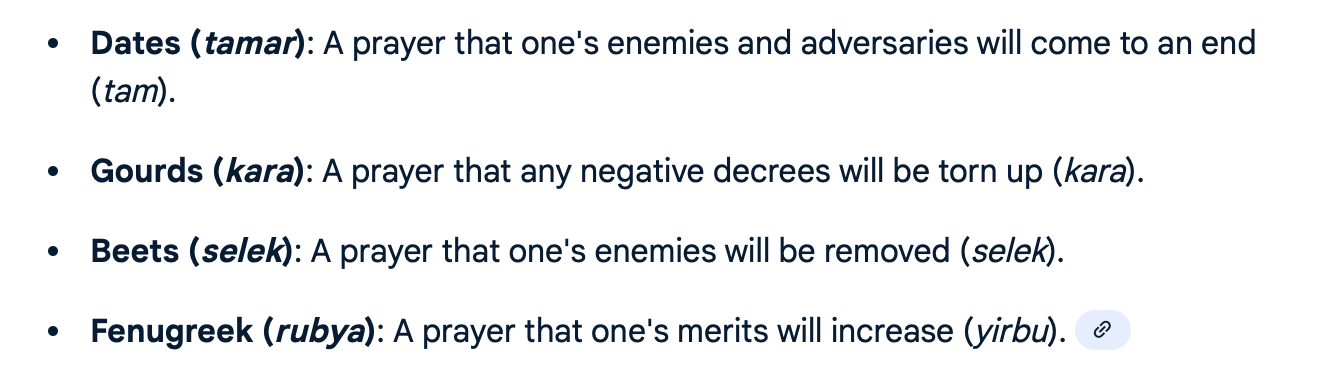
personally, i think we should all be loading up on dates and beets. but now i am really off in the ditch, and shall return myself to more linear thinking. . .

we were musing about honey, or at least i was. and since this is ultimately going to be a story about honey cake, i’m in the midst of explaining how we got there. how i wound up shoving a bundt pan of sumptuous honey-doused batter into my unreliable but deeply lovable ancient commercial-grade oven.

i tend to be someone who gloms onto traditions. and, given that these days, i spend a lot of time musing about time and the passing of years, i was suddenly struck—even though i am the farthest thing from a baker—with the question of whether there was some heirloom recipe for the holiday that i might have been missing. so i struck out to the best family baker, my brilliant and beloved sister-in-law brooke of the upper east side, and before the text with the query could possibly have registered in her wee little phone, she shot back the recipe she’s been baking for years. she noted that it was a super hit, and she noted that it was a family heirloom not in the traditional since, as her mother/my mother-in-law staked her claim to feminism by not knowing her way about the kitchen, and thus might not have baked in her life, dear brooke had made it a family tradition, one that secured its position the very first year she baked it when all that was left was a plate full of crumbs.

that’s all the convincing i needed, so i (practically as inept a baker as my late, great, mother-in-law) leapt aboard. i wheeled my grocery cart wildly through the store, plucking spices off shelves, fresh-squeezed OJ from the cooler, stocking up on fresh bags of flour, baking soda, baking powder (for the ones currently on my shelves had likely turned to clay, the subjects of years of idle waiting), and i set myself to baking. words being more my thing, i immediately gave it a name, this honey cake of famed repute. since dear brooke had clued me in its familial origins with this trademark hilarious note —”Considering that Mom’s recipe for the New Year was attending someone else’s party, this is our (1 generation = me) tradition.”—i immediately dubbed it Gen One Honeycake, and so it’ll stick. i also informed my boys they’d best follow along, for it was now incumbent upon them and their children’s children to crank the ovens every Rosh Hashanah, and pull out the whiskey and OJ.

excuse me, you say? where does the whiskey come in, and why are we talking cocktails so early in the morning? well, this famed honey cake, so dense it shall bulk your biceps as you ferry it to the table, is loaded: whiskey (or rye), OJ, a cup of coffee, a cup of honey, and a shuk‘s worth of spices. (a shuk is the israeli name for an open-air spice market)

aunt brooke continued, holding my hand (long-distance) the very whole way:

“It’s Marcy Goodman’s honey cake and it’s a fan favorite. Use the whiskey and use the sliced almonds in the recipe. And if you have whole wheat flour, sub in 1/2 c wheat flour for 1/2 c white flour. Make it in a tube pan. It’s a big dense cake.”

much to my amazement i found it pure delight to stand at the counter dumping in this and that, and stirring as directed. as the smell rose from the bowl, i began to understand the soothing powers of baking. and now wonder if it’s seductive enough—and sufficiently sedative—to carry me through the next 1212 days (inauguration 2029).

oops!

because my oven is, as i’ve mentioned, a recalcitrant behemoth, i’ve no idea whether it rose to the necessary 350-degrees Fahrenheit, and suspect it was probably my fault that the cake, despite its extra five minutes in the oven, decided to collapse round the middle (a flub fixed first by dumping extra almond slivers into the hole, and then duly disguised by brooke’s suggestion of stuffing the hole with rosemary sprigs, which i happened to have growing out back).

by the time i carried it to the table, where eager forks awaited, i felt my chest puffing out just a bit, swelled with pride at picking up the family slack. we now have ourselves a tradition. and my boys, by edict of their mother, shall carry it on, far into the next and the next and the next generation. may it always be so.

with no further ado, for i’ve tarried long enough here, i offer you the famed aunt brooke gen one honey cake, courtesy of one marcy goldman, reigning queen of the honey cake whoever she is. the version here was posted on deb perelman’s smitten kitchen site, and comes along with notes at the end, worth reading for their spicy humor.

Gen One Honeycake, from famed family baker BJKR, courtesy deb perelman’s Smitten Kitchen, courtesy marcy goldman (a cake with lineage!)

SERVINGS: 16
TIME: 20 MINUTES TO ASSEMBLE; 1 HOUR TO BAKE
SOURCE: MARCY GOLDMAN’S TREASURE OF JEWISH HOLIDAY BAKING
See Notes about recipe changes at the end of the recipe.

3 1/4 cups plus 2 tablespoons (445 grams) all-purpose flour (see Note)
1 3/4 teaspoons baking powder (see Note)
1 teaspoon baking soda
1 teaspoon kosher salt (see Note)
4 teaspoons ground cinnamon
1/2 teaspoon ground cloves
1/2 teaspoon ground allspice
1 cup (200 grams) vegetable or another neutral oil
1 cup (320 grams) honey
1 1/2 cups (300 grams) granulated sugar
1/2 cup (110 grams) light or dark brown sugar
3 large eggs
teaspoon vanilla extract
1 cup (235 grams) warm coffee or strong tea (I use decaf)
1/2 cup (120 grams) fresh orange juice, apple cider, or apple juice
1/4 cup (60 grams) rye or whiskey, or additional juice
1/2 cup (50 grams) slivered or sliced almonds (optional)

Pan size options: This cake fits in two (shown here) or three loaf pans; two 8-inch square or two 9-inch round cake pans; one 9- or10-inch tube or bundt cake pan; or one 9 by 13 inch sheet cake.
Prepare pans: Generously grease pan(s) with non-stick cooking spray. Additionally, I like to line the bottom and sides of loaf pans with parchment paper for easier removal. For tube or angel food pans, line the bottom with parchment paper, cut to fit.
Heat oven: To 350°F.
Make the batter: In a large bowl, whisk together the flour, baking powder, baking soda, salt, cinnamon, cloves and allspice. Make a well in the center, and add oil, honey, granulated sugar, brown sugars, eggs, vanilla, coffee, juice, and rye. [If you measure your oil before the honey, it will be easier to get all of the honey out.]
Using a strong wire whisk or in an electric mixer on slow speed, stir together well to make a well-blended batter, making sure that no pockets of ingredients are stuck to the bottom.
Spoon batter into prepared pan(s). Sprinkle top of cake(s) evenly with almonds, if using. Place cake pan(s) on two baking sheets, stacked together (which helps the cakes bake evenly and makes it easier to rotate them on the oven rack).
Bake the cake(s): Until a tester inserted into a few parts of the cake comes out batter-free, about 40 to 45 minutes for a round, square, or rectangle cake pan; about 45 to 55 minutes for 3 loaf pans; 55 to 65 minutes for 2 loaf pans (as shown), and 60 to 75 minutes for tube pans.
Cool cake: On a rack for 15 minutes before removing it from the pan. However, I usually leave the loaves in the pan until needed, as they’re unlikely to get stuck.
Do ahead: This cake is fantastic on day one but phenomenal on days two through four. I keep the cake at room temperature covered tightly with foil or plastic wrap. If I want to bake the cakes more than 4 days out, I’ll keep them in the fridge after the first 2 days. If you’d like to bake them more than a week in advance, I recommend that you freeze them, tightly wrapped, until needed. Defrost at room temperature for a few hours before serving.

Notes:
Size: These days, I bake this cake in two filled-out loaves, as shown, instead of 3 more squat ones. My loaf pans hold 6 liquid cups; they’re 8×4 inches on the bottom and 9×5 inches on the top; if yours are smaller, it might be best to bake some batter off as muffins, or simply use the 3-loaf option.
Flour: After mis-measuring the flour many years ago and baking the cake with 2 tablespoons less flour and finding it even more plush and moist, I’ve never gone back. The recipe now reflects the lower amount.
Baking powder: The original recipe calls for 1 tablespoon of baking powder, but I found that this large amount caused the cake to sink. From 2011 through 2023, I recommended using 1 teaspoon instead. But, after extensive testing this year, I’ve found that a higher amount — 1 3/4 teaspoons — keeps this cake perfectly domed every time, and even more reliably than the 1-teaspoon level.
Salt: The original recipe calls for 1/2 teaspoon but I prefer 1 teaspoon.
Liquids: This is address the question that comes up in at least 30% of the 1115 comments to date: “What can I use instead of whiskey?” and/or “What can I use instead of coffee?” The original trifecta of liquids in this cake [coffee, orange juice, and whiskey] is unusual and wonderful together, and I still think the perfect flavor for this cake. But if you want to omit the whiskey, simply use more orange juice or coffee. If you want to omit the coffee, simply use tea. If you don’t want to use tea, use more juice. If you don’t want to use orange juice, my second choice liquid here would be apple cider (the fresh, not the fermented, kind), followed by apple juice.
Apples and honey: It’s a whole thing!
Sweetness: The recipe looks like it would taste assaulting sweet but you must trust me when I say it doesn’t. But, if you reduce the sugar, any one of them, you will have a cake that’s more dry. You can still dial it back, but do understand what the adjustment can do to the recipe.
Flavor: Finally, this is every bit as much of a spice cake as it is a honey cake. Honey isn’t the most dominant flavor, but it’s one of many here that are harmonious and wonderful together. It smells of fall in a way that a simmer pot of $60 candle could never. I hope you get obsessed with it too.

that’s it, sweet friends. certain we could all use a little sweetness at this turn in the year, where did you find sweetness this week?

*as promised, the tina fey sheet cake scene. (nod to faithful chair reader sharon of twin cities!)
tefillah (תפילה) for a sweet new year in the season of awe

it is the soft dawn of a new year here, the jewish new year, an ancient calendar i’ve been drawn into, enfolded by, graced by, for all the decades since i met my beloved. he was the one who caught my eye back in the long ago, leaving the newsroom before sundown on friday nights to go to synagogue. i was moved by that devotion. leaving the newsroom on a friday night, back in the days when the big fat sunday newspaper was being “put to bed,” all the sections laid out, the stories edited, photos cropped and captioned, leaving the newsroom before deadline on a friday night meant you were breaking a mold. and you’d better have had a very good reason.

he broke my mold, all right, that tall bespectacled fellow loping toward the door. broke open a love of sacred creation, broke open an ancient text, the poetries and prayers that rose from the rocky, dusty, sometimes fertile terrain of a land indeed holy.

it would be a couple years before i found out the reason the bespectacled fellow was heading out to synagogue early on those friday nights: that was the hour of the singles’ shabbat service. he was looking to meet a nice jewish girl, and theirs was the six o’clock service. oh, well. that didn’t quite work the way he’d intended.

nor did i ever expect to be so deeply entwined with the religion of ancient ancient times. though there were hints. way back in high school, i asked a jewish friend of mine if i could come to her family’s seder, the passover meal at which the story of the exodus is told and retold. she answered that her family didn’t really mark the occasion, but maybe that year they’d make an exception. so there i was at their table, turning the pages of the exodus story, searching for the hidden matzah at the end of the meal. i came back year after year.

and all these years later, i’m the one who opens the jewish cookbook as the holidays near. over the arc of time, we’ve inscribed customs into the trace of the year: rosh hashanah, the new year, is when lamb stew (a middle-eastern iteration with chickpeas, and raisins, and apples and rice) is on the stove, though this year, just the two of us, we opted for the modern-day jewish classic, chicken marbella from the silver palate cookbook.

i crack open the prayer book too. crack it open weeks and weeks ahead of time, for the prayers are what draw me deep into the currents of the great river of judaism. awaken me to the mysteries and sumptuous beauties all around. remind me to see the miraculous in the most ordinary: the dust mote wafting by, the shadow of a tree, the call to pray “in the moments when light and darkness touch.” sometimes it’s the language, a simple line chiseled over time, that breaks me wide open, like this one: “prayer is our attachment to the utmost.”

let that one filter in…

sometimes i think my blessing is that i am still new to all this, so the way the words are unspooled is still fresh enough to catch my attention, my breath. i am often the one quietly gasping in the pews. or here at my kitchen table.

one last thing before i unfurl my prayer, my tefillah, for the new year: the other night at synagogue, just before the prayer for healing, the rabbi told of a midrash taught over time. she began by pointing to the eternal light that hangs above the arc where the Torah scrolls are kept. she noted that in the ancient temples the light that burned was from a wick floating in oil, specifically olive oil, the only oil allowed to burn in the eternal light. and then she went on to talk about the olive, the abundant small but ubiquitous fruit of the hillsides of the holy land. she noted that the oil from an olive is released only when it’s pressed, and crushed. and then, in that majestic humble way of hers, she taught us a lesson i’ll never forget: “when the olive is crushed it’s brightest light comes forth.”

ponder that the next time you feel the world pressing in from all sides, when you feel crushed. your brightest light might soon be burning.

here is my prayer for the new year. . .

tefillah for a sweet new year in the season of awe

O One who robes this world in threads of crimson and bronze, who reaches in the paint pot for persimmon, goldenrod, and concord grape, the palette of autumn ablaze,

under newborn moon, under deep black dome of night, i bend my knees and pray…

i ask for blessing abundant. i ask stingily, you might think. 

but then, you look around the world, see the tally from which i draw, and realize i’m barely beginning.

i pray first for forgiveness, for the sins of this selfish, self-obsessed culture of course, but more immediately and closer to the bone, for the sins of my own failings: my unwillingness to stray too far beyond the comfortable, to not muster the radical courage to cut a bold swath, to heal what’s deeply broken; for my inability to see my own blind spots; for the flippant dismissals i sometimes make too quickly; for being afraid, to the point that it occludes my seeing and breathing, my being. 

i pray for peace, peace of nations and peace of each unsettled heart.

i pray for wisdom to discern that which lasts and that which crumbles over time. 

i pray for grace which i define as radiance that will not fade in the face of shadow, will not step aside when life inflicts sharp elbow.

i pray for the hand that reaches out to dry the tears of the one whose cheeks are splotted, streaked, and sodden. even when, especially when, those cheeks belong to a someone we do not know. yet the simple presence of those tears signals how deep, how stinging, the hurt must be, the pain. i pray for the woman who sat beside me at synagogue and could not stanch her tears.  

i pray for those who go through life fists clenched, driven by a fury that won’t allow unfurling. won’t release the tendons taut, won’t uncoil the hands God gave so we could do the work of loving, of reaching, and cradling in times of turbulence and tumult.

i pray for the echo of laughter’s peals rising from the kitchen tables, the diner counters, the park benches, those flat plains where good souls congregate to dig down deep and tell their stories.

i pray for morning light to rush in before eyelids flutter open so that when they do all is golden, nearly blinding, in its insistence to start the day awash in luminescence.

i pray for mothers who buried their children this week. i pray for the papas whose hearts were hollowed by deaths too soon, too impossibly inexplicable. i pray for memory to fill in the cracks, to begin to piece together the jagged edges of the shattered vessel that is the grieving heart. 

i pray and i pray for the children––afraid, broken, scared out of their wits, looking into a night sky not for stars but for rockets’ red glare.

i pray for silence from the bombs and the hell screech of rockets. 

i pray for those pummeled by rain — be it the rain of those rockets or the deluge of storm and hurricane winds.

i pray we see You in the sparks that animate the woods, the streams, the darkened skies. i pray that all the cosmos becomes as if a light-catching prism of holy wonder and wild astonishment that points to the One Creator God.

i pray we see You, too, in the gentle murmur of kindness, of tenderness, of heavenly mercy that is certain trace of Holy Presence.

i pray, dear holy, holy God, for these days of awe to fuel us for the long winter to come. let us stock the larder, fill the shelves that line the walls of heart and soul. let us go forth, each and every blessed day, fully awake to the miracle of those we love, and those we don’t yet know whose lives, like ours, contain untold tragedy as well as untrumpeted triumph, and whose wholeness any day just might depend on the goodness of those who do not pass them by unnoticed. 

amen. and thank you.

what lines would you add to our prayer, communally or privately?

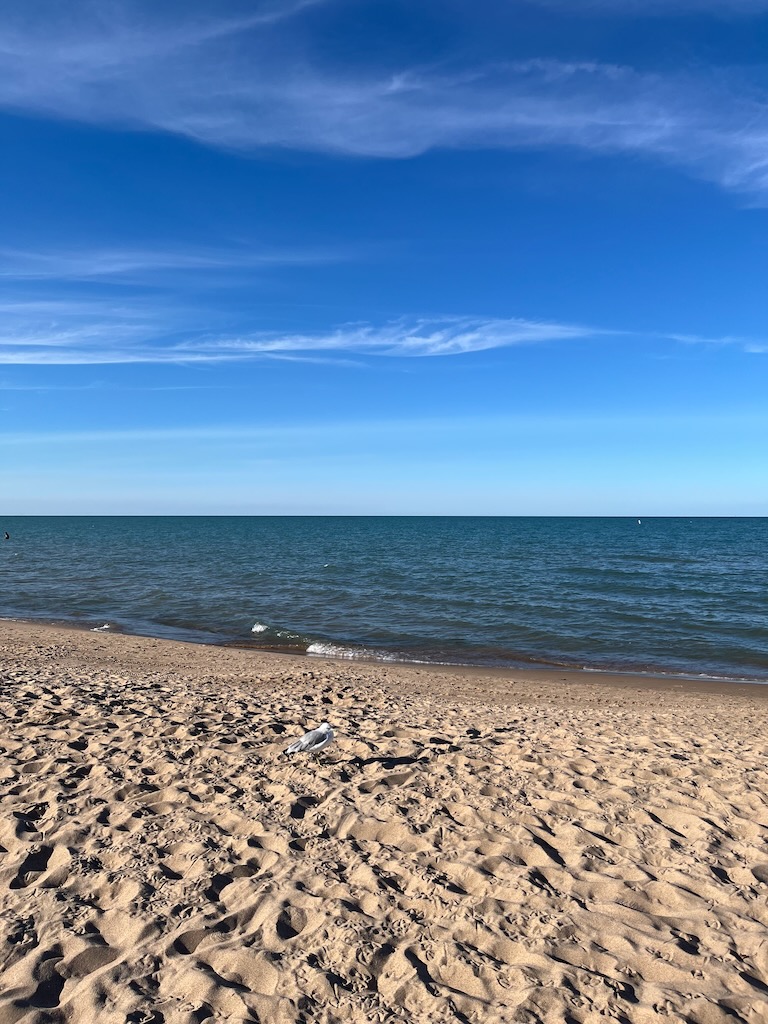
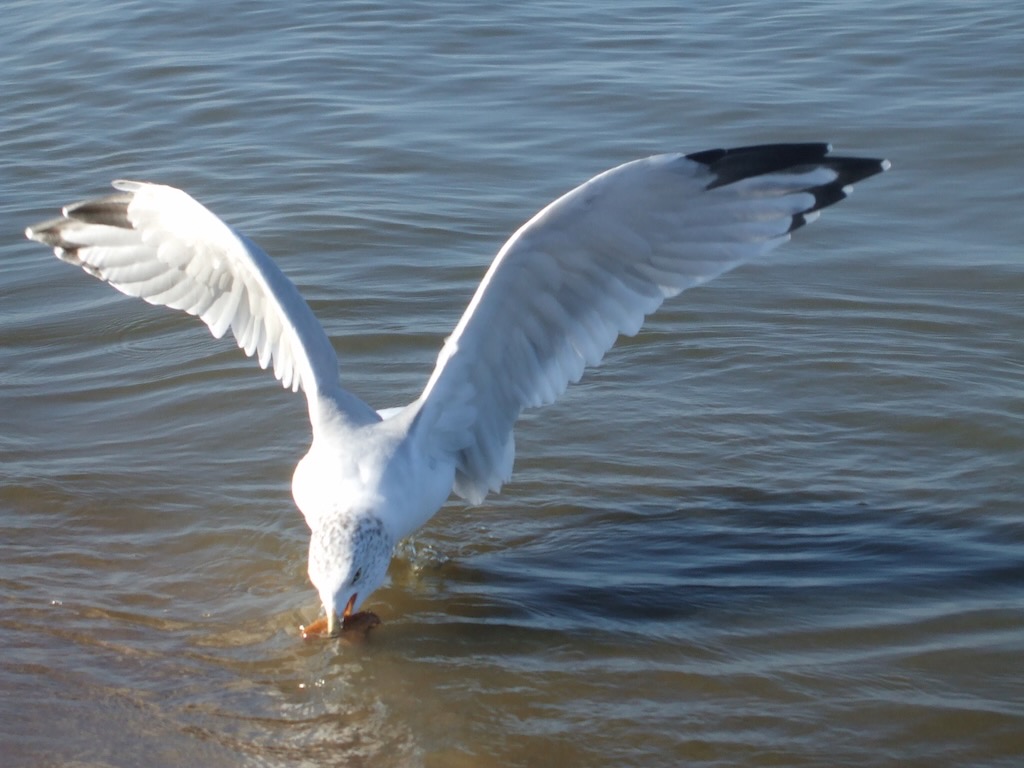
the gull above is diving into lake michigan to gather up a chunk of bread one of us has tossed into the water, a symbolic casting of our sins into the lake in an act of absolution.

the line, “prayer is our attachment to the utmost,” is from rabbi abraham joshua heschel, and the full line is: “unless we aspire to the utmost, we shrink to inferiority. prayer is our attachment to the utmost.”

the quickening of september

if i were truly of the prairie, rooted into its undulating loam, rather than a citizen merely plopped here by geography, because it’s the place i call home, i’d know the turning of the celestial wheel and its interplay with earth as robustly as the marrow that courses my bones. alas, my knowing is fainter than that. and yet, still, each september i feel it. the angle of light shifts, and the lens does too. it’s amber now, or so i seem to imagine. the days are drenched, more and more, in molasses hue. and the air holds a chill one minute, a warming the next.

the season itself is playing meteorological tug-of-war: do we want to let go? do we want to surrender? or shall we hang on with the last of our oomph?

ah, but the signs, they abound. and they quicken my spirit, each and every one. the school bus sightings, for one. they lumber the streets now, that slow serpentine crawl, disgorging couplets of children at most any corner. i’m detached from the school calendar now. it’s merely there at the edge of the frame. but, nonetheless, i notice.

my cooking’s changed too. i simmered this week. slow stirring a vegetable stew. i spent a good chunk of hours stationed by the stove, overseeing allium play sidekick to eggplant, to pepper. offering up its essence to add just a pique to the whole.

but mostly i feel the turning of earth in the garden, the plot that keeps me most rooted in the wonder, the majesty, the undying wisdom that is the sacred whole of creation. i felt it in the proliferation of spider webs, those silken geometries of arachnid architectures. the uncanny way the eight-legged thing knows to construct its trapping, and in the process makes beauty of pace-pausing proportion. i felt it in the crisping of blooms, and the heads of hydrangea and black-eyed susan starting to droop, the weight of their long season now taking its toll. a last gasp before death.

i hear it just now in the distant cloudcall of the goose, threading the sky, signaling autumn. it’s a cry that can shroud me in goosebumps. a call to prayer if ever there was.

september is when i feel myself beginning to curl like the nautilus, inward spiral, expanding the chambers within. making room for the quiet, the sacred, to come.

thirty some years into a spiritually-braided marriage, i know september to be the season of awe. quite literally. liturgically speaking. we are in the hebrew calendar’s month of elul, counting the days till the high holiness of the jewish new year. according to jewish tradition, it is the month for contemplating the question, “how should i live the existence that i am.”

just the other day, i –– along with a rabbi i love and a gathering of women –– walked to the water’s edge, recited three blessings, and dropped into the water, into the great lake michigan. it was a cleansing, a beginning anew, a rite of purification. it was a mikveh, an ancient ancient tradition that is symbolically a turning of the page.

the question at the core of elul, “how should i live the existence that i am,” is one that especially quickened for me in a paragraph i read this week that had little to do with religion, and everything to do with the holiness of how we live our lives. it was the beginning of a review of a children’s picture book, and it was written by one of the high priestesses of everyday cultural commentary, maria popova.

she was writing about kamau & zuzu find a way, an “uncommonly soulful” story of a little boy and his grandmother who, somehow, find themselves living on the moon.

popova begins her essay this way:

The astonishing thing is that not one human being who ever lived has chosen the body, brain, place, or time to be born into, and yet in the narrow band of freedom between these chance parameters, we must find a way to live lives of substance and sweetness. Chance deals the hand and we must play it, and in how we choose to play it lies the measure of who we are.

“we must find a way to live lives of substance and sweetness.

“chance deals the hand and we must play it, and in how we choose to play it lies the measure of who we are.”

those are the questions i shall carry into my fading garden, and under the dome of a sky now rife with the cries and the calls of the flocks flying as one, in the migrational river that carries them faraway home.

in the quiet of your own soul, that’s the question for today: how do you choose to play the hand that chance has dealt you? what will be your sweetness and your substance?

let us speak of the awesomeness

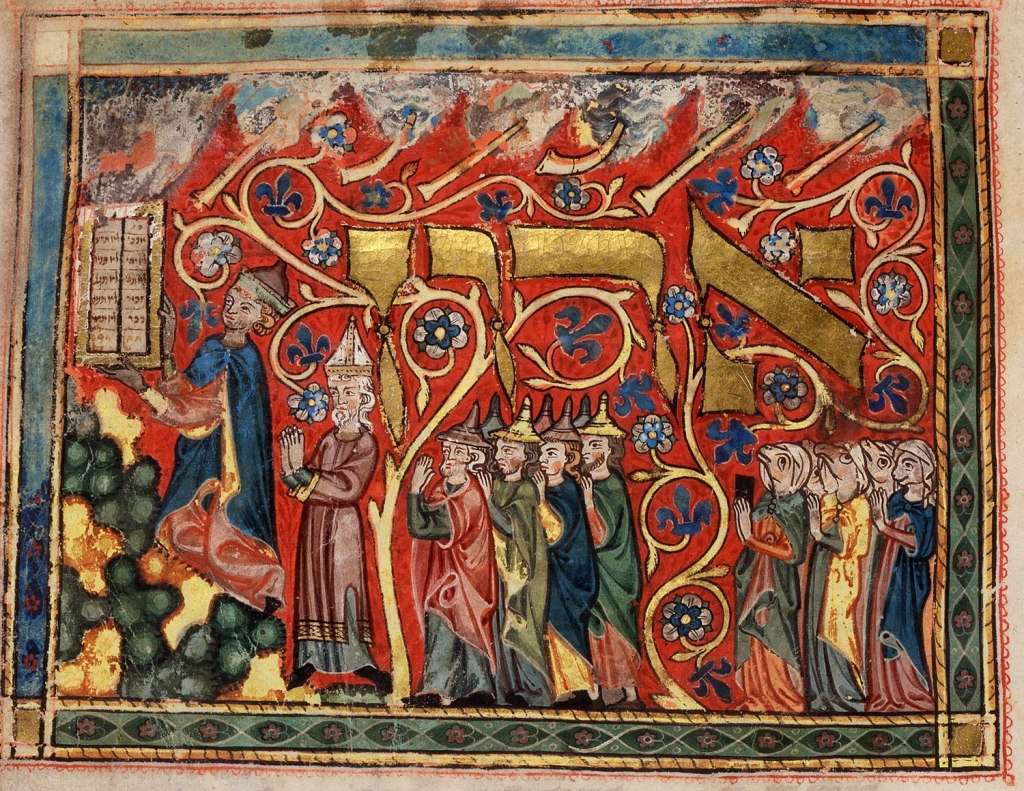
This image has an empty alt attribute; its file name is sinai.jpg

of all the majestic moments in the days to come, the days of awe to come, for this is the cusp of the jewish new year –– the hours when we drop to our knees (figuratively, for there’s not a lot of kneeling in the synagogue) in thanks for all creation, for the newbornness of the world, this world we are entrusted to keep, meaning not to possess but to preserve, to tend, to watch over as a shepherd over his lambs –– one of the moments that will stop time for me is when the chanting of the unetanneh tokef (“let us speak of the awesomeness”) begins. 

its words are as stirring as they come, deep down to the marrow. and they will stir me so deeply this year.

Unetanneh Tokef (ונתנה תקף) (“Let us speak of the awesomeness”) is a piyyut, or Jewish liturgical poem, woven into the hours of prayer of Rosh Hashanah, the new year, and Yom Kippur, the day of atonement to follow. it is chanted just before the Kedushah, the prayer in which the angels sing of the holiness of God, and when the ark that holds the Torah, or sacred scroll, is opened. 

leonard cohen sung from it. in his glorious, goosebumping “who by fire?”** 

it’s a prayer poem in which we stare into the face of our ending, our death, and examine closely the sharp edges of that terrain we so often run from. while it hurls us into attention, a mortal attention that is the base of plenty of theologies (those teachings believe we heighten our game when we’re aware it will end), it doesn’t look only at the last steps, but, too, at the ones we might take as we march there. it’s in the unflinchingness of judaism –– the bracing, no-beating-around-the-bush, straight-on-ness of it –– that so often grabs me by the scruff of the neck and keeps me transfixed. 

and certainly here, and in the hours and days ahead, when we will take public inventory of our sins, when we will stand before a body of water and along with those who stand beside us cast our sins (in the form of bread chunks) into the currents or tide. and when, in the silence of our own pews, we will once again ask these mortal questions. it is the second section of the four-part prayer-poem, the litany of not only death but life, that stirs me most profoundly. 

here are its words (with emphasis on the lines that emphasize living, not dying):

“On Rosh Hashanah will be inscribed and on Yom Kippur will be sealed – how many will pass from the earth and how many will be created; who will live and who will die; who will die after a long life and who before his time; who by water and who by fire, who by sword and who by beast, who by famine and who by thirst, who by upheaval and who by plague, who by strangling and who by stoning. Who will rest and who will wander, who will live in harmony and who will be harried, who will enjoy tranquility and who will suffer, who will be impoverished and who will be enriched, who will be degraded and who will be exalted. But Repentance, Prayer, and Charity mitigate the severity of the Decree.”

one of the prevailing pounding questions of this long hard summer has been my considerable wondering about what lies ahead for me, how many years to love on this world that i love so lavishly. it’s left me breathless, a true foggy night of the soul. and yet, as fall emerges, and the new year begins, so it’s time for me to turn (another command of the days of awe, teshuva, to turn in forgiveness, to repair what we’ve broken) to face the light of the days i won’t –– and can’t –– count. 

it’s a soul-scouring exercise, one that was flung upon me the moment i heard “it’s cancer,” and i’ve taken it to heart. spent more hours than anyone knows contemplating how i will live what remains of my portion. if i emerge living more alive than ever before, if i emerge wildly embracing each and every dawn and the day that follows, if i love as i would be loved, if i take to heart every last prompt to be gentle, to be kind, to forgive as i would be forgiven, then my prayers this year, my Unetennah Tokef, will be answered.

this is a question to be answered in your own silence: how will you live the next holy days of your one blessed life? 

the whole text, for anyone keen to read, broken into four thematic sections:

fear and trembling:

“Let us now relate the power of this day’s holiness, for it is mighty and frightening. On it Your Kingship will be exalted; Your throne will be firmed with kindness and You will sit upon it in truth. It is true that You alone are the One Who judges, proves, knows, and bears witness; Who writes and seals, Who counts and Who calculates. You will remember all that was forgotten. You will open the Book of Remembrances — it will read itself – and each person’s signature is there. And the great shofar will be sounded and a still, thin voice will be heard. Angels will be frenzied, a trembling and terror will seize them — and they will say, ‘Behold, it is the Day of Judgment, to muster the heavenly host for judgment!’ — for even they are not guiltless in Your eyes in judgment.”

God judges us:

“All mankind will pass before You like a flock of sheep. Like a shepherd pasturing his flock, making sheep pass under his staff, so shall You cause to pass, count, calculate, and consider the soul of all the living; and You shall apportion the destinies of all Your creatures and inscribe their verdict.

“On Rosh Hashanah will be inscribed and on Yom Kippur will be sealed – how many will pass from the earth and how many will be created; who will live and who will die; who will die after a long life and who before his time; who by water and who by fire, who by sword and who by beast, who by famine and who by thirst, who by upheaval and who by plague, who by strangling and who by stoning. Who will rest and who will wander, who will live in harmony and who will be harried, who will enjoy tranquility and who will suffer, who will be impoverished and who will be enriched, who will be degraded and who will be exalted. But Repentance, Prayer, and Charity mitigate the severity of the Decree.”

we are helpless:

“For Your Name signifies Your praise: hard to anger and easy to appease, for You do not wish the death of one deserving death, but that he repent from his way and live. Until the day of his death You await him; if he repents You will accept him immediately. It is true that You are their Creator and You know their inclination, for they are flesh and blood. A man’s origin is from dust and his destiny is back to dust, at risk of his life he earns his bread; he is likened to a broken shard, withering grass, a fading flower, a passing shade, a dissipating cloud, a blowing wind, flying dust, and a fleeting dream.”

God is enduring: 

“But You are the King, the Living and Enduring God.

There is no set span to Your years and there is no end to the length of Your days. It is impossible to estimate the angelic chariots of Your glory and it is forbidden to pronounce Your Name. Your Name is worthy of You and You are worthy of Your Name, and You have included Your Name in our name.”

bless you all, profoundly.

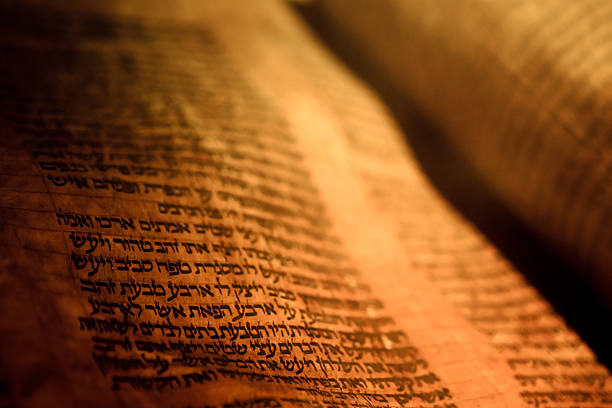
This image has an empty alt attribute; its file name is ancient-hebrew-scroll.jpg

**i tried to post a video, a glorious recording of leonard cohen singing “why by fire?” but the video seemed to be getting in the way of publishing this post, so if you’d love a musical blessing, try googling “who by fire?” by leonard cohen. it’s worth a listen. xoxox


season of turning

my friend: red-breasted nuthatch.

all around, i see daubs of russet and pumpkin. at the tips of the branches. on the leaves of the vine. even on the chest of my nuthatch, the one that followed me around the garden the other day as if he wanted to plop on my shoulder and whisper a secret. (in the case of the nuthatch, though, a red-breasted nuthatch, he wears russet all year round; he’s not sporting ephemeral seasonal garb). for the leaves, the russet and pumpkin, soon to be crimson and gold as the deepening deepens, as the chlorophyll scrapes the paint-barrel bottom, the brushstrokes of autumn are signs that we’ve entered the season of turning. 

the jews, a people from whom i have gleaned volumes of sacred attentiveness, seize every turning of this holy earth, and this season of turning is its own holy time: Elul, the month that opens the gates to the holiest of holy days, the Days of Awe, the new year and the day of atonement, coming at the next new moon. 

this is the month, these amber-drenched days and moonbeam-bathed nights, when our one anointed task is to attend to the work of cleansing our souls. jews take repentance seriously. no whispered, hurried, sloughed off “so sorry.” to truly repent is to a.) look deep inside; b.) shake off the shame, the excuse, or whatever it is that keeps you from telling your truth; and then, c.) the hard part: stepping up to the plate, looking the ones you’ve hurt or cut short, the ones for whom you’ve been too often distracted, looking them straight in the eye and saying here’s what i did, and i am so sorry. and i will change my ways. or try to anyway.

and here’s a wondrous thing, a something that makes it just a wee bit more promising to take on the hard work of repenting; wise words spoken by one of our rabbis just the other Shabbat. she was preaching about the season of turning, and she made the point that God — the God in whom i believe, a God of compassion, a God who reaches deep down into the parts of me that hurt the most, into the parts of me that get tangled, tripped up, and sometimes make a big mess of what needn’t be messy — that holy God is primed and ready to meet us way more than halfway in the repenting department. 

the sages of the Talmud gave us this marvelous teaching about repentance:

“God says if we open a door as tiny as the eye of a needle, God will widen it and make it large enough to let carts and horse-drawn carriages drive through.”

in other words, God’s got skin in this game. God doesn’t expect overnight miracles. we aren’t meant to turn into superheroes of saintly proportion. we’re plain old bumble-brain humans, after all. and the talmudic teaching is, in my mind, as if God sat us down, knee-to-knee on a park bench, perhaps, and said, look, here’s the deal, just give me the faintest slightest attempt at saying you’re sorry. just one tiny opening, that’s all i ask. the beginning of something that looks or smells or sounds like contrition. an honest-to-goodness “i screwed up.” you give me that, and i’ll take it from there. i’ll swipe open your heart, let the sweet stuff roar in. give you a sense of just what it feels like to let loving abide. 

maybe just maybe, the teaching is saying, we can discover the weightlessness that comes when the guilt washes away, and with it its ugly cousins: worry, or shame, or that godawful sense that we’ve hurt someone or something when we hadn’t intended to do any such thing. 

one of the things i love about jewish teachings is that there’s an almost breathtaking knowing of the complexities of the human soul and psyche. there’s no simplistic aphoristic glossing over of whatever it is that makes us tick. it’s not a magic-wand religion, not inclined toward three E-Z steps to HappilyEverAfterLand. 

it doesn’t avert its gaze. doesn’t whitewash the ask. names the hard parts. and somehow believes we’re up to the task, every last wobbly one of us.

take this teaching on the demands of the season of turning, a teaching i found in the prayer book for this month of Elul: 

Now is the time for turning. The leaves are beginning to turn from green to red to orange. The birds are beginning to turn and are heading once more toward the South. The animals are beginning to turn to storing their food for the winter. For leaves, birds, and animals, turning comes instinctively. But for us turning does not come so easily. It takes an act of will for us to make a turn. It means breaking with old habits. It means admitting that we have been wrong; and this is never easy. It means losing face; it means starting all over again; and this is always painful. It means saying: I am sorry. It means recognizing that we have the ability to change. These things are terribly hard to do. But unless we turn, we will be trapped forever in yesterday’s ways. God, help us to turn––from callousness to sensitivity, from hostility to love, from pettiness to purpose, from envy to contentment, from carelessness to discipline, from fear to faith. Turn us around and bring us back toward You. Revive our lives, as at the beginning. And turn us toward each other––for in isolation there is no life. 

Rabbi Jack Riemer (emphasis added)

the jewish understand of the soul is nuanced, its prayers often stop me in my tracks. utterly breathtakingly beautiful. and blessed. 

no matter how or what you believe (or even if you don’t), it seems there is something in this turning season that calls us into a deeper and quieter contemplation, an inkling that we are all wrapped in a golden-threaded prayer shawl of awe.

Mishkan Halev: prayers for Elul

to the author of this prayer (again, a prayer i found in the Mishkan Halev, or prayer book for Elul), the days and weeks in which we now find ourselves are something of a holy island in the year. may you find its shore, and be harbored in its holiest coves.

An Island in the Year

Before we slip too quickly into the Season of the Soul––
let there be a Sabbath of Sabbaths for the heart. 

Before the music of Creation’s majesty––
let there be a silent praise of existence.

Before the feast of sanctified words––
let there be a poetry of solitude.

Before we enter the palaces of prayer––
let us find within ourselves a place of calm.

Before we revel on the wondrous and sublime––
let there be an honest, inward gaze.

Before the rites and ceremonies of Awe––
let there be quieter days,
an island of attentiveness.

what are the ways you find yourself turning in this holy season?

beautiful people, i never really write chairs a day ahead, but for some reason i did yesterday, and today it turns out i am flying to new york city on the next flight. my beautiful boy was admitted to the hospital last night, and i am going to be there. no idea for how long. but this is where mamas belong. say a prayer for my Will.

since the beginning, awe

across the years, i’ve been swept into the river of an ancient time. i wear it, almost, like a prayer shawl. wrap myself in its silken threads. inhale the sweet spice rising up from earth’s release, as summer breathes its final breaths and autumn rushes in.

it’s in the morning air, the chill that makes me pull the covers tight round my shoulders; it’s in the thin bronze light that casts its amber shadow, long across the floorboards. it’s in the withering of the garden, the last green tomato clinging, holding on for just another ray of sunlight. will it turn before the freeze?

all around, you can feel the shuddering of season folding into season, of the turning of the prayer book page.

when the new moon, in its indigo darkness, rises tonight, a holy people — the blessed jews — all around the globe will spark the first flames of the new year’s light in the kindling of the rosh hashanah candles. i will strike the match at this old house. and only two of us will bless the light, the wine, the spiraled raisin-studded challah.

we need the new year prayers more than ever, this gasping year. the burned-out brokenness is everywhere, the globe (or vast acres of it anyway) is shrouded in ashes, a more fitting metaphor it’s hard to imagine.

hope though comes in prayer — and, spine-tingly, in the science that tells us there are forest pines whose seeds can only burst new life when exposed to flame. may our prayers be those forest seeds.

prayer, for me, has become something of a force field. we fire up our deep-down jet-pack of incantation; we might, some of us, fall to our knees (a posture sure to super-launch those prayers, to propel with oomph through all the turbulence along the way). we do our part, our lowly simple part. and we realize that the more of us who fire up our prayers, the more fiercely, more mightily we put forth our voices, we just might forge an opening in heaven’s door, and our petitions — our saying we are so so sorry for the state of things, our vow to spend our living, breathing hours in pursuit of all that’s good, that’s holy — might find the way to the heart of the God to whom we are praying. it’s a collective effort, really, an all-out, all-of-us campaign to light the light, to open up the spigot of holy goodness, to let it rain down on this parched and burned-out earth.

there’s an ancient teaching, taught by long-ago rabbis and mystics, that in the beginning the light God made was so blindingly bright, it burst out of its vessel, and the shards, the sparks, the bits of flame sifted down to all creation — not unlike the embers raining down in all the smoldering forests, maybe. and from that shattering of the vessel came the first and holiest instruction, the one to carry all of humankind from that day forward: seek the shards of light, look deep into the souls of each and every someone you meet, look into the morning’s dew and the constellations strewn across the heavens, look where you least expect to find the shard, and in those places where you can’t help but see it.

and when you find it, when you gather up the bits and shards, bring your light harvest to the table, where we will all lay down our gleanings, where we will stand back and marvel. in awe. in awe for what we’ve all done, all on our own and all together. in awe for all the light that’s here to be pulled from the shadows and the darkness. in awe of how luminous it might be.

awe is what these days are called — the holy days of awe — in the great and holy tradition that unfolds at the cusp of the jewish new year. from tonight’s setting of the sun and the rising of the new moon, clear through to ten days from now, on the day of atonement, we stand in awe. we marvel at the light, holy light, that’s mustered from all the cracks and broken places in this still-holy, ever-holy earth.

it’s how we heal the world, how we make it whole — tikkun olum — repair the broken shattered world. it’s God’s command. and we begin to sew it whole with our prayer, our harvest of the light, and our undying awe.

will you join the prayer collective, do your bit to scrounge up shards of light wherever you go today, and tomorrow, and every day after? will you bring your bits of light to the shared table, so we can all of us stitch together the whole cloth of incandescence this broken world so deeply desperately needs?

awake to awe

awake to awe

two holy things happened in synagogue this week, on the night and the long day of prayer that marked the new year: one, the boy who now towers over me, he grabbed my thumb with his, and inch by inch enfolded his fingers over mine. he wouldn’t let go. he leaned in, so much so that i yielded my head to his shoulder. felt the rise and fall of his breathing against the tide of my own. we sat like that, entwined, silent, for long stretches of prayer. it was the holiest prayer i’ve prayed in a very long time. over and over — it never gets old — i remember how unlikely it was, how impossible it was, that he came to me, to us. that in the midst of our believing it would never be, the unbelievable happened: he happened.

a mother’s deepest prayers, sometimes, are the ones she whispers only to herself. those were the prayers i prayed on the new year. each breath was emboldened with the knowing that a year from now he will not be by my side. i will not feel him pressing against my shoulders. there will be miles and miles between us. and it will ache. i will ache.

the other holy thing, the thing that’s washed over me all week, and will wash and wash for days still, is the notion that we carve these 10 days of awe out of the whole cloth of the year, and do as commanded. we are commanded to be awake to awe, to make each passing moment be a prayer, the prayer of paying attention, the prayer of drinking in all that surrounds us, that buoys us, that lifts us and carries us on a current unattached to the dreck of the everyday.

the prayer in my prayer book is this, and the title of the prayer (composed for the High Holy Days in the early centuries of the Common Era, according to the footnote) happens to be How Do We Sense God’s Holiness? Through Awe. here are the first lines…

And so, in Your holiness,

give all creation the gift of awe.

Turn our fear to reverence;

let us be witnesses of wonder —

perceiving all nature as a prayer come alive….

the prayer goes on, and the leitmotif of paying attention arises again and again through the hours of prayer that are rosh hashanah. it’s as if the prayer found my soul, found the soul that had been waiting for just those words, just that command: “let us be witnesses of wonder — perceiving all nature as a prayer come alive.”

and so i’ve done as commanded ever since i walked out of that sacred space where the prayers and the limbs of the boy wound around me. i’ve opened my eyes and my ears and my soul to the majesty — the breathtaking, trumpet-blasting, cymbal-crashing beauty — that is this stretch of time and season-turning, the enflaming of the planet as the last-blast palette engulfs the trees and the nodding heads atop the stems that bend in autumn breeze.

it’s not just a ho-hum isn’t-this-lovely that punctuates my days, it’s a notch beyond. it’s a command from God. “perceive all nature as a prayer come alive….”

there is a certain holiness imbued. there is a sure clear knowing that the hand that created all of this, all of this fathomless wonder, is the hand of the Creator, the one who breathed first breath into each of us. the one who has tumbled the unbelievable into my life — more than once.

my watch-keeping this week feels anointed. as if God is right there over my shoulder, delighting each time i spy one of the wonders. delighting when i pause to drink it in — slow the car, plop down on a stone, tiptoe out the door to count the stars.

i felt God the morning i drove along a field shimmering in golden rod, and the glowing slant of sun streaked radiance like lightning bolts, set the dew drops shimmering — jewels of the dawn.

i felt God when i glanced toward the night sky through the heavy boughs of trees last night and caught the crescent moon winking at me. bright. certain. daring me to slow my dash and pay attention. stop and marvel, i almost heard it whisper.

i will feel the certain hand of God when i first hear the faraway cry of the geese, crossing sky, crossing miles, crossing half the globe in search of thermal sanctuary. leaving us behind to shiver in the winter’s cold.

i am living in a census of wonder. i am living awake to awe. i am knowing that all of God’s creation is prayer come alive. and i am praying right along.

what moments of wonder have you counted this week? begin the litany here….

(i am dashing to drive my sweet boy to school, and clicking the publish button before my litany is done. but so be it. we weave the rest together…..)

awe bee nuzzling


improbably, the prayer shawl

will BK AZk bar mitzvah photo

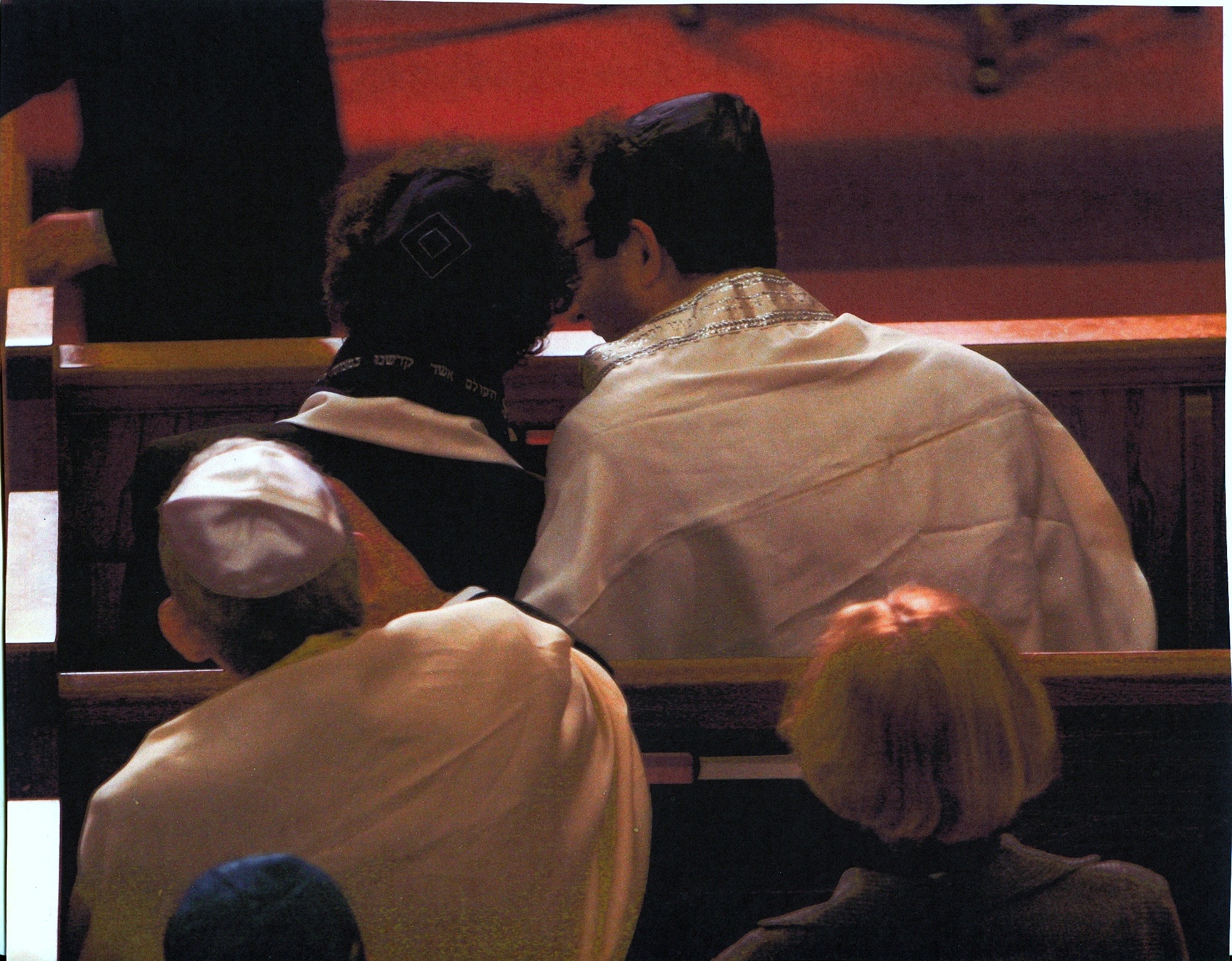
a triptych of prayer shawls: three generations wrapped in sacred thread

it’s as if the voice calls to me from an ancient canyon, a hallowed space carved through time and history. the history of this perpetually-spinning planet and its holy peoples, and, now, the history that is mine, carved across the years.

i yearn to wrap myself in the folds of the prayer shawl. to cloak my shoulders, burrow my arms, to bend my knees and bow down in the way i have long watched my prayerful beloved. a part of me, yes, aches to be enfolded, to feel the soft threads against my bare skin, but more against my heart. to be swept into the incantations of long ago and forever. to confess and call out to the God who is Avinu Malkeinu, “loving parent, Sovereign of our souls,” in the translation of our synagogue’s new prayer book.

i immerse myself in this span of holy time — the days of awe, rosh hashanah, the jewish new year, through to yom kippur, the day of deepest atonement — as if a tide pool that washes over and through me. it’s at once a cleanse and elevation, a surrender to another key, a frequency and melody and language that carries me to another plane. an otherworldly plane.

and yet, it’s one that comes on and through the worldliest of channels: the trip to the butcher shop, the spice jars pulled from the shelves. the chopping and stirring at the kitchen counter. the strolling through the garden, cutting stems to tuck in wide-mouthed jars and pitchers strewn across the table. the gathering of pomegranates, apples, acorns — sweet fruits of the new year, blessed offerings of the season of sacred bounty.

i have always loved the whole-body immersion of judaism, the ancient call to prayerfulness, the stories set in desert and dry land, the image of the sacred quenching that comes through the oasis, the raining down of sustenance from heaven, the voice that calls out, unseen but deeply heard.

these days i seem to be wrapping myself in all sorts of unfamiliar sacred threads, in threads finer-grained in their unfamiliarity, because their language is new to me, the constructions of sentences, the word choice, the tales they choose to tell. i’ve been going all summer to a just-past-dawn service in an episcopal chapel, one presided over and preached by women. wise women. soulful women. women priests.

it is a soul-stirring thing in the landscape of religion to walk into an unfamiliar place, to listen to the unfolding of an unfamiliar script, to feel each word and gesture as if new (because to me it is new). and thus to feel it so deeply fully.

it’s the element of exposure. the eyes-open willingness to surrender. to submit to that which by definition is foreign, uncharted, able to come up and grasp you, unsuspecting. nothing’s dulled; it’s all bristling, and stands at full alert. you never know what might be around the next bend. and thus you enter wide-eyed, scanning. catching every shift and nuance, passing through the sieve of your soul as if the first rinse.

so it’s always been for me in the folds of judaism, the religion i’ve stepped into because my heart and soul pulled me toward this man who is my beloved, my much-tested companion on this long journey called our married life. i feel it wholly because it’s new to me in so many ways, and now, 30 years after i first stepped — quaking — into my then-beau’s synagogue, its refrains come washing over me with decades of resonance. i find my place, i pull familiar threads round my shoulders, taut against my heart. i am cloaked and covered, kept safe, and free to burrow deep inside, to pore over the holy text, to consider prayers and, most of all, the image of the God who puts pause to the mad dash of the everyday. who awaits our urge to surrender. to bow down and pay attention. to hold high the sanctified blessing of the gifts that abound at the cusp of this new and holy year.

in the cry of the shofar, the coiled ram’s horn that calls out the new year. in the minor chords that rise up from our soul’s deepest depths. in the warm notes of spices saved for now. and in the prayers unfurled in each day of the days to come…..

i find my shelter and my refuge, my call to courage, and the certain whisper of the Most Holy. here, in the soft folds and sacred threads, i pull the prayer shawl round my shoulders. improbably, i tumble toward my heart’s deepest resonance.

l’shanah tovah u’metukah — may it be a good and sweet new year…

have you ventured into a sacred landscape that at first was unfamiliar, and did it sharpen all your senses, and draw you deeper into some universal understanding, some fine-grained sense of holy truths? 

p.s. my friday mornings these days include a drive to the far side of this little town to drop my sweet boy off at the faraway high school campus where he is shepherding the new freshmen into their high school adventures. this puts a bit of a pause in my morning writing, and thus delays its arrival in your mailbox, if you’re one who receives this by e-post. apologies for the delay, but this is my last chance, my last year, of dropping my sweet boy at the schoolhouse door, and i am relishing every drop of it. (even the days when we are running late and i am not quite as “chill” as he wishes me to be….)

hope patrol

yellowboots

i’m just in from searching for hope. my boots are a bit muddy. my fingers are cold. and i’m not surprised to report there were no sightings of winter loosening its miserly grip.

sadly, in my corner of the world there is no snow. no drifts of white. no boughs laden with icy meringue. no fat flakes tumbling, tumbling from heaven to earth.

there is, more than anything, drab brown. not even rich brown. drab. drained-of-zing brown. which, perhaps, is apt description for my soul of late. which is why i was out searching.

thank heaven, the heavens responded last night: posted a nearly full moon, a fat moon, a bright moon, a moon that tonight will glow in all its glory. full snow moon. the moon that marks the arrival at sundown of a jewish holiday i’ve come to love. tu b’shevat it’s called, and it marks “the new year of the trees.” in israel, the holy land where all of these blessings begin, it’s the date on the calendar when vernal whisperings begin. when, if you pulled out your magnifying lens, and tiptoed close to the tips of the almond tree’s branches, you’d easily see the evidence: fat buds, fatter by the hour.

the trees are shaking off their slumber. the trees are stirring toward blossom, toward heavenly perfume, toward fruit. (the prescriptions for tu b’shevat i find wholly enchanting, a four-course feast of fruits and wine, so explained by the kabbalists, those deeply spiritual thinkers who believed that we elevate ourselves by the eating of certain fruits on tu b’shevat. if done with holy intention, they taught, sparks of light hidden in the fruit could be broken open from their shells, freed to float up to heaven, to the great divine, completing the circle of the renewal of life. oh my.)

it’s the eternal rhythm of earth and heavens. the inalterable equation of light from above, and richness from deep down inside the earth. it’s carried us forth, a pulsing pull, from the beginning of time. till now. and some winters — some winters inside our soul — we need surrender to the holy earth, to the rhythms that sustain us, move us forward even when we don’t believe we’ve the energy to lift a weary foot.

this winter would be one of those winters. all around the news is drab to worse. we’ve all been holed inside. and around here not even buffeted by snows, by the glory of an icy-painted window pane. we’re worn thin.

so mother earth comes to comfort us. she offers hope. even when we cannot see it.

back before the winter came, my last act of hope came the day i dropped to bent knee, thrust my shovel in the ground, and tucked in dozens and dozens of bulbs. i’d scanned the nursery shelves for blues and whites, the colors of delft, of old willow plates, the colors of sky and cloud. it’s a form of prayer, i’d insist, to tuck hope beneath the earth, to step away, and await the moment when the surge comes, when the tender determined shoot of newborn green comes poking through the earth. declares triumph. offers proof that hope pays off.

it’s too soon for that moment, as my morning’s patrol has made perfectly clear. but i find hope in other ways. i find hope seeping in through the cracks. do you?

i felt hope last night sitting in a circle of prayerful souls. i feel hope as i watch folks far braver and bolder than me pick up the reins and write the truth. i feel hope as all around i see the humblest among us stirred to action. i feel an awakening, even though it’s not yet the one from down beneath the crust of earth, where all the roots are emboldening, the roots we cannot see.

maybe it’s a blessing that we’re all paying attention, maybe it’s a very good thing that we’re being reminded that a democracy is a fragile thing, a living breathing entity that, like the rhythms of the earth and sky, must be carefully attended to. and we must all hold up our corner of its banner. we must all — by little and by little — find our courage, find our voice, think hard, think critically, employ deepest civility, listen with a gentle heart, and wield the purest acts of justice. and not let go — ever — of plain old kindness. the sort that seems to be rising up in some of the loveliest defiance i’ve ever seen.

come to think of it, that all sounds like hope to me. maybe, after all, it’s out there where the winds blow cold, blow certain. maybe my muddy boots led me to the very thing i’m hoping for.

are you sensing any signs of hope? any stories of pure kindness you’d care to share? the more we hear, the more emboldened we become, i do believe….

couple special intentions on this second friday in february. two dear friends of the chair suffered heart-shatterings this week: deepest prayers to pjt, who lost her dearest best friend far far too soon, and pjv, whose sister — last i heard — is on a ventilator and whose hold is fragile at this point. at my house, we are remembering my papa who died this day 36 years ago. i’ve heard from a few of my brothers this morning, who are all mourning his long absence from our every day. 

if you’re curious about tu b’shevat, i wrote about it here a few years back….

and now we pause for awe…

DSCF1354

the lamb has been ordered. the prayer books, slipped from the shelf. soon, i will slice the pomegranate and begin to count the seeds. are there really precisely 613, the same as the number of mitzvot, or commandments, as the sages taught, as i was told in whispers in a kosher kitchen once upon a time?

i have been curious, asking questions, burrowing into the holiness of the new year, the jewish new year, rosh hashanah, ever since i stumbled on that fine bespectacled fellow in the newsroom so long ago, decades ago now. and because i come to this beginning — this pause to behold the wonder of creation, original creation — with inquisitive heart, because question upon question tumbles before me, because one leads to another and another, i can’t help but be drawn deep into what these days offer: these days offer awe.

they are called, quite precisely, the Days of Awe.

awe, my dictionary tells me, is “a feeling of reverential respect mixed with fear or wonder.”

awe, my etymologists* tell me, has deep roots in fear, and traces back to circa 1300, aue, “fear, terror, great reverence,” earlier aghe, circa 1200, from a Scandinavian source, such as Old Norse agi “fright;” from Proto-Germanic *agiz- (cognates: Old English ege “fear,” Old High German agiso “fright, terror,” Gothic agis “fear, anguish”), from PIE *agh-es- (cognates: Greek akhos “pain, grief”), from root *agh- “to be depressed, be afraid” (see ail). the current sense of “dread mixed with admiration or veneration” is due to biblical use with reference to the Supreme Being. To stand in awe (early 15c.) originally was simply to stand awe. Awe-inspiring is recorded from 1814.

in my own dwelling inside these days of awe, i don’t think too much about fear. i tend toward wonder. the God i know and sidle next to is not one who makes me tremble. truth is, i’m most myself when i draw deep into the hollows of God. when i feel myself wrapped in the arms of the one who gave me breath, and question, and proclivities for awe.

because this pause for holiness is at once still new to me, and now familiar, because in many ways it’s always felt as if i’d been waiting for reason to hold up these days, to hold up these autumn’s-coming hours, i walk through them with all pores open. i love the pungent notes that will rise up from the pot on the stove, the one where lamb simmers alongside onion and celery and garlic, before the apples and raisins and cinnamon settle in. i love the way the molasses morning light pours across the page. i love each sentence i find on the page, especially the ones that startle me, give me pause, give me much to think about during the long hours in synagogue, during the long walks that will punctuate the pause, the anointing that makes the days of awe unlike ordinary time.

because i am always, always drawn to the sage of all sages, abraham joshua heschel, i pulled him, too, from the shelf this morning. i’ve been filling the shelves with heschel for a long long time. even before i knew i’d be the one to share my husband’s bookshelves.

this morning i found this from heschel, along with the pages of prayer that we will tuck under our arms and carry to the pews where the prayers will come. because it speaks to all of us who are inclined to turn in, to refuel in the depths of quietude, i share these fine heschel thoughts as something of a blessing for these days when we pause for awe.

here’s heschel, from “On Prayer,” found in the collection, Moral Grandeur and Spiritual Audacity: Essays, by Abraham Joshua Heschel, edited by Susannah Heschel (Farrar, Straus and Giroux, 1996):

Prayer is not a stratagem for occasional use, a refuge to resort to now and then. It is rather like an established residence for the innermost self. All things have a home: the bird has a nest, the fox has a hole, the bee has a hive. A soul without prayer is a soul without a home. Weary, sobbing, the soul, after wandering through a world festered with aimlessness, falsehoods, and absurdities, seeks a moment in which to gather up its scattered life, in which to divest itself of enforced pretensions and camouflage, in which to simplify complexities, in which to call for help without being a coward. Such a home is prayer. Continuity, permanence, intimacy, authenticity, earnestness are its attributes. For the soul, home is where prayer is.

may you find your way home in this sacred span of time, the one that unfolds across the coming hours, the ones i’ve come to know and love as the holy Days of Awe, when i bow my head, my heart, my soul, and pulse with the wonder of creation, and my one small moment to revel in all its glories.

how do you pause for awe? who is your trail guide across the landscape of prayer?

*my etymologists: online etymology dictionary