pull up a chair

where wisdom gathers, poetry unfolds and divine light is sparked…

Category: healing

the not-so-simple tasks of being alive
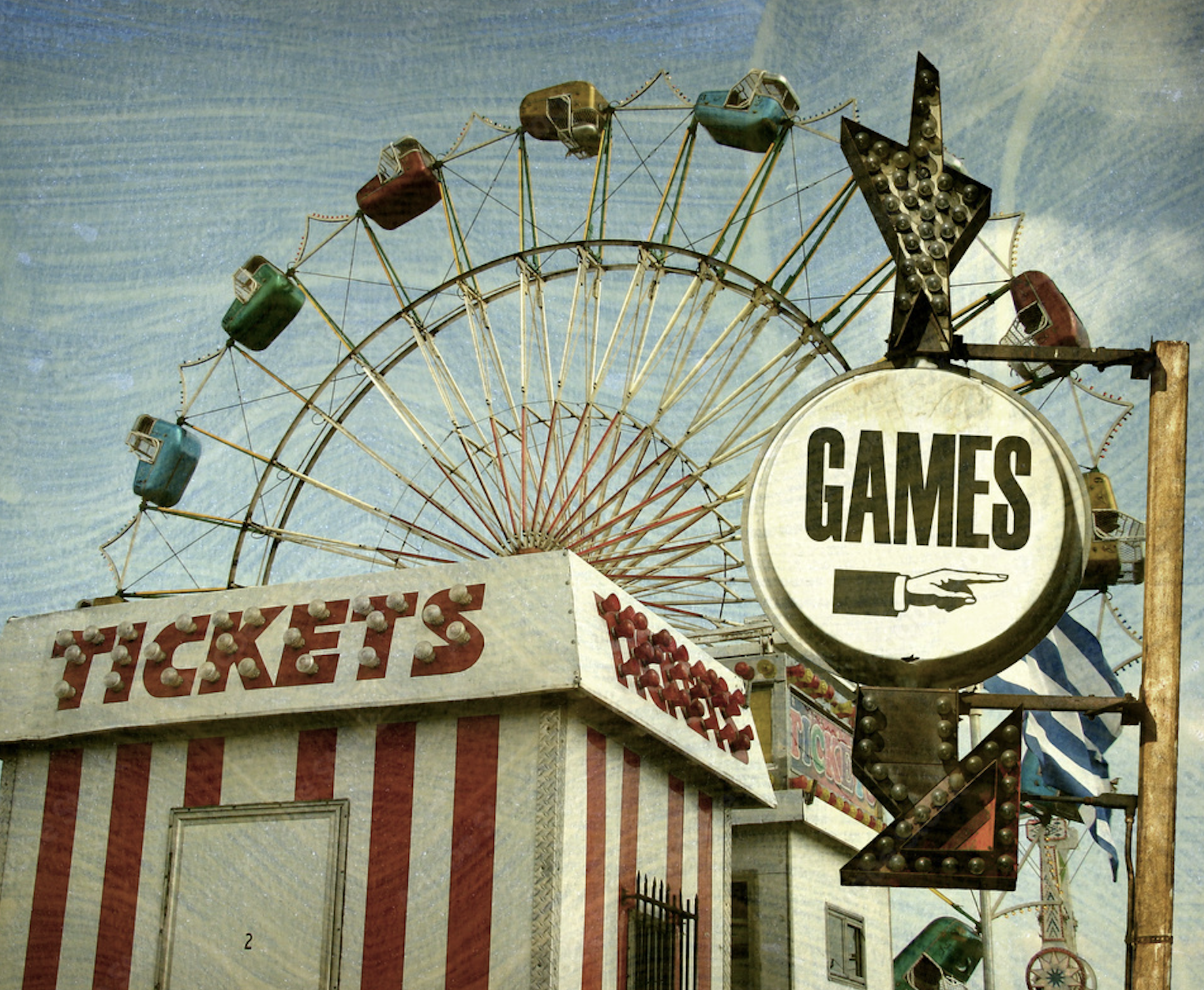
life, sometimes, makes like it’s an arcade of carnival challenges, and to make it to the other side is, in fact, something of a triumph we barely take time to note.

we shouldn’t, though, take it for granted. we are mightier than we think. and there will come times when we truly need to believe how mighty we can be. we’re not here on this earth to dawdle around.

as this week draws to a close, i can testify that these things happened: a new used car was found, bought, driven home, and will soon be ferried to another state; a kid wrestled through the decision of which of three job offers he’d choose, and started the one; husband down for the count with a cough that sounds like it’s hollowing his lungs; cavity filled in the way back of my mouth; latest peek at my lungs behind me (now awaiting results, a fraught interval that always leads to some trembles); and the latest round of edits on Book No. 6 at last sent off to editor (i had to wait till her calendar cleared).

not included in the list, but very much there, are the facts that i spent the week dodging the heck out of whatever virus was mucking up the works, for fear my scan or my cavity filling would get bumped; also, never mind the “check tire pressure” light that went on halfway home from the car lot, and the hurdles to get that untangled. in addition, i arose each dawn, never crashed my own car, swam a few miles, cooked a few mediocre dinners and one or two fair ones, and grocery shopped what seems like ninety-five times.

such is the business of living. each week throws at us a spaghetti bowl of hurdles, some humdrum, some of dimension that leads us to gulping.

it’s the quotidian stuff that comprises our day to day. and to make it through and to the other side is a feat that draws on cords and gears we barely acknowledge. to miss the chance to take note, to not ponder just how resilient we are, just how swiftly we can untangle ourselves from houdini’s chains is to short shrift our capacities.

we live our lives amid stories of what seem insurmountable feats: folks rolling into surgeries that untangle their insides, or shave off a lump on their spine; house fires that leave lives in ashes and soggy remains; kids finding out their cancer is double-D badd. (and those are stories plucked only from the last 48 hours, each one devastating and true.)

the news of the bad guys around us might distract and infuriate and leave us in tears. but the hard work of being human is never far from home. it’s the pit in our belly we awake with, and the headache that drums us to sleep. it’s what we might face before breakfast, and what comes with an unsuspecting wallop midway through the day. it comes in the phone call we never expected, and the one that makes us fall to our knees.

i’m not trying out for a part as the voice of doom here. i’m simply saying what we too often forget: no matter the circumstances, nor the twists in the story, we are all made of strong stuff—stronger than we remember to note.

to get to the other side of the traumas and troubles that hurtle our way is worthy of note, if not ovation. it might do us well to take count of the muscle it takes, and the grit, and the intense imagination, to merely get to the other side.

and here we are, on the far side of all those things that a week ago seemed insoluble.

that alone might stand as proof that even the frailest among us are tough as tough can be. and we can take on just about anything. we are breathed into life with every capacity our lives will demand. and we are living proof of how much we can survive.

you needn’t share this with anyone other than yourself, but perhaps you might find strength in looking back across the arc of your life and seeing what a marvel you are, and all the impossible hills you have climbed. what marvels you the most?
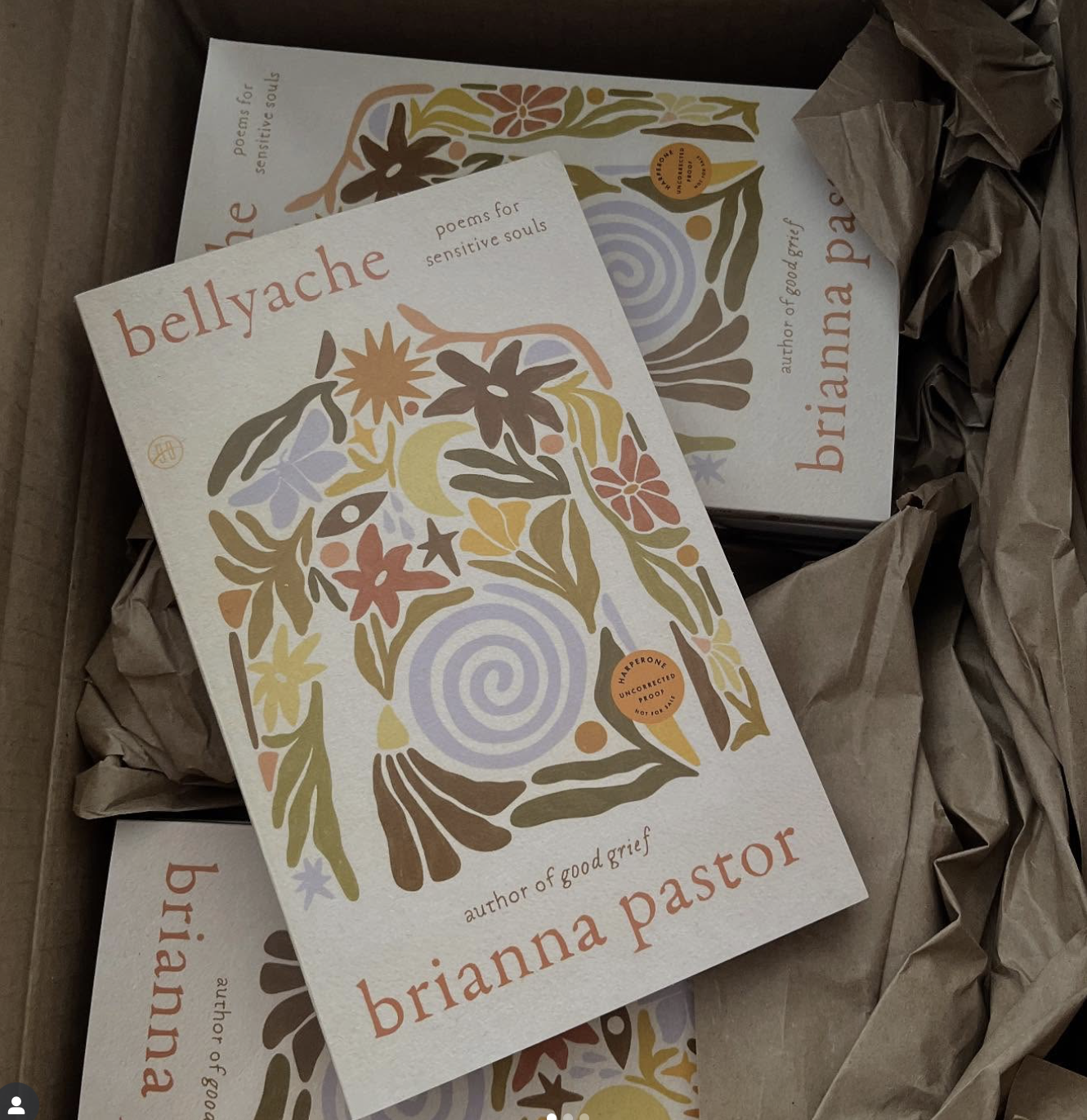

as antidote to all that, i bring you a bit of wonder in the form of the latest book that crossed my transom. it’s titled bellyache: poems for sensitive souls (harper one, 2026), and they had me at the subtitle. it’s by brianna pastor, a poet described in her bio as “a queer writer, empath, advocate, and author of the poetry collection good grief.” the book isn’t due out till february, but i got a review copy, and i’ll share a few marvels here. pastor’s poetry is rooted in childhood trauma and what it means to heal, with sensitivity and love as the non-negotiable parts of the deal. she writes, according to the author note, “about the raw, the uncomfortable, the overlooked, and makes clear that at the root of all things, is love.” it’s not every day that you open a book and find yourself in the midst of a poet whose heart feels so immensely attuned to the pain and the preciousness of tender, tender feeling.

here’s one of my favorites….

and here are two others (the spare simplicity is everything in these love-drenched poems):
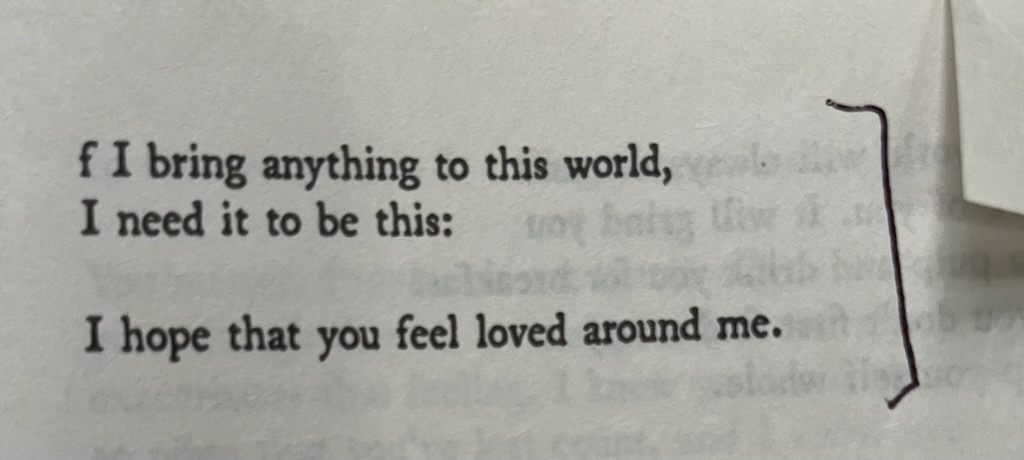
and this:
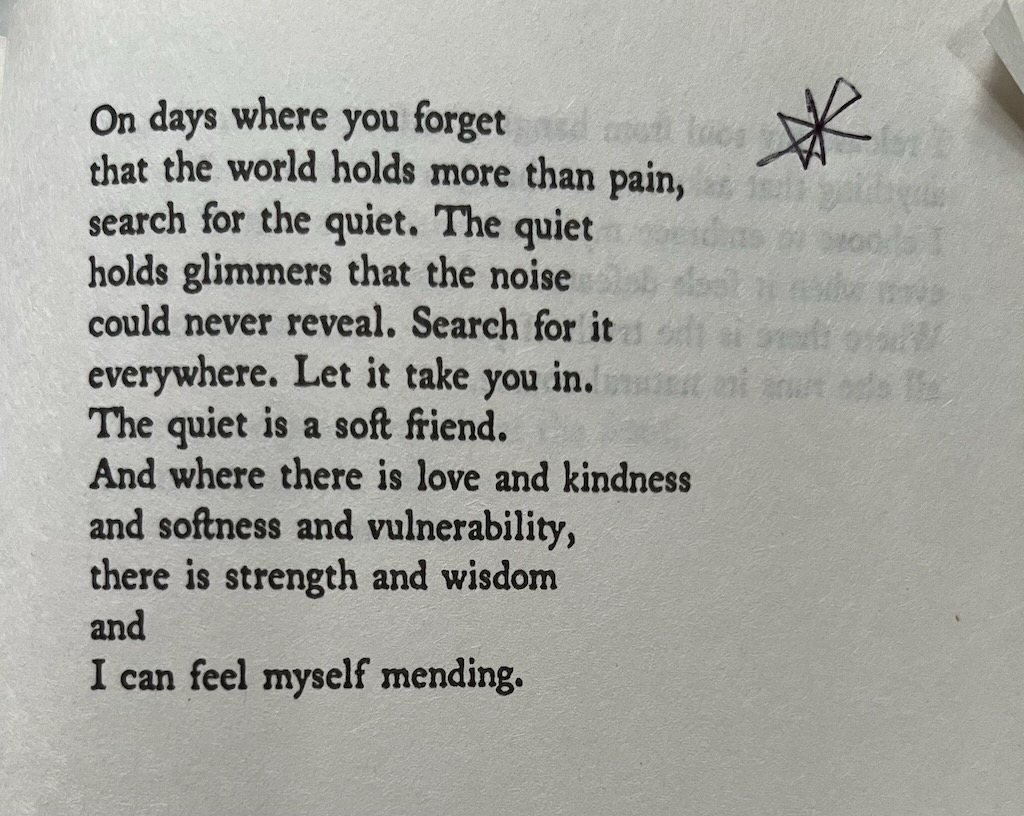
Excerpted from pages10-12 Bellyache by Brianna Pastor, reprinted with permission from HarperOne, an imprint of HarperCollins Publishers. Copyright 2026.

fallowing

fal·low
/ˈfalō/
adjective
(of farmland) plowed and harrowed but left unsown for a period in order to restore its fertility as part of a crop rotation or to avoid surplus production.
verb
leave (land) fallow.
”fallow the ground for a week or so after digging”


i am fallowing. i am also making up a word (a particular quirk of mine), but a word most apt for i use it here to describe the wide-open plain of time when i see no deadlines peeking from behind trees, nor wide gulleys and ditches to swallow me whole. 

after season upon season that taxed me from every which angle, i am all but stringing a wintry hammock between cedar posts in my fir lot and settling in for a long winter’s nap. 

i am fallowing. i am, per merriam webster’s instruction and strict definition, leaving my days “unsown for a period in order to restore fertility” of both soul and imagination.

i have been so thirsty for days that unfurl with little to do, for days that meander from daybreak to starshine. i am, per the law of the fallowing land, partaking of those soulful things that stoke my deepest flickering flame: i am reading deep and thick theological treatises; i am making burgundy stews, and sorting through boxes of long-ago treasures; i am reading old letters, and wiping back tears; i am simmering bones into broth and ferrying batches of soups to friends i’ve long wanted to visit. i am even reciting the occasional poem with my mother. at the moment, i am listening to rain, the fallowest thing i might know how to do.

i am not actively worrying. 

to fallow is to partake of an otherworldliness, at least when you find yourself born into an age that grows increasingly attention-deficient. when the background noise is incessant. and so little of it sustenant. 

sometimes you don’t realize how deeply you need something till it’s suddenly there in your grasp. and then you can’t let it go. or you hope you don’t have to anytime soon.

advent for me is quieting time. advent ushers in the stillness of winter. advent, i’ve written, is the season of anticipation, of awaiting, of holding our breath for spectacular coming. 

as the darkening comes minute by minute, day after day, the liturgical calendar, prescriptive in its wisdoms, unfurls the sacred instruction: make the light be from you. deep within you. seize the month. reclaim the days. do not succumb to the noisy distraction. 

make your december a blessed one, a quiet one. a stretch of kindled light against the whole cloth of darkness. 

this world is aching, is crying, is calling for even one matchstick of light. imagine if we all struck a match, put flame to wick, and allowed it to burn long through the night. my light + your light + your light would = a light that would make ours one glowing orb. 

the instructive is this, even in fallowing times: one mere droplet. one bare kilowatt of luminsence to shatter the darkness. it’s ours to kindle, to light, to enflame. day by day, droplet by droplet. might we gather our goodness and bring back a flicker of light to this world?

how and where will you strike your match?

when the day calls for a good collapse

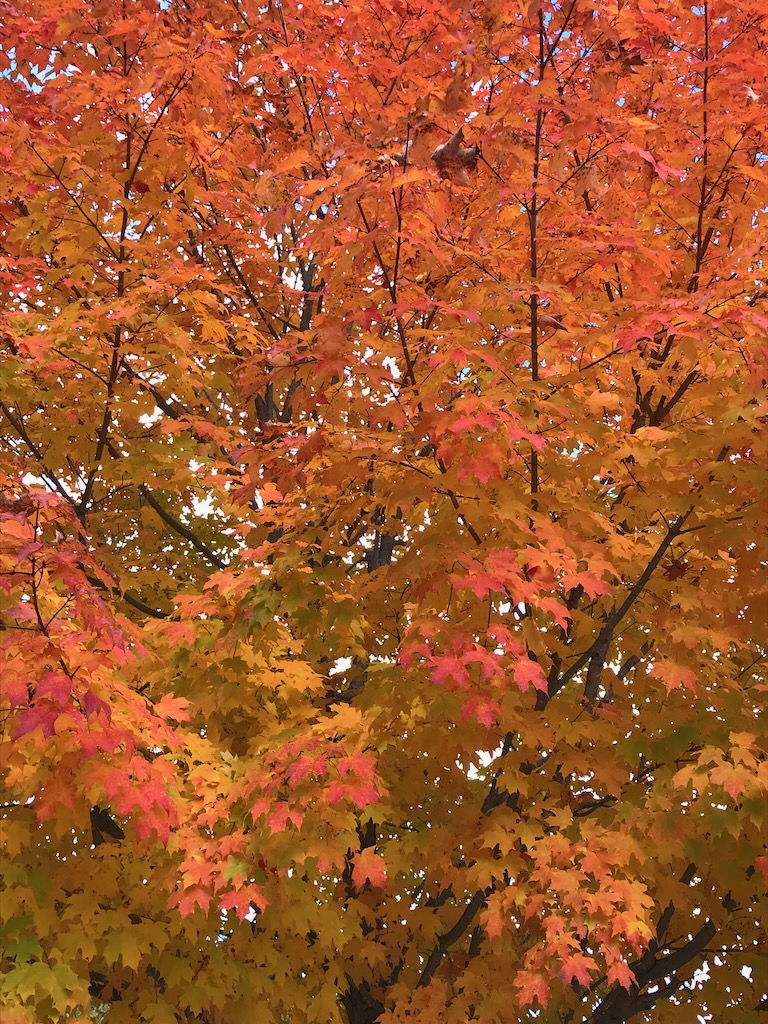
i likened the way i was feeling to all the leaves quaking in the wind all around me, the day a tumbling down of golden-glowing five-point sails, a summer’s worth of sunshine stored and radiant and dropping now to autumn’s calling. 

i felt all aflutter inside. in an exhausted, tank-tapped-out sort of way. in the sort of way that so rarely hits, but when it does, i know to listen. it has been a long, long summer, followed by an uphill fall, preambled by a bumpy spring. and my whole self––all sinew and bone, every ligament and synapse––was calling for a holy pause. 

i listened.

out of fear and trembling as much as anything. afraid i just might topple if i didn’t give myself a sabbath day. sabbath on a thursday. the God who calls to me is not a Day-Minder god. mine is a God who must have looked down upon my weary, worn-thin soul and whispered just enough caution that i couldn’t help but listen.

so this is how my day of good collapse unfolded:

i walked amid the golden-tumbling leaves. i walked and walked. and listened to the rushing wind. i raked my garden, and dug up errant brambles, brambles that had shoved aside the finer, tamer citizens of my so-called farm. i excised the thorny rascals from their elevated plot and moved them down and north to where they might stretch and reach without elbowing out the neighbors. while there on my knees at the raised-bed edge, i raked my hand through spent black earth, the summer’s labor ended. it’s time now for all the loam to bask in winter’s sun, drink up that for which it thirsts. and so i cleared the way, shooshed away the detritus the way a farmer tills her tired, worn-thin field. make-believe is but one of my balms; i’ve escaped into once-upon-a-time as far back as my brain cells have ever stirred.

before calling it a day, i knocked on a neighbor’s door, just to say hello. and down we plopped, a necessary catch-me-up; long overdue. a chat with the good people with whom we intersect by accident of geography, is one of life’s unchoreographed and relished blessings.

and then, at last, i curled into my favorite chair and read and read: t.s. eliot is on this week’s docket. “east coker,” the quartet i read and read, trying to imagine a mind so lush it pours such words onto the page: 

In my beginning is my end. In succession
Houses rise and fall, crumble, are extended,
Are removed, destroyed, restored, or in their place
Is an open field, or a factory, or a by-pass.
Old stone to new building, old timber to new fires,
Old fires to ashes, and ashes to the earth
Which is already flesh, fur and faeces,
Bone of man and beast, cornstalk and leaf.
Houses live and die: there is a time for building
And a time for living and for generation
And a time for the wind to break the loosened pane
And to shake the wainscot where the field-mouse trots
And to shake the tattered arras woven with a silent motto.

it’s a poem that fits the day, the week, the season’s turning. and not only for its mention of the late november (a couple stanzas on). i find the sacred text of poets long-ago to be, at once, elixir and ablation. i find healing there, deep amid the stanzas. curled up, limbs tangled like an autumn vine, as the arc of sunlight rises, falls, and rises once again…


the world is testing us, all of us who can’t abide the horrors. and so i found solace in the words of  the late, glorious, raspy-throated leonard cohen who proclaimed this:

“I wanted to stand with those who clearly see G-d’s holy broken world for what it is, and still find the courage or the heart to praise it.”

Leonard Cohen

and finally this one short paragraph might hold more than enough to think about through the week of gratitudes ahead…

I have been thinking lately about how the search for God and the search for our deepest selves ends up being the same search. This insight is not unique to me, but it has become truer for me as I’ve grown older. Teresa of Ávila often expressed the wonderful idea that one finds God in oneself, and one finds oneself in God. Both are true! And when one experiences this and discovers one’s chosenness and inherent belovedness, one can rest deeply in it. Indeed, that is a great spiritual gift of contemplative seeing.

—Richard Rohr


neither last nor least, happy 93 to my mama, who has fought hard these past many weeks to shuffle on again. and so she is—daunted, yes, but not surrendered. i could have written a meditation on my mama, but she much prefers to be out of the spotlight, at the edge of the crowd. i will say that as i roamed my mama’s house these past few alone times, browsed her bookshelves, plucked a tome or two, i’ve been struck––deeply––by the many titles she has saved that are ones i cannot wait to take to heart. eliot’s four quartets among them. the complete works of robert frost. botanical shakespeare: an illustrated compendium. i am so so grateful for this gentle chapter of my mother’s life. when she is harbored well in a lovely place and we just might have time to learn another thing or two about each other’s souls. i love you mama, in case you’re reading this. xoxoxo

how might you choreograph a day of good collapse?

praise song for black-eyed susan

should you poke through the lore-and-legend files of the black-eyed susan, that luminescent exclamation of the august meadow, you’d find it’s long been treasured for its curative charms. the keetoowah peoples (formerly known by the name cherokee, which translated to “people who speak a different language,” which begs the question who’s the different one?) squeezed juice from the roots to cure an earache. a tea made from dried leaves served as a mild diuretic; in other words, it made the bloat go away. and the native peoples of my neck of the woods, the neshnabék (formerly known as the potawatomi) chased away a cold with the ooze they squeezed from black-eyed susan roots. the anishinaabe (a name that means “the good humans”) used it as a poultice against snake bites or open wounds. 

i’d like to amend the apothecary: rudbeckia hirta, it turns out, is the perfect balm for rinsing away whatever hurts you deep inside. and i mean the sort of hurt that won’t show up on x-ray, nor splotch a purply bruise on flank or limb or bum. in other words, the black-eyed susan just might be the original pick-me-upper. especially when those nodding heads embroider the banks of a ripple-less pond, especially when their cheery saffron heads stick their necks out as far as the eye can see.

i stumbled onto such a swath this week, after days and days of poring over medical journals that must have been quick-sinking me into summer’s gloom. i’d not known quite how much i needed a spoonful of black-eyed whimsy till it unfurled before me, and far, far beyond me. but once i crouched down low, once i spied the bumbly bees doing their doh-si-doh and la-dee-da, poking their probisci into pollen pouch upon pollen pouch, i found myself entranced. and might have plopped myself permanently amid said swath, except for the fact that chicago’s finest would have given me a chase come the closing hour of the grand old park. 

i can’t quite put my finger on whether it’s the hoop skirt of golden petals or the way the fuzzy black-eyed dome periscopes up the middle, or the way the flock of them insistently interrupt the summer fade to jolt us back to joy, but there is a certain je ne sait-something that stands tall and wafts my way, and ever makes me break into a jolly when i come upon a black-eyed susie. 

maybe the other day it was the unendingness of it all, the exuberance of earth, rising up and rolling out the golden carpet, one french-knotted with those black-eyed buttons. it was as if the earth was daring me to laugh, to set aside my worries and my dread, to roll with what it offered: it offered stubborn testament to holy hope. it all but rubbed joy in my face, plucked the weight right off my soul, shouted in its earthly way: ”be not afraid; this here’s a world where skies turn pink at dawn, and posies rise in paint-box colors.” 

the black-eyed susans got it done. and thus i poked around, to see what else i just might learn while traipsing by their beds.

with one of the more curious common names among the prairie inhabitants, i exercised my curiosities and found out that the name traces back to an old english ballad, one penned near the dawn of the eighteenth century (in 1720, to be precise) by a fellow named john gay. it tells the sad, sad tale of a lovelorn lass (aka susan) who leaps aboard a fleet of moored ships soon to set sail for battle. she’s desperate to find her lover (a sweet fellow by the name of wiliam, the tale so goes) before he shoves off to sea. with tears spilling from her dark, dark eyes (here we find the black-ey’d bit), she cries out his name, he hears her from high above the ship’s yardarms, and, don’t you know, he scrambles down to bid his susan one last farewell. and so it goes in “sweet william’s farewell to black-eyed susan,” the first stanza of which rolls out like this: 

All in the Downs the fleet was moor’d,
The streamers waving in the wind,
When black-ey’d Susan came on board:
Oh! where shall I my true love find?
Tell me, ye jovial Sailors, tell me true,
If my sweet William sails among your crew!

never mind that love language of the seventeen hundreds all but drips with sticky treacle.

and here’s a gardener’s tip to go with it (cuz we never stop pouring it on here at the chair!): it’s said that if you seed wild Sweet William (Dianthus barbatus) with Black-eyed Susan (Rudbeckia hirta), the pair will bloom at precisely the exact the same time. forever twinned, the star-crossed, black-eyed lovers. 

so goes the etiology of the common name, and now for a bit about the latinate, the rudbeckia hirta, so named by the great father of taxonomy, carl linnaeus, who tidily ordered the world of nature, dividing and naming every which thing according to genus and species. 

as these things go, there’s always a backstory. and it’s all in who you know. in this case, before hitting it big in the taxonomy department (binomial nomenclature, his claim to fame), it seems mr. linnaeus needed a little side job. a professor at uppsala university, a school founded in sweden in 1477, a professor by the name of olof rudbeck, was in need of a tutor for his three children, and, in 1730, he hired linnaeus to do the job. linnaeus returned the kindness years later when he conferred immortality on his boss, the good prof, by pinning his name to the black-eyed beauty. as andrea wulf explains in The Brother Gardeners: Botany, Empire and the Birth of an Obsession: “For his old teacher Olof Rudbeck, Linnaeus chose the popular Rudbeckia. The tall flower reflected Rudbeck’s stature, Linnaeus explained, and the ray-like petals bore ‘witness that you shone among savants like the sun among stars.’”

its second name, hirta, is latin for “rough and hairy,” which if you rub your nose up against the black-eyed dome is pretty much what you’ll bump into. 

but from here on in, i’m going to think of the rudbeckia hirta as the bloom that makes the hurt go ‘way…

…and there’s pretty black-eyed Susan,

perfect as the night is blue…

George Elliott Clarke, from “King Bee Blues”

where’d you find your joy this week?

should you need your own dose of rudbeckia hirta, i beg you waste no time and  point yourself in the direction of the brilliantly restored north pond in chicago’s lincoln park. it’s breathtaking in the extreme. and will cure whatever ails you. 

p.s.s. the perseid meteor showers — summertime’s biggest celestial splash — hit the skies this weekend. without a full moon this year, the good folk at NASA promise A+ viewing. just find yourself a cozy spot to plop (i’d vote for black-eyed susan proximities), align your spine with the curve of earth and look straight up. they’ll be hard to miss. 

the necessary and somewhat radical act of saying “i have sinned”…

the idea, the sacred idea, is to step out of and away from the worldly, the den of sin and brokenness, the everyday landscape where we knock around and are knocked around, where some days we haul ourselves to bed only after rinsing off the scrapes and skinned knees and slapping on a slew of bandaids. 

the idea is that for one cycle of darkness to light to star-salted dusk, we burrow deeper and deeper into a journey of the soul. to scour every last particle of grit and grime that gets in the way of the blessedness we are, the blessedness we might have forgotten long, long ago. to emerge into a radiance that matches the heaven’s-on-fire setting of the sun.

one great rabbi taught that on yom kippur, the holiest of holy days in the jewish calendar, the day of deep atonement, we are to stand in front of the great mirror, to see ourselves as the divine sees us, stripped of our excuses and rationalizations, our denials and self-trickeries: to see our brokenness, our bumps and our bruises, the hurts we’ve held onto long after expiration date, and, too, to see fully and in fine grain all the tender places and the faintest stirrings of our hopes and dreams, the inkling that we do have the courage — and the grit (the good kind) — to put muscle to the blessedness we’re called to be. 

we begin with confession. vidui, the hebrew word for confessing. we confess in short form (vidui zuta) and, because that would be short-shrifting our fumblings and failings and only half doing the job, we do it again in longform (vidui rabbah), poking around in all the places where we pretend we’ve hidden what hurts, scrubbing out each and every crevice, spilling all our secrets and the moments when we know we’ve stumbled and precisely how we’ve done so.

we live in an age without much confession. extreme defensiveness seems to be the preferred posture, the safer stance, necessary armor in the rough and tumble of this gory global moment. i’m sorry’s are mumbled or slurred. we sneak one in, if at all, and hope it doesn’t halt the proceedings, call too much attention to itself, to our admitting how far we sometimes fall. 

but from the start, the jews — a people with whom i’ve been practicing now for more than three decades, along with my practices catholic and anglican, my practices in all paths toward a life that is holy (and by practice i mean not only the noun but also the verb, to try again and again) — they’ve set themselves apart. they see themselves as a people commanded to strive for holiness, not just individually but collectively. as a people. as a nation. a people with whom God has chiseled out a covenant; follow me and my ways, and I will harbor you and bring you abundant fruitfulness.

and with a nuanced grasp of the innermost self, fluent in the light and shadow of the soul, daring to stand naked, to wrestle and argue with God, jews erect a tabernacle of confession into the holiest of holy days. traditionally, it’s an acrostic, an accounting of sin in alphabetical inventory, spoken aloud and collectively, in the third person. ashmanu, bagadnu, gazalnu, dibarnu dofi…kizavnu, latznu, maradnu, niatznu…we betray, we steal, we scorn, we act perversely…we have deceived, we have mocked, we have rebelled against God and his Torah, we have caused God to be angry with us. 

in a commentary on the acrostic confessional, known as the ashmanu, one rabbi (Alan Cook) writes of how, over a lifetime, he’d squandered his once-innocent alphabet, the 26 letters he’d learned as a child, hardened it, allowed A to stand for apathy, B for brusqueness, C for coarseness, and he prays: “Help me, then, to return to that innocence. / Let the letters be letters once again, / And let them rise to the heavens / And form into the words / That You know I wish to say.”

the words that You know I wish to say…acknowledging how, even before God, it is so, so hard to admit our sins, to put breath to the naming of each and every one. 

it’s that breathtaking truth-telling at the foot — or in the face — of the divine that arrests me. stops me in my pilgrim tracks. draws me deep into the embrace of this ancient people who so profoundly and poetically unspool the most intimate utterings of the soul. makes me certain we are meant to lean on and learn from each other’s most finely, surely trod paths to the mountaintop, the place where the Holiest of Holy dwells. 

i might not make it through the whole alphabet, not in one sitting anyway, but it seems right to try to insert an act of contrition, confession, into the public square of the 21st century in the midst of pandemic, and flood and drought and fire, and never-ending vitriol. 

this tiny pebble i will try to cast, may it ripple at least as far as across this old scarred table. and in the spirit of the ancient peoples who do not flinch, may it plumb true depths and stirrings.

i begin with these words from the prayer book of Yom Kippur: You know the secrets of the universe and the secrets of the human heart. You know and understand us, for You examine our inner lives. Nothing is concealed from You, nothing hidden from Your sight. Eternal One, our God and God of our ancestors, we pray that this be Your will: forgive all our wrongs, pardon us for every act of injustice, help us atone for all our moral failures.

for these sins, our God, we ask forgiveness: 

for the times we avoid and evade, because we’re too afraid to put breath to truth. for being ashamed of who we are, or how we look or think or act, for allowing the self-criticism to serve as excuse for retreat.

for betraying the ones we love, and all who need an ally.

for calculating kindness, measuring it out for motive, rather than its own unfettered sake. for cold shoulders when we couldn’t — or wouldn’t —muster warmth.

for denying what we believe in, too spineless to stand with our convictions.

for eclipsing the words, or thoughts, or gestures of those who share our space, in those moments when we fail to simply listen, to turn the stage to those whose voices aren’t so loud, so certain.

for falling short a hundred times a day — or hour — because we sell our own selves short; the sin of false modesty, a sin of not stepping up to the plate for which we’re made.

for going with the crowd when we know we’re meant to go another way, a lesser trod way, simply because we shy away from stirring any sort of friction.

for hurling hateful, vengeful thoughts at those we deem “against us,” those who overpopulate the public square, who by their words and actions seem hellbent on inflicting pain. and so we justify our sin by deeming them deserving of every vile drop. because we pretend we’re holier.

for ignoring muffled cries from those who are hurting, are lonely, are cast aside, those who seek the simple solace of one warm soul to walk beside. and for inflexibilities, when we can’t bend to whatever life is asking of us, even if it’s the merest accommodation, one that might make another’s day just a little easier.

for jealousies in all their bitter poisons. for judging far too swiftly with far too little evidence or reason.

for kindness we were too lazy to extend. 

for love we withhold, a self-righteous tax we convince ourselves is ours to dole out or deny as we so choose. 

for mindgames we play, locking ourselves inside cages of our own making.

for not noticing the quiet hurt our words or inattentions inflict.

for obstinance, the rigid stance of non-surrender, when simple empathies would unblock a holy current.

for pretense and prejudice, thinking somehow we’re superior in any way, shape, or form.

for quietly shuffling away from rough spots where we might otherwise leave a mark of reconciliation or compassion, or simple healing.

for refusing to unclench our tightly-furled fist, for thinking that to let go is to tumble down a precipice rather than realizing that in releasing we just might catch an updraft.

for sleepwalking through too many days of our lives. 

for time and again falling into the same traps, the ones that hold us back from those tiny fuels that might propel us.

for underestimating ourselves and those who surround us, for not giving the benefit of the doubt and banking on our better instincts.

for venomously casting stones on those who think or see the world in ways other than we do.

for wasting precious, precious time.

for xenophobia, of course, the scourge of casting “other” as “less than.” and turning our backs, closing our doors and our borders, to their agonies and sufferings.

for yoking ourselves to old rhythms that only serve to hold us back, for a stubborn resistance to letting go of anxieties and quirks that chain us to a hollow past. 

for over-zealously chasing after whatever in our lives feels out of reach: be it love or attention, or the peaceful coexistence chiseled out of old animosities.

Avinu Malkeinu, almighty and merciful God, hear our voice, wield compassion, renew us for a year of goodness, let our hands overflow with Your blessings.

amen.

i have to wonder if the constraints of A,B,C, eclipsed a more nuanced confession, or if the alphabet nudged me toward nooks and crannies i might have overlooked. but more importantly:

what alphabet letter, what frailty or failing, might you step forward to confess, to form the words so hard to say?

anointed places

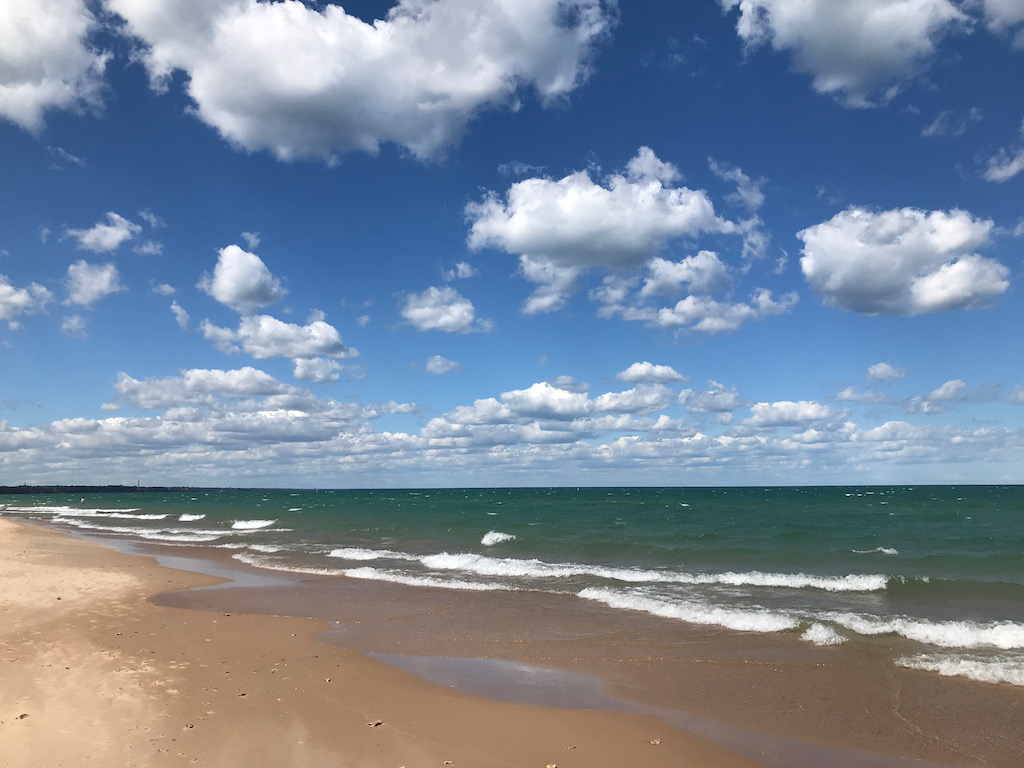
it’s as if someone’s set a buzzer that must go off at asynchronous times–could be twilight, could be the middle of the afternoon, could be on the verge of thunderclap, or the first dappled stitches of starlight–and deep inside me there is some cord that must be yanked. suddenly, i am turning toward the east, propelled to the water’s edge by wagon, bike, or soles. it’s the vast, vast ever-shifting canvas, where lake and sky, earth and heaven, never cease their stagings.

in these weeks and months when what’s bottled up inside–the worldly angst, the brokenness in all its iterations–when all of that feels so compressed, so hungry for release, relief, it’s the expanse, the i-can’t-reach-the-end-of-it of heaven’s vault that offers ablution. that rinses out the muck. and fills me once again with hope, with depth, with the unshakable sense that i am held in the very palm of God. and all that worries me, weighs me down, is drained away.

there’s the play of color, a color wheel of endless turning, from indigo to amethyst, cerulean to aubergine, and at the dawn and dusk, who’s ever behind the curtain hauls out the rosy tray, where the sky ignites in shades of flame. there’s light and shadow, too. the sky roils in charcoaled turbulence, storm churning in the distance. the sun illuminates the lacy edges of a cloud. sun and clouds and sky in eternal choreography, not one scene ever plays on rerun.

it is, by definition, an anointed place, a most holy place. a place where the nearness of God, the encircling of that infinite tenderness, pours out from some unseen vessel. holy unction, indeed.

when i was all of eight, in Mrs. Bishop’s third-grade religion class, learning all the things that make a catholic catholic, i always tripped over the one of the seven sacraments they called extreme unction. it sounded downright scary. i knew that oil was involved. i couldn’t tell you if it was safflower or olive, but it was oil, and it was poured on you in the hour of your direst need. at the cusp of dying, among other times. getting blessed with water was an everyday matter (to this day i lurch toward any holy water basin, splash fitfully and let it rain sloppily down on me), but getting blessed with oil was like calling in the light brigade. it was reserved for Serious Stuff. in my third-grade vernacular that probably meant whatever was worse than falling off your bike, or getting pushed down on the playground, when Mrs. Dolder the school nurse, pulled out that stinging bottle of mercurochrome, its iron bitterness running down your leg.

thetis anointing achilles

turns out, oil’s claim to holiness is an ancient one. it’s there in the early pages of the bible, not long after genesis. thought to be the medium through which God’s blessings are conveyed. it’s what makes a king a king, apparently. (well, that and a crown.) jews and egyptians reached for olive oil (poured from a ram’s horn). butter is the anointment of choice in hindu blessings. a newly built house is smeared with it, so too are those thought to be possessed by demonic forces. indigenous australians believed that if they smeared themselves with the intestinal fat of a dead person they would absorb that person’s virtues. (i’ll pass, thank you.) arabs of east africa rubbed themselves with lion’s fat to muster courage. and in greek mythology, the sea nymph thetis anointed her mortal child achilles with ambrosia to make him immortal. (another telling of the myth has thetis dipping achilles in the waters of the river styx, but she failed to dip the heel by which she held him. and we all know what happened to achilles’ heel).

lest i get too far sidetracked by the oily substance of anointments, let us leap back to a consideration of a place that’s anointed, even if not a slick. a place the celts would call a thin place. where the opening to heaven is so thin as to be not there. in other words, it’s where you go when you need to fall into the arms of God, or whomever you think is out there trying to hold us together.

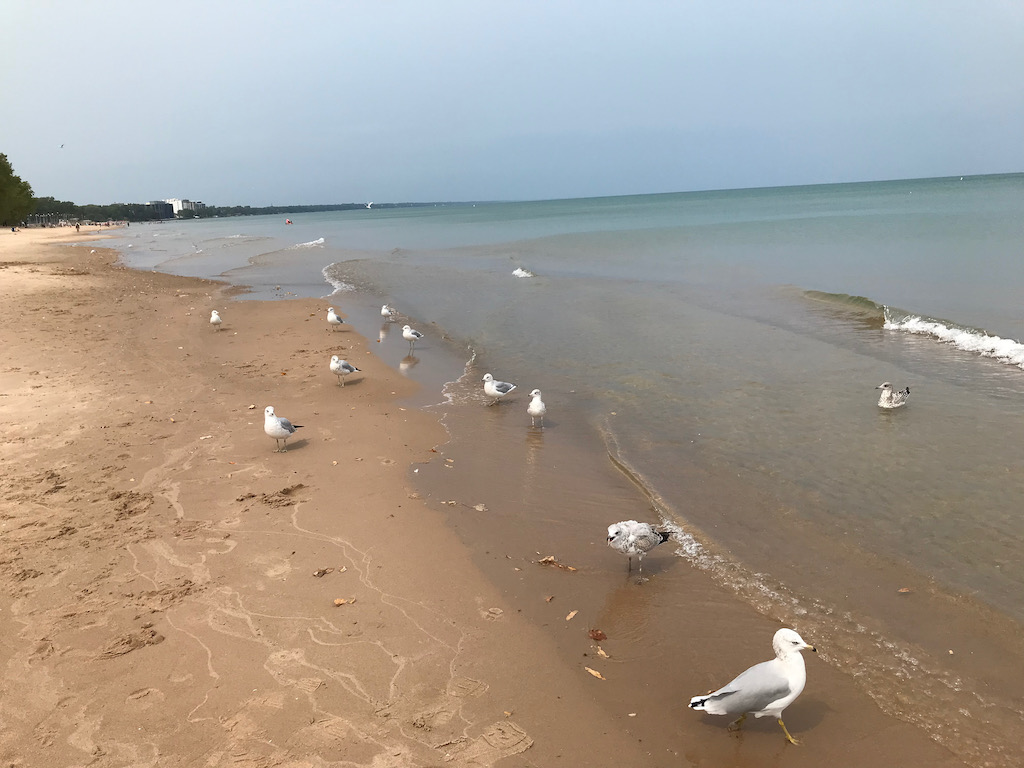
walking along the water’s edge, dodging the tickle of the still-warm undulations, dodging the squawky gulls, it’s all but impossible not to be swept into the game of it, the deep-down child’s joy of it. nearly every time, i hear the sound of someone out-loud laughing; i look around and figure out the sound is me, it’s coming from my bellows. be it a brisk constitutional or a lazy jaunt, those sands, those waves, that sky, soak up what ails me every time.

i’ve not always been a shore girl. more often i’ve found myself tucked inside grassy coves, leaning against the rough bark of oak or cottonwood, or plopped on a log deep in the woods. i’m one for making myself all but hidden, a tiny dot, in the all-engulfing canvas of the never-ending curve of globe. but there is a singular prescriptive that comes where water plays, and where the sky can’t keep from turning. it’s a wide-out-in-the-open sort of place.

it’s cast a holy spell on me. and i’ve no intention of rubbing it away.

what’s your anointed place?

and should the woods be on your anointed list, i share this meditative walk in the woods from my wonderful friends at orion magazine. (it’s a 20-minute enchantment, sung by the Crossing Choir of philadelphia, sure to lift you to some ethereal plane.) it’s described thusly:

IN THE DEPTHS of the pandemic, when choral groups could not safely gather to sing indoors, The Crossing Choir of Philadelphia took their singing outdoors, into parks and open-air venues. Last October, they premiered a work entitled “The Forest” in Bowman’s Hill, a stand of mature trees, many over 200 years old, in the Philadelphia neighborhood of Mt. Airy.

During the performance, the singers, unmasked, stood far apart among the trees, their voices amplified by specially-designed speakers, while audience members walked at safely-distanced intervals along a thousand-foot path through the forest.

quite simply: asking for prayers.

it dawned on me that after all these years and all the threads woven here at this old table, we’ve something of a prayer shawl, even though there might be more than a few who gather here unbeknownst to me. so i realized i can quietly ask for prayers, even just one or two up the old prayer chimney, for my beautiful mama.

my fiercely independent 90-year-old mama, the Original Mother Nature, Barbara the Wiser, was in a terrible accident driving home from morning Mass on Easter Monday. the day before she’d been hiking in the woods with a friend, looking for bluebirds, scanning the marshland for dogtooth violets and trillium, the wild and tender things of the woodlands.

but on Easter Monday morning, driving from church to home, her car was totaled, and she was taken by ambulance to the hospital where so many important things in our life have unfolded (my beloved little brother was born there, my father died there). in the passenger seat of my mama’s car had been the canvas bag of church altar-cloth laundry that my mama has washed and ironed for years. that canvas bag of church laundry was the only thing my mama carried with her in the ambulance. when i got to the emergency room, there were the LL Bean jeans she’s worn for a couple decades (and i mean the single pair she’s worn, not merely the brand she’s always worn), there was her father’s pale blue golf sweater (the one she wears for an extra layer of comfort, the hug with sleeves), the pink polo shirt, and, laying quietly atop the neat little stack of her “uniform,” the canvas bag of white linen rectangles, each stitched with a simple red cross.

(that still-life, folded and stacked, is now one of the freeze frames of my mother’s life i will forever carry with me….the ambulance, and the instinct to reach first and only for the bag of church laundry. those Sacred Heart nuns certainly drummed in the lessons on devotion, there in the convent on the hill in Cincinnati where my mama grew up.)

my mama is hurting terribly, and i am asking for a prayer. it will help her, and it will help me and my four beautiful, beautiful brothers, all of whom are once again tightly and lovingly woven together, each carrying one corner of the let’s-get-mom-through-this banner.

i wrote of my mama on her 90th birthday last november, and i am going to paste a few of those paragraphs here, just so you know a little bit more of the woman for whom you are praying. during all these months of COVID, the one thing my mama — who until COVID volunteered somewhere (soup kitchen, nature preserve, botanic garden classrooms) six days a week — the one activity she’s kept at (even a little this week with her achy achy body) was knitting prayer shawls for whomever needs to be wrapped in prayer, and blankets for babies in faraway desperate places. someone so good shouldn’t be in such pain — but of course even as i type those words i know that’s not how it works; it’s simply the truths of what i hear myself wishing…..

here are a few bits about Barbara the Wiser, for whom i ask you to offer a prayer….

she has long been our matriarch, our mother, our chief instructor in living a good and simple life. hers is the code attributed to st. francis: “preach the gospel at all times; if necessary, use words.”

in our house, she’s grammy. there’s even a day of the week named in her honor, grammy tuesday, a title she earned by motoring to our house every blessed tuesday since our firstborn was born in june of 1993. she played the role of “nanny” one day a week, when he was a newborn, a toddler, straight through till the day we sent him off to college. when he was eight, and we found out he was getting a brother, grammy doubled her workload. without hesitation or pause, she announced she was coming on thursdays as well. over the years, her nanny equipment expanded to include the blue plastic cooler she filled with the fixings of whatever she’d decided we were having for dinner, one of a rotating cycle of circa 1970s dinners. if you trace back the roots of her cooking you might discern that she was the wife of an ad man, an ad man who counted campbell’s soup among his quiver of clients, and thus my mother might only be bested by mr. warhol when it comes to making the most of a soup can.

because my mother is all action, few words, the scenes that flash in the carousel that plays in my head — just like the home movies that clackety-clacked through the reel of the kodak projector she’d set up in front of the living room fireplace, every once in a sunday — are utterly silent.

watching them now, on the eve of the dawn of her tenth decade, they still take my breath away.

there’s the time at the kitchen door, when the long black limousine from the funeral home idled in our circular drive, and my mother (a widow at 50) in her camel hair church coat gathered the five of us (one girl, four boys in her brood), and intoned: “make your father proud.” she’d meant in the church where we were headed for his funeral, and the cemetery afterward, but i’d always taken it as instruction for life. and i’ve tried, oh i’ve tried. 

there’s another time, in a misty winter’s drizzle, when we were motoring into the cemetery where my father was buried, and we were carrying a tiny wooden box, inlaid with brass. inside was the tiny, tiny baby girl i’d just miscarried. we’d decided to bury her beside my father, and as we drove into st. mary’s cemetery, there was my mother, standing above her husband’s grave, her foot to the lip of the shovel, already digging the hole where we would lay our baby to rest, forever atop her grandfather’s chest. 

there are even — more rarely — silly times: squirting a can of whipped cream into the mouths of my boys. squirting it into her own. when i was little once we stayed up late, my mother and i, making fudge from a box. and then, leaning against the fridge in the dark, we cut out piece after piece in the moonlight. we giggled.

my mother has taught me to fix things myself, to sew on a button, to darn the holes in a sock. my mother gave me ironing lessons there at the board she unfolded in the kitchen, sprinkled with water doused from a recycled 7Up bottle she’d fitted with a hole-pocked cap, the better to moisten your wrinkles. she taught me how to get a sharp enough crease on an oxford cloth shirt, or a pillow case, should you be so inspired. (i’m usually not.) and right there at that ironing board, on a day without school, she taught me all about “the birds and the bees,” (her words) and the womanly cycle certain to come.

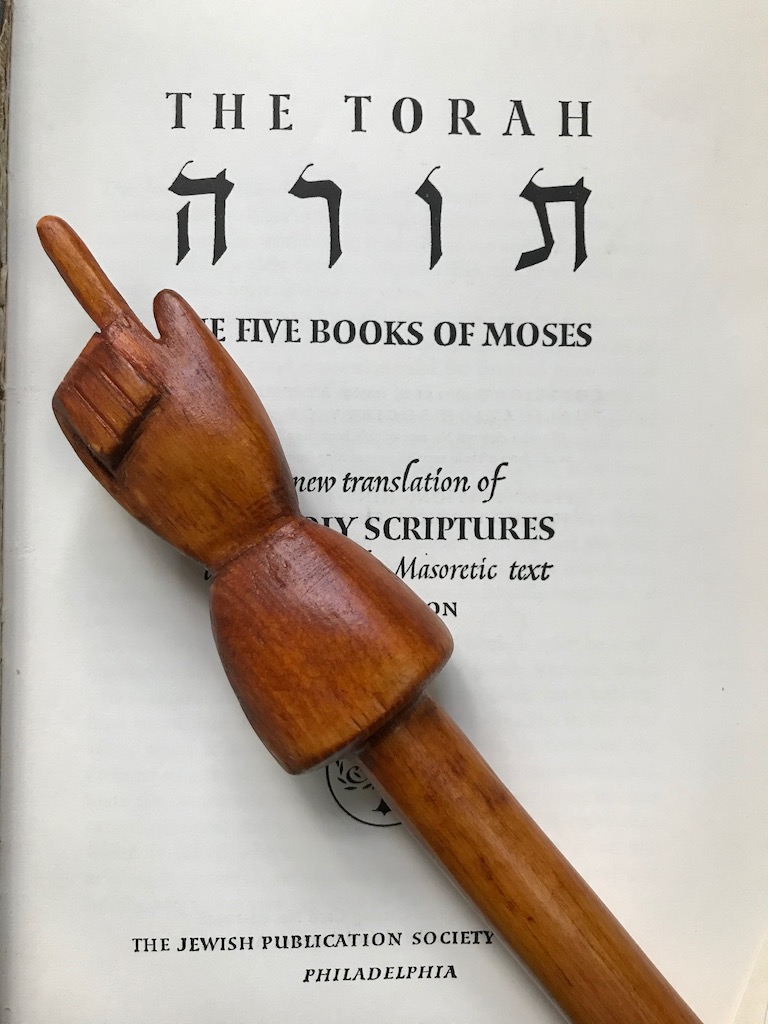
my mother taught me to love birds and walks in the woods. my mother woke me up most every school morning trilling lines from robert browning, robert louis stevenson, or emily D, her beloved belle of amherst. my mother taught us, over and over, not to ever let the church get in the way of God. i took it as gospel. when i came home with my jewish boyfriend, my mother who’s gone to morning mass every day of her life, pulled me aside to tell me he was a keeper. she even pinned on him her highest medal of honor, “he’s an old shoe,” she exclaimed, citing the holes in soles of his penny loafers, and the falling-down hem of his seersucker shorts. when our firstborn — the old shoe’s and mine — turned 13, and became a bar mitzvah, my mother spent months carving from wood the yad, or pointer he would use to trace the lines of the hebrew scroll as he read from the Torah. 

my mother, by many measures, has not had it so easy. she’s borne heartache enough to crush a flimsier soul. but my mother — whose daily uniform of baggy, faded denim jeans, sweatshirt, and lace-up thick-soled shoes bespeaks her character — is nothing if not sturdy.

but even the sturdy, sometimes, feel broken. and this morning, that is my mama.

with all my heart, thank you for whispering a prayer for comfort and healing for my sturdy, sturdy mama. she’s the one who needs to be wrapped in the prayer shawl today.

xoxox and bless you for doing so……

we need to get her sturdy again. and for now, my old nursing degree is coming in mighty mighty handy.

things that go bang in the night.

IMG_0323

until the rat-a-tat-tat, it had been a silent night. not even the usual tossing and turning. but then the big bang came. sounded like gunfire. or maybe a long string of firecrackers. i did what any night-rousled someone would do: i flung back the sheets and leapt toward the window (not such a smart idea as i look in the rear-view mirror).

peering into the murky darkness, trying to make out shapes against the silhouette of the street lamps, i couldn’t see much. only what looked like lots and lots of leaves.

so i did what any half-witted, mostly-asleep someone would do: i ran outside.

it took a half circle of perambulation, as i walked down the bluestone walk and into the street, to realize what was appearing before my still-blurry eyes: a good third of our giant locust tree had decided to fall to the ground, and on its way down the rat-a-tat i had heard was the sound of the big ol’ locust shaving off half the parkway maple.

oh, lordy.

now i am a girl who loves her trees. i come to befriend them. consider them living, breathing specimens with layers and layers of stories. of history. of keeping wise watch on all that unfolds below and above and within. and this particular tree is the muscular one, the centerstage one that, long as i’ve known this old house, has harbored and shaded the front. it’s as if the big old tree is reaching its arms round the house and all who dwell there. it stands in the way, as if the sentry dead-set on keeping us safe. in fact, i’m certain i fell in love with the tree at the very same instant i fell for the house. likely before, since i had to walk beneath and around that fine lacy-leafed locust on my very first traipse up the walk.

it’s the tree whose branches — in the years when it’s grown inches and inches before we’ve brought in the trimmers — tap against our bedroom window panes, and let us know when a storm is stirring up trouble. it’s the tree whose filagree makes for the lacy dapples of light and shadow in the window seat that’s held me through long hours of long-distance phone calls with the boys i so love, and pages and pages and pages of books (i think of it as my “therapy nook” as emphatically as i call it my book nook). it’s the romping ground of sparrows and woodpeckers, and the high-up perch of the cardinal. it’s where the squirrels, whole generations of squirrels, build their nurseries and stash their winter’s larder.

it’s the tree that has long made my night sky an alchemy of heaven and earth, as the stars play peek-a-boo between the tossing branches and leaves.

and now there’s a hole in my sky.

that night, the night of the big crash-bang-boom, our street looked not unlike a crime scene: the cops rolled right up, set flares glaring into the night, all around the perimeter of the tree now sprawled clear across the street. the guy with the chain saw came too, once he was roused from his sleep, clear up in wisconsin he told me, as i tried to fill his mug with coffee. some of the neighbors came too, all of us decked out in our jammies and various iterations of footwear. (one came in big rubber rain boots, i — stupidly — left my flip-flops behind.)

the next morning, still another big branch came crashing to the ground. (i lost another night’s sleep, tossing and turning over the what-if’s with that one, knowing how often our sidewalk is filled with nannies and babies en route to the park down the lane.) the tree gurus are pretty sure the first fallen chunk of the tree had been holding up the one that fell hours later. and everyone’s certain the big tree is strong as it’s ever been. (last winter an old oak in the yard next door fell to the ground, pulled right up out of the earth, and the tree man told me our big locust likely lost one of its buffers from the wind, and now took all westerlies straight on, thus shaking loose any precarious limbs.)

but the part where the story turned decidedly sweet, the part where it really got me to thinking, was what happened once the sunlight came up, and i sent a note off to my faraway boys, to let them know what had happened during the night.

you would have thought an old friend had died.

both sent notes with lots and lots of exclamations. and not the happy kind. both wanted pictures. both knew exactly how shaken i was — because, suddenly, they were too.

it made me think about home. and how even when you’re no longer there, day after day, night after night, you expect it to stay just as it was. home is defined by a curious set of particulars: the creaks in the stairs, the way the bathroom window always gets stuck. the tree that’s always out front.

and when the picture is changed — even when you’re far far away — it takes a bit of realignment. our world is not right. not right away anyway.

so it is with our living, breathing, hurting and healing selves. in the course of our lives we take a mighty long string of blow after blow. it starts early on. most of us can’t even recall what first set us to tears. we take skinned knee and knocks to the head. we fall off swings, we tumble down stairs. we take hurt after hurt, and each time — miraculously — we heal. or we regain some piece of wholeness again. we learn to live with the bruise, or the scar. we learn to live with our hearts shattered to pieces. somehow, some miraculous how, we are stitched back together again. we might even forget just how much it hurt. or maybe we learn to remember without feeling the whole of the sting. sometimes, we even realize the horrible, unbearable hurt has opened the door to some unimaginable room. when my sweet papa died, i decided not to run off to faraway nursing school. instead i stayed close to home, and learned how to type — and a thing or two about newspaper writing — and there in a newsroom six years later, i met the love of my sweet life. and from that came our beautiful blessed couplet of boys, the ones we call our first and second double-bylines.

the point here might simply be that all our life long we are taking hit after hit, and somehow finding the hope and the faith and the possibility that stitches us back together again: never the same, and maybe just a little bit stronger.

and in the meantime, when i look up into the night sky, from down by the trunk of my big old tree, i see heaven’s dome, more stitched with stars than i’ve ever seen before….

IMG_0330

the new hole in my sky

how have the hurts — and holes — in your life, opened you to wide new starry-stitched vistas? 

the marvel of the capacious soul

i’m convinced that one of the reasons we’re down here on this messy planet, this planet that sometimes feels overpopulated with goons and wise guys, is that on occasion, as we mill about among the masses and misfits, we run into the occasional breathtaking specimen from whom we will undoubtedly learn a thing or three.

i bumped into one this week, and once again i scribbled notes into my chunky fat notebook, the one titled, “how to be a better human. volume 61.”

the most accurate way to phrase it, quite honestly, would be to say that i didn’t so much as bump into him — he’s a time zone away, after all — but rather that this gorgeous soul pretty much flung himself onto the skinny little trail i was traipsing through the day. and it took all of a fraction of a second for me to read his words, feel the breath sucked straight out of my lungs (in that marveling sort of a way), and remember why oh why i’ve always adored him, and would like to be like him when i grow up.

he arrived, my old friend did, in an out-of-the-blue email, one announcing that he — whose wife had died just 10 days before, and whom we’d not seen in years and years — was jumping on a plane to chicago, where he and his wife had lived a couple decades ago, back when both of us were starting out in this experiment called “how to birth and raise a child.” we had all succumbed, his wife and i and our respective mates, at just about the same moment in history. they sped off to the birthing room first, and we followed fairly close behind. then, they sped again shortly after us, so we all spent a few years there cradling newborns, trading tales and names of pediatricians. in fact, the day the chicago tribune decided to unveil a room (more like a rehabbed closet) for “lactating reporters,” my friend’s wife and i showed up to pose for pictures with our little guzzlers well attached (clinging to our shoulders, people; all of us fully clothed and covered, merely suggesting that we young mothers might at some point put down notepads and plug into breast pump (i forsook the whole endeavor and worked from home, with nary a pump in sight)).

i digress.

back to this blessed friend who dropped in this week. he wrote this:

Hi guys,

Corey and I have sort of tumbled into a Chicago comfort trip. He’s there already, and I am flying out in a few hours.

It’s exceedingly last minute, but he and I would love to see as many of you as we can in a gathering of some design. I’ve been thinking brunch Saturday or Sunday, at a restaurant or (if one of you has the stomach for it) a home (I’d ecstatically cover the catering).

Let me float the idea of 10 am Saturday or Sunday. Other times will in truth be tougher (I’ll be doing things with/at the theater, etc.).

Maybe we can reply-all in order to see whether this might work?

I adore you all, and thank you for words and sustenance over months, weeks, and years.

Love,

(old friend)

i should mention that this old friend is a professor of shakespeare in new york city, and from the first day i met him he has used the english language in measures that far exceed just about anyone else i’ve ever known. he matches his eloquence with an effusion of the human spirit that is, frankly, a force of nature. something akin to sharing a room with a hurricane of most glorious refinement.

amid a world of ways of mourning, i was bowled over by this friend’s instinct to surround himself — immerse himself, really — with stories, tears, and laughter. to reach out for old, old friends. to throw himself onto a plane to shrink the distance, to not wait to lather himself in the healing balm, to quite emphatically wrap himself in the company of those who’d lived and breathed the chapters before cancer trod his heart, and stole his lifelong love.

it’s why capacious is the word that best fits his soul, his spirit, the magnitude of how he exercises love and life and full-throttle humanity. “having a lot of space inside; roomy,” the pocket OAD tells us. my friend is roomy, all right, and he makes room for the whole whirling wild climate zone of grief and grieving.

i imagine that tomorrow morning, when my kitchen is filled with lox and bagels and stories tumbling atop stories, when the coffee flows endlessly and big bowls spill with the fattest sweetest berries i can find today, it will get messy. there will be rivers of tears. and once or twice someone might laugh so hard they’ll spit strawberry across the table. i’ve been around enough grief to know it’s uncharted.

what i’ve not often seen, and what i love and what finds me marveling, is this old friend’s willingness to plunge right in, to immerse himself in the anguish and the joys that old friends know by heart. almost none of us witnessed up close the past few years of surgery and chemo and the inevitable dying, but we were all there for the thick of what came before — the births, the strollers, the raucous Shabbat dinners, the summer sunsets from their rooftop terrace.

and we have stories in which to wrap him, and tears to bathe his broken heart, and great good laughter on which to lift and carry him.

from deep inside his fog of pain and loss and rudderlessness, he thrust out a hand, and called on an old unbroken circle of the heart. we will hold a shiva here tomorrow. and there will be prayer in the form of story. and the wailing and gnashing of teeth will be shared in the company of those who remember well the days long before the whiff of cancer slid into the room, and took away our old friend’s truest deepest love.

may his capacious ways remind me to never shrink from the confines of the soul so blessedly breathed into each of us at the moment we were first imagined, and sent forth to fill this planet…..

who are some of the ones in your life who teach you how to be? and in what form have some of those lasting lessons come? 

this one’s for…

boy with my heart

you. and you. and you.

my world these days is inhabited, certainly, with hearts that are heavy, hearts that are hurting. one is mourning the loss of her mother, her brilliant and vibrant and unforgettable mother. another will never stop mourning the loss of her daughter. one struggles with a diagnosis that week by week makes it harder to hold a pencil, pour juice in a glass, pray on her knees. another is slowly losing her powers to see.

and then there are all the others, who harbor hurts and shoulder unbearable weights.

i walk through the labyrinth, alongside their lives, seeing their pain, imagining the crushing weight of the worry, wishing more than anything that words — the surest thing i know, short of lifting out my heart and wrapping it round them — could do the work of saying, “i remember. i’m watching. i’m here to listen. you’re not all alone.”

in a world where we all whirl, from birth till the end, in our own little amoebas of space and sentience, where the oceans of life bang up against our shores, where we stand and brace ourselves for whatever comes, never knowing what will wash up next, the one holy grace — short of the cord that ties us to heaven — is the grace of soulmates who listen, who put forth their own shoulders to bear a chunk of the load, who dare to sit side-by-side in the dark, to not say a word when silence is best, and who sometimes, rare sometimes, know just the right words. or they try anyway.

if only we all slowed down long enough. if only we all let down our own layers of armor, those impenetrable sheaths we carry into the day to keep ourselves safe from rocks and arrows, not realizing that our efforts to gird against our own hurts make it all the harder to recognize others’.

if only our words could do the work we wish for. if only we could slither inside someone else’s pain, sidle up close by her side, and whisper just the right curative potion.

if only words could work in the way that we hope and we pray: if words had the power to heal. to lift burden. salve the wounds. rinse away the sting.

maybe, sometimes, they do.

which is why i remember a few short phrases spoken to me in hours of dread. or despair. or unbearable grief. i remember a friend insisting, “you got this,” when she and she alone held that certainty. i remember, in the crowded kitchen of the house where i grew up, not even an hour after we’d buried my father, my uncle leaned into me, rested his hands on my shoulders, looked me deep in the eyes, and said: “the depth of the pain is equal to the depth of the love,” and suddenly my immense and immeasurable grief became bearable. because somehow i now had a framework, a balance of scale, to understand the pain as a pure reflection of love, and in that equation i found the muscle to bear what would be months and months and months of heart-crushing pain.

there’s not a morning that i don’t wake up and tick through an inventory of heartaches and griefs all around. i recite the names of people i love, a litany propelled by pure empathy. i pause on each name and each story, sometimes for longer than others. i imagine how hollow or heavy it feels. and i send up a prayer. and then another and, often, another.

the beauty of prayer is that words — those sometimes stumbling, fumbling, ill-fitting sounds that come from our throats — words when spoken in prayer take on powers that come from far beyond our own soul. words spoken in prayer do immeasurable work. they seep in through the cracks, or so i believe. they settle in deep, and maybe just maybe they send up tender resilient shoots, and one day they’ll bloom. into love. into peace. into the breathtaking power to bear whatever it is we know we cannot bear alone.

and so this fine morning, i offer up words for the ones who i love who are hurting. and hollowed. and certain that no one could ever imagine how lonely it is. or how dark.

this one’s for you.

love, b.

what are words whispered to you over the course of your life that made you know you could carry the load, you could go forth, one tender step at a time?