pull up a chair

where wisdom gathers, poetry unfolds and divine light is sparked…

Category: forgiveness

artisanal peace

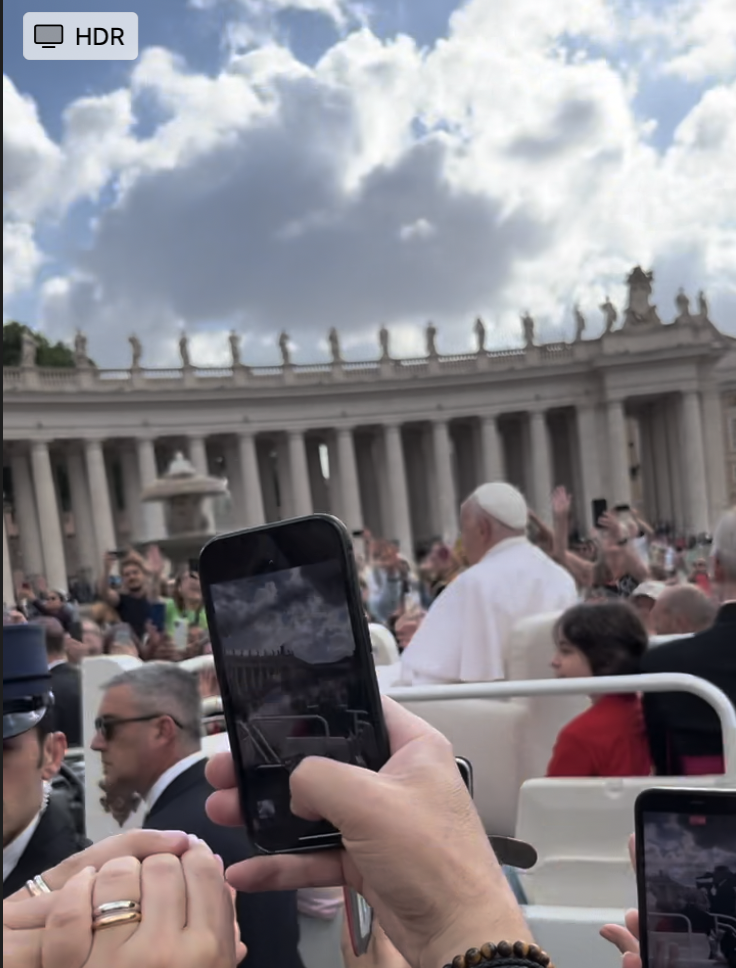
closest i got to Il Papa, when i found myself accidentally at the barricades that clear the way for the Pope-mobile

sages are in short supply, it seems. certainly now, and certainly on the global scale. i scan where i can, ever on the lookout. and wasn’t my eye caught when i read the words “artisanal path” to “handmade peace.”

tell me more, my little heart shouted. 

though it sounded a bit like a recipe for earthy bread or hand-thrown plates, the sort that rise from the potter’s wheel, i sensed the subject here was far more urgent, and in dire need of replenishing. not what you’d find on any pantry shelf. 

hand-crafted peace, peace constructed with care and attention. peace that we at home can build, without scissors or glue or a potter’s spinning wheel.

i clicked on a duly-provided link, and wasn’t one iota surprised to find that Il Papa, our most beloved Francis, was the one who not only dared to raise his voice above the blather, but considered it a requisite of his job’s description.

he is, after all, shepherd to a farflung flock. but more than that, he’s a prophet, which, according to the definition i found in richard rohr’s brand-new the tears of things: prophetic wisdom for an age of outrage, means a radical change agent, teacher of a moral alternative, and deconstructor of every prevailing order. rohr reminds us of the prophets of ancient times, the ones described by isaiah and ezekiel, whose job it was to hold the powers that be “maddeningly honest.”

bring on the prophets, please.

in these times, francis, our dear pope who from his hospital bed in rome reached out to the suffering of gaza, is the rare voice to which all the world will sometimes listen. thank holy God, he speaks the language of love without condition, clause, or pause. there are those among us, in this age of outrage, who might do well to listen. especially when they claim to take instruction from the very same God who whispers to Il Papa

the new york times calls him “an increasingly lonely moral voice on the world stage.”

all the more reason to listen. and listen hard.

“peace is crafted; it is the work of our hands,” francis began at a prayer vigil in the central african republic back in 2015, “it is built up by the way we live our lives.” he was speaking to an audience of children, teens, and young adults in bangui, the capital of the central african republic, when that country was in the midst of a sectarian war between Christians and Muslims, and thousands had been killed, and more than a million displaced from homes, their properties looted or destroyed.
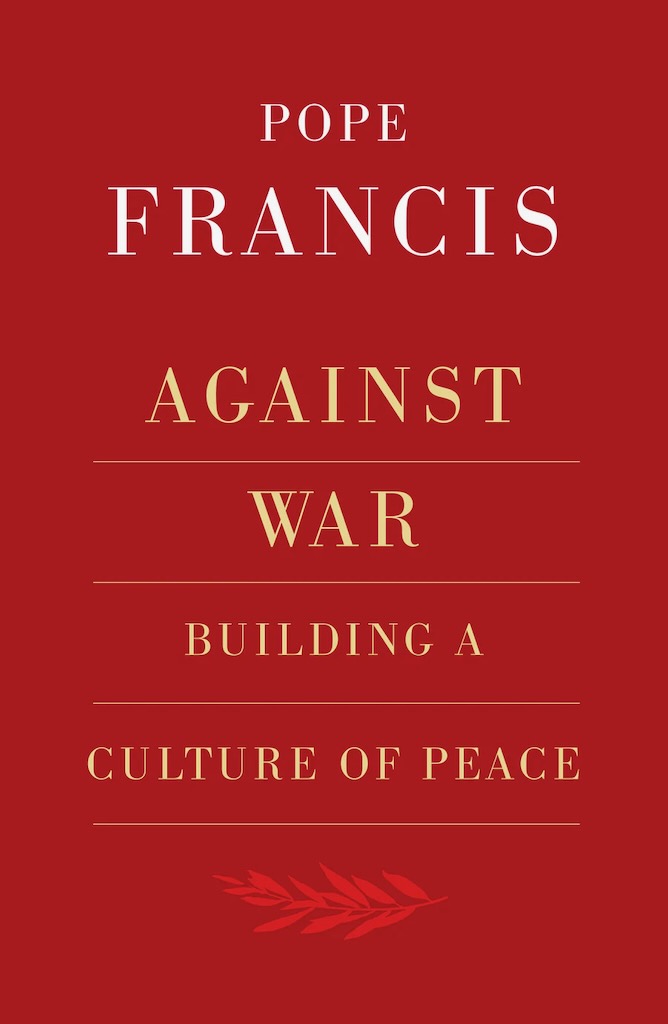
this artisanal path, “built up by the way we live our lives,” is spelled out, it turns out, in francis’s Against War: Building a Culture of Peace, a book i’ve ordered from my local bookstore, as it’s one with permanent claim to a slot on my bookshelf. 

it’s not that i think i can build a culture of worldwide peace, though once upon a time i dreamed of such things. the point here, from the wee bit i’ve read, is that peace is a sphere we build bit by bit, as we travel through space and time, and it’s built by even the most unassuming of gestures, attitudes, and actions.

what the pope is saying, and what the world ought listen to, is that the tiniest empathies and kindnesses matter: giving cuts in the grocery line, waving someone into your expressway lane; taking time to take the call, dropping the tupperware of soup on your neighbor’s stoop. biting your tongue when you’re tempted to snap, and, yes oh yes, turning the other cheek, a trait i’m told no longer belongs in a world of dog eat dog. 

what a game changer: here’s the head of a church that counts 1.39 billion baptized among its ranks, and he too concurs that we needn’t be rocket scientists in the art of magnanimous charitable persuasion to make a dent in the realm of ever-spreading goodness. 

for one thing, it’s fairly contagious. if you’re out-of-the-blue kind to me, if you take my breath away with some wonder act of yours, chances are i’m inclined to be a copy cat and try the same. if for no other reason than the pure joy of watching someone be surprised you’ve not just slammed the door in their sorry, sorry face. 

here’s where Il Papa begins his artisanal path to handmade peace, with this fulsome criticism of the futility of war: 

“war is not the solution, war is madness, war is a monster, war is a cancer that feeds off itself, engulfing everything!”

that’s all i needed to keep on reading. and what i found, and what you’ll find should you decide to play along, is a compendium of his most outstanding commentaries on war and peace during the first nine years of his pontificate. 

here are a few of the nuggets you just might choose to tuck in your peace-gathering pockets. 

because one can’t best the pope when it comes to eloquence and voice, i am quoting from the book, here on in, and plucking five that leap out the most….

1.) seeing the world as one human family living in one common home.

The stars in the sky shine down on every single person — from the beginning of time to today — and learning “to look at the stars” will be “the most effective vaccine for a future of peace,” he said in Ur, Iraq, in 2021.

“Anyone with the courage to look at the stars, anyone who believes in God, has no enemies to fight. He or she has only one enemy to face, an enemy that stands at the door of the heart and knocks to enter. That enemy is hatred,” the pope said.

“There will be no peace as long as we see others as them and not us,” he said. Humanity lives under one heaven, under the gaze of one God who desires his children to be “hospitable and welcoming” to each other on earth.

2.) reconciling with one’s enemies and embracing unity in diversity.

The pope told young people in the Central African Republic that the first step toward being a peacemaker was “never hate anyone. If someone wrongs you, seek to forgive.”

“We only win if we take the road of love,” he said, and, with love, “you will win the hardest battle in life” and find peace.

But “we need to pray in order to be resilient, to love and not to hate, to be peacemakers,” and “you must be courageous,” he added. “Courageous in love, in forgiveness, in building peace.”

3.) the difficult art of dialogue and listening, which can sometimes be as hard as building a bridge over an abyss.

Pride and arrogance must be eradicated from one’s own heart, he told young people at a congress of the educational project, “Scholas Occurrentes,” in 2016. “Our world needs to lower the level of aggression. It needs tenderness. It needs gentleness, it needs to listen, it needs to walk together.”

Dialogue is “the capacity to listen, not to argue immediately, to ask,” he said. “Everyone wins in dialogue; no one loses” because “it is about agreeing to proposals so as to move forward together.”

Dialogue is to put oneself in the other’s place, “to form a bridge” and “persuade with gentleness.”

4.) peace is a constant journey of “getting one’s hands dirty,” concretely working for the common good.

“Our path leads us to immersing ourselves in situations and giving first place to those who suffer,” he said in Assisi for the World Day of Prayer for Peace in 2016.

Feeling responsible for helping others and refusing to be indifferent cleanses the heart and requires the “purification” and conversion that can only come from God, he said in Irbil, Iraq, in 2021.

This new order must meet humanity’s desire for justice, equality and participation, he said in his World Day of Peace message in 2020. A democratic society recognizes everyone’s rights and one’s duties toward others, which can temper a harmful, unbridled understanding of freedom.

5.) living the beatitudes is to bring heaven––and peace––to earth.

In his homily in Baghdad in 2021, the pope said, “We do not need to become occasional heroes, but to become witnesses, day after day,” embodying the wisdom and love of Jesus.

Jesus changed history “with the humble power of love, with his patient witness. This is what we are called to do,” he said, and “that is how the world is changed: not by power and might, but by the beatitudes.”

People who live the beatitudes “are helping God to fulfill his promises of peace,” he said. “This is the way; there is no other.”


in these tumultuous times, i am turning hungrily to prophets and sages in the news and on my dusty bookshelves. i’m inclined to not fill this space with my own blather, but rather to bring any lights that might dapple our paths. it’s always a tug-of-war to quiet the chair or keep it going with whatever bits i find. this doesn’t seem like the time to turn to silence. so my aim is upped to break through blather and bring voices that will wedge open our hearts, and like a doorstop, keep it wedged till we get through to the other side….

what voices broke through to you this week?

love thy neighbor ain’t always easy but it’s where it begins

maybe my world is shrinking, or maybe pragmatism comes with creaky knees and hair turned pewter white. once upon a time i dreamed i might figure out a way to end world hunger. nowadays i spend my days worrying about how to make peace on the little block of houses where i live.

i’ve somehow shrunken my visionary zeal, realized i’m no melinda french gates and will never swipe the planet of those scourges — polio and TB and cluster bombs — that wreak a hardly-holy hell.

what consumes me nowadays is the hard task of human beings bumping up against each other with their curious quirks and rough spots. long ago, when i had my nose in books about saving the planet from the scourge of hunger, when i failed to set the dinner table cuz i was on the phone with a friend in tears, my mama used to drive me nuts with her refrain: “charity begins at home.” i thought that was just another way of getting me to mind my chores.

but, decades later, i get it. i get how hard it is to attend to the one simple command at the core of nearly every world religion: love thy neighbor.

yes, love the lady who shrieks out her window. love the guy whose dog barks through the night. love the ones who park their fancy car in the middle of the alley and don’t think they might be blocking your way.

it’s in the fine grain that we stumble. and that where the grit pits our knees.

it’s pie in the sky — and a cheap way out — to talk in platitudes. it’s a whole other thing to meet that someone on the sidewalk, to look into her eyes, and talk it out. to say i am so sorry you were hurt. to say, i’ll fix it. to invite someone in for coffee — after she’s made it clear she doesn’t much like the way you leave your christmas lights strung up till easter.

i’m not the one who’s in trouble at the moment. but i happen to know that of the eight houses on my side of the block, four are deep in scuffles. and it sickens me to know that in a single ZIP code we cannot find a way toward peace.

and it throws me back to that radical jesus, and maimonides not too long after, and buddha, and mahatma gandhi and mother theresa too, all of whom made it seem so clear, who gave us three words to live by: love thy neighbor.

work it out.

dig deep in your soul’s well, and pull up forgiveness. find compassion. try to imagine how deeply the hurt must be for someone to yell out their window to “mind your own ******’ business.”

this humanity is complicated stuff. not everyone seems to have read the same play book. and no matter how hard we wish, we cannot write the script, nor spew the lines for all to recite.

so how to be the instrument of peace? how oh how, is the question i ask over and over. i don’t have too many answers here. but i do know this: my one holy task, the one way i am choosing to spend my days, is to try. to wake up every morning with that code in mind. to catch myself in the rough spots, just before the fall. and to ask if there’s a kinder, gentler, humbler way to be.

it’s down here in the weeds of our own backyards where the hardest part comes. where it boils down to something more than everyday civility. where if someone’s house was burning, i might run toward the window to catch whatever was being thrown out the windows. where if someone fell on the sidewalk, bleeding, i’d run and hold her hand. wipe her tears. cradle her till the doctors came.

it’s not so hard to send off money to the middle east. what’s hard is walking down the sidewalk, or watering the garden, when someone turns the other way.

it’s in the squeeze of that human vise when we need call on our better, finer, wiser, kinder angels, to not only turn the other cheek, but to figure out a way to span the divide. to sow love where there is hurt. to be the living, breathing instrument of peace.

for that i pray. day after day after day.


diana butler bass, an author and historian who calls herself a public theologian, is someone whose voice i’ve been listening more intently to these past couple years. she points her focus on the intersection of modernday culture (often political culture) and religion and spirituality, and she scythes through any hint of hypocrisy and flat-out baloney. she stands, unflinchingly, for the good. this past week, she was writing about bread and wine and wisdom, and i stumbled into this one paragraph (bolded below) which held me for a long while. wisdom is something i look for, hope for, reach for. i love the way bass takes the hard turns in our lives and sets them as the building blocks upon which the wisdom rises. i love that “bad choices” is part of her mix of what might lead to wisdom. it’s not just that we’re the recipients, that bad things “just happen to us.” sometimes, she wisely puts it, we bring the dark times on. we can be culpable. we can stumble. and do dumb things. words we wish we could stuff back in our mouths. invitations we wish we didn’t turn down. chances we wish we were brave enough to have tried. she makes me wish i could turn back the clock of time just long enough across the arc of my life to tap little me on the shoulder to let me know the dark days i was stepping into were going to be the days that in the end would grow me into the wise old woman i’d long prayed i’d  become. here’s diana on hard-won wisdoms…

Central to bread and wine is the exact same principle: In order to become what they are, they must be transformed from one thing into another. When a leavening agent is introduced to flour and water, it becomes a dough that bakes into bread. When yeast consumes the sugar in juice, it ferments the fruit and turns it into wine. Wheat and fruit are, in effect, broken down and simplified by an outside agent, turning them into bread and wine. That’s what fermentation does.

But this process takes time. Bread must be worked, kneaded, left to rise, reworked, and baked. Wine is the result of weeks or months or even years of yeasts breaking down sugar and slowly turning fruit into alcohol. Bread and wine are staple foods for everyone, and yet they demand great patience of bakers and vintners. Neither happens immediately. One must learn the craft of these foods over time. They cannot be rushed. Staples, yes. Slow foods, absolutely. The best things to grace our tables — those things that sustain us and give us joy — result from an intentional and gradual undertaking.

Wisdom is like that, too. How does one pursue wisdom? Where do you find it? Perhaps it is like bread and wine. It begins as something else — an experience, a loss, suffering, bad choices. But when some leaven — like the Spirit — is introduced, these original ingredients are transformed into wisdom through a process of fermentation that takes time. Wisdom cannot be rushed. You learn, you craft, you wait. Eventually, what was becomes something else — something lasting and satisfying.


i didn’t mean for this to line up quite so charmingly, but another thing that utterly grabbed me this week was this bit of poetry sent by my beloved poet friend win. it’s a poem called “butter knife.” bread and butter, how perfect. but first a word about win, who this year started up a wisdom gathering she sends out every monday morning. it’s called metta monday, and in it she gathers up a bouquet that stirs me, fuels me, and often draws out a tear. her well is deep, and she harvests broadly, drawing on sages and poets and zen masters. i’m not quite sure how you’d sign up for it, but if you leave word here, i will be sure win finds you. she starts your week with a rocketblast of all you need to make it to the other side. . .

click here for butter knife, a poem by hollie mcNish about wonder, and specifically about the wonders and wizardry of the human body and the interplay between blood, sweat, tears and the soul….where “teardrops can be conjured out of thoughts…” it’s a beauty! we might all climb on the hollie mcNish train….

do you have a story to tell of watching love blossom and break through darkness?

into the depths and the darkness…

i hadn’t set out to burrow into the darknesses of history this week. but i’ve been traversing trails darker and darker, as i’ve turned the pages of jewish history, a history i entered into on sunday when i listened to a priest tell a story of holy week. drawing from the work of early christian scholars, the priest i was listening to closely laid into a tight and stark timeline an account of holy week, one i’d never quite followed so closely, one which even more poignantly drew me into the jesus for whom judaism held the holiest code.

one curiosity led to another, and notes were exchanged between the priest and i, and books were requested from the library. while i awaited the books, i wandered upstairs to the bookcase where my husband keeps his collection of jewish-themed books, from the big book of jewish humor to the wisdom of the Talmud, from chaim potok to martin buber. that’s where i found the big fat doorstopper of my people: the story of the jews, the majestic 522-page historical tome written by abba eban, the late great israeli statesmen and scholar of hebrew and arabic languages (he was fluent in 10 languages).

i pulled the book from the shelf, and started to read, and soon i was typing line after line of notes as i turned the pages of eban’s telling of jewish history, from the drama of abraham through the rise of christianity, and on through the crusades of the middle ages, through the founding of israel, straight through to the state of the middle east when eban’s book was published in 1968.

these are but some of the notes i typed, ones especially relevant to this holy week:

Jesus meticulously kept Jewish law, made pilgrimage to Jerusalem on Passover, ate unleavened bread, uttered blessing when he drank wine. “He was a Jew in word and deed.” Articulated ideas of the masses. Sermon on the Mount: “I have not come to destroy Law but to fulfill it.”

with each page’s turning it felt apt to be tracing more and more deeply the story of the jews in this particularly blessed week where our house is filled with the rhythms, once again, of passover and passion week. after spending each saturday of the year studying torah, portion by portion with a collection of inquiring minds at our synagogue, it seemed as if eban was giving me a glimpse of the whole jigsaw puzzle i’d been studying piece by piece.

but the longer i read, the darker it grew. in the name of one holy God, we have persecuted, and burned at the stake. we’ve thrown the holiest texts of the jews onto the pyres of history. we’ve forced them into ghettoes, ordered them to stay in their homes with shutters drawn on easter sunday. ordered them to wear badges, so identifying themselves as followers of the One Holy God. we’ve told centuries and centuries of stories making them out to be the ones who crucified jesus. who betrayed him in the garden, who led him before pontius pilate, mocked him and crowned him with thorns. those stories, lost in translation, lacking full context, miss plenty of points. those stories have been turned into stones to torture the jews.

Jesus meticulously kept Jewish law, made pilgrimage to Jerusalem on Passover, ate unleavened bread, uttered blessing when he drank wine. “He was a Jew in word and deed.” Articulated ideas of the masses. Sermon on the Mount: “I have not come to destroy Law but to fulfill it.”

i weep at the decimations of history, at the evil and the distortion that drives the worst of humanity. at the fact that we wage such wars under the flag of God, and of church. how dare we.

i’m 239 pages in; i’ve just read through the crusades, and the development of the ghetto in medieval europe, where “jewry was sealed off by a bolted gate.” today, i’ll put down eban, and i’ll pick up the way of the cross, by caryll houselander, the anglican mystic and artist, who curiously worked as a counselor of war-traumatized children, the war in question being the one where hitler sought to exterminate (what a detestable verb) the entire jewish population, a hatred that never seems to die.

i will read, as i always do, each station along the way of the cross, to the mount where jesus was nailed to a cross and left to die between two criminals, one who sought forgiveness and one who scoffed.

i will weep as i turn those pages, just as i’ve wept through the pages of my people.

i will ask, louder and louder, how might we have been so very wrong? and how have we dared demonize a holy people, a chosen people, a people whose truth jesus so ardently tried to tell? jesus’s holiest command, “love as you would be loved,” is in fact the jews’ central command, found in leviticus, and taught by the great hillel to be the greatest of all.

a marvelous story, in fact, is told of hillel, the gentle sage, who once was confronted by someone who wanted him to teach the whole of the Torah while standing on one foot, and to which hillel is said to have replied something along the lines of “what is hateful to you, do not do to your neighbor. that is the whole Torah; the rest is the explanation of this—go and study it!”

what is hateful to you, do not do to your neighbor.

love as you would be loved.

Father, forgive us for all of our sins, for which there are so, so many.

who taught you to love as you would be loved? and how did you see that played out in the fine grain of your life?

because friday is the day we pull up a chair, i’ve written on 17 good fridays now, and each year i seem to find a new way in. here are a few others:

way of sorrows
 
jesuit girl with jewish soul

into the depths

silence on the day that darkens

season of turning

my friend: red-breasted nuthatch.

all around, i see daubs of russet and pumpkin. at the tips of the branches. on the leaves of the vine. even on the chest of my nuthatch, the one that followed me around the garden the other day as if he wanted to plop on my shoulder and whisper a secret. (in the case of the nuthatch, though, a red-breasted nuthatch, he wears russet all year round; he’s not sporting ephemeral seasonal garb). for the leaves, the russet and pumpkin, soon to be crimson and gold as the deepening deepens, as the chlorophyll scrapes the paint-barrel bottom, the brushstrokes of autumn are signs that we’ve entered the season of turning. 

the jews, a people from whom i have gleaned volumes of sacred attentiveness, seize every turning of this holy earth, and this season of turning is its own holy time: Elul, the month that opens the gates to the holiest of holy days, the Days of Awe, the new year and the day of atonement, coming at the next new moon. 

this is the month, these amber-drenched days and moonbeam-bathed nights, when our one anointed task is to attend to the work of cleansing our souls. jews take repentance seriously. no whispered, hurried, sloughed off “so sorry.” to truly repent is to a.) look deep inside; b.) shake off the shame, the excuse, or whatever it is that keeps you from telling your truth; and then, c.) the hard part: stepping up to the plate, looking the ones you’ve hurt or cut short, the ones for whom you’ve been too often distracted, looking them straight in the eye and saying here’s what i did, and i am so sorry. and i will change my ways. or try to anyway.

and here’s a wondrous thing, a something that makes it just a wee bit more promising to take on the hard work of repenting; wise words spoken by one of our rabbis just the other Shabbat. she was preaching about the season of turning, and she made the point that God — the God in whom i believe, a God of compassion, a God who reaches deep down into the parts of me that hurt the most, into the parts of me that get tangled, tripped up, and sometimes make a big mess of what needn’t be messy — that holy God is primed and ready to meet us way more than halfway in the repenting department. 

the sages of the Talmud gave us this marvelous teaching about repentance:

“God says if we open a door as tiny as the eye of a needle, God will widen it and make it large enough to let carts and horse-drawn carriages drive through.”

in other words, God’s got skin in this game. God doesn’t expect overnight miracles. we aren’t meant to turn into superheroes of saintly proportion. we’re plain old bumble-brain humans, after all. and the talmudic teaching is, in my mind, as if God sat us down, knee-to-knee on a park bench, perhaps, and said, look, here’s the deal, just give me the faintest slightest attempt at saying you’re sorry. just one tiny opening, that’s all i ask. the beginning of something that looks or smells or sounds like contrition. an honest-to-goodness “i screwed up.” you give me that, and i’ll take it from there. i’ll swipe open your heart, let the sweet stuff roar in. give you a sense of just what it feels like to let loving abide. 

maybe just maybe, the teaching is saying, we can discover the weightlessness that comes when the guilt washes away, and with it its ugly cousins: worry, or shame, or that godawful sense that we’ve hurt someone or something when we hadn’t intended to do any such thing. 

one of the things i love about jewish teachings is that there’s an almost breathtaking knowing of the complexities of the human soul and psyche. there’s no simplistic aphoristic glossing over of whatever it is that makes us tick. it’s not a magic-wand religion, not inclined toward three E-Z steps to HappilyEverAfterLand. 

it doesn’t avert its gaze. doesn’t whitewash the ask. names the hard parts. and somehow believes we’re up to the task, every last wobbly one of us.

take this teaching on the demands of the season of turning, a teaching i found in the prayer book for this month of Elul: 

Now is the time for turning. The leaves are beginning to turn from green to red to orange. The birds are beginning to turn and are heading once more toward the South. The animals are beginning to turn to storing their food for the winter. For leaves, birds, and animals, turning comes instinctively. But for us turning does not come so easily. It takes an act of will for us to make a turn. It means breaking with old habits. It means admitting that we have been wrong; and this is never easy. It means losing face; it means starting all over again; and this is always painful. It means saying: I am sorry. It means recognizing that we have the ability to change. These things are terribly hard to do. But unless we turn, we will be trapped forever in yesterday’s ways. God, help us to turn––from callousness to sensitivity, from hostility to love, from pettiness to purpose, from envy to contentment, from carelessness to discipline, from fear to faith. Turn us around and bring us back toward You. Revive our lives, as at the beginning. And turn us toward each other––for in isolation there is no life. 

Rabbi Jack Riemer (emphasis added)

the jewish understand of the soul is nuanced, its prayers often stop me in my tracks. utterly breathtakingly beautiful. and blessed. 

no matter how or what you believe (or even if you don’t), it seems there is something in this turning season that calls us into a deeper and quieter contemplation, an inkling that we are all wrapped in a golden-threaded prayer shawl of awe.

Mishkan Halev: prayers for Elul

to the author of this prayer (again, a prayer i found in the Mishkan Halev, or prayer book for Elul), the days and weeks in which we now find ourselves are something of a holy island in the year. may you find its shore, and be harbored in its holiest coves.

An Island in the Year

Before we slip too quickly into the Season of the Soul––
let there be a Sabbath of Sabbaths for the heart. 

Before the music of Creation’s majesty––
let there be a silent praise of existence.

Before the feast of sanctified words––
let there be a poetry of solitude.

Before we enter the palaces of prayer––
let us find within ourselves a place of calm.

Before we revel on the wondrous and sublime––
let there be an honest, inward gaze.

Before the rites and ceremonies of Awe––
let there be quieter days,
an island of attentiveness.

what are the ways you find yourself turning in this holy season?

beautiful people, i never really write chairs a day ahead, but for some reason i did yesterday, and today it turns out i am flying to new york city on the next flight. my beautiful boy was admitted to the hospital last night, and i am going to be there. no idea for how long. but this is where mamas belong. say a prayer for my Will.

barreling on, gently…

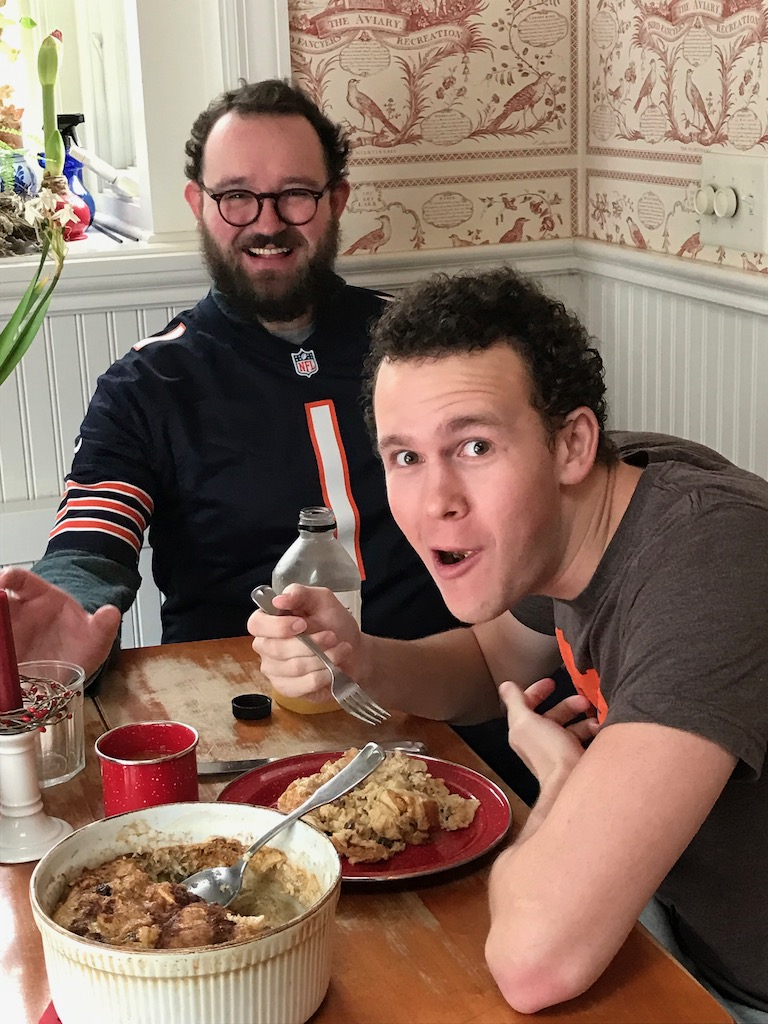
christmas-morning bread pudding, eight days late

it wasn’t the winter break it was supposed to be. or the christmas. or the new years. two of us were behind closed doors for days on end. one of us is still shuffling from armchair to armchair, plopping down for little puffs of air. another one has blotchy red spots on the back of his hands, covid rash they call it. the other two of us strained to keep two steps ahead and out of the path of the red-spiked intruder.

but we barreled on, the four of us. christmas-morning bread pudding finally billowed in the oven on january 2. and ever since we’ve been trying to shove the train back onto the rails, to make the most of these 10 days before flights and calendars dissipate us once again.

it dawned on me in the middle of the night, as i shuffled through the dark to trace my way to the bathroom down the hall, that we were––at that very moment––all four of us safe under one single roof, as is my most settled equation, as is the variable i’ve prayed for, waited for, for two long years. and it hit me just as quickly how the four of us, over the years, have grown to be our own impenetrable force, a circle of loving each other fully and thoroughly through thick and thin and whatever the whims of life hurl our way. 

we’ve worked hard at that. it doesn’t come without determination and practice. it’s a living, breathing exercise in turning the other cheek, in forgiving, in listening, in quietly knocking on a bedroom door and asking, “can i come talk?” it’s long long hours on the long-distance line. it’s jumping in the car and driving hours, if necessary. it’s showing up, again and again. it’s being willing to admit, i blew it. i worry too much. i got scared. (or whatever is the foible of the hour.)

it’s believing in the best of each other. and giving yourself the time to see it. it’s figuring out that if someone else sees the best in me, maybe the best is deep down under there, after all. 

it’s a lifelong practice in practicing. in knowing there will be days when you don’t quite do your best. when your voice comes out in sharper tones than you’d intended. when you wish you lived alone. when tears sting your eyes, and eventually you hold each other tight.

it’s a testament to loving played out in episodes that take your breath away: the time the stranger called to say she’d found your kid unconscious, strewn on the bike path; the time your kid called to say he got into the law school of his dreams; the time the brand-new driver slunked in the house and handed over the speeding ticket he’d just gotten on his first friday night out; the time your mom turned to you and said they’d found a tumor, and weeks later your then-little one proposed a hat party to make a little bit of joy out of grammy losing all her hair. 

those are the strands that make a family, that stand a chance of weaving something whole in a world of rampant brokenness. it’s the little asides at the dinner table, or while stirring onions on the cookstove, the gospel spelled out––again and again––in certain truths you dare impart. it’s the notes you slide under the bedroom door. the stories they hear you share at the kitchen counter, or listening in on one of your phone calls. that’s the slow-unfurling whole of who you are, and what you believe, what you stand for, that gets spelled out, inscribed, passed on without a slip of parchment. 

families are made by choice or by birth. both stand strong against the cold winds of history. families take endless work, and infinite joy. at our house, it’s the laughter that is the certain glue. the antics that punctuate the pure delight. sometimes, too, it’s tears, the willingness to cry. always, it’s the listening, and the curiosities that drive the questions. hours and hours of questions. of true and telling replies.

it’s the most important work i’ve ever done. making a family, day after day after blessed loving day. it’s the hardest work, and the work that lifts my soul more than any other aim i’ve reached for. 

my definition of family is nothing like it was when i was little. i used to look to the scrubbed and polished clans who filled the church pew, all in matching hats and coats, lined up like stepping stones in graduated sizes. a lifetime of paying attention clobbered that flimsy facade. now the ones who teach me how it works are the ones who weather heartache, who do not give up, who tell the truth, don’t hide the hard parts.  

i remember in the hours before my firstborn was born, i was sitting all alone at the kitchen table, and i whispered words to God, promised to envelope that sweet child in all the love i could muster, to harbor him from every hurt. i’ve found out over the years that you can’t keep the ones you love from hurt, from heartache. but you can build a mighty shield, you can build an unbreakable ring of love and light, and you can be there to catch ’em when they falter, you can wrap them in your arms, rest their heads against your heartbeat, and you can promise them your love is one inextinguishable force, and your light will always always burn for them. and you can always make ’em laugh. and listen to their secrets, their hopes, their dreams, their prayers. 

and when the days don’t unfold the way you’d wished, the ways you’d dreamed of, well, you can wait till the darkness ends, and you can tuck a new bread pudding in the oven, and you can shuffle to the kitchen table, join hands, squeeze tight, and whisper, thank you God for bringing us this holy, holy moment, and letting us weather all of life––its best, its worst––with each other at our backs, our sides, our wholes

every family is its own story, is a vessel for a hundred thousand stories, some passed down from generations, and it’s hard work to make a tiny community of similar-but-unique human beings coalesce into something whole. how do you get through the hard parts? what’s your one essential ingredient? (questions need only be for your own personal reflection, as is always always the case.)

tis january, a month of new beginnings, and a happy birthday blessing to the one and only MJH, loyal reader, dear friend of this ol’ chair, and to my longtime beloved comrade MBW, whose birthdays are today!

pins and needles and why it matters…

dear america,

land of the free and the brave. land i want to be home to the kind and the gentle. and the fair and the just. land where truth is the national language, the one we expect to hear and to speak, the one that rings from sea to shining sea. land where we’re blind to the melanin that colors our skin, but not blind to the sins we’ve borne until now. still bear. land where bullies get sent to the principal’s office. and aren’t allowed on the playground, not till they right their ways. land where some big-hearted, big-eared soul sits down to listen, to find out why the bully’s so mean. land of confession. land where we fall to our knees, open our heart, and spill out our sins. where we say we’re sorry, so sorry, and we mean it. where we do right, right our wrongs. make up for the shatters and hurt we’ve left in our wake.

that’s the nation i want to belong to. that’s the world i want to populate, for the short time i get to be here.

it’s all evanescent. we’re not here for long. we’ve one short shot at weaving our one single thread into the tapestry. i aim for my thread to be radiant. too often it’s frayed. falls short. but the thing is, day after day, i clamber out of bed and i set my mind to living the promise: love as you would be loved. reach beyond your own borders. imagine how it feels to live in the other guy’s shoes. to be strapped with the load that he or she was born into, picked up along the way. the stuff that broke and scarred and left scabs that never quite healed.

i reach for the stars, for the heavens. my own personal plot, the one by which i measure my life, is to open the doorway to heaven here on earth. to make it all a little bit kinder, gentler, to love as i would be loved.

the thing is when you grow up knowing hurt, you sometimes decide to dedicate your every blessed hour to doing all you can to not let it happen to anyone else. to be, as blessed st. francis put it, the instrument of peace. to be the consoler. the sower of love. it’s a prayer i pray every day of my life.

i pray for that hope to spread like a rash. once upon a time i believed we could cure the world of the scourge of hunger, fill every last belly. now i’m sinking my hopes into the radical notion that we could all — just for one day, maybe even for longer — stop with the ugliness, put down the guns, dial down the incessant noise. stop seeing the world in us versus them.

for God’s sake: be still. breathe in the deep and calming oxygen of pure unfiltered kindness. imagine forgiveness.

i believe in capital D Decency. i believe in resurrection and redemption. i believe in the hard-rock capital of empathy. i’m willing to hope we can find it again. i’m not certain. but i cast my vote for all the holiness i believe in, the holiness that is the architecture, the underpinning, the spine and the sinew of my every blessed day.

and that’s why i wait, holding my breath, awaking in the night to peek at the numbers, to see if there’s half a chance we might become a more perfect union. one where life, liberty, and the pursuit of happiness is spelled out in three hundred million-plus variations on the theme. but one where justice, and fairness, and truth is the least common denominator. the one we strap on each and every morning, and take it from there. there is so much work to be done….

let us begin.

what are the threads of the world you believe in? the one that deep in your heart waits to be born?

it’s a scary thing to put yourself out there, to lay it all on the line. but this moment demands unfiltered courage in all its iterations. mine lies in saying it aloud, in whispering my heart’s deepest prayers. maybe i’m not alone…

the saddest apology. though never too late….

teddy home umbrella

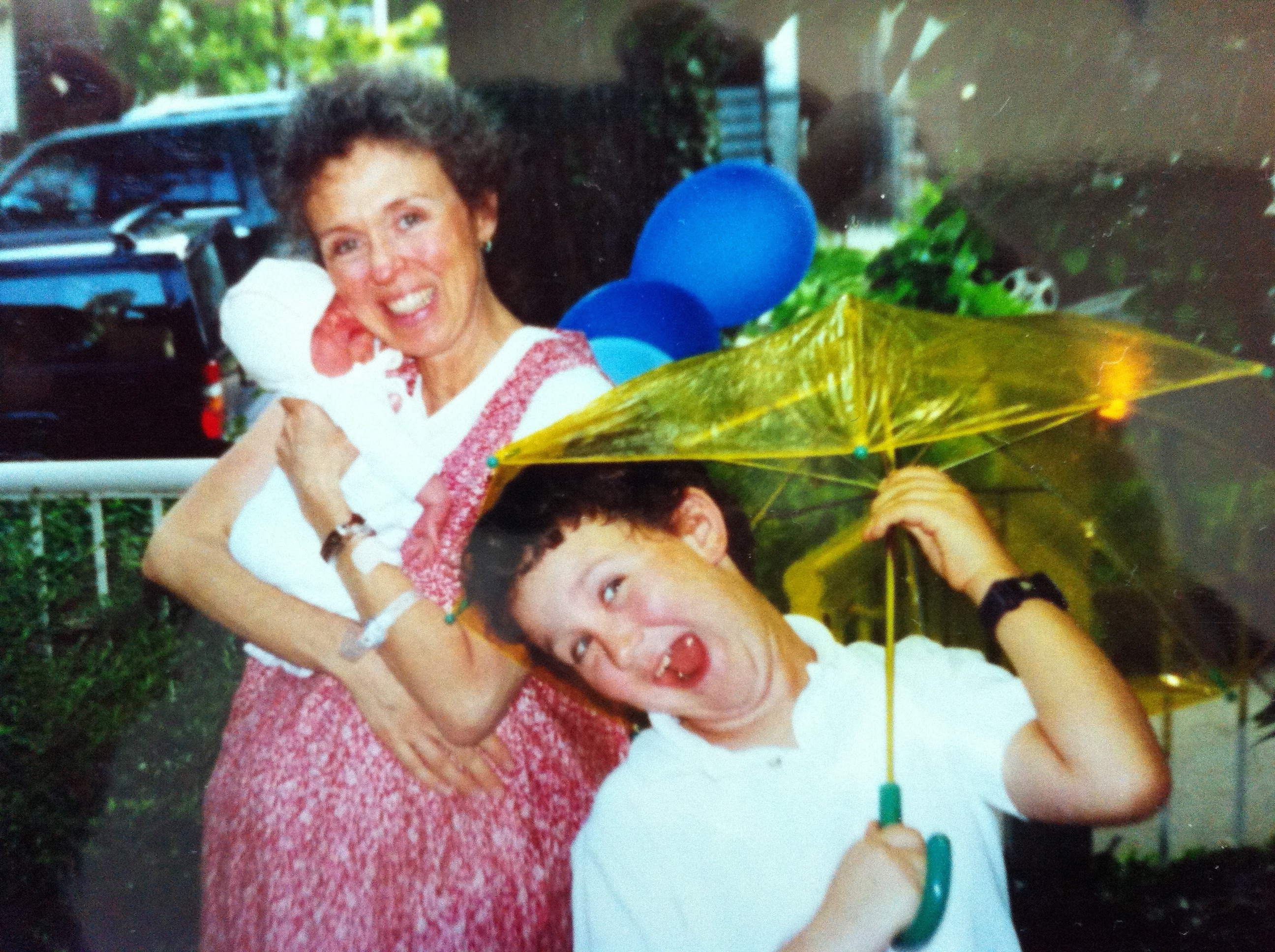
I still remember the phone call. I had a brand new baby, a baby whose birth had not been without one of those moments where the doctor calls you by first name, slaps you to attention, and with eyes darting between your unblinking gaze and the monitor measuring the baby’s dropping-down heart beat, she tells you this is what you’re going to do: You’re going to get that baby out in the very next push.

And you, knowing the vast canyon of cold chiseled truth nestled into that statement, knowing that she’s telling you you have a few breaths and one push to get this baby out whole and without harm, without your life’s dream whirling into the darkest abyss, you call on all the angels and saints and powers within and without, and you do just what she told you: You birth that baby in one triumphant, I’m-not-losing-him-now force beyond nature.

And then you wait. Wait through unbroken silence, seconds that feel like an hour, the quicksand of time. And then, from the shaft of light slicing through the darkness, his lungs fill with air and you hear him wheeze out a cry. A cry that deepens. A cry that says, without waver, “I am here.”

And from that blessed second on, you cradle that baby like nobody’s business. Not one ounce of his being here was ever expected, he is wholly a miracle.

But the voice on the phone that day, not long after you’d tumbled home from the hospital, she was shattered by your dream come true.

She, too, had wanted a baby. Wanted a baby more than anything. Had undergone more medical twists and turns than you ever thought a doctor would allow. She’d been poked and prodded and shot through with stimulators and repressors and countless variations thereof, all in the hopes of that one impossible moment where egg meets sperm and the dividing begins.

It hadn’t worked, not for her and not for her dream. Not in any of the last many, many, many rounds (I won’t say how many). She, like I, had one baby already. He was in second grade, as was my firstborn at the time and that’s how we met. It was the second baby she wanted. It was the second baby, with no medical wizardry, that I got. And not for one instant did that not feel anointed, feel blessed, feel beyond my grasp.

From the moment I realized there was a heartbeat pumping within, I was washed through with hushed holding my breath. The minute I called my doctor (at home on a Saturday afternoon) to tell her what the little pink stick from the home pregnancy test was telling me, she laid out the cold hard statistics for the “advanced maternal age” of 44 and counting: Odds of Down Syndrome, odds of miscarriage before the first trimester ended. Odds, odds, odds.

Not for a day, not for an hour, on the long road to delivery, did I forget those odds. Nor did I take one moment of any of it as a given.

But the voice on the other end of the phone could only see it through the pain of her bottomless wanting what I’d somehow gotten. And so, she told me, in bitterest words that she could never talk to me again. Never wanted to hear from me again.

I remember cradling the phone, feeling my knees about to give out. We’d not known each other for years and years, but she was big-hearted, huge-hearted, my friend. And we had found some solace in our shared hoping for one more round of mothering a baby. And, besides, she’d smothered my firstborn with her dollops and dollops of tender attentions — not to mention, killer matzah ball soup.

But the road forked — heartbreakingly so — when I found myself with child. I’d tried, oh I tried, to shield her from the pain that I knew would slice through her, in the quarter hour when I pulled her aside, held her hands tightly, and told her I could hardly believe it myself, didn’t know how long — or if — it would last, but my prayers seemed to have been answered.

In using those words, she would tell me in the bitterest phone call, I’d all but told her, she thought, that my prayers were heard, and hers were not, hers were not worthy, she construed it to mean.

From my end of the phone call, I said over and over how sorry I was. How I would give anything for her to have the baby she so deeply, desperately wanted. And I was so sorry the words I had carefully chosen had only made it more awful. She repeated, emphatically, that this would be our last conversation, that she never wanted to speak to me again.

Months earlier, when an adoption agency had called to ask for references, I told the questioner, with all my heart, that I knew my friend would be a magnificent mother, would wrap her very huge heart around anyone blessed to be slipped into her arms.

And once, years later, I wrote her a letter. Told her how many nights I lay there thinking of her, whispering prayers to stitch back together her shattered heart. Asked about her baby girl, the one who’d come — yes — from far, far away.

I never heard back. Never once heard her voice after the terrible, awful heartbreaking phone call.

A few months ago, as would occasionally happen, I started to think of her. Wondered how she was faring, she and her two boys (husband and son), and her beautiful girl, now 12 or 13.

I googled her. I found one of those pages for someone who’s sick, very sick, and is seeking donations. I gasped for breath and clicked “Donate.” Didn’t know if she’d return the donation. Didn’t know. Couldn’t believe.

She was too sick to write but her husband, the gentlest man, wrote a very sweet note. He said thank you.

I knew from one more blast email he’d sent that, by the end of June, she was back in the hospital, back in therapy to try to relieve the slicing-through pain that comes with late-stage cancer. They were hoping, he wrote, that once the pain subsided, once “the numbers” improved, she would begin a science-bending assault on the cancer.

And then I heard nothing. Not till yesterday afternoon, when I clicked on my email, and there was her name, first and last. I opened the email, and I started to read, the words tumbling one on top of the other, not making clear sense.

Here’s what I read:

“I know it has been a very long time and many years needlessly gone by.  I am reaching out to you…I hope you don’t think it presumptuous of me to contact you at this late date, but I have spent a good part of the last three months reaching out…Trying to mend fences where possible, with the hope of finding some type of closure for everyone involved.  I don’t have any answers as to what happened, nor any great insight. I do know that what transpired was wrong, you were wronged and that I was unable to effect the out come.”

I wrote back:

“i am breathless. i always loved [her]. she was so hurt by the way i told her i was pregnant with T. i only MEANT to shield her from the pain i feared the news would bring. and clearly i bungled it horribly…….and i have been so sorry for so many years. for years i would lay awake at night wondering if i could yet write to her…..”

And then I googled her once again. Up popped her name, first and last, with the final addendum: “obituary.” She had died, back in the summer. I don’t know the date, don’t know the details.

All I know is what came in the last email from her gentle-hearted husband:

“She passed away peacefully in my arms after staring down cancer for seven and a half years. She had been through a heavy ordeal, seven chemo therapies, three major surgeries and two clinical trials.…We were waiting to start [a newfangled] vaccine when she passed unexpectedly, we both thought she had another year or two. We were a couple at the end, I made sure she was not in any pain. She asked me before she passed, what happens now? what happens next? I told her, I don’t know baby, but what ever it is we are going to face it together and then she smiled and closed her eyes. She was not afraid at the end and neither was I as we were together. I have to stop writing now as i cant see through the tears.”

And I sat there, staring and shaking, shaking and staring. All I could think was that it was the saddest apology I’d ever read, the one that wasn’t too late, not at all. Not one minute too late.

I wrote back: “[she] was pure love. she died with me loving her. and i will pray that she knew that…..”

And I will pray. And I do believe that she knew that. And that she knew that I knew she was sorry. And I was, too. I was, I am, so sorry.

For those friendships that shatter. For words never spoken again. For years lived with distance, with silence. For sparks that don’t get to fly between eyes, between hearts.

For all of it, for my dear blessed friend who never met my miracle boy, nor I her miracle girl.

It is the sorriest saddest apology. And it might have come late, but I am so deeply grateful it came.

Rest gently, dear friend. All is at peace where our hearts beat as one.

because this one made me nervous, because i wasn’t quite sure how i could say it and protect my friend, i typed it first in draft form. thus, today’s rare capital letters throughout. it still scares me a bit to write this. but the point is it’s a meditation on forgiveness, on friendship, on heartbreak and stitching those hearts together again. it breaks my heart that as i type this my friend isn’t here to read it, to see it, to know that the love never died. it breaks my heart that all those years, i never heard her voice again. i think i called once and left a message, so she heard mine. the aching all those years. the bittersweet whole truth of life: in my arms, i cradled pure joy. yet it cost me a friend. that’s a steep price. an equation i’d not weigh in a balance. instead, i am offering up all my sadness, my heart, to the friend whom i pray has found, at long last, the peace she so deeply deserves. 

are there apologies in your life that you would wish would be spoken while there is time to stitch together the brokenness?