pull up a chair

where wisdom gathers, poetry unfolds and divine light is sparked…

Category: family history

turn to sweetness

Gen One Honeycake

the new year calls for sweetness. the Jewish new year, i mean. it’s encoded, in fact, in the Talmud, the nearly-as-old-as-time, all-you-need-to-know guide to living Jewishly, a sacred compendia of rabbinic discourse, debate, and back-and-forth covering ancient teachings, law, and theology, and it gets down to the nitty gritty of what to eat when, and certainly on Rosh Hashanah, one of the highest of the high holy days. it’s spelled out, right there in tractate Keritot 6a (truth be told, i am not quite sure what a tractate is, but i’m surmising it’s something like a bullet point), where a certain sage named Abaye in the second century suggests that eating certain foods might bring on good things in the new year (this might explain the thinking behind the famous sheet cake scene with tina fey from saturday night live*). these sacred foods for the new year are called simanim, and while the Talmud explicitly names fenugreek, dates, leeks, and beets, it merely points broadly to sweetness. honey wended its way into the Rosh Hashanah traditions way back in the seventh century. which means the jews have kept the bees in business for a long, long time. and the dipping of apples in honey is a tradition that waited till the 16th century, which means we’ve been dipping now for 500 years.

and i realize i am steering well off course here, but i find myself in a rabbinic hole of infinite delight and must let you know that jews, known as lovers of wordplay, have prayers to accompany each of those prescribed foods (derived from the shared linguistics in the hebrew root), and the way it worked was that the particular prayer was prayed, followed by the eating of said foods, and this whole shebang was known as the simanim seder. here are a few of the foods and the prayers they inspired:
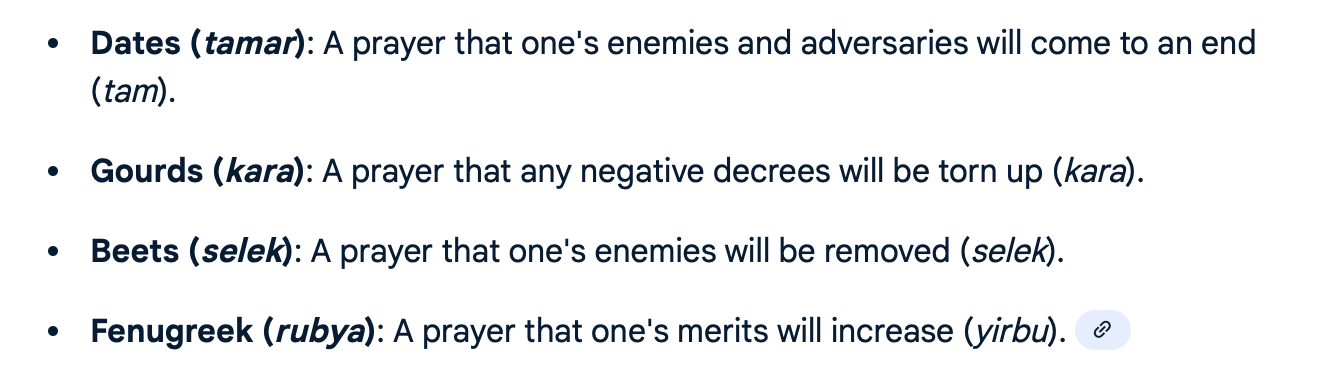
personally, i think we should all be loading up on dates and beets. but now i am really off in the ditch, and shall return myself to more linear thinking. . .

we were musing about honey, or at least i was. and since this is ultimately going to be a story about honey cake, i’m in the midst of explaining how we got there. how i wound up shoving a bundt pan of sumptuous honey-doused batter into my unreliable but deeply lovable ancient commercial-grade oven.

i tend to be someone who gloms onto traditions. and, given that these days, i spend a lot of time musing about time and the passing of years, i was suddenly struck—even though i am the farthest thing from a baker—with the question of whether there was some heirloom recipe for the holiday that i might have been missing. so i struck out to the best family baker, my brilliant and beloved sister-in-law brooke of the upper east side, and before the text with the query could possibly have registered in her wee little phone, she shot back the recipe she’s been baking for years. she noted that it was a super hit, and she noted that it was a family heirloom not in the traditional since, as her mother/my mother-in-law staked her claim to feminism by not knowing her way about the kitchen, and thus might not have baked in her life, dear brooke had made it a family tradition, one that secured its position the very first year she baked it when all that was left was a plate full of crumbs.

that’s all the convincing i needed, so i (practically as inept a baker as my late, great, mother-in-law) leapt aboard. i wheeled my grocery cart wildly through the store, plucking spices off shelves, fresh-squeezed OJ from the cooler, stocking up on fresh bags of flour, baking soda, baking powder (for the ones currently on my shelves had likely turned to clay, the subjects of years of idle waiting), and i set myself to baking. words being more my thing, i immediately gave it a name, this honey cake of famed repute. since dear brooke had clued me in its familial origins with this trademark hilarious note —”Considering that Mom’s recipe for the New Year was attending someone else’s party, this is our (1 generation = me) tradition.”—i immediately dubbed it Gen One Honeycake, and so it’ll stick. i also informed my boys they’d best follow along, for it was now incumbent upon them and their children’s children to crank the ovens every Rosh Hashanah, and pull out the whiskey and OJ.

excuse me, you say? where does the whiskey come in, and why are we talking cocktails so early in the morning? well, this famed honey cake, so dense it shall bulk your biceps as you ferry it to the table, is loaded: whiskey (or rye), OJ, a cup of coffee, a cup of honey, and a shuk‘s worth of spices. (a shuk is the israeli name for an open-air spice market)

aunt brooke continued, holding my hand (long-distance) the very whole way:

“It’s Marcy Goodman’s honey cake and it’s a fan favorite. Use the whiskey and use the sliced almonds in the recipe. And if you have whole wheat flour, sub in 1/2 c wheat flour for 1/2 c white flour. Make it in a tube pan. It’s a big dense cake.”

much to my amazement i found it pure delight to stand at the counter dumping in this and that, and stirring as directed. as the smell rose from the bowl, i began to understand the soothing powers of baking. and now wonder if it’s seductive enough—and sufficiently sedative—to carry me through the next 1212 days (inauguration 2029).

oops!

because my oven is, as i’ve mentioned, a recalcitrant behemoth, i’ve no idea whether it rose to the necessary 350-degrees Fahrenheit, and suspect it was probably my fault that the cake, despite its extra five minutes in the oven, decided to collapse round the middle (a flub fixed first by dumping extra almond slivers into the hole, and then duly disguised by brooke’s suggestion of stuffing the hole with rosemary sprigs, which i happened to have growing out back).

by the time i carried it to the table, where eager forks awaited, i felt my chest puffing out just a bit, swelled with pride at picking up the family slack. we now have ourselves a tradition. and my boys, by edict of their mother, shall carry it on, far into the next and the next and the next generation. may it always be so.

with no further ado, for i’ve tarried long enough here, i offer you the famed aunt brooke gen one honey cake, courtesy of one marcy goldman, reigning queen of the honey cake whoever she is. the version here was posted on deb perelman’s smitten kitchen site, and comes along with notes at the end, worth reading for their spicy humor.

Gen One Honeycake, from famed family baker BJKR, courtesy deb perelman’s Smitten Kitchen, courtesy marcy goldman (a cake with lineage!)

SERVINGS: 16
TIME: 20 MINUTES TO ASSEMBLE; 1 HOUR TO BAKE
SOURCE: MARCY GOLDMAN’S TREASURE OF JEWISH HOLIDAY BAKING
See Notes about recipe changes at the end of the recipe.

3 1/4 cups plus 2 tablespoons (445 grams) all-purpose flour (see Note)
1 3/4 teaspoons baking powder (see Note)
1 teaspoon baking soda
1 teaspoon kosher salt (see Note)
4 teaspoons ground cinnamon
1/2 teaspoon ground cloves
1/2 teaspoon ground allspice
1 cup (200 grams) vegetable or another neutral oil
1 cup (320 grams) honey
1 1/2 cups (300 grams) granulated sugar
1/2 cup (110 grams) light or dark brown sugar
3 large eggs
teaspoon vanilla extract
1 cup (235 grams) warm coffee or strong tea (I use decaf)
1/2 cup (120 grams) fresh orange juice, apple cider, or apple juice
1/4 cup (60 grams) rye or whiskey, or additional juice
1/2 cup (50 grams) slivered or sliced almonds (optional)

Pan size options: This cake fits in two (shown here) or three loaf pans; two 8-inch square or two 9-inch round cake pans; one 9- or10-inch tube or bundt cake pan; or one 9 by 13 inch sheet cake.
Prepare pans: Generously grease pan(s) with non-stick cooking spray. Additionally, I like to line the bottom and sides of loaf pans with parchment paper for easier removal. For tube or angel food pans, line the bottom with parchment paper, cut to fit.
Heat oven: To 350°F.
Make the batter: In a large bowl, whisk together the flour, baking powder, baking soda, salt, cinnamon, cloves and allspice. Make a well in the center, and add oil, honey, granulated sugar, brown sugars, eggs, vanilla, coffee, juice, and rye. [If you measure your oil before the honey, it will be easier to get all of the honey out.]
Using a strong wire whisk or in an electric mixer on slow speed, stir together well to make a well-blended batter, making sure that no pockets of ingredients are stuck to the bottom.
Spoon batter into prepared pan(s). Sprinkle top of cake(s) evenly with almonds, if using. Place cake pan(s) on two baking sheets, stacked together (which helps the cakes bake evenly and makes it easier to rotate them on the oven rack).
Bake the cake(s): Until a tester inserted into a few parts of the cake comes out batter-free, about 40 to 45 minutes for a round, square, or rectangle cake pan; about 45 to 55 minutes for 3 loaf pans; 55 to 65 minutes for 2 loaf pans (as shown), and 60 to 75 minutes for tube pans.
Cool cake: On a rack for 15 minutes before removing it from the pan. However, I usually leave the loaves in the pan until needed, as they’re unlikely to get stuck.
Do ahead: This cake is fantastic on day one but phenomenal on days two through four. I keep the cake at room temperature covered tightly with foil or plastic wrap. If I want to bake the cakes more than 4 days out, I’ll keep them in the fridge after the first 2 days. If you’d like to bake them more than a week in advance, I recommend that you freeze them, tightly wrapped, until needed. Defrost at room temperature for a few hours before serving.

Notes:
Size: These days, I bake this cake in two filled-out loaves, as shown, instead of 3 more squat ones. My loaf pans hold 6 liquid cups; they’re 8×4 inches on the bottom and 9×5 inches on the top; if yours are smaller, it might be best to bake some batter off as muffins, or simply use the 3-loaf option.
Flour: After mis-measuring the flour many years ago and baking the cake with 2 tablespoons less flour and finding it even more plush and moist, I’ve never gone back. The recipe now reflects the lower amount.
Baking powder: The original recipe calls for 1 tablespoon of baking powder, but I found that this large amount caused the cake to sink. From 2011 through 2023, I recommended using 1 teaspoon instead. But, after extensive testing this year, I’ve found that a higher amount — 1 3/4 teaspoons — keeps this cake perfectly domed every time, and even more reliably than the 1-teaspoon level.
Salt: The original recipe calls for 1/2 teaspoon but I prefer 1 teaspoon.
Liquids: This is address the question that comes up in at least 30% of the 1115 comments to date: “What can I use instead of whiskey?” and/or “What can I use instead of coffee?” The original trifecta of liquids in this cake [coffee, orange juice, and whiskey] is unusual and wonderful together, and I still think the perfect flavor for this cake. But if you want to omit the whiskey, simply use more orange juice or coffee. If you want to omit the coffee, simply use tea. If you don’t want to use tea, use more juice. If you don’t want to use orange juice, my second choice liquid here would be apple cider (the fresh, not the fermented, kind), followed by apple juice.
Apples and honey: It’s a whole thing!
Sweetness: The recipe looks like it would taste assaulting sweet but you must trust me when I say it doesn’t. But, if you reduce the sugar, any one of them, you will have a cake that’s more dry. You can still dial it back, but do understand what the adjustment can do to the recipe.
Flavor: Finally, this is every bit as much of a spice cake as it is a honey cake. Honey isn’t the most dominant flavor, but it’s one of many here that are harmonious and wonderful together. It smells of fall in a way that a simmer pot of $60 candle could never. I hope you get obsessed with it too.

that’s it, sweet friends. certain we could all use a little sweetness at this turn in the year, where did you find sweetness this week?

*as promised, the tina fey sheet cake scene. (nod to faithful chair reader sharon of twin cities!)

irish bath

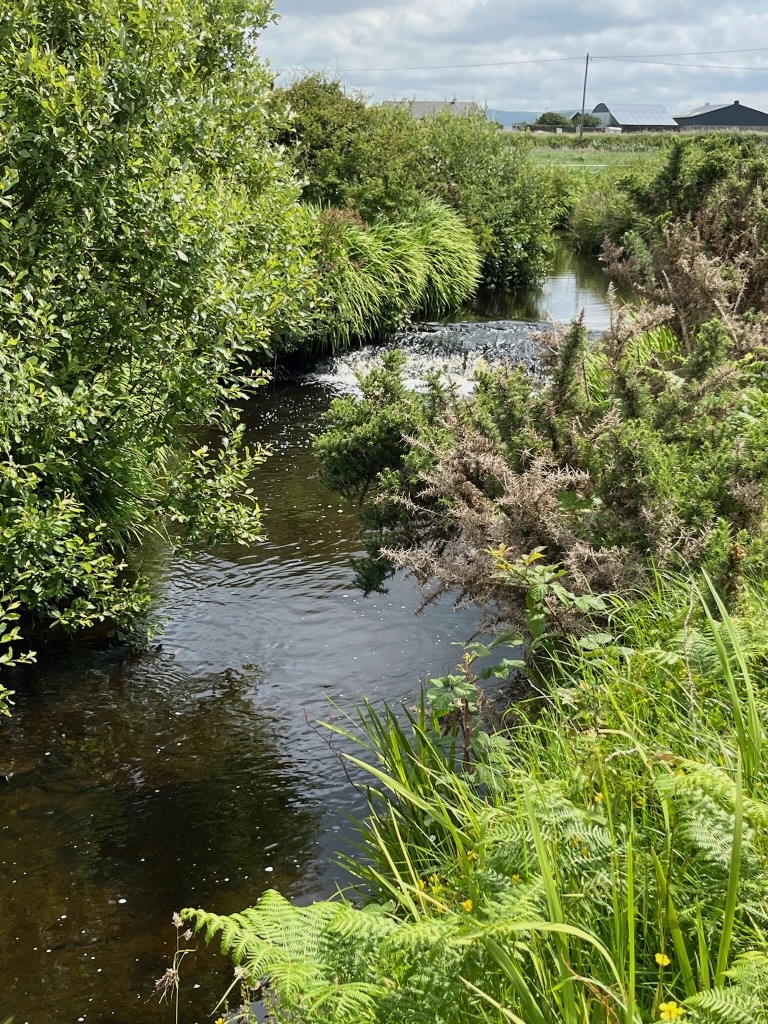
annagh river at kildimo south, my ancestral land, as it flows toward the sea at spanish point

i don’t want to wash it off. instead, i am in that necessary liminal state of in-betweens, when a newfound knowing needs time and space and silence to seep in. when we’re wise to open wide our pores, to fill our lungs, to allow our synapses to affix to new neural pathways. to come to indelible understanding.

if that seems an odd way to describe an adventure, so be it. my days in ireland were so much more than a “trip,” a “vacation,” a “getaway”—banal descriptors for folderol and whimsy, with suitcase attached. instead, my days in dublin, cork, and county clare were something of a journey in its deepest form: a coming to know someone, some place, i’ve always known but not yet fully met. and that someone, in fact, was me. a deep-down part of me long stirring, long felt, but not yet seen in fine focus. as if untold parts of me longed to know from whence they came. and not just my affinity for cloudy days and wit and poetry. and why i feel the hand of God so profoundly in the morning’s mist, and the moonbeams’ amber glow.

or maybe it was propelled by a yearning never sated, a yearning my whole life long to know the people from whom i sprang. the grandmother whose stories have stirred me from the start. the father who spoke so little of his past, and whose answers to my questions died when he breathed his last in 1981.

maybe my search was a daughter’s reaching for the hem of her father’s cloak. to run my fingers along its nubby threads, to stitch in quilt squares where the cloth had worn too thin. maybe there is something of longed-for re-union in my diligent tracings of ancestral ties and tales. maybe my father is who i try still to reach.

and then there’s the radiant present, the crucible of time that amplifies the here and now, the intense knowing that each and every hour is a gift, and before it ends, i intend to magnify the time, to expand the boundaries of my heart, to leave tracings on the ones i love so that my imprint might not fade so quickly. so that some part of me forever lingers in the one place where it matters: their blessed hearts.

i remember, in the darkest turns of these past two years, and especially at the turning of my latest birthday, how deep the wish i made, when i closed my eyes and drew a deep, deep breath, one that filled my lung and a half. i wished with all my might for precious time with my boys, time huddled close, time punctuated with the percolations of laughter without end. time punctuated with the sort of silence that is sodden even its wordlessness, because you know each other so well, so adoringly, you’ve room for time inside the vault of your own thoughts.

my wishes, every one of them, came tumbling true in the trek we took these past eight days, returning to the homeland of my soul, my spirit, my way of being. 

in that uncanny way we can reach across time, reach into a past that was not ours, i’ve long felt that tugging cord to my grandma anna mae, the kentucky schoolteacher whose papa, thadius shannon, hailed from the granite house at annagh bridge, in county clare, on the wedge of land squeezed between the confluence of the annagh and the kildimo rivers as they flow into the sea at spanish point. 

to press my sole onto that soil, to walk the land and listen to the rush of water playing over rocks, to do so with my boys at my side, and my God shining down and through me, was to feel bathed and baptized in life as sweet as it allows. 

it’s too soon, really, to step back and make sense of all of it, so at this just-home stage i’ve little but a mosaic of moments i’ll not forget, and which i’m scrambling to scribble onto the page in hopes of holding on for a good long while. among the litany i’m pressing to my heart, re-looping through the sleepless jet-lagged night, there are these: 

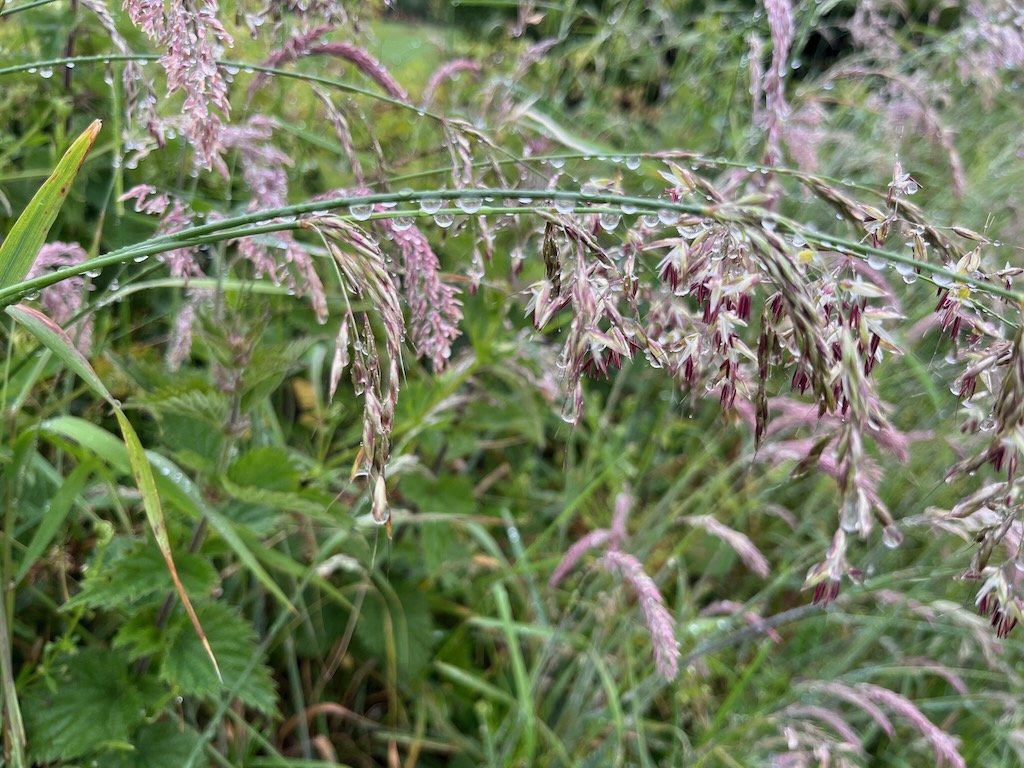
awaking on a rain-sodden morning when the country lane was still puddled, and the branches dripping diamond-like droplets of morning drink, and stepping into the soundscape of magpie and rook and lowing cows and calves. the whir of the milking machines beginning to rumble before the roar. 

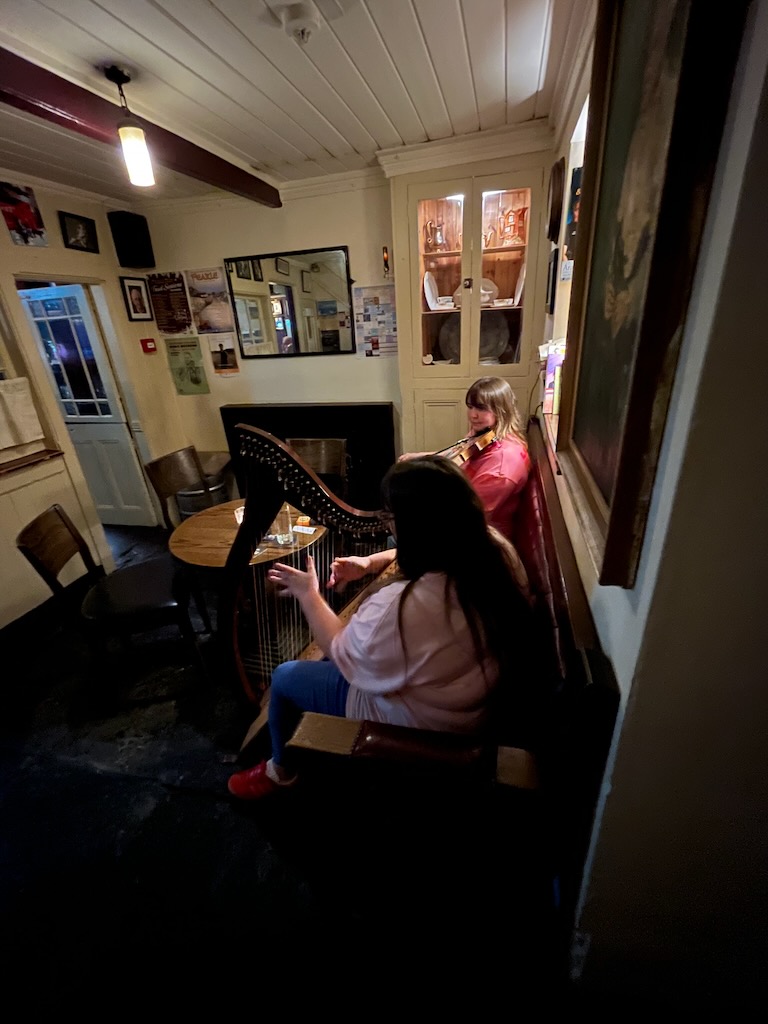
arms that reached out to wrap me in the minute i knocked on the door and introduced myself as a long-lost cousin, no questions asked. the rounds of drink at the pub that night where we gathered to tell tales above the lilt of harp and fiddle. and the hilarity of the cousin who moaned, “oh jezus!” when i asked if they might have a prosecco. and when i leapt into the self-mockery right along with her, she continued on, “you’re in a pub in a wee town, jezus, what are ya thinkin’?” or words nearly to that effect. 

driving down country lanes that turned like corkscrews (in fact one set of directions included the name “corkscrew hill,” and i feared dear blair’s heart might skip a beat or two, if not pause altogether), and threaded through ancient arbors where branches on each side of the road reached out to join hands.

the plates of food that arrived with herbs from the sea and tendrils of sweet pea, the butter from cows who sleep in the fields, under stars and moon each night and chew the sweet grasses by day, the fish you imagine leapt from streams just beyond the kitchen where little more than heat was put to flesh. 

the hilarity and wit. of just about everyone. from the taxi drivers in dublin to the tattoed and multi-pierced fellow clearing away your luncheon plates.

the charms of signs like: “matchmaking goat farm.” do they matchmake goats or give you a choice? a mate or a goat, your pick. (photo to come!)
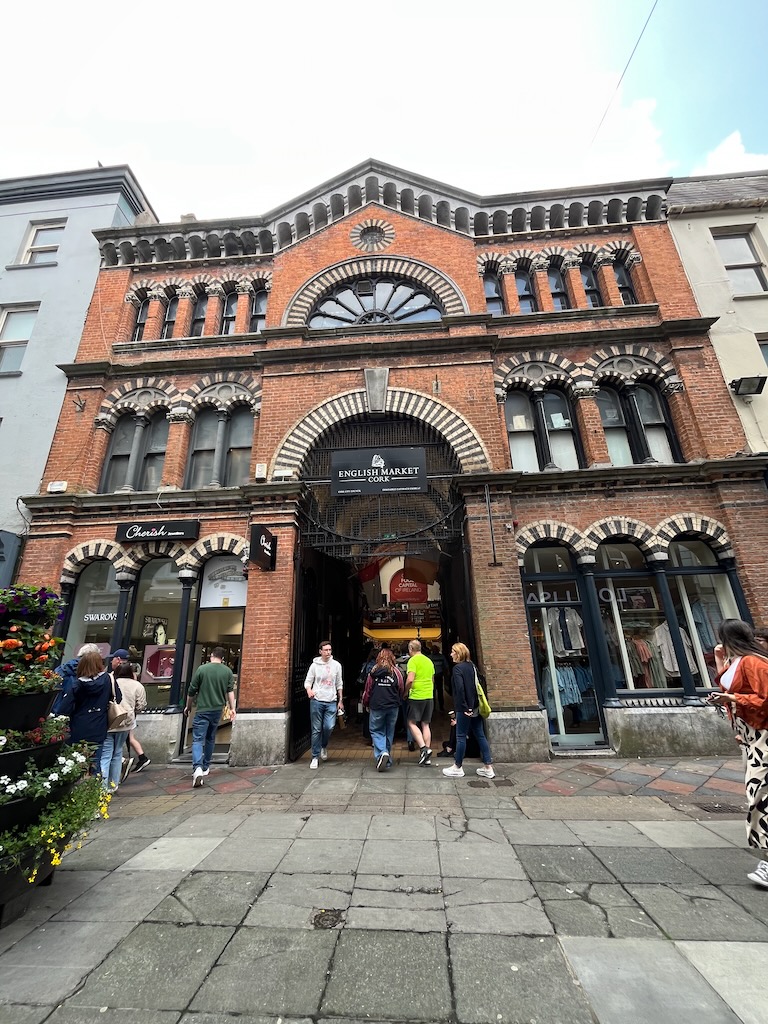
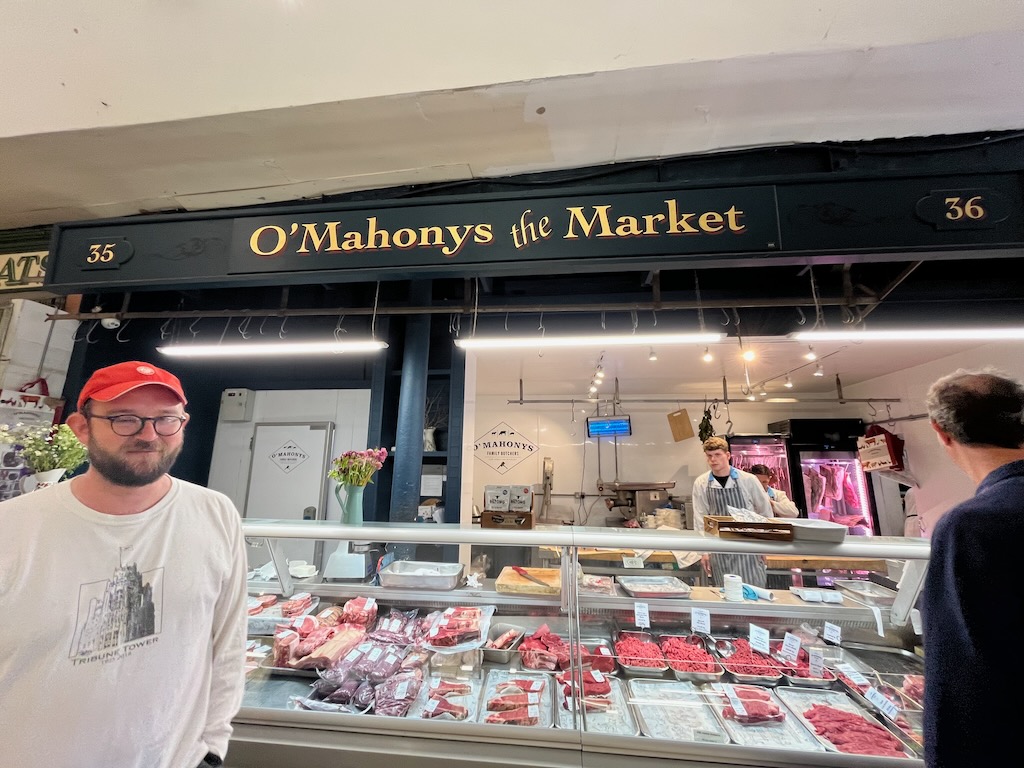
the english food market in cork, a veritable labyrinth of fresh-from-the-earth-and-sea delicious. a butter chicken pie in a crust so flaky the only apt desciption, according to what i witnessed in the expressions of my boys, might be (excuse my language) “orgasmically delicous.” 

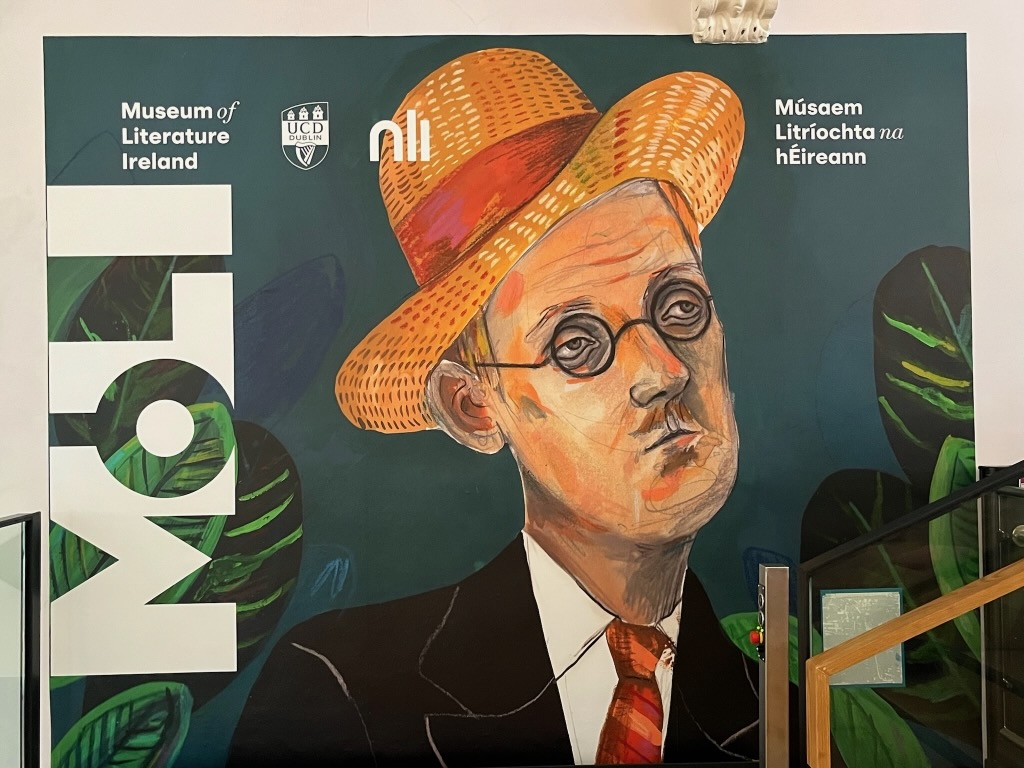
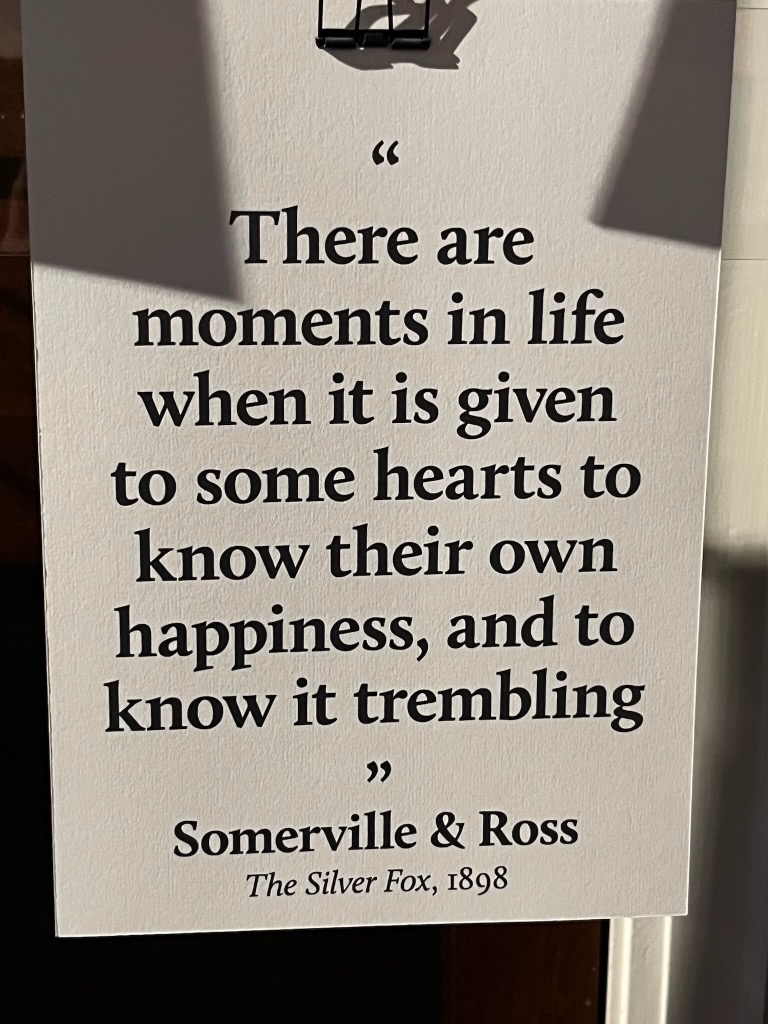
a whole museum that heralds words, and language, poetry and wit, the Museum of Literature Ireland, where Copy Number One of Ulysses basks under glass, and whole rooms are filled with epigraph upon epigraph, one of those rare places on the globe where human language and its infinite configurations are held up as priceless treasure. 

the straight-from-a-storybook propietor of the Dublin pharmacy, Sweny, where on page 88 of Ulysses, in the chapter “Lotus Eaters,” Leopold Bloom buys his lemon soap. the drippingly elegant gent who, upon barely-whispered request, broke into Gaelic song while sipping from his vat of burgundy wine on the eve of Bloomsday. 

i’ll turn it over here to a bit of Joyce and his telling of Sweny’s:

“The chemist turned back page after page. Sandy shrivelled smell he seems to have. Shrunken skull. And old. Quest for the philosopher’s stone. The alchemists. Drugs age you after mental excitement. Lethargy then. Why? Reaction. A lifetime in a night. Gradually changes your character. Living all the day among herbs, ointments, disinfectants. All his alabaster lilypots. Mortar and pestle.”

seán of seán’s bookshop

the bookseller Séan in Milltown Malbay, the town from which my people hail, whose shelves near collapsed under the weight of thousands upon thousands of tomes, with that telltale musty smell of words embalmed in ancient ink, and dusts of time a welcome attribute. 

the countless times we heard the sympathies for us pitiable americans who at the moment seem to find ourselves under the rule of the “feckin ijeet.” eye rolls every time only served to emphasize the point. one cousin told us they keep keen eye on news from america as if it’s real-time soap opera leaping from the daily news. 

the infinitely comforting knowing that 45 years after my first and only other trek to the land of forty shades of green, it’s truly not too changed. sure, there are homes built bigger and sturdier than i’d seen before, but ancient thatched roofs are not a rarity, stone walls still scythe the hillsides, a geometric grid that bespeaks hard labor never shirked and an undying reliance on the old ways, and town centres present row after row of storefronts in kaleidoscopic colors, no pink too pink, no purple or orange too vivid. as one new friend, a poet and old irish professor, told us: in a land so gray, a language rife with wit, and a townscape of vivid palate is but necessity. 

my friend Tadhg Ó Dúshláine, poet, writer, professor of Irish

and i shall let my poet and professor friend tadhg close us out here with these words sent to me upon our arrival home….

It’s just after 8.00 a.m. here in West Kerry, as I look out at the sun rising over the top of Mount Brandon, the holy mountain of the Navigator, across the bay of Smerwick Harbour (google Battle of Smerwick). The ebb and flow of the sea and the steadfast reassurance of the mountain reminds us that the flux, change, coming and going, restlessness, which is part of the human condition, is reflected in the sea; just as our eternal destiny is represented by the mountain, to which we lift up our eyes, in the awesome wonder of faith and hope. At times like this I embrace Isaiah’s vision: ‘… and they shall beat their swords into ploughshares’, le cúnamh Dé.

Bíodh lá maith agat agus fan slán.

                                                                         Tadhg.

may you too take the necessary journeys of your heart and soul.


while away, i got notice from my little library that a book i’d requested was waiting on the “hold shelf,” and before i got back in the door, i began to read. it is so fine a read, i am leaving it here on the table should you be poking around for a summer wonder. a new read: raising hare: a memoir, by chloe dalton, described as “a moving and fascinating meditation on freedom, trust, loss, and our relationship with the natural world, explored through the story of one woman’s unlikely friendship with a wild hare.”


and whilst in the little town of milltown malbay (pop. 921), from where my people hail, we stumbled into Seán’s Bookshop, an emporium of well-read books all but falling off the shelves, and curated by a bookseller with twinkle in his eye, and tales to tell till midnight sundown. there, i plucked a tome from a poet i’ve read too sparsely till now. the book, rapture, by carol ann duffy, winner of the 2005 t.s. eliot prize, is aptly described (per the irish times): “brilliant, beautiful, and heart-aching.” here’s but one of its beauties:

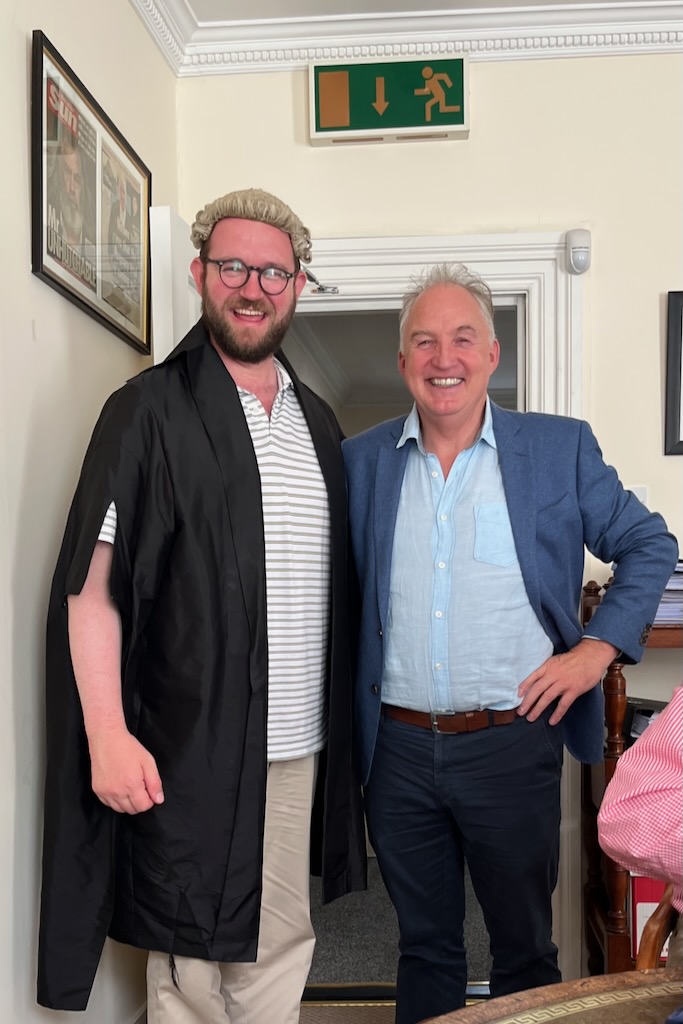
p.s. happy blessed birthday this sunday to my most beloved firstborn, and law professor, will. soon to be teaching within a morning’s drive away, at the university of notre dame law school, another dream come true, prayer answered, and holy wonder for all time.

sweet will with one of ireland’s top barristers, brendan grehan, who shared his silks and wig for the occasion.

what journeys home have called to you, those taken or not yet taken?

and may the full sunlight of the solstice warm you and bring radiance to your soul….

the names we are called, and the names that call us

my little irish grandma mae, as my grandpa, “choo-choo papa,” received his 50-year gold watch from the L&N Railroad, for which he was a locomotive engineer on the cincinnati-to-corbin (ky.) line

the email from synagogue came back in the spring. the rabbis and cantor had been thinking for awhile about some of us. an odd lot of us. we were the ones who’d found our way, through one inlet or another, into the river of jewish life — at synagogue and at home — yet “don’t identify as jewish.” (that wording, so very of the cultural times, cracks me up. in the old days wouldn’t we simply have been “not jewish”?) 

they, this lovely trio of clergy, all young, brilliant, and devoted to their callings, recognized that we were in many ways bringing our lives to the poetries and prayers of judaism, and that judaism’s poetry and prayers had found its way fairly deep into our lives. they wanted to honor that. 

they weren’t asking that we convert, weren’t asking us to sign on any dotted line. 

but they had a radical idea, deeply radical when set against the context of a tradition that long saw intermarriage as the great scourge, one of the most grievous threats to the ancient and blessed religion. the radical idea of our rabbis and cantor was to give us each a hebrew name. but not without deeply engaging in weeks of contemplation and discussion, coming to synagogue on wednesday nights as summer turned to autumn, as the air grew cooler, and the trees more golden and crimson. 

we talked the first night about the journey into judaism, they asked us to talk about moments of pain, times we felt excluded, rejected, pushed to the margins. or when we’d felt welcomed. we talked about being an outsider versus insider. did we feel we had a voice in the conversation, in the congregation, at our own kitchen tables, and even more broadly in the jewish world?

they asked us to tell the stories of each of the names we’d been given at birth, and the names we’d chosen to carry through life. they asked us to unspool the narrative of nicknames that ebbed and flowed through our stories. 

and they asked us to think deeply about what a name means. and to pull from our lives and from Torah particular names of particular souls who somehow stirred us. with whom we felt some deep, almost palpable pull.

i knew fairly quickly whose pull i was feeling. but before settling on my little irish grandma, the only grandparent i never knew, one with whom i’ve long felt an uncanny cord, i briefly considered sarah, she who — like me — thought she was “barren,” and found out at the ripe old age of 90 (i was nearly 45) that she was “with child.” and who greeted the news by laughing out loud. sarah, like me, is the archetypal old mother.

we had homework: a sheet of essay questions pondering names, all of which were meant to evoke for the rabbis a few hebrew names that might be fitting for each of us. after poring over our essays, they sent us our custom-curated list of possibilities. i didn’t choose from high up on the list; i found my name deep down in the unlikelier choices. but, turned out, it was a tight fit. a name with the same roots, the same meaning, whether celtic or hebrew. (you’ll see below.)

once we had our names, and had written the stories of how we came to those names, and why, we were invited to synagogue for a special friday night Shabbat service, where we’d be called to stand in a half circle on the bimah (the raised platform from which the Torah is read). one by one, we’d speak our names, and tell our short stories. 

before we told our stories, the rabbi, who i love, and whose name is ally or allison, (i don’t know her hebrew name, i just realized), set the stage with the eloquence and grace i’ve come to think of as her trademark, her inimitable magnificent, heart-melting way.

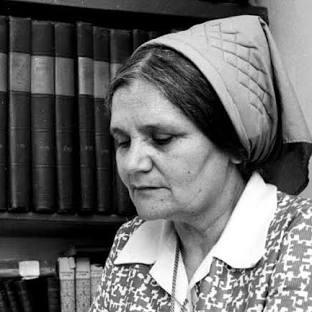
“Jewish tradition believes that names have great power,” she began. and then she read this poem from the israeli poet zelda, who is known widely by only her first name: 

israeli poet, zelda

“Each of us has a name given by God and given by our parents.
“Each of us has a name given by our stature and our smile and given by what we wear.
“Each of us has a name given by the mountains and given by our walls.
“Each of us has a name given by the stars and given by our neighbors.
“Each of us has a name given by our enemies and given by our love.” 

in a sentence that took my breath away before she called us from our pews to stand in our half-circle, to step to the podium, she said that we’d “earned these names through sacrifice and grit, through tenderness and care. they earned these names through their openness, their tolerance, their expansive and soft hearts.”

that sentence made me riffle through the rolodex of my life, through the hard conversations at the kitchen table, the tears on long telephone calls when a Jew and a Catholic were hashing it out in the three years before we married, trying to decide whether we could work it out, whether we could braid two faiths, two traditions, two deep ancestral ties into something that might even be greater than the sum of its parts. made me think of the blessing ceremonies in our tiny little garden on Wellington Avenue, when a rabbi and a priest poured their words, their wisdoms, and their blessings on two baby boys we were both blessing and naming (with eight years between each). made me think of the pair of Shabbat candlesticks, layered with wax from candles dripping and dripping over the years. made me think of the lamb stew we’ve stirred at the cookstove, my beloved and i side-by-side. 

i thought how, indeed, both of our hearts have softened, have opened, have grown.

and then it was my turn to step to the podium, clear the tears from my eyes, and read these words to those gathered:

I’ve spent much of my life peeking beyond the borders of what was before me. Yearnings have always stirred me––reaching for what I don’t yet know, reaching for the holiness I deeply believe in, reaching for loves long after they’re gone. 

And there is a particular grandmother, the only grandparent I never met, who has always, always animated my imagination. I yearned to know this daughter of Irish immigrants, a Kentucky schoolteacher, who, according to family lore, was the first woman to graduate from college in the commonwealth, who snagged the highest score on her county’s teachers’ exams, and just as importantly, could wring a chicken’s neck!––a praiseworthy prelude to many a Sunday supper in the Bluegrass State. 

Her name was Mae, Mae Shannon, and her only child, her beloved child, was my beloved long-gone papa, Eugene Shannon Mahany. 

Until now, my connection to Mae has been purely by heart, and through a few fading photographs that show we share an uncanny resemblance. 

Her name, Mae, is a Celtic derivitive of Mary or Margaret, and one of its meanings is “pearl.” So, too, the Hebrew name Margalit—yet another “pearl.” 

Considered the gemstone of inner wisdom, the pearl is one of creation’s wonders, formed through the mysterious interplay of oceanic depths and the celestial pull of the tides. 

The pearl is formed when the mollusk, or bivalve, senses an irritant—a grain of sand, perhaps—which it enwraps by secreting layer upon layer of minerals, all extracted from seawater. Sand to seawater to pearl.

Ergo, pearl equals protection, luminous protection. Its very creation, an equation of awe. And the pearl, a moonlike orb, is thus said to be a vessel for water’s energy, to carry the lucid movement of the tide’s ebb and flow. It’s believed to hold deeply healing powers. 

Its beauty, formed in unseen depths. 

Radiance, evolved over time. 

The pearl, Margalit––the Hebrew name of my choosing––my tie at long last to the little Irish grandma I so long to sit down beside. And whose inner luminous wisdom I so yearn to absorb. 

And mightn’t she be wonderstruck to discover she’s inspired her only granddaughter’s new Hebrew name.

love you, dear chairs. by your names that i know, and your names that i don’t.

what’s the story of your names?

p.s. our rabbis are pretty sure that ours is the first congregation in the U.S. to undertake such a process, the giving of hebrew names to those who don’t identify as jewish.

and tonight we begin the highest and most solemn of high holy days, yom kippur, the day of deep atonement.

the roof and the trees under which i grew up

i’d told myself that ever since the night my papa died, when i walked in that dark house, his tennis sweater flung over the back of a kitchen chair, as if he’d breeze through any minute, the night when i sat in the den afraid and unwilling to take in a breath, for i didn’t want to let go of the last one i breathed when he was alive, i’d told myself that house was mostly hollow to me. 

it’s held a chill for me ever since. 

i didn’t think i’d much miss it.

but then i drove back the other day. drove back to walk through the rooms where no sound was stirring, not even the whir of the furnace. drove back to see rooms emptied, the rugs a radiograph in reverse where the geometries of now-taken-away furniture shone bright against decades-worn dim. where you could make out the plot where my mama’s four-poster bed had been, and the circular table beside it. where the den, too, was a checkerboard of absence, chairs and a couch lifted and moved. 

this week my mama moved out of the house where she lived, the house she called home, for six whole decades. long long ago, when my papa got a job in chicago (an ad man in the age of the Mad Men), and they’d moved us again from a faraway city, she’d picked that house out of many along the north shore of lake michigan because it was the house with the oaks. more than a half dozen big old oaks. maybe a whole dozen once upon a time. my mama loves big trees and big skies. the house gave her both. 

my mama moved into that house in 1963, with four of us under third grade; two, still tricycle-bound. one of us, the fifth among us, was born to that house. never knew another till the day he went off to college. we used to joke that he and my mama are the only northerners among us. all the rest were born south of the mason-dixon line. we all grew up, though, on brierhill road, a winding dead end of a street carved into the woods. a golf course just across the way made for sixty years of unobstructed sunsets for my mama, who kept watch dusk after dusk through the kitchen window. the creek and the crawdads, the green pond, and the logs in the woods made for my playthings, the topography of all my imaginings.

i made my way back there this week, after it was mostly emptied, when i knew i could be alone. i wanted to walk room to room to room, and up the stairs to my old bedroom at the top of the stairs. the room where you can still find my sixth-grade scribble on the wall in the closet’s back corner. the room where so many nights i looked up and out through the oaks into the stars and the moon, where i rocketed all of my prayers and my dreams. 

as i drove there, to the house at the bend in the road, i thought of all that had happened there. how i got married there, under the trees, breezing through the garden gate flanked by all four brothers. how, ten years before that, we’d sat round the kitchen table the night after my papa died, and tried to make sense. i thought how that was the house from which i was taken to hospitals, especially the time at the end of high school, and how our family pediatrician (yes, he really truly was Dr. Kamin, the most beloved housecall-making pediatrician that ever there was) came in the middle of nights when i was burning with fever. i thought how i’d close the door to my room in those sodden sulky middle-school years when i was sure no one loved me, and how during high school i’d yank the telephone cord from the kitchen round into the dining room, as far as i could uncoil it, to steal a wee bit of sanctuary amid the roar of a family of seven. 

and then i walked the rooms, poked into drawers, shooshed away cobwebs, and inhaled it all one last time. when i got to the oaks out back, looked into the grove where my little girl log cabin once had stood, when i counted the feeders that still swayed in the november breeze, i felt the tears begin to pool in my eyes.

maybe the old house wasn’t so hollow to me, after all. maybe the old house where we’d all grown up, the house that had so long harbored my mama, maybe it would be hard to leave behind, to say a proper goodbye––and thanks–– to. 

my tears spilled one last time on that bumpy old earth under the oaks on brierhill road. 

i stooped to pluck one last acorn, now tucked in my snow coat’s pocket, and then i climbed in my own red wagon, the one that has ferried my very own boys through their growing-up years, back and forth plenty of times to their grammy’s. and i drove ever-so-slowly away. 

but not without whispering a very deep blessing for the house that held us all, and mostly my mama, for so very blessedly, blessedly long. 

what do you miss most about the house where you grew up?

when the history you seek is your own

The Dixie Line of the L&N Railroad

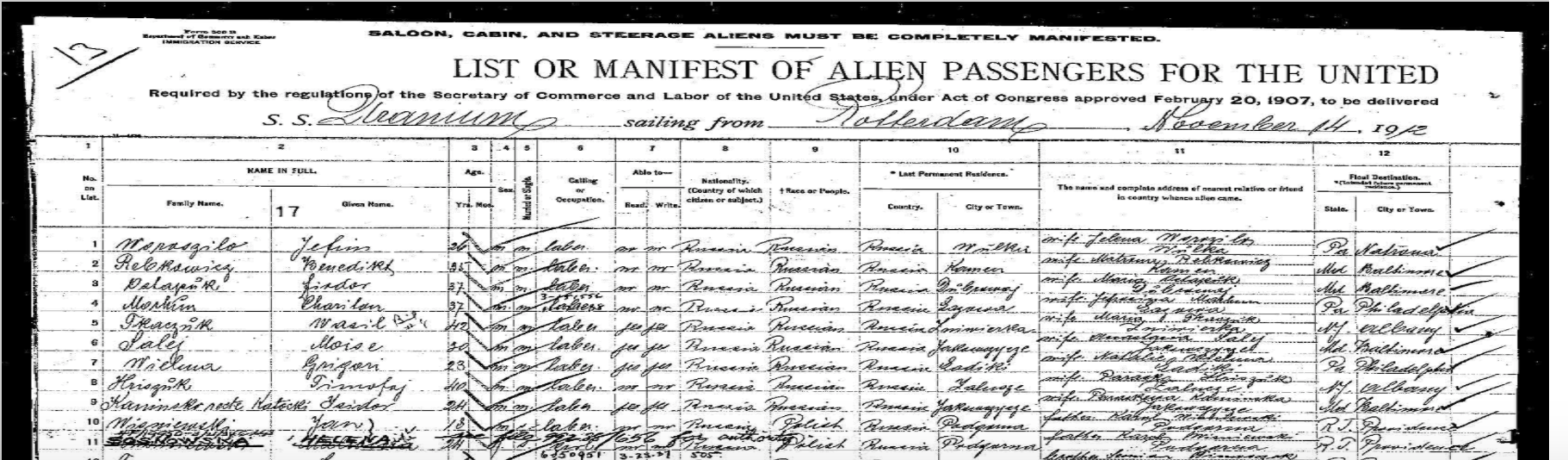
it started over matzo and maror, the staples of passover, when amid cups of wine (they’re commanded, four of them), i started to pepper my mate with question upon question (more than four of my own; again, four are commanded). i was asking about seders of his long-ago past, curious about each of the characters, and the long journey from shtetl to tenement to, well, ivy league colleges and a pulitzer prize. because i tend to poke around in the vaults of history, root around for tidbits and clues, i remembered i’d once tucked away what we thought were steerage records of one isidore kaminski’s arrival on nov. 14, 1912 from russia by way of rotterdam, on the s.s. uranium.

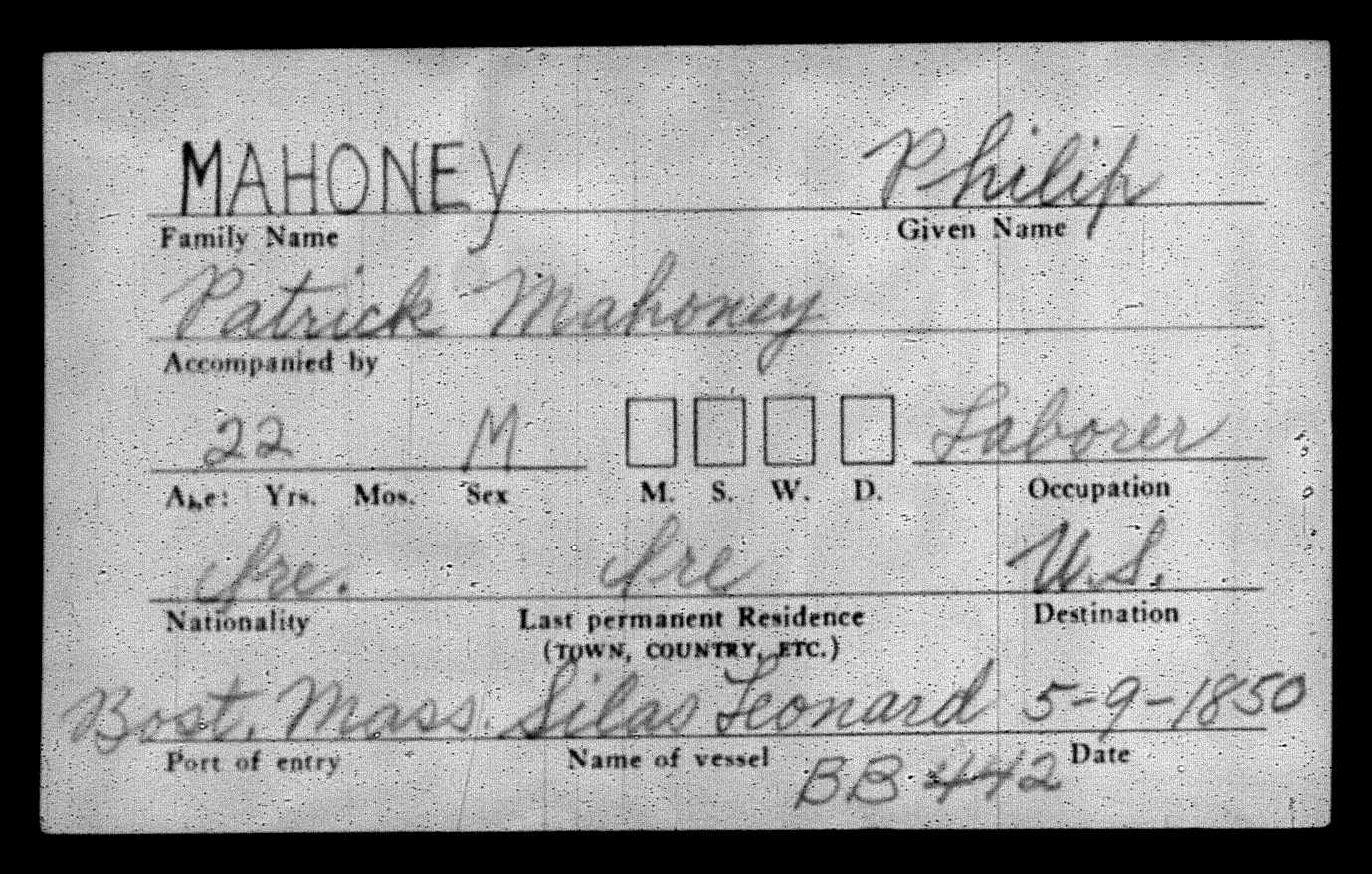
and upon pulling that sheaf from my stash, i felt my curiosities piquing. i was suddenly hot in pursuit of my own irish peoples. and, lo and behold, i found philip mahoney himself arriving in boston harbor on may 9, 1850, on the silas leonard, a steerage ship that only three years later would be shipwrecked off the coast of newport, rhode island.

the deeper i look the likelier i see how often the fact of my existence is but a long, long series of near misses and narrow escapes.

and, often, when poking around long-ago times when survival was iffy, the tales you unearth can knock you back for a while. it’s the price of paying attention. and i welcome it, though it might take a few days, maybe some months to really distill all i discovered this week.

best of all, i discovered a long-lost cousin, a cousin whose tales criss-cross the pages of the new york times, among other adventures. we share a great grandmother and great grandfather. tragedy struck his branch of the tree right from the start, when our great grandmother died birthing joe’s grandmother. my grandfather would have been seven, left without a mother and with a newborn baby sister. i am still filling in all of the pieces of a story far sadder even than that. i am imagining––enlivening––all of the characters in each of the plots, thrusting myself back in time, peeking out from under the tables and around all the corners.

that’s what is often the case for those of us who find ourselves compelled by the stories of the past, stories we know in some way inform who we are and how we got to this moment. the few cousins i’ve met along the way, one of them one of the true treasures of my life, all seem to share a gnawing curiosity, a wanting to fill in the blanks. to step back from the present and take in the whole sweep of the story.

it’s how i discovered an uncle had died in the great battle of iwo jima, slashed with a bayonet in the deep of night before he could leap from his tent. it’s how i filled in so many missing pieces of the grandmother my own father so rarely spoke of, a silence i sensed was fueled by a heart so broken by her absence he chose to stay mostly wordless when it came to talk of her. though he did tell me once––and with my father the less he said, the more emphatically you knew he meant it––that he saw so much of his mother in me.

i am fairly certain i get lost in the mists of family history in my feeble attempt at resurrections. oh, what i wouldn’t give to sit at an old maple table, fueled by tea for the women, scotch for the men, and indulge in the swirl of their stories. maybe it’s reaching deep into the vaults––frustrating as it is to run into the dead ends and cul-de-sacs of hard-to-read 18th-century cursive and records gaping with holes––maybe it’s reaching back into time, barely brushing up against the most basic of biographies, that fills in a sense of just who i am, and propels me to make of my one little life just a little bit more than i otherwise might.

maybe it’s that the long sweep of history puts me more squarely in my place, highlights how tiny a dot is my place in the long ellipsis of genetics and time.

this week i spent a long time looking at the mahany side of my family, a side i knew too little about, a side whose story is much sadder than i ever realized. my dad said so very little, and my dad was gone way before i’d asked even a tenth of my questions. the last significant thing i remember my dad saying to me, one day not long after his very last christmas, was “kid, you have a real sense of history.”

indeed, it seems it’s a hunger.

and all these years later, i’m still trying to ask my next question, to find the stories he never told.

with all the love in my heart, this one is in its own way a love note to my dear beloved p. shannon, a third cousin who more than anyone i know has taken me by the hand deep into the vaults, and pointed the light at each and every turn. bless you paddy, i will adore you till the way end of time…..

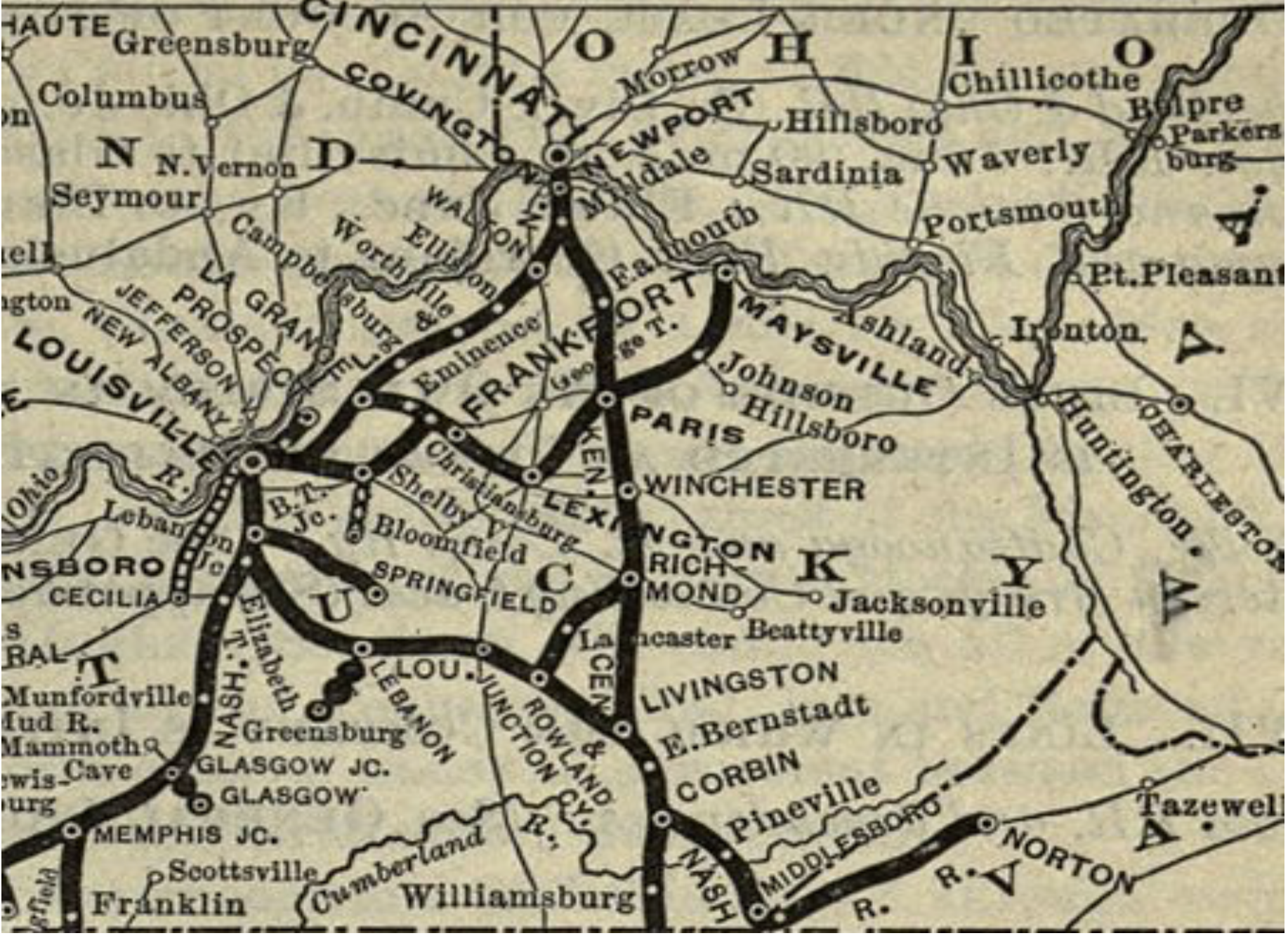
the map above is the rail line through kentucky where my choochoo papa (my paternal grandfather) was the locomotive engineer for the Louisville & Nashville Rail Road at the early age of 26 until his retirement some 50 years later. he––along with my dad and the grandma i never knew––started out at the little dot on the map marked “paris,” as in kentucky not france, a dot on the map that will forever be my old kentucky home.

manifest of the s.s. uranium that carried our boys’ great grandfather to america in 1912
my great-great-great grandfather’s record of arrival from ireland in 1850

have you poked around in the attic of your own family’s history? are you propelled by curiosities? i suppose, after a lifetime of bylines, i’ve left more than my share for some curious soul in generations to come. have at it, sweet girl, i only wish i could join you…….

the dangers of not letting go. and the dusty path toward redemption.

the homestead, circa 1957

this is not a story about religion. though it’s a subject with zealots and slackers.

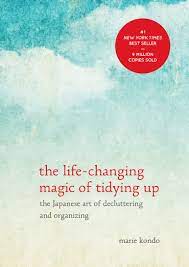
marie kondo, the porcelain doll of a declutterer, calls it sparking joy (and swears it can change your life). i call it getting covered with cobwebs. and eye-watering dust. and reminding myself of my proclivities for not letting go of the sentimental. 

but i took a trip to new jersey, to a white-clapboard house that might have been built in the early 19th century, and might have been there (in one form or another) as early as 1789. 

and everything changed. 

inside that old house were dozens and dozens of orifices, each one packed to the brim. to open the door to the attic was to trigger a domestic avalanche, the sort you might find spelled out in the weekly gazette, where some poor soul was buried alive beneath decades-old shoeboxes, crumbly yellowed news magazines, and strings of christmasy lights that might never have burned. 

when your job is to pack up the kitchen, to wrap not only the skinny-necked goblets, but to sift out toothpicks, circa 1960, and mismatched tupperware lids by the dozens, you swiftly absorb an abiding commandment: thou shalt not leave behind a house stuffed with stuff thou hast not had the courage or chutzpah to preemptively toss. 

you get cured right quick of your stockpiling ways.

marie kondo, whose best-selling tidying book i once was assigned to survey, makes the closet-clearing task sound downright zen-like, as if standing before overstuffed shelves, blithely sorting and chucking and plucking for joy — would that be placing the object in the palm of one’s hand, awaiting the wee bit of voltage that’s the signal for “keep me”? — is the next best thing to a trip to the spa. (no wonder i tossed aside that pretty little spark of a joy-jolting book, the book that sparked little but befuddlement back in my stuff-keeping days.)

the truth is, i found packing up the kitchen of someone i love a hauntingly heart-tugging endeavor. i unearthed the red apple-shaped placemats she must have delighted in setting on her breakfast table, or when a struggling student she lovingly tutored came for after-school cookies and milk. i pulled from a drawer the crystal-handled cake cutter that might have sliced into chocolatey layers on countless occasions, and i heard once again the peals of laughter that echoed through the house’s post-colonial walls. i discovered my mother-in-law’s absolute obsession for all things valentine’s day; heart-shaped candy dishes, red paper doilies, and 101 variations on heart-speckled pink paper napkins. 

it’s as if a life is being unspooled wordlessly, a silent reel of thing upon thing. each one with a story you can only imagine, each one a frame still palpably pulsing, but only just barely. and you feel the slipping away all over again.

i kept picturing my mother-in-law peeking over my shoulder, wincing each time i tossed a tchotchke into a trash bag or pitched some trifle to the give-away pile. i felt guilty. i felt tender of heart. i wiped away dozens of tears. (and i kept those few things that belong in the family treasure heap: a dough cutter (highly likely unused), a trio of age-worn red plates (the ones i ate off dozens of times), the red-plaid apron i long ago sewed for her birthday, and now frayed at the ties.)

but then, stripped of my long-held tossing hesitancies, emboldened to not bequeath such a task to my own two boys, i came home and applied my newfound thick-as-reptilian toughness to the orifices i call my own. all week i’ve been standing akimbo in closets and tucked-away corners, dispatching and discarding with gusto. whole bags have been filled as i’ve scoffed at the millions of times i’ve stashed some odd something away, long deluding myself that some day i might find reason to put into action whatever was the odd esoterica. i now know that someday never comes. 

and my new best allies are the fine fellows at goodwill industries, who handily roll out the big blue bins every time they see my red wagon pulling into the lot. 

it’s hard work for the heart. and i don’t mean the muscle that’s doing the pumping. i mean the ineffable filaments of said organ that cling too mightily to the objects of everyday living. the invisible cords that — in some of us anyway — tug too hard in the attachment department. 

to excavate the closets and cupboards of a life long lived is to sweep across the narrative told in dusty old things. in the story told from the long life i hope is mine, i want the people i leave behind to lift up each object and know it sparked me pure joy. 

but more than that, far more than that, in the now, i want my life to not be buried under the crumpled weight of stuff that niggles at me, taunts, “why on earth are you holding onto me?” why not let go, and be freed from the crushingness of closets that threaten to topple, drawers stashed with missing and misplaced parts, and the generalized sense that i live in a house that might split at the seams? 

i want only the things that conjure a someone or sometime or someplace i loved. i want to live lean and clean and not take up more than my share of the room. i want a house without the ghosts of fibber mcgee. i want a lightness of being.

mostly, i guess, i want to pare it all back to the essence, the true essence of joy — unencumbered.

turns out, marie kondo was right after all.

how do you rate in the declutter department? are you a stasher or trasher? if you told your life story in objects, what might be the most treasured pages?

all around, a burrowing in…

the shadows crossed the line this week. the equatorial line that cinches the earth’s belly at the waist. those of us on the upside of that line, we’re in shadow now. minute by minute, inch by inch, we’re tipping away from the sunlight, into the deepening, lengthening shadow.

it’s autumn, season of molasses light. season of hauling out the sweaters, putting seed back into the feeders, hauling out cook pots we’ve not seen maybe in months. it’s the season when deep-down parts of me come humming back to attention. everything about it — the scents, the slant of light, the goosebumps of early morning — seems to me a call to begin the in-burrowing.

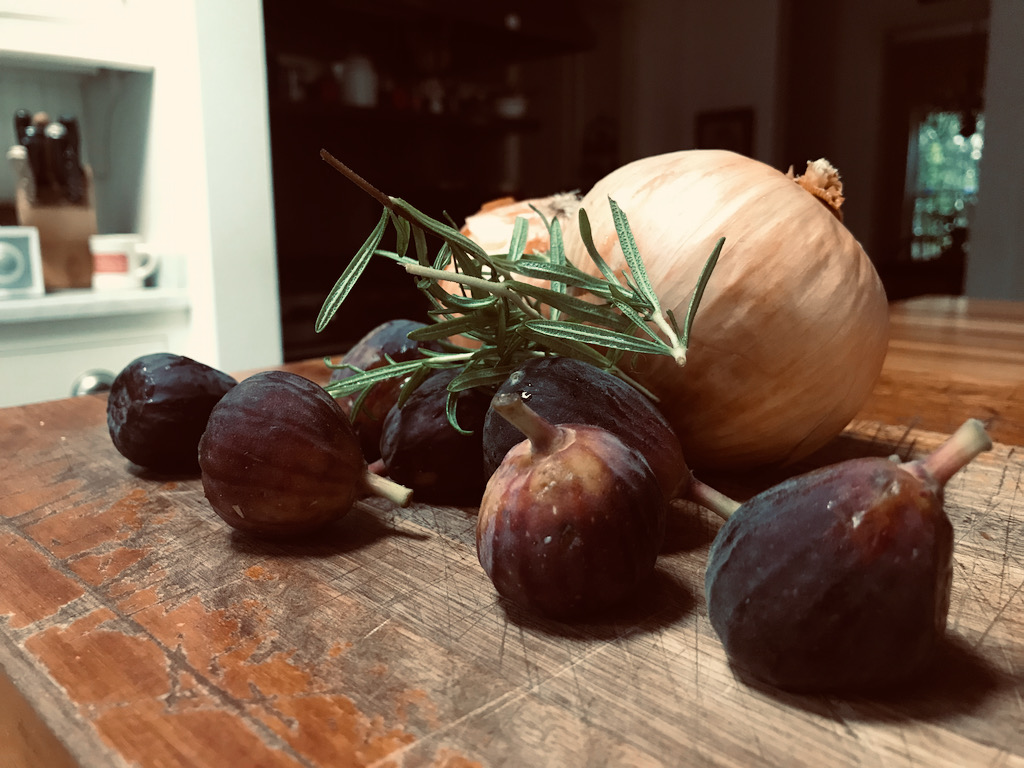
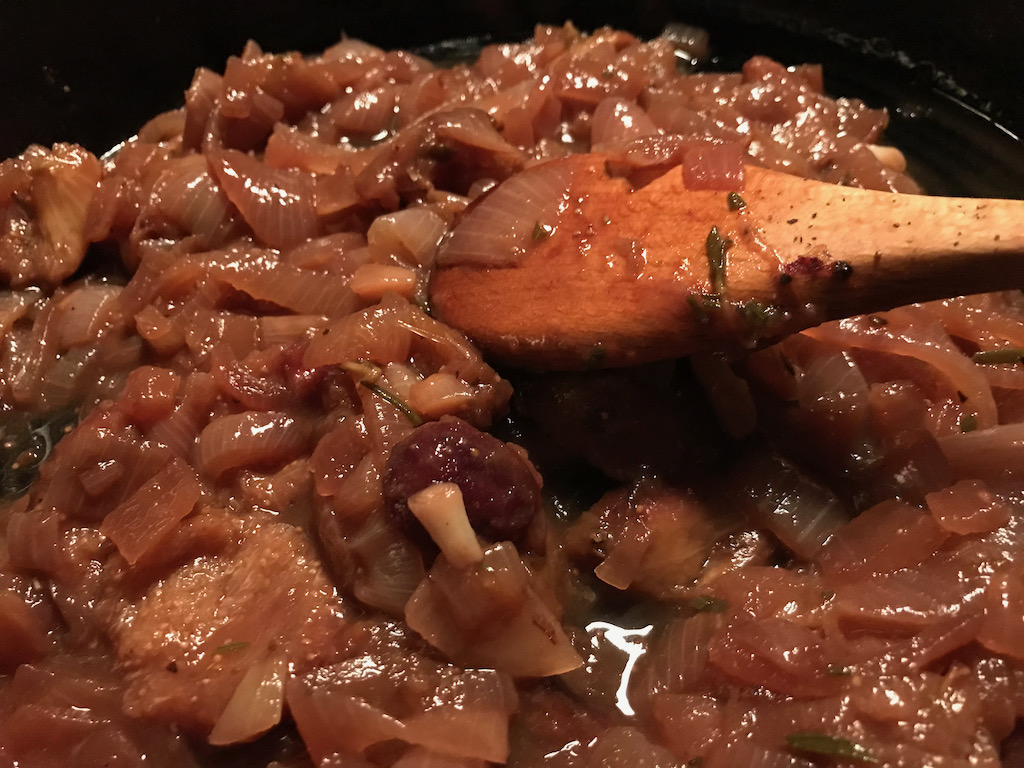
i was home alone all week so autumn’s call had little distraction. i did as instructed: sifted through the bins of bulbs, cut back the ramshackle runaway garden, plucked the last of the bright orange tomatoes off the vine (it’s a game of where’s waldo, really, rummaging through the tangled vines in search of the ones so certainly orange, i know their time has come). inside, in the kitchen where i ply my alchemies and my otherworldly ministrations, i glugged olive oil, chopped fennel, carmelized onions. i invented things to do with figs.

today i amble to the airport, to fly back to the corner of the jersey shore, tucked between a pond and a river, where my husband is sifting through the decades of his family’s home, the 19th-century house where untold stories are being resurrected every day: a wedding album never seen (not by me or my husband, anyway), a dashiki worn on a south american concert tour, a baseball bat commemorating willie mays’ 600th home run. i am eager to be alone in the house of the woman i am very much missing, while my husband is out attending to the thousands of things on a list when you are closing a chapter of lives fully lived.

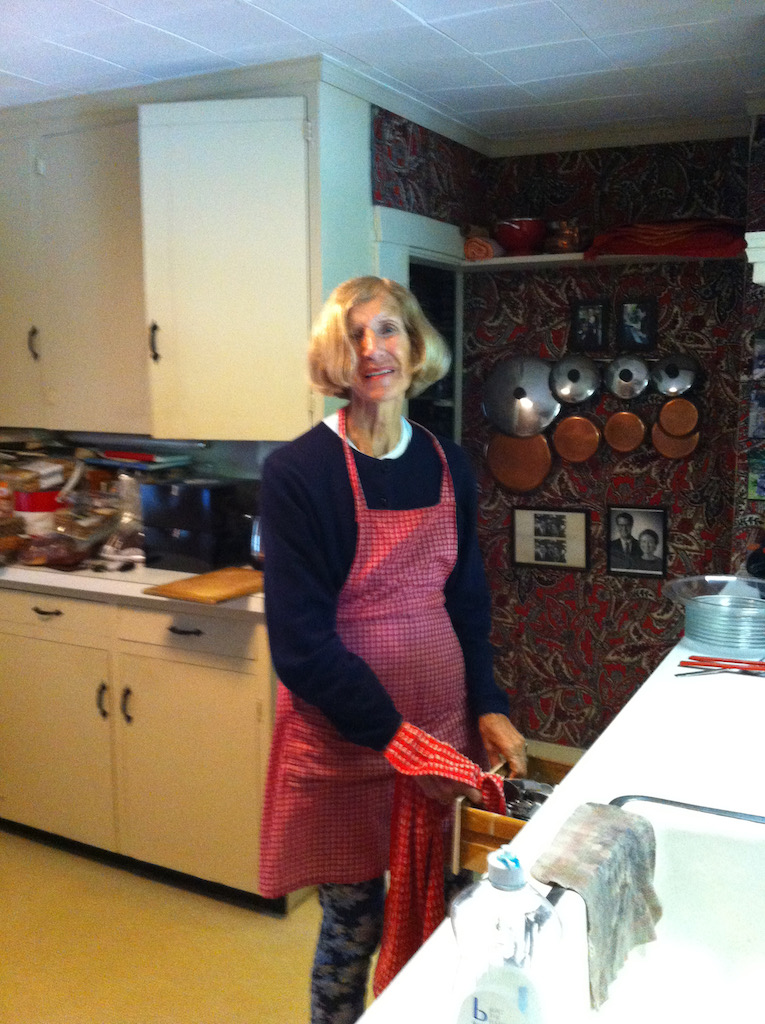
my job is to sift through her kitchen, to pull from the shelf the mug she always shared with her husband of sixty years, each one taking a sip of the morning’s coffee, passing the mug back and forth across the maple table, all to the quiet tune of news pages turning. the sort of sacramental moments that unfurl across the span of a lifetime, of a marriage of decades. i will sift, too, through her cookbooks, the ones i hardly think she ever cracked, for cooking to her — a woman who came of age as the feminism of the 1960s was tearing down the eastern seaboard — was pure distraction, and dinner was apt to be a thawed-out Tastee burger (bun and all tossed in the freezer after a run through the drive-in, especially if selling on discount, and i’m told the pickle never really warmed in the toaster oven that served as her main kitchen appliance). i hear there’s a Settlement Cook Book, circa midcentury, i’ll add to my jewish cookery shelf. i’ve reason to believe it will be in pristine condition, not a single splatter of schmaltz (unlike the one already on my shelf; one given to me when i married my jewish beau). there will be pangs that hurt, and moments that make us laugh till we cry. and moments, too, that do both.

all of it — the days home alone, really alone, and the somber-toned trip to new jersey, where a for-sale sign is now staked in the yard — has drawn me deep down more swiftly than in most autumns. i’m finding i need to work a little harder, tread more vigorously, to keep from going under, into the darker shades of the shadow. once again, there’s little to distract me. so i’m listening to the wisdom of the season. i’m surrendering to the call to burrow in, to put the garden to bed, to stock the cellar for winter. to batten the hatches, throw a thicker blanket onto the bed. to not get in the way of the work of the lengthening shadows.

how do you respond to the shadows of autumn?

carmelized onion and fig confit, upon which i rested a chunk of roast salmon with late-season rosemary sprigs from my garden: dinner for one, a la autumn.

40 years later…

i thought i was fine this week, the week we marked the day and the hour when my dad died 40 years ago. but then, as the hour grew nearer and the twilight grew dimmer, one of my brothers started a chain of emails, everyone chiming in, adding a snippet, a gesture, a frozen moment in one of our minds. my brother michael, in four short lines, haiku of the heart, conjured a moment that pierced me, one that keeps looping round in my head. he wrote how he’d driven down from milwaukee in a blizzard, in a borrowed car with a bag of sand tossed in the trunk—just in case. my other brother, two years younger and all of 19, was riding shotgun. when they got to the hospital parking lot, walking toward the entrance, they saw an old family friend. the man, always stern, must have been wise enough to station himself out in the cold, on the sidewalk beside the gliding glass doors, where he’d been waiting, on the lookout for two sons not knowing, maybe sensing, they were on their way to their father’s deathbed. wordlessly and from a distance, the man shook his head, a gesture simple and somber, a shorthand for the grief soon to come. a sad shake of the head, that’s all, letting them know, before the question was asked, did we make it in time?

it’s an angle of the story i never knew before, or if i did, i’d long ago buried it. it slayed me, that simple short story. ripped me in bits. i thought until then that i was okay. but then i crumbled…..it all came tumbling back, that awful abyss of a night, and the way the grief spread like a shadow, one by one across each of our lives, changing us all forever and ever. i ached all over again for both of my brothers, out in the cold, absorbing the subtle but certain shake of the head. grief comes in so many layers.

***

because i’m writing up a storm for a book that is taking immense and total concentration, because i’ve been underwater for days, squinting at the screen and hoping no one notices if i never get up from my chair, i am re-upping this tale written 14 years ago. how can that be? when my little one sat on my lap watching his grandpa for the very first time. how can it be that that snowy blizzard-y night was 40 years ago?

measuring life in 8 millimeters (from 2007)

it seemed fitting, on the night, at the hour, that he had died, a whole 26 years ago now, to bring him back to the screen. to huddle my children, to wrap up under a blanket, to watch grandpa geno, a grandpa they never met in the flesh, a grandpa the little one says he remembers from heaven, to watch him come quite back to life. on a screen.

it was remembering for me, discovering for them, a life unspooling in frame-after-frame, a life confined to 8 too-narrow millimeters.

i hadn’t hauled out the home movies in such a very long time. they dwell in the dark under a cabinet under the not-so-big screen where eventually we watched him.

but something was roused, something stirred deep inside me. to not just remember the stories, but to watch them. to take in the gestures, the smile, the laugh. the way he threw back his head and woke the whole world—or my world, at least—when he laughed with the whole of his belly.

mind you, home movies at my house are old enough, date back to the day when there was no sound. only the clicking of film, the spin of the reels, as frame-after-frame rolled rapidly past the blinding white beam of the aqua-and-silver projector.

it was the first thing my little one noticed. where’s the sound? how come i can’t hear grandpa geno?

it’s the same question i ask, the question i ache for, when i watch him but can’t hear a word. can’t hear a sound of the voice i swore i would never forget. it’s a game i used to play, in the weeks and the months after he died. i’d try to imagine how he would sound if i picked up the phone and there was his voice, there was some audible bit to hold onto.

if smell never forgets, i think sound might be the first to go. i cannot, for the life of me, conjure the sound of my papa.

but i can see him. i can watch once again as he tickles me with my little stuffed dog. as he crawls on his hands and knees after me, all around the living room, a study in brown, the beiges and browns of the late 1950s. or at least that’s how it looked through the blur of the film now 50 years old.

as is always the case when i watch the home movies, i found myself studying each frame as if leaves in a teacup. searching for clues that made me, that scarred me. realizing this was the slate of my life when it was clean; the id untarnished, the script not yet scripted.

as the whole of my youth swept past, one reel at a time, i eyeballed the aunt, the first woman i knew to actually wear hotpants (and actually look, well, rather hot), now lost in an alzheimer’s fog, and the cousin i worshipped and now cannot reach, no thanks to a near-lethal cocktail of chemicals.

i saw how my papa, in frame after frame, was tucked in the corner, a book or a newspaper held up to his face. saw how he’d drop it, put down the paper, when someone, my mama perhaps, made mention that this was all being recorded for posterity (a word, by the way, that he tossed with abandon). posterity, i realized as my papa swept by, was now, was what we were watching, the title of this untitled film.

not all was so sweeping. sometimes what leapt from the screen was only a prop, not a player. but it echoed from deep in my life.

in a pan of one christmas morn, i spotted my papa’s plaid robe, the one thing that i took when he died. for a long time, on cold empty mornings, i’d slip my arms through the sleeves of that robe, and cinch it quite tight. then i’d sit and i’d rock as i wiped away tears for my papa.

i watched the whole narrative unfold, right up to the months before he died. i was hungry, have always been hungry, for a look at the last possible frame of his life as i knew him, i loved him. one last frame to hold onto. one frame to freeze. but, alas, that frame never came. no camera was rolling. posterity, lost.

it wasn’t long, i soon noticed, before i was the only one left in the dark, the only one watching the screen. it’s hard to hold interest in a life shot in silence, even when that life is a life that begat you.

but a night or two after i watched, as my little one spooned bedtime cheerios into his mouth, he looked right at me, out of the blue, in that way that 5-year-olds do, and mentioned that when he grew up he was going to get a tv and watch all the movies.

“i want to see the one where grandpa geno sneaks the peanut butter,” he said, of a story he’d heard told time and again, a story that’s nowhere on film. it was the tale of how, like a mouse, before bedtime, my papa would hollow the peanut butter jar, leaving the sides unscathed, no one suspecting. until my mother, poor thing, opened the jar one eventual morning, to make pb & j for her brood, a brood, she discovered, who would be left with just j for the bread she would smear for their lunch.

in my little one’s mind’s eye, it was all on the roll. every last bit of the life he’d not known. like magic, he figured, you put in the disc, and every story is there.

a whole life resurrected on film. oh, if only, i thought, as i sighed. if only we could curl up and watch any frame of a life that’s now only on film. and too many frames, they are missing.

how do you remember the ones you have loved, and now lost? how do you pass on their soul to the hearts of those who never knew them? the ones you love now, who were not in the past, the ones you ache for them to know?

not the end, a love story

Amid the haunting tremors of this national moment, and the bone-chilling worry that something awful could erupt, the dreadful sense that we are teetering at the precipice of something precious being lost, I interrupt the breathlessness, the imploring for peace, mercy, justice and truth, to turn ever so briefly to one of the countless personal narratives that unfurls against this shadowed backdrop. Someone with whom I’ve carved a life is turning the page on one of his most consequential chapters, and, as the family historian and archivist, it must be duly marked. 

This is a love story.

It begins long, long ago, inside a vaulted cacophonous chamber inside a gray stone Gothic tower, one that hugs a river’s edge as it courses toward one great lake, in the crosshairs of the American metropolis that rose defiantly from the endless prairie. 

A tall bespectacled gentleman, cloaked in appropriately puddle-splashed and newsprint-stained London Fog trench coat and holey-bottomed penny loafers, strides with his signature mix of certainty + humility down the newsroom’s center aisle, past desk after factory-assembled desk, each one equipped with typewriter, ancient desktop computer, and, chances are, one of the big-city news hustlers straight out of central casting (half-drained whiskey bottles hide in file drawers, stashed behind the extra pair of brogans down where dustballs grow; ashtrays brim with stubbed-out cigarettes; expletives punctuate the rumble, a slurry mix of ringing phones, clackety-clacking teletype machines, and the endless bark of irascible editors and the copy kids who dart and dodge at every bark before it turns to bite). 

Our protagonist, the bespectacled one, is noticed by a young Irish-American nurse-turned-scribe, one whose presence in that very newsroom is as unlikely as anything in her curiously-scripted life. She especially perks her ears when newsroom talk spreads word that this new fellow — this 6-foot-3 Ivy Leaguer who’s arrived by way of Des Moines, and is reputed to write “like nothing you’ve never seen” — boldly exits the newsroom on Friday evenings at six o’clock sharp (akin to walking out of surgery just before the scalpels dig deep into flesh, as Friday night is when the big bulging Sunday paper is “put to bed,” and all hands usually on deck). Word is that the reason for his unnewsroomly departure is to sprint to synagogue for Friday night service. This unorthodox (for a newsroom) orthodoxy is a.) impossible to miss, and b.) highly impressive to the religiously-intrigued Irish-Catholic ecumenical one. 

(Turns out, don’t you know, he was dashing out to the door not only to bow his head and pray, but also to keep a sideways glance on any nice Jewish girl who might wander into the synagogue’s so-named Singles Shabbat, a mix-and-mingle for the 20-something minyan set. Our unreliable narrator here obviously mistook urge to mate — or at least to J-date — for religious fealty.)

It’s not long into this newsroom tale till she — our narrator — falls for him. It is longer, markedly longer, till he returns the favor. But this is not that love story. 

This is her ode to his third-of-a-century dedication, devotion, middle-of-the-night perseverations to the journalistic craft, to his unswerving eye toward excellence, toward equity and justice for all in the urban grid, from the greenswards to the cloud-poking steel-and-glass arisings. 

Back in the beginning of this Chicago story, he worked the city desk, just like the legions of fresh-faced cub reporters who started out eager and naive to the wily ways of Second City aldermen and crooks (sometimes one in the same), ears trained to the police scanner, ready to leap with hat, coat, and scribbler pad to the scene of the nearest atrocity, disaster, or ambulance chase. 

First time the Irish-Catholic and the new-to-the-newsroom Shabbat devotee found themselves dispatched to the same breaking news was the night ol’ Eddie Vrdolyak, an aldermanic stalwart of Chicago’s famed Democratic Machine, broke loose and turned Republican, stunning his Southeast Side constituents who filed into the Serbian Orthodox church hall with their bundt cakes and their murmured words of world-is-upside-down consternation and congratulations. She soaked up color, ambiance, mood; he stuck with the facts. (A telling distinction, one that in some ways would never really fade.)

From there, the hard core of the city desk, the one who’d studied hard the intricacies of balustrades and board-and-batten, casement windows and Corinthian columns, who’d versed himself in architectural volumes from primitivism to Postmodernism, dutifully bid his time pounding Chicago pavement, but he never took his eye off that glittering ever-shifting skyline. 

In the fall of 1992, a mere five years after slipping on his Chicago Tribune ID badge, he was crowned the title he had long, long yearned for: architecture critic of America’s First City of built masterpieces and no little plans. (Note: For all my wanting to, and with all my years cobbling sentences and spinning yarns, I cannot do justice to his 28 years “on the beat,” as newsroom parlance would put it. Oh, but I shall try.) 

He’s sized up the likes of Frank Gehry, Philip Johnson, Santiago Calatrava, Robert A.M. Stern, Jeanne Gang, and the iconoclastic-in-every-way Stanley Tigerman, among the many, many. 

He’s marched into architectural battle with no less than Mayor Richie Daley (e.g., the infamous Meigs Field midnight raid, bulldozing Xs through the runway, among his many go-arounds with Da Mare), Mike McCaskey and the Chicago Bears (Soldier Field brouhaha, or in our critic’s inimitable description, “Starship Enterprise crash-landed on the Parthenon”), the Chicago Cubs (Wrigley Field, and specifically the Toyota sign planted in the bleachers, a “wart on the face of baseball’s grande dame”), Star Wars director and Hollywood legend George Lucas (a “cartoonish mountain” of a proposed lakefront museum the critic likened the “giant lump” to a “bloated Jabba”), and, of course, the Developer in Chief, Donald John Trump, who first courted then skewered our friend the critic.

Our critic’s story began long before the summer of 1987 when he loped into the Tribune Tower. He’d grown up in a newsroom, starting out at 13 on the night shift — writing obits by night, body surfing on the Jersey Shore by day — in his father’s newsroom, a classic PK, or publisher’s kid, in Red Bank, NJ. He’d interned in newsrooms in Newark, Pittsburgh, Miami, and Houston. And paused long enough for a masters in environmental design at Yale. This curious chemistry of take-no-guff news hound + aesthete and well-trained critic’s eye proved a formidable match for the rough-and-tumble of Chicago, where not even the arts are shielded from shenanigans and shysters.

This explosive combo, well, exploded. Often. In shouting matches with City Hall, delivered at full throttle and no words minced. The leitmotif (toned down for tender eyes or ears) went something like this: “Don’t give me that [baloney]! Tell me the truth!” It is reported that as these shouting matches unfurled for quarter-hour chunks of time, the heads of young reporters would pop up from behind their screens around the newsroom, “like gophers from their gopher holes,” to ogle the sight and sound of a scribe at top bellow. 

Truth, most often, won out. Which might explain how, along the way, the critic’s sharp eye and voluminous and tireless reporting on the inequities of the city’s bejeweled lakefront — well-appointed and abundant on the North Side, decrepit and inaccessible from poor Black neighborhoods on the South Side — would in time reshape the city map. Bulldozers literally shoved parkland to where before there had been none. And millions once unjustly cut off from the great Lake Michigan shoreline now romp on beach and trail, “forever open, clear and free,” in accord with the 1909 edict of the Illinois Supreme Court that has become the rallying cry for decades of lakefront protection. Hands down, the opening up of the entire swath of lakefront is the critic’s proudest moment. That redrawing of the lakefront came in the wake of his 1998 series, “Reinventing the Lakefront,” six parts in all, that won him what a young friend of ours once and indelibly declared, “the Polish Surprise” (sound it out swiftly, and you’ll know what I mean, especially to the tender ears of a 5-year-old child).

Together, after all those decades in the same newsroom, the Irish scribe and the tireless critic (one of the rare perpetual newsroom bondings, wed in 1991) paired their names on only three double-bylines. One, named Will (now 27, and a brand-new lawyer — just yesterday sworn in virtually to the Illinois Bar from a Portland, OR, courthouse), and another, Teddy (19, and trudging through college). And yet a third: The mother of those double-bylines was asked by the critic to tag along when the new Prentice Women’s Hospital was opened and ready for architectural critique, since after all, the critic pointed out, she was the one who’d pushed out the double-bylined babies in the original hallowed Prentice hospital.

And now, for some undetermined chunk of time, the indefatigable and as-yet-unnamed-here critic (long ago, I made a vow that I would not write of him or our marriage, except for occasional sidekick insertions, as he was something of a public figure who deserved full control over his private life), is hanging up his London Fog, and kicking off those holey loafers. He announced his leave-taking on Twitter the other night (see tweets down below). And with lump in my throat, and tears not only in my eyes but running down my cheeks, I partake of the great newsroom tradition of clapping him out as he exits the building and the beat. 

As he wrote in his own last column in the Tribune, which ran practically hidden in the inside pages of the Business section on Thursday:

When I became the Tribune’s architecture critic in the fall of 1992, there was no Millennium Park, no Museum Campus, no downtown Riverwalk, no Trump International Hotel & Tower Chicago and no St. Regis Chicago. There were no planter boxes in the middle of Michigan Avenue and few bike paths other than those on the lakefront trail.

Hulking public housing high-rises still stood at Cabrini-Green, the Robert Taylor Homes and Stateway Gardens. State Street was an ugly transit mall. Little planes still landed at Meigs Field. Sears Tower was still Sears Tower and the tallest building in the world.

I am chest-burstingly proud of the brilliant work he’s written under his byline, of the countless midnights when he slunk out of bed to fix a sentence or deepen some particular thought. His devotion must rank among the rarest in the business. His love for his city and his readers kept him writing long after counterforce made quitting the easier option. We’ve seen him trailed by TSA agents at O’Hare who wanted to keep up some architectural conversation, straight to the boarding gate; stood by as he was tapped on the shoulder as far away as London or DC by a reader who recognized him and didn’t want to miss a chance to say thank you, ask an architectural question. It’s that devotion — and infinite unsung kindnesses extended to readers and would-be someday critics — that is perhaps his shiningest prize, the one that comes with no crystal paperweight, and no plaque to hang in a back corner of his book-lined office. 

He’s our beloved Blair Kamin, of whom we are soo soo proud. And who has left an indelible and breathtaking mark on the city he loved, the newspaper for which he wrote for 33 rollercoaster years, and who has written his best and most lasting lines in the narrative that is our blessed little double-bylined family.

But that’s the not end of this love story. Only this latest chapter.

***

Here’s how he broke the news on Twitter last Friday night:

After 33 years at Chicago Tribune, 28 as architecture critic, I’m taking a buyout + leaving the newspaper. It’s been an honor to cover + critique designs in the first city of American architecture + to continue the tradition begun by Paul Gapp, my Pulitzer-winning predecessor.

During these 28 years, I have chronicled an astonishing time of change, both in Chicago and around the world. From the horrors of 9/11 to the joy of Millennium Park, and from Frank Gehry to Jeanne Gang, I have never lacked for gripping subject matter.

Whether or not you agreed with what I wrote was never the point. My aim was to open your eyes to, and raise your expectations for, the inescapable art of architecture, which does more than any other art to shape how we live.

So I treated buildings not simply as architectural objects or technological marvels, but also as vessels of human possibility. Above all, my role was to serve as a watchdog, unafraid to bark and, if necessary, bite, before developers and architects wreaked havoc on the city. 

I am deeply grateful to my newspaper, which has never asked me to pull punches. I have been incredibly fortunate to work with talented editors, reporters, photographers and graphic designers. They have been a huge help. Journalism, like architecture, is a team enterprise.

What will I do next? I have no idea. After decades of stressful deadlines and rewriting paragraphs in my head at midnight, I’m ready for an extended break — and many long bike rides along Chicago’s lakefront.

It’s essential that a new critic, with a fresh set of ideas, take up where Paul Gapp and I left off. Imagine Chicago without a full-time architecture critic. Schlock developers and hack architects would welcome the lack of scrutiny. -30-

you’ll note i put aside for this one time my disinclination to hit the shift key and write with capital letters (writing here in lower case is for me something akin to kicking off my shoes and shuffling around in slippers), but for the upstanding critic, i decided to pull out my big-girl keys and give him ups and downs on the keyboard scale. i’ll return to slippers, no doubt, though i do note it makes for easier reading when you can spy the peaks and valleys in each and any sentence.

in the tweets above, you might notice mention of Jon Stewart, the late-night genius, who once saw fit to enter the Chicago architectural fray, a little back-and-forth, you might say, between our hero here, the critic, and the comb-over developer who would go on to rule the Oval Office…watch here the clip of Signfeud, from the Daily Show…

i have now overflowed this space with a kitchen sink of Kamin esoterica and folderol. it is with all the love in the world, and bursting giant heart, that i thank the Chicago Tribune (where, combined, we toiled for 63 years) for bringing me the other half of our double byline. it’s been some rocket ride, and i’ll hold on tight for wherever this takes us next.

much love, BK. i am — in the great Tribune tradition of “clapping out” your final exit from the newsroom — standing and applauding. xoxox

and here’s a final twist for this week’s chair: how bout this, you ask the question this week, and i will try to answer….the annals of the newsroom are now open for the curious…..

no blowing out candles this year…

there should have been a gathering of little wax sticks, a whole cloud of them poked into the landscape of a buttery cake, each wick flickering, sputtering sparks, as she drew in a very deep breath, ready to blow them all out.

we should have flown in from our corners of the continent, gathered at her old kitchen table, brought our stories and quirks, raised a glass or a skinny-necked bottle.

she has long been our matriarch, our mother, our chief instructor in living a good and simple life. hers is the code attributed to st. francis: “preach the gospel at all times; if necessary, use words.”

and she’s turning 90 on tuesday.

in our house, she’s grammy. there’s even a day of the week named in her honor, grammy tuesday, a title she earned by motoring to our house every blessed tuesday since our firstborn was born in june of 1993. she played the role of “nanny” one day a week, when he was a newborn, a toddler, straight through till the day we sent him off to college. when he was eight, and we found out he was getting a brother, grammy doubled her workload. without hesitation or pause, she announced she was coming on thursdays as well. over the years, her nanny equipment expanded to include the blue plastic cooler she filled with the fixings of whatever she’d decided we were having for dinner, one of a rotating cycle of circa 1970s dinners. if you trace back the roots of her cooking you might discern that she was the wife of an ad man, an ad man who counted campbell’s soup among his quiver of clients, and thus my mother might only be bested by mr. warhol when it comes to making the most of a soup can.

because my mother is all action, few words, the scenes that flash in the carousel that plays in my head — just like the home movies that clackety-clacked through the reel of the kodak projector she’d set up in front of the living room fireplace, every once in a sunday — are utterly silent.

watching them now, on the eve of the dawn of her tenth decade, they still take my breath away.

there’s the time at the kitchen door, when the long black limousine from the funeral home idled in our circular drive, and my mother (a widow at 50) in her camel hair church coat gathered the five of us (one girl, four boys in her brood), and intoned: “make your father proud.” she’d meant in the church where we were headed for his funeral, and the cemetery afterward, but i’d always taken it as instruction for life. and i’ve tried, oh i’ve tried.

there’s another time, in a misty winter’s drizzle, when we were motoring into the cemetery where my father was buried, and we were carrying a tiny wooden box, inlaid with brass. inside was the tiny, tiny baby girl i’d just miscarried. we’d decided to bury her beside my father, and as we drove into st. mary’s cemetery, there was my mother, standing above her husband’s grave, her foot to the lip of the shovel, already digging the hole where we would lay our baby to rest, forever atop her grandfather’s chest.

there are even — more rarely — silly times: squirting a can of whipped cream into the mouths of my boys. squirting it into her own. when i was little once we stayed up late, my mother and i, making fudge from a box. and then, leaning against the fridge in the dark, we cut out piece after piece in the moonlight. we giggled.

my mother has taught me to fix things myself, to sew on a button, to darn the holes in a sock. my mother gave me ironing lessons there at the board she unfolded in the kitchen, sprinkled with water doused from a recycled 7Up bottle she’d fitted with a hole-pocked cap, the better to moisten your wrinkles. she taught me how to get a sharp enough crease on an oxford cloth shirt, or a pillow case, should you be so inspired. (i’m usually not.) and right there at that ironing board, on a day without school, she taught me all about “the birds and the bees,” (her words) and the womanly cycle certain to come.

my mother taught me to love birds and walks in the woods. my mother woke me up most every school morning trilling lines from robert browning, robert louis stevenson, or emily D, her beloved belle of amherst. my mother taught us, over and over, not to ever let the church get in the way of God. i took it as gospel. when i came home with my jewish boyfriend, my mother who’s gone to morning mass every day of her life, pulled me aside to tell me he was a keeper. she even pinned on him her highest medal of honor, “he’s an old shoe,” she exclaimed, citing the holes in soles of his penny loafers, and the falling-down hem of his seersucker shorts. when our firstborn — the old shoe’s and mine — turned 13, and became a bar mitzvah, my mother spent months carving from wood the yad, or pointer he would use to trace the lines of the hebrew scroll as he read from the Torah.

my mother, by many measures, has not had it so easy. she’s borne heartache enough to crush a flimsier soul. but my mother — whose daily uniform of baggy, faded denim jeans, sweatshirt, and lace-up thick-soled shoes bespeaks her character — is nothing if not sturdy.

she’s not one to bellyache about the missed birthday candles (all 90 of ’em), nor the noise that would have bounced off the walls of the kitchen.

on tuesday, as on every other morning in all these immeasurable years, she’ll almost certainly get out of bed before dawn, feed her birds, sit down to her crossword puzzle, shuffle off to church, maybe take a stroll in the woods, and pour herself a “drinkie poo” soon as the twilight turns on.

we won’t be there in the ways that we’d hoped. but we will all raise a glass. as i’ve just done here, a glass spilling with words. happy birthday, mom. and thank you.

what are some of the life moments you’ve missed, no thanks to the red-ringed virus?

and a bit of housekeeping:

one, a fine friend of the chair, a master naturalist i met at a meeting of the thomas merton society, a friend named paula, had a hugely glorious moment this week when USA Today ran a beautiful, beautiful essay she wrote about the bedside vigil she kept during the final hours and funeral of a world war II veteran, and i am delightedly sharing the link here.

on tuesday evening, as my mother is sipping her amber-colored refreshment, i will be ZOOMing in what amounts to the first, last, and only book tour event for Stillness of Winter. and you’re all invited! it’s a virtual book launch, courtesy of a lovely local bookstore, The Book Stall in Winnetka, and i will be reading one or two pieces, and generally delighting in seeing a host of fine faces through the screen of my laptop. it’s at 6:30 chicago time, and you’ll need to register here to get the link. it would be more than wonderful to make this something of a little chair gathering. it’s via Crowdcast and there is room for everyone! (my hope is that my brother can zoom in my mother, so we can toast her as never before…)