pull up a chair

where wisdom gathers, poetry unfolds and divine light is sparked…

Category: family

the names we are called, and the names that call us

my little irish grandma mae, as my grandpa, “choo-choo papa,” received his 50-year gold watch from the L&N Railroad, for which he was a locomotive engineer on the cincinnati-to-corbin (ky.) line

the email from synagogue came back in the spring. the rabbis and cantor had been thinking for awhile about some of us. an odd lot of us. we were the ones who’d found our way, through one inlet or another, into the river of jewish life — at synagogue and at home — yet “don’t identify as jewish.” (that wording, so very of the cultural times, cracks me up. in the old days wouldn’t we simply have been “not jewish”?) 

they, this lovely trio of clergy, all young, brilliant, and devoted to their callings, recognized that we were in many ways bringing our lives to the poetries and prayers of judaism, and that judaism’s poetry and prayers had found its way fairly deep into our lives. they wanted to honor that. 

they weren’t asking that we convert, weren’t asking us to sign on any dotted line. 

but they had a radical idea, deeply radical when set against the context of a tradition that long saw intermarriage as the great scourge, one of the most grievous threats to the ancient and blessed religion. the radical idea of our rabbis and cantor was to give us each a hebrew name. but not without deeply engaging in weeks of contemplation and discussion, coming to synagogue on wednesday nights as summer turned to autumn, as the air grew cooler, and the trees more golden and crimson. 

we talked the first night about the journey into judaism, they asked us to talk about moments of pain, times we felt excluded, rejected, pushed to the margins. or when we’d felt welcomed. we talked about being an outsider versus insider. did we feel we had a voice in the conversation, in the congregation, at our own kitchen tables, and even more broadly in the jewish world?

they asked us to tell the stories of each of the names we’d been given at birth, and the names we’d chosen to carry through life. they asked us to unspool the narrative of nicknames that ebbed and flowed through our stories. 

and they asked us to think deeply about what a name means. and to pull from our lives and from Torah particular names of particular souls who somehow stirred us. with whom we felt some deep, almost palpable pull.

i knew fairly quickly whose pull i was feeling. but before settling on my little irish grandma, the only grandparent i never knew, one with whom i’ve long felt an uncanny cord, i briefly considered sarah, she who — like me — thought she was “barren,” and found out at the ripe old age of 90 (i was nearly 45) that she was “with child.” and who greeted the news by laughing out loud. sarah, like me, is the archetypal old mother.

we had homework: a sheet of essay questions pondering names, all of which were meant to evoke for the rabbis a few hebrew names that might be fitting for each of us. after poring over our essays, they sent us our custom-curated list of possibilities. i didn’t choose from high up on the list; i found my name deep down in the unlikelier choices. but, turned out, it was a tight fit. a name with the same roots, the same meaning, whether celtic or hebrew. (you’ll see below.)

once we had our names, and had written the stories of how we came to those names, and why, we were invited to synagogue for a special friday night Shabbat service, where we’d be called to stand in a half circle on the bimah (the raised platform from which the Torah is read). one by one, we’d speak our names, and tell our short stories. 

before we told our stories, the rabbi, who i love, and whose name is ally or allison, (i don’t know her hebrew name, i just realized), set the stage with the eloquence and grace i’ve come to think of as her trademark, her inimitable magnificent, heart-melting way.

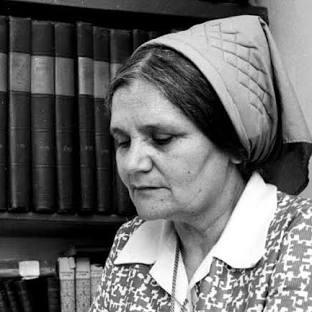
“Jewish tradition believes that names have great power,” she began. and then she read this poem from the israeli poet zelda, who is known widely by only her first name: 

israeli poet, zelda

“Each of us has a name given by God and given by our parents.
“Each of us has a name given by our stature and our smile and given by what we wear.
“Each of us has a name given by the mountains and given by our walls.
“Each of us has a name given by the stars and given by our neighbors.
“Each of us has a name given by our enemies and given by our love.” 

in a sentence that took my breath away before she called us from our pews to stand in our half-circle, to step to the podium, she said that we’d “earned these names through sacrifice and grit, through tenderness and care. they earned these names through their openness, their tolerance, their expansive and soft hearts.”

that sentence made me riffle through the rolodex of my life, through the hard conversations at the kitchen table, the tears on long telephone calls when a Jew and a Catholic were hashing it out in the three years before we married, trying to decide whether we could work it out, whether we could braid two faiths, two traditions, two deep ancestral ties into something that might even be greater than the sum of its parts. made me think of the blessing ceremonies in our tiny little garden on Wellington Avenue, when a rabbi and a priest poured their words, their wisdoms, and their blessings on two baby boys we were both blessing and naming (with eight years between each). made me think of the pair of Shabbat candlesticks, layered with wax from candles dripping and dripping over the years. made me think of the lamb stew we’ve stirred at the cookstove, my beloved and i side-by-side. 

i thought how, indeed, both of our hearts have softened, have opened, have grown.

and then it was my turn to step to the podium, clear the tears from my eyes, and read these words to those gathered:

I’ve spent much of my life peeking beyond the borders of what was before me. Yearnings have always stirred me––reaching for what I don’t yet know, reaching for the holiness I deeply believe in, reaching for loves long after they’re gone. 

And there is a particular grandmother, the only grandparent I never met, who has always, always animated my imagination. I yearned to know this daughter of Irish immigrants, a Kentucky schoolteacher, who, according to family lore, was the first woman to graduate from college in the commonwealth, who snagged the highest score on her county’s teachers’ exams, and just as importantly, could wring a chicken’s neck!––a praiseworthy prelude to many a Sunday supper in the Bluegrass State. 

Her name was Mae, Mae Shannon, and her only child, her beloved child, was my beloved long-gone papa, Eugene Shannon Mahany. 

Until now, my connection to Mae has been purely by heart, and through a few fading photographs that show we share an uncanny resemblance. 

Her name, Mae, is a Celtic derivitive of Mary or Margaret, and one of its meanings is “pearl.” So, too, the Hebrew name Margalit—yet another “pearl.” 

Considered the gemstone of inner wisdom, the pearl is one of creation’s wonders, formed through the mysterious interplay of oceanic depths and the celestial pull of the tides. 

The pearl is formed when the mollusk, or bivalve, senses an irritant—a grain of sand, perhaps—which it enwraps by secreting layer upon layer of minerals, all extracted from seawater. Sand to seawater to pearl.

Ergo, pearl equals protection, luminous protection. Its very creation, an equation of awe. And the pearl, a moonlike orb, is thus said to be a vessel for water’s energy, to carry the lucid movement of the tide’s ebb and flow. It’s believed to hold deeply healing powers. 

Its beauty, formed in unseen depths. 

Radiance, evolved over time. 

The pearl, Margalit––the Hebrew name of my choosing––my tie at long last to the little Irish grandma I so long to sit down beside. And whose inner luminous wisdom I so yearn to absorb. 

And mightn’t she be wonderstruck to discover she’s inspired her only granddaughter’s new Hebrew name.

love you, dear chairs. by your names that i know, and your names that i don’t.

what’s the story of your names?

p.s. our rabbis are pretty sure that ours is the first congregation in the U.S. to undertake such a process, the giving of hebrew names to those who don’t identify as jewish.

and tonight we begin the highest and most solemn of high holy days, yom kippur, the day of deep atonement.

of pickled onions and a particular fondness for kentucky’s homegrown farmer bard

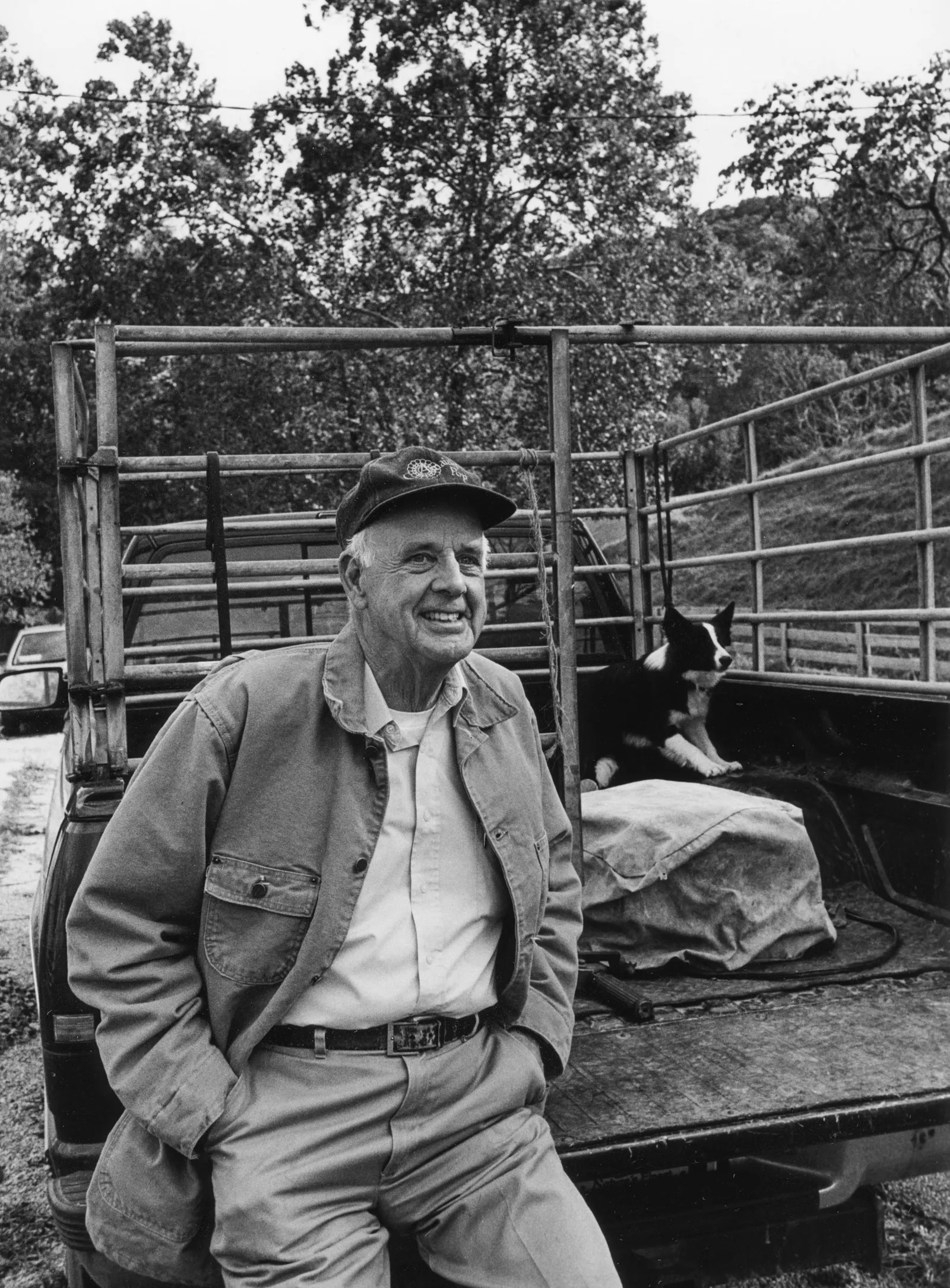
wendell berry

in which the somnolence of summer has settled into its seasonal adagio so much so that pickling a red onion or two, and slow-reading the poetries and musings of one wendell berry is as fever-pitched as it gets around here. welcome to my slo-mo world of the week.

it started when i stumbled on the poem below, a poem that captures the quietude of a couplet of humans who’ve breathed in unison for so long they can fill the silence richly. so it is here in this old house of late, where only two of us now reside. where we know the choreography of most days by heart. and come and go as in a wordless waltz. there’s an ease now, one i never imagined, as i balked mightily long ago about the idea of two lives squeezed under one roof and in a labyrinth of too-tight rooms. but over time, across all these years (near 33), the respirations of our souls have aligned, at least enough to feel our echo in the lines below. those lines, by wendell berry, the poet, novelist, and conservation farmer whom i count as one of my heroes, were just enough to take me down the rabbit hole that is the life and work of kentucky’s homegrown literary treasure. and, besides, mr. berry’s birthday was this week, the fifth of august, wedged, it so happens, between the birthdays of two of the three humans whom i count as pillars holding up my world and whose arrivals to the planet are marked across the week in that steady beat of 4-6-8.

here’s the poem that got me started:

They Sit Together on the Porch
By Wendell Berry

They sit together on the porch, the dark
Almost fallen, the house behind them dark.
Their supper done with, they have washed and dried
The dishes–only two plates now, two glasses,
Two knives, two forks, two spoons–small work for two.
She sits with her hands folded in her lap,
At rest. He smokes his pipe. They do not speak,
And when they speak at last it is to say
What each one knows the other knows. They have
One mind between them, now, that finally
For all its knowing will not exactly know
Which one goes first through the dark doorway, bidding
Goodnight, and which sits on a while alone.

i shared the verse with the one with whom i share these walls, and he wrote back that he found it “haunting,” which made me see the lines anew. and was just enough to prompt a bit more poking around, again reminded how much i love the poetries that come with accumulated lifelong wisdoms. and that’s where i then re-bumped into this 2019 dispatch from the new yorker, a days-long interview between bard and scribe, one distilled and put to paper. it’s worth a read in whole (link below will take you straight to it), but i’ll pluck a few parts should your summer’s day demand a snappier pace than mine (or should a paywall keep you out):

the dispatch, titled Going Home with Wendell Berry, is by amanda petrusich, a new yorker staff writer and writer-in-residence at the gallatin school of individualized study at NYU. a 2016 guggenheim fellow, she writes often about music, and blessedly for us she takes the occasional road trip down kentucky way. in this case, she wound her way to where berry’s farmed for more than four decades, a little town that goes by the name port royal. sixty-three miles from the dot in the blue-grass map my papa called home (paris, KY), and one mile from the meandering kentucky river, it’s a town you might think ol’ garrison keillor pulled from his imagination. (in 2010, its population, according to the U.S. Census, was all of 64 humans.) it’s a town one writer (sandra mcCracken, a singer-songwriter) described thusly (and not too surprisingly given the threadworn quilt that is rural america these days): “Port Royal is a patchwork strip of storefronts, a blink-and-you’ll-miss-it sort of spot made up of a local bank, a post office, a general store with a built-in diner (with little printed signs about their town’s famous author, Wendell Berry), and an old Baptist church. I am sad to report that, like most small towns in our country, Port Royal looks as though it is dying.” 

here’s how the new yorker‘s chronicling of that luscious conversation between journalist (petrusich) and poet (berry) begins:

Two and a half years ago, feeling existentially adrift about the future of the planet, I sent a letter to Wendell Berry, hoping he might have answers. Berry has published more than eighty books of poetry, fiction, essays, and criticism, but he’s perhaps best known for “The Unsettling of America,” a book-length polemic, from 1977, which argues that responsible, small-scale agriculture is essential to the preservation of the land and the culture. The book felt radical in its day; to a contemporary reader, it is almost absurdly prescient. Berry, who is now eighty-four, does not own a computer or a cell phone, and his landline is not connected to an answering machine. We corresponded by mail for a year, and in November, 2018, he invited me to visit him at his farmhouse, in Port Royal, a small community in Henry County, Kentucky, with a population of less than a hundred.

Berry and his wife, Tanya, received me with exceptional kindness, and fed me well. Berry takes conversation seriously, and our talks in his book-lined parlor were extensive and occasionally vulnerable. One afternoon, he offered to drive me around Port Royal in his pickup truck to show me a few sights: the encroachment of cash crops like soybeans and corn on nearby farms, the small cemetery where his parents are buried, his writing studio, on the Kentucky River. Berry’s connection to his home is profound—several of his novels and short stories are set in “Port William,” a semi-fictionalized version of Port Royal—and his children now run the Berry Center, a nonprofit dedicated to educating local communities about sustainable agriculture. Our correspondence would continue, but, before I left, Berry gave me a broadside letterpress of his poem “A Vision.” I think often of some of its final lines, which clarify, for me, what it means to truly know a place:

Memory,
native to this valley, will spread over it
like a grove, and memory will grow
into legend, legend into song, song
into sacrament.

here’s but one of the questions captured from their conversation (with a few lines in bold for emphasis):

Q: Have you always farmed here?

A: Right away, we had a large garden, and we kept two milk cows. We fattened two hogs to slaughter, for our own meat. We had a flock of chickens. And we had some fruit that we produced ourselves, and some that was wild. We were sitting down during that time to a lot of meals that came entirely from under our own feet by our own effort. And our children came up in that way of living. The integration of the various animals and crops into a relatively small acreage becomes a formal problem that is just as interesting and just as demanding as the arrangement of the parts of a novel. You’ve got to decide what comes first, and then you work your way to the revelation of what comes last. But the parts also have to be ordered. And if they’re ordered properly on a farm, something even more miraculous than most art happens: you have sustainability. Each thing supports the whole thing.

and here’s another exchange:

Q: It’s funny, clarity is often undervalued in art. One of the things I admire about your writing, especially the essays, which feel like polemics, is that you’re very clear in your arguments. They’re beautifully supported. In the new book, you talk about how you often read seeking instruction. I’m curious how you balance that idea with reading for beauty, savoring the visceral pleasure of words.

A: You’re being fed in an essential way by the beauty of things you read and hear and look at. A well-made sentence, I think, is a thing of beauty. But then, a well-farmed farm also can feed a need for beauty. In my short story “The Art of Loading Brush,” when Andy Catlett and his brother go to a neighbor’s farm, there’s a wagonload of junk, and it’s beautifully loaded. Andy’s brother says, “He couldn’t make an ugly job of work to save his life.” In the epigraph I use from Aldo Leopold he questions if there’s any real distinction between esthetics and economics.


and here, in case you’re even a little bit hooked, is a poem worth reading in whole. it’s from a 1965 volume of Poetry magazine, and it’s excerpts from an early Berry wonder, titled, “The Handing Down,” a poem about a grandfather and grandson sitting on a porch and the quiet conversation that unspools between them. read those excerpts here.


oh, and about those onions. . . my kid, the one who turned 23 yesterday, finds himself a line cook these days at a chicago eatery of some notoriety; girl and the goat, it’s called, and stephanie izard, who dreamed up the joint seems to have a particular fondness for things pickled. she pickles everything from kumquats to mushrooms to beets. i decided pickled red onions might be a summery thing to do, and besides i like a little crunch amid the strata of my sandwich. and, as with many a task in my kitchen, i pickle the easy way. no cauldrons steaming for me. no sterilizing jars and lids. i dumped a little of this, stirred in some of that, and by next morning, i had a jar of garnet rings shimmering in my fridge. i’m not fond of sugar these days (i never was, and then a dear friend told me cancer is fond of sugar, making it something of a foe of mine, thus i’ve perma-sealed my lips to sugar’s sweetness), so i searched for pickling roadmap that steered clear of the sugar bin. here’s what i found: (and ps i have no real clue what whole30 compliant means, so feel free to disregard.)

what captured your fancy this week, quick-clipped or slow?

all these years later

forty-four cakes. three-thousand-two-hundred-seventy-eight candles. that’s how many cakes and candles we’ve missed since my papa died in the winter of 1981. i counted it up because today would have been his 96th birthday. he didn’t make it past 52. 

all these years later the second of august is still a day i remember.

i remember the sunny sunday mornings when honeydew melon and handmade cards were strewn at his place at the dining room table, birthday brunch a step-up from the requisite eggs, bacon, and toast after ten-o’clock mass. i remember, in the preambles to birthday dinner, the glistening of his pewter mug, summer’s sultry humidity meeting the cold of his ice cubes and tonic and gin. the quarter of lime floating canoe-like near the rim. eight-minute burgers on the grill, corn on the cob littering all of our chins. 

i remember his laugh. 

much, though, fades.

i can’t remember the sound of his voice. or the way he called me barbie. i remember a few lines, but not the ones my brothers often remember. i remember the time he told me he’d prayed and prayed and could not understand why he was driving me to the hospital. i remember the time, driving home from my college graduation, when he told me he’d felt his mother right beside him when they called out the names of those who, like him long before, were graduating with highest latin honors, and he watched me rise from my seat in the crowded arena. 

i remember how one late summer’s afternoon he called me from the office and asked me to meet him for burgers on the outdoor cafe of a place called jerome’s in lincoln park, a place he deemed “kicky.” my papa liked things that were “kicky” or “cool.” my papa, born of a locomotive engineer and a country school teacher in little bitty paris, kentucky, never shed the marvel of being a big-city ad man in the heady era of Mad Men and martini lunches and sixty-second commercials whose jingles and cutlines stoked the soundtrack of america’s bell-bottomed woodstock-and-watergate age. my papa liked to travel the globe. to give speeches in sydney and meetings in munich. he liked his corporate apartment in mid-town manhattan. he loved new york city. a place he never wanted to move us; he’d moved his moptop crew too many times, he and my mama agreed. one more uprooting might do us in. so he more or less made a weekly commute to the big juicy apple.

and home base for all those years was the two-story colonial with all the big trees at the bend in the dead-end lane. he brought the “neat, keen, cool, fab, it’s a blast” to our dutch backdoor, and on in to the big oval table where, at 6:30 sharp each night of the week except for on sunday when we pushed it to 5:30, we sat down for dinner, all seven of us. if there was something new out there in the world, my papa wanted us to know. didn’t matter if it was a word or a box soon to be labeled “hamburger helper.” he was our conduit, our passport, to all that was grander and jazzier than our sleepy little burg one in from the lake. 

those are the things, all these decades later, i still remember––like yesterday. i remember, too, the year after he died when i thought i might never stop crying. how there were nights when i wailed a wild-animal sort of a wail, and bit into my pillow to muffle the sound. i never thought i would know joy again. 

i never thought the ache would stop aching.

but here we are: two kids, a long marriage, and a whole career later. my papa had no idea i––a nurse when he died––would take his and my shared love of words and make a life of it. but the first day i sat down in the chicago tribune newsroom and they told me i needed a password, i knew just what i’d type each time i needed to rev up my desktop computer: my papa’s initials and mine; he was a part of every start to every story. and i never dropped his last name, cuz i wanted my papa to stay in the news. and in print. day after day. byline by byline. 

here’s where i fell short: no matter how many stories i’ve told my boys and the man i love the most, i have not come close to bringing my papa to life. and, believe me, i’ve tried. no story, no matter how animated, no matter the gleam in my eye, can ever, ever come close. the man was a human high-wattage bulb. he was known for his wit. but i remember the tenderest parts. i’ve tried to bring all of it forth over the years. 

but all these years later, it fades. and the truth is, my papa fades too. there’s too much i cannot remember. 

grief and time make for an odd, sometimes cruel calculus. yes, the aching abates most of the time. though the piercing can come and come strong. in a grocery aisle. when a certain song comes on. when you’re trying to tell––or to catch every word of––a particular story. (writing these words here this morning, the tears have come too. if i’ve wallowed in moments, in memories, here, it’s only to make it all last. to live in those moments again.) 

as much as the gasping for air is no longer a part of the grief, so too the frames of a life reel on, and the erasing begins. after so, so many years, you sometimes forget the one who’s no longer there. not always, and not in those crucible moments, when time itself feels condensed and magnified all at once. i too have felt my papa beside me when my firstborn walked a graduation stage; when my firstborn became a professor of law (a profession my papa once yearned for). i’ve watched how tender my so-called “little one” is, especially to my papa’s widow (“grammy” to both of my boys), and i know my papa would melt. but, truth is, ordinary time mostly hurls by, and i don’t remember. and then i might catch myself with a twinge. or i might not catch myself at all. there’s an anesthesia in grief that i never saw coming. maybe it saves us. maybe it’s cruel.

maybe that’s why there are birthdays, even when the someone is gone. especially when someone is gone. they become remembering days. they are days without cakes and no candles. but, in the silent chambers of the heart and the mind and the soul where time knows no rules, those someones return. 

my papa rumbles in me this morning. in the only way i know how, i just brought him back. and i didn’t need to close my eyes, or make a wish, or blow out candles to make it happen.

he’s here. right beside me. in each of these stories. i know it.

happy birthday, dear papa. i love you forever.

at our house, we have an august birthday parade, a 2-4-6-8 of celebrations. so most blessed of birthdays i wish for my brother david (4), my blair(6), my teddy(8). i love you each and all to the moon and mars and beyond.…

tell a story of any someone you miss. any story. any someone. we’ll make this a party.

my papa and me

the roof and the trees under which i grew up

i’d told myself that ever since the night my papa died, when i walked in that dark house, his tennis sweater flung over the back of a kitchen chair, as if he’d breeze through any minute, the night when i sat in the den afraid and unwilling to take in a breath, for i didn’t want to let go of the last one i breathed when he was alive, i’d told myself that house was mostly hollow to me. 

it’s held a chill for me ever since. 

i didn’t think i’d much miss it.

but then i drove back the other day. drove back to walk through the rooms where no sound was stirring, not even the whir of the furnace. drove back to see rooms emptied, the rugs a radiograph in reverse where the geometries of now-taken-away furniture shone bright against decades-worn dim. where you could make out the plot where my mama’s four-poster bed had been, and the circular table beside it. where the den, too, was a checkerboard of absence, chairs and a couch lifted and moved. 

this week my mama moved out of the house where she lived, the house she called home, for six whole decades. long long ago, when my papa got a job in chicago (an ad man in the age of the Mad Men), and they’d moved us again from a faraway city, she’d picked that house out of many along the north shore of lake michigan because it was the house with the oaks. more than a half dozen big old oaks. maybe a whole dozen once upon a time. my mama loves big trees and big skies. the house gave her both. 

my mama moved into that house in 1963, with four of us under third grade; two, still tricycle-bound. one of us, the fifth among us, was born to that house. never knew another till the day he went off to college. we used to joke that he and my mama are the only northerners among us. all the rest were born south of the mason-dixon line. we all grew up, though, on brierhill road, a winding dead end of a street carved into the woods. a golf course just across the way made for sixty years of unobstructed sunsets for my mama, who kept watch dusk after dusk through the kitchen window. the creek and the crawdads, the green pond, and the logs in the woods made for my playthings, the topography of all my imaginings.

i made my way back there this week, after it was mostly emptied, when i knew i could be alone. i wanted to walk room to room to room, and up the stairs to my old bedroom at the top of the stairs. the room where you can still find my sixth-grade scribble on the wall in the closet’s back corner. the room where so many nights i looked up and out through the oaks into the stars and the moon, where i rocketed all of my prayers and my dreams. 

as i drove there, to the house at the bend in the road, i thought of all that had happened there. how i got married there, under the trees, breezing through the garden gate flanked by all four brothers. how, ten years before that, we’d sat round the kitchen table the night after my papa died, and tried to make sense. i thought how that was the house from which i was taken to hospitals, especially the time at the end of high school, and how our family pediatrician (yes, he really truly was Dr. Kamin, the most beloved housecall-making pediatrician that ever there was) came in the middle of nights when i was burning with fever. i thought how i’d close the door to my room in those sodden sulky middle-school years when i was sure no one loved me, and how during high school i’d yank the telephone cord from the kitchen round into the dining room, as far as i could uncoil it, to steal a wee bit of sanctuary amid the roar of a family of seven. 

and then i walked the rooms, poked into drawers, shooshed away cobwebs, and inhaled it all one last time. when i got to the oaks out back, looked into the grove where my little girl log cabin once had stood, when i counted the feeders that still swayed in the november breeze, i felt the tears begin to pool in my eyes.

maybe the old house wasn’t so hollow to me, after all. maybe the old house where we’d all grown up, the house that had so long harbored my mama, maybe it would be hard to leave behind, to say a proper goodbye––and thanks–– to. 

my tears spilled one last time on that bumpy old earth under the oaks on brierhill road. 

i stooped to pluck one last acorn, now tucked in my snow coat’s pocket, and then i climbed in my own red wagon, the one that has ferried my very own boys through their growing-up years, back and forth plenty of times to their grammy’s. and i drove ever-so-slowly away. 

but not without whispering a very deep blessing for the house that held us all, and mostly my mama, for so very blessedly, blessedly long. 

what do you miss most about the house where you grew up?

the prayer after the fall. . .

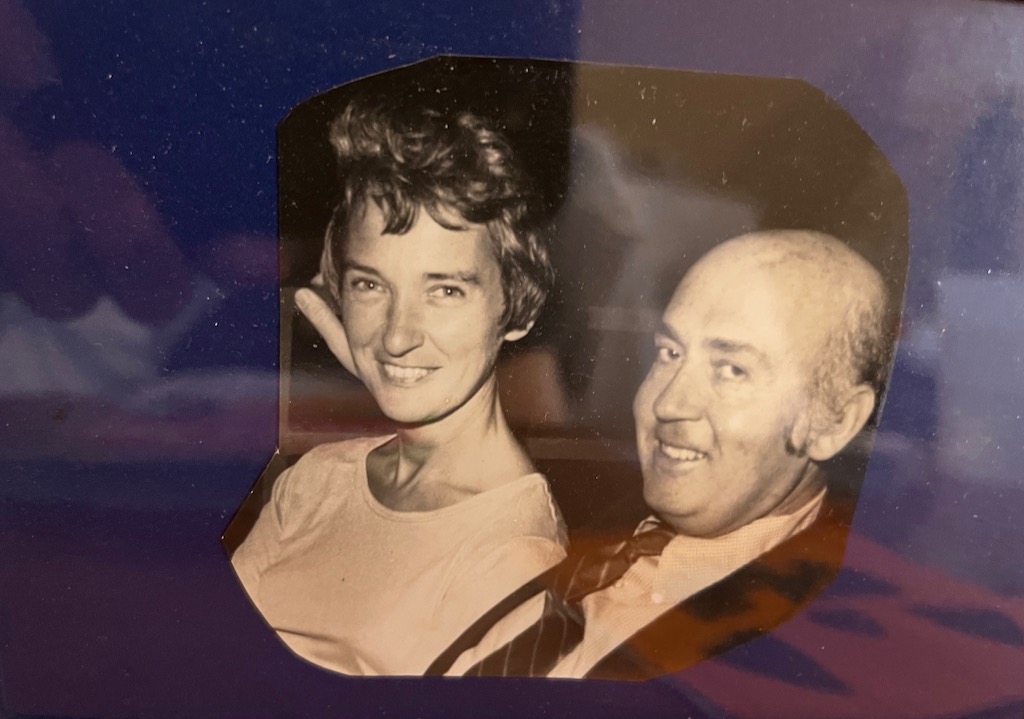
my mama and papa, a long long time ago…

it was the call you pray you never, ever get: early morning. “police and paramedics are already there.” little else known.

except that it was my mom. and she’d taken a terrible fall, a nightmare of a fall. police had broken in the front door when they saw her lying, crumpled, unresponsive, at the bottom of the stairs. a spotted trail of blood had followed her down the last eight of 14 stairs, around the landing, and onto the slate floor of the front hall, where it had pooled. 

as the pieces started to fall into place, one theory was replaced by another, and what we knew was that it was a fall from the top of the steep hardwood stairs to the hall down below. she’d been lying there almost 12 hours. 

and i was some 200 miles away, driving 70 miles per hour, suddenly fielding phone calls to and from brothers scattered across the country, detroit, california, maine, and the brother whose car was following the ambulance to the emergency room where so much of our family’s life has unfolded: death, birth, broken arms and legs and umpteen stitches, hours-long surgeries and outpatient, too, along with a few godawful diagnoses.

my mother’s most fervent prayer since a car accident two aprils ago has been “to go home.” and home to my mother is heaven. she desperately doesn’t want to be alive anymore. finds little joy in the everyday. except for the birds. and irish whiskey on the rocks, with plenty of water, at 5 p.m. sharp (or 4 if nobody’s looking). and as she said to me in a whisper from her ICU bedside the other day, “to be honest, i wish i’d gone” (meaning not waken up after the fall). “but not that way, i guess” (meaning not alone, in the dark, at the bottom of the stairs, when she thought she’d been headed into the shower, to climb into bed, for another restless night of not much sleeping). 

my mother, who is as pragmatic and plainspoken as the day is long, wasted little time in realizing “i might never be allowed to live alone again.” a dawning followed quickly by “can you take me right now to westmoreland,” which is not quite the name of the place where she’s been on a waiting list for independent living since two aprils ago, and at least four times has told them “i’m not ready” when they’ve called her with an available apartment.

she’s still not ready. not really. 

but my mother’s face and scalp and arms and legs are the color of eggplant right now. the bruising so intense it’s long past purple and deep into inky indigo. somewhere between aubergine and midnight. and that’s only what’s broken on the outside. ribs, and vertebrae, and a bone on her face, they’re broken too. 

i was lying in bed the other night, the night before we moved my mother to rehab, tallying the things my mother will miss after 60 years in the house where we all grew up, the house she would not leave because of its tall oaks, and its sunsets out the kitchen window, and the birds and the deer and the pair of ducks who waddled under the fence each and every spring. 

after all these years of knowing ours was the house at the first bend on the winding dead-end street, across from the green pond and the woods where i grew up, across from the country club where my mother for years would strap on skis after any snowfall and glide for miles across snowy greens and tees and sand traps, i am bumping into brain hiccups any time i try to wrap my head around the brand-new notion that 707 will no longer be. or no longer be ours anyway, no longer the polestar to our family chronicles. 

for now, my mother is miles away from that old house. and she’s never going back. says she doesn’t think she could bear to say one last goodbye. so we will shutter it, the five of us who know that house inside and out, who know which upstairs window was the one a brother climbed in one night too late past curfew, the sliding door where another brother was showing off his brand new BB gun and PING! the glass was shattered, the arbor of oaks under which i and my beloved were married. 

this is not the way my mama––or any of us––wanted her story to end. 

but we’ve soldiered on before. she has always taught us how. she’s not one to buckle under. 

she’s been widowed 42 years; buried a husband, and a tiny baby granddaughter atop her husband’s grave; mothered five children, each of whom has had twists and turns and upside downs. she’s had cancers of her own. 

and till now, she has not crumpled. 

even now, her faith has barely flagged. but she looks up at me, through her swollen ink-black eyes, and asks, “barbie, why won’t God take me?” 

and how can i answer that, other than to say, “mama, we don’t know. we just don’t know.”

and so i rub her back where the terrible aching is, and we find her favorite cowboy channel, and i pray and i pray. don’t think me wrong to echo my mama’s prayer. i pray too, dear God, please take her home. she wants so very, very deeply to be there…

i’m transfixed by that photo above. i stare into my mama’s long-ago glimmer. i miss them both, so deeply.

today my only questions are ones without answers…

remembering and other acts of blessing

yahrzeit is a yiddish word translated as “time of year,” and for jews, a people who sanctify time in so many ways, yahrzeit is both solemn and a blessing. yahrzeit is when jews remember the dead, and, as in so many cultures, when we wrap ourselves in an almost-palpable sense of remembering. for jews, it dates back to the 16th century, when an otherwise obscure rabbi wrote of yahrzeit in his book of customs. every year on the anniversary, “the time of year,” of the death of someone beloved, jews are called to the synagogue, and rise for the reciting of the mourner’s kaddish, a praise prayer to God, spoken in the depths of mourning, of grieving, and of remembering. it is one of the beautiful mysteries of judaism that the kaddish does not mention death. it’s an ancient aramaic prose-poem, thought to be an echo of Job, “spoken from the sub-vaults of the soul,” that, as some have written (beautifully), is offered up as consolation to God, who suffers the loss of any one of us as piercingly as we do.

at home, the marking of “the time of year” is when a yahrzeit candle is lit, and burns for 24 hours. to glance at the dance of the flickering flame is to remember, to offer up a word, a prayer, from the heart.

my papa’s yahrzeit is today. 42 years ago, this became the darkest day, the snow-swept night the doctor walked into the cold, linoleum-tiled hospital corridor and simply said, “i’m sorry,” leaving us to fill in the unimaginable, unspeakable blank. my beloved papa had breathed his last. and it would be a long time till i could fill my own lungs again. and it is a miracle and testament to godly healing that all these years later i do know laughter again, and i have filled my life with treasures––my boys, first among them––my papa would have so reveled in. oh, he would have beamed. in my darkest and my brightest hours, he is with me still and always.

i am not alone in marking this day as a day of remembering. all our calendars are filled with dates all but written in invisible inks that we alone decode. the date i miscarried my baby girl. the date my firstborn broke his neck. the date you found out something terrible. the date you or someone you love got sober. the date you figured it out, whatever “it” might be.

it is in remembering, i think, that we sometimes grow our hearts. it is in holding close whatever was the whammy life dealt. those whammies come in a thousand thousand colors and flavors and sounds. and those moments, those chapters, are the ones that propel us into our truer and truer depths. it’s life in its complexities that draws out the marrow of who we are.

i am not one who usually turns to nietzche but i stumbled across this line this week, and suddenly it fits with thoughts of yahrzeit and remembering and loving:

“no one can build you the bridge on which you, and only you, must cross the river of life,” the young nietzsche wrote.

but we walk the bridge with those who’ve walked before us, with those we’ve loved and lost.

and in my darkest hours, and in my brightest ones, i somehow always find my papa shimmering there at the edge of the frame. in my deepest dark hours, i pray: “be with me papa.” and he is.


it’s the last line of this poem where i feel my soul swoop up and skyward…

Lines For Winter

Tell yourself
as it gets cold and gray falls from the air
that you will go on
walking, hearing
the same tune no matter where
you find yourself —
inside the dome of dark
or under the cracking white
of the moon’s gaze in a valley of snow.
Tonight as it gets cold
tell yourself
what you know which is nothing
but the tune your bones play
as you keep going. And you will be able
for once to lie down under the small fire
of winter stars.
And if it happens that you cannot
go on or turn back and you find yourself
where you will be at the end,
tell yourself
in that final flowing of cold through your limbs
that you love what you are.

~ Mark Strand  ~


the earthquake in turkey and syria: as we all watched helplessly the devastations in syria and turkey, it was hard to watch, and hard not to want to reach across the screen and clear away the rubble. i have been moved time and time again why the white helmets, an all-volunteer corps who leap into chaos and devastation with unbridled courage and determination to pull any breathing bodies from beneath the dusty hell on earth. should you be inclined to do what we can from over here, and want to be sure your money’s getting where it will make the most lasting impact, check out this navigator from NPR to find out just that. the baby girl to the right is the sole survivor of her family, pulled from the rubble with her umbilical cord still attached to her dead mother. the world is rooting wildly for her. and blanketing her in so, so much love. and remembering her mother. . .


and before i go, in case you didn’t happen to see my highly unusual monday morning posting here on the chair, i bring this invitation to the friday table! it’s a real-live virtual (such is the definition of real-live these days) chair gathering. we’re calling it a launch for my next little book, but really for me it’s the joy of finally finally gathering us all together. and finally putting faces to names like “jack,” and “hh,” and “nan”. . .

we’ll gather on the evening of Tuesday, March 21––the actual pub date of The Book of Nature: The Astonishing Beauty of God’s First Sacred Text––when we shall send it soaring into the everland. it’s free and it’s just for friends of the chair––wherever you are––and it’ll be at 7 p.m. chicago time, when we’ll gather by zoom. and all you need to do is click this link to register. the zoom link will be magically sent to you. and, since i’ve never ever done this before, beyond that we will all find out together what happens next.


that’s my papa above, feeding the kangaroo, when he was once down under, giving yet another one of his gloriously animated speeches to a crowd of grocery mavens. my papa was an ad man, an ad man who loved a microphone. i, as his deeply devoted daughter, decidedly did not get the microphone gene, though i can find myself animated once i get over the trembles.

how do you remember the ones you’ve loved and lost?

barreling on, gently…

christmas-morning bread pudding, eight days late

it wasn’t the winter break it was supposed to be. or the christmas. or the new years. two of us were behind closed doors for days on end. one of us is still shuffling from armchair to armchair, plopping down for little puffs of air. another one has blotchy red spots on the back of his hands, covid rash they call it. the other two of us strained to keep two steps ahead and out of the path of the red-spiked intruder.

but we barreled on, the four of us. christmas-morning bread pudding finally billowed in the oven on january 2. and ever since we’ve been trying to shove the train back onto the rails, to make the most of these 10 days before flights and calendars dissipate us once again.

it dawned on me in the middle of the night, as i shuffled through the dark to trace my way to the bathroom down the hall, that we were––at that very moment––all four of us safe under one single roof, as is my most settled equation, as is the variable i’ve prayed for, waited for, for two long years. and it hit me just as quickly how the four of us, over the years, have grown to be our own impenetrable force, a circle of loving each other fully and thoroughly through thick and thin and whatever the whims of life hurl our way. 

we’ve worked hard at that. it doesn’t come without determination and practice. it’s a living, breathing exercise in turning the other cheek, in forgiving, in listening, in quietly knocking on a bedroom door and asking, “can i come talk?” it’s long long hours on the long-distance line. it’s jumping in the car and driving hours, if necessary. it’s showing up, again and again. it’s being willing to admit, i blew it. i worry too much. i got scared. (or whatever is the foible of the hour.)

it’s believing in the best of each other. and giving yourself the time to see it. it’s figuring out that if someone else sees the best in me, maybe the best is deep down under there, after all. 

it’s a lifelong practice in practicing. in knowing there will be days when you don’t quite do your best. when your voice comes out in sharper tones than you’d intended. when you wish you lived alone. when tears sting your eyes, and eventually you hold each other tight.

it’s a testament to loving played out in episodes that take your breath away: the time the stranger called to say she’d found your kid unconscious, strewn on the bike path; the time your kid called to say he got into the law school of his dreams; the time the brand-new driver slunked in the house and handed over the speeding ticket he’d just gotten on his first friday night out; the time your mom turned to you and said they’d found a tumor, and weeks later your then-little one proposed a hat party to make a little bit of joy out of grammy losing all her hair. 

those are the strands that make a family, that stand a chance of weaving something whole in a world of rampant brokenness. it’s the little asides at the dinner table, or while stirring onions on the cookstove, the gospel spelled out––again and again––in certain truths you dare impart. it’s the notes you slide under the bedroom door. the stories they hear you share at the kitchen counter, or listening in on one of your phone calls. that’s the slow-unfurling whole of who you are, and what you believe, what you stand for, that gets spelled out, inscribed, passed on without a slip of parchment. 

families are made by choice or by birth. both stand strong against the cold winds of history. families take endless work, and infinite joy. at our house, it’s the laughter that is the certain glue. the antics that punctuate the pure delight. sometimes, too, it’s tears, the willingness to cry. always, it’s the listening, and the curiosities that drive the questions. hours and hours of questions. of true and telling replies.

it’s the most important work i’ve ever done. making a family, day after day after blessed loving day. it’s the hardest work, and the work that lifts my soul more than any other aim i’ve reached for. 

my definition of family is nothing like it was when i was little. i used to look to the scrubbed and polished clans who filled the church pew, all in matching hats and coats, lined up like stepping stones in graduated sizes. a lifetime of paying attention clobbered that flimsy facade. now the ones who teach me how it works are the ones who weather heartache, who do not give up, who tell the truth, don’t hide the hard parts.  

i remember in the hours before my firstborn was born, i was sitting all alone at the kitchen table, and i whispered words to God, promised to envelope that sweet child in all the love i could muster, to harbor him from every hurt. i’ve found out over the years that you can’t keep the ones you love from hurt, from heartache. but you can build a mighty shield, you can build an unbreakable ring of love and light, and you can be there to catch ’em when they falter, you can wrap them in your arms, rest their heads against your heartbeat, and you can promise them your love is one inextinguishable force, and your light will always always burn for them. and you can always make ’em laugh. and listen to their secrets, their hopes, their dreams, their prayers. 

and when the days don’t unfold the way you’d wished, the ways you’d dreamed of, well, you can wait till the darkness ends, and you can tuck a new bread pudding in the oven, and you can shuffle to the kitchen table, join hands, squeeze tight, and whisper, thank you God for bringing us this holy, holy moment, and letting us weather all of life––its best, its worst––with each other at our backs, our sides, our wholes

every family is its own story, is a vessel for a hundred thousand stories, some passed down from generations, and it’s hard work to make a tiny community of similar-but-unique human beings coalesce into something whole. how do you get through the hard parts? what’s your one essential ingredient? (questions need only be for your own personal reflection, as is always always the case.)

tis january, a month of new beginnings, and a happy birthday blessing to the one and only MJH, loyal reader, dear friend of this ol’ chair, and to my longtime beloved comrade MBW, whose birthdays are today!

fragility

one of those phone calls came the other afternoon, the sort that snap you into realizing with every synapse that this fragile interwebbing we call our lives is so precariously held together, barely a breath keeps the filaments from snapping right in two. it was one of those calls when one minute you think the biggest worry on your list is the ache in your hand that won’t be quelled, and then the phone rings. you hear the voice you know so well. you hear the depths of its deepest canyons, and the words can’t spill quite fast enough. you listen, and you hear words that send you tumbling, catapulting down an unimaginable chute for which there feels no bottom.

you hear words that someone you love dearly has just gotten word from a doctor, and there’s a death sentence attached.

and you spend the next 18 hours barely breathing. swiping tears from your cheeks, your chin, your nose, the hard back of your hand.

blessedly, miraculously, that call was followed by a clarifying one the morning after, and it turns out the message first conveyed was not nearly as drastic as originally told. the one i love has every reason to believe he’ll be around years and years from now.

but in the intervening space, in the hours of scanning the whole of my life and the deepest places in my heart, i stared once again at the fragile filaments that hold us, that position us, that sometimes fool us into thinking they’re indestructible. we forget the fragility. we forget how each day when we first stir under our covers, plant a wobbly foot on the floorboards, peek out the window at the rising sun’s pink wash across the sky, it’s a miracle. it’s a flat-out gift that no one dare take for granted.

because in a sweep, in a single phone call, in a tumbling out of words–in a heartbeat–it could all be gone. poof! no longer….

i didn’t mean to scare you here, the way i wrote this, the way i waited a whole paragraph to let you know the coast is clear. but i did mean to remind us all that this is fragile, oh so, so fragile.

most of us have gotten those phone calls, those knocks at the door. i got one when i was 18, and another when i was 24. i admit to living too much on the edge of fear.

but it’s hard to scrub away the clear memory of the operator breaking in the phone call, telling me there was an emergency, and someone needed to interrupt the call. hard to wipe away the long drive through the blizzard, the walking the hospital halls, kneeling with my youngest brother in the stripped-bare hospital chapel as cold as everything else that night. hard to undo the doctor’s somber words, when he walked down the hall, ashen, and simply said, “i’m sorry.”

it’s hard to forget six years earlier the unfamiliar sight of my father walking into the drug store where i worked, telling me in the middle of a weekday afternoon that i had to come home, i was being taken to a hospital. hard to forget all the nightmare that unfolded after that.

with those indelible etchings on my heart, i count myself among the blessed ones, the ones less likely to forget most days just how precious this all is. just what a miracle it is that i became a mother to two boys who are as precious to me as all the magnificence in this wide world. that i met a man i dearly fiercely love, a man whose depths have steadied me, have buoyed me, have fueled my updraft in ways i never ever dreamed. that i’ve lived well past the 52 years my blessed father was allotted. and that i never take for granted a moon’s rise, or the sun’s setting. i live to hear the cardinal singing, to stir something bubbling on the stove. life’s littlest miracles are the sum and substance of my days. and then you add the big ones — the loves that animate my heart and soul, the laughter that punctuates the hours, the wisdoms that take my breath away — and i am living, breathing, holy gratitude.

and i aim to live my life at fullest attention.

what moments in your life have made you see the fragility that underpins it all?

equinox of the heart

My heart is in equinox. Equal parts light and shadow. That’s not necessarily an out-of-the-ordinary state of affairs for the human vessel that holds all we feel in a day, in a lifetime. But it’s not usually so amplified, not usually so stark.

On the one hand, I am counting down the hours and minutes till a boy I love, the first one I birthed, comes home for the first real time in years and years. The first time in as long as I can remember when he won’t be squelched by the pressures of (in reverse chronological order) bar exam, law school, admission to law school, wrangling a classroom of hellions for the year he was teaching on the mean streets of Chicago, and before that pushing against the deadline for an honors thesis that somehow stretched to 300-plus pages. He is—in three days and two hours—packing a Portland apartment into a moving van, and one day  and six hours after that he’s boarding a plane, crossing the Rockies, the Great Plains, and the checkerboard of farmland that is preamble to landing at Chicago’s O’Hare International. 

He’ll be here—for the first time in six years—for the Thanksgiving feast. And Christmas, and the turn of the new year. Then he’ll move on, to New York City, where once again he will take up his pen and his law books and clerk for a federal judge. And all that time, all the weeks when he’s here, the first order of business will be simply to breathe. To sleep in the old room at the top of the stairs, to trundle down to this old maple table, to cook by my side, and walk along the lakeshore where we all go to think when our thoughts—and our souls—need every square inch of the infinite sky.

And, on the other hand, the man I married three decades ago, the man whose life has unspooled next to mine for the best of my years, he’s off on the Jersey Shore, in an old quirky-but-endlessly-charming house at the edge of a pond. He is there all alone, except for the movers who are coming in shifts, day after day, to empty the house of every last trace of the long lives lived there. The house will be bulldozed before spring turns to summer. And it’s his job, as the only son, to attend to its final hours. He is packing up the last of the dishes found tucked in a cabinet no one had known, finding nearly lost treasures slipped between books on the shelves (his parents’ ketubah, or marriage “contract,” signed in ink in January of 1955, and almost sent off with a load of donations), taking one last long look out the living room window, watching the sunlight and the swans on the pond. 

It’s a house that has played an anchoring role as a central character in the narrative of the long lives lived there. No one ever imagined it wouldn’t be there, high on the ridge at the top of the slope, peering down on the pond. The footfall of at least a century and a half are pressed into the stairs that twist up to the bedrooms. Sixty-five of those years belonged to my husband’s father and mother—he in his white bucks or his Keds, a gentleman of old-school sartorial splendor; she in her size-10 flats (never heels, for she never wanted to tower too tremendously over the little children she taught, as a woman of considerable height). 

My husband, who has long taken to heart the tenet that architecture shapes lives as lives shape the architecture, is not one to bid farewell to timber and bricks (both of Revolutionary War vintage) without a significant lump in his throat, and a piercing in his chest. I saw how his eyes went dark, the sadness not hidden, when he said to a friend the other day, “It’s like another death.” It’s the last one of its chapter. Six years ago, the sartorial one breathed his last, and just this July, so did the schoolteacher. Each time, my husband and his sister scattered the ashes along the holy ground that is the edge of the pond.

I can barely imagine how hard it will be to turn the key in the door that one last time. To walk down the steps, turn, take one last look. To drive away, down the lane, the white clapboard gardener’s cottage disappearing into the distance. To know, after 64 years, he’ll never come again. 

And so the shadow is thick on the walls of my heart, and the light, too, is dappling, is falling in splotches. The equinox of the heart is not uncharted terrain, but oh it makes for gingerly treading. 

Thank you for listening. It is hard, so hard, to say good-bye.

funny that i wrote this in caps, up till now. i’ve been writing and writing all week, and i guess i’ve fallen back into work mode here on the keyboard. for me caps are like wearing my big-girl shoes, lower case is kicking ’em off, shuffling around in my slippers. i’m letting it stand, as a salute to the ones i love…

photos above by blair kamin, on Shippee’s Pond, fair haven, new jersey.

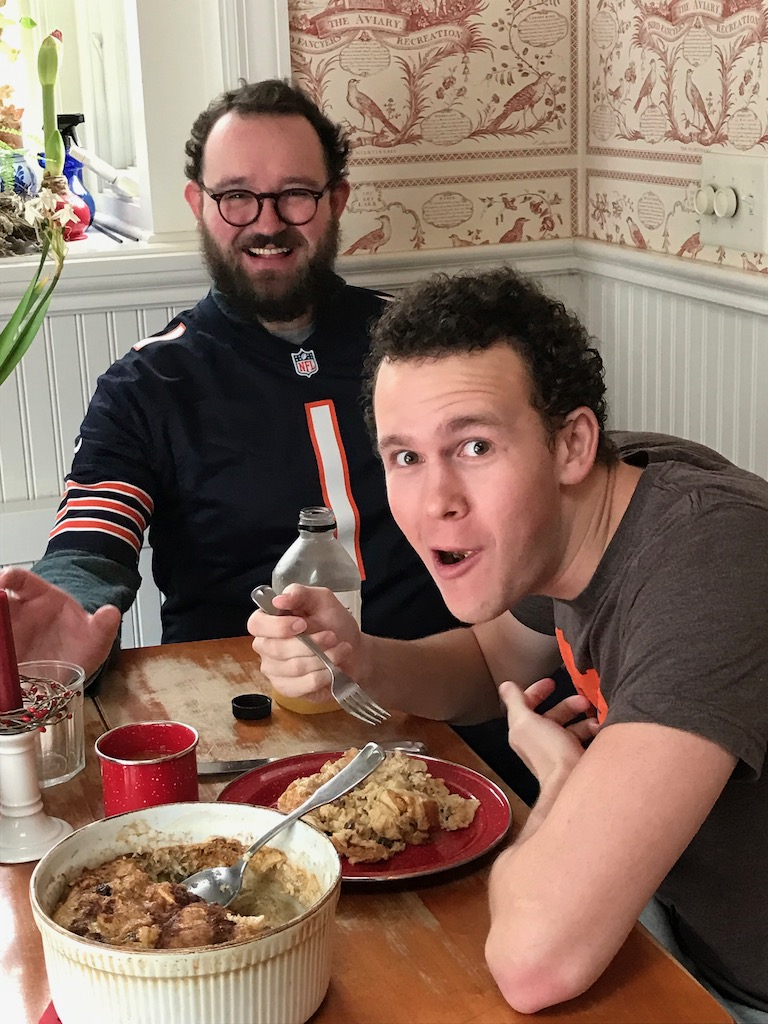
the boys i love, the one coming home tuesday on the left. standing in the front yard of their grandparents’ house on the day of their grandmother’s funeral.

how often do you live in equinox of the heart, and might it be–in many ways–the natural state of the vessel that contains so very much of our love, and our joy and our hurt? so much of our lives are equal parts light and shadow. how do you find a stillpoint?

the stories we tell

in a hospice room 719 miles away, a cluster of people i love sit circled round a bedside: a son, a daughter, their mother. words are few now, hours vary by breaths per minute, by doses of morphine. i am there/not there by the miles on a map between us, but my every breath is with them. vigils are kept without proximities. vigils are kept by heart. and my heart is there…

this vigil, as with most any vigil, is one syncopated by its own time and twists, all of which are beyond — far beyond — our inclinations toward clock and calendar, those false measures by which we mark things. minutes turn to hours turn to days. in the timelessness of now, i’m reminded how we set our hearts sometimes by timekeeping tools of our own making. we allow for acceleration, we slow, we pace. but really all of it is no more than device within which we pour ourselves for the comfort of the walls around us. as a species we seem to prefer to plunk ourselves in vessels rather than fling ourselves unbounded onto undulating limitless seas.

i steady myself inside this landscape of not knowing by extracting and considering the stories that emerge, that tell us who we are, who we mourn and who we aim to emulate. as is always the way, the stories we extract from lives well lived are the very fibers that will weave us back together again, in the wake of our emptiness. they’re the totems and road signs that point the way for every day thereafter. the etchings of the heart that prove inextinguishable instruction, the wisdoms and glories that keep the radiance from dimming.

here’s one of the ones i will tell from the life of a woman who from the start was always in my corner. that alone is everything (especially in a mother-in-law), but more than anything i have loved her for her goodness. her endless, endless, bottomless goodness.

in a parade of tales to tell, this one i’m forever seizing: it’s the tale of a gas-station attendant and my mother-in-law, who just two months ago was as blonde, beautiful, and fully engaged as ever. the gas-station attendant, it turns out, is an immigrant woman from a sometimes-unwelcome country, who some years back with her now-late husband bought a CITGO station in new jersey, worked the register seven days a week, long hours every day, and came to know the blonde-haired lady with the old volvo as a friend, one who never failed to deliver kindness every time she filled her tank, and carefully-wrapped gifts at christmas and easter. when the gas-station lady hadn’t seen my mother-in-law and her spiffy new Honda Fit for weeks, she tracked down the home phone and left a message, saying she missed her, and hoped all was well. my husband—who has meticulously been attending to all matters of the heart, and much else besides during these long weeks—called her back, and the woman explained that my mother-in-law had always been so kind, and over the last few weeks she’d grown more and more worried by her absence. the gas-station woman said that when her own husband had died — leaving her to run not only the register but the whole gas station on her own — my mother-in-law was right there with sympathies and kindness, and had become something of a rare american friend here in this strange new land.

to befriend the folks who pump your gas, to befriend them to the extent they notice your absence, and track you down, leave word and hope you’re well, that’s a measure of goodness worth remembering.

here’s another story that’s emerged, that tells us who she is and was in the silence and the solitude when no one was looking: in poring through the piles of papers that shrouded the desk in his old boyhood bedroom, my mother-in-law’s first-born and only son found a yellow legal pad with pages and pages of carefully enumerated names and gifts. my mother-in-law, an inveterate bargain hunter and irrepressible gift giver, spelled out her christmas lists every january, once the post-holiday sales were cleared, and her bedrooms filled with carefully chosen dollar-sale finds. when the Gap marked down winter scarves from $20 to $1 apiece, my mother-in-law bought the whole lot, and squirreled away each one for her endless christmas list. (she also never missed a new baby gift, a wedding, a graduation, or a sympathy gift, but hands down, my jewish mother-in-law’s favorite holidays were those wholly christian christmas and easter. maybe it’s no wonder she never minded the idea of a catholic daughter-in-law.) christmas 2021 was months ago enumerated, executed, and laid out in shopping bags all across the bedroom floors. all that’s left was the wrapping, a months-long ritual she usually began each october. indeed, my mother-in-law had her giving down to something of a science. a science of goodness, of calibrated, counted-out (and bargain-hunted) perpetual goodness.

it’s a goodness without measure, and she lived and breathed it every blessed day.

what stories do you tell of the ones you’ve loved most dearly? or even ones you barely knew but whose stories became the measures of your own every day?

for all these 15 years here on the chair, my mother-in-law was among its most loyal dedicated readers. she was the first to call if she liked it, and if she didn’t….well, the silence….

i tell her tales here with love. with so much love….