pull up a chair

where wisdom gathers, poetry unfolds and divine light is sparked…

Category: cooking

turn to sweetness

Gen One Honeycake

the new year calls for sweetness. the Jewish new year, i mean. it’s encoded, in fact, in the Talmud, the nearly-as-old-as-time, all-you-need-to-know guide to living Jewishly, a sacred compendia of rabbinic discourse, debate, and back-and-forth covering ancient teachings, law, and theology, and it gets down to the nitty gritty of what to eat when, and certainly on Rosh Hashanah, one of the highest of the high holy days. it’s spelled out, right there in tractate Keritot 6a (truth be told, i am not quite sure what a tractate is, but i’m surmising it’s something like a bullet point), where a certain sage named Abaye in the second century suggests that eating certain foods might bring on good things in the new year (this might explain the thinking behind the famous sheet cake scene with tina fey from saturday night live*). these sacred foods for the new year are called simanim, and while the Talmud explicitly names fenugreek, dates, leeks, and beets, it merely points broadly to sweetness. honey wended its way into the Rosh Hashanah traditions way back in the seventh century. which means the jews have kept the bees in business for a long, long time. and the dipping of apples in honey is a tradition that waited till the 16th century, which means we’ve been dipping now for 500 years.

and i realize i am steering well off course here, but i find myself in a rabbinic hole of infinite delight and must let you know that jews, known as lovers of wordplay, have prayers to accompany each of those prescribed foods (derived from the shared linguistics in the hebrew root), and the way it worked was that the particular prayer was prayed, followed by the eating of said foods, and this whole shebang was known as the simanim seder. here are a few of the foods and the prayers they inspired:
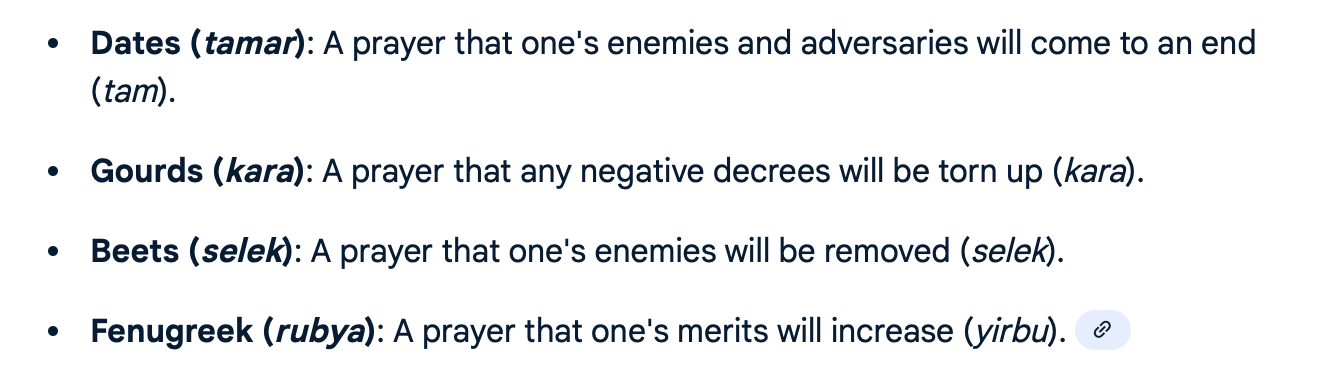
personally, i think we should all be loading up on dates and beets. but now i am really off in the ditch, and shall return myself to more linear thinking. . .

we were musing about honey, or at least i was. and since this is ultimately going to be a story about honey cake, i’m in the midst of explaining how we got there. how i wound up shoving a bundt pan of sumptuous honey-doused batter into my unreliable but deeply lovable ancient commercial-grade oven.

i tend to be someone who gloms onto traditions. and, given that these days, i spend a lot of time musing about time and the passing of years, i was suddenly struck—even though i am the farthest thing from a baker—with the question of whether there was some heirloom recipe for the holiday that i might have been missing. so i struck out to the best family baker, my brilliant and beloved sister-in-law brooke of the upper east side, and before the text with the query could possibly have registered in her wee little phone, she shot back the recipe she’s been baking for years. she noted that it was a super hit, and she noted that it was a family heirloom not in the traditional since, as her mother/my mother-in-law staked her claim to feminism by not knowing her way about the kitchen, and thus might not have baked in her life, dear brooke had made it a family tradition, one that secured its position the very first year she baked it when all that was left was a plate full of crumbs.

that’s all the convincing i needed, so i (practically as inept a baker as my late, great, mother-in-law) leapt aboard. i wheeled my grocery cart wildly through the store, plucking spices off shelves, fresh-squeezed OJ from the cooler, stocking up on fresh bags of flour, baking soda, baking powder (for the ones currently on my shelves had likely turned to clay, the subjects of years of idle waiting), and i set myself to baking. words being more my thing, i immediately gave it a name, this honey cake of famed repute. since dear brooke had clued me in its familial origins with this trademark hilarious note —”Considering that Mom’s recipe for the New Year was attending someone else’s party, this is our (1 generation = me) tradition.”—i immediately dubbed it Gen One Honeycake, and so it’ll stick. i also informed my boys they’d best follow along, for it was now incumbent upon them and their children’s children to crank the ovens every Rosh Hashanah, and pull out the whiskey and OJ.

excuse me, you say? where does the whiskey come in, and why are we talking cocktails so early in the morning? well, this famed honey cake, so dense it shall bulk your biceps as you ferry it to the table, is loaded: whiskey (or rye), OJ, a cup of coffee, a cup of honey, and a shuk‘s worth of spices. (a shuk is the israeli name for an open-air spice market)

aunt brooke continued, holding my hand (long-distance) the very whole way:

“It’s Marcy Goodman’s honey cake and it’s a fan favorite. Use the whiskey and use the sliced almonds in the recipe. And if you have whole wheat flour, sub in 1/2 c wheat flour for 1/2 c white flour. Make it in a tube pan. It’s a big dense cake.”

much to my amazement i found it pure delight to stand at the counter dumping in this and that, and stirring as directed. as the smell rose from the bowl, i began to understand the soothing powers of baking. and now wonder if it’s seductive enough—and sufficiently sedative—to carry me through the next 1212 days (inauguration 2029).

oops!

because my oven is, as i’ve mentioned, a recalcitrant behemoth, i’ve no idea whether it rose to the necessary 350-degrees Fahrenheit, and suspect it was probably my fault that the cake, despite its extra five minutes in the oven, decided to collapse round the middle (a flub fixed first by dumping extra almond slivers into the hole, and then duly disguised by brooke’s suggestion of stuffing the hole with rosemary sprigs, which i happened to have growing out back).

by the time i carried it to the table, where eager forks awaited, i felt my chest puffing out just a bit, swelled with pride at picking up the family slack. we now have ourselves a tradition. and my boys, by edict of their mother, shall carry it on, far into the next and the next and the next generation. may it always be so.

with no further ado, for i’ve tarried long enough here, i offer you the famed aunt brooke gen one honey cake, courtesy of one marcy goldman, reigning queen of the honey cake whoever she is. the version here was posted on deb perelman’s smitten kitchen site, and comes along with notes at the end, worth reading for their spicy humor.

Gen One Honeycake, from famed family baker BJKR, courtesy deb perelman’s Smitten Kitchen, courtesy marcy goldman (a cake with lineage!)

SERVINGS: 16
TIME: 20 MINUTES TO ASSEMBLE; 1 HOUR TO BAKE
SOURCE: MARCY GOLDMAN’S TREASURE OF JEWISH HOLIDAY BAKING
See Notes about recipe changes at the end of the recipe.

3 1/4 cups plus 2 tablespoons (445 grams) all-purpose flour (see Note)
1 3/4 teaspoons baking powder (see Note)
1 teaspoon baking soda
1 teaspoon kosher salt (see Note)
4 teaspoons ground cinnamon
1/2 teaspoon ground cloves
1/2 teaspoon ground allspice
1 cup (200 grams) vegetable or another neutral oil
1 cup (320 grams) honey
1 1/2 cups (300 grams) granulated sugar
1/2 cup (110 grams) light or dark brown sugar
3 large eggs
teaspoon vanilla extract
1 cup (235 grams) warm coffee or strong tea (I use decaf)
1/2 cup (120 grams) fresh orange juice, apple cider, or apple juice
1/4 cup (60 grams) rye or whiskey, or additional juice
1/2 cup (50 grams) slivered or sliced almonds (optional)

Pan size options: This cake fits in two (shown here) or three loaf pans; two 8-inch square or two 9-inch round cake pans; one 9- or10-inch tube or bundt cake pan; or one 9 by 13 inch sheet cake.
Prepare pans: Generously grease pan(s) with non-stick cooking spray. Additionally, I like to line the bottom and sides of loaf pans with parchment paper for easier removal. For tube or angel food pans, line the bottom with parchment paper, cut to fit.
Heat oven: To 350°F.
Make the batter: In a large bowl, whisk together the flour, baking powder, baking soda, salt, cinnamon, cloves and allspice. Make a well in the center, and add oil, honey, granulated sugar, brown sugars, eggs, vanilla, coffee, juice, and rye. [If you measure your oil before the honey, it will be easier to get all of the honey out.]
Using a strong wire whisk or in an electric mixer on slow speed, stir together well to make a well-blended batter, making sure that no pockets of ingredients are stuck to the bottom.
Spoon batter into prepared pan(s). Sprinkle top of cake(s) evenly with almonds, if using. Place cake pan(s) on two baking sheets, stacked together (which helps the cakes bake evenly and makes it easier to rotate them on the oven rack).
Bake the cake(s): Until a tester inserted into a few parts of the cake comes out batter-free, about 40 to 45 minutes for a round, square, or rectangle cake pan; about 45 to 55 minutes for 3 loaf pans; 55 to 65 minutes for 2 loaf pans (as shown), and 60 to 75 minutes for tube pans.
Cool cake: On a rack for 15 minutes before removing it from the pan. However, I usually leave the loaves in the pan until needed, as they’re unlikely to get stuck.
Do ahead: This cake is fantastic on day one but phenomenal on days two through four. I keep the cake at room temperature covered tightly with foil or plastic wrap. If I want to bake the cakes more than 4 days out, I’ll keep them in the fridge after the first 2 days. If you’d like to bake them more than a week in advance, I recommend that you freeze them, tightly wrapped, until needed. Defrost at room temperature for a few hours before serving.

Notes:
Size: These days, I bake this cake in two filled-out loaves, as shown, instead of 3 more squat ones. My loaf pans hold 6 liquid cups; they’re 8×4 inches on the bottom and 9×5 inches on the top; if yours are smaller, it might be best to bake some batter off as muffins, or simply use the 3-loaf option.
Flour: After mis-measuring the flour many years ago and baking the cake with 2 tablespoons less flour and finding it even more plush and moist, I’ve never gone back. The recipe now reflects the lower amount.
Baking powder: The original recipe calls for 1 tablespoon of baking powder, but I found that this large amount caused the cake to sink. From 2011 through 2023, I recommended using 1 teaspoon instead. But, after extensive testing this year, I’ve found that a higher amount — 1 3/4 teaspoons — keeps this cake perfectly domed every time, and even more reliably than the 1-teaspoon level.
Salt: The original recipe calls for 1/2 teaspoon but I prefer 1 teaspoon.
Liquids: This is address the question that comes up in at least 30% of the 1115 comments to date: “What can I use instead of whiskey?” and/or “What can I use instead of coffee?” The original trifecta of liquids in this cake [coffee, orange juice, and whiskey] is unusual and wonderful together, and I still think the perfect flavor for this cake. But if you want to omit the whiskey, simply use more orange juice or coffee. If you want to omit the coffee, simply use tea. If you don’t want to use tea, use more juice. If you don’t want to use orange juice, my second choice liquid here would be apple cider (the fresh, not the fermented, kind), followed by apple juice.
Apples and honey: It’s a whole thing!
Sweetness: The recipe looks like it would taste assaulting sweet but you must trust me when I say it doesn’t. But, if you reduce the sugar, any one of them, you will have a cake that’s more dry. You can still dial it back, but do understand what the adjustment can do to the recipe.
Flavor: Finally, this is every bit as much of a spice cake as it is a honey cake. Honey isn’t the most dominant flavor, but it’s one of many here that are harmonious and wonderful together. It smells of fall in a way that a simmer pot of $60 candle could never. I hope you get obsessed with it too.

that’s it, sweet friends. certain we could all use a little sweetness at this turn in the year, where did you find sweetness this week?

*as promised, the tina fey sheet cake scene. (nod to faithful chair reader sharon of twin cities!)

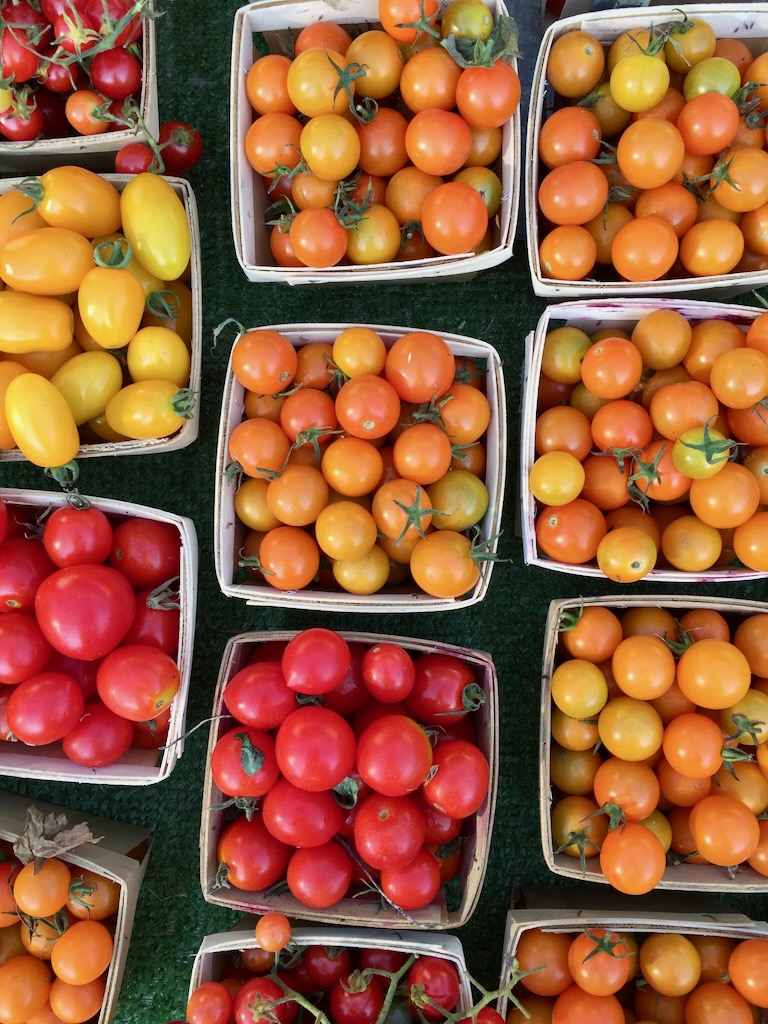
ode to summer’s drippiest fruit: the tomato

in which we begin with news: ol’ babs signed a book contract yesterday; the book, it so happens, is already written (sorta unfurled swiftly, once i started to type), and already back from being edited (the contract was agreed upon back in may, but these things take time to get shuffled around the publisher’s desk.) and now i’m knee-deep in responding to edits, cranking the dial in an attempt to make it worthy of the paper on which it shall be printed, and the bookshelves on which it might take up real estate. more details shall come but what i can tell you now is that the working title is When Evening Comes: An Urgent Call to Love, and the epigraph pretty much points to the heart of the book:

“When the evening of this life comes,” says St. John of the Cross, “you will be judged on love.” The only question asked about the soul . . . “Have you loved well?”
––Evelyn Underhill, The House of the Soul

in a nutshell, it’s a collection of essays exploring the spiritual awakening and very real tremblings that come with cancer. a subject with which i’ve been living for the last two years. so, while i’m deep in the fine art of toiling over the words that will or won’t wind up in the book, i leave you today with the simple tomato, summer’s drippiest fruit, and my all-star contender for the juiciest mouthful of summer.

it’s summer and living is easy. and beginning to drip down our chins. at least in the tomato aisle, that is. because i am deep in the task laid out above, i am leaving you today with the simple tomato. and pablo neruda’s sumptuous ode…

my recipe is this:

pluck the reddest orb faintly tender to the touch. 

slice, or halve into hemispheres, if you’re the poet neruda.

sprinkle with a dusting of sea salt.

add a grind or three of tellicherry peppercorns.

lean over sink.

employ your top teeth and your jaw.

clamp down.

dribble.

repeat. 


and now for the ode, one of the many neruda wrote in the later chapters of his life. what’s more than charming—and so very wise—is that neruda, the chilean poet and nobel laureate, wrote odes to the simplest things, training a poet’s eye—and thus ours—on the wonders right before us. it’s a lifework worth emulating.

while poking around, i found a marvelous ode to the odester on the website of a chap named huck gutman, who happens to be not only a professor of english at the university of vermont, but the former chief of staff to bernie sanders. who knew?!?!

of pablo neruda, the great chilean poet, huckman writes that he is particularly fond of his late ‘odes’. he goes on:

the good poet pablo

“I love these poems in praise of his socks, his suit, lemons, and other everyday objects.  They speak to me very powerfully about the wonderful world we inhabit.  His aim, as I say in the long introduction to his poem, was to speak to those he lived with about the shared wonder of our world.  He set out to speak not to intellectuals or ‘lovers of poetry,’ but to his neighbors in the small coastal town in northern Chile where he lived.  The language of his odes is simple, the imagery rich but drawn from the experience all humans share. In a century when too frequently poetry seems divorced from the concerns and language of everyday life, Neruda embraced the commonplace and made it uncommon, though still shared. 

 “Neruda’s love of the richness of the world was hard-earned.  He lived a full life, of sorrow and suffering as well as joy and love.  He was acquainted with alienation and oppression, with persecution and exile; he also knew the glories of tomatoes. 

 “One of his close friends was Salvador Allende, the socialist who was elected President of Chile and then overthrown by Chile’s right-wing military (with, tragically, the collusion of the American CIA).  Neruda, already ill with cancer, died shortly after Allende perished in the coup which ended both his presidency and Chilean democracy.” 

Ode to Tomatoes 
by Pablo Neruda

The street
filled with tomatoes,
midday,
summer,
light is
halved
like
a
tomato,
its juice
runs
through the streets.
In December,
unabated,
the tomato
invades
the kitchen,
it enters at lunchtime,
takes
its ease
on countertops,
among glasses,
butter dishes,
blue saltcellars.
It sheds
its own light,
benign majesty.
Unfortunately, we must
murder it:
the knife
sinks
into living flesh,
red
viscera,
a cool
sun,
profound,
inexhaustible,
populates the salads
of Chile,
happily, it is wed
to the clear onion,
and to celebrate the union
we
pour
oil,
essential
child of the olive,
onto its halved hemispheres,
pepper
adds
its fragrance,
salt, its magnetism;
it is the wedding
of the day,
parsley
hoists
its flag,
potatoes
bubble vigorously,
the aroma
of the roast
knocks
at the door,
it’s time!
come on!
and, on
the table, at the midpoint
of summer,
the tomato,
star of earth,
recurrent
and fertile
star,
displays
its convolutions,
its canals,
its remarkable amplitude
and abundance,
no pit,
no husk,
no leaves or thorns,
the tomato offers
its gift
of fiery color
and cool completeness.

which lines made you marvel? what’s making your mouth water these days?

tomato madness: slow-roasted cherries from the vine out back

woozy

if this white diet lunch (white bread, white turkey, clear chicken broth) looks blurry, that’s because 10 days of bland’ll blur you…

with every key i type, my little self gets woozier. i am a poster child today for the prehistoric side of medicine, in which (as one dear friend has said) we can zap folks into outer space and land them on the moon, but we do not know how to clear out one’s insides short of filling them with Drain-O, and starving them besides. 

yes, yes, i’ve had this date on my calendar for months now. after my last attempt at this adventure in inner exploration got canceled at the last minute when my doctor got around to reading my medical history and realized i have uncharted and “torturous” insides. so they signed me up for the Drastic Plan, not the ordinary one for ordinary insides, but the special class for those who present gastroenterologists with high hurdles and sinuous turns in which to get tangled. 

they are knocking me flat out, with full-strength, full-bore anesthesia, because who in the world wants to be even half-awake when dead ends and cul-de-sacs are bumped into. 

i’ve had a guide or two, holding my hand through this gut-wrenching adventure. i was pointed to the aptly named White Diet, for all you are allowed to eat are things the color of freshly-fallen snow, a few of which have not touched my lips in half a century: white bread, white potato, white cottage cheese, white turkey slices, white insides of cucumber (oddly, though they must be peeled and seeded). if it’s white, it’s allowed. but only for a week. then one moves onto the part where things get serious, and clear. for three days now i’ve sustained myself on black coffee (color’s back!), clear apple juice, clear chicken broth, clear electrolyte gatorade. i tried coconut water and i gagged. and that’s as far as i will go in the TMI department (that’s too-much-information, mom!)

i am thus waving my white flag here, and surrendering to the woozies. before i pass out here at the keyboard (fear not, my trusty driver and lifelong handholder will get me safely to the hospital and back), i am going to fling you one or two juicy morsels (both from Mary Os) i found for you this week, and then i shall quietly slink away to await the end of this torturous two weeks. 

here’s an irony: i stumbled on a top-secret recipe for true irish scones, and because i occasionally indulge in self-torture (kidding, mom!) i am passing it along. because it looks delicious (cream and irish butter have a way of working their charms) and because a girl can dream even when she’s starving. this comes from my friends at Food 52, who might have snuck it out of someone’s east village kitchen:

Copycat Mary O’s Irish Soda Bread Scones
By Nea Arentzen
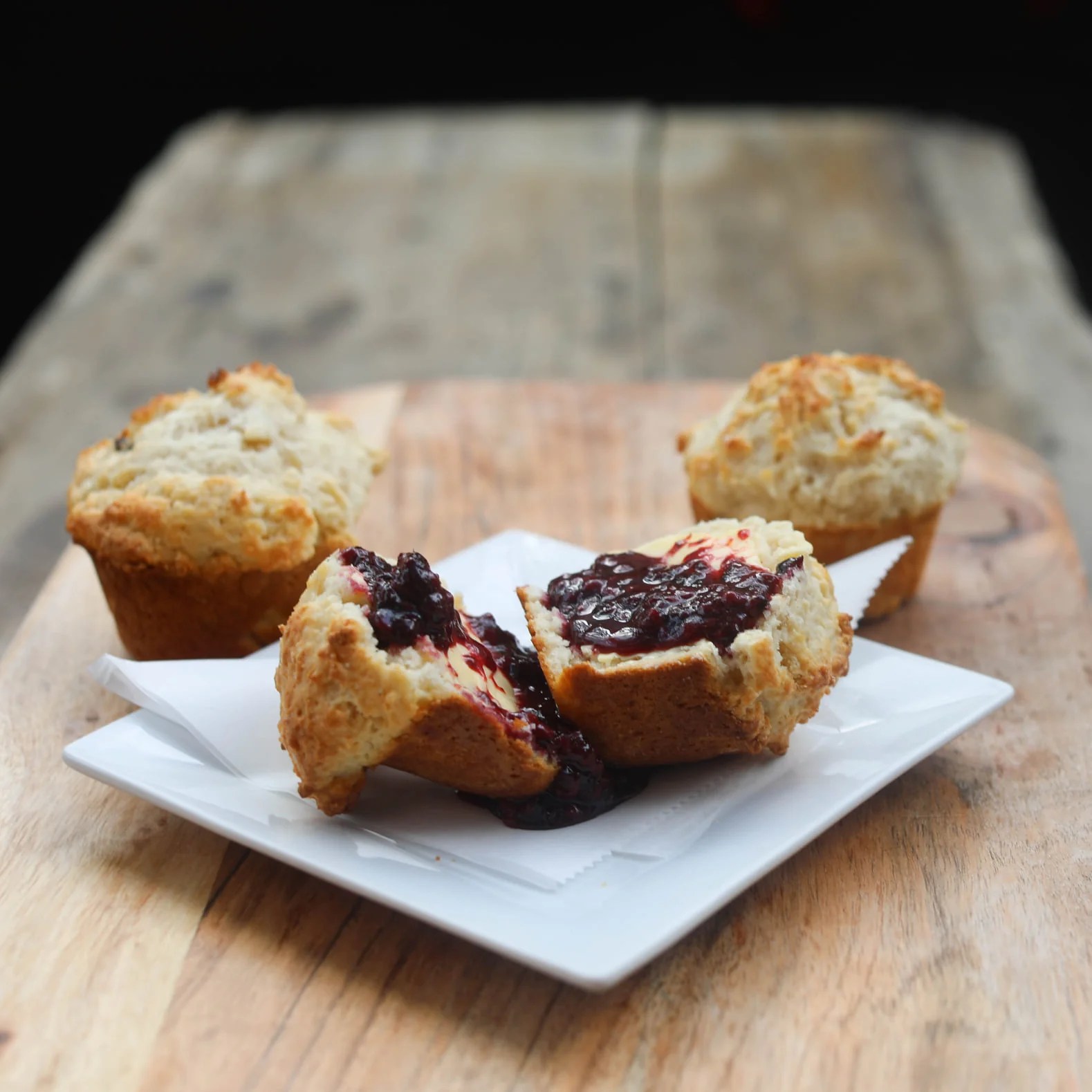
these irish soda bread scones were inspired by Mary O’s, an irish soda bread shop in new york’s east village not named for one of the chair’s patron saints of poetry, the other Mary O (only in new york would you find a specialty soda-bread shop). apparently, they serve theirs with homemade blackberry jam and Kerrygold butter, but Nea, the baker here, opts for store-bought strawberry jam instead. either way, she writes, you can’t go wrong. she adds this baking note: “the dough comes together quickly and all in one bowl, then i scoop it into mounds in a cupcake tin for extra height and stability.”
Serves
12 large scones
Prep time: 10 min
Cook time: 40 min

4 cups (480 grams) all-purpose flour
1/2 cup (100 grams) granulated sugar
4 teaspoons baking powder
1/2 teaspoon baking soda
1 1/2 teaspoon kosher salt
3/4 cups (170 grams) unsalted butter, cold and cut into cubes
1 cup raisins
2/3 cups buttermilk (or milk plus 1/2 teaspoon lemon juice)
2/3 cups heavy cream, plus more for egg wash
1 egg yolk
strawberry jam, to serve
softened butter, to serve
flakey sea salt, to serve

1. Heat the oven to 425 degrees F with a rack placed in the center position. Generously grease a 12 cup cupcake tin.

2. In a large bowl, stir together the flour, sugar, baking powder, baking soda, and salt. Add the cold, cubed butter and press into the flour with your fingers until it resembles coarse sand and no large butter clumps remain. Do this quickly as you don’t want the butter to have time to soften too much.

3. Stir in the raisins, then drizzle in the buttermilk and cream. Use your hands to scoop and fold the dough together until the flour is absorbed, trying to mix and press as little as possible. Gently scoop the dough into the cupcake tin, evenly dividing between the 12 cups.

4. In a small bowl, mix the egg yolk with 2 tablespoons heavy cream. Brush over each scone. Bake until golden brown and a toothpick inserted into the center comes out mostly clean, 22 to 25 minutes. (If using a kitchen thermometer, it should read at least 190 degrees F.)

5. Serve warm with jam, butter, and flakey sea salt.

and now for this bit of inspiration from another most beloved Mary O:

i cannot leave this post without sending the biggest birthday trumpet blast to two of my beloveds who happen to have back-to-back birthdays, auntie M today, and sweet P yesterday. the world, my world, is a taste of heaven here because their hearts beat alongside mine. i love them both with every ounce i’ve got.

taking a cue from Mary O, what noble things are you thinking of this week? and what’s the most improbable thing you’ve tried lately?

no whistling in the dark here. but maybe some chocolate…

these are dark times. chaotic times. times so upside down and alarming, i’m groping for what i can do. sometimes i think the solutions are way, way above my paygrade. 

what i know i can’t do is whistle in the dark. blather on about incidental ponderings, pretend that all this will soon go away. it feels as if we’re witnessing wide-eyed the wielding of sledge hammers to bedrock pillars of democracy. who are these 19-year-olds re-writing code in the department of treasury? why in the world would anyone waste a minute of breath renaming a mountain, a gulf, except for extreme case of hubris? and what of claiming gaza, the land of a people who have sustained unthinkable horrors to simply exist on the land of their ancestors, a land now so deeply bloodied i fear it seeps to the core of the planet? to say nothing of erasing the existence of aid to the poor, the hungry, the marginalized around the globe. to strike language and data from federal websites, all but telling vast swaths of humanity they’ve been expunged. to imagine the labs where cures for disease are suddenly stalled, where lives––like mine––depend on those cures.

i have aimed from the beginning not to bleed into politics here. and i still hold firm to that core. what i address here, what i disdain here, is something far more foundational, a vengeance fueled by a mindset that it’s always always us v. them. a philosophy of division, of payback in the cruelest of iterations. a credo of greed. let the weak be weakened, and the few take the pot. and let it all be built on a mound of mistruths, fictions of wild proportion. 

we’ve an unspoken bond here at this table that once a week i will leave some platter of words that might open a window. even a crack. let light in to our collective souls. so maybe in these dark times my place is shifting. maybe i’m meant to listen in silence, to keep close watch, to defend the tenets of the God of justice and love. a God whose wisdom is not twisted, turned on its head, shoved to the side for malevolent purpose. 

maybe the chair, in these dark and cruel times, is simply a place to swing by, to listen for voices wiser and keener than mine. maybe the chair is a place to come catch your breath. to embolden your spirit. to find brief reprieve. 

until the darkness lifts––and wise and faithful souls believe that it will, that We the People in our undeniable goodness and courage shall overcome––i’ll do what i quietly can. my platter today comes with two poems and a slather of chocolate. yes, chocolate. though in this case, it’s the priceless morsel of the story behind katie hepburn’s very own chocolatey brownies that might best the brownies themselves. you decide. 


a beauty of a new poem found on diana butler bass’s straight-talking, life-sustaining, deeply soulful the cottage….

WHAT COMES NEXT
by Rosemerry Wahtola Trommer

Love relentlessly.
—Diana Butler Bass

Love relentlessly, she said,
and I want to slip these two words
into every cell in my body, not the sound
of the words, but the truth of them,
the vital, essential need for them,
until relentless love becomes
a cytoplasmic imperative,
the basic building block for every action.
Because anger makes a body clench.
Because fear invokes cowering, shrinking, shock.
I know the impulse to run, to turn fist, to hurt back.
I know, too, the warmth of cell-deep love—
how it spreads through the body like ocean wave,
how it doesn’t erase anger and fear,
rather seeds itself somehow inside it,
so even as I contract love bids me to open
wide as a leaf that unfurls in spring
until fear is not all I feel.
Love relentlessly.
Even saying the words aloud invites
both softness and ferocity into the chest,
makes the heart throb with simultaneous
urgency and willingness. A radical pulsing
of love, pounding love, thumping love,
a rebellion of generous love,
tenacious love, a love so foundational
every step of what’s next begins
and continues as an uprising,
upwelling, ongoing, infusion
of love, tide of love, honest love.


an ode to kindness….aptly titled…

Small Kindnesses

I’ve been thinking about the way, when you walk
down a crowded aisle, people pull in their legs
to let you by. Or how strangers still say “bless you”
when someone sneezes, a leftover
from the Bubonic plague. “Don’t die,” we are saying.
And sometimes, when you spill lemons
from your grocery bag, someone else will help you
pick them up. Mostly, we don’t want to harm each other.
We want to be handed our cup of coffee hot,
and to say thank you to the person handing it. To smile
at them and for them to smile back. For the waitress
to call us honey when she sets down the bowl of clam chowder,
and for the driver in the red pick-up truck to let us pass.
We have so little of each other, now. So far
from tribe and fire. Only these brief moments of exchange.
What if they are the true dwelling of the holy, these
fleeting temples we make together when we say, “Here,
have my seat,” “Go ahead—you first,” “I like your hat.”
Danusha Laméris


and now, for katie’s brownies, the story of which first appeared in the letters to the editor of the new york times….

July 6, 2003

To the Editor:

Re the death of Katharine Hepburn last Sunday: For many decades, my father used to walk across town to do his food shopping on Second Avenue. He often shopped at a Gristede’s around the corner from Miss Hepburn’s town house on East 49th Street.

One day he suddenly came face to face with Miss Hepburn, who was also picking up groceries. He acknowledged her with a nod, and she responded in kind. He began thinking of her as a neighbor.

In 1983, my senior year at Bryn Mawr, Miss Hepburn’s alma mater, I was frustrated and was doing poorly, and at Christmas break, I decided to quit. I had the romantic notion of running away to Scotland to write screenplays. My father was frantic. My mother had died two years before, leaving him with all the responsibility for his headstrong daughter.

He knew that Miss Hepburn had gone through her own struggles at Bryn Mawr, so he wrote her a letter asking her to intervene. ”She’s a great admirer of yours, and perhaps she’ll listen to you,” he wrote. On the way to the grocery store, he dropped the letter in her mail slot.

At 7:30 the next morning, the phone woke me up. I answered it and heard that famous voice, crackling with command. ”Is this the young woman who wants to quit Bryn Mawr?” I said it was. ”What a damn stupid thing to do!” she snapped. She went on to give me a lively lecture, the gist of which was that I had to finish my studies and get my degree, and after that I could do what I wanted to do. There was no arguing with her imperiousness. Then she said she wanted to meet us for tea.

The day of our appointment was gray and wintry. Walking the long blocks to Turtle Bay, my father and I didn’t speak much. It felt as if we were about to meet the Queen.

Miss Hepburn greeted us warmly. With casual hauteur, she provided us with tea and some of her famous brownies. Though she was in her 70’s, she had a youthful look, enhanced by her girlish clothes: a turtleneck, a black cardigan and shabby khaki-green pants.

We talked about many things, including Bryn Mawr. She said that she was miserable there and still had nightmares about it, but she was glad she went. At the end of the afternoon she told me, in a rather grim tone, ”You’re smart.” It was a compliment, but also an admonition not to be foolish in the future.

My father was invited to visit her a few times after that. Once, he had heard that she was recovering from a serious car accident, and he stopped by to drop off a package of homemade brownies and a get-well note. To his surprise, he was ushered in and invited into her boudoir, where she greeted him in her nightgown. She sampled his brownies.

”Too much flour!” she declared. She then rattled off her own recipe, which he hastily wrote down. ”And don’t overbake them! They should be moist, not cakey!”

I’ll always be grateful to Miss Hepburn for making me stick it out at Bryn Mawr and for giving me these rules to live by: 1. Never quit. 2. Be yourself. 3. Don’t put too much flour in your brownies.

KATHARINE HEPBURN’S BROWNIES

1/2 cup cocoa
1 stick butter
2 eggs
1 cup sugar
1/4 cup flour
1 cup broken-up walnuts or pecans
1 teaspoon vanilla
pinch of salt

Preheat oven to 325 degrees. Melt butter in saucepan with cocoa and stir until smooth. Remove from heat and allow to cool for a few minutes. Mix in eggs, one at a time. Add sugar, flour, nuts, vanilla and salt. Pour into a greased 8×8 square pan. Bake 40 minutes. ”Don’t overbake!” They should be gooey. Let cool (an essential step) and cut into bars.

Heather Henderson
St. Paul, Minn.

how, pray tell, are you finding your way? chocolatey or otherwise…

countdown. . .

i clambered up from the basement yesterday morn, and found myself face-to-face with a whiteout. snow falling in thickets. snow whirling wildly. snow, snow, and more snow for hours and hours and hours. 

it was all the currier & ives i needed to supercharge my countdown clock. the one that’s percolating at quicker and quicker clip as the days turn closer to wednesday a week, the eve of thanksgiving itself, when not just one but both of the boys i so love will––for the first time in almost a year––unfurl their dreams on the pillows of their long-ago boyhood beds, all nestled cozily under this mostly dependable, nearly centenarian roof. 

and i will savor the joy of kissing both on the forehead as i trundle off to bed hours before my wide-eyed night owls, or should we all stay up till the same insensible hour i will give it my best waltons’ bedtime holler, and call out from under my bedsheets and across the hall and down a few stairs, “good night, will. good night, Bear. good night, old house. sweet dreams, my beautiful boys.”

it’s been a long hard autumn, held in the vise of worries and fear the likes of which i’d not recommend. and so this coming thanksgiving is the emotional equivalent of frank lloyd wright’s trademark compress-and-release, in which the great architect intentionally magnified the vast spaciousness of a room by first pressing in the walls and the ceiling of the space leading into the room, so that upon stepping through the tight corridor and into the vaulted chamber the sense of openness would be perceived as vaster than ever. 

and so it is with the human dynamic of fear, grace, and gratitude: to walk through unbearable days, days that stretch into weeks, and weeks that stretch into more than a month, and then to find yourself falling into the arms of the human beings you most long to hold onto; it’s the pinnacle of paradise on earth, to be released from the vise and enwrapped in a love without end. 

cancer sharpens that point. cancer sometimes brings on seasons of uncertainty that are quickly populated with ghosts and demons that defy containment. i’m learning the undulations of cancer that are colored in shades of gray. interminable shades of gray. questions that come without answers. doctors who call with unwelcome news. and barely stay on the line long enough to answer a single question. and then you hang up and feel the floor drop out from under you. sometimes––if you’re me––you take the short road to doom. because that’s what worriers do. we worry. we pray for holy release.

in time, we get a grip. regain our bearings. hold our chin high, dry our tears, practice at being brave. whistle into the in-blowing winds. hold tight to the hands of the one or two who know how dark it’s become, and we fall to our knees, or fold to the ground and enter the depths of divine meditation. i’ve spent more hours with eyes closed, palms open, sitting in silence, beckoning the perpetual God-flame within, than ever before. i’ve been tempted to beg, “more time, please.” but i don’t any longer believe i can––or hold any special claim to––change God’s equation, so what i pray for is grace. is heightened attention. what i pray for is an emphatic aliveness that infuses each turn of the day with unbarred acceptance. i don’t want to blink and miss something holy.

those prayers––for grace, for keen attention, for seeing deeper than ever day in and day out, for pausing to savor––are answered, blessedly. and my own season of unending thanks coincides with that of this nation founded on pillars of moral perpetude, and the hope of equal justice for all.

the essence of my life’s gratitude has always been the improbable miracle that i became a mother. that i birthed not one but two glorious humans, and devoted the best of my heart, my soul, my breath, my being, to carving out for them a space in which they’d be cocooned in the purest love i could imagine, could muster. along the way, i’ve tossed every life line i could whenever they needed, and now, lo and behold, they’re the lifelines and i’m the one needing.

and so all these past 45 days, i have longed for only one thing: hours more to sit side-by-side the ones i so fervently sumptuously love. to giggle at their antics. to marvel at their wild-eyed wonder tales. to feel their hands squeeze mine, to be wrapped in their arms, my ear pressed to their chest, absorbing the heartbeat i’ve loved since the very first ultrasound when that echoing lub-dub-dub poured over and through me like the holiest chrism. 

this is a countdown like never before. and my heart is more than open for business. the business of loving my boys. in real time. under one shared and sheltering roof.

thanksgiving morn, a few years ago.

here’s a poem, fittingly, a prayer poem by the great madeleine l’engle, who lived by words but found herself wordless in prayer. which, indeed, is sometimes the way to our deepest depths…

Word

I, who live by words, am wordless when
I try my words in prayer. All language turns
To silence. Prayer will take my words and then
Reveal their emptiness. The stilled voice learns
To hold its peace, to listen with the heart
To silence that is joy, is adoration.
The self is shattered, all words torn apart
In this strange patterned time of contemplation
That, in time, breaks time, breaks word, breaks me,
And then, in silence, leaves me healed and mended.
I leave, returned to language, for I see
Through words, even when all words are ended.
I, who live by words, am wordless when
I turn me to the Word to pray. Amen.

––Madeleine L’Engle


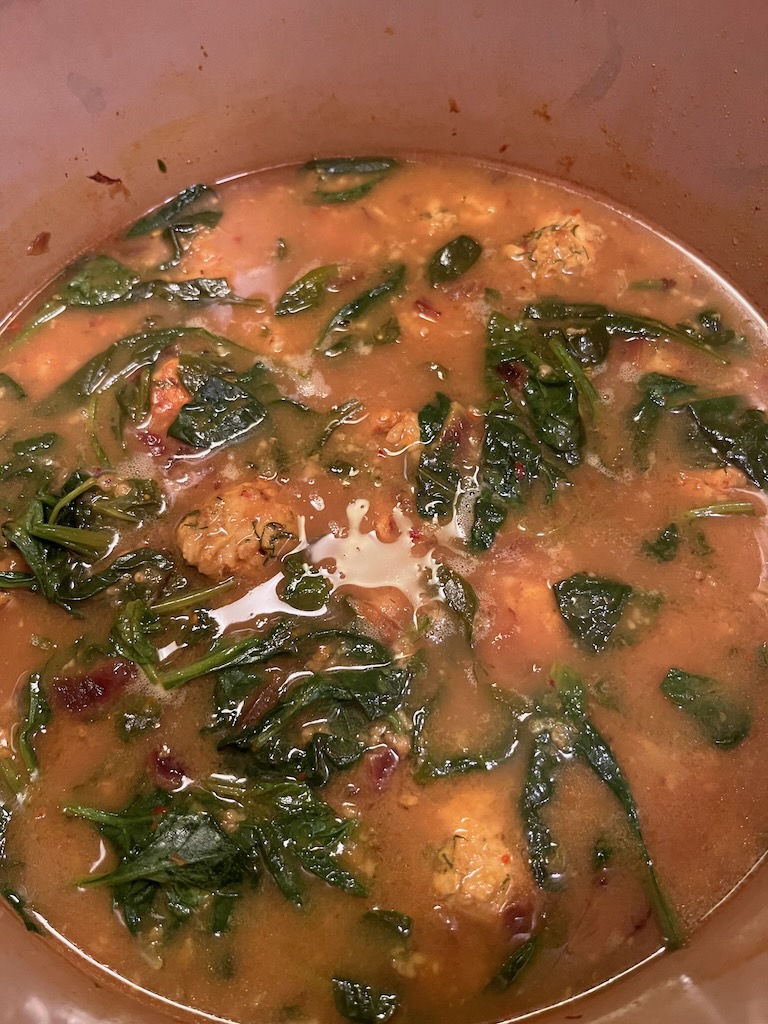
and here, because i love to imagine ladling steaming bowls of soup to people i love, is my new favorite stoup recipe, lemony chicken-feta meatball with spinach from my friends at NYT Cooking (you will be licking the bowl; it’s that good):

Lemony Chicken-Feta Meatball Soup With Spinach
By Yasmin Fahr
Yield: 4 servings
Total Time: 30 minutes

Note from NYT: Some might be suspicious of the rolled oats called for in this recipe, but used in place of breadcrumbs, they help create a light and tender chicken meatball. A half-cup more is simmered in the broth, which thickens it and provides a pleasant texture. The meatballs, made with ground chicken, feta and fresh dill, swim in a lemony, spinach-filled broth that’s comforting and light, perfect for lunch or dinner. Serve any leftovers with a fresh squeeze of lemon juice to brighten the soup.

INGREDIENTS
1 pound ground chicken or turkey, preferably dark meat (i use white meat)
½ cup crumbled feta
¾ cup old-fashioned rolled oats
1 small red onion, halved (½ diced, and ½ grated, then squeezed with a paper towel to remove excess liquid)
⅓ packed cup fresh dill leaves and fine stems, finely chopped
1 tablespoon ground cumin
½ teaspoon plus 1 tablespoon ground turmeric
Kosher salt and black pepper
3 tablespoons olive oil
½ teaspoon red-pepper flakes, plus more for serving
4 cups low-sodium chicken broth
4 packed cups baby spinach (about 5 ounces)
2 lemons (1 juiced and 1 cut into wedges for serving)

PREPARATION
Step 1
In a medium bowl, add the chicken, feta, ¼ cup oats, the grated onion, most of the dill (reserve about 2 tablespoons for garnish), the cumin, ½ teaspoon turmeric and 1 teaspoon salt. Gently combine without squeezing too hard or overworking the meat. Lightly wet your palms and shape the meat into small balls, a little smaller than the size of a golf ball, about 1½ inches. (You will have approximately 25 balls.)

Step 2
Heat the oil in a large Dutch oven or wide pot over medium until shimmering. Add the diced onion, season with salt, and cook until it begins to soften, about 2 minutes, stirring occasionally. Add the remaining 1 tablespoon turmeric and the red-pepper flakes, and stir until fragrant, about 30 seconds. Push the onions to the sides as best you can, then add the meatballs. (They will be close together, and that’s OK.) Cook until browned on two sides, 5 to 7 minutes total.

Step 3
Pour in the broth and remaining ½ cup oats, then gently tilt the pot to the right and left to distribute the oats and broth without disturbing the meatballs. Bring to a gentle boil, then immediately reduce the heat to maintain an active simmer. Season with salt. Cook, gently stirring occasionally to make sure nothing is sticking to the bottom, until the oats have softened and the meatballs are cooked through, about 4 minutes more.

Step 4
Stir in the spinach and lemon juice until the spinach is wilted, about 2 minutes more. Adjust the seasoning to taste. Spoon into bowls, top with pepper and the remaining dill. Serve with lemon wedges.

what is your heart longing for this season of through-and-through thanks?

when writerly rabbit holes swallow you whole….

in which a writing assignment, one that’s wholly captured my imagination, has taken over my gray matter (the stuff inside my head, not the pewter hairs that spring from it), and precluded most any other human activity—save for the occasional re-fueling at the cookstove to keep from puddling to the floor, famished. and for which i’ve shared my simmering salvation down below…

excuse me while i type over here. i seem to have fallen down-down-down into an engrossing writerly rabbit hole, and as the week’s worn on, i’ve only found myself burrowing deeper and deeper. it’s been a while since i’ve chased a thread of idea down to where the earthworms wriggle and the bunnies make hutches. and while i admit that my inner mad-scientist might be vividly on display here, in the way that i can’t put down my wild-eyed pursuit, there is a preponderance of joy stirring the madness. 

i love chasing ideas. love untangling cognitive threads. discovering new ways of thinking i’d not known of before. love when one read leads to another and another. and then it’s my task to slice it, and dice it, and make it all make sense. extra points if it comes out poetic.

i’ve been a rabbit-hole writer as long as i’ve been slapping verbs and nouns into sentences. back in high school, i decided to write a mega theme paper on the misuse of wealth in america, and pretty much took hostage the dining room table for weeks on end. if anyone wanted easter dinner that year, they were going to have to shove aside my teetering stacks of tomes chronicling the gatsby brigade of modernday over-conspicuous consumption. years later, when the tribune set me off on a cross-country steinbeckian journey, zigzagging the continent from the deep woods of maine to the pacific northwest and plenty of points between, chronicling stories of hunger in america for a 10-part series, i distinctly remember my editor, a rumpled import from the new york times, sauntering over to my cubicle and insisting i unchain myself from my keyboard to at least stand under a shower, or swim a lap in a pool, long enough for one or two big ideas to snap into place. i was never much for taking breaks. 

granted, writing that way might have been bad for the eyes and tough on the spine and the wrist, but i kept at it (one night, in the thick of telling a murderous tale, my writing partner and i took turns falling asleep on a very fat phone book). until i birthed a wee child. and said child insisted on eating. and i was the source, the one and only. swiftly realizing that typing while nursing had its drawbacks, i reluctantly succumbed to the art of the pause. 

lo and behold, i discovered epiphany. 

amazing things happen in the chambers of the mind when you stop hard-charging the thoughts. when you allow a synapse to slow to a pokier pace. 

more often than i wish to admit, some elusive sentence has snapped into place while rinsing a plate under the faucet. and a sugarplum of a word has skydived in from seeminly nowhere. so i’ll concede that there’s virtue in lifting my head from the writerly hole.

but now that this old house is mostly empty again, there’s no stopping me. except that there is still one other mouth to feed. (fear not, he feeds himself well and is happy to do so on the nights i relinquish my post at the cookstove.) and besides, chopping and stirring, i’ve found, provides fine syncopation for the drumming of thoughts while assembling an essay.

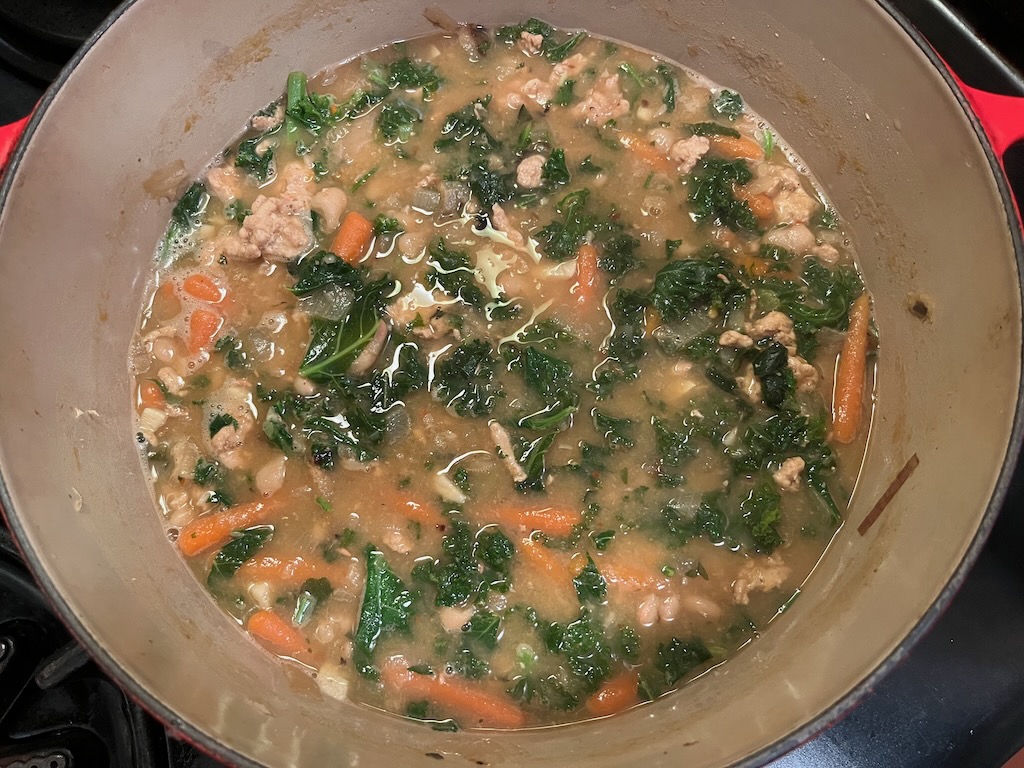
soup by the kettleful is my solution. all it takes is one afternoon of onion slicing, garlic mincing, and the tossing in of a few other things. and by nightfall, and the night after too, you’ve got plenty to slurp from your bowl. 

my ode to autumn, lemony white bean soup with turkey and tuscan kale, is what i bring you this week with the promise that it is utterly, perfectly, shlurpably delicious. it comes, as so much of my best cooking does, from my very fine friends at NYT Cooking, one of the perqs of seven-day-a-week home delivery, the last house this side of the block to still believe in turning actual newsprint pages.

Lemony White Bean Soup With Turkey and Greens
By Melissa Clark
Total Time 45 minutes

INGREDIENTS
Yield: 4 servings

3 tablespoons olive oil
1 large onion, diced
1 large carrot, diced
1 bunch sturdy greens, such as kale, broccoli rabe, mustard greens or collard greens
1 tablespoon tomato paste
3⁄4 teaspoon ground cumin, plus more to taste
1⁄8 teaspoon red-pepper flakes, plus more to taste
1⁄2 pound ground turkey
3 garlic cloves, minced
1 tablespoon finely grated fresh ginger
1 teaspoon kosher salt, plus more to taste
1 quart chicken stock
2 (15-ounce) cans white beans, drained and rinsed
1 cup chopped fresh, soft herbs, such as parsley, mint, dill, basil, tarragon, chives or a combination
Fresh lemon juice, to taste

PREPARATION

Step 1: Heat a large pot over medium-high for a minute or so to warm it up. Add the oil and heat until it thins out, about 30 seconds. Add onion and carrot, and sauté until very soft and brown at the edges, 7 to 10 minutes.

Step 2: Meanwhile, rinse the greens and pull the leaves off the stems. Tear or chop into bite-size pieces and set aside.

Step 3: When the onion is golden, add tomato paste, 3⁄4 teaspoon cumin and 1⁄8 teaspoon red-pepper flakes to the pot, and sauté until paste darkens, about 1 minute. Add turkey, garlic, ginger and 1 teaspoon salt, and sauté, breaking up the meat with your spoon, until turkey is browned in spots, 4 to 7 minutes.

Step 4: Add stock and beans, and bring to a simmer. Let simmer until the soup is thick and flavorful, adding more salt if needed, 15 to 25 minutes. If you like a thicker broth, you can smash some of the beans with the back of the spoon to release their starch. Or leave the beans whole for a brothier soup.

Step 5: Add the greens to the pot and simmer until they are very soft. This will take 5 to 10 minutes for most greens, but tough collard greens might take 15 minutes. (Add a little water if the broth gets too reduced.)

Step 6: Stir herbs and lemon juice into the pot, taste and add more salt, cumin and lemon until the broth is lively and bright-tasting. Serve topped with a drizzle of olive oil and more red-pepper flakes, if desired.


and because even amid my mad musing this week, i still found myself melted by poetry, i bring you this beauty…

End of Summer

An agitation of the air,
A perturbation of the light
Admonished me the unloved year
Would turn on its hinge that night.

I stood in the disenchanted field
Amid the stubble and the stones,
Amazed, while a small worm lisped to me
The song of my marrow-bones.

Blue poured into summer blue,
A hawk broke from his cloudless tower,
The roof of the silo blazed, and I knew
That part of my life was over.

Already the iron door of the north
Clangs open: birds, leaves, snows
Order their populations forth,
And a cruel wind blows.
—Stanley Kunitz 

named the tenth poet laureate of the united states in the autumn of 2000, kunitz was 95 at the time. his poetry was said to get richer with age. and one of his lifetime’s most pervasive themes probed the simultaneity of life and death. “it’s the way things are: death and life inextricably bound to each other,” he once explained. “one of my feelings about working the land [as a gardener] is that i am celebrating a ritual of death and resurrection. every spring i feel that. i am never closer to the miraculous than when i am grubbing in the soil.” he once told the new york times: “the deepest thing i know is that i am living and dying at once, and my conviction is to report that dialogue. it is a rather terrifying thought that is at the root of much of my poetry.” kunitz won the pulitzer prize in poetry in 1959. he died in 2006. (boldface emphasis mine…)

“my conviction is to report that dialogue. . .” and thus is the reason writers fall into rabbit holes…


i was looking high and low for a roz chast cartoon of a madwoman pulling her hair out, for illustrative purposes above. but, alas, i could not find. though ed koren’s wild-haired woman did come in a close second, and in the end i opted for the wanna-be writer above, courtesy of mr. koren…

see you next week when if all goes well i hope to tell you the story of how i got myself a new name last week, and a hebrew one at that…

in the meantime, are you, like me, one who prefers to tie on the blinders and not come up for air till the task is completed, or are you of the sort who finds that leisurely attending to a task makes for all-round saner existence? 

of pickled onions and a particular fondness for kentucky’s homegrown farmer bard

wendell berry

in which the somnolence of summer has settled into its seasonal adagio so much so that pickling a red onion or two, and slow-reading the poetries and musings of one wendell berry is as fever-pitched as it gets around here. welcome to my slo-mo world of the week.

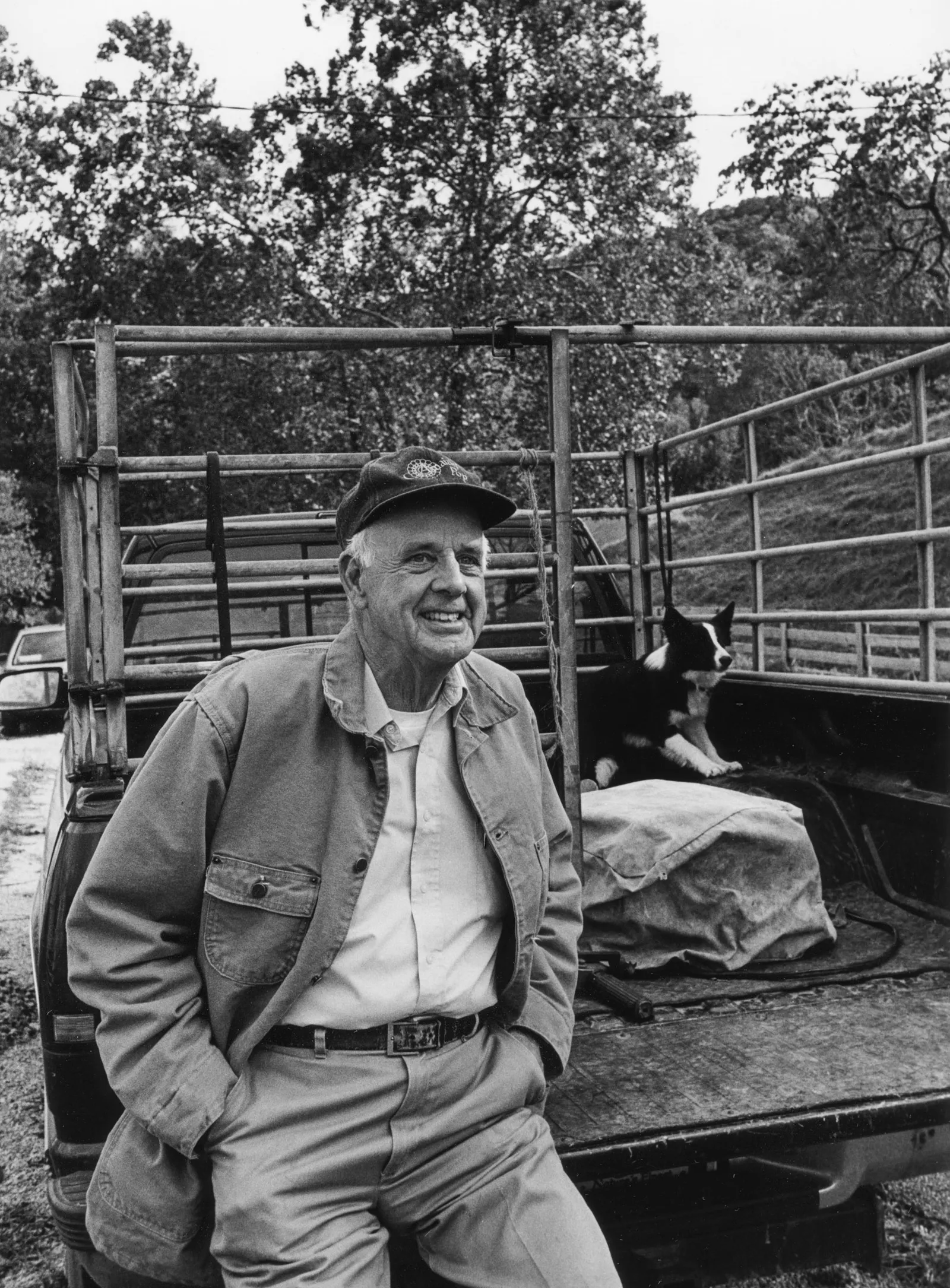
it started when i stumbled on the poem below, a poem that captures the quietude of a couplet of humans who’ve breathed in unison for so long they can fill the silence richly. so it is here in this old house of late, where only two of us now reside. where we know the choreography of most days by heart. and come and go as in a wordless waltz. there’s an ease now, one i never imagined, as i balked mightily long ago about the idea of two lives squeezed under one roof and in a labyrinth of too-tight rooms. but over time, across all these years (near 33), the respirations of our souls have aligned, at least enough to feel our echo in the lines below. those lines, by wendell berry, the poet, novelist, and conservation farmer whom i count as one of my heroes, were just enough to take me down the rabbit hole that is the life and work of kentucky’s homegrown literary treasure. and, besides, mr. berry’s birthday was this week, the fifth of august, wedged, it so happens, between the birthdays of two of the three humans whom i count as pillars holding up my world and whose arrivals to the planet are marked across the week in that steady beat of 4-6-8.

here’s the poem that got me started:

They Sit Together on the Porch
By Wendell Berry

They sit together on the porch, the dark
Almost fallen, the house behind them dark.
Their supper done with, they have washed and dried
The dishes–only two plates now, two glasses,
Two knives, two forks, two spoons–small work for two.
She sits with her hands folded in her lap,
At rest. He smokes his pipe. They do not speak,
And when they speak at last it is to say
What each one knows the other knows. They have
One mind between them, now, that finally
For all its knowing will not exactly know
Which one goes first through the dark doorway, bidding
Goodnight, and which sits on a while alone.

i shared the verse with the one with whom i share these walls, and he wrote back that he found it “haunting,” which made me see the lines anew. and was just enough to prompt a bit more poking around, again reminded how much i love the poetries that come with accumulated lifelong wisdoms. and that’s where i then re-bumped into this 2019 dispatch from the new yorker, a days-long interview between bard and scribe, one distilled and put to paper. it’s worth a read in whole (link below will take you straight to it), but i’ll pluck a few parts should your summer’s day demand a snappier pace than mine (or should a paywall keep you out):

the dispatch, titled Going Home with Wendell Berry, is by amanda petrusich, a new yorker staff writer and writer-in-residence at the gallatin school of individualized study at NYU. a 2016 guggenheim fellow, she writes often about music, and blessedly for us she takes the occasional road trip down kentucky way. in this case, she wound her way to where berry’s farmed for more than four decades, a little town that goes by the name port royal. sixty-three miles from the dot in the blue-grass map my papa called home (paris, KY), and one mile from the meandering kentucky river, it’s a town you might think ol’ garrison keillor pulled from his imagination. (in 2010, its population, according to the U.S. Census, was all of 64 humans.) it’s a town one writer (sandra mcCracken, a singer-songwriter) described thusly (and not too surprisingly given the threadworn quilt that is rural america these days): “Port Royal is a patchwork strip of storefronts, a blink-and-you’ll-miss-it sort of spot made up of a local bank, a post office, a general store with a built-in diner (with little printed signs about their town’s famous author, Wendell Berry), and an old Baptist church. I am sad to report that, like most small towns in our country, Port Royal looks as though it is dying.” 

here’s how the new yorker‘s chronicling of that luscious conversation between journalist (petrusich) and poet (berry) begins:

Two and a half years ago, feeling existentially adrift about the future of the planet, I sent a letter to Wendell Berry, hoping he might have answers. Berry has published more than eighty books of poetry, fiction, essays, and criticism, but he’s perhaps best known for “The Unsettling of America,” a book-length polemic, from 1977, which argues that responsible, small-scale agriculture is essential to the preservation of the land and the culture. The book felt radical in its day; to a contemporary reader, it is almost absurdly prescient. Berry, who is now eighty-four, does not own a computer or a cell phone, and his landline is not connected to an answering machine. We corresponded by mail for a year, and in November, 2018, he invited me to visit him at his farmhouse, in Port Royal, a small community in Henry County, Kentucky, with a population of less than a hundred.

Berry and his wife, Tanya, received me with exceptional kindness, and fed me well. Berry takes conversation seriously, and our talks in his book-lined parlor were extensive and occasionally vulnerable. One afternoon, he offered to drive me around Port Royal in his pickup truck to show me a few sights: the encroachment of cash crops like soybeans and corn on nearby farms, the small cemetery where his parents are buried, his writing studio, on the Kentucky River. Berry’s connection to his home is profound—several of his novels and short stories are set in “Port William,” a semi-fictionalized version of Port Royal—and his children now run the Berry Center, a nonprofit dedicated to educating local communities about sustainable agriculture. Our correspondence would continue, but, before I left, Berry gave me a broadside letterpress of his poem “A Vision.” I think often of some of its final lines, which clarify, for me, what it means to truly know a place:

Memory,
native to this valley, will spread over it
like a grove, and memory will grow
into legend, legend into song, song
into sacrament.

here’s but one of the questions captured from their conversation (with a few lines in bold for emphasis):

Q: Have you always farmed here?

A: Right away, we had a large garden, and we kept two milk cows. We fattened two hogs to slaughter, for our own meat. We had a flock of chickens. And we had some fruit that we produced ourselves, and some that was wild. We were sitting down during that time to a lot of meals that came entirely from under our own feet by our own effort. And our children came up in that way of living. The integration of the various animals and crops into a relatively small acreage becomes a formal problem that is just as interesting and just as demanding as the arrangement of the parts of a novel. You’ve got to decide what comes first, and then you work your way to the revelation of what comes last. But the parts also have to be ordered. And if they’re ordered properly on a farm, something even more miraculous than most art happens: you have sustainability. Each thing supports the whole thing.

and here’s another exchange:

Q: It’s funny, clarity is often undervalued in art. One of the things I admire about your writing, especially the essays, which feel like polemics, is that you’re very clear in your arguments. They’re beautifully supported. In the new book, you talk about how you often read seeking instruction. I’m curious how you balance that idea with reading for beauty, savoring the visceral pleasure of words.

A: You’re being fed in an essential way by the beauty of things you read and hear and look at. A well-made sentence, I think, is a thing of beauty. But then, a well-farmed farm also can feed a need for beauty. In my short story “The Art of Loading Brush,” when Andy Catlett and his brother go to a neighbor’s farm, there’s a wagonload of junk, and it’s beautifully loaded. Andy’s brother says, “He couldn’t make an ugly job of work to save his life.” In the epigraph I use from Aldo Leopold he questions if there’s any real distinction between esthetics and economics.


and here, in case you’re even a little bit hooked, is a poem worth reading in whole. it’s from a 1965 volume of Poetry magazine, and it’s excerpts from an early Berry wonder, titled, “The Handing Down,” a poem about a grandfather and grandson sitting on a porch and the quiet conversation that unspools between them. read those excerpts here.


oh, and about those onions. . . my kid, the one who turned 23 yesterday, finds himself a line cook these days at a chicago eatery of some notoriety; girl and the goat, it’s called, and stephanie izard, who dreamed up the joint seems to have a particular fondness for things pickled. she pickles everything from kumquats to mushrooms to beets. i decided pickled red onions might be a summery thing to do, and besides i like a little crunch amid the strata of my sandwich. and, as with many a task in my kitchen, i pickle the easy way. no cauldrons steaming for me. no sterilizing jars and lids. i dumped a little of this, stirred in some of that, and by next morning, i had a jar of garnet rings shimmering in my fridge. i’m not fond of sugar these days (i never was, and then a dear friend told me cancer is fond of sugar, making it something of a foe of mine, thus i’ve perma-sealed my lips to sugar’s sweetness), so i searched for pickling roadmap that steered clear of the sugar bin. here’s what i found: (and ps i have no real clue what whole30 compliant means, so feel free to disregard.)

what captured your fancy this week, quick-clipped or slow?

summer is for cooking. no, really.

when the day presents itself as sooty afghan, gray and soft and without shadow. when the air is cool, so cool that cranking the oven is not an act of self-destruction. when the bins at farmers’ market are nearly tumbling to the parking lot below, so weighted by their zaftig field-plucked wares. well, on summer days like that the itch to cook begins.

and so it was the other morning i woke up with eggplant visions. eggplant layered lushly with cheesy-herby oozy pillows in between. all bathed in marinara. baked. dubbed summer’s abbondonza eggplant lasagna.

i promised easy reading here in summer time. and thus, below, i keep my promise, with nothing more strenuous to read than a grocery list of things to gather, and step-by-step notes so you can play along.

abbondonza eggplant lasagna, with more than a few idiosyncratic twists

(as always, i read a few recipes, extract a few cues and follow my whims from there. this began from something that zipped by me on instagram, and led me to a website called mediterranean something or other, and wound up so delicious i gobbled two oozy squares the size of my dinner plate. my annotations below in italics, which is basically me talking back to the recipe. . .)

Ingredients

2 to 3 eggplants (about 1 ½ pounds), sliced lengthwise into ½-inch thick slices (about 10 to 12 slices)
1 zucchini, sliced into coins (or honestly any shape you choose)
1 pint cherry tomatoes
Extra virgin olive oil
Kosher salt
1 large egg
1 15-oz tub part-skim ricotta cheese
1 ½ cup part-skim mozzarella cheese, divided
½ cup grated Parmesan cheese, divided
3 garlic cloves minced (i squeezed mine through garlic press)
1 teaspoon dried oregano
10 oz frozen spinach, thawed and fully dried (wring out all the water)
1 cup packed chopped fresh parsley
½ cup packed chopped fresh basil, ⅔ ounce
Black pepper to your liking
2 generous cups marinara sauce of choice (i used trader giotto’s organic tomato basil marinara)

Instructions

  • Season the eggplant slices on both sides with kosher salt and set aside for 20 to 30 minutes (if you don’t have the time, this step can be optional). i skipped this part, because i didn’t have time and because i recently read that these days eggplant has been cured of its bitterness.
  • Meanwhile, preheat the oven to 400 degrees F and position a rack in the middle.
  • Wipe the eggplant slices very well with a paper towel (you want to dry it well and remove any excess salt), then arrange on parchment-lined baking sheet (or two if needed). Brush both sides of the eggplant with extra virgin olive oil. Roast in the heated oven until the eggplant softens and becomes pliable (about 15 to 20 minutes or so on the first side, at least another 10 minutes for the B side, which might be because i have a cranky old oven). to this step i added sliced zucchini, and a tub of cherry tomatoes, similarly brushed with oil, and roasted on their own sheet pan.
  • While the eggplant, zucchini, and tomatoes are roasting, prepare the ricotta filling. In a mixing bowl, beat the egg. Add the ricotta, 1 cup mozzarella, ¼ Parmesan, garlic, oregano, spinach and chopped herbs. Add a small pinch of kosher salt and black pepper to your liking. Mix well to combine. i wandered out to my so-called farm (a raised bed alongside the back alley) and snipped a cup’s worth of basil and another of flat-leaf parsley; the freshness filled the air surrounding my cutting board.
  • Remove the eggplant, zucchini, and cherry tomatoes from the oven. Lower the heat to 375 degrees F.
  • Prepare a 9 x 13-inch baking dish. Pour a bit of the pasta sauce (i used 1 cup of trader joe’s marinara) and spread it out into one layer. Lay a few eggplant slices (anywhere from 4 to 6 and it’s fine if they overlap a bit). Next, add half the zucchini slices and half the roasted cherry tomatoes. Spread 1/2 of the ricotta filling, then spread a thin layer of the sauce. Repeat the process in the same pattern. Spread the final layer of sauce and follow with the remaining ½ cup mozzarella cheese and ¼ cup of Parmesan.
  • Cover the dish tightly with foil. Bake in the heated oven for 15 to 20 minutes, then carefully uncover and return to the oven. Bake for another 10 to 20 minutes or until the cheese has melted and the edges of the lasagna turn a nice golden brown.
  • Let the lasagna rest for 10 minutes before cutting and serving.
  • Slice and savor. And then daydream about it till you get around to making it again.

not all who wander to the chair believe in the stove as kitchen essential, and thus for those good souls and anyone else who never minds a blessing, here’s a treasure sent to me weeks back by dear beloved chair friend nan. it’s a blessing from kate bowler, who is herself something of a wonder. a four-times NYT best-selling author, a professor of american religious history at duke divinity school, the scholar who wrote the book on the prosperity gospel, a wife and mother and 35-year-old when she was diagnosed with stage IV colon cancer, deemed incurable, and now (nine years later) is cancer-free, she’s taken as her mission “giving you permission to be human.” fully human: warts, dents, soft spots, wonders, glories, whole truths and nothing but the truths.

i’ve been in a room where kate was speaking and she is hilarious. and self-deprecating. and doesn’t present herself as the eighth wonder of the world (which isn’t always the case at writing festivals that showcase those who’ve gained fame by building sentences that grow into paragraphs that fly off the shelves and rack up fine profits). so, with no further ado, and deep thanks to our beloved nan, here is a blessing from kate that, to my mind, gets to the heart of so much that matters:

the blessing above is from kate’s book of blessings, co-written with the lovely jessica richie, and titled “The Lives We Actually Have: 100 Blessings for Imperfect Days.”

may all of us work to be the ones who notice the light in their eyes, or when that light dims, and to always not be afraid of scooting up close, close as need be, to their suffering.

and that’s the news from the summer kitchen this week. xox

where did you find blessing this week, at the cookstove or otherwise?

summer idyll: another name for “idle”

summertime is for slow. and slow i am this summer. i watch bunnies make breakfast buffet of my flowerpots. i keep vigil for a redbud tree that might be on its death march. i cut corn off the cob and dump it into confetti-like salads, delicious salads of tomato, armenian cucumber, and fists full of basil. i swim, slowly and gasping for air at the end of the lanes, in a pool where i am the youngest by a few decades.

and of course i read, an exercise that requires little other than the moving of one’s pupils, the occasional blink, and the turning of pages should one resort to that quaint document, the page.

and so it was in reading this week that those pupils of mine––and the braincells behind them––paused for deep consideration when i came across a commencement address by the late great russian poet and essayist joseph brodsky.

joseph brodsky

in the summer of 1989, two years after he won the nobel prize in literature and two decades after he fled the soviet dictatorship with the help of w.h. auden, brodsky stepped to the podium at dartmouth college to give the commencement address, later published in a posthumous collection titled, “on grief and reason: essays” (farrar, straus and giroux, 1997).

the topic he chose, curiously, was boredom. but brodsky being brodsky, he soared with it. and because i found it altogether mesmerizing, and because his closing passage stuck with me in what amounts to the cerebral iteration of gum to the bottom of your sneakers, i’m bringing it here to the old make-believe maple table.

what’s true, in these months of living fully awake to the ephemerality of time, is that i soak in especially the wisdoms of those who understand that fleetingness to be central to the sanctifying of time’s each and every parcel. to understand that time is not endless, but rather bracketed and with certain end, is for me anyway the gravitational force that drives my attention out of malaise and into full-on savor.

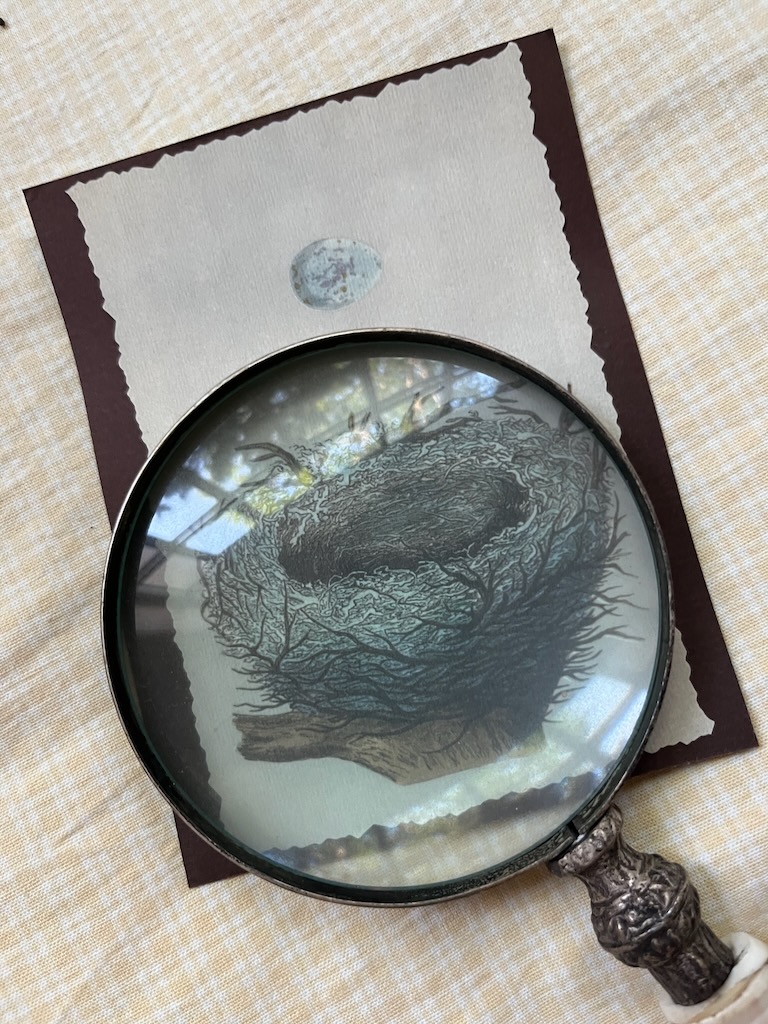
i hold each grain of time, as often as i pause and catch myself, up to the incandescent luminescence that reveals and magnifies its wonder. in other words, i aim to live with one of these in my back pocket, gliding time beneath my ever-ready looking glass:

here then is where brodsky begins his deep-dive into boredom, as he looked out upon a sea of soon-to-be-graduates at that ivy-covered college in new hampshire’s piney countryside (i’d endorse reading clear through these next few grafs, but if you’re pressed for time, leap down to the bottom of read to see if you, too, are struck by brodsky’s likening our time here to a ride on a runaway train, and his admonition to seize each blessed frame as it’s passing by):

Known under several aliases – anguish, ennui, tedium, doldrums, humdrum, the blahs, apathy, listlessness, stolidity, lethargy, languor, acedia, etc. – boredom is a complex phenomenon and by large a product of repetition. It would seem, then, that the best remedy against it would be constant inventiveness and originality. That is what you, young and newfangled, would hope for. Alas, life won’t supply you with that option, for life’s main medium is precisely repetition.

[…]

In a manner of speaking, boredom is your window on time, on those properties of it one tends to ignore to the likely peril of one’s mental equilibrium. In short, it is your window on time’s infinity, which is to say, on your insignificance in it. That’s what accounts, perhaps, for one’s dread of lonely, torpid evenings, for the fascination with which one watches sometimes a fleck of dust swirls in a sunbeam, and somewhere a clock tick-tocks, the day is hot, and your willpower is at zero.

Once this window opens, don’t try to shut it; on the contrary, throw it wide open. For boredom speakes the language of time, and it is to teach you the most valuable lesson in your life – the one you didn’t get here, on these green lawns – the lesson of your utter insignificance. It is valuable to you, as well as to those you are to rub shoulders with. “You are finite,” time tells you in a voice of boredom, “and whatever you do is, from my point of view, futile.” As music to your ears, this, of course, may not count; yet the sense of futility, of limited significance even of your best, most ardent actions is better than the illusion of their consequences and the attendant self-aggrandizement.

For boredom is an invasion of time into your set of values. It puts your existence into its perspective, the net result of which is precision and humility. The former, it must be noted, breeds the latter. The more you learn about your own size, the more humble and the more compassionate you become to your likes, to that dust swirls in a sunbeam or already immobile atop your table. Ah, how much life went into those fleck! Not from your point of view but from theirs. You are to them what time is to you; that’s why they look so small. And do you know what the dust says when it’s being wiped off the table?

“Remember me,”
whispers the dust.

Nothing could be farther away from the mental agenda of any of you, young and newfangled, than the sentiment expressed in this two-liner of the German poet Peter Huchel, now dead.

brodsky closes his address with the words that first caught my eye this week, and that i––once again––will aim to not forget:

[…]

What lies ahead is a remarkable but wearisome journey [on a] runaway train. No one can tell you what lies ahead, least of all those who remain behind. One thing, however, they can assure you of is that it’s not a round trip. Try, therefore, to derive some comfort form the notion that no matter how unpalatable this or that station may turn out to be, the train doesn’t stop there for good. Therefore, you are never stuck — not even when you feel you are; for this place today becomes your past… receding for you, for that train is in constant motion. It will be receding for you even when you feel that you are stuck. So… look at it with all the tenderness you can muster, for you are looking at your past.

i reached for that confetti salad glamour shot above because it was a bit more visual than trying to find an image of boredom. it was perhaps the most delicious thing i made this week (the grilled salmon that arrived with the salad was mighty good, but i did nothing other than introduce it to the heat of the grill), and if you’re now hungry, here’s the recipe, courtesy of david lebovitz, a former pastry chef from chez panisse now a cookbook writer living in paris. lucky david.

fresh corn, tomato, cucumber, avocado, basil summer salad

2-3 ears of fresh corn
2 cups (350g) cherry tomatoes , (or 2 cups fresh tomatoes, diced)
1 ripe avocado
1/2 cucumber, peeled and seeded
1 cup (75g) loosely packed chopped fresh basil, (reserve any small leaves for garnish) Freshly ground black pepper
Vinaigrette
2 tablespoons red wine vinegar
4 teaspoons Dijon mustard
1-2 small shallots, peeled and minced (1-2 tablespoons)
1 teaspoon sea or kosher salt
6 tablespoons (90ml) extra-virgin olive oil

  1. Shuck the corn and remove it from the cob.
  2. Remove any stems and slice the cherry tomatoes in half.
  3. Peel the avocado, remove the pit, and dice the flesh. Cut the cucumber into similar sized cubes.
  4. Put the corn kernels, tomatoes, avocado, cucumber, and basil into a serving bowl and season with freshly ground black pepper.
  5. In a small bowl, whisk together the vinegar, mustard, shallots, salt, and olive oil. Pour the vinaigrette dressing over the salad and gently mix together. Taste, and add more salt and pepper if necessary.

Serving and storage: The dressed salad can be served right away or in a few hours. (It can be stored in the refrigerator or at room temperature, but should be served room temperature.) It’s best the same day it’s made.

your thoughts on the runaway train (above) welcome here, with the related question, what are the ways you remind yourself to live each day mindful of the preciousness and miracle that it holds?

i-can’t-get-warm-enough cooking, an arctic imperative

on days when the mercury out the kitchen window is barely visible through stalactites of ice, and, from what i can make out, it appears that the high for the day hovers far below the murky line at zero, there are choices to be made: you can curl in a quivering ball under your strata of blanket; or you can strip off the flammable parts (the wraps with dangling clusters of ignitable threads) and post yourself boldly in front of the six-burner, commercial-grade range that fell into your custody the long-ago day you signed for the old shingled house with the ricketiest of windows.

i opted for six-burner range. 

and all through the arctic siege, i cooked anything i could get my mitts on: simmering stews, bubbling soups, sheetpans of roots, just about any comestible that called for application of flame. i might have been fooling only myself, but i pretended it put some level of purpose to my bone-level desire to rub up against any surface weighing in at greater than zero degrees. the imprecise dial that purports to crank the oven all the way to 450 is my most-cherished doodad of late. 

and so in a week in which i might have been distraught about the state of the world, and in which i might have been pondering how in heaven’s name to navigate the narrow straits that look to be ahead, i dallied in the kitchen. a wise woman i met the other night let on that as she sees it, her job in dark times is to fill herself with as much light as she possibly can, and then get out in the world to start spilling it. 

but first you need to be able to feel the tips of your fingers and toes. and wandering about in the five layers of woollen and fleece and yoga-pant spandex sometimes gets in the way of even apostolic wanderings. so i did what i could: i cooked. 

and despite the corona making the rounds, i invited folks in. i might have asked even the mailman had he not spun on his heels before i could stick my neck out the door to extend my relatively-warm invitation. i seemed as hungry for company as i was for the faintest trace of heat. there is something about gathering, even with goosebumps, when trying to chase the cold spell away. 

here’s a soup i made for one catch-up lunch, and which i intend to ladle when old globe-trotting cronies gather this weekend to welcome a stray back to the fold.

i-can’t-get-warm-enough tomatoey soup

(aka Provençal Tomato, Basil, Parmesan Soup)
 
a collective effort with input from Martha Rose Shulman and Ali Slagle and Babs
Time: 1 hour
Yield: Serves four 

Martha, one of crunchy-granola cookbook writers I followed back in ancient times (the 1970s), learned to make this soup years ago when she lived in France. She tells us that if there are no fresh tomatoes at hand, use canned. And she thickens with rice or tapioca, which we’re forgoing. Ali chimes in: “What if you could have a tomato soup that was as plush as a cream of tomato but tasted like pure tomato? Enter Parmesan. Simmering tomatoes with a Parmesan rind is like seasoning a bowl of soup with a shaving of cheese 100 times over. It gives the soup an undercurrent of savory fat and salt that only bring out tomato’s best sides. Many specialty groceries sell containers of rinds, but if you can’t find any, stir 1⁄2 cup grated Parmesan into the final soup (or cut off the rind of a wedge you’re working through). Rinds will keep in the freezer for forever, so start saving.” Babs echoes and amplifies both, having plucked the very best bits from each of the kitchen geniuses.

INGREDIENTS
1 – 1.5 tablespoons extra virgin olive oil
1 -2 medium onion, chopped
4 to 6 garlic cloves (to taste), minced
1/2 tsp. red-pepper flakes
Salt to taste
2 (28-ounce) cans whole peeled San Marzano tomatoes with juice
2 large sprigs basil, or about 16 leaves, plus 2 tablespoons slivered basil for garnish
1 Parmesan rind
Freshly ground pepper to taste 

For the Garnishes:
Garlic croutons (thin slices of baguette, lightly toasted and rubbed with a cut garlic
Grated or shaved Parmesan 

PREPARATION
––Heat oil over medium heat in a large, heavy soup pot or Dutch oven. Add onion. Cook, stirring often, until tender, about five minutes. Stir in half the garlic and a generous pinch of salt. Cook, stirring, until fragrant, about 30 seconds to a minute. Add the tomatoes, basil sprigs or leaves and remaining garlic. Cook, stirring often, 15 to 20 minutes. 

––Add Parmesan rind and salt to taste. Bring to a simmer, cover and reduce the heat to low. Simmer 30 minutes. Remove basil sprigs and Parmesan rind. Puree in a blender in small batches, taking care to place a towel over the top of the blender and hold it down tightly. Return to the pot, add pepper to taste and adjust salt. Serve garnished with garlic croutons and/or Parmesan, if desired, and slivered basil leaves. If serving cold, which I decidedly am not, refrigerate until chilled. 

Tip:
 Advance preparation: The soup will keep for two or three days in the refrigerator and can be frozen. 


and here’s a peek at that beefy-root stew i made last week as the many snows fell. it fueled me through to the last succulent drop of its leftover bits, which i zapped just the other night when the day had kept me too far from my heat post to start from scratch all over again….

to what do you turn when your insides need warming? is it a cookstove, a voluminous book, or are you more inclined to strap on your snowshoes and slap through the woods?

p.s. i fully realize that opening cans (see soup above) hardly qualifies as cooking, but it’s warm and it’s red, and in my book it qualifies as delicious.