pull up a chair

where wisdom gathers, poetry unfolds and divine light is sparked…

Category: conversation

turning inward, turning back
these times call for pronounced postures, for intention. ultimately we want to reach out, to be the bridge, the peacemaker. or, maybe little more than one flickering flame amid the global shadow. but first, in aim of fortification, we turn in. it’s where we stoke the fire, clarify the vision, and maybe just maybe find the peace, the calm, from which to set forth.

i’d call myself a quietist. one of the ones who finds the solitude and silence a necessary interiority. it is the place of prayer, of wisdom seeking, reaching far beyond the bounds of life as i know it, and drawing in pole stars to point the way. more and more, i start to think i subscribe to the church of the bookshelf. an eclectic crowd of thinkers and seers, the holy well from which i draw.

the noise of the world is beyond cacophony these days. rafters are rattling, pots and pans are clanging. all of which pushes me into the cracks of the world, where i poke around endlessly, sniffing out wisdoms like a mouse after cheese. i’m intent.

this week i turn east, and i turn back in time. way back, and way east. east to india. back to the first century of the common era, roughly 55 CE.

epictetus, the unsung stoic, goes first. he was as unlikely a pole star as they might come: born a slave, a slave with a limp, he carved out 93 instructions, bound them as a book, slapped on a catchy title (the art of living), one that came with a wallop of staying power (we’re still seeking the art), and all these millennia later, we’re still turning its pages.
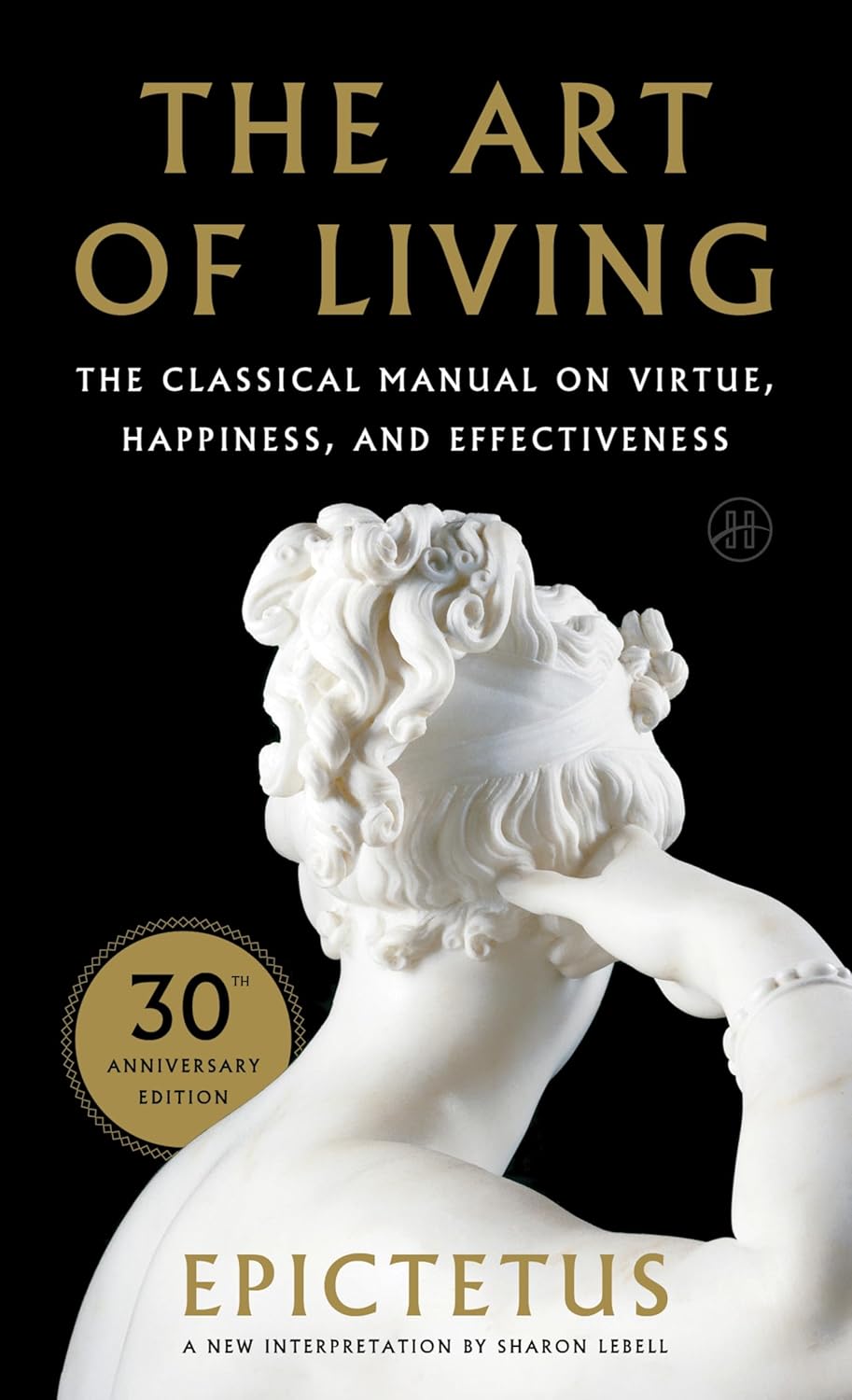
a marvelous philosopher and musician, a northern californian by the name of sharon lebell, back in 1995 took a crack at translating epictetus anew. her translation stuck, and it’s now considered a classic. i found epi’s wisdoms rather timeless, and in keeping with survival in tumultuous times.

here’s epictetus:

Caretake This Moment

Caretake this moment.
Immerse yourself in its particulars.
Respond to this person, this challenge, this deed.

Quit the evasions.
Stop giving yourself needless trouble.
It is time to really live; to fully inhabit the situation you happen to be in now.
You are not some disinterested bystander.
Exert yourself.

Respect your partnership with providence.
Ask yourself often, How may I perform this particular deed
such that it would be consistent with and acceptable to the divine will?
Heed the answer and get to work.

When your doors are shut and your room is dark you are not alone.
The will of nature is within you as your natural genius is within.
Listen to its importunings.
Follow its directives.

As concerns the art of living, the material is your own life.
No great thing is created suddenly.
There must be time.

Give your best and always be kind.

~ Epictetus ~
(Epictetus: The Art of Living a New Interpretation by Sharon Lebell.)

Arundhati Roy

the next wise soul i bumped into this week was arundhati roy, the booker prize-winning novelist, who grew up and lives still in india; delhi specifically these days. she’s getting plenty of ink of late because her latest work, her first memoir, Mother Mary Comes to Me, has just been published. it’s an exploration of her complex relationship with her “iconic” and “extraordinary” mother, whom she describes as both “my shelter and my storm.”

roy’s 1997 novel, The God of Small Things, is what won her the booker prize for fiction, which in this mercenary worldly equates with that murkily-defined “success,” and its often evil twin, fame. roy, wise woman, wasn’t having it. she was not one to be deluded, or seduced, by such worldly measures. as she tells it she was keenly influenced by an uncle, a beloved uncle, who was one of india’s first rhodes scholars for his work in greek and roman mythology, but gave up his academic pursuits to start a pickle, jam, and curry-powder factory with his mother. and to build balsa-wood model airplanes in his basement.

not surprisingly, someone schooled in the shadow of such an uncle might have strong instincts on the “right” definition of success. and in a conversation with an old friend, arguing that “recognition is not the only barometer of brilliance or human worth,” she noted the friend’s eyebrow arching. skepticism, in full display. so roy did what any cocktail debater might do: she pulled the paper napkin out from under her drink, and a pen from her purse, and began to scribble.

what she wrote amounts to a gospel of success that belongs not on half-soggy paper, but a granite slab somewhere:

To love. To be loved. To never forget your own insignificance. To never get used to the unspeakable violence and the vulgar disparity of life around you. To seek joy in the saddest places. To pursue beauty to its lair. To never simplify what is complicated or complicate what is simple. To respect strength, never power. Above all to watch. To try and understand. To never look away. And never, never to forget.

sometimes i think i’m a broken record, saying over and over—and over—such a few simple truths. 

never get used to the unspeakable violence and vulgar disparity of life around you.

seek joy in the saddest places.

never simplify what is complicated or complicate what is simple.

respect strength, never power.

above all, watch.

never look away.

love.

love.

love.

what inscription might you add to a granite wall of truths?

p.s. i hyperlinked to a marvelous interview with sharon lebell above (i love her whole story, how she was drawn to study philosophy, inspired by a neighbor with more books than she’d ever seen, and how she found those first classes in philosophy “exercises in obfuscation” — might that describe much of the noise here on planet Earth in the year 2025?). here is just one of the grafs from that interview you might find as delicious as i did….

Epictetus drew me in particular because in the mid-1990s he was the unsung Stoic. People had heard of Marcus, of Seneca. No one, except the cognoscenti, had heard of Epictetus or could pronounce his name. I liked his humble background: he wasn’t an emperor or a big cheese. As a former slave with a limp, he was someone who wasn’t expected to have a voice, but he used his voice anyway. He was a relatable everyman trying to figure out best practices for getting through the day.  Since I am female, this mattered a lot. Many philosophers invoke male experience as a stand-in for the universal human experience. Epictetus did not, of course, address females when he taught, but his teachings have an inclusive, of-the-people feel.”
in search of the common

in which we take a hard look at the crumbling discourse in this country, and consider a solution or two….

i’ll be honest. these are hard times. i pick up the news and feel pummeled by each new blow. i see pillars of democracy crumbling one after another. jeff bezos and the washington post, only the latest. i read of law firms—white shoe ones, meaning old-guard firms who take on some of the highest-profile clients, the most complex cases, aka “the elite”—being stripped of security clearance, being considered for criminal investigation only because they represented a client the current administration has inked onto the enemies list. 

i see revenge as the rule of the day. 

i’m sickened.

i’ve never prayed to a God of revenge. 

but i read, too, that there are stirrings of hope. faint, yet beginning to stir. 

you might call it an occupational hazard, but i happen to pay attention to the ways we get news and i worry desperately that we all cower in distant silos. (getting more distant by the day.) i get my news and you get yours and, often, ne’er the twain shall meet. 

so how do we have a shared conversation? how do we sit down to the same old table and begin to listen? how do we reach across the table, and in a quiet, unquivering voice, utter the words, “i hear your point”? or the certain conversational lubricant, “say more”? or the nervier, and necessary, “that’s not actually true”?

i hold onto my hunch that most of us want what we think is fair, is just. and i’m not giving up on my fervent belief that if you saw me bleeding on a sidewalk, you would not ask first how i voted and then decide whether or not to lift me off the ground. 

i’m fairly certain that in the nearly two decades we’ve been pulling up chairs here, some of us do get our news from different silos. i try to tread lightly. i respect divergence of thought. but the problem, as i see it, is that we are all being fed news in the flavors most to our liking. and that’s not the way the news is supposed to work. it’s not the way it worked for the time i was one of the ones writing what counted as news. and not in the newsroom i knew.

so here’s the jam: if the news you’re being fed is slanted, if some of it’s filtered out, and some of it’s twisted, if both sides aren’t fairly presented, it’s not any sort of surprise that conclusions are drawn, and wedges are wedged. 

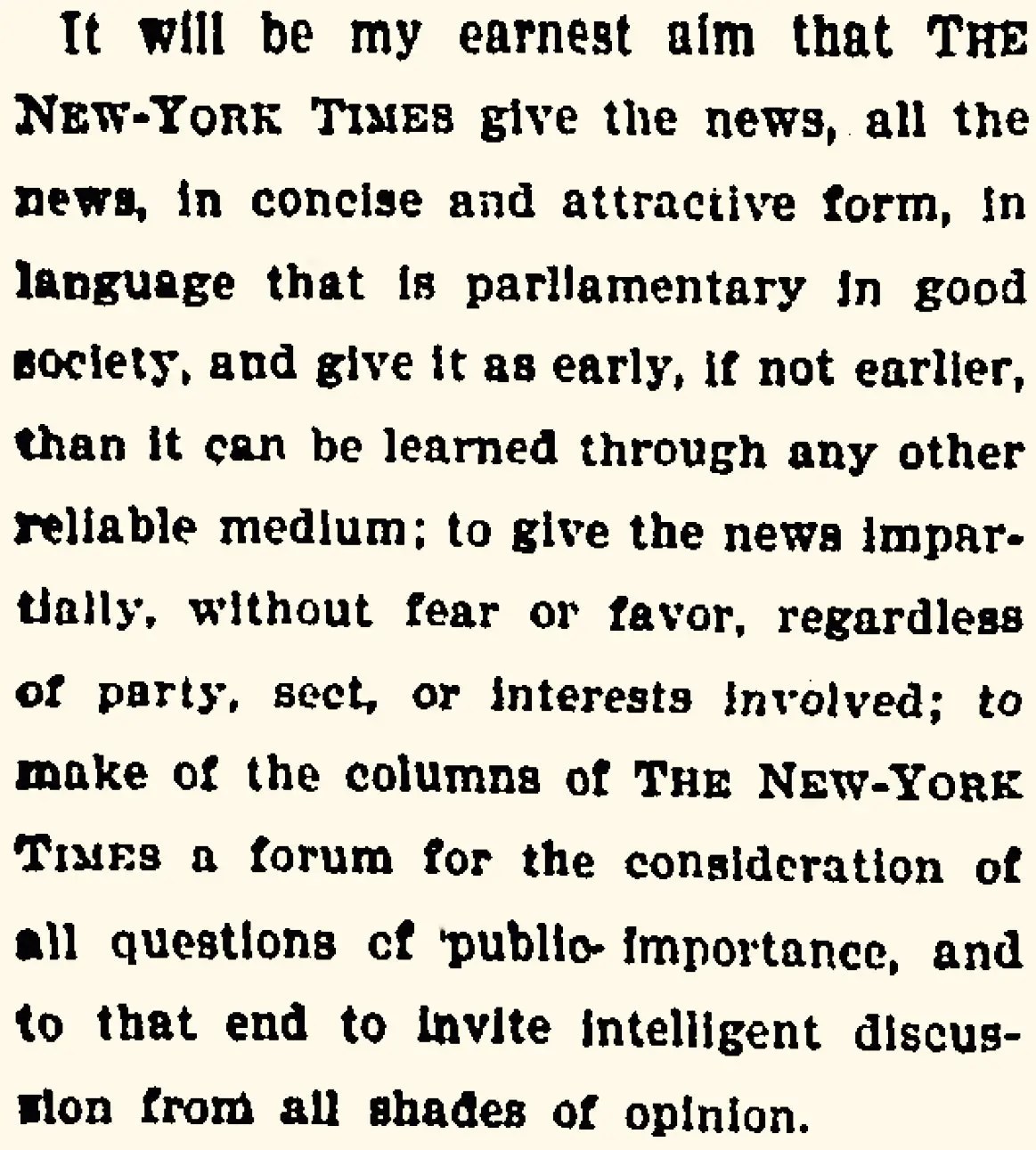
“…without fear or favor…”

these days, the ones helming the news––the owners, the billionaires who thought it a romp to claim a slot on the masthead––they seem to be in it for hard, cold cash. the one with the most wins. cozying up to power seems a game to which we’re not invited. to get there, you need to fly in your private jet, hopefully not one of the ones making a mess on the runways. 

so much for democracy dying in darkness. or that now quaint-seeming declaration of adolph s. ochs in april of 1896, that his newspaper, the venerable new york times, would “give the news impartially, without fear or favor.” 

good journalists hold firm to those words. good journalists have died defending those words.

you don’t get into the news biz––chasing after crooks and pols, climbing rickety stairs in darkened hallways, knocking on doors knowing full well you might find a muzzle pointed at the bridge of your nose––because it’s a sure way to raise your heart rate. or just cuz you’re nosey.

you get into the news biz cuz you’re a mad dog for the truth. and the fair telling of stories. you dig and you dig till you find that shimmering shard that, to your best knowledge, and according to more than one reliable source, is unassailably true. i sat beside folks in the newsroom who thought nothing of holing themselves in the dungeons of city hall or the bowels of bureaucrat mazes, riffling through file after file to track down the name and the dollar amount on contracts that might or might not have been legal. that might have unearthed wrongful convictions. or identified bodies dumped on the roadside. and those subterranean scribes had the pallor to prove it, after months and months under the glow of flimsy fluorescent lights. and cups of stale coffee. (we’ll leave the bottles of whiskey for another day.)

these days, the ones coursing the landscape with their reporter pads and pens, their itty-bitty microphones and their smartphone recorders, are plenty besmirched. discounted as little more than rousers of rabble. there’s a strong scent of disdain souring the air. 

that’s an unfair and erroneous swipe at all those who abide by the time-tested codes. you might have heard that, um, democracy dies in darkness. and the reporters i know refuse to turn off their flashlights.

my little screed here won’t make a dent. but i cannot give up. none of us can. my faintest hope is that even one someone who reads this might take up the dare: fight fallacy and fiction with verifiable fact. there was an old maxim in the newsroom, one that we more or less lived by: if your mother tells you she loves you, check it out. 

check your sources for news. read beyond your usual silo. sit down at a table and listen. exercise your ears more than your tongue. 

at least for now, it’s a place to begin….

p.s. i know there is a good handful of journalistic heroes who pull up a chair, so if any of you wander by today or tomorrow or anytime soon, feel free to pen your prolific and profound views on the state of news consumption in america, and how it might be at least part of the root of what’s tearing us apart….


only one poem this week, and it’s a wonder from a poet who is a chicago legend, a hero in Black arts…..it’s an ode to books, which is a great place to begin a grounding in knowledge, and finding common language…..be sure to get to the last line, where i’m guessing you’ll let out a sigh. as i did. so much in common….

So Many Books, So Little Time
by Haki R. Madhubuti

My sanctuaries are liberated lighthouses of shelved books,
featuring forgotten poets, unread anthropologists of tenure-
seeking assistant professors, self-published geniuses, remaindered
first novelists, highlighting speed-written bestsellers,
wise historians & theologians, nobel, pulitzer prize, and american book
award winners, poets & fiction writers, overcertain political commentators,
small press wunderkinds & learned academics.
All are vitamins for my slow brain & sidetracked spirit in this
winter of creating.

I do not believe in smiling politicians, AMA doctors,
zebra-faced bankers, red-jacketed real estate or automobile
salespeople, or singing preachers.

I believe in books.
It can be conveniently argued that knowledge,
not that which is condensed or computer packaged, but
pages of hard-fought words, dancing language
meticulously & contemplatively written by the likes of me & others,
shelved imperfectly at the level of open hearts & minds,
is preventive medicine strengthening me for the return to my
clear pages of incomplete ideas to be reworked, revised &
written as new worlds and words in all of their subjective
configurations to eventually be processed into books that
will hopefully be placed on the shelves of libraries, bookstores, homes,
& other sanctuaries of learning to be found & browsed over by receptive
booklovers, readers & writers looking for a retreat,
looking for departure & yes spaces,
looking for open heart surgery without the knife.

—Haki R. Madhubuti, who turned 83 this week, is a poet, writer, and educator, who in 1967 founded Chicago’s Third World Press, the largest independent Black-owned press. He’s regarded as an architect of the Black Arts Movement. Born Donald Luther Lee, he changed his name in 1973 after traveling to Africa: “Haki” means “justice” or “rights,” while “Madhubuti” means “precise, accurate, and dependable.” Both names are derived from Swahili. Of his renaming, Madhubuti explained at the time that he wanted to arrive at a new definition of self.

have you had any hard conversations of late? were you afraid to go there? what peaceable tools did you use to navigate? how did it go? will you try again?

love letter to the chairs on the occasion of seventeen years

dear chairs, 

a calendar turned the other day, a yearly one. and it turned for the seventeenth time. thus begins the eighteenth year of this little old chair. 

that first day of that first year –– december 12, 2006 –– i faced a blank white screen and a motherlode of trepidation. that screen plus the trembling inside equaled a scarier form of publishing than i’d ever really done before –– and that was 25 years into my stint at the late great Chicago Tribune

to write what at the time was a newfangled thing — a blog, an ugly gutteral word if ever there was — was, to my mind, to take away the filter that might have allowed me to occasionally put my heart to my sleeve in the stories i told and how i told them, but it shielded me from going deeper than that, from willingly baring my soul, where my truest self stirs. 

i was compelled to write the chair because i was convinced that the deepest truths of our lives are played out in the quotidian. on the humdrum stage of our day-after-day domesticities, and the confines of hardly exotic daily rounds. i’d come to believe that the common, plain-wrapped stories of our lives are in fact imbued with the sacred, the lasting, the shared. and more than worth holding up to the light.

i still think so. 

chances are, you and i are not going to find our names chiseled in the roll call of global heroes. we are going to live on in the scant traces we leave behind, the simple kindnesses, the one or two times we mustered just the right words, the softening we brought to someone’s unbearable hour.

and so, i thought then and think now, if this one bracket of time is ours, then perhaps we’d do well to plumb the depths of it. or at least plumb a little more pointedly. root around a bit. not shy from asking the tough question, the true question. search for the sacramental. name the holiness where we find it. shine the light on it. make known the magnificence that runs through the river of each of our lives.

because i firmly believe that, in the end, we are all animated by a few certain yearnings: to love and be loved; to be seen or be heard; to reach out in the darkness and be met with a soft and warm hand to hold onto. some of us live to be stirred, to feel our hearts beating hard against the wall of our chest. to delight in the whimsies of each and any hour. and to know more when we fall asleep than we knew upon waking that day.

so i offered up the stories of my own life’s spool. i scanned the day to day, and plucked the shards that shimmered the most, the ones that seemed to hold the most questions. maybe even a quiet holiness. the ones i’ve described as exuding the most wattage. the ones i thought might resonate a bit more than all the rest. ones worth examining.

and so for 17 years i’ve turned here, plopped my bum on this rickety chair that’s missing a spindle, tapped at the alphabet letters as if i was at once alone and in the company of the dearest of soulmates. i’ve pushed toward the truth, even when i worried you might wriggle a bit. even if i pictured you rolling your eyes. to write the truth is to blot out the worries of just how your words might land. especially if your mother-in-law or your mother is one of the ones reading your words. (i learned not to hyperventilate on the days when only a weighted silence followed a post, when my usually exuberant mother-in-law chose silence as the way of letting me know she was, um, not such a fan of whatever i’d mused that morning.) 

over the years, dear chairs, you’ve chimed in, and made me laugh aloud, and more times than you might imagine you’ve moved me to tears with the words and the wisdoms you’ve brought here. 

and this year, this darn nasty year, you all but kept me from keeling right over. 

the fourth wall, the one they talk about in the theater, the invisible screen that separates actors and audience, it’s non-existent in the realm of writing, or at least in the writing i write here. 

ever since that long ago first morning, i’ve meant for this to be a back and forth, a call and response. yet i never imagined the friendships that would leap off the page, break through the cybersphere and become so very real, some of the dearest in my life. 

whether we’ve sat in the same room never or once, or dozens of times, your very big hearts, your high-soaring souls, your whimsies, your tender ways, have worked their numinous magic in a world that’s sometimes so, so dark: you’ve become true, true friends. the sort you tell truths to, the sort whose hands you reach for when your own are trembling like leaves in an autumn wind. 

so all of this is a long-winded way of simply saying thank you. from the bottom of my very big heart, the one i’ve long worn on my sleeve. where it now shares a space with my soul. 

and thank you to willie, who long long ago, got me started. and to teddy, who long let me tell his collection of growing-up stories. and, of course, to each and every one of you, whether you ever leave a trace, or tiptoe in and out quiet as a mullipuff bobbing on the breeze….

where do you sense the holy in your lives?

photos by Will Kamin, long long ago. xoxo

a jump on counting my blessings . . .

photo by will kamin*

the days of late have been plenty gray, sodden gray, gray the color of chimney ash. 

the gray started seeping into me especially this week when someone i love lost her father who might have qualified as one of the dearest men on earth. he was 97 and as alive and filled with curiosity and charm as anyone whose tales i’ve ever known through the close transitive property of one shared soul. i’d never met him, though i longed to, but he came alive to me because his daughter, our very own amy of the chair, told the most animated love-drenched stories of him. his last name was neighbour, and i am pretty sure his amy must have grown up thinking the whole world was singing along with mister rogers when the sweatered one belted, “won’t you be my neighbour?” because who wouldn’t want to be hub neighbour’s neighbor??

the grayness, though, started to shatter when i looked up late yesterday afternoon and saw not one, not three, but six scarlet cardinals circling round my feeder, taking turns at the 0s where the seed dribbles down for the plucking. 

that’s all it took to remind me to count my blessings. 

so i begin with six: cardinals, all in a ring, chasing away the murky gloom of twilight, chasing away the murky shadow that’s been eclipsing a chunk of my soul. . .

more blessings: 

the boy driving home from college on sunday. the dinner i’ll serve, a birthday feast for my very own mama who turned 92 this week, and who longs for birthdays to end, so she can “go home,” to the heaven she pines for. . .

the boy flying home on thanksgiving morn, when his hours among us are brief, too brief, but at least he’ll be here long enough for me to reach under the table and give his fingers a squeeze. and that hallowed night i’ll fall asleep to the sounds of two boys in two ‘cross-the-hall rooms rustling the sheets of their boyhoods, snug in their long-ago beds. . .

the faraway cousin who bathes me in books, this week’s batch a quartet on the birds and wild herbs and trees and critters of ireland, complete with marvelous lore and legend. (according to one celtic telling, the robin is the bird thought to bring comfort to the wounded and suffering. and here’s my favorite part: the plump little bird came to boast its red breast, according to the heavenly irish, when it pulled either a thorn from Jesus’s crown while he hung on the cross, or a nail from his hands or his feet, so Jesus’s blood spattered on the robin and thus it became red-breasted.) . . .

the husband who sits across from me at dinner each night, fielding my curiosities and never ever failing to say thank you for a dinner he always claims “delicious,” (even, i swear, when it’s not). and who, even after all these years, can set my heart soaring because of the way he captures a thought or a phrase, and whose unheralded kindnesses often only i witness. . .

these lines i read from rabbi jonathan sacks’ posthumously published, studies in spirituality: a weekly reading of the jewish bible (more on this some other friday), in a chapter on judaism as a religion of listening . . .

“If I were asked how to find God, I would say: Learn to listen. Listen to the song of the universe in the call of the birds, the rustle of trees, the crash and heave of the waves. Listen to the poetry of prayer, the music of the Psalms. Listen deeply to those you love and who love you. Listen to the words of God in the Torah and hear them speak to you. Listen to the debates of the sages through the centuries as they tried to hear the texts’ intimations and inflections. 

“Don’t worry about how you or others look. The world of appearances is a false world of masks, disguises, and concealments. Listening is not easy. I confess I find it formidably hard. But listening alone bridges the abyss between soul and soul, self and other, I and the Divine.”

Rabbi Jonathan Sacks

the poet friend who’s found the courage to once again plunk herself at my so-called kitchen table writing school (virtually, this go-around), so we can try to chase away whatever demons spook her into thinking she can’t write when in fact she writes in a way that takes my breath away. . .

the friend who never fails to ping me when there’s a glorious moon rising or looming out my late-night window. . .

every single one of you who pulls up a chair. for all these years, known or unknown, you have graced me and blessed me. . .

that’s more blessings than i can count, and i am only just beginning. 

what lines are you adding to your litany of gratitudes this year?

*photo by will kamin, from his AP art photo portfolio from his senior year of high school. now professor kamin, our very own assistant professor of law….

please keep our amy in your prayers. and the soul of her papa.

the call to come together

the invitation was simple: come for coffee. the invite list was the neighbors who surround me, a few of whom have moved in within the year or last couple years, and who i barely or didn’t even know.

all i did was brew a vat or two of coffee. pull out favorite plates. tuck flowers in vases. vacuum cobwebs out of corners. dump clementines and figs into bowls — bowls given to me over the years by some of those very same neighbors. the things we stack in cupboards — many of them, anyway — tell stories all their own. nearly every single thing in my house tells a story. i collect stories, not things.

it all started because the air turned crisp, and light turned amber — or at least that’s the way it always looks to me. there is a light in september that sometimes feels to me as if the heavens open just a crack, and someone tosses down a holy shaft. a shaft that’s almost a stairway back to whence it came.

the date i picked on the calendar was the date that holds a quiet sort of holiness for me: it’s the day my friend ceci died, three years ago, and the birthdate of my friend mary ellen, who died not long after….

it turned out to be the date dr. christine blasey ford took her terrors and her fears and stepped before the senate judiciary committee to tell her awful story, to peel back the layers of the wound she’d tried so very hard to escape.

for a while there, i thought my timing couldn’t have been worse. i’ve long been something of a news junkie and i didn’t want to miss hearing her words, the tremor in her voice, in real time. it felt like we all, as a nation, needed to encircle her, stand behind her, to say emphatically, “we hear you, and we believe you.” and we are here, as literally as possible, reaching through the screen, with our palms pressed against your back, squeezing your hand, touching you softly on the arm, one last time before you take a breath and begin.

i’d decided that i’d leave the tv on — softly — over in the corner, where it’s tucked inside an old armoire. as it happened, one by one, a few of us circled close to listen. we ebbed and flowed from coffee to nibbles to capitol hill testimony. and then, christine blasey ford cleared her throat, pushed back that swatch of hair that insisted on covering her left eye, and a circle of us moved close. as if by instinct. we leaned in. we held our breath. i noticed that we all had wrapped our arms across our own chests, held ourselves tight. anchored ourselves. the looks on our collective faces was a portrait in pain and empathy i’ll not forget. i don’t know, because we didn’t talk about it, how many of us in that circle had our own version of a christine blasey ford story to tell. and that didn’t matter, because we were there — leaning in, listening — for her. to put the power of our hearts, our intellects, our faith, behind the courage it took for her to stand up to power and softly tell her truth.

if i’d been home alone, i would have been glued in front of that screen all day, all by myself. instead i found myself in the company of women, lovely women, women who’d shown up with scones they baked, and pumpkin dip they’d stirred and poured in antique bowls. we told our own stories — how we got here, who we were, what made our children stir. i watched as clusters leaned in and women whispered. or laughed aloud. i watched the company of women weave together those disparate threads that make a whole cloth out of mismatched parts.

instead of going through the day alone, instead of absorbing the nation’s pain all by ourselves, we gathered in a circle, stood — literally — shoulder to shoulder. as i studied the pain-wrought faces of the women watching, absorbing every word of someone else’s nightmare, another woman’s indelible pain and trauma, i saw — without words — how deeply tied we humans are. how much we suffer in the face of suffering.

in the company of strangers, we can find our deeper truer selves.

it made me wonder if we need to climb more often beyond the walls we build around ourselves and our stories. all it takes, sometimes, is vats of coffee. and the invitation: please come….i’ll not spend this day holed up inside my private woes and worries….

what parts of september 27, 2018, will you not forget? which words or images are etched now across your heart? do you find comfort in company? do you need to give yourself a little nudge to get out from behind the comforts of your solitude?

makes me think we might need the occasional occasion of pulling up chairs in real time, say at my house for those who live within chair-pulling distance?

burrowing into december, month of miracles and searching

breakfast in bed

this is the month, they tell us, of miracles. “a miracle happened here.” so say the hanukkah refrains. it’s the month, too, of searching for a room, searching for room in your heart. so say the stories of christmas.

amid the month of darkness, miracles await in the nooks and the crannies. amid the month of december, there’s searching to do. deep-down searching.

here’s a secret: sometimes, you’re wise to approach the days with a deep-down quiet. that’s how you come to hear the whispers, and the cries that haven’t the oomph to rise to deafening decibels. that’s how you just might stumble into a miracle, sometimes find room in the cave of your heart.

the three, it seems, belong together: the quiet, the miracle, the room.

december for plenty of folks is a month of tight passages, and tangled adventures in forward motion. december is a month that grabs some by the ankles, tugs at them, tries to topple them, steepens the climb.

december, when you turn down the noise, unspool the days in whispers, tiptoe rather than race, is when you just might hear the scratch at the door of your heart. you are awake to the muffled cries that come in from the cold. and, often, that’s how you find yourself in the company of miracles, and discover a few extra inches in the capacity of your heart.

in recent days, i’ve tumbled into one or two souls in shadow. souls who couldn’t for the life of them see the light. certainly not their own. i wonder if i’d been racing through the days, a list of to-do’s blaring in my ears, if i would have heard quite how deeply they were hurting.

thank God, i heard.

i paused. i took a breath. shoved aside what the day had intended for me to do. instead, i climbed into the trench where each one found him or herself. i sidled up beside the soul in shadow; i said little. i spoke in actions. because sometimes only in doing can we really truly speak. i made breakfast, plopped it on a tray, ferried it to the someone whose soul was hurting. i unfurled blankets, and we sat side-by-side. i listened, all day.

the magic of loving is this: it works both ways at once. have you ever noticed that in your moments of deeply loving, as you lavish kindness and gentleness, as you exercise dashes of creativity to give your love some oomph, your own heart is growing right alongside the one you’re working so hard to love?

tonight a friend i love is coming for dinner. she’s a friend whose world has shrunk quite dramatically of late. the moment i imagined inviting her for dinner, imagined the candles i’d light, the napkins i’d lay out, imagined the plates piled with deliciousness, imagined the hours of uninterrupted conversation, i felt my own heart grow.

it is in giving love that we find it. that’s neither radical or new. it’s an old recycled truth. but when we live it, especially in the month of december, month of darkness and miracle and making room inside our hearts, it takes on a radiance all its own.

i’ll kindle lights tonight. i’ll aim to kindle light each and every day. i’ll keep my ears tuned for whispers and for cries. i’m making room. i’m tumbling into miracles.

those are the stories, the truths, of december, blessed holy month.

first night candles

how bout you? are you tumbling into miracles, making room?

telling time

img_8841-1

listen in: tick tock chime 

in this old house, bed linens are worn thin. old quilts bare their threads. spoons stir porridge for decades. chairs are passed from generation to generation. in the right slant of light, you can make out particular dents in the old kitchen table, where long ago, my third-grade self, or one of my brothers, pressed pencil to homework to maple slab, and the addition in columns, the ill-formed alphabet letters of some week’s spelling words, still stand. even the potato masher in this old house bears the weight of half a century — at least.

new things aren’t often acquired here. but we made room last week for an old, old clock. a new-to-us old clock. a beehive clock, it’s called. with westminster chimes. and from the very first gong, it’s felt as if it’s ever been here. right away, it lulled me. made me feel even more at home.

it chimes every quarter hour, the progression of chimes compounding with every passing slice of the hour, for a total of 96 chimes in a day. and when the minute hand points heavenward, points due north, it gongs the big ben gong, one for each accumulated hour, of course.

it sounds to me like honey dripping across a slice of poundcake. or molasses poured onto flapjacks, if sound came with pictures. velvety, smooth, utterly unruffled and unruffling. it’s the very definition of soothing. it might sound, in its quieter intervals, the ones where it’s merely ticking and tocking, like water dripping. because i’ve been reading all about clocks, i understand why i hear the water-drop sounds. in ancient times, back near the beginning of measured time, the greeks devised a water clock, realizing that the drips fell at a particular rate per hour, and thus could be harnessed for time-telling purposes.

i tried to find out if there was some physiologic connection between the sound of time ticking and the workings of the human body, the heart perhaps. i’ve not yet found my answer, but i have a hunch: the sound of a ticking clock is the closest we’ll come to the in utero sounds, when our newly-formed ear was pressed against the wall of our mama’s womb, and the whooshing and swooshing of her heart was the first thing we heard, was the round-the-clock soundtrack of our very beginning.

i know that in nature there’s a particular universal set of shapes and designs and symmetries and proportions (consider the snowflake or the rose petal, the starfish or even the tiger’s striped face), and that the patterns repeat and repeat throughout creation. mathematicians and artists alike have spent their lives obsessed with these ineffable truths. they’ve put names to them, names like divine proportion or the miraculous spiral.

i like to imagine God dipping into God’s paint kit to pull from that oft-used palette, applying God’s favorites here, there, and everywhere. do you think it’s true too of the patterns of sound? clock ticking = water dripping = human heart, no matter how you rearrange it. do you think God had a shortlist of sounds, of ones reserved for the soothingest jobs?

affection for clocks is not new in this old house. in one of those curious entwinings of the histories we’ve woven together in this adventure called “our married life,” the tall bespectacled fellow and i both grew up with grandparents whose walls were covered in clocks, and whose hours erupted in cacophonous gongs and chimes and whistles and tweets (in the cases, of course, of the cuckoo clocks). sleeping at grandma’s, for both of us, meant falling asleep and awaking to clang upon clang upon cuckoo.

long ago, in our very first house, we hung on our wall a simple kitchen clock, one with gingerbread carvings and etchings in paint the color of gold. it had belonged to the tall one’s grandfather, and i’ve long considered it the heart sound of this old house. i didn’t need another one.

but the man i married started thinking about clocks a few years ago, when i was writing a book called “slowing time,” and he thought a clock was the perfect way to mark the birth of that dream. we’d considered a true grandfather clock, one that stood against the wall like a wood-limbed soldier. every once in a while we’d amble through a clock shop, one where the clocks came with history, and sometimes with pedigree.

then we traveled to london, and beelined our way to big ben, the best clock that ever there was, you might argue (and i might). we stood beneath that tower of chiming and gonging, feeling the sidewalk beneath us quiver with the vibration of the bells. we listened and listened, made sure we were there for high noon and midnight, to get the full bravura.

a year passed, and for me, another decade ended, a new one began. we went back to the clock shop, and this time, we both stopped in front of the clock that sounded just like big ben.

my beloved blair bought it, the clock man gave it a cleaning, and a few days later i drove back to carefully carefully carry it home.

it’s home now. it chimes now. we call it little ben. every time i hear its chimes, i melt all over again. i can’t seem to help it.

my sweet blair, a very wise soul in the deepest and surest of ways, he stood back the other evening, the glow of the lamps falling across his face, and whispered quietly, “it’s a celebration of time.”

and it is. every minute noted, every quarter hour chimed. every hour a loud and resonant reminder: the time is now, savor it.

bless you, and thank you, sweet blair. and little ben, too.

if you click the link just below the clock (way above), you can hear a bit of the ticking and half-hour chiming (i hope!). and be sure to note that i’ve linked to big ben announcing high noon in the paragraph near the bottom, the one about traveling to london. both are your clock songs for the day. 

a few things i learned about westminster chimes: they first rang out from the church of st. mary the great, in cambridge, england. the year was 1793. the chimes are comprised of four permutations of four pitches, all in the key of E major. three crotchets (or quarter notes) are followed by a minim (half note). and they’re believed to be a set of variations on the four notes that make up the fifth and sixth measures of “I know that my Redeemer liveth” from handel’s messiah. they were first heard in america in 1875, ringing out from the steeple of trinity episcopal church in williamsport, pennsylvania. and, the first two notes are the very ones heard to this day on every NYC subway train, warning that doors are about to close. the whole shebang is played at yankee stadium whenever the home team scores. and if there’s a 3-point shot that glides through the basket on the LA laker’s home court, you’ll hear it there too. 

do you, too, love the tick and the tock of a clock? do you have a clock story to tell? what are the sounds that most soothe you, or make you feel as if God is whispering in your ear?

“be our best selves,” and other wisdoms gleaned

candle

in which we turn to the wisdom of others to find instruction for the way toward grace…

a precede before we begin: i was trained as a journalist to leave my politics off the table, to keep it out of my writing, and because i’ve worked for almost 10 years to make this a sacred place outside the cacophony of the cruel world that tries to knock us down, i want to put the politics aside here, and frame this as a conversation of all the things we believe in here at the table: looking across the abyss to find the glimmering shards of the divine, renouncing hate and hateful speech. finding courage even when we’re mired in doubt. 

***

when we sat down to dinner the other night, the night after we’d stayed up till the wee hours watching votes roll in, we clasped hands as we always do, maybe a little tighter that night than we sometimes do, and we nodded toward the gentle man at the far end of the table, the man whose moral ballast, whose capacities to anchor my fevered flights, weighed deeply into why i married him. it was his turn to say the prayer. he spoke simply, two sentences perhaps. and the one that’s stuck with me all week, the one i’ve all but sewn to my backbone, to put muscle to my wobbly self, is this: “dear God, let us be our best selves.”

it’s as wise an instruction as any i’ve stumbled upon this week.

what it means, i think, is to double-down on our inclinations to be living-breathing beacons of all that’s good. and by “good” we mean those actions inscribed in every ancient and timeless holy text: love as you would be loved. turn the other cheek. be your brother’s or your sister’s keeper. to name a few (please, name a few that guide you).

when the world around you feels as if the ground’s been shaken, when you’re scared by all the words (and acts) of hate that swirl around, is there any hope in muscling on more deeply attuned to your own code of gentle kindness, in reaching across the darkness in search of the glimmering shard of holiness we’re sure is somewhere out there?

is there any other choice?

we can’t submit to the lowest, harshest impulses wired into the whole of we are.

is it enough to conduct our daily lives in a cone of grace, a willingness to listen, to speak in soft and measured tones, to sometimes muster all the courage in the world to step in and say, i’m sorry, that’s wrong and i will not stand silent?

or might we need, more emphatically than ever, to step beyond our well-worn zones of comfort, carry our best selves into the more public sphere?

i’m rich in questions this morning, short on answers. i’m guided, as always, by my simple code: make each encounter peace-filled, at a minimum. take it up a notch and sow an extra dash of goodness, of compassion. look the stranger in the eye, allow your eyes to sparkle. speak a word of shared communion. make someone laugh. wreak random acts of plain old kindness. shake someone out of complacency by your radical gesture of human decency. put breath to the voice of truth, of healing, of all the wisdom you can muster. don’t be afraid.

i’ve been turning all week for instruction from the wise souls who surround me. my dear friend katelynn carver is a friend i made in a virginia woolf class at harvard divinity school. she’s in scotland now, at st. andrews, writing herself toward a phD in wisdom. she wrote this brilliant essay this week, titled “the opposite of indifference.”

in part, she wrote:

We’re forgetting the most important thing. Because we think we’ve lost love to hate, today. We think we’ve lost kindness to wrath, today. We think we’ve lost the good in what we stand for as a country to violence and hate-mongering and xenophobia and all of the horrible -isms that plague our society and divide us ever further where we need to unite. And I won’t kid you: all those things have been dealt a mighty blow—mightier than many of us have ever seen.

But we’re wrong that we, as a country, lost to hate, today.

she went on to write:

We need to look beyond the superficial, and take nothing for granted, and create dialogue where we’ve long found it easier to turn a deaf-ear. We need to dig in with both hands and do the hard work.

We need to protect each other. We need to recognize what this division has done to our friends, our neighbors, our fellow citizens. We need to reach out and assist immediately with those who are grieving this morning, who are fearful, who are suffering or devoid of all hope, and remind them that they matter, and that there’s light left, and that we’re still here. We need to see the hate and the rage and the vitriol and sit with it a while, so that we can understand where it comes from, so as better to help heal where it stems from. We need to remember that at the end of the day we are all human—and if remembering that is a trial, or a seeming impossibility, we need to work harder. We need to work to figure out how to stop being being so scared that we’re defensive, that we’re ignorant, that we make enemies amongst ourselves and cut rifts that shake our cores. We need to figure out what went wrong that parts of our nation have ever felt that they need walls, physical and metaphorical.

But what we need most, is to remember. We are a nation of many nations. We are a people of many peoples. We are a generation being faced with a challenge, as every generation is, and we are being called to rise to it and shore this nation up at its fractures to be stronger, to be better. We are an experiment, and sometimes experiments don’t go the way we expect, but that’s what makes them groundbreaking—for better or worse.

Where this experiment leads is going to be in our hands, now. And if we remember only one thing as the first step, as the driving force, and the first niggling thought before we remember everything else ahead of us, expected of us, needed from us—we must remember this:

We are not indifferent.

And as long as that remains true, we have a path to forge onward.

no wonder i love katelynn. (please read her whole essay).

and on katelynn’s wisdom, i’ll sign off — with love, and faith that, together, we’ll find our way toward the shining light that cannot be extinguished.

david remnick, a voice i turn to in times of light or dark, wrote in the darkest hours of tuesday night, wednesday morning. he chose these words to end his essay: “…despair is no answer. to combat authoritarianism, to call out lies, to struggle honorably and fiercely in the name of American ideals—that is what is left to do. that is all there is to do.”

and my burning question: what instruction guides you? where are you finding hope? how do you define, “be our best selves”?

riveted

FullSizeRender

night after night, we took our places, however many of us happened to be home. we all had our props, tea mugs or ice cream alongside iterations of screens, small, smaller and smallest. as the night blackened outside the windows, one shared rectangle glowed: for the last two weeks, our portrait of the american family has been the four of us huddled around the modern-day campfire that is the tv blaring the national conventions, both of them. we take religion and politics in two flavors in this house, so we are by definition bi-partisan. because we watch knowing there is more than one brand of lens in this house (it’s the college kid who went off to school emphatically one way, came home another), we train our ears and our minds and our hearts on common ground.

it makes for truly compelling watching. no knee-jerk reactions allowed. and civility, doled out in carefully thought words, honestly asked questions, is the one abiding premise. fact-checking has become a family sport.

what compelled me the most, what i can’t get enough of, can’t stop thinking about was the oration. the power to put breath to words and bellow them across the seas of cheering (or jeering) souls in the seats of the arenas, both the Q in cleveland and the wells fargo center in philly. i found myself as rapt by the voices clearly not used to the national stage as i was by some of the ones whose road to glory and office was paved by the power to put heart and soul into political story.

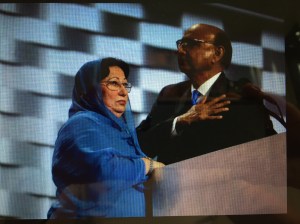
IMG_7933i admit to tears — tears when the muslim immigrant father pulled his shiny copy of the Constitution from the pocket beneath his impeccably-pressed suit jacket. tears when his hajib-shrouded wife, the gold star mother of their fallen soldier son, stood by his side, without saying a word, looking as if this stage might be the last place in the world she wanted to be, except that deep in her heart she had a son whose story she would not let be silenced. the goosebumps began when the father, in his halting english, tinged with middle-east lilt, recounted how immediately after migrating to the u.s. from the united arab emirates he’d taken his three sons to visit the jefferson memorial. the father recited the words, the ones etched in white Georgia marble, jefferson’s words swearing “hostility against every form of tyranny over the mind of man,” that so spoke to his son, whose name was Humayun, the son who had grown up to be a soldier and who died in iraq, an army captain who charged into death to save his soldiers. on june 8, 2004, when an explosives-laced taxi barreled through the gate of the army base he was there to protect, Capt. Humayun Khan told his soldiers to hit the dirt while he ran 10 steps toward the taxi, 10 steps before the car bomb exploded. the son, who had dreamed of becoming a military lawyer, is now buried, with bronze star and purple heart, in arlington national cemetery.
in case you missed the father’s words, and the moment he pulled out his pocket-edition of the Constitution, i’ve saved it for you here.

i was covered in a whole other kind of goosebumps when michelle obama took the high road, when she spoke through the lens of a mother, a mother teaching her daughters grace and grit in equal measure, it seems. and joe biden. oh, joe! and the president, as he so often has, had me in tears, streaming-down tears.

night after night, i felt my soul rise, and my heart pick up its pace. the voices and stories, the hands trembling, even the clearing of one history-making throat, all of it drew me in, gave me reason to hope. made me think — in the recounting of deeply intimate stories from mothers of slain sons and daughters, in the rising crescendo of preachers soaked in their own perspiration — that deep in the heart of all of this is a religion not bound by party or nation. it’s the majestic, indomitable, sometimes suffering human spirit, the one that given half a chance will reach for the light, will shimmy toward the crack where the air comes in.

it’s the stories of forgiveness, it’s the stories of wives and children kissing their daddy goodbye one last time, not knowing it was the last, not till later when some terrible knock came to the door, it’s the words pinned to those unforgettable moments, those moments when the human spirit stands to be crushed, but somehow, some way, it’s not. it catches some updraft, finds courage and voice, and rises again. rises to heights it hadn’t imagined.

for the last two weeks, we’ve heard story tumbled atop story. we’ve seen glimpses of the human spirit at its most soaring, and we’ve heard visions that make us tremble in fear. it’s the quadrennial amalgam of hope and awakening. now what we need is plenty of prayer.

which voices, which stories, which moments, are the ones that linger for you? 

(and a point of clarification: the kid who went off to college as president of the new trier young democrats and came home otherwise is not, repeat not, a backer of the republican presidential nominee. the kid is all about reasoned discourse, and deeply held founding principles. his respect is reserved — on both side of the aisle — for those rare few who abide by those immutable pillars of democracy.) 

and, finally, yes i note the irony in just last week saying i don’t write about politics here; i’m trying to thread a very fine needle here, and divine the sacred thread of human triumph and suffering and courage and grace when it’s thrust on a national stage — yes, the national political stage. it’s a belief that beneath the bluster there is something deeply, powerfully human that must be paid serious attention. and i abstain from divisiveness.

photo credits: (top) Josh Haner for the New York Times; (parents of Capt. Humayun Khan) Damon Winter for the New York Times

the wisdom of “it needn’t be correct”

interludes mindful

when you wander through life utterly certain that there are volumes you’ve yet to learn, a certain thing happens. a wonderful thing. you wake up every morning with your eyes, and your ears, and your heart at full alert. you are the ever-scanner, knowing that at any minute, from any crevice, the light might seep in. might flash in. the wisdom, gosh darn it, will come.

by day’s end, by the time you plop that cheek back onto the pillow, by the time you snuggle the sheets up by your chin, tucked back in for one more round of dreams, you’ll have — perhaps — learned a thing or two. gotten just a wee bit wiser. all because the teacher appeared, and you, the eternal student, were ready.

so it was the other afternoon as i was listening along in poetry class, when all of a sudden a fellow, a dancer with the new york city ballet, said something that shocked right through me, that slipped in through the crack, just off to the edge of the frame.

the subject, allegedly, was poetry. emily dickinson’s poetry, specifically. but in this wonderful class that i can’t stop inhaling, all sorts of wise souls wander onto the scene and peel back the layers of emily, of poetry, in ways i’ve not before known.

the discussion at hand was emily’s poem, “i cannot dance opon my toes,” the last poem of the four-week class taught by my beloved professor elisa new. she’d invited damian woetzel, a retired principal dancer with the new york city ballet, and now director of the aspen institute arts programs, to parse emily’s poem. as is professor new’s knack for unlikely pairings in the parsing of poetry, woetzel, a classically-trained ballet dancer, was joined in conversation by charles “l’il buck” riley, a practitioner of a street-dance form known as memphis jookin’ (think breakdance; it’s otherwise known as “gangsta walking”).

as street dance and ballet twirled in conversational tango, woetzel suddenly said this: “when i go to see people dance, it’s not to see them do it correctly. i’m not that interested in correct. i want to be moved. i want to cry. i want — (his voice faded away). i want to find voice, essentially.”

now, this was nothing short of revolutionary to my little mind. i felt the shock of a chill run through me. (my brilliant friend amy, by the way, just yesterday afternoon defined “chill” to me in this way: “a chill is a current of truth that runs through your body,” when you see beauty, she said, or when you hear flat-out wisdom in a way you’ve never thought it before, i’d add.)

“i’m not that interested in correct.”

i felt the ties that bind snap loose. i felt myself freed from the tethers that, long as i can remember, have bound me. do it right, do it correctly, or don’t even try. that was pretty much the lesson i grew up believing. and while it didn’t stop me from trying, it set a nearly impossible bar. “get it right.” or else.

but here was a brilliant dancer, here was the director of aspen institute arts, for crying out loud, telling me it needn’t be correct. needn’t be perfect. stumbles are okay. bumps and bruises are beautiful.

your whole imperfect self is the most ravishingly beautiful self imaginable.

because it’s about something much deeper. it’s about opening up and saying, “this wobbly old soul, this soul that tries and tries, and sometimes makes it and more often stumbles, this is me.

“and you’re here for the likely chance that our two stumbling fumbling selves will find communion — not in our perfect pirouettes, but in the moments when i trip and you catch me. you brush me off and set me back upon the path, and you point the way forward. or better yet, you take me by the hand. you walk together with me. and you laugh, besides, at the way the two of us, we so often nearly fall off the stage.”

it’s a whole new paradigm: the paradigm of imperfection as aim. because what matters lies deep therein.

“i’m not that interested in correct. i want to be moved. i want to cry. i want to find voice, essentially.”

and voice we all have. and, yes, sometimes it warbles. and sometimes it cracks. but it’s a voice and it’s ours. and it’s how we put words to what rustles around deep inside. it’s where our breath resides. it’s the topography that puts height and depth and nooks and crannies — glorious texture — to all that air flowing in and out of our lungs, air keeping us alive.

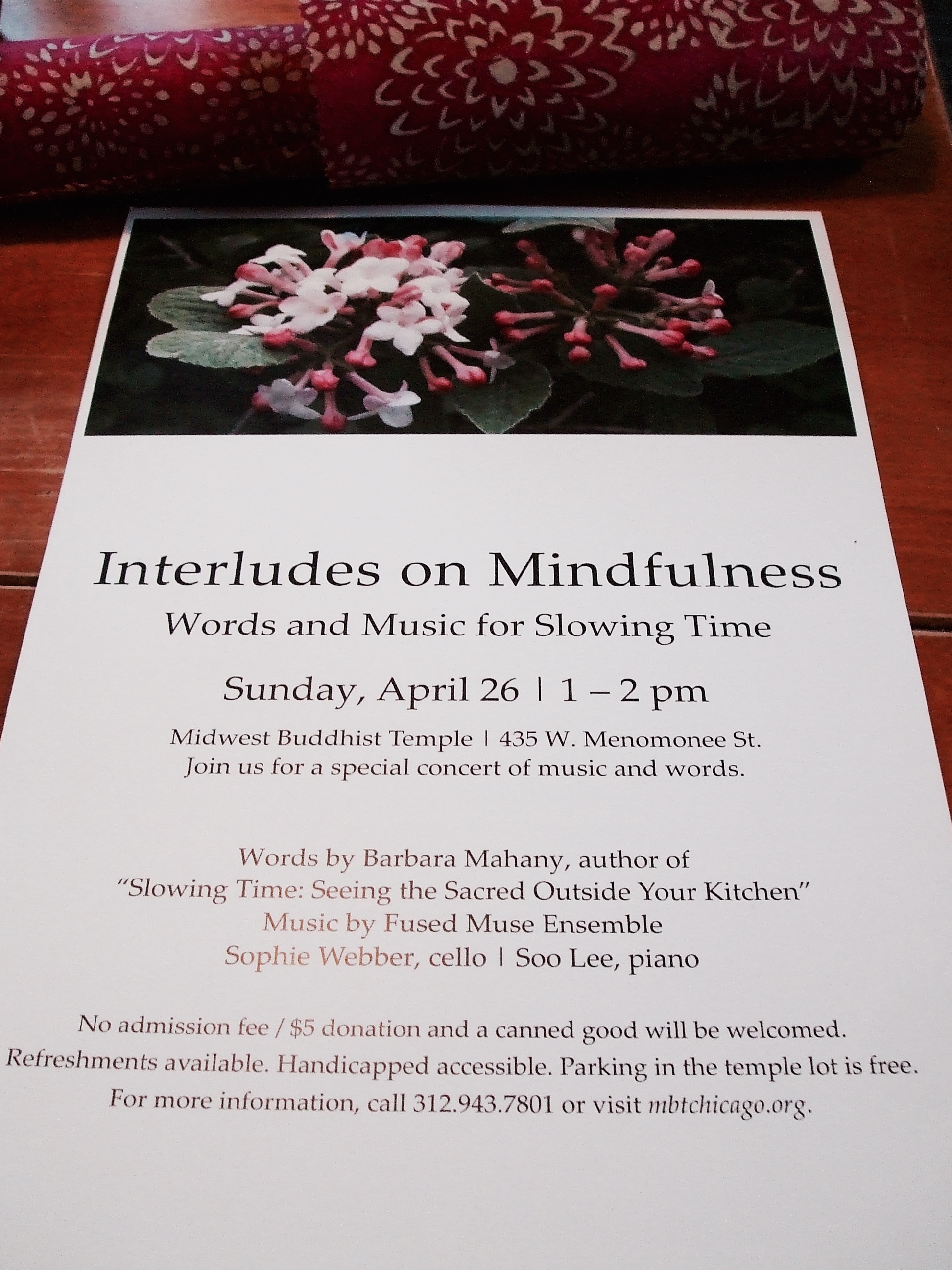
all of this is all the more immediately essential because this sunday i am doing something i’ve never done before. something that might have scared me out of my behoozies. i am walking onto a stage, and i am sitting down beside a cellist and a pianist. it’s a spoken word concert, inspired by one that a beloved friend and editor of mine once saw in japan.

i am, for the first time ever, invited into conversations about lighting and stage set, and in the faintest of ways, costume. i’m immersed in the full dimensionality of theatre. and i am discovering what happens when words are lifted from the page. when words are set soaring by the power of cello strings and piano keys, and the alchemies of audible, ephemeral creation.

and, as is my natural inclination, i was scared silly. until two things happened: until damian woetzel taught me that it’s not about correct; correct holds little interest, little tension, scant transparency.

and the other thing that happened is i stepped into the music during rehearsals, and i felt the most astounding flight: cello and piano, cellist and pianist, dove into conversation with the words i was unfurling. and then this, which i’ll preface by saying that many a writer’s whispered prayer is that, in between and through the words, music might come for those reading or listening. and, suddenly, there in the light-filled rehearsal room, i heard it, i felt it. the music did come, did lift and vault and carry the words to places and heights they’d not otherwise have ascended. it comes, the music does, i discovered, when you step onto a stage, and sit down beside a cellist and a pianist who’ve spent their lives deepening their knowledge of the landscape that’s theirs. the power of music, i’ve realized, is the safety net to my trapeze. is what holds me aloft, shooshes away my perpetual fears, is a medium that suddenly felt like coming home, a place where i, at long last, belong. how utterly unlikely.

so sunday afternoon at 1, at the midwest buddhist temple in chicago’s old town, i will be walking out from behind a curtain, all in black with a wrap of fuchsia. i’ll be sitting down in a japanese armchair, a bowl of oranges beside me, a vase spilling with springtime white. the cellist will pick up her bow. the pianist will strike a key. and i will put breath, put voice, to my words.

and i will remember that the wise ones in the room aren’t there to hear “correct,” they’re there to be moved, to cry, to find a voice, essentially.

and that is a truth that sets me soaring.

do you, like me, spend far too many hours of life being worried you won’t get it right? and thus binding yourself in ways that demand houdini-like tricks to set you free? 

that said, here’s an invitation: if you’re near chicago sunday afternoon, find your way to the temple, and plop yourself in a chair. cellist sophie webber and pianist soo young lee, both of fused muse ensemble, will take you places that might take your breath away…..

a few things:

1.) emily’s poem

I cannot dance opon my Toes –
No Man instructed me –
But oftentimes, among my mind,
A Glee possesseth me,

That had I Ballet Knowledge –
Would put itself abroad
In Pirouette to blanch a Troupe –
Or lay a Prima, mad,

And though I had no Gown of Gauze –
No Ringlet, to my Hair,
Nor hopped for Audiences – like Birds –
One Claw opon the air –

Nor tossed my shape in Eider Balls,
Nor rolled on wheels of snow
Till I was out of sight, in sound,
The House encore me so –

Nor any know I know the Art
I mention – easy – Here –
Nor any Placard boast me –
It’s full as Opera –

2.) the program for sunday’s “interludes on mindfulness: words and music for slowing time”

Screen Shot 2015-04-22 at 7.14.22 AM


and a post-script:

it’s sunday night, the interludes have ended. it’s quiet now and i’m breathing again. a dear friend snapped this moment of the concert. and i’m enchanted by what appear to be fairy lights wafting across the stage. the cellist is sophie webber, the pianist is soo young lee, both have PhDs in music. both are beautiful. sophie founded fuse muse ensemble, a collective of musicians who dedicate themselves to social causes as well as beautiful music in all forms. i hope this is only a beginning for us….here’s a peek at the magic of “interludes on mindfulness: words and music for slowing time.” thank you, from the bottom of my heart….

SlowingTimeMusic