pull up a chair

where wisdom gathers, poetry unfolds and divine light is sparked…

Category: books

bibliotherapy: of fictional nature

i tend to ground myself in the world in all its nitty-gritty. that mattered (critically) when i was a nurse (don’t you dare inverse a systolic for a diastolic, when it comes to blood pressure reading), and in all my decades of chasing after news, the truth—and every grimy detail—was what we sought. thus, when i peruse the bookshelves of my local free library (the world’s most generous invention, to be sure), i am nearly always in the down-low where no windows are, where the endless rows of fact not fiction reside. 

i’m decidedly non-fictionally inclined.

but this week i was lulled into the rooms upstairs, the rooms where sunshine streams through sky-high windows, and where make-believe is the order of the room. in other words, i crept up to where the fiction is. and in the writings of one irish novelist, a fellow i’d give anything to sit with in any irish pub, or better yet to stroll the rocky coastline of the continent from which half my peoples come, i found the surest cure for running from the blues. 

niall williams is his name, an irishman, who is but a year younger than me, and who has gathered wisdom as an old stone takes on a mossy coat. i can almost see the glint in his eye, as from some quiet post in the corner of a dimly-lit, crossbeamed room, he’s kept closest watch on the quirks and comedies of human nature. and on the heartbreak too. as the tenderness he kneads into his prose and paragraphs has left me gasping more than once (and i am only eight chapters in). 

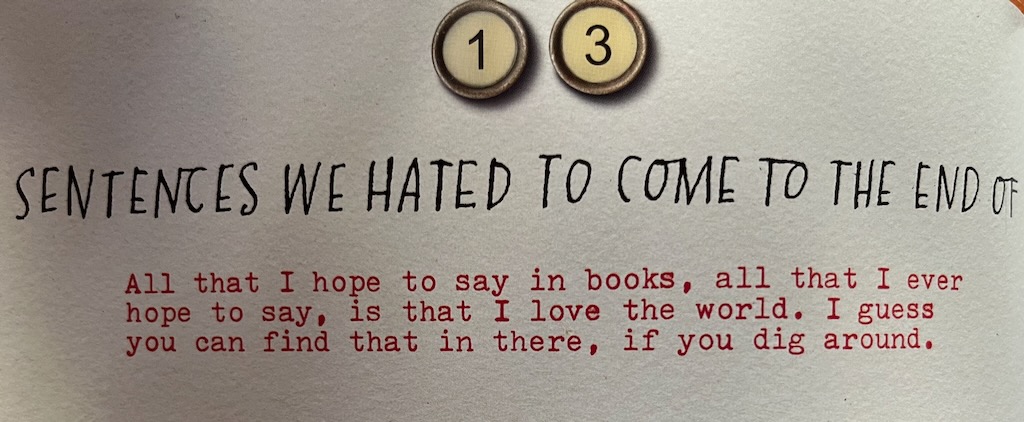
the book is this is happiness, as prescriptive a title as a girl in search of antidote might want. 

the irishman had me at chapter 1: “It had stopped raining.” (that’s the chapter in its entirety.)

chapter 2 picked up where 1 left off: “Nobody in Faha” (the fictional irish town that just happens to be a spot on the map not far from where my non-fictional peoples hailed) “could remember when it started.” by the third sentence of that second chapter, i was ready to shove up my shirtsleeves and not move an inch till i’d turned the last page. it went like this: “[Rain] came straight down and sideways, frontwards, backwards, and any other wards God could think of. It came in sweeps, in waves, sometimes in veils. It came dressed as drizzle, as mizzle, as mist, as showers, frequent and widespread, as a wet fog, as a damp day, a dreeping, an out-and-out downpour.” 

and on it goes, plip-plopping along, this incantatory passage that soon enough tells us that the unrelenting rain came “like a blessing God had forgotten he had left on.”

this is nothing less than bliss in garamond font (a literary typographic detail nearly always spelled out at the back end of any book); and most certainly for a girl who penned a paragraph of her own, in her most recent book, that unfurled in uncannily kindred ways. c’est moi:

“Rain, like most of us, has its moods. In its more laconic hours, it comes on unsuspectingly, without folderol, timpani, or cymbal crashing, the barest slip of a presence and suddenly you’re bespattered. On the days when rain is tempestuous, furious, raging, it rattles the heavens, cleaves the night, pummels the trees, and sends all the world—even the puddle-­paddling robins—running for cover. Betwixt and between, it’s the master of a thousand voices, from the salubrious plopp—the drop with a splatter—to the militaristic rat-a-tat-tat, when the rain tries to pretend it’s a handful of pebbles thrashing your windows, and on to the audible gulp when a downpour is frothing your gulleys. The Brits, reliably saturated in the subject, offer a lengthy lexicon for precipitation’s multiple personalities: there’s a basking (drenching in heavy shower); a drisk (misty drizzle); a fox’s wedding (sudden drops out of clear blue sky); a hurly-burly (thunder and lightning); a stotting (rain so hard it bounces up off the ground); and, for closers, thunner-­pash (heavy shower with thunder). Because it’s so elemental, the life stuff of our very existence, the celestial surge that fills our rivers and waters our crops, rinses away the detritus, bathes all the woods, and the sidewalks as well, it’s been the subject of intense preoccupation and prognostication for a long, long time. time. Since ever ago.”
(p. 85, The Book of Nature)

is there not a hint here of shared joy in precipitatory romps? can you not feel the two of us––niall et moi––luxuriating in the many, many wondrous ways to say “the rain is unrelenting”?

i am hardly alone in my enamorment of mr. williams. my best best friend, a longtime children’s librarian in the los angeles public schools, couldn’t stop texting me pictures of its pages this week, and, soon after, when i mentioned to a beloved literary friend (a sister chair, who might reveal herself below) that i’d fallen into novel love, she reminded me that she’d told me so a few years back. as always, i am late to my own party. 

in any case, here’s what the new yorker had to say back at the dawn of 2020, in the year of our covid, when happiness whirled onto the world stage.

This Is Happiness, by Niall Williams (Bloomsbury). This elegiac novel is as unhurried as its setting: Faha, a village in western Ireland, “unchanged since creation” until, in the late fifties, electricity arrives. The narrator, now elderly, reminisces about that time; having come from Dublin as a teen-ager, to live with his grandparents after the death of his mother, he conceived a hopeless passion for three sisters. “We spend most of our lives guarding against washes of feeling, I’m guarding no more,” he promises. The novel’s description of a lost rural life style, and the gaps between a young man’s romantic expectations and the inescapable letdown of reality, is comic and poignant in equal measure.

all of which is to say that bibliotherapy is one of the world’s great cures for whate’er ails you. and even more so when it ferries you off to a wee irish village “where story was a kind of human binding,” where church pews were filled as if by unwritten order, where front doors were never closed in daytime nor backdoors locked at night, and where, we’re told, “religion lasted longer … because we were an imaginative people, and so could most vividly picture the fires of Hell.” 

and wherein the self-described antiquarian narrator notes in passing, “i know it seems unlikely that Faha then might have been the place to learn how to live, but in my experience the likely is not in God’s lexicon.”

the world these days is wearying. and worrying, too. my week began with a funeral, a breathtakingly beautiful one that wove buddhist and roman catholic threads but was tragic nonetheless, and was followed by a seder where the weight of gaza and jerusalem bore down on every heart. by week’s end, i’d heard tell that my kid was nearly carjacked, and a dear friend who lives alone (and has borne already more than too much suffering) is on the cusp of twelve rounds of godawful, pray-to-God-it-works chemo for the newly-diagnosed cancer in her lungs.

the blooms outside my kitchen door were doing all they could to boost the perfumed quota in the vernal air, and the robins busied themselves constructing scrappy nests in my window box along the alley. (do not ask me to tell you the tragic tale of the mama robin who was tangled in a dessicated grapevine, nor of the nest no longer in the works.) all the earth’s wonderment––glorious as it is as winter erupts into spring––is ephemeral, is here, then, poof, it’s gone. 

but what i find on the page is lasting. can be read and read again. can be indelibly inked into the files of our mind.

and so, this week, a newfound balm and friend was found. and i’ll be tucked away in faha, on the fictional irish coast, for as long as the pages will carry me. bibliotherapy rarely fails me. 

what carried you away this week?


here’s a jolt of joy that took my breath away this week: the great christian mystic richard rohr, a franciscan friar and ecumenical teacher, and his new mexico-based Center for Action and Contemplation saw fit to surprise me by clipping an excerpt from The Book of Nature in his daily meditations on wednedsay. that he chose a favorite passage, the story of brother lawrence, the barefoot monk who saw God in the pots and pans of his parisian monastery kitchen, and was struck by the innate holiness of a nuck-naked little tree, only charmed me all the more. here’s a peek at the preaching of the trees.


and from this week’s commonplacing. this morsel from DH Lawrence:

The vast marvel is to be alive… The supreme triumph is to be most vividly, most perfectly alive. Whatever the unborn and the dead may know, they cannot know the beauty, the marvel of being alive in the flesh. The dead may look after the afterwards. But the magnificent here and now of life in the flesh is ours, and ours alone, and ours only for a time. We ought to dance with rapture that we should be alive and in the flesh, and part of the living, incarnate cosmos. I am part of the sun as my eye is part of me. That I am part of the earth my feet know perfectly, and my blood is part of the sea. My soul knows that I am part of the human race, my soul is an organic part of the great human soul… There is nothing of me that is alone and absolute except my mind, and we shall find that the mind has no existence by itself, it is only the glitter of the sun on the surface of the waters.

this, from mary oliver

Morning Light

by MARY OLIVER

Every morning
 the good news
  pours
   through the field

touching
 every blossom
  every stem
   and each of them,

on the instant
 offers to be part of it—
  offers to lift and hold, willingly
   the vast burden of light

all day.
 In my life
  I have never seen it to fail—
   flower after flower

leaf after pearly leaf,
 to the acre,
  to the massy many,
   is silvered, is flooded;

and such voices
 spangle among it—
  larks and sparrows—
   all those small souls—

are everywhere
 tossing the quick wheels of pleasure
  from their red throats
   as they hang on—

as though on little masts
 of golden ships,
  to the tops of the weeds—
   and that’s when I come—

that’s when I come, crying out to the world:
 oh give me a corner of it
  to lift also, to sing about, to touch
   with my wild hands—and they do.

and this from annie dillard‘s the writing life, prose laid out as a poem by my friends at SALT Project:

One of the few things I know
about writing is this:
spend it all, shoot it, play it, lose it,
all, right away, every time. 

Do not hoard what seems good
for a later place in the book,
or for another book;
give it, give it all, give it now. 

The impulse to save
something good
for a better place later
is the signal to spend it now. 

Something more will arise
for later, something better.
These things fill from behind,
from beneath, like well water. 

Similarly, the impulse to keep
to yourself what you have learned
is not only shameful, it is destructive.

Anything you do not give
freely and abundantly
becomes lost to you. 

You open your safe
and find ashes.

and finally, this goodbye to “poetry’s colossus,” helen vendler, whom i was blessed to call my teacher in our year of sumptuous thinking

and blessings to you, and thanks for whirling by….

p.s. the other two books in my bibliotherapy stack (above) are william’s history of the rain, which had me at the title, and letters from max: a book of friendship, an epistolary collection between a poet and a playwright: sarah ruhl, the twice pulitzer-finalist playwright who was once teacher to poet max ritvo and quickly became dear friends, and as max’s cancer grew worse, their connection deepened. suleika jauoad ran an excerpt the other day in her isolation journals, and i ran to the library to grab a copy.

when springtime lives up to its billing: equal parts shadow and light

according to celestial alignments, the shadow now is equal, light and dark. the sun has crossed the equator, and here on the northern half of the orb, spring is upon us. except that as i type, snow is blanketing my tender spring tendrils, and the walk is slick, and, well, tis the very picture of springtime here in the heartlands, where you’re wise not to count your blooms before the ides of may.

my heart too is heavy, beating in time with that of a mother i know who is off in the mountains of northern california searching for her blessed daughter who went hiking from the tassajara zen mountain center on monday, and five days and cold dark nights later still has not been found. i ask for prayers for caroline.

motherhearts are a communal collective. we cannot pause the pounding against our own chest wall, we cannot sleep soundly, when we know profoundly of another mother in unimaginable distress. be it the mothers of syria, or gaza, or israel’s kibbutzim, or my long-ago newsroom compatriot now strapped into her hiking boots, hearing only the echo of her own cry as she walks the remote yet exquisite topography where, somewhere, her firstborn is lost, is lying, is awaiting her mama’s arms and a wrapping in blankets.

my prayers have been looping nonstop, clouding out most other thoughts, since i first heard word. caroline’s mama is a woman of incredible, unbreakable faith. the notes she is sending back home, here in chicago, bolster my faltering. “my gratitude and hope outweigh my fears,” she wrote in her last short update, teaching me a thing or two about how to be strong in the face of the unbearable.


because the promise of springtime is, indeed, equal parts shadow and light, i turn to the poets for a dappling of light. and we begin with emily, the belle of amherst, and quickly turn to the little-known artist who inspired her:

“to be a flower,” emily dickinson wrote in her 1865 poem, “bloom,” considered a pre-ecological work, “is profound responsibility.”

clarissa munger badger

a passionate lifelong gardener, emily D (“a keen observer of the house of life who made of it a temple of beauty,” as cultural critic maria popova once put it) had fallen under the spell of wildflowers as a teenager while composing her herbarium of 424 blooms native to new england. but, writes popova, it was an “uncommonly beautiful” book her father gave her just before she turned thirty that rocket-blasted her poetic passion for nature’s own garden: wild flowers drawn and colored from nature by the botanical artist and poet clarissa munger badger (may 20, 1806–december 14, 1889).

published in 1859, the same year charles darwin’s on the origin of species shook science, badger’s book “contained twenty-two exquisite scientifically accurate paintings of common new england wildflower species — violets and harebells, the rhododendron and the honeysuckle — each paired with a poem bridging the botanical and the existential: some by titans like percival and longfellow, some by long-forgotten poets of her time and place, some by badger herself,” writes popova.

seven years later, badger brought her brush to the beauty of wildflowers’ domestic counterparts, the blooms of greenhouse and garden: the pansy and the lily, the day-blazing geranium and the night-blooming cactus, the tulip and the rose, and once again pairing her paintings with poems, she celebrated garden flowers as “brilliant hopes, all woven in gorgeous tissues,” as “stars… wherein we read our history.”


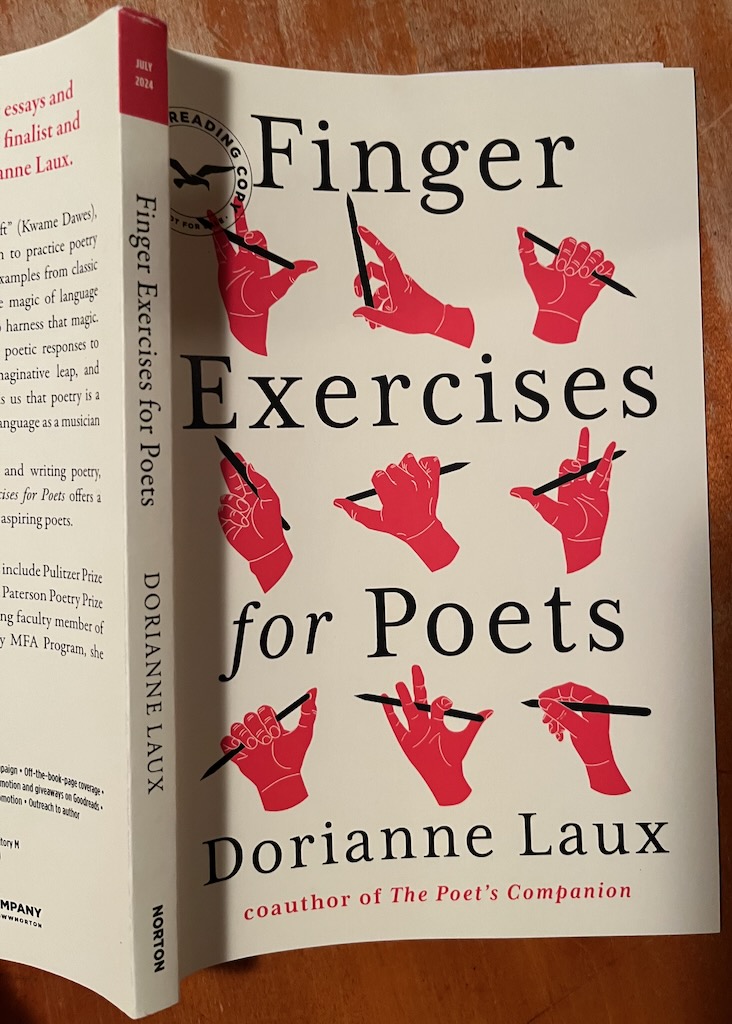
another poet, one i dream of sitting down to dinner with, or more in keeping with her ilk, plopping on a porch swing, she with cigarette burning orange against the black of night, me, merely pumping my merry little legs. dorianne laux is her name, and you’ve seen me write of her here. she has a brand new craft book, companion of sorts to her earlier the poet’s companion, and the new book, finger exercises for poets, is “an engaging invitation to practice poetry alongside a master,” and it’ll be out this july from w.w. norton & company. (they still send me advance reader copies; bless them.)

here’s a passage i knew i needed to share, from glorious, glorious dorianne’s introduction:

“My instrument is the immensity of language, the techniques and effect of crafting images, shaping sound and rhythm, creating new combinations with the single notes of words, each colliding or coming together, meshing or crashing, standing firm or tumbling. There are eighty-eight keys on a piano, six hundred thousand words in the English language. The patterns, the sequences, and permutations of both are endless. For me, language is another kind of music.

“I practice poetry. This book invites you to practice along with me.”


and i close, this snowy spring morning, with yet another master of language, and truth-telling: james baldwin. (this comes to me from a french monk whose writing i follow; laurence freeman is his name, and here’s a bit of what he sent this week from the bonnevaux centre for peace, in the southwest of france): “toward the end of his life, baldwin gave a television interview in which he was asked to reflect on the essential subject of his classic, groundbreaking novel, giovanni’s room. baldwin’s answer is an extraordinary meditation on love, and in particular, how it can serve a kind of educational purpose in our lives.” here’s what baldwin said, laid out as a poem. 

Q: What’s the novel, Giovanni’s Room, about?

Baldwin’s answer:

It’s about what happens to you
if you can’t love anybody.
It doesn’t make any difference
whether you can’t love a woman,
or can’t love a man —
if you can’t love anybody,
you’re dangerous.
Because you’ve no way
of learning humility.
No way of learning
that other people suffer.
No way of learning
how to use your suffering,
and theirs, to get from one place
to another.

In short, you fail the human
responsibility, which is
to love each other.

+ James Baldwin

what are the lessons of love you learned in this week of shadow and light?

my “springtime” garden, whitened.

p.s. illustration at the top is indeed one of clarissa munger badger’s beauties. and i will ask once again, please please offer up prayers for rescue for blessed, blessed caroline, her mama, her papa, and all who are holding their most sacred breath…..

the blessing of an open window and other wonderments. . .

the whoosh of summer’s soundtrack is back again. windows were blessedly opened as the stars beckoned last night, as the little numbers on the don’t-breathe-this scale finally slid down to mere double digits. we are breathing again.

canadian forests are burning and we here along the great lake were taking our due. as this noxious cloud wafts back and forth across the continent––making apocalyptic scenes of the brooklyn bridge, choking the air out of cleveland, blocking the view of the john hancock from chicago’s lake shore drive––we were holed up in a seasonal inversion: it’s one thing to be nose pressed to the window when snows are whirling and harsh winds are howling, but the summer sun was shining, the garden was begging attention, and we couldn’t step outside for fear of the poisons that’d swirl in our lungs (and some of us are paying particular attention to what swirls in our leftover lungs).

it’s a curious quirk of humanity, how we long for whatever it is we can’t have. and so i stood nose to the glass watching the summer without me. i longed for my wicker chair, the one that lets me watch mama wren unnoticed. and then i wondered about mama wren’s lungs, and what happens when she warbles or burbles like nobody’s business. her lungs are wee things, and i imagine the toxins that threaten my big ol’ (comparatively) breathers might all but close hers off. so now i am listening extra intently, hoping for that trademark mama-wren burble to come.

the week’s barely-breathable script was apocalyptic preamble. summer is the season of screens in the windows and doors left wide open. the indoors and outdoors, permeably conjoined. except when they’re not. except when the toxins per breath reach uninhabitable levels.

it’s a blessing to watch the curtains stir. to fall asleep to the hummings of nightfall’s lullaby. to hear the distant siren, the train in the offing, the raccoons holding their hootenanny.

when the windows are sealed, and the summer hermetically wrapped at safe distance, there’s little to do but long for the way summer once was. when sunlight glistened. and the creek tickled your toes. and long days in the woods were the very best thing you could do for your soul.

summer is back now. we can breathe again. and we can open our doors and our windows.

and i, for one, intend to breathe deeply.

teddy’s raspberries–three years in the making–finally ripe for the plucking.

summer reading from the e.b. white and kate di camillo files, a celestial pairing if ever there was…

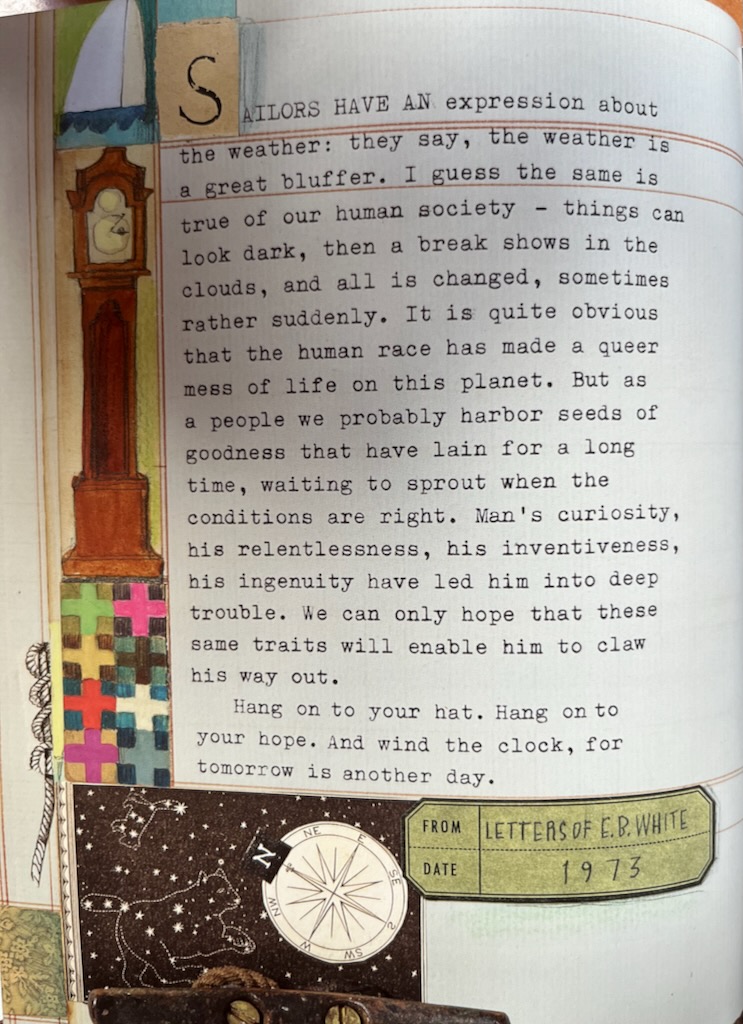
this comes from a glorious letter di camillo, author of because of winn dixie and the tale of despereaux, once wrote to a fellow author who’d written her asking how honest a writer should be with the young children to whom they both wrote (a question that pertains just as vividly to any writing, i’d argue, and a question that has especially animated my writing in recent weeks).

“E. B. White loved the world. And in loving the world, he told the truth about it — its sorrow, its heartbreak, its devastating beauty. He trusted his readers enough to tell them the truth, and with that truth came comfort and a feeling that we were not alone.

“I think our job is to trust our readers.

“I think our job is to see and to let ourselves be seen.

“I think our job is to love the world.”

in yet another conversation di camillo refers to the writing she does as a “shortcut to the heart.”

and when she was awarded her second newbery medal (in 2004 for tale of despereaux and 2014 for flora & ulysses: the illuminated adventures), di camillo brilliantly captured her life’s work as this: “We have been given the sacred task of making hearts large through story. We are working to make hearts that are capable of containing much joy and much sorrow, hearts capacious enough to contain the complexities and mysteries … of ourselves and of each other.”


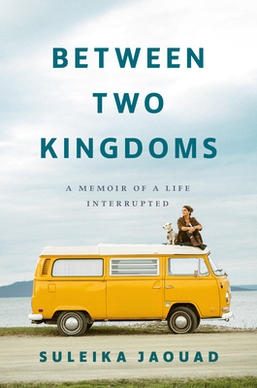
and finally, this capturing of grief by the tender and brilliant and fierce suleika jaouad, the author of the best-selling between two kingdoms: a memoir of a life interrupted, who was diagnosed with a rare form of acute myeloid lymphoma in 2011, a disease which recurred in late 2021, and for which she has had a second bone marrow transplant. she is married to the brilliant musician and magnificent soul jon batiste. and here’s what she wrote of grief:

“Grief is a ghost that visits without warning. It comes in the night and rips you from your sleep. It fills your chest with shards of glass. It interrupts you mid-laugh when you’re at a party, chastising you that, just for a moment, you’ve forgotten.” 

a more finely-grained exposition of grief i’ve not seen captured. and, by the way, suleika is exceedingly, exceedingly kind i’ve found out.


what stirred you most this week? or stifled you? and what’s topping your summer reading stack? i’ve been imagining a kate di camillo summer’s binge. and suleika’s is already on hold at my friendly local library…

a need for butterfly wings. . .

beloved chairs,

i’ve thought long and hard about what i was going to write here today, and i’ve decided to lower my voice to a whisper and let you all in on what’s stirring in my heart. after all, even if this table is more cyber than maple, and even if the chairs we pull up are virtual, it’s all very real, and utterly fulsome to me: the love and the kindness and the tenderness, and all the shared wisdoms and laughters and tears, as deep and human––and often divine––as they could possibly be. 

and what sort of hearts would we be if we didn’t share some especially tender threads every once in a while? so here’s what i want to tell you, though i really truly don’t want anyone worrying: i’m having a little surgery next week. a little something is stirring in one of my lungs and they need to take it out. there, now you know. i’ve been in something of a medical mystery tour these past many weeks, some of them bumpier than others, and all of them pointing toward the date i now have with a wonderful surgeon who has a habit of making me laugh out loud. 

the timing, of course, is something of a bummer. not in any marketing plan in publishing land is there a clause that suggests the author duck out for a while to have scalpels taken to her chest. so i’ve had to cancel a swath of bookish adventures for the next few weeks. or, “postpone” them, as sweet blair keeps correcting me. and since brand new books have only so wide a window for birthings, i feel a bit as if i’ve slammed the sash on my very own thumb. 

but maybe you can help keep the flutter in my butterfly wings. maybe for the next few weeks, while i get the wobble out of my knees, i can imagine you afluttering for me. any simple thing: maybe a few words on that ol’ amazon reader review (my publisher keeps reminding me); maybe ask your local librarian if they’ve a copy on their shelves; maybe you simply send me a picture of a page you’ve found yourself reading. (i melt every time anyone does that.) or, maybe, whatever stirs you. 

i promise you i need not one other anything. i am abundantly wrapped in the tenderest care by my beloved, blessed dear hearts and souls. my blair has been nothing short of a saint. and one of my boys will be here all week. and the other has sworn not to give it a worry. (an emphatic answer to this mama’s prayer; more than anything i did not want that kid to give it one shred of a worry.)

because i’m a quirky iteration of shy, and because i’m mostly allergic to SocialMediaLand, i am not saying a word about this out in the public sphere (i don’t think of the chair as anything close to public; it all feels very sacred and safe here to me), as i don’t want it to prompt any worries or wild-eyed questions. (trust me, the things people ask!!!) i’ve kept it all exceedingly quiet because i can’t bear the thought of worrying the ones i love (or anyone else) and, until i had more than an inkling of what was going on, i didn’t want to utter a word. 

so know only this: that little fluttering, however you flutter, is more than aplenty; it will keep me afloat and awaft, and soon as i can, i’ll pick up the winging all on my own. xoxox, and thank you.

love, bam

p.s. i think by now you’ve figured out that i love to respond to your comments whenever you leave one at the table, but i might not be able to check the chair too much in the week ahead. and i want to apologize in advance. 

and speaking of the public square, how’s this for the perfect antidote?

Remedy for Social Overexposure

by Sandra Cisneros

Seek a pirul tree and sit
beneath immediately.
Remove from
ears and tongue,
words.
Fast from same.

Soak in a tub of seclusion.
Rinse face with wind.
In extreme cases, douse
oneself with sky. Then,
swab gently with clouds.

Dress in clean, pressed pajamas.
Preferably white.

Hold close to the heart,
chihuahuas. Kiss and
be kissed by same.

Consume a cool glass of night.
Read poetry that inspires poetry.
Write until temperament
returns to calm.

Place moonlight in a bowl.
Sleep beside and
dream of white flowers.


or this one stanza from celtic mystic christine valters paintner’s poem, “origins,” especially the first stanza, about peering into a robin’s throat, an image i envision again and again every time i see the robins plucking for a worm in my newly-verdant grasses…

Origins
 
If I could peer far enough down
a robin’s pulsing throat, would I see
notes piled there waiting to be flung
into freshness of morning?
 
If I close my eyes and burrow
my face into peony’s petals,
would I discover the source 
of its scent, a sacred offering?
 
Can I plunge inside 
and find a lifetime of words
spooled tightly inside my heart
ready for a tug?
 
If I dig beneath the bedrock 
will I find love there, 
solid like iron or does it flow like magma
filling in all of the empty spaces?

–christine valters paintner


and i’ll sashay off into the sunset with this psalm from dorianne laux…

Psalm

by Dorianne Laux

Lord, there are creatures in the understory,
snails with whorled backs and silver boots,
trails beetles weave in grass, black rivers
of ants, unbound ladybugs opening their wings,

spotted veils and flame, untamed choirs

of banjo-colored crickets and stained-glass cicadas.
Lord, how shall we count the snakes and frogs
and moths?  How shall we love the hidden
and small? Mushrooms beneath leaves

constructing their death domes in silence,

their silken gills and mycelial threads, cap scales
and patches, their warts and pores. And the buried
bulbs that will bloom in spring, pregnant with flower
and leaf, sing Prepare for My Radiance, Prepare

for the Pageantry of My Inevitable Surprise.

These are the queendoms, the spines and horns,
the clustered hearts beating beneath our feet. Lord
though the earth is locked in irons of ice and snow
there are angels in the undergrowth, praise them.

“how shall we love the hidden and small?” that’s a question to ponder in the blessed, blessed unfurling days ahead….

p.s.s happy blessed birthday to my beloved ella bella beautiful, who is turning 14 today, her goldenest birthday. xoxox

out in the wilds (another name for birthing a book to the world)

the very definition of oxymoron: girl recording into phone in the midst of sheer wonder

field notes from out on the front (the book-birthing front). . .

well, it’s friday, friday morning to be precise, and none of the heart attacks i was certain i would have or was having seem to have felled me. despite my genetically-certified DNA from a fellow who loved a microphone, and the chance to trumpet his wonder and wit into the world, i’m fairly certain mine has gone dormant. i seem to have found a sweet spot in the quiet of a typing room where thoughts meander and flow, wriggle onto the page (or the screen), and i do my best talking from there. or even better: across an old maple table, a formica slab, or even the console of any old car, where talk is heart to heart, face to face, where you can see the gleam or the tears in the eyes. where you gauge every flinch of the jaw or the cheeks or the itty bitty muscles that lift up the eyebrows, punctuation in facial expression––the very best kind.

if you were one of the glorious flock who popped onto the zoom the other night, when we all lined up in our on-screen window panes, you were there for the glorious highlight of the week. of the eighty who pulled up a virtual chair (80?!?!), some 22 of you were signed on as “iPad,” which made it a little hard to know who was quite whom. but i knew that for the first time since this ol’ chair started gathering round the make-believe old kitchen table, we were as one, unblindfolded, and we could finally see who we were. and hear our real live voices. at least some of us. we might need more zooms. especially ones where my heart isn’t pounding like the kettle drum in the marching brigade.

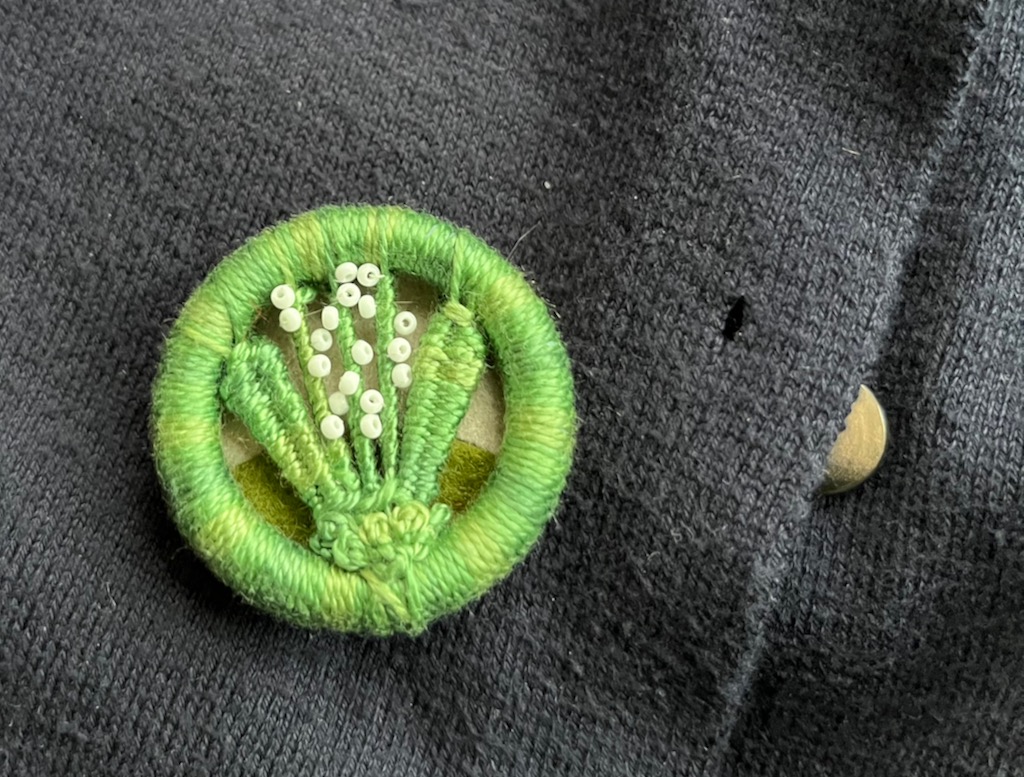
lily-of-the-valley dorset button from amy

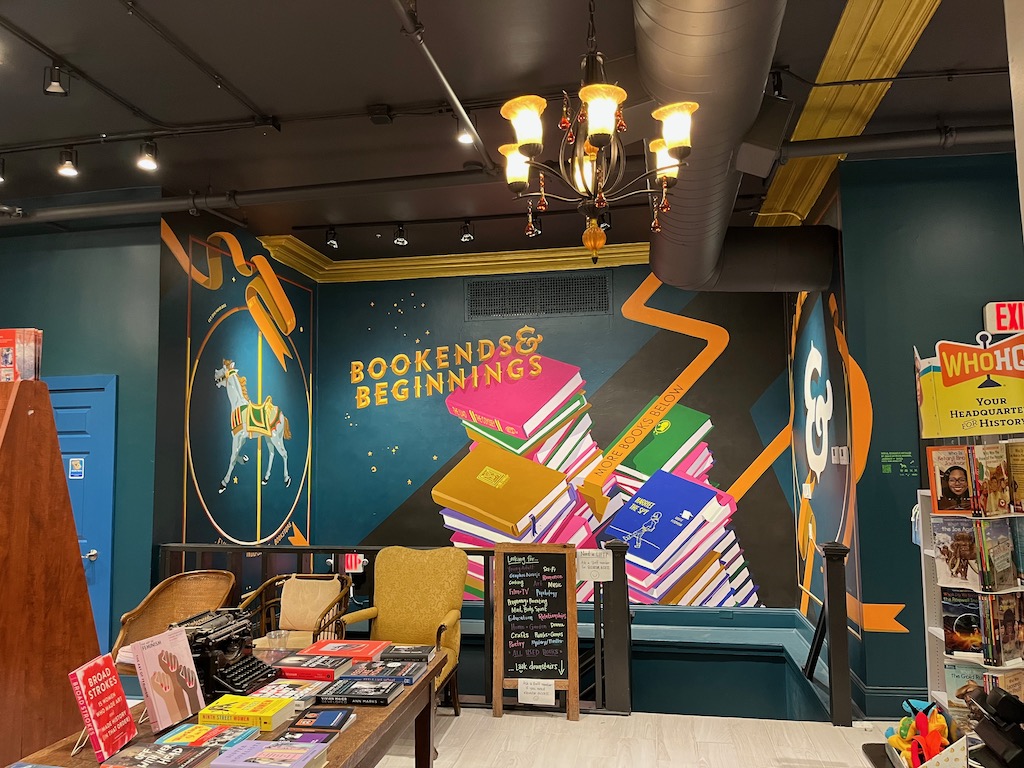
twas a week full of flurry. twas a week filled with moments i’ll never forget. (a hand-stitched dorset button i now wear by my heart, marsha from low country blessing us with her front-porch benediction, a river of people i love flowing down the stairs of an ever-enchanted bookstore last night, and the little pings of love notes and reminders to breathe from the blessed old friends who know how trembly i get when dispatched beyond the walls of my hermitage…)

i’ve been thinking hard of late of how the writing of a book is a time-lapse conversation––and conversation, to me, is the holy marrow of life. i spent months and weeks reading and writing, pouring my heart and my soul into each page; quite truly, laying it all on the line. and then, as the book made its way down the book-making assembly line, through the chutes and the gears and the binding machines, it all went silent. but now, as the little book lands with its plops on door stoops hither and yon, the conversation picks up again. and that, my friends, is the very, very best part of writing a book.

it’s when i find out which sentence or thought might catch on your heart or your soul. it’s where the interplay of our minds begins a back and forth, often a dance. where i get to find out what cumulus clouds of wonder or wisdom rise up from your reading, where your thoughts leap off of mine and gather their muscle and take on their own magnificent form. that leaves me jaw-dropped.

last night, at the very first in-person book launch, in the lower room of the enchanted bookstore where four of my five books have been officially birthed (the pandemic got in the way of one of the birthings), a beautiful, beautiful woman (one i’d never before met) came up to me, took me firmly by the shoulders, and told me she’d read the book cover to cover, and had figured out its message: “the Holy Spirit will find you,” is what she said over and over. “that’s the message.”

she had tears in her eyes when she said it. and tears i find are contagious, so i had them in mine too. after all those months of reading and writing, i hadn’t quite landed on precisely those words. but i realized that no matter how you define “Holy Spirit” (and i might define it quite broadly), she’d nailed it. in six words, she summed up what it took me 56,000 words to quite get at.

there are comical moments too, as in many a delivery room. (remind me which parts of labor and delivery made me chuckle…) the photo above, a rare inclusion of any image of me here at the chair, captures me following orders. the marketing gurus at broadleaf books, my lovely twin-cities-based publisher, sent me a note and told me to get out and record video befitting my book. not wanting to be on screen myself, i decided to film at the glorious water’s edge of which i write in the book, the grasses where i nestle like quail in the rush. and i decided i’d insert myself by reading aloud, sight unseen. and my beloved blair, who assigned himself to the role of “editorial assistant” this week, decided he’d do the driving and, when i wasn’t looking, he snapped the somewhat hilarious photo above: crazy lady reading aloud a book on earthly wonder into hidden microphone of little glass slab.

the other half of that marketing assignment instructed me to consider making a “reel,” a concept as foreign to me as reading a novel in russian. i had literally no idea how to do this, so i called one of my brothers, whose mastery of reels is legendary among his circles. he reels with abandon, he reels for any occasion. so i knew i was going to the master. as he talked me through, step-by-arduous-step, i followed along. i sat in a chair, and i read a few lines. and then, i must have hit the wrong button, for the darn thing “posted”––aka somehow landed on instagram where any and all could follow along. egad. it had been my first dry run, but i decided to leave it. because life unfiltered, unedited, un-pre-plotted, is where the spice finds its way in.

here’s what life unfiltered might look like:

and with that overdose of moi, i shall leave you in peace for the day and the week.

but do tell: if you’ve found yourself turning the pages of my conversation in paper and ink, what are some of the thoughts that have wriggled up for you? lines that sprung your own epiphany? stories that made you think of your own? tell me what you’ve read from the Book of Nature (the real one, not my little old book)? and tell me the glories and wonders you’ve found. . .

bless you and thank you for being the circle that holds me. the love here is real, even if all the rest is somewhat virtual.

a most special gathering: let us pull up chairs and launch this book together

it’s monday. i know. and that’s not a day when i usually leap out of the cyber-vapors to plop onto whatever is the glowing screen of your choosing.

but i come with invitation:

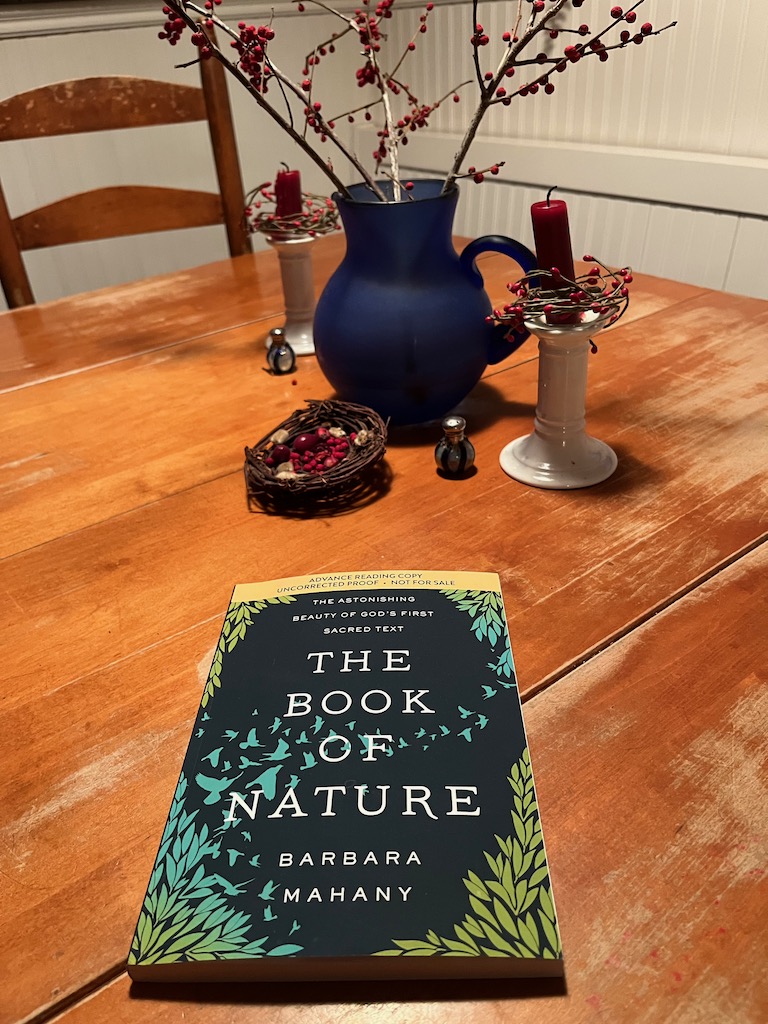
please join me in pulling up your very own chair to gather round this virtual old maple table to attend the birthing of my next book, the one titled The Book of Nature: The Astonishing Beauty of God’s First Sacred Text (Broadleaf Books).

we’ll gather on the evening of Tuesday, March 21––its actual pub date––when we shall send The Book of Nature soaring into the everland. it’s free and it’s just for friends of the chair––wherever you are––and it’ll be at 7 p.m. chicago time, when we’ll gather by zoom. and all you need to do is click this link to register. the zoom link will be magically sent to you. and, since i’ve never ever done this before, beyond that we will all find out together what happens next.

but what i do promise you is that i will be right here. perched on my stool, snug against the kitchen counter. and i can’t imagine a cozier way to begin this latest adventure in book-birthing.

it is a downright thrill to imagine seeing many of your faces for the very first time because after 1,102 meanders here at the chair, it’s about time we look into each other’s eyes, feel the smiles wash up from the depths of our very own soul, and revel in the collective goodness of those who have so buoyed me over the years.

truth is, i can think of no finer way to gather the graces and muster the courage i’ll need to tell the world all that i’ve tucked into these 200-some pages. this is a book that stands on the shoulders of wisdom seekers across the millennia, and across cultures and faiths and geographies. it’s a book that pokes around in the nooks and crannies of all creation, seeking the thrum of the sacred––the holy Divine––in our very midst. it stands in awe of the moon and the night sky. it awaits the dawn, and gathers the dusk. it traipses through the woods, and settles into the murmurous grasses that rise from the mounds not far from the water’s edge.

this book has been called “a field guide to the depths of your holiest places,” and i hope and i pray that as you turn its pages you find yourself inching deeper and deeper, closer and closer, into your own holy encounters with the ineffable wonder and wisdom that stirs in the wind and rustles the meadow.

but this gathering––this rare leap off the page and into the virtual––is how my heart yearns to begin the book’s first breathing.

you can find out more about this newest book on its very own page here at the chair, where you can even find links to buy it from your favorite indie bookstore, or direct from its publisher Broadleaf Books, or, yes, our friends at the behemoth that is amazon.

here’s a peek at the first review that’s crossed the transom. and, yes, i will be forever grateful to that lovely, lovely soul at Booklist, the publication of the American Library Association, who wrote this in the January edition of Booklist:

The Book of Nature: The Astonishing Beauty of God’s First Sacred Text

By Barbara Mahany

Mar. 2023. 191p. Broadleaf, $27.99 (9781506473512). 200

Writing with a nurse’s foundation, a scientist’s eye, a theologian’s mind, and a poet’s soul, journalist Mahany (Stillness of Winter, 2020) contemplates God’s presence as revealed in nature, His “first sacred text.” Tracing the Judeo-Christian belief that scripture succeeds and augments nature by directing humanity to knowledge of the divine, Mahany looks to nature itself, marveling at its intricacies and blending scientific facts with literary descriptions that all point unquestionably to a grand designer worthy of worship. She incorporates literary writing by a host of essayists and poets (Annie Dillard, Henry David Thoreau, Mary Oliver, Walt Whitman) and Christian and Jewish religious writers as well as Islamic, Greek, Chinese, Celtic, and Indigenous traditions. She implores readers to continue reading the book and not to allow the noise of modern life to obscure its message. Supplemental material includes an annotated list of recommended reading and an extensive bibliography. Mahany’s lyrical, thoughtful, most recent work beautifully complements her shelf of awe-inspired books about nature and will appeal to fans of Shauna Niequist and Anne Lamott.

–Karen Clements

till then, i’ll keep finding you here on fridays. and while i dream up ways to sign books for those not nearby, do know that there will be real-live book events in person at bookstores and sacred places in the days and weeks and even the months after the 21st. in fact, an actual in-store book launch is on the calendar for thursday, march 23, at 6 p.m. at that charmed bookstore, bookends & beginnings, in their brand-new space at 1620 Orrington, Evanston.

i hope, hope, hope, you can pull up your very own chair on march 21. though i won’t be able to pass a tin of cookies, nor pour you a spot of tea or bubbly, the conviviality alone will fill my lungs, and set my heart a soaring….

please let me know if you encounter any glitches, and i’ll don my thinking cap. and turn to the wizards at Broadleaf who seem to know how to guide me at every turn.

with love, babs, the chair lady.

p.s. the book in the photo at the top here is the Advanced Reading Copy, or ARC, and it’s the only edition i’ve got, though i hear the final final is due to plop on my stoop any day!

chop. stir. turn. sigh. repeat.

my days these days are filled with simple verbs; staccato, monosyllabic verbs: chop. stir. turn. sigh.

in other words, i fill my hours tucked between the pages of tall stacks of books i am guzzling down as if to carry me across the frozen tundra out my window. i guzzled my way through january, and except for a few days in the air in february, i aim to do it all over again in this the shortest month. 

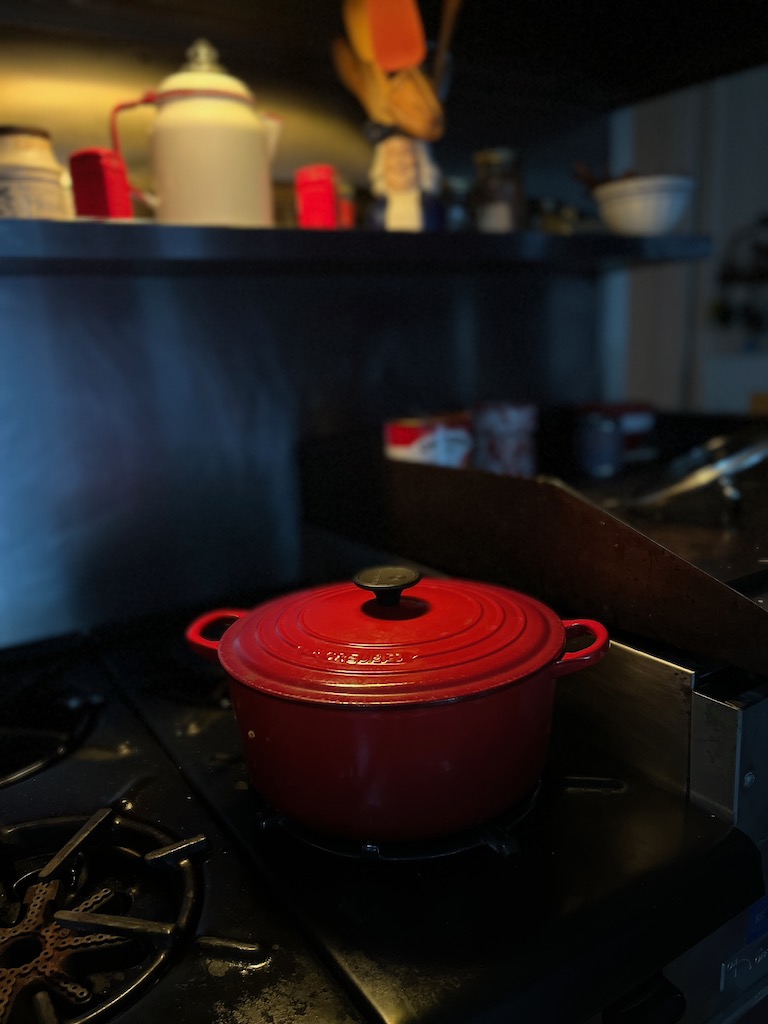
i do rise on occasion from my butter-yellow-checked chair, mid-morning sometimes, to take my station at the chopping block, where my knife work begins. usually in the alliums, chopping onions to bits, mincing garlic buds, filling the room and my fingertips with the essence of under-earth. i glug olive-y oils into the big red pot, the one weighty enough to shatter my toes should i ever let it slip from my grip. i slow-cooked my way through the year’s first month: stews and soups and braises. more stews and soups and braises.

it’s the simple rhythms that put the hum in my day. sustenance, really. the exotic and the excitement––the sighs and the gasps––come in the pages i turn. the ones where i might find a sentence so lovely i all but haul out my scissors to make of it a shrine to the genius of human mind and soul that so sees the world in these breathtaking ways, and dares to combine words in ways we’ve never before imagined. or felt.

really, it’s all filling my tank for the weeks ahead when my little book will take its pirouette for a few short moments, and i will step beyond my shadows long enough to put voice to its birthing. those of us who tremble when stepping before a crowd, we need to store up a winter’s worth of quietude, of sustenance, so we’ve a reserve to dip into. to share abundantly.

these wintry months i am doing winter’s work: letting the roots seek deeper ground whilst on the surface all looks still.

and so my offerings here are leaning more than usual on the genius of those i gather round me. and my hope is that what punctuates and titillates my day might bring the same to you…


we begin with mary oliver, a little poem she wrote as part of a septet.

“So Every Day”

So every day
I was surrounded by the beautiful crying forth
of the ideas of God,

One of which was you.

—Mary Oliver


a beloved, beloved friend of the chair sent me this the other day. and i thought you too might want to tuck it in your drawer of special words (i could not for the life of me find its origins, only that it was tagged “healers” and so i share it thusly:

some will turn away when you show them your bleeding.
some will stay.
will press stars into the wounds.
will hold your feet as you learn to walk again with the weight of a too-full heart pummeling your bones.

(healers)


i mentioned last week that i’d tumbled my way into a poetry conversation between dante micheaux and a poet priest named spencer reece, whose story so intrigued me i ran to the library and found his magnificent, magnificent memoir, the secret gospel of mark: a poet’s memoir, which is hands down the most gasp-inspiring book i’ve read in a good long while. i couldn’t stop reading; inhaled 400-plus pages in two days. tried hard as i could to stay awake into the night to keep reading. but my old body refused. i saved it till the morrow. i wound up giving it five stars in an amazon review, and i wrote this:

5.0 out of 5 stars In a Word: Brilliant Reviewed in the United States on February 2, 2023

In an age of binge-watching, this magnificent, tender, deeply vulnerable, and utterly breathtaking memoir from poet and Anglican priest Spencer Reece deserves to be binge-read. In one gulp, if you don’t need to sleep. I swallowed it whole in two sittings. And I couldn’t wait to get back to its pages when I had to put it down. Reece writes gloriously on multiple levels. He is at once raconteur and poet. A lifetime’s close read of poetry pours from the pages, as Reece takes us deep into his fluency in — and kinship with — Sylvia Plath, Elizabeth Bishop, Emily Dickinson, James Merrill, Mark Strand, George Herbert, and Gerard Manley Hopkins. Interwoven with his own sometimes wrenching, occasionally tragic, story — one that carries him through dark years as a closeted gay teen, and later an alcoholic who briefly finds himself on a psych ward, and ultimately stumbles into grace as a priest called to love with abundance — Reece writes that “poetry saved me more than the church.” The twinned lenses, funneling toward a holy and redemptive intersection of God and poetics, serve to make this a book I’ll long press close to my heart. As a longtime reviewer of Books for the Soul for the Chicago Tribune, this one counts among the rare few unforgettable treasures tucked on that bookshelf. It’s at turns bawdy, and funny, and crushing, and always, always crafted in sentences so beautiful, so crisp, and — yes — so poetic, they will leave you gasping in awe.

and from the pages of reece’s secret gospel come this week’s. . .

sentences of the week (in which i invite you into my commonplacing world and share some of the snippets that filled my notebook this week):

“The hint of night scratched at the edges of the day.” (372; Spencer Reece, Secret Gospel of Mark)

“foggy green lawn footnoted with hedgehogs” The Secret Gospel of Mark: A Poet’s Memoir, by Spencer Reece (“footnoted” as in splattered, punctuated with…(113)

“the land oozed God.” (and for the trifecta, it’s Spencer Reece once again…)


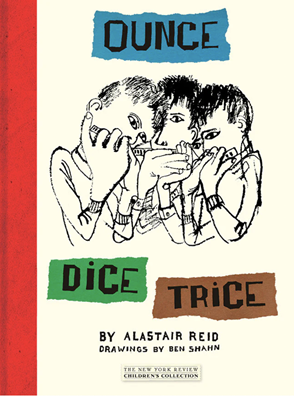
i often let my friends at the New York Review of Books point me toward what belongs on my shelves. and so it is, especially, in the children’s corner. i’ve long been mad for whimsical nearly obsolete words, words that need a puff of oxygen to keep their hearts still beating. and, so, i’m enchanted by this long-time favorite, which i’d not known before: Ounce Dice Trice, with words by Alastair Reid and illustrations by Ben Shahn. Ounce Dice Trice was the only children’s book ever illustrated by Shahn, and only one of two books Reid wrote for children. 

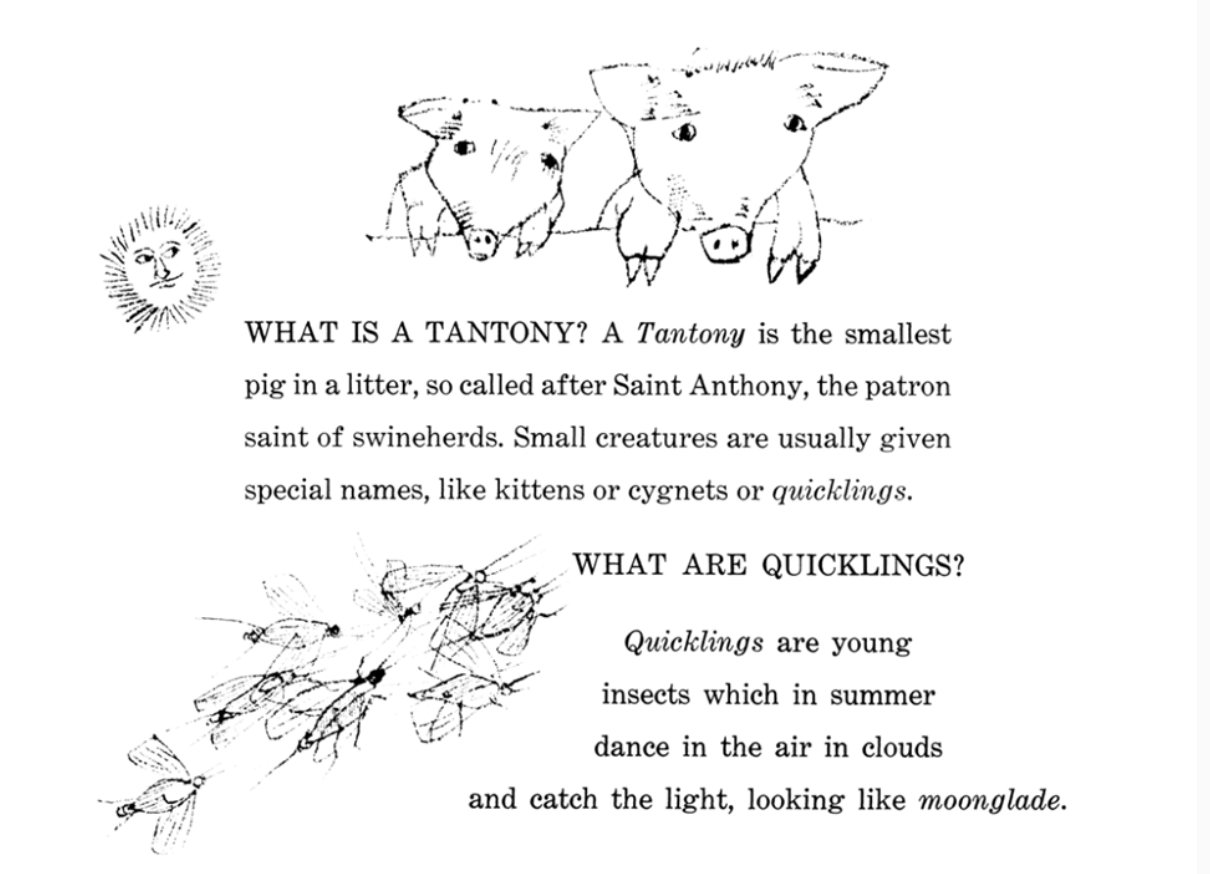
NYBR says this: “Ounce Dice Trice operates as a haphazard, whimsical dictionary of words and word play. Reid, a Scottish-born poet and long-time correspondent for The New Yorker, provides list upon silly list of fantastic words, most of them real, some completely made-up. Shahn, the Lithuanian-born American artist known for his socially- and politically-informed art, provides hilarious drawings to accompany the words.” [see below, for a wee quickling of a peek. and be charmed, like me, by the name for a little pig. i suppose dear wilbur (of charlotte’s barnyard) was a tantony.]


and that, dear friends, is my week’s worth of sustenance. except for one thing: the big red pot. so here is but one of the many things that filled that pot this past week and this past month:

Turkey Meatballs in Eggplant Tomato Sauce (from Melissa Clark at the New York Times, with a little twist by me*)

INGREDIENTS

Yield: 28 meatballs, 4 to 6 servings

  • ½ cup grated Parmesan cheese, more for serving, if desired
    ½ cup panko or other plain dried bread crumbs
    ¼ cup minced onion
    ¼ cup chopped chives or basil
    2 garlic cloves, grated on a microplane or minced
    1½ teaspoons kosher salt
    ½ teaspoon black pepper
    ½ teaspoon dried oregano
    Pinch red pepper flakes (optional)
    1½ pounds ground turkey, very cold
    1 large egg, beaten
    3 tablespoons extra-virgin olive oil, more as needed
    3 cups marinara sauce, more to taste*

PREPARATION
Step 1
In a large bowl, combine cheese, bread crumbs, onion, chives, garlic, salt, pepper, oregano and red pepper flakes, if using, and mix well. Add turkey and egg and blend with your hands until well mixed. If you’ve got time, cover mixture and chill for an hour or up to 24 hours. These are easiest to form into balls while very cold. Form into 28 meatballs, each about 1¼-inches in diameter.

Step 2
Heat 2 tablespoons of the oil in a large sauté pan. When hot, add enough of the meatballs to fit in one layer without crowding, and brown on all sides, 5 to 8 minutes. Transfer to a plate, add another tablespoon of oil to pan and brown another layer of meatballs, transferring them to the plate as they brown. Repeat until all meatballs are browned, adding more oil to the pan as needed.

Step 3
When meatballs are all browned, add marinara sauce to pan and bring to a simmer, scraping up the browned bits on the pan bottom. Return meatballs and their juices to pan, shake pan to cover the meatballs with sauce, and lower heat. Partly cover pan and simmer until the meatballs are cooked through, 15 to 20 minutes.

Step 4
Serve hot, drizzled with more olive oil and sprinkled with more cheese, if you like.

*note: this week i super jazzed up the sauce with a shiny night-black eggplant: while the meatballs chilled in the fridge, i took my marinara up a couple notches: sautéed onions, garlic, and then eggplant. added fennel, red pepper flaks (a pinch), marjoram and oregano, salt and pepper. cook till browned and then relaxed. add splash red wine. jar of tomato basil marinara; let simmer a good half hour. (here’s where i added extra bowls: i scooped my simmered sauce into a bowl, and browned my meatballs in the big red pot; once browned, i poured back the sauce, and let it all get cozy, simmering for another while. at dinner time, they all arrived deliciously on our plates. (and this is why you’d best take your cooking instruction for a more precise cook!)

what sustains you through your week?

leftovers . . . (and a few other morsels besides)

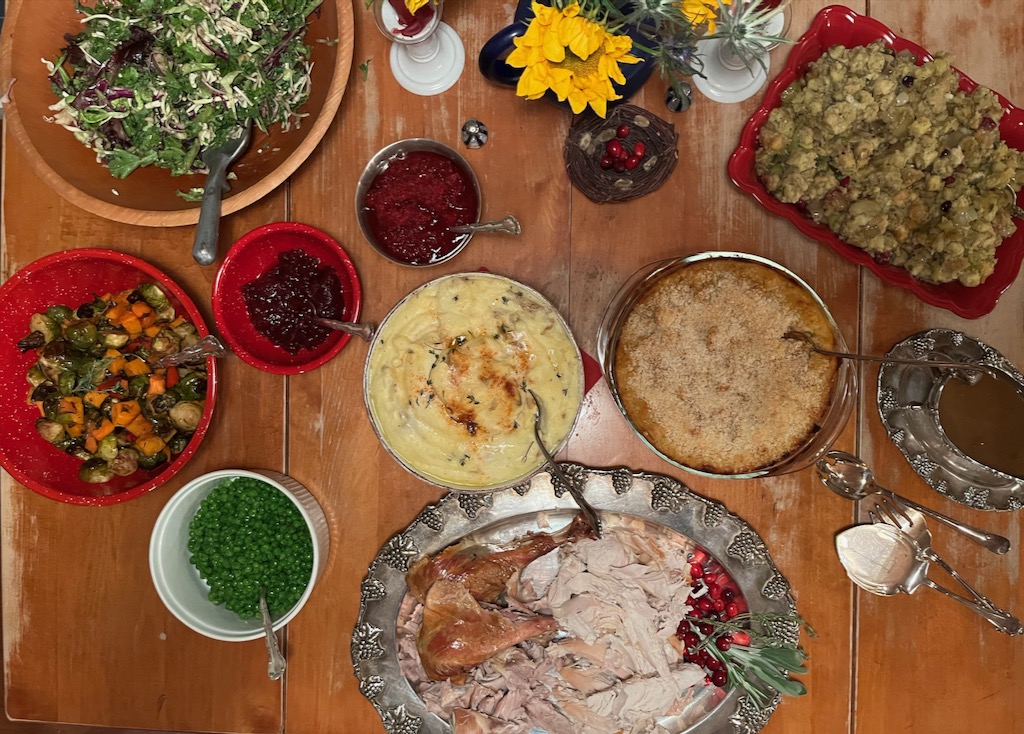
the dishes are mostly done––except for a few errant goblets. the cutting board is oiled and tucked away for a well-deserved slumber. the beds at the top of the stairs are finally all full, and certainly rumpled. (a triple delay between newark and o’hare made me wonder if boy No. 1 would ever get home.) along the day, no one got cut, or burned, or splashed with red wine, and other than bellies too full, we escaped without harms.

it was in fact as hilarious and raucous and savorable a day as ever could be––testament to julian of norwich’s promise that all shall be well, and all shall be well, and all manner of thing shall be well. (i need to inscribe that on my kitchen wall, as i fret and perseverate and plot and re-plot my time charts and checklists, clocked to the quarter hour.)

my prayer is that your day, too, rolled out without a hitch. or at least no unfixable hitches. i know there were empty chairs, and hollowed hearts to go with them. i know some forsook big birds, and all the fussing. but deep down i hope a trickle of grace and gratitude slipped in through one of the cracks.

while the rest of the world races to the mall, or speed dials black-friday shopping deals on their keypads and phones, i’m taking to the woods, or the simple turning of pages. and i’m leaving just a few morsels here.


poets corner: first up, from ross gay, the bloomington, indiana-based poet whose “catalog of unabashed gratitude” is a fine place to begin:

“And thank you, too. And thanks
for the corduroy couch I have put you on.
Put your feet up. Here’s a light blanket,
a pillow, dear one,
for I can feel this is going to be long.
I can’t stop
my gratitude, which includes, dear reader,
you, for staying here with me,
for moving your lips just so as I speak.
Here is a cup of tea. I have spooned honey into it.”


nature beat: once upon a time in november of 1947, a poet by the name of jack kerouac sat at his mother’s kitchen table in the working-class ‘hood of ozone park in new york city. he’d just coined the term “beat,” (a word in which he saw double meaning, derived from both “beaten-down” but also “beatitude”), and while waiting to see if he might ever get anything published, he unleashed these lines on november’s harsh winds and inked them into his journal (posthumously published as Windblown World: The Journals of Jack Kerouac, 1947–1954):

Powerful winds that crack the boughs of November! — and the bright calm sun, untouched by the furies of the earth, abandoning the earth to darkness, and wild forlornness, and night, as men shiver in their coats and hurry home. And then the lights of home glowing in those desolate deeps. There are the stars, though! high and sparkling in a spiritual firmament. We will walk in the windsweeps, gloating in the envelopment of ourselves, seeking the sudden grinning intelligence of humanity below these abysmal beauties. Now the roaring midnight fury and the creaking of our hinges and windows, now the winter, now the understanding of the earth and our being on it: this drama of enigmas and double-depths and sorrows and grave joys, these human things in the elemental vastness of the windblown world.

Jack Kerouac, 1947

storybook corner: i stumbled onto a wonder from nobel-prize winning polish novelist olga tokarczuk the other day, a mostly-picture book titled the lost soul. it’s the tenderest story of a man who’s lost his soul, and in the whole book there are only four pages of text (and three of those are barely a few lines long). the story picks up here:

“once upon a time there was a man who worked very hard and very quickly, and who had left his soul behind him long ago.” a paragraph later we find that “during one of his many journeys, the man awoke in the middle of the night in his hotel room and he couldn’t breathe. . .”

he visits a wise, old doctor who tells him: “if someone looked down on us from above, they’d see that the world is full of people running about in a hurry, sweating and very tired, and their lost souls, always left behind, unable to keep up with their owners. the result is great confusion as the souls lose their heads and the people cease to have hearts. the souls know they’ve lost their owners, but most of the people don’t realize that they’ve lost their own souls.”

the wise old doctor’s prescription: “you must find a place of your own, sit there quietly, and wait for your soul.”

and so the man waits. and waits. and waits some more. and with nary another word, we finally see his soul come knocking at the door of a little cottage on the edge of the city, where the man had gone to sit in pure quiet.

and here’s the happy ending: “from then on they lived happily ever after, and john (the man) was very careful not to do anything too fast, so that his soul could always keep up with him. he did another thing too––he buried all his watches and suitcases in the garden. the watches grew into beautiful flowers that looked like bells, in various colors, while the suitcases sprouted into great big pumpkins, which provided john with food through all the peaceful winters that followed.

and may this day in the wake of so much blessing be filled to the brim with the pure joy of savoring –– all without timetables, and stopwatches, and sinks to be scoured.

which will be the first leftover you sink your fork into???

slow birding

A force in us drives us to the untamed. We dream of the wild, not the domestic, for it is wildness that is unknown….It can be a daily need, a desire to connect with the wind, to live facing the unexpected.

What will bring us wildness in the places we live, domesticated with warmth and culture? For some, icy branches scratching together will suffice. A glimpse of a gibbous moon or a pomegranate-stained evening sky might help. But more than these, more than perhaps anything else, are the birds. These winged dinosaurs that have given up stored fat, hollowed their bones, and made many other compromises for flight––these organisms connect us with here and there, with then and now, as they chatter outside our windows or soar past our lives. 

Slow Birding: The Art and Science of Enjoying the Birds in Your Own Backyard by Joan E. Strassmann

i surrender my soul to anyone who looks out the window and sees so vastly, so deeply. someone who understands that the pulsebeat of all creation––timeless creation––is as near as the fluttering in the branch that scrapes against the panes of our window. 

joan strassmann, an animal behaviorist and beloved professor, is the someone who penned those words. she penned them in her new book, Slow Birding, a title that immediately caught my eye (and when i mentioned it to my birdwatching mother, she swiftly informed me she’s been slow birding forever; so much for novel ideas). strassmann writes that she, like my mother, has been a slow birder all her life, not one of those birders frantically motoring hither and yon for a quick glimpse through the binocular lens, a scribbled addition to the “lifelist,” and then onto the next spotting. strassmann is not about “spotting.” she’s about slow-paced study. about taking the time to delight in the humors, startle at the spats (as even regal papa cardinal squawks away the lowly sparrowly choristers), marvel at the parabolas of flight, as feather takes on the wind. she’s all about absorbing the wonder. 

here at my cloister-in-the-making, where the walled garden soon will be serpentined with climbing hydrangea, where an elegant and capacious shingle-roofed bird B+B has been ceremoniously mounted on an elegant hand-carved post (the resident architecture critic thought it would be nifty if the scrolled brackets of the house were matched by post brackets that echoed the scrolling; and our beloved jim the builder obliged), it’s the feathered flocks that spring the whole place to life, to effervescent animation: the crimson troupe of cardinals, the squawking trio of jays, the countless sparrows, the occasional and pesky grackles, the ominous hawk.

with a mind toward soothing and stoking the soul, we’ve pared our dwelling here in this old house to an unfettered few balms: armchairs are ample and poised for conversation, a fireplace crackles with logs from the forest, books line the walls, hours are filled with the quiet of pages turning and spices simmering on the near-ancient cookstove. 

it’s the birds who bring the wild to our windowsills and put flight to our wondering. my housemate here, the aforementioned architecture critic, a man who makes an art of the rhythm of routine, has made it his solemn and devoted morning chore to scoop up a tin of seed and ferry it out to the flocks. whenever i can manage to beat him to the punch, i punctuate my seed dumping with a cheery call to the flocks, to let them know that breakfast is served. i refer to my birds in the diminutive. “here, sweeties,” i call, much to the dismay, i fear, of the neighbors. (but, oh well, they put up the fence so i can do as i wacky-well please in my now-secret walled garden.)

and even though our birding has always been slow, i find strassmann’s intentionality, her keen and fine-grained observations of the ways of each and every genre of bird, has me upping my game. putting down distraction, training my eye out the window for longer and longer spells of the day. taking note of peculiar particulars i might otherwise miss. (it’s excellent training for the whole of one’s closely examined and attentively-lived sole chance at life.)

strassmann passes along the wisdom of famed ornithologist margaret morse nice whose instruction is at once spare yet richly complex: sit still and watch. draw what you see, perhaps, the singular birds who flutter and flit. befriend them. scribble notes in a journal you keep by the window. 

but why a whole book, a 334-page book, if the instruction itself is so brief? well, strassmann explains that she delves into the intricacies of sixteen birds––and five bird-watching places––because to know the ways of the birds, to know each particular one’s biological story, is to illuminate all the more what we might otherwise be utterly missing out yonder. and thus we might look and look more closely.

the stories, obtained over the lifetimes of various ornithologists who trained their lenses on a single question or puzzle or species, might leave you oohhing and ahhing and racing to windows.

for instance: blue jays––noisy, bossy––are “the most american of birds, occurring in every state” (though not a single state claims the jay as its state bird); the american robin is the “earthworm whisperer,” and when a robin cocks its head toward the earth, it’s listening for the rustle of the underground worm; the ubiquitous sparrow is a bird with roots in bethlehem (yes, that bethlehem), and once was considered a pot-pie delicacy (thankfully those days are behind us––and the sparrow); and finally, the cardinal has reason for chasing after the reddest of berries: the carotenoids in the fruits make for a deeper red of its feathers (and not only that, but the redder the cardinal, the more desirable it’s regarded in the feathered fiefdom of red-bird mating).

it’s all endlessly wondrous to me, the alchemy of poetry and science and feather on air, the proximity of the wild, the animations of beings both social and singular. 

there is something about the delicate ways of the avian world, something about the simple existence of seed and nest, flight and song, that stirs in me an exercise of the prayerful. it’s as close as i come to the wild day in and day out, and it draws me every time into a marveling that makes me sense i’ve been brushed by the holy divine. 

what will you do slowly today?

the other night i was blessed to sit and listen in proximity to pádraig ó tuama, who among many wonders spoke about how he loves birds and irish names for birds, and i was enchanted. because he’s as kind and generous as he is brilliant, yesterday afternoon he sent me the poem he’d read—“now i watch through an open door”––with the irish names for various birds woven into the poetry, and so i am including here the last stanza, with the names highlighted and i’m adding a little glossary below, so you too might be enchanted by the names the irish put to their birds…..

Oh forest flame, oh young light on the old oak,
oh small brown druid I hear
but never see. Oh red king of the morning, oh dainty feet
among the dungheaps, and fierce goose
with fierce goslings, oh muscled hare, russeted
by the long evening. Oh my
low deer, powerful and insignificant,
oh glen, oh magnificent.

irish names for birds:

*goldfinch: “bright flame of the forest” 

*wren: “brown druid”

*chaffinch: “red king”

barn owl: “graveyard screecher”

red wing: “little red one of the snow”

meadow pipit: “little streaked one of the bog/moor”

kestrel: “wind frolicker”

bullfinch: “little scarlet one of the woods”

greenfinch: “little green one of the oak tree”

oh, sigh, oh magnificent irish….

one last thing: i’ve been invited by a dear friend, the poet mark burrows, to partake of a celebration of the great austrian-bohemian poet rainer maria rilke, on dec. 4, rilke’s birthday. i quake to tell you that we’ll be in conversation with none other than pádraig ó tuama, and the details are spelled out in the flyer below. and you can find out more and register for the free zoom program here. (you’ll need to scroll down a wee bit; it’s the third in the roster of events…) (my favorite part of the flyer is where it notes the time of the event in ireland! be still my ol’ irish heart….)

and that, dear friends, is it for the week. be well, and be slow….

it’s the-light-will-save-you season

it wafts in, gold dust, falls in rivulets across the table, broad swaths and shafts through the windowpanes. it’s molasses light, the amber season, the light of autumn coming that just might save me. it holds alchemical powers, makes my heart quicken, might even push out the walls of my veins a wee bit. i imagine it expands the little red blood cells ferrying molecules of oxygen all around my labyrinthine insides. it makes me more alive than any other season’s sunlight. and it’s coming day by day.

the sun is slipping is how we put it. but, really, that’s not the science. that’s the egocentric way we humans always try to think: putting ourselves in the core of the equation. really, it’s just plain old geometry, all about the angles of earth to sun, and axis to angle. we’re spinning at our cockeyed angle, and come autumn, when we’re leaning out from the sun, the angle shrinks from summer’s straight-on-from-on-high 90-degrees to the slenderer 23.5 degrees, meaning the sun no longer shines straight down in an intense tight cone, but rather the light’s diffuse, the shadow longer. the sun––should you imagine it as a flashlight shining on a table (should you care to do a bit of third-grade science, here)––is not shining from straight above, but now (imagine moving your hand and the flashlight lower in an imaginary arc) it’s shining from off to the side, and the light cast is, per our hypothesis, less intense, more spread out, and––here’s the magic, if we’re talking earth and not flashlights and tables––more golden.

dylan thomas said we should “rage against the dying light.” mary oliver called it “the old gold song of the almost finished year.” i call it molasses light. and i won’t rage against it. i will all but gulp it down. heck, i’d lick it off the table like an autumn lollipop if i didn’t know how impolite that was.

it’s the-light-will-save-you-season, and it’s saving me.

it comes with its cousin, tinge-in-the-air. or at least it does here where i live, not far from the shoreline of that great lake michigan. as one long summer sings it’s almost-finished song, i will relish the next one on the song list: the song of autumn’s gold, with a chaser of goosebumps-in-the-morning air…


commonplace corner: i tend to read in tandem, two books at once; sometimes more. and it’s magic when one book finds itself in conversation with another, unbeknownst to all of us till we stumble on the paragraphs that talk to each other. that happened this week when the subject was how we learn to tell stories. and it’s making me think hard and long about the places in my life where i learned what it meant to sit at a table and be transfixed by the ones from whom the words were pouring, the one with the magical capacity to make a whole room laugh at the very same moment, as if a giant feather had just tickled all our funny bones. at once. how miraculous is that, to make a whole room laugh? to make a whole room cry? to make a whole room think? i can’t think of anything more magical. maybe other than making someone walk who’d never walked before.

here are two sumptuous paragraphs that made me think this week. one’s from erskine caldwell, an american novelist and short story writer whose father was a home missionary at the turn of the last century who moved from place to place in the clay hills of georgia, so young erskine absorbed the dialect and wisdoms of the impoverished sharecroppers where his papa preached. the other’s from kerri ní dochartaigh, a breath-taking writer born on the border of the north and south of Ireland, whose recent memoir, thin places: a natural history of healing and home (pointed to me by beloved chair sister sharon b.) seems to be taking the writerly world by storm. deservedly so. she too has written a sumptuous paragraph about the storytellers in her life. maybe they’ll make you think about the story spinners in your own sweet life…

Erskine Caldwell

I was not a writer to begin with; I was a listener. In those early decades of the century, reading and writing were not common experiences. Oral storytelling was the basis of fiction. You learned by listening around the store, around the gin, the icehouse, the wood yard, or wherever people congregated and had nothing to do. You would listen for the extraordinary, the unusual; the people knew how to tell stories orally in such a way that they could make the smallest incident, the most far-fetched idea, into something extraordinarily interesting. It could be just a rooster crowing at a certain time of night or morning. It’s a mysterious thing. Many Southern writers must have learned the art of storytelling from listening to oral tales. I did. It gave me the knowledge that the simplest incident can make a story.

from Thin Places: A Natural History of Healing and Home by Kerri ní Dochartaigh

My grandfather was born in the same week as the Irish border. He was a storyteller, and his most affecting tales, the ones he gave me that have shaped my life, were about place, about how we relate to it, to ourselves, and to one another. Good seanchaidhthe––storytellers––never really tell you anything, though. They set the fire in the hearth, they draw the chairs in close; they shut all the windows so the old lore doesn’t fall on the wrong ears. They fill the room with a sense of ease, a sense of all being as it should be. The words, when they spill quietly out of the mouth of the one who has been entrusted with them, dance in the space, at one with the flames of the fire. It is, as always, up to those who listen to do with them what they will. 


“‘Consider the lilies,’” Emily Dickinson said, “is the only commandment I ever obeyed.” Some days, that one is enough. More than enough.


and finally in this week’s version of the chair gazette, a celebration this week of shifting sunlight and words that awaken us, i need to leave one last bit. some but hardly all of you play on the various social media playgrounds — facebook or instagram (i try to do little of either) — and my job as a person with a book in the publishing chute is to tell the world it’s coming (which i intend to do as quietly as my publisher allows). and this week the marketing folks at broadleaf books sent me my “blurbs,” those words of kindness that early reviewers send along. because i promised those marketing wizards that “the chair” would always be my core people, i need to quietly leave those blurbs here to keep up my end of the promise. if you’ve seen ’em in a little post i left on facebook, well then apologies. if not (and my mother counts among those who’ve not seen them elsewhere) here’s the lineup that frankly broke me out in goosebumps. the kindness of these five, all of whom are heroes of mine, pretty much made the last two years worth it….

some heart-melting kindnesses from early reviewers of The Book of Nature: The Astonishing Beauty of God’s First Sacred Text

“Regardless of where one’s spirituality (or lack of it) may lie, Barbara Mahany’s The Book of Nature is a deeply rich celebration of the ageless overlap between religion and the many faces of the natural world—the ‘Book of Nature’ to which mystics, monks, and others have turned for insight into the sacred. Best of all, this thought-provoking exploration is wrapped in Mahany’s luscious and luminous writing, which makes every page a delight.” 
—Scott Weidensaul, author of A World on the Wing

“Attention is among the deepest forms of integrity. In The Book of Nature, Barbara Mahany pays attention. She doesn’t look through nature; she looks at nature and, there, sees the mysteries that make and unmake us. In an age of environmental threat and neglect, Barbara Mahany’s book is a theological, poetic, and devoted plea for attention to our most fundamental constitution: matter—and everything that comes from it, including us.”
—Pádraig Ó Tuama, host of Poetry Unbound from On Being Studios

The Book of Nature is an invitation to step into the newness of each day: sunrise, garden, forest, waters, nightfall. These pages reflect both awe and heartbreak, a pause when our world feels on fire and the climate crisis calls us to collective lament, communion, and action.”
—Mallory McDuff, author of Love Your Mother: 50 States, 50 Stories, and 50 Women United for Climate Justice

“Following in and deepening the footsteps of the Desert Mothers and Fathers, Barbara Mahany’s The Book of Nature invites you to engage with nature as the body of God: to know that all life is the happening of a nondual Aliveness  called by many names. Calling to a humanity drunk on transcendence and desperate to escape from Nature and our responsibility to Her, The Book of Nature reveals the sobering immanence of God as the Source and Substance of all reality.” 
—Rabbi Rami Shapiro, author of Judaism Without Tribalism

“Lovely and smart reflections—the perfect book to slip into a rucksack on a day you’re planning a wander through the larger world!”
—Bill McKibben, author The Flag, the Cross, and the Station Wagon

and that, dear friends, is that. page proofs are due tuesday, so i’ll be back–perhaps–to more regular chairs, less gazette (though it’s been deliciously fun to assemble morsels every week) and more single-subject essay.

but in the meantime, spill your thoughts about autumn sunlight, storytellers, or words that’ve stirred you this week as we move into golden time….the season of the light that just might save you….