pull up a chair

where wisdom gathers, poetry unfolds and divine light is sparked…

Category: Book of Nature

bibliotherapy: of fictional nature

i tend to ground myself in the world in all its nitty-gritty. that mattered (critically) when i was a nurse (don’t you dare inverse a systolic for a diastolic, when it comes to blood pressure reading), and in all my decades of chasing after news, the truth—and every grimy detail—was what we sought. thus, when i peruse the bookshelves of my local free library (the world’s most generous invention, to be sure), i am nearly always in the down-low where no windows are, where the endless rows of fact not fiction reside. 

i’m decidedly non-fictionally inclined.

but this week i was lulled into the rooms upstairs, the rooms where sunshine streams through sky-high windows, and where make-believe is the order of the room. in other words, i crept up to where the fiction is. and in the writings of one irish novelist, a fellow i’d give anything to sit with in any irish pub, or better yet to stroll the rocky coastline of the continent from which half my peoples come, i found the surest cure for running from the blues. 

niall williams is his name, an irishman, who is but a year younger than me, and who has gathered wisdom as an old stone takes on a mossy coat. i can almost see the glint in his eye, as from some quiet post in the corner of a dimly-lit, crossbeamed room, he’s kept closest watch on the quirks and comedies of human nature. and on the heartbreak too. as the tenderness he kneads into his prose and paragraphs has left me gasping more than once (and i am only eight chapters in). 

the book is this is happiness, as prescriptive a title as a girl in search of antidote might want. 

the irishman had me at chapter 1: “It had stopped raining.” (that’s the chapter in its entirety.)

chapter 2 picked up where 1 left off: “Nobody in Faha” (the fictional irish town that just happens to be a spot on the map not far from where my non-fictional peoples hailed) “could remember when it started.” by the third sentence of that second chapter, i was ready to shove up my shirtsleeves and not move an inch till i’d turned the last page. it went like this: “[Rain] came straight down and sideways, frontwards, backwards, and any other wards God could think of. It came in sweeps, in waves, sometimes in veils. It came dressed as drizzle, as mizzle, as mist, as showers, frequent and widespread, as a wet fog, as a damp day, a dreeping, an out-and-out downpour.” 

and on it goes, plip-plopping along, this incantatory passage that soon enough tells us that the unrelenting rain came “like a blessing God had forgotten he had left on.”

this is nothing less than bliss in garamond font (a literary typographic detail nearly always spelled out at the back end of any book); and most certainly for a girl who penned a paragraph of her own, in her most recent book, that unfurled in uncannily kindred ways. c’est moi:

“Rain, like most of us, has its moods. In its more laconic hours, it comes on unsuspectingly, without folderol, timpani, or cymbal crashing, the barest slip of a presence and suddenly you’re bespattered. On the days when rain is tempestuous, furious, raging, it rattles the heavens, cleaves the night, pummels the trees, and sends all the world—even the puddle-­paddling robins—running for cover. Betwixt and between, it’s the master of a thousand voices, from the salubrious plopp—the drop with a splatter—to the militaristic rat-a-tat-tat, when the rain tries to pretend it’s a handful of pebbles thrashing your windows, and on to the audible gulp when a downpour is frothing your gulleys. The Brits, reliably saturated in the subject, offer a lengthy lexicon for precipitation’s multiple personalities: there’s a basking (drenching in heavy shower); a drisk (misty drizzle); a fox’s wedding (sudden drops out of clear blue sky); a hurly-burly (thunder and lightning); a stotting (rain so hard it bounces up off the ground); and, for closers, thunner-­pash (heavy shower with thunder). Because it’s so elemental, the life stuff of our very existence, the celestial surge that fills our rivers and waters our crops, rinses away the detritus, bathes all the woods, and the sidewalks as well, it’s been the subject of intense preoccupation and prognostication for a long, long time. time. Since ever ago.”
(p. 85, The Book of Nature)

is there not a hint here of shared joy in precipitatory romps? can you not feel the two of us––niall et moi––luxuriating in the many, many wondrous ways to say “the rain is unrelenting”?

i am hardly alone in my enamorment of mr. williams. my best best friend, a longtime children’s librarian in the los angeles public schools, couldn’t stop texting me pictures of its pages this week, and, soon after, when i mentioned to a beloved literary friend (a sister chair, who might reveal herself below) that i’d fallen into novel love, she reminded me that she’d told me so a few years back. as always, i am late to my own party. 

in any case, here’s what the new yorker had to say back at the dawn of 2020, in the year of our covid, when happiness whirled onto the world stage.

This Is Happiness, by Niall Williams (Bloomsbury). This elegiac novel is as unhurried as its setting: Faha, a village in western Ireland, “unchanged since creation” until, in the late fifties, electricity arrives. The narrator, now elderly, reminisces about that time; having come from Dublin as a teen-ager, to live with his grandparents after the death of his mother, he conceived a hopeless passion for three sisters. “We spend most of our lives guarding against washes of feeling, I’m guarding no more,” he promises. The novel’s description of a lost rural life style, and the gaps between a young man’s romantic expectations and the inescapable letdown of reality, is comic and poignant in equal measure.

all of which is to say that bibliotherapy is one of the world’s great cures for whate’er ails you. and even more so when it ferries you off to a wee irish village “where story was a kind of human binding,” where church pews were filled as if by unwritten order, where front doors were never closed in daytime nor backdoors locked at night, and where, we’re told, “religion lasted longer … because we were an imaginative people, and so could most vividly picture the fires of Hell.” 

and wherein the self-described antiquarian narrator notes in passing, “i know it seems unlikely that Faha then might have been the place to learn how to live, but in my experience the likely is not in God’s lexicon.”

the world these days is wearying. and worrying, too. my week began with a funeral, a breathtakingly beautiful one that wove buddhist and roman catholic threads but was tragic nonetheless, and was followed by a seder where the weight of gaza and jerusalem bore down on every heart. by week’s end, i’d heard tell that my kid was nearly carjacked, and a dear friend who lives alone (and has borne already more than too much suffering) is on the cusp of twelve rounds of godawful, pray-to-God-it-works chemo for the newly-diagnosed cancer in her lungs.

the blooms outside my kitchen door were doing all they could to boost the perfumed quota in the vernal air, and the robins busied themselves constructing scrappy nests in my window box along the alley. (do not ask me to tell you the tragic tale of the mama robin who was tangled in a dessicated grapevine, nor of the nest no longer in the works.) all the earth’s wonderment––glorious as it is as winter erupts into spring––is ephemeral, is here, then, poof, it’s gone. 

but what i find on the page is lasting. can be read and read again. can be indelibly inked into the files of our mind.

and so, this week, a newfound balm and friend was found. and i’ll be tucked away in faha, on the fictional irish coast, for as long as the pages will carry me. bibliotherapy rarely fails me. 

what carried you away this week?


here’s a jolt of joy that took my breath away this week: the great christian mystic richard rohr, a franciscan friar and ecumenical teacher, and his new mexico-based Center for Action and Contemplation saw fit to surprise me by clipping an excerpt from The Book of Nature in his daily meditations on wednedsay. that he chose a favorite passage, the story of brother lawrence, the barefoot monk who saw God in the pots and pans of his parisian monastery kitchen, and was struck by the innate holiness of a nuck-naked little tree, only charmed me all the more. here’s a peek at the preaching of the trees.


and from this week’s commonplacing. this morsel from DH Lawrence:

The vast marvel is to be alive… The supreme triumph is to be most vividly, most perfectly alive. Whatever the unborn and the dead may know, they cannot know the beauty, the marvel of being alive in the flesh. The dead may look after the afterwards. But the magnificent here and now of life in the flesh is ours, and ours alone, and ours only for a time. We ought to dance with rapture that we should be alive and in the flesh, and part of the living, incarnate cosmos. I am part of the sun as my eye is part of me. That I am part of the earth my feet know perfectly, and my blood is part of the sea. My soul knows that I am part of the human race, my soul is an organic part of the great human soul… There is nothing of me that is alone and absolute except my mind, and we shall find that the mind has no existence by itself, it is only the glitter of the sun on the surface of the waters.

this, from mary oliver

Morning Light

by MARY OLIVER

Every morning
 the good news
  pours
   through the field

touching
 every blossom
  every stem
   and each of them,

on the instant
 offers to be part of it—
  offers to lift and hold, willingly
   the vast burden of light

all day.
 In my life
  I have never seen it to fail—
   flower after flower

leaf after pearly leaf,
 to the acre,
  to the massy many,
   is silvered, is flooded;

and such voices
 spangle among it—
  larks and sparrows—
   all those small souls—

are everywhere
 tossing the quick wheels of pleasure
  from their red throats
   as they hang on—

as though on little masts
 of golden ships,
  to the tops of the weeds—
   and that’s when I come—

that’s when I come, crying out to the world:
 oh give me a corner of it
  to lift also, to sing about, to touch
   with my wild hands—and they do.

and this from annie dillard‘s the writing life, prose laid out as a poem by my friends at SALT Project:

One of the few things I know
about writing is this:
spend it all, shoot it, play it, lose it,
all, right away, every time. 

Do not hoard what seems good
for a later place in the book,
or for another book;
give it, give it all, give it now. 

The impulse to save
something good
for a better place later
is the signal to spend it now. 

Something more will arise
for later, something better.
These things fill from behind,
from beneath, like well water. 

Similarly, the impulse to keep
to yourself what you have learned
is not only shameful, it is destructive.

Anything you do not give
freely and abundantly
becomes lost to you. 

You open your safe
and find ashes.

and finally, this goodbye to “poetry’s colossus,” helen vendler, whom i was blessed to call my teacher in our year of sumptuous thinking

and blessings to you, and thanks for whirling by….

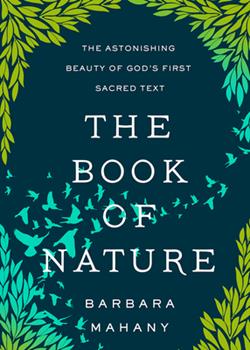
p.s. the other two books in my bibliotherapy stack (above) are william’s history of the rain, which had me at the title, and letters from max: a book of friendship, an epistolary collection between a poet and a playwright: sarah ruhl, the twice pulitzer-finalist playwright who was once teacher to poet max ritvo and quickly became dear friends, and as max’s cancer grew worse, their connection deepened. suleika jauoad ran an excerpt the other day in her isolation journals, and i ran to the library to grab a copy.

the pretty way

long a proponent of “the pretty way,” the winding way to wherever i’m headed, i am up against the GPS current, the Waze current, those little voices that come out of the ubiquitous boxes in our lives that try to tell us what to do––and the shortest, fastest, sometimes blandest way to do it.

it’s one thing when running late to a doctor’s appointment on a rainy afternoon when the roads are under construction. but not so when the afternoon is a span of time unmoored from anything else, except an eventual need to show up somewhere.

i am seizing one of those days today, as i drift north and a little bit west and steer myself toward a corner of the world i’ve never seen, a corner called “the driftless” (and if i ever employed my caps lock key, that d would be a D, as in a capital proper-name letter). it’s a corner as dramatic as any in these middlelands of the continent, a chunk of 8,500 square miles described as “a sudden maze of hills” and bluffs and valleys below, rising out of the flatlands of southwestern wisconsin.

it’s the land that time (or at least a good chunk of the ice age) forgot. while the glaciers of 500 bazillion years ago steamrolled the behoozies out of the rest of these parts, they never rolled through the driftless, leaving time to do its thing: cold water streams kept on carving through rock, sculpting and clearing and doing as they pleased. the meltwater from parts beyond incised valleys and bluffs, sinkholes and springs, caves and labyrinthine cave systems. and so, in the midst of a topography best described as pancake, suddenly there is capital D drama.

i could do with a good dose of topographical drama. and today’s the day i’m making it happen. because there’s not a Siri in the world who will point me the ways i want to go, i’ve had to revert to pen and ink, and scribbled my route onto an index card. 90 to 20 which turns into 69, quick right onto 81, then city road G/N and, at last, onto 23. u.s. highways and state roads, roads with alphabetical options, and streets with no names at all. that’s how i’ll get where i’m going.

and all the while i will marvel, and gawk. might even put the car in reverse, to gawk all over again (don’t tell the designated “careful driver” in the family, he who would insist on seizing my wheel).

it’s all a way of seizing time. of gulping down as much as you can of the wonders not too far beyond our very own windows. for the most part, my days trace and re-trace old, familiar routes. and for a homebody like me, that’s a very fine thing. if given my druthers, i’d stay curled in my window seat for hours on end. but, when distant parts call, i’m intent on getting there my way.

which is always, always the wiggledy way.

the way that makes me so blessedly thrilled to be drinking it in.


luci shaw is as dear a soul as she is a fine poet. and this morsel from luci fell on my path this week, in a resurrected interview with Image Journal. here’s luci’s take on why we write:

I have a magnet on my file cabinet that says, Write to learn what you know. So often the physical jotting of words in a journal or on a screen is like a key opening a lock. We know more than we know. When that door is opened, we find unsuspected treasures that can become available to others in our writing. This is a mystery. Because words and ideas have been recorded for centuries, they are available to enlarge our own thinking. We can connect with the words of the great writers of the past—Shakespeare, Milton, Spenser, Dante, Donne—because they were written down and preserved. It is magical to realize that their ideas are still flying, reaching over hundreds of years into our lifetimes, and as we read them, their revelations are transferred into our modern minds. I just wrote a poem inspired by a saying of Tertullian, an early church father, about birds, and the cross they make with their wings when flying.


and a little dose of poet and zen monk jane hirshfield to wind up the week….

To Drink

I want to gather your darkness
in my hands, to cup it like water
and drink.
I want this in the same way
as I want to touch your cheek—
it is the same—
the way a moth will come
to the bedroom window in late September,
beating and beating its wings against cold glass;
the way a horse will lower
his long head to water, and drink,
and pause to lift his head and look,
and drink again,
taking everything in with the water,
everything.
––Jane Hirshfield

how might you make the most of time today?

p.s. i’m headed to mineral point, wisconsin, for a weekend of Book of Nature extravaganzas, beginning with a saturday morning nature hike through a wooded (and likely muddy) preserve, followed by an afternoon book talk in a charming book store called The Republic of Letters, followed by a gathering at a new cook shop, followed by my first from-the-pulpit sermon at Trinity Episcopal Church on sunday morning. then it’ll be back home the windiest way i can wiggle…(here’s a little recording the mineral point chamber of commerce posted who knows where…)

bee season

when you happen to tiptoe outside into the dewy sop of dawn, just after the light breaks through, you might hear a noise, at that liminal hour when noise is one thing there’s not. not much of, anyway. 

i was standing there with my mug and my prayers, when all of a sudden i heard it. the sound of a mosquito buzzing your ear, only amplitudes louder. it’s not as loud as the nighttime’s cicada, nowhere near it. it’s the buzzsaw of dawn, when the bees are up early and nose-deep in work. 

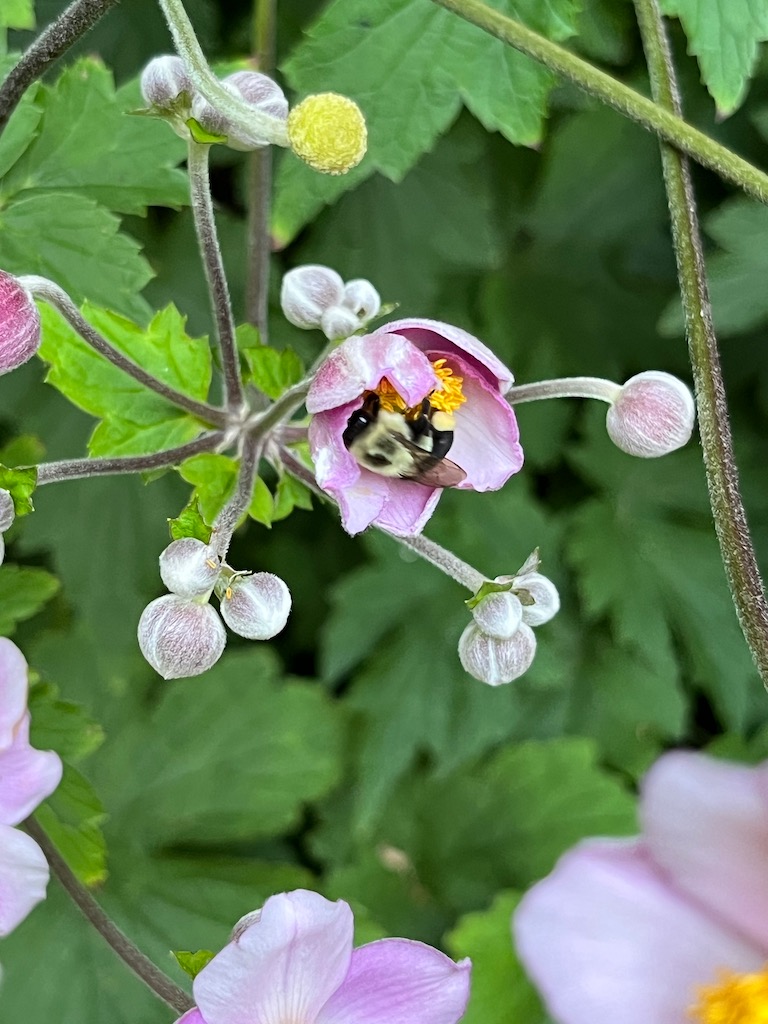
i followed a pair, fat, fuzzy, all full of themselves. full of unctuous beads of gold-dazzled pollen. looked like they’d rolled in a can of it. which they more or less did, dive bombing into the gold-dusted pincushions that rise from the swirl of anemone petals.

because i tend to read nature in a scriptural way, meaning i stand there in the face of a question, connecting the dots, unpuzzling the parable, i wondered what lesson i might extract from the bee, while the bee was drowsily, drunkenly, extracting its pollen-y porridge. 

what i came up with was unrelenting. unrelenting as in the bee, morning after morning, rises up from the hive, zigzags out the door, and plows ahead with his one holy task: he gathers up gold dust, the baseline of honey. it’s the task he was born to, a task he can’t shirk. a task he dives into with unrelenting enthusiasms.

i stood there for a while marveling at all there is in the tableau of dawn. the breeze already stirring. the moon now off the clock, back under the covers. or maybe just hiding back behind clouds. one or two birds were up and starting to chirp. but centerstage, in my attentions at least, was that fine pair of harvesting bees.

i thought about the perfect harmony of this early hour. how all of creation plays its own part. 

i thought about my own holy task and not being daunted. i don’t really know yet what exactly i’m up against — none of us do. but, i took a note from the bees: head down, nose first, gather up gold dust wherever you can.

be unrelenting. don’t be distracted. or daunted. even on days when it’s harder than hard: nuzzle your way into the gold dust, suck up what you can. 

it’s the reason you’re here on this holy earth.

maybe the bee understands: his days in the hive, they’re numbered. just like yours and like mine. so he gets down to business. gathering all that he can.

i let that sink in, while i kept up my watch, mesmerized by the bee who would not be dissuaded, distracted, or daunted. 

bee season brings lessons. but you need to perk up your ears. 


among the gold-dusted pollens i gathered this week was one heavenly spoken-word poet, podcaster, and author: amena brown. “a breathtaking blend of poet, prophet and pioneer,” one reviewer wrote. “her life and words will bless your soul.” no less than richard rohr, the modern-day mystic, and his center for contemplation and action pointed me in her direction. and what a direction it is. have a listen:

amena brown: “She Said How Do You Know When You’re Hearing From God”

i ran out and bought the book from which it came, so knocked off my socks by it was i. and i was only going to share the first verse. or two. but i can’t bear to leave out a one. it’s a bit long. and worth every drop. thank you, amena, for sharing your wonder…

She said, “How do you know when you are hearing from God?”
I didn’t know how to explain
It is to explain the butter grit of
  cornbread to a mouth that just
  discovered it has a tongue
The sound of jazz to ears that only ever
   thought they’d be lobes of flesh
The sight of sunsets to blinded eyes
   that in an instant can see
To fail at the ability to give words to
   how the scent of baked bread can
   make the mind recall a memory
Every detail
Of a house, a room, a kitchen, a
   conversation
Like explaining to a newborn baby this
   is what it feels like to be held
My words never felt so small, so
   useless, so incapable

I wanted to say
Put your hand in the middle of your chest
Feel the rhythm there
I wanted to say you will find the holy
  text in so many places
On crinkly pages of scripture
In dusty hymnals
In the creases of a grandmother’s smile
The way she clasps her hands
The way she prays familiar, with
 reverence as if to a dignitary and friend
The way she sings a simple song from
  her spirit and porches turn to cathedrals

I learned from my great-grandmother
   how to pray
How to talk to God
How to listen
Watching her and the other silver-
   haired church mothers gather in her
   living room
Worn wrinkled hands on top of leather
   bibles well traveled

They prayed living room prayers
   because you don’t have to be inside
   the four walls of a church to cry out to
   the God who made you
Because no matter where you sing or
   scream or whisper God’s ears can
   hear you

And despite what the laws say or what
   our human flaws say
God’s ears don’t play favourites
God’s ears don’t assess bank accounts
   or social status before they attune
   themselves to the story your tears or
   your fears are telling

God’s ears are here for the babies
For the immigrant, for the refugee
For the depressed, for the lonely
For the dreamers
The widow, the orphan
The oppressed and the helpless
Those about to make a mess or caught
   in the middle of cleaning one up
Dirt don’t scare God’s ears
God is a gardener
God knows things can’t grow without
   sun, rain and soil

I want to tell her to hear God
You have to be willing to experience
   what’s holy in places many people
   don’t deem to be sacred
That sometimes God sits next to you
   on a barstool
Spilling truth to you like too many beers
That God knows very well the dance
   we’ll do
When we love ourselves so little that
    just about anyone will do

That God cares about the moments we
   find ourselves
On the edge of a cliff
On the edge of sanity
On the edge of society
Even when we have less than an inch
   left of the thread that’s been holding
   us together

I want to tell her God is always waiting
Lingering after the doors close
And the phone doesn’t ring
And we are finally alone
God is always saying
I love you
I am here
Don’t go, stay
Please

I try to explain how God is pleading with us
To trust
To love
To listen
That God’s voice is melody and bass
   lines and whisper and thunder and
   grace

Sometimes when I pray, I think of her
How the voice of God was lingering in
   her very question
How so many of us just like her
Just like me
Just like you
Are still searching
Still questioning, still doubting
I know I don’t have all the answers
I know I never will
That sometimes the best thing we can
   do is put our hands in the middle of
   our chest
Feel the rhythm there
Turn down the noise in our minds, in
   our lives
And whisper,
God
Whatever you want to say
I’m here
I’m listening

– Amena Brown


and one last wonder, sent my way this week, from rebecca solnit’s 2004  Hope in the Dark, her counterpoint to a world in despair, an exploration of hope as “an embrace of the unknown and the unknowable.”.

Hope is not a lottery ticket you can sit on the sofa and clutch, feeling lucky. It is an axe you break down doors with in an emergency. Hope should shove you out the door, because it will take everything you have to steer the future away from endless war, from the annihilation of the earth’s treasures and the grinding down of the poor and marginal…

To hope is to give yourself to the future – and that commitment to the future is what makes the present inhabitable. 

Rebecca Solnit

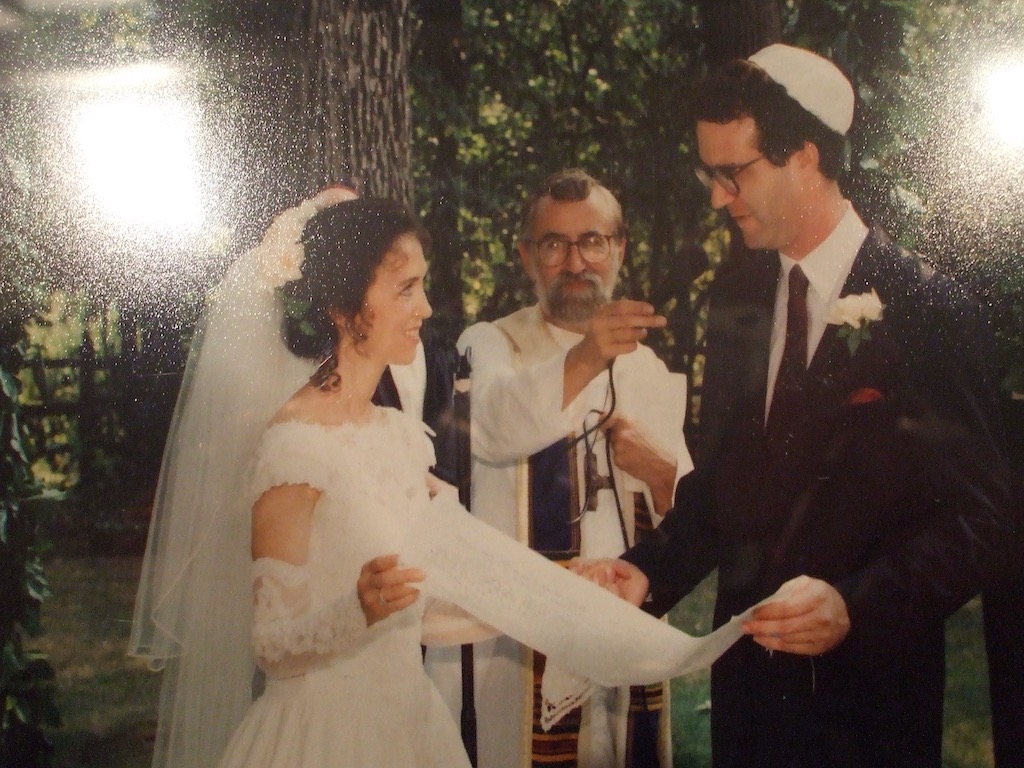
finally, finally, but maybe sweetest for last: 32 years ago i married the love of my life. my tall sequoia of a sweet and steady soul. he has been my ballast all these holy blessed years, and never more than now, so one big giant i love you from me.

how were you unrelenting this week? and did you gather up gold dust?

nursing tender things along. . .

barely perceptible nub of palest green, on the first outpost of the left branch of what might once again be my peewee hydrangea…see it?

i found myself crouching down as low as i could go the other day—likely lower than a girl with slits in her side should wisely have gone. but i was intent on inspection. i was searching clumps of stick for little nubs of green. of life. of any sign that the last shrub i planted in the fall — the day before the frost came — had survived the long winter. 

it was a long winter for plenty of us — certainly for my garden, newly planted in the weeks not long after the dreaded fence went up next door, and indeed for me. 

and yet now the season of birth and rebirth is upon us. from every bough and limb, from every red bird’s throat, the song of springtime’s hallelujah bursts forth and keeps on forthing. 

i find myself particularly intent on the tendernesses of this holy spring. i am crouching down low day after day, keeping watch for signs of life, coaxing beauties to unfurl.

poor mama robin laid her egg on a porch railing. oops. fear not, all now is well.

seems a wise posture, that of nursemaid to the birthing earth. it’s one i am learning to mimic as i consider my own deeply tender places, as i picture the convulsions of my poor little lung that likely has no clue what hit it, and why all the folderol and commotion a week or so ago. but it is now doing its darnedest to sew itself back to whole, pressing tight the seams that now are held in place with metal threads. the miracle of the human body is not unlike the miracle of holy earth, and as i slowly walk my garden’s edge, stooping here or there to lend a hand — lifting clematis vine to its fallen trellis, rescuing a robin’s egg mislaid on a railing’s edge — i am breathing in the tender caretaking ways of the God who so tenderly holds us in God’s sacred trusted hand. or so i imagine. none of us has a clue really just what form this God of ours inhabits, so from time to time i apply my storybook imaginings to make it all more apprehensible. i understand the naiveté of picturing a God who scoops me in God’s hand, but somewhere deep in that vision there is a grain of holy comfort. there is an image put to the ineffable. and right in here, i need that image.

i’m not the first to put pictures to my God, and i know i’m not the last. it’s a hard task here on earth to imagine the Divine goodness that inhabits all the cosmos, and surely all the heavens, and then the questions come: is heaven the holy light deep in our hearts? is heaven that palpable knowing that we are held by a goodness beyond our wildest imagination? once upon a time the nuns taught that heaven had a pearly gate, and was carpeted in clouds. oh, lord, they shouldn’t teach such things to wide-eyed little children; it can take a long long time to revise the picture reel inside your head, and why waste time in lala land when God is so much more and vaster and infinitely deeper.

i am spending many chunks of time pondering the presence of God in this messy chapter of my life. what i know is this: when i was deep in the dark tunnel of an MRI that scanned the vessels of my brain, and told not to flinch a single muscle for 45 excruciating minutes, i surrendered to the softest arms i’ve ever known. i imagined them as the arms of God, cradling me. and in that space of utter peace, i rested. and did not flinch, did not cough, did not exercise the itch or cramp in my shoulder; i found the holy wherewithal to do precisely as the doctor ordered. 

and that is how i pass the hardest hours. i go deep down under. into the place where God and angels dwell. i’ve no knowledge of this landscape. it’s all uncharted and unknown. but when i go there i am safe. and i am cradled in what feels like love. and that to me is how it feels when i walk my garden’s edge, crouch down low, and lift a hand to bud or vine or mislaid egg. we are all nurturing each other along. God and all of us. and i’ve no idea just how it works, or what it is. but i know i sense a holiness that i am choosing to call my God.

amen.

(i fully grasp that i’m going out on limbs here, groping along in wholly naked ways, but if i don’t use these hours of my life to plumb the deepest questions, to fumble for the truest answers i know, then what worth will these struggles hold? we have a chance to be our best selves in our darkest hardest hours. and these are mine. so far. so why not open the book and see what stirs? i’m impelled to wonder and to muse aloud….)

mama robin, safely atop her mislaid egg. photo by kerry, who saved the egg and whose porch is mama’s birthing room….

and now a few morsels, as has been my way in this year of gathering up bouquets of wisdoms…

Julian of Norwich, an English anchoress who experienced a vision in 1373 and wrote about it in a work titled Showings or Revelations of Divine Love — the earliest surviving book by a woman in the English language. my friends at the SALT Project (emmy-award-winning visual storytellers with a spiritual bent; check them out) laid this excerpt out as a poem. i found it lovely….

And in this he showed me a little thing
the quantity of a hazelnut,
lying in the palm of my hand, as it seemed.
And it was as round as any ball. 

I looked upon it with the eye of my understanding,
and thought, ‘What may this be?’
And it was answered generally thus,
”It is all that is made.”

I marveled how it might last,
for I thought it might
suddenly have fallen to nothing
for littleness. 

And I was answered in my understanding:
It lasts and ever shall, for God loves it.
And so have all things their beginning
by the love of God. 

In this little thing I saw three properties.
The first is that God made it.
The second that God loves it.
And the third, that God keeps it.


+ Julian of Norwich


 as has been my habit in recent months, i mark the turning of each month by turning to the pages of Henry David Thoreau’s The Journal: 1837–1861. here’s a dreamy entry from the ninth of may when thoreau was 34 and aswirl in the warmth of mid-Spring. (may our warmth please come….) 

May 9. It is impossible to remember a week ago. A river of lethe flows with many windings the year through, separating one season from another. The heavens for a few days have been lost. It has been a sort of paradise instead.

Saw a green snake, twenty or more inches long, on a bush, hang­ing over a twig with its head held forward six inches into the air, without support and motionless. What there for? Leaves generally are most beautiful when young and tender, before insects or weather has defaced them.

These are the warm­-west-­wind, dream­-frog, leafing­-out, wil­lowy, haze days. Is not this summer, whenever it occurs, the vireo and yellowbird and golden robin being here? The young birch leaves reflect the light in the sun.

Mankind seen in a dream. The gardener asks what kind of beans he shall plant. Nobody is looking up into the sky.

a little dictionary for those of us who don’t know our greek: lethe: “forgetfulness,” from the river in Hades that causes drinkers to forget their past.


one more thing a brilliant woman sent me this week when i was inquiring whether a certain “tiny retreat” (that’s how it was billed) had a virtual component, for those of us whose lives are pretty zoom-y these days…..

“Be who God meant you to be and you will set the world on fire.”

Catherine of Siena

finally, a profound note of thanks, to the brilliant and bold mountain-mover of a friend i have in poet and scholar (and my former cambridge landlord) mark burrows, who sent a note to all who were at the zoom book launch a few weeks ago (a lifetime ago!), and who implored you to add a little amazon review to my “languishing” Book of Nature. well, the book isn’t languishing but its state of review sure was. i have no understanding of the algorithms of amazon, but apparently, without reviews, you’re sunk. glub. glub. glub. so mark, unbeknownst to me, rallied the forces and got the reviews boosted from 3 to 11, currently. in a million years i couldn’t have done what he did. in these otherwise upturned days, the human species has shown me in brilliant colors just how magnificently we all can be, and love is pouring forth with the might to rocket me to the holy moon, which was magnificent last night if you happened to notice.

so, thank you, blessed blessed mark. and thank every one of you who in your own magnificent ways has stepped to my side in this curious curious walk through springtime 2023…..

love, bam

waiting. . .

i decided to give you a pretty picture of this season erupting, but doing it in slo-mo. this is korean spice viburnum waiting to open wide its little throats and let out its intoxicating perfumes. this is waiting, the spring edition.

waiting is the word of the week. word of the year, in fact––so far, anyway. i’m on the other side of surgery––and have the tic-tac-toe board crisscrossing my side to prove it. they got out what they needed to get out (i hope), though it was more than we’d been betting on. so now i’m waiting.

waiting is a quilt of many textures. sometimes it washes over me, with a calm that takes the sting away. sometimes i feel my heart kick into higher, faster gear. i try hard to turn off the nozzle that lets the worries out. but even my secondborn tells me i do too much of that. and he’s only been keeping watch for twenty-one of my years (and he is 300 miles away right now, so he’s out of range for any current worries; job one for me is to project calm to the one with the very, very giant heart). it’ll take two weeks for the blessed souls in the pathology lab to do what all they do to lay out the specifics of this little dervish that somehow found its way to the bottom of my lung. and that gives me time to sink slowly into the bath of this new reality.

waiting gives the human species time to settle in, to realize you’ve taken more steps into the unknown than you’d ever imagined you would. and you’re calmer––and maybe braver––than you’d ever ever imagined you could be (most of the time anyway). of all the worries i’ve worried over the years, i never added lungs to the list.

just the other week, i read a lovely line from a 96-year-old, a woman who knew she was on the last pages of her life, and so she scribbled out her truths for her children, her grandchildren, and her many greats. when asked what might be the most important thing she’d realized as she rounded the final bend, she simply said: “i wish i hadn’t spent so many hours worrying, cuz most of those worries never came to be.”

mostly, what waiting does is make me savor every minute. stepping out into the balmy springtime air. tucking my nose into the soon-to-be blossoms. listening to the owls hoot at 5:15 a.m. marveling at the miracles of modern medicine that can do so very very much, and for the most part do it so very lovingly. (i fell in love with my nurses, emily who stayed all night with me, and clare who worked by day. the care with which they changed dressings, filled syringes, listened to my questions, they made me so so proud that i was once one of them. and they made me realize how very much even their most basic medical tasks translate into a language that feels like love. i was a stranger to them when i was rolled into my cubicle of a room, but by shift’s end i was sad to see them leave. if you’re a nurse, believe me when i tell you you’re a living saint. to make the scared and fragile and confused feel safe and tended to is a sacred act, is sacramental, in that it lifts even the most perfunctory of duties into the closest thing i know to benediction.)

a few of things i marveled at this week, while idling in my wait station: my friend the nurse practitioner who, when she found out how much it hurt to try to lie down in bed, ordered up a giant wedge pillow that made last night a whole lot less bumpy. having two of my three boys right by my bedside all week long. one of ’em had me laughing (sidesplittingly is not such an apt description here, though it might have stretched some stitches) within hours of getting to my little room. (i was on the heart transplant floor, and, believe you me, i did not miss for a minute how blessed i was to be there only for a chunk taken out of my little lung.)

yet another surround-sound marvel in this week one of the two-week wait: the promise of springtime, that life bursts forth year after year after year. we live in an eternal spiral, and i am on for the holy blessed sumptuous ride. stepping into the still soft air, watching the goldfinch nibble at the thistle seed, rejoicing as the daffodils tossed off their snowy caps to rise and shine again, golden periscopes of spring. it felt to me like the arms of God were wrapping round me in the form of this gentle greening world.

in book world, one fine thing happened: there is a lovely lovely journal, the EcoTheo Review––a quarterly put out by a collective of poets (mostly), writers, and artists who plumb the depths of wonder and beauty in this world, and who claim as their mission, to “celebrate wonder, enliven conversations, and inspire commitments to ecology, spirituality, and art.” and they published a conversation we’d had a few weeks back about The Book of Nature, which you can read here. the editor who spent hours in our exchange of thoughts, Esteban Rodriguez is his name, is himself a poet, and one of the kindest, gentlest souls i’ve been blessed to come to know. it more than more than made up for the half dozen book events that got wiped off the calendar.

while i wait in these days ahead (and try so hard not to worry!), i’m going to be on watch, to soak up and see every blessed wonder and beauty in this holy world. i don’t want to miss a drop. i am following the instruction of richard rohr, the modern-day mystic, who asked:

Where is this God being revealed? Not in the safe world, but at the edge, at the bottom, among those where we don’t want to find God, where we don’t look for God, where we don’t expect God.

i’m going to look for God in every nook and cranny along this waiting way. because i’m fairly certain God comes in a thousand thousand forms: in the gentle touch of the nurse who poked my arm, in the bouquet dropped on my front stoop, in the tub of soup that now takes up a shelf in the fridge, in the box that’s on its way from zingerman’s deli in ann arbor, and in every last note and gentle text that simply says, “you got this, and i am here beside you.”

God comes most certainly in the hours when our waiting gives God more than plenty time to tap us on the heart, the soul, the noggin. i’m on watch while i wait…

where did you find God this week, or whatever is the name you give to the all-embracing goodness that i call the holy Author of it all?

she blossomed, my olfactory factory….

a need for butterfly wings. . .

beloved chairs,

i’ve thought long and hard about what i was going to write here today, and i’ve decided to lower my voice to a whisper and let you all in on what’s stirring in my heart. after all, even if this table is more cyber than maple, and even if the chairs we pull up are virtual, it’s all very real, and utterly fulsome to me: the love and the kindness and the tenderness, and all the shared wisdoms and laughters and tears, as deep and human––and often divine––as they could possibly be. 

and what sort of hearts would we be if we didn’t share some especially tender threads every once in a while? so here’s what i want to tell you, though i really truly don’t want anyone worrying: i’m having a little surgery next week. a little something is stirring in one of my lungs and they need to take it out. there, now you know. i’ve been in something of a medical mystery tour these past many weeks, some of them bumpier than others, and all of them pointing toward the date i now have with a wonderful surgeon who has a habit of making me laugh out loud. 

the timing, of course, is something of a bummer. not in any marketing plan in publishing land is there a clause that suggests the author duck out for a while to have scalpels taken to her chest. so i’ve had to cancel a swath of bookish adventures for the next few weeks. or, “postpone” them, as sweet blair keeps correcting me. and since brand new books have only so wide a window for birthings, i feel a bit as if i’ve slammed the sash on my very own thumb. 

but maybe you can help keep the flutter in my butterfly wings. maybe for the next few weeks, while i get the wobble out of my knees, i can imagine you afluttering for me. any simple thing: maybe a few words on that ol’ amazon reader review (my publisher keeps reminding me); maybe ask your local librarian if they’ve a copy on their shelves; maybe you simply send me a picture of a page you’ve found yourself reading. (i melt every time anyone does that.) or, maybe, whatever stirs you. 

i promise you i need not one other anything. i am abundantly wrapped in the tenderest care by my beloved, blessed dear hearts and souls. my blair has been nothing short of a saint. and one of my boys will be here all week. and the other has sworn not to give it a worry. (an emphatic answer to this mama’s prayer; more than anything i did not want that kid to give it one shred of a worry.)

because i’m a quirky iteration of shy, and because i’m mostly allergic to SocialMediaLand, i am not saying a word about this out in the public sphere (i don’t think of the chair as anything close to public; it all feels very sacred and safe here to me), as i don’t want it to prompt any worries or wild-eyed questions. (trust me, the things people ask!!!) i’ve kept it all exceedingly quiet because i can’t bear the thought of worrying the ones i love (or anyone else) and, until i had more than an inkling of what was going on, i didn’t want to utter a word. 

so know only this: that little fluttering, however you flutter, is more than aplenty; it will keep me afloat and awaft, and soon as i can, i’ll pick up the winging all on my own. xoxox, and thank you.

love, bam

p.s. i think by now you’ve figured out that i love to respond to your comments whenever you leave one at the table, but i might not be able to check the chair too much in the week ahead. and i want to apologize in advance. 

and speaking of the public square, how’s this for the perfect antidote?

Remedy for Social Overexposure

by Sandra Cisneros

Seek a pirul tree and sit
beneath immediately.
Remove from
ears and tongue,
words.
Fast from same.

Soak in a tub of seclusion.
Rinse face with wind.
In extreme cases, douse
oneself with sky. Then,
swab gently with clouds.

Dress in clean, pressed pajamas.
Preferably white.

Hold close to the heart,
chihuahuas. Kiss and
be kissed by same.

Consume a cool glass of night.
Read poetry that inspires poetry.
Write until temperament
returns to calm.

Place moonlight in a bowl.
Sleep beside and
dream of white flowers.


or this one stanza from celtic mystic christine valters paintner’s poem, “origins,” especially the first stanza, about peering into a robin’s throat, an image i envision again and again every time i see the robins plucking for a worm in my newly-verdant grasses…

Origins
 
If I could peer far enough down
a robin’s pulsing throat, would I see
notes piled there waiting to be flung
into freshness of morning?
 
If I close my eyes and burrow
my face into peony’s petals,
would I discover the source 
of its scent, a sacred offering?
 
Can I plunge inside 
and find a lifetime of words
spooled tightly inside my heart
ready for a tug?
 
If I dig beneath the bedrock 
will I find love there, 
solid like iron or does it flow like magma
filling in all of the empty spaces?

–christine valters paintner


and i’ll sashay off into the sunset with this psalm from dorianne laux…

Psalm

by Dorianne Laux

Lord, there are creatures in the understory,
snails with whorled backs and silver boots,
trails beetles weave in grass, black rivers
of ants, unbound ladybugs opening their wings,

spotted veils and flame, untamed choirs

of banjo-colored crickets and stained-glass cicadas.
Lord, how shall we count the snakes and frogs
and moths?  How shall we love the hidden
and small? Mushrooms beneath leaves

constructing their death domes in silence,

their silken gills and mycelial threads, cap scales
and patches, their warts and pores. And the buried
bulbs that will bloom in spring, pregnant with flower
and leaf, sing Prepare for My Radiance, Prepare

for the Pageantry of My Inevitable Surprise.

These are the queendoms, the spines and horns,
the clustered hearts beating beneath our feet. Lord
though the earth is locked in irons of ice and snow
there are angels in the undergrowth, praise them.

“how shall we love the hidden and small?” that’s a question to ponder in the blessed, blessed unfurling days ahead….

p.s.s happy blessed birthday to my beloved ella bella beautiful, who is turning 14 today, her goldenest birthday. xoxox

of thin places and the deep soul of my ancient peoples

i remember perfectly the first time i heard mention of a “thin place.” i was on holy ground, a farm smack dab in the middle of abe lincoln’s homeland. beau’s farm was the name of the farm, an organic farm, an organic farm that rose from an almost impenetrable shadow of grief. deep grief. beau was a marine, a strapping handsome fellow, who died down the road from the farm, home on leave from iraq, when he drowned. his mother, a woman i’ve come to love dearly, once told me that losing beau was “just like being hung, that moment when they pull that thing out from under you,” when the sheriff comes to the door, rings the bell at just past dawn to break the news.

beau’s mama was lost to grief for two long years. but then, she told me, she started to notice little beauties. she’d toss an old dried plant to the ground; and it’d grow.

“it dawned on me, after all those months, i was noticing beauty,” she once told me as we walked the gravel drive to where the peacocks pecked and strutted in their pen. and as i once wrote in the pages of the chicago tribune, “that’s when she realized. realized maybe the one place where she could plant her sorrow, turn it into something beautiful, something lasting, was the almost seven acres that surrounded her old white resurrected farmhouse. . .”

terry starks is beau’s mama’s name; she lives up in maine now, where she still turns earth and life into something beautiful, something lasting.

terry starks was the first to tell me of thin places. she told me the hay loft in her barn was where she went to cry when the tears seemed to have no end. she told me she was drawn there because the loft was surely a thin place, a place where the veil between heaven and earth is lifted. where you can all but feel the arms of God reaching out toward you.

it’s the celts who see the world that way, who know that ours is a topography of the sacred. who live attuned to soulful rhythms most others miss.

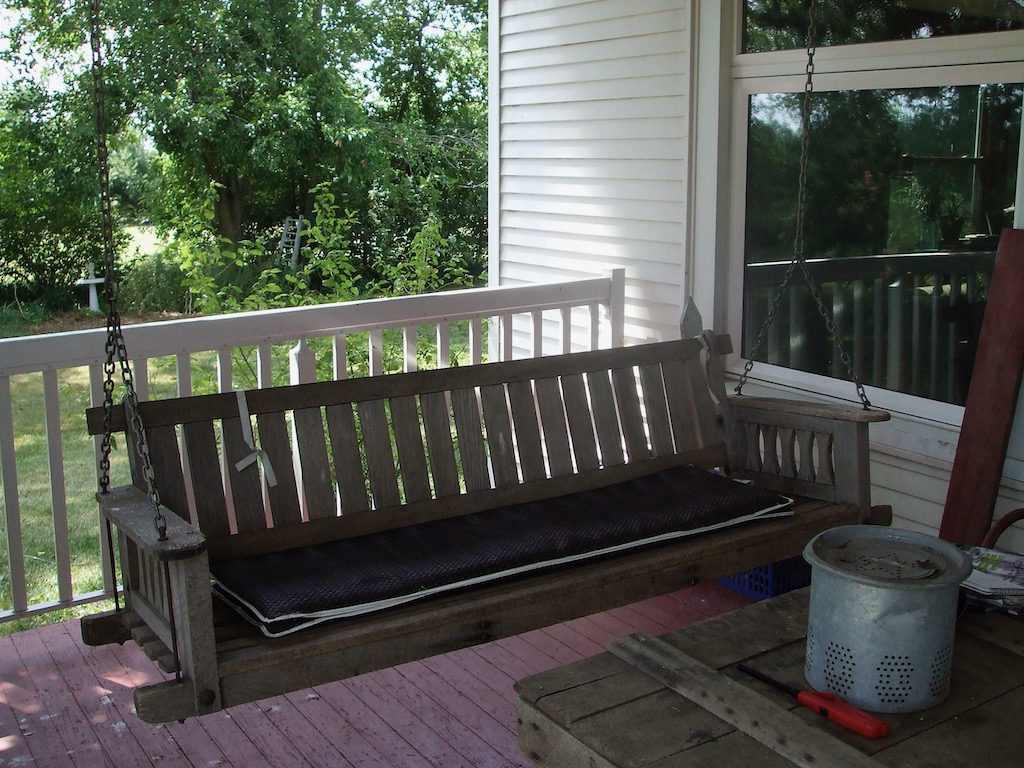
i remember sitting on the porch swing at beau’s farm, as beau’s mama poured her hard-won wisdoms as if a pitcher without bottom. i absorbed more gospel that day on beau’s and beau’s mama’s farm than i’ve absorbed most days of my holy blessed life.

ever since, i’ve been drawn deeper and deeper into the wisdoms of the celts, a holy people who traipse the hills and vales and rocky shorelines of my ancient roots.

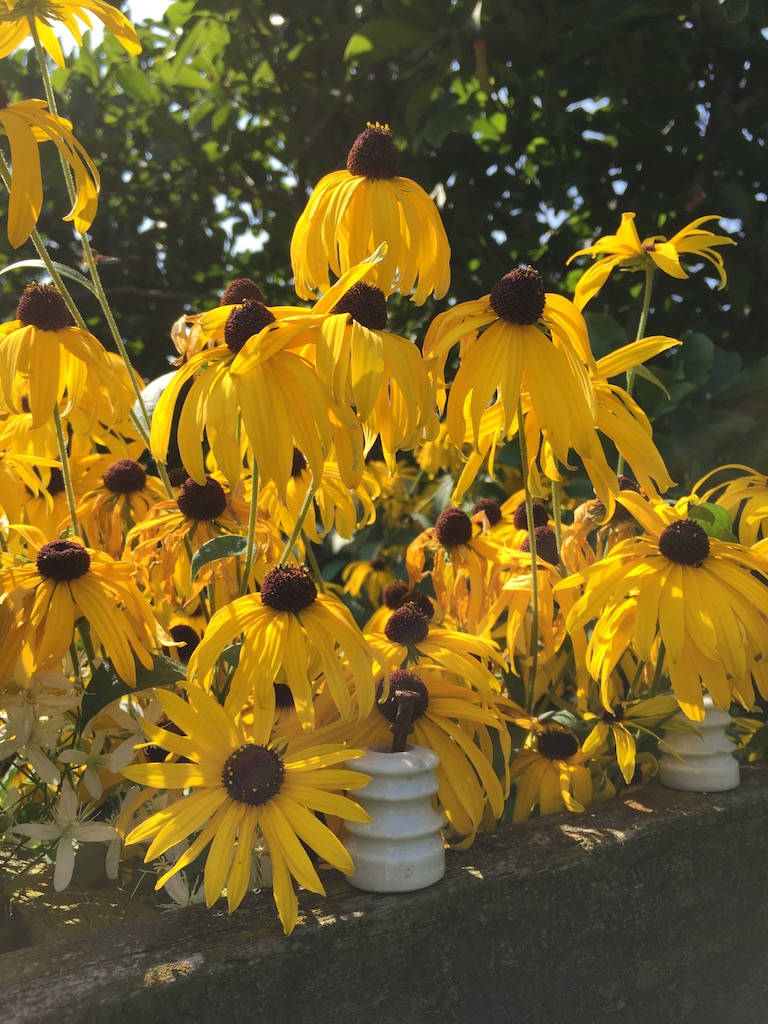
because today happens to be a day when plenty of folk haul out green beer and soda bread, i decided to haul out just one of many passages from The Book of Nature, my little book due to be birthed just the other side of the weekend, on the vernal equinox, day of equal light and shadow, when all of us might look upon each other’s faces for the very first time, reason to rejoice if you ask me. it’s a passage from a chapter on the dawn. and i picked the photo way up above because i took it on the day i drove to beau’s farm, and it fits blessedly with how the celts see the sun. and because i was thinking of thin places, i decided to tell terry’s tale as the long way in to how the celts have taught me so very many things. thin places, among the litany.

here tis. . . a passage from The Book of Nature…

God was considered “the Sun behind all suns,” as the author George MacLeod once wrote. The whole of creation was dappled with the light of the sun as it journeyed across the sky. Wherever its light fell, there was God filtering through, an earthly translation of the divine infusion. And the perpetual Celtic praise song rose up with the dawn. Celtic gentlemen—farmers and herders and fishermen, set off to work in the predawn darkness—doffed their hat at the first light of the sun, and bowed in blessing. The Carmina Gadelica, a collection of Gaelic prayers and chants, is filled with start-of-day blessings, as the Celts were wont to offer up benediction for every chore and implement and God-given element of every day, from milking to weaving to shearing the sheep, from fire to wind to sprinkling of water. And certainly for the miraculous return of the morning’s first light. Mystic and teacher Alexander Scott, who grew up in the west of Scotland and kept Celtic ways alive in his nineteenth-century books, wrote that his were a people “listening for God in all things, ‘in the growth of the tree, in the rising of the morning sun, in the stars at night, and in the moon.’” 

–Barbara Mahany, The Book of Nature


of the many, many stories i wrote over the almost 30 years, the story of beau’s farm was one of the ones i hold closest to my heart. here’s a link, should you care to read it. with love, from terry’s scribe. (apologies if you need a subscription to open the link.)


thanks to a friend i love with my whole heart, i stumbled on another wise soul with buckets of beauty to grace the world. a poet-activist-performer named andrea gibson, now a cancer survivor whose words might take your breath away. andrea identifies as queer, and uses the pronoun “they;” and they are known for their trademark honesty and bare-naked vulnerability, traits i find irresistible and blessed beyond words. here are just a few lines i couldn’t keep from scribbling down:

when it comes to hearts i want always to be size queen…

i love you because we both showed up to kindness tryouts with notes from the school nurse that said we were too hurt to participate….

when your heart is broken, you plant seeds in the cracks and pray for rain.

before i die, i want to be somebody’s favorite hiding place, the place they can put everything they know they need to survive, every secret, every solitude, every nervous prayer, and be absolutely certain i will keep it safe. i will keep it safe.

andrea gibson

one more morsel for this blessed day, a poem from billy collins, once poet laureate of the united states, and a poet with plenty o’ irish roots . . .

Questions About Angels
by Billy Collins

Of all the questions you might want to ask
about angels, the only one you ever hear
is how many can dance on the head of a pin.

No curiosity about how they pass the eternal time
besides circling the Throne chanting in Latin
or delivering a crust of bread to a hermit on earth
or guiding a boy and girl across a rickety wooden bridge.

Do they fly through God’s body and come out singing?
Do they swing like children from the hinges
of the spirit world saying their names backwards and forwards?
Do they sit alone in little gardens changing colors?

What about their sleeping habits, the fabric of their robes,
their diet of unfiltered divine light?
What goes on inside their luminous heads? Is there a wall
these tall presences can look over and see hell?

If an angel fell off a cloud, would he leave a hole
in a river and would the hole float along endlessly
filled with the silent letters of every angelic word?

If an angel delivered the mail, would he arrive
in a blinding rush of wings or would he just assume
the appearance of the regular mailman and
whistle up the driveway reading the postcards?

No, the medieval theologians control the court.
The only question you ever hear is about
the little dance floor on the head of a pin
where halos are meant to converge and drift invisibly.

It is designed to make us think in millions,
billions, to make us run out of numbers and collapse
into infinity, but perhaps the answer is simply one:
one female angel dancing alone in her stocking feet,
a small jazz combo working in the background.

She sways like a branch in the wind, her beautiful
eyes closed, and the tall thin bassist leans over
to glance at his watch because she has been dancing
forever, and now it is very late, even for musicians.


nothing would delight me more than to see some of you, or all of you, come tuesday night, when i am shoving aside my worries about stepping up to speak in front of a crowd any bigger than the one or two who might share this old maple table on any given morning. we’ll gather to mostly rejoice in what’s become a holy sacred bond, one woven over time, through shared wisdoms, devoted kindness, good grace and humor. and i promise to read one or two passages from The Book of Nature, and even talk a little bit about how it came to be. it’s the first of my five books that wasn’t first birthed here, but its pages are filled with wisdoms learned here, steeped here, refined here. so you all have a thread in the whole cloth it became. and i can imagine no finer benediction than to begin the book with you. so see you tuesday, march 21, the vernal equinox at 7 p.m. chicago time.

now, what celtic wisdoms fuel your every day? and where are the thin places in your life where the veil between heaven and earth is at its thinnest, and you too feel it lifted for a blessed glance of the sacred beyond?

when it comes to hearts, i always want to be known as size queen…

remembering and other acts of blessing

yahrzeit is a yiddish word translated as “time of year,” and for jews, a people who sanctify time in so many ways, yahrzeit is both solemn and a blessing. yahrzeit is when jews remember the dead, and, as in so many cultures, when we wrap ourselves in an almost-palpable sense of remembering. for jews, it dates back to the 16th century, when an otherwise obscure rabbi wrote of yahrzeit in his book of customs. every year on the anniversary, “the time of year,” of the death of someone beloved, jews are called to the synagogue, and rise for the reciting of the mourner’s kaddish, a praise prayer to God, spoken in the depths of mourning, of grieving, and of remembering. it is one of the beautiful mysteries of judaism that the kaddish does not mention death. it’s an ancient aramaic prose-poem, thought to be an echo of Job, “spoken from the sub-vaults of the soul,” that, as some have written (beautifully), is offered up as consolation to God, who suffers the loss of any one of us as piercingly as we do.

at home, the marking of “the time of year” is when a yahrzeit candle is lit, and burns for 24 hours. to glance at the dance of the flickering flame is to remember, to offer up a word, a prayer, from the heart.

my papa’s yahrzeit is today. 42 years ago, this became the darkest day, the snow-swept night the doctor walked into the cold, linoleum-tiled hospital corridor and simply said, “i’m sorry,” leaving us to fill in the unimaginable, unspeakable blank. my beloved papa had breathed his last. and it would be a long time till i could fill my own lungs again. and it is a miracle and testament to godly healing that all these years later i do know laughter again, and i have filled my life with treasures––my boys, first among them––my papa would have so reveled in. oh, he would have beamed. in my darkest and my brightest hours, he is with me still and always.

i am not alone in marking this day as a day of remembering. all our calendars are filled with dates all but written in invisible inks that we alone decode. the date i miscarried my baby girl. the date my firstborn broke his neck. the date you found out something terrible. the date you or someone you love got sober. the date you figured it out, whatever “it” might be.

it is in remembering, i think, that we sometimes grow our hearts. it is in holding close whatever was the whammy life dealt. those whammies come in a thousand thousand colors and flavors and sounds. and those moments, those chapters, are the ones that propel us into our truer and truer depths. it’s life in its complexities that draws out the marrow of who we are.

i am not one who usually turns to nietzche but i stumbled across this line this week, and suddenly it fits with thoughts of yahrzeit and remembering and loving:

“no one can build you the bridge on which you, and only you, must cross the river of life,” the young nietzsche wrote.

but we walk the bridge with those who’ve walked before us, with those we’ve loved and lost.

and in my darkest hours, and in my brightest ones, i somehow always find my papa shimmering there at the edge of the frame. in my deepest dark hours, i pray: “be with me papa.” and he is.


it’s the last line of this poem where i feel my soul swoop up and skyward…

Lines For Winter

Tell yourself
as it gets cold and gray falls from the air
that you will go on
walking, hearing
the same tune no matter where
you find yourself —
inside the dome of dark
or under the cracking white
of the moon’s gaze in a valley of snow.
Tonight as it gets cold
tell yourself
what you know which is nothing
but the tune your bones play
as you keep going. And you will be able
for once to lie down under the small fire
of winter stars.
And if it happens that you cannot
go on or turn back and you find yourself
where you will be at the end,
tell yourself
in that final flowing of cold through your limbs
that you love what you are.

~ Mark Strand  ~


the earthquake in turkey and syria: as we all watched helplessly the devastations in syria and turkey, it was hard to watch, and hard not to want to reach across the screen and clear away the rubble. i have been moved time and time again why the white helmets, an all-volunteer corps who leap into chaos and devastation with unbridled courage and determination to pull any breathing bodies from beneath the dusty hell on earth. should you be inclined to do what we can from over here, and want to be sure your money’s getting where it will make the most lasting impact, check out this navigator from NPR to find out just that. the baby girl to the right is the sole survivor of her family, pulled from the rubble with her umbilical cord still attached to her dead mother. the world is rooting wildly for her. and blanketing her in so, so much love. and remembering her mother. . .


and before i go, in case you didn’t happen to see my highly unusual monday morning posting here on the chair, i bring this invitation to the friday table! it’s a real-live virtual (such is the definition of real-live these days) chair gathering. we’re calling it a launch for my next little book, but really for me it’s the joy of finally finally gathering us all together. and finally putting faces to names like “jack,” and “hh,” and “nan”. . .

we’ll gather on the evening of Tuesday, March 21––the actual pub date of The Book of Nature: The Astonishing Beauty of God’s First Sacred Text––when we shall send it soaring into the everland. it’s free and it’s just for friends of the chair––wherever you are––and it’ll be at 7 p.m. chicago time, when we’ll gather by zoom. and all you need to do is click this link to register. the zoom link will be magically sent to you. and, since i’ve never ever done this before, beyond that we will all find out together what happens next.


that’s my papa above, feeding the kangaroo, when he was once down under, giving yet another one of his gloriously animated speeches to a crowd of grocery mavens. my papa was an ad man, an ad man who loved a microphone. i, as his deeply devoted daughter, decidedly did not get the microphone gene, though i can find myself animated once i get over the trembles.

how do you remember the ones you’ve loved and lost?

it’s the-light-will-save-you season

it wafts in, gold dust, falls in rivulets across the table, broad swaths and shafts through the windowpanes. it’s molasses light, the amber season, the light of autumn coming that just might save me. it holds alchemical powers, makes my heart quicken, might even push out the walls of my veins a wee bit. i imagine it expands the little red blood cells ferrying molecules of oxygen all around my labyrinthine insides. it makes me more alive than any other season’s sunlight. and it’s coming day by day.

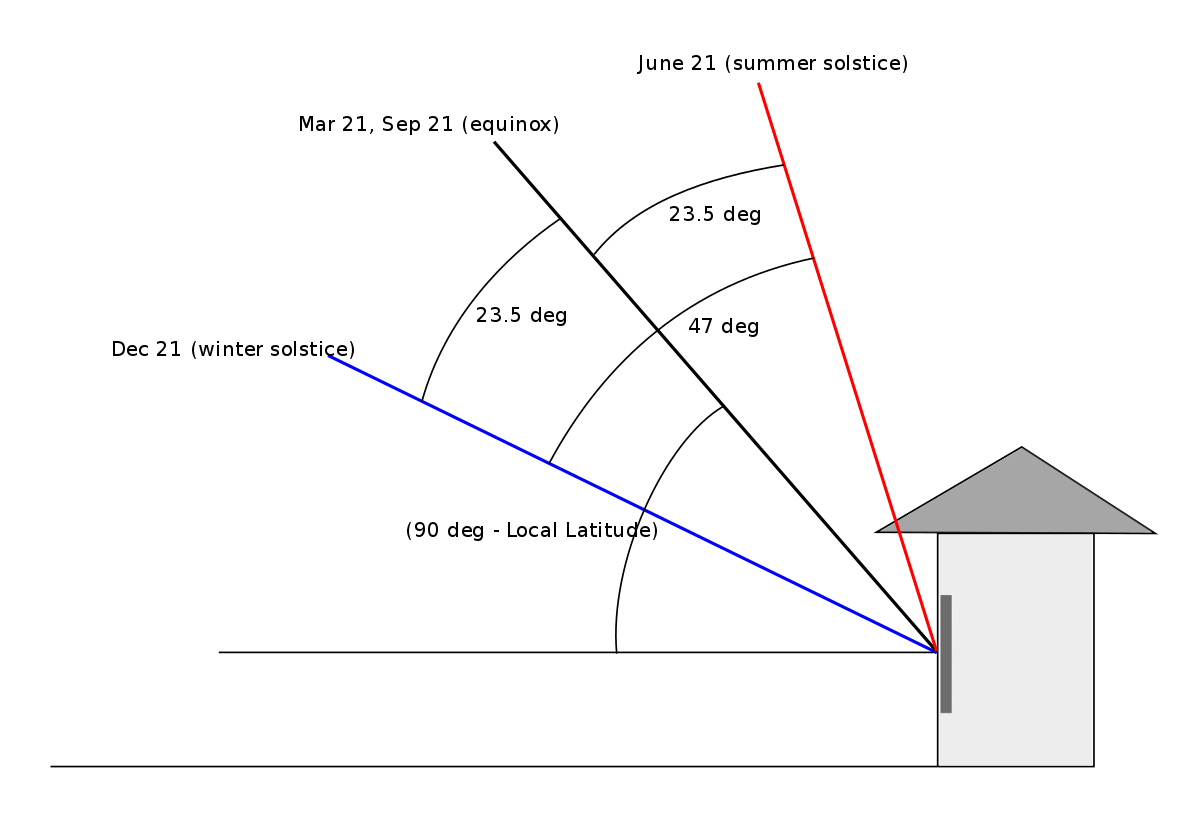
the sun is slipping is how we put it. but, really, that’s not the science. that’s the egocentric way we humans always try to think: putting ourselves in the core of the equation. really, it’s just plain old geometry, all about the angles of earth to sun, and axis to angle. we’re spinning at our cockeyed angle, and come autumn, when we’re leaning out from the sun, the angle shrinks from summer’s straight-on-from-on-high 90-degrees to the slenderer 23.5 degrees, meaning the sun no longer shines straight down in an intense tight cone, but rather the light’s diffuse, the shadow longer. the sun––should you imagine it as a flashlight shining on a table (should you care to do a bit of third-grade science, here)––is not shining from straight above, but now (imagine moving your hand and the flashlight lower in an imaginary arc) it’s shining from off to the side, and the light cast is, per our hypothesis, less intense, more spread out, and––here’s the magic, if we’re talking earth and not flashlights and tables––more golden.

dylan thomas said we should “rage against the dying light.” mary oliver called it “the old gold song of the almost finished year.” i call it molasses light. and i won’t rage against it. i will all but gulp it down. heck, i’d lick it off the table like an autumn lollipop if i didn’t know how impolite that was.

it’s the-light-will-save-you-season, and it’s saving me.

it comes with its cousin, tinge-in-the-air. or at least it does here where i live, not far from the shoreline of that great lake michigan. as one long summer sings it’s almost-finished song, i will relish the next one on the song list: the song of autumn’s gold, with a chaser of goosebumps-in-the-morning air…


commonplace corner: i tend to read in tandem, two books at once; sometimes more. and it’s magic when one book finds itself in conversation with another, unbeknownst to all of us till we stumble on the paragraphs that talk to each other. that happened this week when the subject was how we learn to tell stories. and it’s making me think hard and long about the places in my life where i learned what it meant to sit at a table and be transfixed by the ones from whom the words were pouring, the one with the magical capacity to make a whole room laugh at the very same moment, as if a giant feather had just tickled all our funny bones. at once. how miraculous is that, to make a whole room laugh? to make a whole room cry? to make a whole room think? i can’t think of anything more magical. maybe other than making someone walk who’d never walked before.

here are two sumptuous paragraphs that made me think this week. one’s from erskine caldwell, an american novelist and short story writer whose father was a home missionary at the turn of the last century who moved from place to place in the clay hills of georgia, so young erskine absorbed the dialect and wisdoms of the impoverished sharecroppers where his papa preached. the other’s from kerri ní dochartaigh, a breath-taking writer born on the border of the north and south of Ireland, whose recent memoir, thin places: a natural history of healing and home (pointed to me by beloved chair sister sharon b.) seems to be taking the writerly world by storm. deservedly so. she too has written a sumptuous paragraph about the storytellers in her life. maybe they’ll make you think about the story spinners in your own sweet life…

Erskine Caldwell

I was not a writer to begin with; I was a listener. In those early decades of the century, reading and writing were not common experiences. Oral storytelling was the basis of fiction. You learned by listening around the store, around the gin, the icehouse, the wood yard, or wherever people congregated and had nothing to do. You would listen for the extraordinary, the unusual; the people knew how to tell stories orally in such a way that they could make the smallest incident, the most far-fetched idea, into something extraordinarily interesting. It could be just a rooster crowing at a certain time of night or morning. It’s a mysterious thing. Many Southern writers must have learned the art of storytelling from listening to oral tales. I did. It gave me the knowledge that the simplest incident can make a story.

from Thin Places: A Natural History of Healing and Home by Kerri ní Dochartaigh

My grandfather was born in the same week as the Irish border. He was a storyteller, and his most affecting tales, the ones he gave me that have shaped my life, were about place, about how we relate to it, to ourselves, and to one another. Good seanchaidhthe––storytellers––never really tell you anything, though. They set the fire in the hearth, they draw the chairs in close; they shut all the windows so the old lore doesn’t fall on the wrong ears. They fill the room with a sense of ease, a sense of all being as it should be. The words, when they spill quietly out of the mouth of the one who has been entrusted with them, dance in the space, at one with the flames of the fire. It is, as always, up to those who listen to do with them what they will. 


“‘Consider the lilies,’” Emily Dickinson said, “is the only commandment I ever obeyed.” Some days, that one is enough. More than enough.


and finally in this week’s version of the chair gazette, a celebration this week of shifting sunlight and words that awaken us, i need to leave one last bit. some but hardly all of you play on the various social media playgrounds — facebook or instagram (i try to do little of either) — and my job as a person with a book in the publishing chute is to tell the world it’s coming (which i intend to do as quietly as my publisher allows). and this week the marketing folks at broadleaf books sent me my “blurbs,” those words of kindness that early reviewers send along. because i promised those marketing wizards that “the chair” would always be my core people, i need to quietly leave those blurbs here to keep up my end of the promise. if you’ve seen ’em in a little post i left on facebook, well then apologies. if not (and my mother counts among those who’ve not seen them elsewhere) here’s the lineup that frankly broke me out in goosebumps. the kindness of these five, all of whom are heroes of mine, pretty much made the last two years worth it….

some heart-melting kindnesses from early reviewers of The Book of Nature: The Astonishing Beauty of God’s First Sacred Text

“Regardless of where one’s spirituality (or lack of it) may lie, Barbara Mahany’s The Book of Nature is a deeply rich celebration of the ageless overlap between religion and the many faces of the natural world—the ‘Book of Nature’ to which mystics, monks, and others have turned for insight into the sacred. Best of all, this thought-provoking exploration is wrapped in Mahany’s luscious and luminous writing, which makes every page a delight.” 
—Scott Weidensaul, author of A World on the Wing

“Attention is among the deepest forms of integrity. In The Book of Nature, Barbara Mahany pays attention. She doesn’t look through nature; she looks at nature and, there, sees the mysteries that make and unmake us. In an age of environmental threat and neglect, Barbara Mahany’s book is a theological, poetic, and devoted plea for attention to our most fundamental constitution: matter—and everything that comes from it, including us.”
—Pádraig Ó Tuama, host of Poetry Unbound from On Being Studios

The Book of Nature is an invitation to step into the newness of each day: sunrise, garden, forest, waters, nightfall. These pages reflect both awe and heartbreak, a pause when our world feels on fire and the climate crisis calls us to collective lament, communion, and action.”
—Mallory McDuff, author of Love Your Mother: 50 States, 50 Stories, and 50 Women United for Climate Justice

“Following in and deepening the footsteps of the Desert Mothers and Fathers, Barbara Mahany’s The Book of Nature invites you to engage with nature as the body of God: to know that all life is the happening of a nondual Aliveness  called by many names. Calling to a humanity drunk on transcendence and desperate to escape from Nature and our responsibility to Her, The Book of Nature reveals the sobering immanence of God as the Source and Substance of all reality.” 
—Rabbi Rami Shapiro, author of Judaism Without Tribalism

“Lovely and smart reflections—the perfect book to slip into a rucksack on a day you’re planning a wander through the larger world!”
—Bill McKibben, author The Flag, the Cross, and the Station Wagon

and that, dear friends, is that. page proofs are due tuesday, so i’ll be back–perhaps–to more regular chairs, less gazette (though it’s been deliciously fun to assemble morsels every week) and more single-subject essay.

but in the meantime, spill your thoughts about autumn sunlight, storytellers, or words that’ve stirred you this week as we move into golden time….the season of the light that just might save you….

still plowing…

please excuse the interruption in regular programming here at the chair, i’m barreling toward the latest installment in the Deadline Plan, this one poured in concrete, i’m told. i rounded the bend on the penultimate deadline last sunday, and awaited the first batch of edits, which landed tuesday midday. now awaiting batches two, three, and possibly four. all destined to drop––impeccably and with my whole heart attached––on the editor’s desk by end of business on monday.

if you ever wondered how a book becomes a book, here’s how in one word: persistency.

never looking up from the page. forgetting to eat lunch. thinking of verbs in your sleep. surrendering nearly every last domestic chore to the very kind fellow who stalks these same halls, the one who is making sure i sleep, eat, and drink gallons of water.

i think it will all be worth it. i’m pretty sure there will come a day when i look back on this chapter and––just like labor pains––forget how much it hurt, how much my head pounded, and my heart right along.

as i look at my bookshelves these days, i see not just pages and pages of paper and ink but the accumulated anguish of hundreds of authors over hundreds of years. books do not write themselves. books demand total attention. and day after day of it. for as long as it takes.

and what’s it all for? for the scant hope of communion, for the slim chance that one someone somewhere will be reading along and suddenly hearing a loud pop, down in their heart, or up in their brain. because some faraway someone has just put to words some ineffable thing that they’ve never named. though they’ve long sensed it.

there is much typing still to be done here. and after that, the copy-editing brigade comes over the hills. and then proofing each page, making sure no squiggles or bloops slide into a sentence. making sure each their is a their and not there. same with the its‘s.

once this latest round of incessant typing slows to a ceasefire, i’ll be back to breathing again. it’ll come in waves from then on. this here is the final hard push. just like the time my miracle baby was about to arrive, and the monitor beside me dropped to a gulch. and my doctor looked me in the eyes, and said, “barb, you’re getting this baby out in one push.”

and i did.

and i’ll do it again with this book.

in the meantime, here’s a little amuse bouche for your troubles.

One of the best things a man can bring into the world with him is a natural humility of spirit. About the next best thing he can bring, and they usually go together, is an appreciative spirit — a loving and susceptible heart.

John Burroughs, naturalist, conservationist, wonder seer

and why not another?

If we turn our mind toward the good, it is impossible that little by little the whole soul will not be attracted thereto in spite of itself.

Simone Weil, French philosopher, mystic, political activist

what pithy bits of wisdom or heart stirred you this week?