pull up a chair

where wisdom gathers, poetry unfolds and divine light is sparked…

Category: blessings

the blessing of an open window and other wonderments. . .

the whoosh of summer’s soundtrack is back again. windows were blessedly opened as the stars beckoned last night, as the little numbers on the don’t-breathe-this scale finally slid down to mere double digits. we are breathing again.

canadian forests are burning and we here along the great lake were taking our due. as this noxious cloud wafts back and forth across the continent––making apocalyptic scenes of the brooklyn bridge, choking the air out of cleveland, blocking the view of the john hancock from chicago’s lake shore drive––we were holed up in a seasonal inversion: it’s one thing to be nose pressed to the window when snows are whirling and harsh winds are howling, but the summer sun was shining, the garden was begging attention, and we couldn’t step outside for fear of the poisons that’d swirl in our lungs (and some of us are paying particular attention to what swirls in our leftover lungs).

it’s a curious quirk of humanity, how we long for whatever it is we can’t have. and so i stood nose to the glass watching the summer without me. i longed for my wicker chair, the one that lets me watch mama wren unnoticed. and then i wondered about mama wren’s lungs, and what happens when she warbles or burbles like nobody’s business. her lungs are wee things, and i imagine the toxins that threaten my big ol’ (comparatively) breathers might all but close hers off. so now i am listening extra intently, hoping for that trademark mama-wren burble to come.

the week’s barely-breathable script was apocalyptic preamble. summer is the season of screens in the windows and doors left wide open. the indoors and outdoors, permeably conjoined. except when they’re not. except when the toxins per breath reach uninhabitable levels.

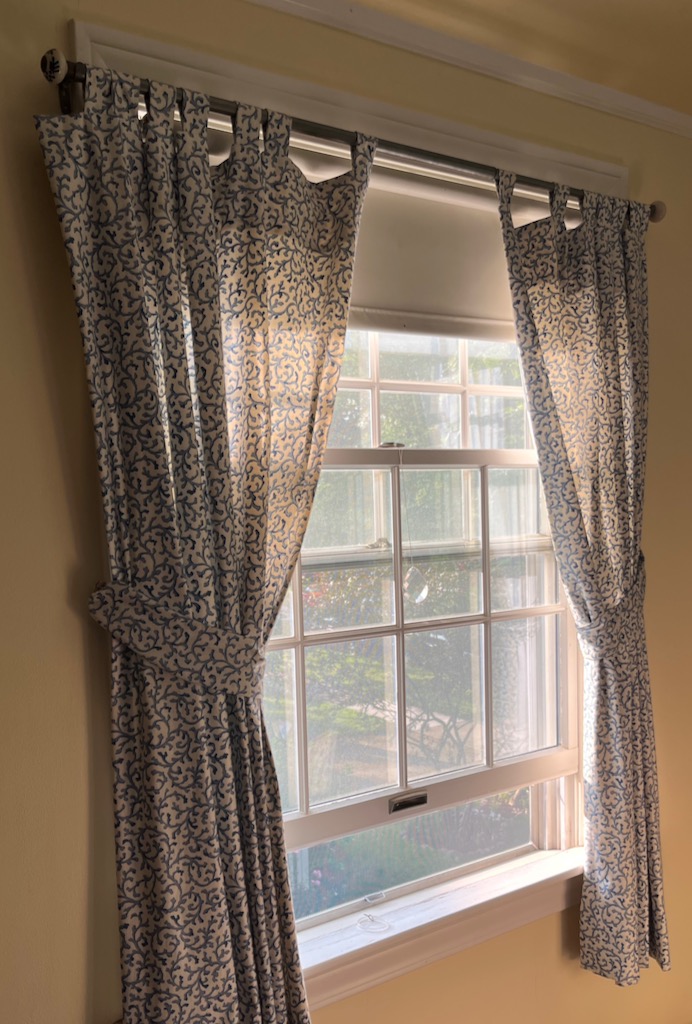
it’s a blessing to watch the curtains stir. to fall asleep to the hummings of nightfall’s lullaby. to hear the distant siren, the train in the offing, the raccoons holding their hootenanny.

when the windows are sealed, and the summer hermetically wrapped at safe distance, there’s little to do but long for the way summer once was. when sunlight glistened. and the creek tickled your toes. and long days in the woods were the very best thing you could do for your soul.

summer is back now. we can breathe again. and we can open our doors and our windows.

and i, for one, intend to breathe deeply.

teddy’s raspberries–three years in the making–finally ripe for the plucking.

summer reading from the e.b. white and kate di camillo files, a celestial pairing if ever there was…

this comes from a glorious letter di camillo, author of because of winn dixie and the tale of despereaux, once wrote to a fellow author who’d written her asking how honest a writer should be with the young children to whom they both wrote (a question that pertains just as vividly to any writing, i’d argue, and a question that has especially animated my writing in recent weeks).

“E. B. White loved the world. And in loving the world, he told the truth about it — its sorrow, its heartbreak, its devastating beauty. He trusted his readers enough to tell them the truth, and with that truth came comfort and a feeling that we were not alone.

“I think our job is to trust our readers.

“I think our job is to see and to let ourselves be seen.

“I think our job is to love the world.”

in yet another conversation di camillo refers to the writing she does as a “shortcut to the heart.”

and when she was awarded her second newbery medal (in 2004 for tale of despereaux and 2014 for flora & ulysses: the illuminated adventures), di camillo brilliantly captured her life’s work as this: “We have been given the sacred task of making hearts large through story. We are working to make hearts that are capable of containing much joy and much sorrow, hearts capacious enough to contain the complexities and mysteries … of ourselves and of each other.”


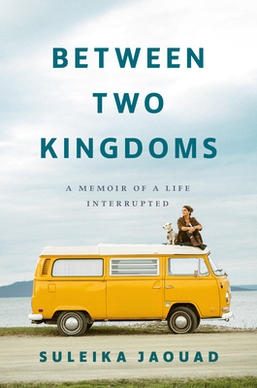
and finally, this capturing of grief by the tender and brilliant and fierce suleika jaouad, the author of the best-selling between two kingdoms: a memoir of a life interrupted, who was diagnosed with a rare form of acute myeloid lymphoma in 2011, a disease which recurred in late 2021, and for which she has had a second bone marrow transplant. she is married to the brilliant musician and magnificent soul jon batiste. and here’s what she wrote of grief:

“Grief is a ghost that visits without warning. It comes in the night and rips you from your sleep. It fills your chest with shards of glass. It interrupts you mid-laugh when you’re at a party, chastising you that, just for a moment, you’ve forgotten.” 

a more finely-grained exposition of grief i’ve not seen captured. and, by the way, suleika is exceedingly, exceedingly kind i’ve found out.


what stirred you most this week? or stifled you? and what’s topping your summer reading stack? i’ve been imagining a kate di camillo summer’s binge. and suleika’s is already on hold at my friendly local library…

our job is to savor. . .

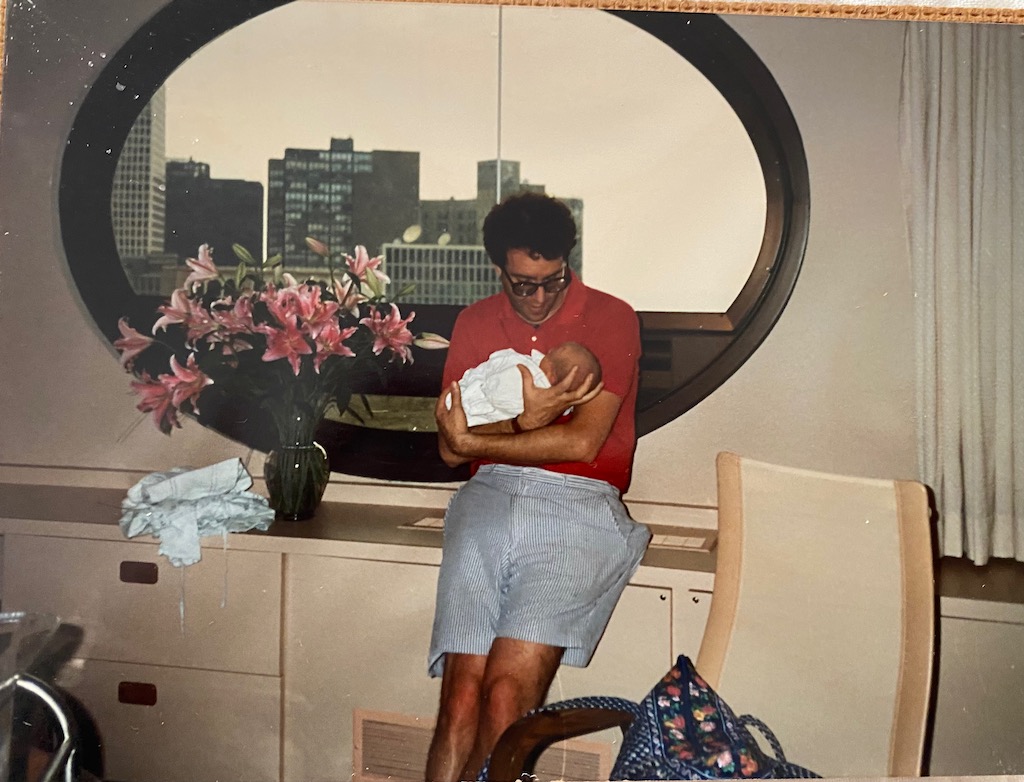
i’ve been especially partial to summer for precisely three decades — or 10,958 days — now, for my firstborn was born on the very first full day of the season precisely 30 years ago yesterday. i fell instantly in love. deliriously so. with my firstborn, yes, but also with the way the summery light slanted in on the long june morning i waited for him, and the new days thereafter, and every start of summer since, as it always brings me back to the solstice when the dial on my summer-savoring machine was cranked up infinite notches. 

truth is, i’ve savored summer’s start for as long as i can remember: it was the day my mama picked us up at the schoolhouse gate, end-of-year report cards in hand, and took us out for grilled cheese and fries. it was the day we trotted into the library and signed ourselves up for the summer reading brigade, an adventure i thought of as something of a secret society that promised me long afternoons with nose curled in a book, and the sheer delight of marching up to the children’s librarian with my summer-reading-club card, and my latest finished book, awaiting the inky stamp she’d press onto my card that felt like a passport, proof to me and the world that i was a serious reader. (or so i imagined.)

i was told just the other day that more than ever my job is to savor, that i’d make more room in my life, proportionally diminish the grief (that a diagnosis of cancer inevitably brings) if i made a point of savoring those joys that i love, each and every day. 

grief, this wise person explained, doesn’t ever go fully away. the things that bring it on, the things that break our hearts into pieces, can’t be erased. but they can settle into nooks and crannies of our souls where they might go quiet, or lose some of their sting. and, yes, it’s true too that those slumbering griefs will still make unannounced appearances all on their own schedule and of their own accord. grief, i’ve found over the many, many years, likes to catch you in the throat when you are, say, stumbling down a grocery store aisle, and suddenly you see the thing that makes you think of your long-gone papa, or the baby you lost, or your life before you worried about cancer cells running amok. 

but, the wise person explained, the more room we make in our life for those things that aren’t grief, the more alive and less strangled we might feel. 

so, savor it is. specifically, savor this summer, the unspooling of week upon week with barely an inkblot on the docket. no deadline, no due date. just one simple job: to savor.

it’s not such a tough assignment: conjure the things you love, the things that bring in the joy — or the peace or the grace or the wonder — as the tide to the shore, as the river that flows only forward and over the rocks and onto the sea. 

it’s a job, in fact, that belongs to all of us always. it’s just that cancer — or any one of those indelibly stamped diagnoses, or the sudden loss of someone or something you love — sharpens the urgency and the focus. if you don’t want to be strangled, if you’re searching for a light to come in through the cracks, a place to begin is racking up joys. an abacus of joy, one bead at a time. joy counting in plainest arithmetic. intricate, intricate calculus of the heart and the soul.

my joys are so, so simple. they rise from the garden, from the mud stained on my knees and under my fingernails. they are stirred at the cookstove. they flutter my heart when i curl into my old wicker chair and listen to mama wren warbling to her babies. 

when i lean my head against the chest of the boy i once birthed, when i drink in the tick and the tock of his heart, the surest steadiest lullaby i’ve ever known. when someone i love calls on the phone. or leaves a note tucked in the box by the door. when the sunset dizzies me.

the point, i’m told, is to root myself in all the things that make me feel most alive. the ones that slow the pounding in my heart. the ones that might make me giggle. the ones that make me know someone out there is listening. 

here’s to summer, the season when savoring is fresh in the air.


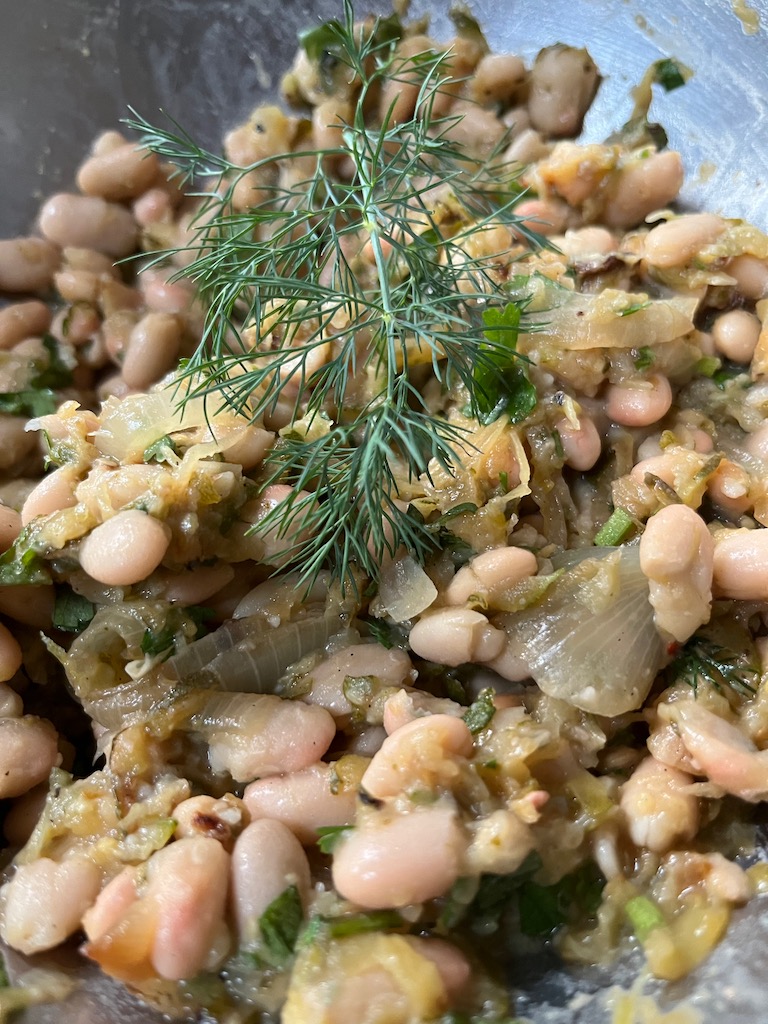
and here’s a roadmap to joy that converges multiple routes: herbs from the garden, simmering caramelized onions, squeezing a lemon, and summery salad. it’s nutritious and delicious and it comes from my friends at NYT Cooking, where they never ever lead me astray, nor off the path of the straight road to Joy. 

it’s not a pretty salad in a rainbow-y sense, but oh my it’s delicious. i promise. sometimes joy comes in plain clothes and drab colors (it can be sneaky like that….) here’s to joy, however it comes…`

Caramelized Zucchini and White Bean Salad
By Yossy Arefi for The New York Times
Time: 45 minutes, plus cooling and chilling
Yield: 6 servings

Start with a big pile of shredded zucchini and onions, and marvel at how much it cooks down as it browns and caramelizes. Toss that potent blend with creamy white beans and herbs –– it’s easy as that! The mint adds brightness, and pairs well with other soft herbs, like parsley, dill and basil. The caramelized zucchini mixture makes a great base for bean salad, but it can be used in many other ways: Make a big batch and toss it with pasta, serve it on top of ricotta-slathered toast, or top a flatbread with it; you really can’t go wrong, says the Times.

INGREDIENTS

2 large zucchini, shredded on the large holes of a box grater
1 large yellow onion, thinly sliced
4 tablespoons olive oil
1⁄2 teaspoon red-pepper flakes
Kosher salt and freshly ground pepper
2 (15-ounce) cans white beans, like cannellini, rinsed
1 lemon, plus more if needed
1⁄2 cup roughly chopped mint
1⁄2 cup roughly chopped parsley, dill or basil

PREPARATION 

Step 1
Wrap the shredded zucchini in a clean kitchen towel and gently squeeze it to remove excess moisture. 

Step 2
In a large nonstick skillet over medium-high heat, combine the zucchini and onion with 3 tablespoons olive oil, the red-pepper flakes, 1 teaspoon salt and a few grinds of pepper. Cook the mixture, stirring occasionally, until the water has evaporated and the zucchini and onion turn golden brown, 25 to 30 minutes. You will have to stir more often toward the end of cooking to prevent burning. 

Step 3
Add the cooked zucchini mixture to a large bowl along with the beans. Zest and juice the lemon over the top and add the remaining 1 tablespoon of olive oil; stir gently to combine. Let the mixture cool to room temperature, then add the herbs and stir gently. Season to taste with salt, pepper and additional lemon juice, if desired. Serve at room temperature or cold. 


someone wise sent this beauty…

A Prayer

Refuse to fall down
If you cannot refuse to fall down,
refuse to stay down.
If you cannot refuse to stay down,
lift your heart toward heaven,
and like a hungry beggar,
ask that it be filled.
You may be pushed down.
You may be kept from rising.
But no one can keep you from lifting your heart
toward heaven
only you.
It is in the middle of misery
that so much becomes clear.
The one who says nothing good
came of this,
is not yet listening.


and, as she so often does, mary oliver preaches:

The Summer Day

Who made the world?
Who made the swan, and the black bear?
Who made the grasshopper?
This grasshopper, I mean —
the one who has flung herself out of the grass,
the one who is eating sugar out of my hand,
who is moving her jaws back and forth instead of up and down —
who is gazing around with her enormous and complicated eyes.
Now she lifts her pale forearms and thoroughly washes her face.
Now she snaps her wings open, and floats away.
I don’t know exactly what a prayer is.
I do know how to pay attention, how to fall down
into the grass, how to kneel down in the grass,
how to be idle and blessed, how to stroll through the fields,
which is what I have been doing all day.
Tell me, what else should I have done?
Doesn’t everything die at last, and too soon?
Tell me, what is it you plan to do
with your one wild and precious life?

+ Mary Oliver


what will you savor as summer begins its unspooling?

jubilance and the boy who made impossible possible

My baby boy, the one they told me I’d never ever have, is graduating from a college he never thought he’d know as his own. And we are celebrating. We are jubilant. We are celebrating deep down inside both of us all those things that people say you will never ever do; but you forge right ahead and you do them anyway. 

We have long thought of the kid as “the egg that wouldn’t take no for an answer.” That little egg did not care that I was 43, halfway to 45 by the time he was born. Did not care that so many other eggs had not followed instructions. That egg — his egg — refused to take no for an answer. And that egg grew and grew into the magnificent human with the very very big heart. The tenderest heart I’ve ever known. A heart that says best what it says in unpunctuated text messages, in hilarious pictures he sends of himself dressed in alligator suit, complete with spiky tail he swishes hither and yon as he stalks his native habitat.

That kid is my champion. That kid makes me believe in the impossible. That kid is living, breathing, impossible made possible. 

That kid told me a few weeks ago that when he was trying to do the impossible — to reach for something well out of reach — he tapped his shoulder as if to beckon me, to give him the strength and the will and the courage he needed. Turns out, he reached what he was reaching for. And he let me in on his secret the morning after it happened. Ever since, I’ve follow his lead: when I need to reach for something beyond my reach — be it courage, or breath, or not flinching a muscle when the doctor comes at me with needles the size of a drain pipe — I now tap my shoulder too. 

That kid and I might spend the rest of our lives tapping our shoulders, beckoning courage, beckoning the possible, beckoning reaching far, far beyond what we think we can do. 

So I am madly wildly celebrating that kid, and the chance to be by his side when he doesn’t exactly walk across the graduation stage this weekend. Because his most recent impossible something was winning a championship along with his mates, the ones who fling frisbees into the air, and shout out in joy as they run for the discs that spin through the air, impossibly. He’s taking to frisbee fields, in the national championship, instead of seizing diploma, and I will be right there on the sideline. Jubilant. Celebrant. Waiting to see if he taps at his shoulder. 

My once-impossible impossibly soaring and diving, seizing the impossible. My blue-ribbon boy. My joy and jubilance ever after…


i could sit and read jane kenyon all day any day. and this one is new to me, so i’m sharing it…

jane kenyon, a poet of the quotidian, was long and adoringly married to donald hall, the late great poet and essayist. both now gone; forever heroes to me, their poetries worthy of a lifetime’s attention. some years ago, in the blessing of one such lifetime, i sat beside hall –– on the floor tucked against his armchair –– in the living room of their white frame farmhouse on eagle pond, in new hampshire. it was during our “year of thinking sumptuously,” when we up and moved to cambridge, mass., and drank from the firehose that is the nieman fellowship for journalists. poetry was where i took my deepest dive that year. and, after that field trip to new hampshire, hall and i became something of pen pals, posting letters back and forth, letters i now save tucked between the pages of his poems. on the day we had spent at eagle pond farm, kenyon, who had been the poet laureate of new hampshire, had already died (she died at 47 in 1995), but her poetries for me are now animated by knowing the kitchen where she cooked, the desk where she wrote, and the barn where she sometimes went to weep.

here is kenyon’s “happiness”…

There’s just no accounting for happiness,
or the way it turns up like a prodigal
who comes back to the dust at your feet
having squandered a fortune far away.

And how can you not forgive?
You make a feast in honor of what
was lost, and take from its place the finest
garment, which you saved for an occasion
you could not imagine, and you weep night and day
to know that you were not abandoned,
that happiness saved its most extreme form
for you alone.

No, happiness is the uncle you never
knew about, who flies a single-engine plane
onto the grassy landing strip, hitchhikes
into town, and inquires at every door
until he finds you asleep midafternoon,
as you so often are during the unmerciful
hours of your despair.

It comes to the monk in his cell.
It comes to the woman sweeping the street
with a birch broom, to the child
whose mother has passed out from drink.
It comes to the lover, to the dog chewing
a sock, to the pusher, to the basket maker,
and to the clerk stacking cans of carrots
in the night.

It even comes to the boulder
in the perpetual shade of pine barrens,
to rain falling on the open sea,
to the wineglass, weary of holding wine.

+ Jane Kenyon

my jubilance: apparently, he’s been dressing up as zoo animals his whole life long. here he is, my tiger.

waiting. . .

i decided to give you a pretty picture of this season erupting, but doing it in slo-mo. this is korean spice viburnum waiting to open wide its little throats and let out its intoxicating perfumes. this is waiting, the spring edition.

waiting is the word of the week. word of the year, in fact––so far, anyway. i’m on the other side of surgery––and have the tic-tac-toe board crisscrossing my side to prove it. they got out what they needed to get out (i hope), though it was more than we’d been betting on. so now i’m waiting.

waiting is a quilt of many textures. sometimes it washes over me, with a calm that takes the sting away. sometimes i feel my heart kick into higher, faster gear. i try hard to turn off the nozzle that lets the worries out. but even my secondborn tells me i do too much of that. and he’s only been keeping watch for twenty-one of my years (and he is 300 miles away right now, so he’s out of range for any current worries; job one for me is to project calm to the one with the very, very giant heart). it’ll take two weeks for the blessed souls in the pathology lab to do what all they do to lay out the specifics of this little dervish that somehow found its way to the bottom of my lung. and that gives me time to sink slowly into the bath of this new reality.

waiting gives the human species time to settle in, to realize you’ve taken more steps into the unknown than you’d ever imagined you would. and you’re calmer––and maybe braver––than you’d ever ever imagined you could be (most of the time anyway). of all the worries i’ve worried over the years, i never added lungs to the list.

just the other week, i read a lovely line from a 96-year-old, a woman who knew she was on the last pages of her life, and so she scribbled out her truths for her children, her grandchildren, and her many greats. when asked what might be the most important thing she’d realized as she rounded the final bend, she simply said: “i wish i hadn’t spent so many hours worrying, cuz most of those worries never came to be.”

mostly, what waiting does is make me savor every minute. stepping out into the balmy springtime air. tucking my nose into the soon-to-be blossoms. listening to the owls hoot at 5:15 a.m. marveling at the miracles of modern medicine that can do so very very much, and for the most part do it so very lovingly. (i fell in love with my nurses, emily who stayed all night with me, and clare who worked by day. the care with which they changed dressings, filled syringes, listened to my questions, they made me so so proud that i was once one of them. and they made me realize how very much even their most basic medical tasks translate into a language that feels like love. i was a stranger to them when i was rolled into my cubicle of a room, but by shift’s end i was sad to see them leave. if you’re a nurse, believe me when i tell you you’re a living saint. to make the scared and fragile and confused feel safe and tended to is a sacred act, is sacramental, in that it lifts even the most perfunctory of duties into the closest thing i know to benediction.)

a few of things i marveled at this week, while idling in my wait station: my friend the nurse practitioner who, when she found out how much it hurt to try to lie down in bed, ordered up a giant wedge pillow that made last night a whole lot less bumpy. having two of my three boys right by my bedside all week long. one of ’em had me laughing (sidesplittingly is not such an apt description here, though it might have stretched some stitches) within hours of getting to my little room. (i was on the heart transplant floor, and, believe you me, i did not miss for a minute how blessed i was to be there only for a chunk taken out of my little lung.)

yet another surround-sound marvel in this week one of the two-week wait: the promise of springtime, that life bursts forth year after year after year. we live in an eternal spiral, and i am on for the holy blessed sumptuous ride. stepping into the still soft air, watching the goldfinch nibble at the thistle seed, rejoicing as the daffodils tossed off their snowy caps to rise and shine again, golden periscopes of spring. it felt to me like the arms of God were wrapping round me in the form of this gentle greening world.

in book world, one fine thing happened: there is a lovely lovely journal, the EcoTheo Review––a quarterly put out by a collective of poets (mostly), writers, and artists who plumb the depths of wonder and beauty in this world, and who claim as their mission, to “celebrate wonder, enliven conversations, and inspire commitments to ecology, spirituality, and art.” and they published a conversation we’d had a few weeks back about The Book of Nature, which you can read here. the editor who spent hours in our exchange of thoughts, Esteban Rodriguez is his name, is himself a poet, and one of the kindest, gentlest souls i’ve been blessed to come to know. it more than more than made up for the half dozen book events that got wiped off the calendar.

while i wait in these days ahead (and try so hard not to worry!), i’m going to be on watch, to soak up and see every blessed wonder and beauty in this holy world. i don’t want to miss a drop. i am following the instruction of richard rohr, the modern-day mystic, who asked:

Where is this God being revealed? Not in the safe world, but at the edge, at the bottom, among those where we don’t want to find God, where we don’t look for God, where we don’t expect God.

i’m going to look for God in every nook and cranny along this waiting way. because i’m fairly certain God comes in a thousand thousand forms: in the gentle touch of the nurse who poked my arm, in the bouquet dropped on my front stoop, in the tub of soup that now takes up a shelf in the fridge, in the box that’s on its way from zingerman’s deli in ann arbor, and in every last note and gentle text that simply says, “you got this, and i am here beside you.”

God comes most certainly in the hours when our waiting gives God more than plenty time to tap us on the heart, the soul, the noggin. i’m on watch while i wait…

where did you find God this week, or whatever is the name you give to the all-embracing goodness that i call the holy Author of it all?

she blossomed, my olfactory factory….

of thin places and the deep soul of my ancient peoples

i remember perfectly the first time i heard mention of a “thin place.” i was on holy ground, a farm smack dab in the middle of abe lincoln’s homeland. beau’s farm was the name of the farm, an organic farm, an organic farm that rose from an almost impenetrable shadow of grief. deep grief. beau was a marine, a strapping handsome fellow, who died down the road from the farm, home on leave from iraq, when he drowned. his mother, a woman i’ve come to love dearly, once told me that losing beau was “just like being hung, that moment when they pull that thing out from under you,” when the sheriff comes to the door, rings the bell at just past dawn to break the news.

beau’s mama was lost to grief for two long years. but then, she told me, she started to notice little beauties. she’d toss an old dried plant to the ground; and it’d grow.

“it dawned on me, after all those months, i was noticing beauty,” she once told me as we walked the gravel drive to where the peacocks pecked and strutted in their pen. and as i once wrote in the pages of the chicago tribune, “that’s when she realized. realized maybe the one place where she could plant her sorrow, turn it into something beautiful, something lasting, was the almost seven acres that surrounded her old white resurrected farmhouse. . .”

terry starks is beau’s mama’s name; she lives up in maine now, where she still turns earth and life into something beautiful, something lasting.

terry starks was the first to tell me of thin places. she told me the hay loft in her barn was where she went to cry when the tears seemed to have no end. she told me she was drawn there because the loft was surely a thin place, a place where the veil between heaven and earth is lifted. where you can all but feel the arms of God reaching out toward you.

it’s the celts who see the world that way, who know that ours is a topography of the sacred. who live attuned to soulful rhythms most others miss.

i remember sitting on the porch swing at beau’s farm, as beau’s mama poured her hard-won wisdoms as if a pitcher without bottom. i absorbed more gospel that day on beau’s and beau’s mama’s farm than i’ve absorbed most days of my holy blessed life.

ever since, i’ve been drawn deeper and deeper into the wisdoms of the celts, a holy people who traipse the hills and vales and rocky shorelines of my ancient roots.

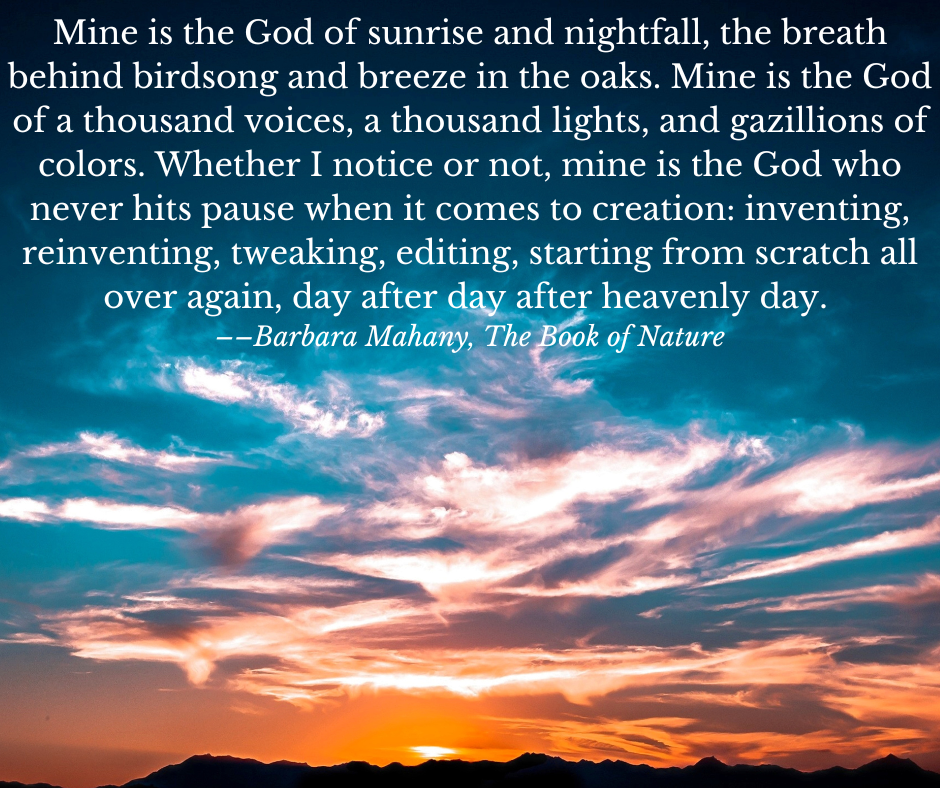
because today happens to be a day when plenty of folk haul out green beer and soda bread, i decided to haul out just one of many passages from The Book of Nature, my little book due to be birthed just the other side of the weekend, on the vernal equinox, day of equal light and shadow, when all of us might look upon each other’s faces for the very first time, reason to rejoice if you ask me. it’s a passage from a chapter on the dawn. and i picked the photo way up above because i took it on the day i drove to beau’s farm, and it fits blessedly with how the celts see the sun. and because i was thinking of thin places, i decided to tell terry’s tale as the long way in to how the celts have taught me so very many things. thin places, among the litany.

here tis. . . a passage from The Book of Nature…

God was considered “the Sun behind all suns,” as the author George MacLeod once wrote. The whole of creation was dappled with the light of the sun as it journeyed across the sky. Wherever its light fell, there was God filtering through, an earthly translation of the divine infusion. And the perpetual Celtic praise song rose up with the dawn. Celtic gentlemen—farmers and herders and fishermen, set off to work in the predawn darkness—doffed their hat at the first light of the sun, and bowed in blessing. The Carmina Gadelica, a collection of Gaelic prayers and chants, is filled with start-of-day blessings, as the Celts were wont to offer up benediction for every chore and implement and God-given element of every day, from milking to weaving to shearing the sheep, from fire to wind to sprinkling of water. And certainly for the miraculous return of the morning’s first light. Mystic and teacher Alexander Scott, who grew up in the west of Scotland and kept Celtic ways alive in his nineteenth-century books, wrote that his were a people “listening for God in all things, ‘in the growth of the tree, in the rising of the morning sun, in the stars at night, and in the moon.’” 

–Barbara Mahany, The Book of Nature


of the many, many stories i wrote over the almost 30 years, the story of beau’s farm was one of the ones i hold closest to my heart. here’s a link, should you care to read it. with love, from terry’s scribe. (apologies if you need a subscription to open the link.)


thanks to a friend i love with my whole heart, i stumbled on another wise soul with buckets of beauty to grace the world. a poet-activist-performer named andrea gibson, now a cancer survivor whose words might take your breath away. andrea identifies as queer, and uses the pronoun “they;” and they are known for their trademark honesty and bare-naked vulnerability, traits i find irresistible and blessed beyond words. here are just a few lines i couldn’t keep from scribbling down:

when it comes to hearts i want always to be size queen…

i love you because we both showed up to kindness tryouts with notes from the school nurse that said we were too hurt to participate….

when your heart is broken, you plant seeds in the cracks and pray for rain.

before i die, i want to be somebody’s favorite hiding place, the place they can put everything they know they need to survive, every secret, every solitude, every nervous prayer, and be absolutely certain i will keep it safe. i will keep it safe.

andrea gibson

one more morsel for this blessed day, a poem from billy collins, once poet laureate of the united states, and a poet with plenty o’ irish roots . . .

Questions About Angels
by Billy Collins

Of all the questions you might want to ask
about angels, the only one you ever hear
is how many can dance on the head of a pin.

No curiosity about how they pass the eternal time
besides circling the Throne chanting in Latin
or delivering a crust of bread to a hermit on earth
or guiding a boy and girl across a rickety wooden bridge.

Do they fly through God’s body and come out singing?
Do they swing like children from the hinges
of the spirit world saying their names backwards and forwards?
Do they sit alone in little gardens changing colors?

What about their sleeping habits, the fabric of their robes,
their diet of unfiltered divine light?
What goes on inside their luminous heads? Is there a wall
these tall presences can look over and see hell?

If an angel fell off a cloud, would he leave a hole
in a river and would the hole float along endlessly
filled with the silent letters of every angelic word?

If an angel delivered the mail, would he arrive
in a blinding rush of wings or would he just assume
the appearance of the regular mailman and
whistle up the driveway reading the postcards?

No, the medieval theologians control the court.
The only question you ever hear is about
the little dance floor on the head of a pin
where halos are meant to converge and drift invisibly.

It is designed to make us think in millions,
billions, to make us run out of numbers and collapse
into infinity, but perhaps the answer is simply one:
one female angel dancing alone in her stocking feet,
a small jazz combo working in the background.

She sways like a branch in the wind, her beautiful
eyes closed, and the tall thin bassist leans over
to glance at his watch because she has been dancing
forever, and now it is very late, even for musicians.


nothing would delight me more than to see some of you, or all of you, come tuesday night, when i am shoving aside my worries about stepping up to speak in front of a crowd any bigger than the one or two who might share this old maple table on any given morning. we’ll gather to mostly rejoice in what’s become a holy sacred bond, one woven over time, through shared wisdoms, devoted kindness, good grace and humor. and i promise to read one or two passages from The Book of Nature, and even talk a little bit about how it came to be. it’s the first of my five books that wasn’t first birthed here, but its pages are filled with wisdoms learned here, steeped here, refined here. so you all have a thread in the whole cloth it became. and i can imagine no finer benediction than to begin the book with you. so see you tuesday, march 21, the vernal equinox at 7 p.m. chicago time.

now, what celtic wisdoms fuel your every day? and where are the thin places in your life where the veil between heaven and earth is at its thinnest, and you too feel it lifted for a blessed glance of the sacred beyond?

when it comes to hearts, i always want to be known as size queen…

a mother’s heart finds its place in a canyon of moving boxes

dispatch from 20009: in which canyons of boxes in every room are ours to conquer, moi and the one i birthed first. . .

i write to you this dawn from the singular place on the planet i wanted to be this week, a point on the map now highlighted in illuminating shades of radiant. a kid i love is a professor now, and i am here where, in my book, a mother belongs: by his side, tearing open his boxes, tallying the lost and found, turning a blueprint of rooms into a place called home. 

i’ve planted the kid in five points on the map since the day he left home for college, and each one for its season became a place i peered in on, checking the weather, counting the miles, watching police reports. his dot became mine by extension. 

i’ve spent years now considering places called amherst and new haven, portland, manhattan, and now the nation’s capital, specifically adams morgan, a neighborhood where RBG graces the banners that waft from the light poles, with the words “live your truth.”

the kid has decidedly hopscotched across the country over the course of the last decade. but his itinerant days might be over, as a tenure-track post prompts me to think i’d better get used to the latest in zip codes. and, anyway, unpacking boxes, finding places on shelves, has become my sub-specialty. it’s a task i take on with all the love in the world. i don’t think i’ll ever extinguish the place in my heart that tells me my number one job on the planet is to soften the blows, trod the circuitous path, keep stretching my arms clear across the landscape, and always, always find space and time for side-splitting giggles and tears when they spill from both of our eyes. 

the kid is 29 but nowhere in the manual i was handed in the delivery room can i find a line telling me there’s a time when the mothering stops. mothering over the decades is a three-dimensional wonder: it deepens and widens, is layered with strata of life’s most wrenching and glorious moments. just last night as we were giggling and whispering our way to sleep––me on un-sheeted bed (we’re working our way from kitchen to bedroom), him on inflatable mattress––i told him how even though i see the professorial glasses he wears these days and feel the heft of his six-foot-three pillar of flesh and bone when he wraps his arms around me, i also see plenty often a flashing picture show of his life at various points along his continuum: i see––clear as clear could be––the wet and squirmy little thing placed in my outstretched arms the very first time; i see the six-month-old who let out a belly laugh for the very first time; i see the toddler who looked up from the kitchen table one breakfast and asked, as if it was the most ordinary of questions for a three- or four-year-old, “mommy, what is facetious?” meaning what does it mean, this very long word not normally found in preschool vocabulary. and, yes, i see the kindergartener who set up a lecture hall in our living room, with a circle of stuffed-animal pupils, a chalkboard and easel, and 26 spongy alphabet letters. the professor wore suspenders and tie and bare feet, and instructed his class on the fine points of D, O, and Q.

it’s a curious thing, this mothering the grown human being. there are those, i’ve been told, who believe a mother’s role is to step into the distant background, loosen the grip on the ups and the downs of those you’ve loved every day of their lives. i’m not among them, though i can go––and i have––whole weeks without more than a short burst of texting. i find it only gets richer and richer, the closest i know to “love as you would be loved.” mothering to me is a spectacular testing ground: day after day, i re-define and refine the extraordinary intricacies of loving, of where to position myself in the tableau of his life, how much of the weight to bear, and when to stand silent and when to come running. 

what i know, after a lifetime of fumbles, of occasional hits and plenty of misses, is this: the width of my brain has only grown wider over the years, as each of my boys carry me into realms i’d otherwise never explore. and my heart and my soul, they’ve at once defied the laws of physics, both deepening and rising to depths and heights i’d never ever imagined. and so, as long as i’m needed and able, i shall tear away the endless strips of packing tape till my fingers are raw and my boy has a place to call home, his very own faraway home. six hundred miles from mine.


since i’ve been busy unpacking this week, i’ve not had much chance to gather up a commonplace-y bouquet. but i did find this, from the late great bard, leonard cohen, on sainthood:

“What is a saint? A saint is someone who has achieved a remote human possibility. It is impossible to say what that possibility is. I think it has something to do with the energy of love. Contact with this energy results in the exercise of a kind of balance in the chaos of existence. A saint does not dissolve the chaos; if he did the world would have changed long ago. I do not think that a saint dissolves the chaos even for himself, for there is something arrogant and warlike in the notion of a man setting the universe in order. It is a kind of balance that is his glory. He rides the drifts like an escaped ski. His course is the caress of the hill. His track is a drawing of the snow in a moment of its particular arrangement with wind and rock. Something in him so loves the world that he gives himself to the laws of gravity and chance. Far from flying with the angels, he traces with the fidelity of a seismograph needle the state of the solid bloody landscape. His house is dangerous and finite, but he is at home in the world. He can love the shape of human beings, the fine and twisted shapes of the heart. It is good to have among us such men*, such balancing monsters of love.”

Leonard Cohen

“achieved a remote human possibility. . . ” contemplate that for a while….


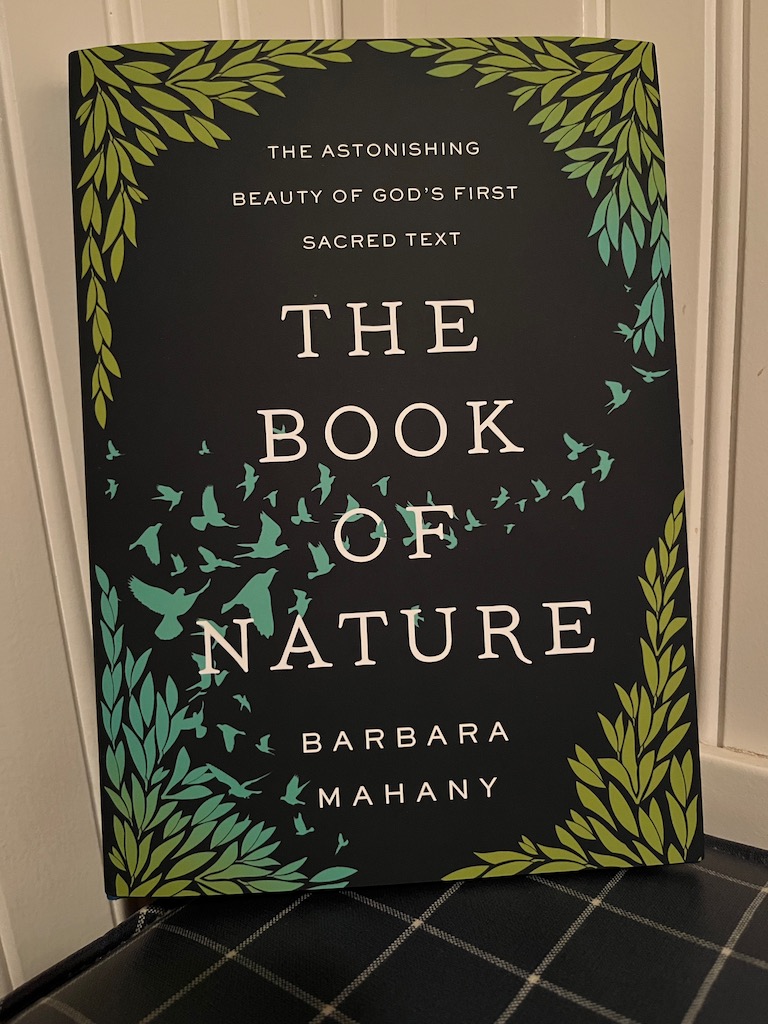
in book news: it seems hard copies of The Book of Nature have been plopping onto front stoops all over these united states, and heavenly folk, especially friends of the chair, have been sending along snaps, each of which makes my heart do a little bit of a gallop. it’s still a couple weeks till the official pub date––the vernal equinox, march 21; bring on the springtime, bring on the book!––so these early sneak-peek arrivals are both surprise and delight. and i am hoping to set that book soaring with a grand circle of chairs, as night falls on that first day of spring. see here for more details, should you be so inclined. (we’re gathering on march 21 at 7 p.m. central time, via zoom, one of the rare silver linings to emerge from our years in pandemic––or at least i count it as a silver lining, bringing me poets and thinkers from all across the globe.)

before i get back to uprooting books from their boxes, here’s the question (to ponder or drop us your thoughts): of all the mothers you’ve known or watched from some distance or close proximity, what are/were the defining qualities that allowed you to see and see clearly just what it means to love in the deepest mothering way? (and, remember, mothering for me is a verb not tied to any particular gender or state of procreativity, but rather to any and all who love with a tender loving attention and care, and the undying prayer that in some way they might both lighten another’s load and magnify the wonder of being alive…)

foreverest friends and the incomparable lessons of the heart

my grandma lucille, me, and the Divine Ms M, easter circa 1977, in the house where i grew up

because this week paused to celebrate the glories of the ever-pulsing heart, and because i happened to board a jet plane and criss-cross the country, to land in the state of movie stars and swaying palms, where i am romping with my foreverest friend, i decided a love letter was the order of the day. . . and, besides, who ever grows old of lettres d’amour?

this is going to be a love letter to my very, very best forever-and-ever friend, yet it’s also a love letter to friends of the deepest-down sort. i call my forever-and-ever friend the Divine Ms M. and sometimes i call her Auntie M, because she is auntie to my bookends of boys. she lives 2,041 miles away, in sunny LA, which is far too far for afternoon mugs of tea, or long mornings side-by-side on a park bench, or those other indulgences of forever friendships. i’ve said that she saved my life. but what she really did was teach me how it feels to be loved in the deepest nooks and crannies of the heart, and she taught it in a way that felt so very very heavenly, so otherworldly, i’ve spent the rest of my life trying to love like she loves. 

it was second semester of my sophomore year of college, and suddenly there was a willowy blond-haired beauty with big big eyes and an even bigger heart who had moved onto our wing of the second floor of a mostly-sophomore dorm, a dorm with clunky elevators and skanky carpet ribboned along long dark hallways, a dorm that looked out over nothing so scenic as endless parking lot. this new someone, a brand-new freshman among us second years, carried herself with an elegance i spied miles away. in the thick of downtown milwaukee, a california girl is a rarity. 

right away i noticed her tender heart. maybe she noticed mine. 

we’d both suffered a few tough knocks, knocks still raw for both of us. not the sorts of things you say much about till you’ve sniffed around, made sure the coast is clear and you’re in a safe heart zone.  

it wasn’t long till we must have realized there was a certain pull that held us; it had been a long long time since i had a friend to whom i could safely hand my whole heart. but i knew she was just that friend. what i remember most emphatically is that, for a reason that long ago escaped me, she one day knocked on my dorm room door, and sat down beside me with a basket. every delicately-selected something in that basket was speaking to a different turn of the prism’s light. i seem to remember an apple. and a tea bag. but i don’t remember a single other thing. i do remember that little squares of folded-up paper explained each and every something. and i remember my breath was sucked away, because each and every something burrowed deeper and deeper into the heart of me. she had covered the whole expanse of a many-chambered heart with a few fine things tucked in a handled, wicker basket. 

we’ve shared hard years, and a few sweet rejoicings, over all these years. the sorts of years lifelong friends inevitably share: deaths, disease, weddings, births, worries, worries, more worries. 

and after almost 15 years of only phone calls, and emails, and brown paper packages mailed back and forth, and more recently the miracle of texting in real time (whether it be from an emergency room, or a surgical waiting room, or the children’s library where she enchants the kindergarteners), we have tumbled into each other’s real life arms. i hopped a plane and tagged along my bespectacled mate as he motors off to the california desert, and the oasis that is palm springs, to give a sunday talk. we decided to make it a hop, skip, and a jump trip. one that plopped us first in sunny LA, and then will find us out palm springs way.

for a million and one reasons, this visit is just what the doctor ordered. and it will upholster me (another word for plump me up, or cushion me) for the weeks to come. 

i hope and pray we all have a Divine Ms M in our lives, that rare someone whose hearing is so high-grade she or he can hear the words we utter without sound. whose sight is keen to the faintest of subtle twitches, the ones we try to hide deep inside the smiles we sometimes wear. i am blessed with a glorious handful of such friends. some make me laugh so hard i nearly choke on whatever’s in my mug. some set me straight with unabashed, unfiltered truth talk. some hold my hand so tight it forgets to tremble.some bowl me over with a brilliance and a sheaf of wisdoms that leave me gobsmacked.but there’s no one who goes so far back to what might be my new beginning, not long out from a hellhole of a dark, dark chapter in my early days. my LA girl brought me sunshine, and all these 46 years later, she still holds the secret wand to chase away whatever big gray cloud dares to scuttle in. 


in honor of friendship, and its miraculous healing powers that make us strongest in our broken places, here’s a beauty of a poem from jane hirschfield, a wunder poet and ordained practitioner of soto zen buddhism. 

For What Binds Us

There are names for what binds us:
strong forces, weak forces.
Look around, you can see them:
the skin that forms in a half-empty cup,
nails rusting into the places they join,
joints dovetailed on their own weight.
The way things stay so solidly
wherever they’ve been set down —
and gravity, scientists say, is weak.

And see how the flesh grows back
across a wound, with a great vehemence,
more strong
than the simple, untested surface before.
There’s a name for it on horses,
 when it comes back darker and raised: proud flesh,

as all flesh
is proud of its wounds, wears them
as honors given out after battle,
small triumphs pinned to the chest —

And when two people have loved each other
 see how it is like a
scar between their bodies,
stronger, darker, and proud;
how the black cord makes of them a single fabric
that nothing can tear or mend.

~ Jane Hirschfield ~
 (Of Gravity & Angels)

what are some of the ways you learned to love from someone you happened to tumble into in the hollows of your holy blessed life?

auntie m + me + our babies, her sweet girl and my beloved firstborn in sunny LA a long time ago…i think 1999, cuz we went to the not-yet-opened Legoland and i just checked when it opened, and voila march ’99.

remembering and other acts of blessing

yahrzeit is a yiddish word translated as “time of year,” and for jews, a people who sanctify time in so many ways, yahrzeit is both solemn and a blessing. yahrzeit is when jews remember the dead, and, as in so many cultures, when we wrap ourselves in an almost-palpable sense of remembering. for jews, it dates back to the 16th century, when an otherwise obscure rabbi wrote of yahrzeit in his book of customs. every year on the anniversary, “the time of year,” of the death of someone beloved, jews are called to the synagogue, and rise for the reciting of the mourner’s kaddish, a praise prayer to God, spoken in the depths of mourning, of grieving, and of remembering. it is one of the beautiful mysteries of judaism that the kaddish does not mention death. it’s an ancient aramaic prose-poem, thought to be an echo of Job, “spoken from the sub-vaults of the soul,” that, as some have written (beautifully), is offered up as consolation to God, who suffers the loss of any one of us as piercingly as we do.

at home, the marking of “the time of year” is when a yahrzeit candle is lit, and burns for 24 hours. to glance at the dance of the flickering flame is to remember, to offer up a word, a prayer, from the heart.

my papa’s yahrzeit is today. 42 years ago, this became the darkest day, the snow-swept night the doctor walked into the cold, linoleum-tiled hospital corridor and simply said, “i’m sorry,” leaving us to fill in the unimaginable, unspeakable blank. my beloved papa had breathed his last. and it would be a long time till i could fill my own lungs again. and it is a miracle and testament to godly healing that all these years later i do know laughter again, and i have filled my life with treasures––my boys, first among them––my papa would have so reveled in. oh, he would have beamed. in my darkest and my brightest hours, he is with me still and always.

i am not alone in marking this day as a day of remembering. all our calendars are filled with dates all but written in invisible inks that we alone decode. the date i miscarried my baby girl. the date my firstborn broke his neck. the date you found out something terrible. the date you or someone you love got sober. the date you figured it out, whatever “it” might be.

it is in remembering, i think, that we sometimes grow our hearts. it is in holding close whatever was the whammy life dealt. those whammies come in a thousand thousand colors and flavors and sounds. and those moments, those chapters, are the ones that propel us into our truer and truer depths. it’s life in its complexities that draws out the marrow of who we are.

i am not one who usually turns to nietzche but i stumbled across this line this week, and suddenly it fits with thoughts of yahrzeit and remembering and loving:

“no one can build you the bridge on which you, and only you, must cross the river of life,” the young nietzsche wrote.

but we walk the bridge with those who’ve walked before us, with those we’ve loved and lost.

and in my darkest hours, and in my brightest ones, i somehow always find my papa shimmering there at the edge of the frame. in my deepest dark hours, i pray: “be with me papa.” and he is.


it’s the last line of this poem where i feel my soul swoop up and skyward…

Lines For Winter

Tell yourself
as it gets cold and gray falls from the air
that you will go on
walking, hearing
the same tune no matter where
you find yourself —
inside the dome of dark
or under the cracking white
of the moon’s gaze in a valley of snow.
Tonight as it gets cold
tell yourself
what you know which is nothing
but the tune your bones play
as you keep going. And you will be able
for once to lie down under the small fire
of winter stars.
And if it happens that you cannot
go on or turn back and you find yourself
where you will be at the end,
tell yourself
in that final flowing of cold through your limbs
that you love what you are.

~ Mark Strand  ~


the earthquake in turkey and syria: as we all watched helplessly the devastations in syria and turkey, it was hard to watch, and hard not to want to reach across the screen and clear away the rubble. i have been moved time and time again why the white helmets, an all-volunteer corps who leap into chaos and devastation with unbridled courage and determination to pull any breathing bodies from beneath the dusty hell on earth. should you be inclined to do what we can from over here, and want to be sure your money’s getting where it will make the most lasting impact, check out this navigator from NPR to find out just that. the baby girl to the right is the sole survivor of her family, pulled from the rubble with her umbilical cord still attached to her dead mother. the world is rooting wildly for her. and blanketing her in so, so much love. and remembering her mother. . .


and before i go, in case you didn’t happen to see my highly unusual monday morning posting here on the chair, i bring this invitation to the friday table! it’s a real-live virtual (such is the definition of real-live these days) chair gathering. we’re calling it a launch for my next little book, but really for me it’s the joy of finally finally gathering us all together. and finally putting faces to names like “jack,” and “hh,” and “nan”. . .

we’ll gather on the evening of Tuesday, March 21––the actual pub date of The Book of Nature: The Astonishing Beauty of God’s First Sacred Text––when we shall send it soaring into the everland. it’s free and it’s just for friends of the chair––wherever you are––and it’ll be at 7 p.m. chicago time, when we’ll gather by zoom. and all you need to do is click this link to register. the zoom link will be magically sent to you. and, since i’ve never ever done this before, beyond that we will all find out together what happens next.


that’s my papa above, feeding the kangaroo, when he was once down under, giving yet another one of his gloriously animated speeches to a crowd of grocery mavens. my papa was an ad man, an ad man who loved a microphone. i, as his deeply devoted daughter, decidedly did not get the microphone gene, though i can find myself animated once i get over the trembles.

how do you remember the ones you’ve loved and lost?

when wonder comes wrapped in exclamation!

nose pressed to the windowpane, watching the whirl blow in, i’m inclined to think i’m not alone in counting this mandatory pause among the gifts of the season. the world stilled amid the madness that preambles christmas. i proclaim it perfect

it ushers in a particular, succulent quiet. reminds us how little we are. how frail against the forces that blow, that stir, that upturn the outside, right down to the toppling pinecones.

oh, sure, it’s thrown a few maybes into the yuletide equation: maybe the flight will be canceled; maybe the package won’t plop; maybe the lights will go out (and so too the fridge, which would be a considerable bummer since a beast of considerable proportion is currently napping inside, and unlikely to wait out a warming).

but then again, it’s a grand excuse for extra-thick blankets and long afternoons turning page upon page. it stirs me to kindle candlewicks. simmer cinnamon sticks and starry anise, fistfuls of cranberry and wedges of orange.

and, oh, the sound of wind whistling…

in keeping with the quiet, i’m simply leaving here a few little trinkets in hopes that one, two, or all will add a bit of glimmer to your blizzardy almost-christmas day: my favorite christmas poem; a twelfth-century recipe from hildegrad of bingen; two passages from those who’ve considered the longest night, one from a children’s picture book and the other from the great naturalist henry beston, whose writings i cannot get enough of. and, never too late, a wonder of hand-painted blessing: an inspiration candle made by one of my favorite souls on the planet, the glorious elizabeth marie, who dreamed up these beacons of light with which to kindle your prayers, hopes, and wishes…

merry blessed christmas. merry quiet christmas. merry wonder out the window.


we begin with a poem i count among my very favorites….

The Work of Christmas
by Howard Thurman

When the song of the angels is stilled,
When the star in the sky is gone,
When the kings and princes are home,
When the shepherds are back with their flock,
The work of Christmas begins:
To find the lost,
To heal the broken,
To feed the hungry,
To release the prisoner,
To rebuild the nations,
To bring peace among others,
To make music in the heart.


and, should you be inclined to bake one last batch of deliciousness, here’s a recipe from the twelfth century’s hildegard of bingen, a recipe sent my way by a dear friend of the chair, a modern-day saint by the name of kerry.

HILDEGARD JOY COOKIES

For St. Hildegard – a beloved mystic, prolific writer, medicine woman, Benedictine nun, herbalist, musician and one of only four female Doctors of the Church – Joy cookies are to be eaten often! Literally, she said three or four a day! The recipe is found in her book “Subtleties of the Diverse Qualities of Created Things” and comes under the heading for nutmeg.

Nutmeg

Nutmeg (nux muscata) has great heat and good moderation in its powers. If a person eats nutmeg, it will open up his heart, make his judgement free from obstruction and give him a good disposition. Take some nutmeg and an equal weight of cinnamon and a bit of cloves and pulverize them. Then make small cakes with this and fine whole spelt flour and water.

In her own words she wrote, “nutmeg … will calm all bitterness of the heart and mind, open the heart and impaired senses, and make the mind cheerful. It purifies your senses and diminishes all harmful humors. It gives good liquid to your blood and makes you strong.”

Hildegard also loved spelt flour, which she believed soothed the mind, so together these two ingredients account for a large part of the positive effects of Hildegard cookies.

Joy Cookies Ingredients:

3⁄4 cup butter
1 cup brown sugar
1 egg
1 tsp baking powder
1⁄4 tsp salt
1 1⁄2 cup spelt flour
1 tsp ground cinnamon
1 tsp ground nutmeg
1 tsp ground cloves

Directions:
Let butter soften and then cream it with the brown sugar. Beat in the egg. Sift the dry ingredients. Add half the dry ingredients and mix. Add the other half and mix thoroughly. Dough may be chilled to make it workable. Heat oven to 400 degrees. Form walnut- sized balls of dough, place on greased and floured cookie sheet and press flat. Bake 10-12 minutes (till edges are golden brown) Cool for 5 minutes, remove from cookie sheet and finish cooling on racks.


and with a nod toward the longest night, the winter solstice, of this past week, i share two considerations. the first from a children’s book, and the second from one of the last century’s finest naturalists, the great henry beston.

an excerpt from susan cooper’s The Shortest Day, illustrations by carson ellis:

So the shortest day came, and the year died,
And everywhere down the centuries of the snow-white world
Came people singing, dancing,
To drive the dark away.

They lighted candles in the winter trees;
They hung their homes with evergreen;
They burned beseeching fires all night long
To keep the year alive.

and may your year, too, be kept very much alive….

***

and from henry beston:

In the old Europe which inherited from the Bronze Age, this great feast of the Solstice was celebrated with multitudinous small fires lit throughout the countryside. Fire and the great living sun — perhaps it would be well to honor again these two great aspects of the flame. It might help us to remember the meaning of fire before the hands and fire as a symbol. As never before, our world needs warmth in its cold, metallic heart, warmth to go on and face what has been made of human life, warmth to remain humane and kind.

Henry Beston, Northern Farm

and finally, and with regret for not having shared this sooner, my brilliant friend elizabeth marie (one of the most artful souls i know) was inspired one good friday to paint the blessed virgin mary on a tall votive flask, into which she tucked a pillar candle, and named it the intention candle, the idea being that we might kindle our prayer, and set forth our intentions, all while a flame flickers. each one of elizabeth marie & co.’s intention candles (there are now three designs: lily madonna, golden madonna, our lady of hope) is hand-crafted, and wrapped with equal attention to detail and beauty. i think they’re breathtakingly lovely, and imagine friends here at the virtual table might think so too. take a peek here. and maybe send to someone you love, including your very own self!

image atop this post is from tasha tudor’s heavenly Take Joy! a compendium of christmas-y merriments, published in 1966

and how do you take your wonder come the season of glistening light in the night…..

and may yours be the merriest of christmases, be it quiet or raucous, in whispers or shouts, and may you be surrounded by those you most dearly love, whether in flesh or by heart…bless you this christmas most deeply….

the littlest tree and the beating heart of Christmas . . .

shuffling in from the tree lot––the Christmas tree lot––with the littlest tree that nearly ever there grew, and once i’d kerplunked the pitiful seedling in its far-too-big tree stand (the yuletide equivalent of a saggy pair of dungarees slipping down to the knees of an undersized tot), i sat right down to pen my apologia to my faraway boys.

my mea culpa unfolded thusly: 

sweet boys, we have adopted this year, from the neediest Christmas tree farm, the wee littlest tree you ever did see. he very much wanted a home, and we shall be taking name nominations starting now. he’s an inflationary victim, the poor little sprout (there’s a name, Sprout!), as trees are in short short supply (and they’re short!). we’ve gussied him up with a santa cap, cranberry ropes (don’t tell him they’re wooden), and the lovely quilted skirt that will soon be an heirloom. a standard-sized tree topped 200 bucks this year, and for two weeks of Christmas that is not allowed. (just think, your tree funds will be shifted to the beef tenderloin fund, which is much more delicious anyway.) the little fellow smells just like the woods, and i am certain a bird might land in him soon. i beg your mercies in embracing this little guy. he tried with ALLLLL his might to grow like the big guys, but he just didn’t have it in him, and here in this house we love the ones on the margins, even the trees. xoxoxox deepest apologies if you are duly disappointed…

xox 

didn’t take but a minute for the one i might forever call our “little one” to ping right back: 

I like underdogs

and then:

This tree seems like a underdog

and so my upside-down day was snapped into crystal-clear focus: the message of Christmas delivered, and echoed. 

it’s all about heart, and dimensions don’t matter. nor superlatives. nor getting it right. nor any of the vexations that sometimes tangle me in my own unlit strands.

never mind the panting toward some imaginary finish line, as once again our festival of lights and our feast of nativity wedge their way into the same single overbooked week. never mind the slab of brisket i need to fetch from the butcher, or the welcome-home mac-n-cheese i need to slide in the oven, while dashing to an incoming plane at an airport many miles south (after picking up grammy plenty miles north, making for a 78-mile loop on a holiday weekend afternoon). and never mind the onerous chore that just yesterday had us signing last wills and testaments, which i can assure puts something of a damper on the jolly spirit of christmas. (one of those “responsible-grownup” tasks right up there with root canals!)

all of it vanished, the panting, the worries, the how-will-get-it-all-dones, in the flick of a text (the modernday spin on a wink of the eye, and a twist of the head, as clement c. moore immortally put it). 

the kid needed no convincing. no need to shovel lament. he was ready to love the littlest tree.

in years past i’d taken some ribbing––and serious protest––for my proclivities toward picking the spindliest trees. so i figured a misshapen midget of a fraser fir might have me taking my Christmas out in the doghouse (and since we’ve no dog, the fair equivalent might have been sheltering under the seed trough). 

thus, i’d decided to nip protests in the bud, devised my long-winded defense. 

and the lightning-quick reply––I like underdogs––made me see what should have been clear all along: the kid with the very big heart needs no convincing, no urging to consider the plight of the nearly forgotten. 

This tree seems like a underdog

he’s the kid who long, long ago taught me to watch out for worms, who led me on moon walks, and insisted he stand on the very same spot where abraham lincoln once stood so he could recite the line from the gettysburg address that made him break into tears every time: “we can not dedicate, we can not consecrate, we can not hallow this ground.” and, on that gray pennsylvania day in 2009, when we asked why the tears, he choked out what to him seemed blatantly obvious, “it’s the soldiers.” a sadness too big for his second-grade heart.

he’s 21 now. old enough to drink, drive, and drop a vote in the ballot box. and that heart, it only grows bigger. 

hearts have a way of finding each other, the truest hearts anyway.

so, once again, he’s pointed the way to the bright heart of the season. and the littlest tree, the tree with no name yet, will stand tall and stand proud on its upturned crate. because in this old house, underdogs are always, always the heroes. 

and ours is now dressed in mighty regalia: santa cap, blinking lights (they’ll be switched out, soon as i get to the Christmas light store), and string upon string of bright wooden berries. and up on the milk crate, he’s gotten some inches. our sorry old tree isn’t so sorry, hauled in from the cold, given due glory.


here’s a beauty of a poem, just because it stirred me. . . a poem about rising up, about beauty from ashes. . .

such beauty from ashes
by carolyn marie rodgers**

and we are singing our hearts out, and
our souls are in our eyes,
and they are beautiful souls.
they are souls of truth.
they are souls of love.
they are souls of faith.
they are souls of hope.
and we have conquered a little corner in the
world of fear.

and we have stepped up and forward,
    and we have torn down walls.
we have smashed sound barriers between us.
we have dared again and again and yet again to dream,
and our dreams have finally taken material form.
we have changed our hearts.
we have altered and changed our minds,
and because of this, we now have some
    valor and strength,
and we are threatening to change the world.
that it     might be a better place.
For us and for all god’s children.
for all that we are.
for all that we might be
we have done it.
And we rise now as one voice, with many harmonies,
Through the mystery and beauty of harmony.
One voice

    Though many, for one, for all.
For all the earth to grow and know,
From the mounds of ashes of our dead, our martyred,
Our lambs, our sacrificed, those who died and have been dead
So long, so long they are no more than, nor any less than,
Sacred memories. Mountains of ashes, of our sweet, beloved,
Beautiful dead.
Today, what beauty we now have, to gain strength from to continue on,
Beauty,
From ashes.

***

**Born in Chicago on December 14, 1940, Carolyn Marie Rodgers was born to Clarence Rodgers, a welder, and his wife, Bazella. The last born of four children, her family had moved from Little Rock, Arkansas to Chicago’s South Side, where Rodgers grew up. Early in her career, Rodgers was associated with the Black Arts Movement, attending writing workshops led by Gwendolyn Brooks and through the Organization of Black American Culture. Rodgers’s poetry collections include Paper Soul (1968); Songs of a Black Bird (1969), which won the Poet Laureate Award of the Society of Midland Authors; her best-known book, how i got ovah: New and Selected Poems (1975), a finalist for the National Book Award in 1976; The Heart as Ever Green: Poems (1978); and Morning Glory: Poems (1989).

Rodgers’s poetry addresses feminist issues, including the role of Black women in society, though her work evolved over time from a militant stance to one more focused on the individual and Christianity. Other themes she explored in her poetry include mother-daughter relationships, relationships between Black men and Black women, street life, and love. In addition to poetry, Rodgers wrote plays, short stories, and essays. She worked as a book critic for the Chicago Daily News and as a columnist for the Milwaukee Courier.

Rodgers founded Third World Press in 1967 with Haki Madhubuti, Johari Amini, and Roschell Rich and began Eden Press with a grant from the Illinois Arts Council. She was as a social worker through the YMCA and taught at various colleges. She was inducted into the International Literary Hall of Fame for Writers of African Descent in 2009 on the campus of Chicago State University. She died in 2010 in Chicago, at the age of 69.

—abridged bio taken from the Poetry Foundation


and here is the heavenly late cartoonist George Booth’s last New Yorker Christmas cover. . .  

i seem to be reverting to smorgasbord here at the chair, leaving more than one thing, as i meander through the week collecting my morsels. likely comes from thinking a little isn’t enough. making sure there’s at least enough. today, a tale, a poem, and a drawing. oh, and a question, always a question:

has a little bit of Christmas leapt out from the cracks or the corners of your life, surprised you, taken your breath away just a bit because suddenly, amid the blur, you saw crystal clear the beating heart of the season?

merry almost everything. . .