pull up a chair

where wisdom gathers, poetry unfolds and divine light is sparked…

Category: blessings

canticle of gratitudes in shadowed times

I’ve always noticed the light shines through more perceptibly, more piercingly, when the skies are grizzled gray, and there’s a fissure, a peep hole, in the clouds. 

And so, in this shadowed episode in which I find myself –– awaiting word on my first lung scan since before surgery, trying to navigate my mama through the roiling seas of rehab and the stark knowing she won’t go home –– I wend my way through the days on watch for grace notes which tumble onto me like snowy flakes before the melt: each one unlike any before or aft, each one magnificent in its own faceted incandescence. 

And, in the spirit of blessed Francis of Assisi, I am stringing them into a canticle, a praise song typically referencing Gospel text. I’m not so literate in those Scriptural ways, so I am stringing mine in the vernacular of the everyday: 

Praise be the blessed, blessed nurse named Vishruti whose charcoal eyes are ever sparkling, and whose attendance to my mama’s every woe is pure blessing before my most grateful eyes.

Praise be the harvest moon pinned high in the night sky one especially hollow night, and the acolyte Jupiter who clung to Moon’s southwestern rim, as if to catch any drippings once the melt began again.

Praise be my blessed “baby” brother who seems the answer to my every prayer before I’ve even prayed it: the one who keeps every necessary form on file (to ensure nary a hiccup in our mama’s journey), attends to every detail with fastidious care, and who is so blessedly tender with our mama’s every ache and pain and worry that in watching him tears spring to my eyes nearly every time. Praise be that brother who has always fit me like my other half. I’m 1/3/57 and he just happens to be 2/4/68. Mathematically sequenced, and aptly paired, we are.  

Um, addendum to brotherly praise (did Francis addend his canticles? hmmm): As I was typing that very verse above, said saintly brother was ambling through a lumber yard, intent on rebuilding our mama’s four-poster bed to make it six inches closer to the ground, thus subtracting risk by six not-insignificant inches. And he’s not even the carpenter brother! Be still my brothered heart….

Praise be the ones who fill my stoop with dahlias, and chicken ala yummy, and farmer’s market bounty. And whose prayers and hand squeezes hold me up, even when I wobble.

Praise be my sweet Fred who holds my hand in the dark of night, even when I don’t let on that I am thinking hard about the day ahead, or the one just left behind…

Praise be Pope Francis who, in his latest encyclical, Laudate Deum, squarely implored us to face these crucial questions:

“What is the meaning of my life? What is the meaning of my time on this earth? And what is the ultimate meaning of all my work and effort?”

Praise be Alice Walker who gave us these lines in The Color Purple:

Listen, God love everything you love — and a mess of stuff you don’t. But more than anything else, God love admiration.

You saying God vain? I ast.

Naw, she say. Not vain, just wanting to share a good thing. I think it pisses God off if you walk by the color purple in a field somewhere and don’t notice it.

What it do when it pissed off? I ast.

Oh, it make something else. People think pleasing God is all God care about. But any fool living in the world can see it always trying to please us back.

Yeah? I say.

Yeah, she say. It always making little surprises and springing them on us when us least expect.

You mean it want to be loved, just like the bible say.

Yes, Celie, she say. Everything want to be loved. Us sing and dance, make faces and give flower bouquets, trying to be loved. You ever notice that trees do everything to git attention we do, except walk?

Alice Walker, “The Color Purple”

Praise be that God who aims to please us, even with the color purple. Praise be the God who’s “always making little surprises.”

And praise be the simple, simple miracle of a smile spread across any human face. I don’t know why God thought to give us the capacity to upturn our lips in tenderness or joy, but oh, there is little so life-saving as that simple twitch of those few muscles. 

In gratitude, in joy, in infinite blessing, and with deepest smile, for all the little surprises that steady us through and through…

what blessings steadied you this week?

let us speak of the awesomeness

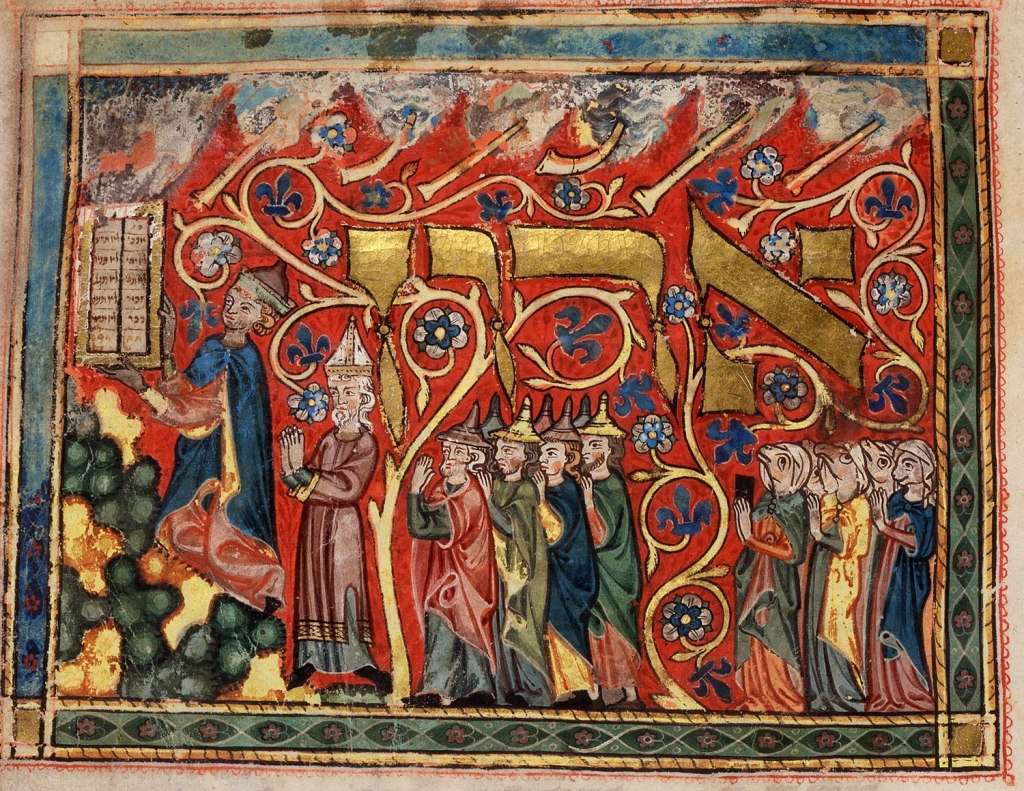
This image has an empty alt attribute; its file name is sinai.jpg

of all the majestic moments in the days to come, the days of awe to come, for this is the cusp of the jewish new year –– the hours when we drop to our knees (figuratively, for there’s not a lot of kneeling in the synagogue) in thanks for all creation, for the newbornness of the world, this world we are entrusted to keep, meaning not to possess but to preserve, to tend, to watch over as a shepherd over his lambs –– one of the moments that will stop time for me is when the chanting of the unetanneh tokef (“let us speak of the awesomeness”) begins. 

its words are as stirring as they come, deep down to the marrow. and they will stir me so deeply this year.

Unetanneh Tokef (ונתנה תקף) (“Let us speak of the awesomeness”) is a piyyut, or Jewish liturgical poem, woven into the hours of prayer of Rosh Hashanah, the new year, and Yom Kippur, the day of atonement to follow. it is chanted just before the Kedushah, the prayer in which the angels sing of the holiness of God, and when the ark that holds the Torah, or sacred scroll, is opened. 

leonard cohen sung from it. in his glorious, goosebumping “who by fire?”** 

it’s a prayer poem in which we stare into the face of our ending, our death, and examine closely the sharp edges of that terrain we so often run from. while it hurls us into attention, a mortal attention that is the base of plenty of theologies (those teachings believe we heighten our game when we’re aware it will end), it doesn’t look only at the last steps, but, too, at the ones we might take as we march there. it’s in the unflinchingness of judaism –– the bracing, no-beating-around-the-bush, straight-on-ness of it –– that so often grabs me by the scruff of the neck and keeps me transfixed. 

and certainly here, and in the hours and days ahead, when we will take public inventory of our sins, when we will stand before a body of water and along with those who stand beside us cast our sins (in the form of bread chunks) into the currents or tide. and when, in the silence of our own pews, we will once again ask these mortal questions. it is the second section of the four-part prayer-poem, the litany of not only death but life, that stirs me most profoundly. 

here are its words (with emphasis on the lines that emphasize living, not dying):

“On Rosh Hashanah will be inscribed and on Yom Kippur will be sealed – how many will pass from the earth and how many will be created; who will live and who will die; who will die after a long life and who before his time; who by water and who by fire, who by sword and who by beast, who by famine and who by thirst, who by upheaval and who by plague, who by strangling and who by stoning. Who will rest and who will wander, who will live in harmony and who will be harried, who will enjoy tranquility and who will suffer, who will be impoverished and who will be enriched, who will be degraded and who will be exalted. But Repentance, Prayer, and Charity mitigate the severity of the Decree.”

one of the prevailing pounding questions of this long hard summer has been my considerable wondering about what lies ahead for me, how many years to love on this world that i love so lavishly. it’s left me breathless, a true foggy night of the soul. and yet, as fall emerges, and the new year begins, so it’s time for me to turn (another command of the days of awe, teshuva, to turn in forgiveness, to repair what we’ve broken) to face the light of the days i won’t –– and can’t –– count. 

it’s a soul-scouring exercise, one that was flung upon me the moment i heard “it’s cancer,” and i’ve taken it to heart. spent more hours than anyone knows contemplating how i will live what remains of my portion. if i emerge living more alive than ever before, if i emerge wildly embracing each and every dawn and the day that follows, if i love as i would be loved, if i take to heart every last prompt to be gentle, to be kind, to forgive as i would be forgiven, then my prayers this year, my Unetennah Tokef, will be answered.

this is a question to be answered in your own silence: how will you live the next holy days of your one blessed life? 

the whole text, for anyone keen to read, broken into four thematic sections:

fear and trembling:

“Let us now relate the power of this day’s holiness, for it is mighty and frightening. On it Your Kingship will be exalted; Your throne will be firmed with kindness and You will sit upon it in truth. It is true that You alone are the One Who judges, proves, knows, and bears witness; Who writes and seals, Who counts and Who calculates. You will remember all that was forgotten. You will open the Book of Remembrances — it will read itself – and each person’s signature is there. And the great shofar will be sounded and a still, thin voice will be heard. Angels will be frenzied, a trembling and terror will seize them — and they will say, ‘Behold, it is the Day of Judgment, to muster the heavenly host for judgment!’ — for even they are not guiltless in Your eyes in judgment.”

God judges us:

“All mankind will pass before You like a flock of sheep. Like a shepherd pasturing his flock, making sheep pass under his staff, so shall You cause to pass, count, calculate, and consider the soul of all the living; and You shall apportion the destinies of all Your creatures and inscribe their verdict.

“On Rosh Hashanah will be inscribed and on Yom Kippur will be sealed – how many will pass from the earth and how many will be created; who will live and who will die; who will die after a long life and who before his time; who by water and who by fire, who by sword and who by beast, who by famine and who by thirst, who by upheaval and who by plague, who by strangling and who by stoning. Who will rest and who will wander, who will live in harmony and who will be harried, who will enjoy tranquility and who will suffer, who will be impoverished and who will be enriched, who will be degraded and who will be exalted. But Repentance, Prayer, and Charity mitigate the severity of the Decree.”

we are helpless:

“For Your Name signifies Your praise: hard to anger and easy to appease, for You do not wish the death of one deserving death, but that he repent from his way and live. Until the day of his death You await him; if he repents You will accept him immediately. It is true that You are their Creator and You know their inclination, for they are flesh and blood. A man’s origin is from dust and his destiny is back to dust, at risk of his life he earns his bread; he is likened to a broken shard, withering grass, a fading flower, a passing shade, a dissipating cloud, a blowing wind, flying dust, and a fleeting dream.”

God is enduring: 

“But You are the King, the Living and Enduring God.

There is no set span to Your years and there is no end to the length of Your days. It is impossible to estimate the angelic chariots of Your glory and it is forbidden to pronounce Your Name. Your Name is worthy of You and You are worthy of Your Name, and You have included Your Name in our name.”

bless you all, profoundly.

This image has an empty alt attribute; its file name is ancient-hebrew-scroll.jpg

**i tried to post a video, a glorious recording of leonard cohen singing “why by fire?” but the video seemed to be getting in the way of publishing this post, so if you’d love a musical blessing, try googling “who by fire?” by leonard cohen. it’s worth a listen. xoxox


they call it grounding for a reason . . .

mistletoe (now studied for its tumor-shrinking capacities) fights “convulsion fits, the apoplexy, palsy, and vertigo.” (elizabeth blackwell, 1737)

there’ve been days of late when i feel dizzy, dizzy with a lightheadedness that comes from being afraid, from not knowing, from wondering if i’m standing on a very thin edge, and worrying about what might swallow me. 

dizzy from trying to figure things out on my own, because doctors don’t always tell you all you need to know. so you piece it together the smartest ways you know. 

on those dizzying days, the days that come because it seems my cancer is more complicated than i was first told, i all but plant myself –– ground myself –– in this holy earth. i listen for the cardinal’s aubade at the hour of first light, as the inky molecules of night dissolve into the tissue-paper pink of dawn. i pluck flowers with whimsy and abandon, and tuck them willy-nilly into wee tiny bottles that line my sink and my windowsill, and make me dizzy with short breaths of joy. i stare into the depths of the starry night. i all but beg all the heavens and earth to enfold me. 

if creation is holy, and i believe it is, if holy God is the spark that animates the whisperings of the cottonwood’s quaking and the duet of the butterfly couplet, and i believe that God is, then this holy earth is here for more than just astonishment and wonder. 

this holy earth is here for healing. 

for healing what’s broken inside. deep inside. and broken in ways where you barely recognize the pieces, and can’t quite find the way to piece them together. 

holy earth has offered its healing since the beginning. the very beginning. 

foxglove

sometimes, it’s straight-up medicinal. the foxglove, a magnificent stalk dangling with deep-throated bells, is the font for digitalis, the cure for a galloping heart. coneflower is where we pluck echinacea, the compound that chases away a cold. even morphine, the pain killer to which i’m allergic, comes to us from the fields of poppies that sway in the mountains of turkey and burma. and it was madagascar periwinkle, described as a “carefree annual,” that gave its leaves to heal the kids with leukemia i cared for so long ago. (how gobsmacking miraculous is each of these earth-given cures?)

sometimes, it heals in ways that infuse without compound or molecule. sometimes, pharmacology is not in the equation. but the healing is as certain, as deep, as true, as that from any pill or tonic i’ve ever swallowed or slurped from a spoon. 

i was drawn back to the groundedness that comes from this earth, to the veritable apothecary of cures upon which we dwell –– both the medicinal and the ethereal (the ones that most often infuse me) –– when i stumbled upon a poem-slash-essay in orion magazine the other day. it was titled “11 interventions in the 10 days of your dying,” and, one by one, it ticks through the litany of earth’s holy graces that saved its writer as she watched her husband die. it ends in this coda: 

XI.
Katydids

I have kissed you goodbye, made the calls, packed our things. I step out into a hot summer midnight to the paeans of katydids ringing the trees. The only conceivable response is to set down our bags and bow.

trebbe johnson

i read that its author, a blessed woman named trebbe johnson, is a writer, wilderness leader, and founder of a global community that goes by the name “radical joy for hard times,” a community that describes itself as “devoted to finding and making beauty in wounded places.” sign me up, say i! 

because poking around is my default mode, i poked around long enough to peek into trebbe’s newest book, fierce consciousness: surviving the sorrows of earth and self, a book i’m ordering up from my friends at the library. here’s one paragraph that just might pull me out of the cold, dark well where i’ve been splashing about: 

so joy is what i’m seizing. joy with its amazing, even if only momentary, loft. startling joy. joy that comes up and grabs you at the heart, and taps on your chest long enough for you to notice. joy is the thing that carries us forward when our feet might feel stuck in the muck. 

joy comes in so many colors, and sounds, and serendipities. joy comes when someone breaks into a particular smile, and zings straight to your heart. joy comes when i sit here typing (another source of deep grounding i’ve noticed) and a word or three pop out in a particular order, one i’d not realized would happen, nor even imagined. 

joy, to me, is when an old friend i love as dearly as life calls me out of the blue, and out of the decades. just after i’ve walked in the door from a harrowing too many hours in the ultrasound chamber. joy is the sound of his voice when he tells me something he was reading felt like “a theological poem from the heart of God.” joy is remembering how deeply i loved him, my dear friend the priest who’s as joy-filled and funny and holy as just about anyone i’ve ever known.

and joy, nearly every day, is what pours from the throat of the cardinal, and the wing of the butterfly whirling. and the way the sunlight darts and illuminates. 

and joy, strung like beads on a string, just might save us. no matter the darkness. 

what radical joy is saving you these summery days?

seneca, ancient roman philosopher

p.s. i should probably listen to the old roman, seneca, who has this to say about groundless fears:

“There are more things … likely to frighten us than there are to crush us; we suffer more often in imagination than in reality.”

and i should probably pay heed to his follow-up advice: 

“What I advise you to do is, not to be unhappy before the crisis comes; since it may be that the dangers before which you paled as if they were threatening you, will never come upon you; they certainly have not yet come.

“Accordingly, some things torment us more than they ought; some torment us before they ought; and some torment us when they ought not to torment us at all. We are in the habit of exaggerating, or imagining, or anticipating, sorrow.”

and here’s his kicker, quoting epicurus, an old greek philosopher: 

“The fool, with all his other faults, has this also, he is always getting ready to live.”

we should heed the ancients, is the moral here…

p.s.s. dearest chairs, i want to be sure you know that there is no need to worry about me. i am finding my way, and have chosen to be truly honest with you in the wake of my medical mystery tour (though sparing any medical details, as this is not the place for that). i don’t intend to write too often on the subject, but when it interlaces with whatever leaps out from my emotional landscape for a chosen pondering, i won’t skirt around it, and i will always write true. so when i write of being afraid, it’s because that is how this is, this thing that has boggled me and thrown me into territory i never would choose to enter. there are days that leave me gasping for breath and hope. and there are days where i can be utterly swept into joy upon joy. mostly, it’s just that this is all new, and uncharted. and i didn’t see it coming. i have always taken life and its emotional obstacles head-on. my knees might buckle, but my spine stays strong. and the only way i know is the truth way. we are all humans who find ourselves afraid. and i’m not afraid to say so. because in our vulnerabilities, we discover our strengths. especially when there are glorious hands to hold all along the way….

praise song for black-eyed susan

should you poke through the lore-and-legend files of the black-eyed susan, that luminescent exclamation of the august meadow, you’d find it’s long been treasured for its curative charms. the keetoowah peoples (formerly known by the name cherokee, which translated to “people who speak a different language,” which begs the question who’s the different one?) squeezed juice from the roots to cure an earache. a tea made from dried leaves served as a mild diuretic; in other words, it made the bloat go away. and the native peoples of my neck of the woods, the neshnabék (formerly known as the potawatomi) chased away a cold with the ooze they squeezed from black-eyed susan roots. the anishinaabe (a name that means “the good humans”) used it as a poultice against snake bites or open wounds. 

i’d like to amend the apothecary: rudbeckia hirta, it turns out, is the perfect balm for rinsing away whatever hurts you deep inside. and i mean the sort of hurt that won’t show up on x-ray, nor splotch a purply bruise on flank or limb or bum. in other words, the black-eyed susan just might be the original pick-me-upper. especially when those nodding heads embroider the banks of a ripple-less pond, especially when their cheery saffron heads stick their necks out as far as the eye can see.

i stumbled onto such a swath this week, after days and days of poring over medical journals that must have been quick-sinking me into summer’s gloom. i’d not known quite how much i needed a spoonful of black-eyed whimsy till it unfurled before me, and far, far beyond me. but once i crouched down low, once i spied the bumbly bees doing their doh-si-doh and la-dee-da, poking their probisci into pollen pouch upon pollen pouch, i found myself entranced. and might have plopped myself permanently amid said swath, except for the fact that chicago’s finest would have given me a chase come the closing hour of the grand old park. 

i can’t quite put my finger on whether it’s the hoop skirt of golden petals or the way the fuzzy black-eyed dome periscopes up the middle, or the way the flock of them insistently interrupt the summer fade to jolt us back to joy, but there is a certain je ne sait-something that stands tall and wafts my way, and ever makes me break into a jolly when i come upon a black-eyed susie. 

maybe the other day it was the unendingness of it all, the exuberance of earth, rising up and rolling out the golden carpet, one french-knotted with those black-eyed buttons. it was as if the earth was daring me to laugh, to set aside my worries and my dread, to roll with what it offered: it offered stubborn testament to holy hope. it all but rubbed joy in my face, plucked the weight right off my soul, shouted in its earthly way: ”be not afraid; this here’s a world where skies turn pink at dawn, and posies rise in paint-box colors.” 

the black-eyed susans got it done. and thus i poked around, to see what else i just might learn while traipsing by their beds.

with one of the more curious common names among the prairie inhabitants, i exercised my curiosities and found out that the name traces back to an old english ballad, one penned near the dawn of the eighteenth century (in 1720, to be precise) by a fellow named john gay. it tells the sad, sad tale of a lovelorn lass (aka susan) who leaps aboard a fleet of moored ships soon to set sail for battle. she’s desperate to find her lover (a sweet fellow by the name of wiliam, the tale so goes) before he shoves off to sea. with tears spilling from her dark, dark eyes (here we find the black-ey’d bit), she cries out his name, he hears her from high above the ship’s yardarms, and, don’t you know, he scrambles down to bid his susan one last farewell. and so it goes in “sweet william’s farewell to black-eyed susan,” the first stanza of which rolls out like this: 

All in the Downs the fleet was moor’d,
The streamers waving in the wind,
When black-ey’d Susan came on board:
Oh! where shall I my true love find?
Tell me, ye jovial Sailors, tell me true,
If my sweet William sails among your crew!

never mind that love language of the seventeen hundreds all but drips with sticky treacle.

and here’s a gardener’s tip to go with it (cuz we never stop pouring it on here at the chair!): it’s said that if you seed wild Sweet William (Dianthus barbatus) with Black-eyed Susan (Rudbeckia hirta), the pair will bloom at precisely the exact the same time. forever twinned, the star-crossed, black-eyed lovers. 

so goes the etiology of the common name, and now for a bit about the latinate, the rudbeckia hirta, so named by the great father of taxonomy, carl linnaeus, who tidily ordered the world of nature, dividing and naming every which thing according to genus and species. 

as these things go, there’s always a backstory. and it’s all in who you know. in this case, before hitting it big in the taxonomy department (binomial nomenclature, his claim to fame), it seems mr. linnaeus needed a little side job. a professor at uppsala university, a school founded in sweden in 1477, a professor by the name of olof rudbeck, was in need of a tutor for his three children, and, in 1730, he hired linnaeus to do the job. linnaeus returned the kindness years later when he conferred immortality on his boss, the good prof, by pinning his name to the black-eyed beauty. as andrea wulf explains in The Brother Gardeners: Botany, Empire and the Birth of an Obsession: “For his old teacher Olof Rudbeck, Linnaeus chose the popular Rudbeckia. The tall flower reflected Rudbeck’s stature, Linnaeus explained, and the ray-like petals bore ‘witness that you shone among savants like the sun among stars.’”

its second name, hirta, is latin for “rough and hairy,” which if you rub your nose up against the black-eyed dome is pretty much what you’ll bump into. 

but from here on in, i’m going to think of the rudbeckia hirta as the bloom that makes the hurt go ‘way…

…and there’s pretty black-eyed Susan,

perfect as the night is blue…

George Elliott Clarke, from “King Bee Blues”

where’d you find your joy this week?

should you need your own dose of rudbeckia hirta, i beg you waste no time and  point yourself in the direction of the brilliantly restored north pond in chicago’s lincoln park. it’s breathtaking in the extreme. and will cure whatever ails you. 

p.s.s. the perseid meteor showers — summertime’s biggest celestial splash — hit the skies this weekend. without a full moon this year, the good folk at NASA promise A+ viewing. just find yourself a cozy spot to plop (i’d vote for black-eyed susan proximities), align your spine with the curve of earth and look straight up. they’ll be hard to miss. 

summer’s sabbatical. . .somewhat. . .

it’s time for me to slip into a deep well of quiet. one where a pebble tossed into a pond or a puddle makes barely a ripple. 

i’ll still be gathering bitlets and wonders that send heart or soul or imagination soaring, and i’ll quietly slip them here onto the “table” on friday mornings, but i am going to practice stillness with magnified focus — at least for the next few whiles. 

my body and soul have been turned on their sides in these last few months. and they’re calling for the blessing of a sabbath’s rest. thus, sabbatical; the ancient invention of a God who toiled six days (creating sky and sea, landmass and creature, blooming thing and someone to till it) and deemed that the seventh be made holy, and blessed, and that rest be the call for the day. 

this summer sabbatical is my summer’s seventh day.

i’m gentling it with the “somewhat” because i can’t quell my commonplacing, and i do delight in passing along the treasures and trinkets i find. so expect offerings week by week till i rev up my engines again. and, who knows, there might come a week when i’ve something fulsome to say. but i feel a bit thin right now. thin in the voice, and thin all around.

and as any airline passenger knows, we’re instructed to slip on our own oxygen mask before tending to those in our care. and i suppose i need the oxygen that comes with quiet. the rare gift of time to wander, to let thoughts unspool as they will. 

i can’t catch my breath. and quiet might help.

from deep down in my quiet, i promise to send forth edification in the forms i find most fitting for a summer’s gambol. but mostly i’m craving the summer relish of bare toes in the grass or the sand. and the cognitive equivalent thereof. 

and the sigh that comes on their heels.

shhhh….


i came upon this morsel this week, a definition of happiness that i knew would have launched me down intricate paths. i shall leave the launching to you. but here’s the line that first stirred me…

willa cather defined happiness as the feeling of being “dissolved into something complete and great.”

(she inscribed it on her gravestone…”that is happiness; to be dissolved into something complete and great. the keyword, it seems to be, is “dissolved,” to be dissipated into atoms and ions that meld into the atmosphere. that truly, biochemically become one with the beyond. to lose a sense of one’s boundaries, to float on an innertube of utter vast blessing…)


and while we’re on the subject of happiness, here’s a poem to go with it…(think not that what’s coming is frothy confection…)

THE WORK OF HAPPINESS
by May Sarton

I thought of happiness, how it is woven
Out of the silence in the empty house each day
And how it is not sudden and it is not given
But is creation itself like the growth of a tree.
No one has seen it happen, but inside the bark
Another circle is growing in the expanding ring.
No one has heard the root go deeper in the dark,
But the tree is lifted by this inward work
And its plumes shine, and its leaves are glittering.

So happiness is woven out of the peace of hours
And strikes its roots deep in the house alone:
The old chest in the corner, cool waxed floors,
White curtains softly and continually blown
As the free air moves quietly about the room;
A shelf of books, a table, and the white-washed wall —
These are the dear familiar gods of home,
And here the work of faith can best be done,
The growing tree is green and musical.

For what is happiness but growth in peace,
The timeless sense of time when furniture
Has stood a life’s span in a single place,
And as the air moves, so the old dreams stir
The shining leaves of present happiness?
No one has heard thought or listened to a mind,
But where people have lived in inwardness
The air is charged with blessing and does bless;
 Windows look out on mountains and the walls are kind.


here’s a breathtaking definition/description of love (can anyone define love? i think not):

the poet Robert Graves defined love as “a recognition of another person’s integrity and truth in a way that…makes both of you light up when you recognize the quality in the other.”

so beautiful…


and because joy harjo deserves the last best word….here she is…

We heard it.
The racket in every corner of the world. As
the hunger for war rose up in those who would steal to be president
to be king or emperor, to own the trees, stones, and everything
else that moved about the earth, inside the earth
and above it.

We knew it was coming, tasted the winds who gathered intelligence
from each leaf and flower, from every mountain, sea
and desert, from every prayer and song all over this tiny universe
floating in the skies of infinite
being.

And then it was over, this world we had grown to love
for its sweet grasses, for the many-colored horses
and fishes, for the shimmering possibilities
while dreaming.

But then there were the seeds to plant and the babies
who needed milk and comforting, and someone
picked up a guitar or ukulele from the rubble
and began to sing about the light flutter
the kick beneath the skin of the earth
we felt there, beneath us.

—excerpt from When the World as We Knew It Ended
by Joy Harjo


consider this a summer’s potluck, and feel free to bring by your own morsels and delicacies. the cupboard is open…

the blessing of an open window and other wonderments. . .

the whoosh of summer’s soundtrack is back again. windows were blessedly opened as the stars beckoned last night, as the little numbers on the don’t-breathe-this scale finally slid down to mere double digits. we are breathing again.

canadian forests are burning and we here along the great lake were taking our due. as this noxious cloud wafts back and forth across the continent––making apocalyptic scenes of the brooklyn bridge, choking the air out of cleveland, blocking the view of the john hancock from chicago’s lake shore drive––we were holed up in a seasonal inversion: it’s one thing to be nose pressed to the window when snows are whirling and harsh winds are howling, but the summer sun was shining, the garden was begging attention, and we couldn’t step outside for fear of the poisons that’d swirl in our lungs (and some of us are paying particular attention to what swirls in our leftover lungs).

it’s a curious quirk of humanity, how we long for whatever it is we can’t have. and so i stood nose to the glass watching the summer without me. i longed for my wicker chair, the one that lets me watch mama wren unnoticed. and then i wondered about mama wren’s lungs, and what happens when she warbles or burbles like nobody’s business. her lungs are wee things, and i imagine the toxins that threaten my big ol’ (comparatively) breathers might all but close hers off. so now i am listening extra intently, hoping for that trademark mama-wren burble to come.

the week’s barely-breathable script was apocalyptic preamble. summer is the season of screens in the windows and doors left wide open. the indoors and outdoors, permeably conjoined. except when they’re not. except when the toxins per breath reach uninhabitable levels.

it’s a blessing to watch the curtains stir. to fall asleep to the hummings of nightfall’s lullaby. to hear the distant siren, the train in the offing, the raccoons holding their hootenanny.

when the windows are sealed, and the summer hermetically wrapped at safe distance, there’s little to do but long for the way summer once was. when sunlight glistened. and the creek tickled your toes. and long days in the woods were the very best thing you could do for your soul.

summer is back now. we can breathe again. and we can open our doors and our windows.

and i, for one, intend to breathe deeply.

teddy’s raspberries–three years in the making–finally ripe for the plucking.

summer reading from the e.b. white and kate di camillo files, a celestial pairing if ever there was…

this comes from a glorious letter di camillo, author of because of winn dixie and the tale of despereaux, once wrote to a fellow author who’d written her asking how honest a writer should be with the young children to whom they both wrote (a question that pertains just as vividly to any writing, i’d argue, and a question that has especially animated my writing in recent weeks).

“E. B. White loved the world. And in loving the world, he told the truth about it — its sorrow, its heartbreak, its devastating beauty. He trusted his readers enough to tell them the truth, and with that truth came comfort and a feeling that we were not alone.

“I think our job is to trust our readers.

“I think our job is to see and to let ourselves be seen.

“I think our job is to love the world.”

in yet another conversation di camillo refers to the writing she does as a “shortcut to the heart.”

and when she was awarded her second newbery medal (in 2004 for tale of despereaux and 2014 for flora & ulysses: the illuminated adventures), di camillo brilliantly captured her life’s work as this: “We have been given the sacred task of making hearts large through story. We are working to make hearts that are capable of containing much joy and much sorrow, hearts capacious enough to contain the complexities and mysteries … of ourselves and of each other.”


and finally, this capturing of grief by the tender and brilliant and fierce suleika jaouad, the author of the best-selling between two kingdoms: a memoir of a life interrupted, who was diagnosed with a rare form of acute myeloid lymphoma in 2011, a disease which recurred in late 2021, and for which she has had a second bone marrow transplant. she is married to the brilliant musician and magnificent soul jon batiste. and here’s what she wrote of grief:

“Grief is a ghost that visits without warning. It comes in the night and rips you from your sleep. It fills your chest with shards of glass. It interrupts you mid-laugh when you’re at a party, chastising you that, just for a moment, you’ve forgotten.” 

a more finely-grained exposition of grief i’ve not seen captured. and, by the way, suleika is exceedingly, exceedingly kind i’ve found out.


what stirred you most this week? or stifled you? and what’s topping your summer reading stack? i’ve been imagining a kate di camillo summer’s binge. and suleika’s is already on hold at my friendly local library…

our job is to savor. . .

i’ve been especially partial to summer for precisely three decades — or 10,958 days — now, for my firstborn was born on the very first full day of the season precisely 30 years ago yesterday. i fell instantly in love. deliriously so. with my firstborn, yes, but also with the way the summery light slanted in on the long june morning i waited for him, and the new days thereafter, and every start of summer since, as it always brings me back to the solstice when the dial on my summer-savoring machine was cranked up infinite notches. 

truth is, i’ve savored summer’s start for as long as i can remember: it was the day my mama picked us up at the schoolhouse gate, end-of-year report cards in hand, and took us out for grilled cheese and fries. it was the day we trotted into the library and signed ourselves up for the summer reading brigade, an adventure i thought of as something of a secret society that promised me long afternoons with nose curled in a book, and the sheer delight of marching up to the children’s librarian with my summer-reading-club card, and my latest finished book, awaiting the inky stamp she’d press onto my card that felt like a passport, proof to me and the world that i was a serious reader. (or so i imagined.)

i was told just the other day that more than ever my job is to savor, that i’d make more room in my life, proportionally diminish the grief (that a diagnosis of cancer inevitably brings) if i made a point of savoring those joys that i love, each and every day. 

grief, this wise person explained, doesn’t ever go fully away. the things that bring it on, the things that break our hearts into pieces, can’t be erased. but they can settle into nooks and crannies of our souls where they might go quiet, or lose some of their sting. and, yes, it’s true too that those slumbering griefs will still make unannounced appearances all on their own schedule and of their own accord. grief, i’ve found over the many, many years, likes to catch you in the throat when you are, say, stumbling down a grocery store aisle, and suddenly you see the thing that makes you think of your long-gone papa, or the baby you lost, or your life before you worried about cancer cells running amok. 

but, the wise person explained, the more room we make in our life for those things that aren’t grief, the more alive and less strangled we might feel. 

so, savor it is. specifically, savor this summer, the unspooling of week upon week with barely an inkblot on the docket. no deadline, no due date. just one simple job: to savor.

it’s not such a tough assignment: conjure the things you love, the things that bring in the joy — or the peace or the grace or the wonder — as the tide to the shore, as the river that flows only forward and over the rocks and onto the sea. 

it’s a job, in fact, that belongs to all of us always. it’s just that cancer — or any one of those indelibly stamped diagnoses, or the sudden loss of someone or something you love — sharpens the urgency and the focus. if you don’t want to be strangled, if you’re searching for a light to come in through the cracks, a place to begin is racking up joys. an abacus of joy, one bead at a time. joy counting in plainest arithmetic. intricate, intricate calculus of the heart and the soul.

my joys are so, so simple. they rise from the garden, from the mud stained on my knees and under my fingernails. they are stirred at the cookstove. they flutter my heart when i curl into my old wicker chair and listen to mama wren warbling to her babies. 

when i lean my head against the chest of the boy i once birthed, when i drink in the tick and the tock of his heart, the surest steadiest lullaby i’ve ever known. when someone i love calls on the phone. or leaves a note tucked in the box by the door. when the sunset dizzies me.

the point, i’m told, is to root myself in all the things that make me feel most alive. the ones that slow the pounding in my heart. the ones that might make me giggle. the ones that make me know someone out there is listening. 

here’s to summer, the season when savoring is fresh in the air.


and here’s a roadmap to joy that converges multiple routes: herbs from the garden, simmering caramelized onions, squeezing a lemon, and summery salad. it’s nutritious and delicious and it comes from my friends at NYT Cooking, where they never ever lead me astray, nor off the path of the straight road to Joy. 

it’s not a pretty salad in a rainbow-y sense, but oh my it’s delicious. i promise. sometimes joy comes in plain clothes and drab colors (it can be sneaky like that….) here’s to joy, however it comes…`

Caramelized Zucchini and White Bean Salad
By Yossy Arefi for The New York Times
Time: 45 minutes, plus cooling and chilling
Yield: 6 servings

Start with a big pile of shredded zucchini and onions, and marvel at how much it cooks down as it browns and caramelizes. Toss that potent blend with creamy white beans and herbs –– it’s easy as that! The mint adds brightness, and pairs well with other soft herbs, like parsley, dill and basil. The caramelized zucchini mixture makes a great base for bean salad, but it can be used in many other ways: Make a big batch and toss it with pasta, serve it on top of ricotta-slathered toast, or top a flatbread with it; you really can’t go wrong, says the Times.

INGREDIENTS

2 large zucchini, shredded on the large holes of a box grater
1 large yellow onion, thinly sliced
4 tablespoons olive oil
1⁄2 teaspoon red-pepper flakes
Kosher salt and freshly ground pepper
2 (15-ounce) cans white beans, like cannellini, rinsed
1 lemon, plus more if needed
1⁄2 cup roughly chopped mint
1⁄2 cup roughly chopped parsley, dill or basil

PREPARATION 

Step 1
Wrap the shredded zucchini in a clean kitchen towel and gently squeeze it to remove excess moisture. 

Step 2
In a large nonstick skillet over medium-high heat, combine the zucchini and onion with 3 tablespoons olive oil, the red-pepper flakes, 1 teaspoon salt and a few grinds of pepper. Cook the mixture, stirring occasionally, until the water has evaporated and the zucchini and onion turn golden brown, 25 to 30 minutes. You will have to stir more often toward the end of cooking to prevent burning. 

Step 3
Add the cooked zucchini mixture to a large bowl along with the beans. Zest and juice the lemon over the top and add the remaining 1 tablespoon of olive oil; stir gently to combine. Let the mixture cool to room temperature, then add the herbs and stir gently. Season to taste with salt, pepper and additional lemon juice, if desired. Serve at room temperature or cold. 


someone wise sent this beauty…

A Prayer

Refuse to fall down
If you cannot refuse to fall down,
refuse to stay down.
If you cannot refuse to stay down,
lift your heart toward heaven,
and like a hungry beggar,
ask that it be filled.
You may be pushed down.
You may be kept from rising.
But no one can keep you from lifting your heart
toward heaven
only you.
It is in the middle of misery
that so much becomes clear.
The one who says nothing good
came of this,
is not yet listening.


and, as she so often does, mary oliver preaches:

The Summer Day

Who made the world?
Who made the swan, and the black bear?
Who made the grasshopper?
This grasshopper, I mean —
the one who has flung herself out of the grass,
the one who is eating sugar out of my hand,
who is moving her jaws back and forth instead of up and down —
who is gazing around with her enormous and complicated eyes.
Now she lifts her pale forearms and thoroughly washes her face.
Now she snaps her wings open, and floats away.
I don’t know exactly what a prayer is.
I do know how to pay attention, how to fall down
into the grass, how to kneel down in the grass,
how to be idle and blessed, how to stroll through the fields,
which is what I have been doing all day.
Tell me, what else should I have done?
Doesn’t everything die at last, and too soon?
Tell me, what is it you plan to do
with your one wild and precious life?

+ Mary Oliver


what will you savor as summer begins its unspooling?

jubilance and the boy who made impossible possible

My baby boy, the one they told me I’d never ever have, is graduating from a college he never thought he’d know as his own. And we are celebrating. We are jubilant. We are celebrating deep down inside both of us all those things that people say you will never ever do; but you forge right ahead and you do them anyway. 

We have long thought of the kid as “the egg that wouldn’t take no for an answer.” That little egg did not care that I was 43, halfway to 45 by the time he was born. Did not care that so many other eggs had not followed instructions. That egg — his egg — refused to take no for an answer. And that egg grew and grew into the magnificent human with the very very big heart. The tenderest heart I’ve ever known. A heart that says best what it says in unpunctuated text messages, in hilarious pictures he sends of himself dressed in alligator suit, complete with spiky tail he swishes hither and yon as he stalks his native habitat.

That kid is my champion. That kid makes me believe in the impossible. That kid is living, breathing, impossible made possible. 

That kid told me a few weeks ago that when he was trying to do the impossible — to reach for something well out of reach — he tapped his shoulder as if to beckon me, to give him the strength and the will and the courage he needed. Turns out, he reached what he was reaching for. And he let me in on his secret the morning after it happened. Ever since, I’ve follow his lead: when I need to reach for something beyond my reach — be it courage, or breath, or not flinching a muscle when the doctor comes at me with needles the size of a drain pipe — I now tap my shoulder too. 

That kid and I might spend the rest of our lives tapping our shoulders, beckoning courage, beckoning the possible, beckoning reaching far, far beyond what we think we can do. 

So I am madly wildly celebrating that kid, and the chance to be by his side when he doesn’t exactly walk across the graduation stage this weekend. Because his most recent impossible something was winning a championship along with his mates, the ones who fling frisbees into the air, and shout out in joy as they run for the discs that spin through the air, impossibly. He’s taking to frisbee fields, in the national championship, instead of seizing diploma, and I will be right there on the sideline. Jubilant. Celebrant. Waiting to see if he taps at his shoulder. 

My once-impossible impossibly soaring and diving, seizing the impossible. My blue-ribbon boy. My joy and jubilance ever after…


i could sit and read jane kenyon all day any day. and this one is new to me, so i’m sharing it…

jane kenyon, a poet of the quotidian, was long and adoringly married to donald hall, the late great poet and essayist. both now gone; forever heroes to me, their poetries worthy of a lifetime’s attention. some years ago, in the blessing of one such lifetime, i sat beside hall –– on the floor tucked against his armchair –– in the living room of their white frame farmhouse on eagle pond, in new hampshire. it was during our “year of thinking sumptuously,” when we up and moved to cambridge, mass., and drank from the firehose that is the nieman fellowship for journalists. poetry was where i took my deepest dive that year. and, after that field trip to new hampshire, hall and i became something of pen pals, posting letters back and forth, letters i now save tucked between the pages of his poems. on the day we had spent at eagle pond farm, kenyon, who had been the poet laureate of new hampshire, had already died (she died at 47 in 1995), but her poetries for me are now animated by knowing the kitchen where she cooked, the desk where she wrote, and the barn where she sometimes went to weep.

here is kenyon’s “happiness”…

There’s just no accounting for happiness,
or the way it turns up like a prodigal
who comes back to the dust at your feet
having squandered a fortune far away.

And how can you not forgive?
You make a feast in honor of what
was lost, and take from its place the finest
garment, which you saved for an occasion
you could not imagine, and you weep night and day
to know that you were not abandoned,
that happiness saved its most extreme form
for you alone.

No, happiness is the uncle you never
knew about, who flies a single-engine plane
onto the grassy landing strip, hitchhikes
into town, and inquires at every door
until he finds you asleep midafternoon,
as you so often are during the unmerciful
hours of your despair.

It comes to the monk in his cell.
It comes to the woman sweeping the street
with a birch broom, to the child
whose mother has passed out from drink.
It comes to the lover, to the dog chewing
a sock, to the pusher, to the basket maker,
and to the clerk stacking cans of carrots
in the night.

It even comes to the boulder
in the perpetual shade of pine barrens,
to rain falling on the open sea,
to the wineglass, weary of holding wine.

+ Jane Kenyon

my jubilance: apparently, he’s been dressing up as zoo animals his whole life long. here he is, my tiger.

waiting. . .

i decided to give you a pretty picture of this season erupting, but doing it in slo-mo. this is korean spice viburnum waiting to open wide its little throats and let out its intoxicating perfumes. this is waiting, the spring edition.

waiting is the word of the week. word of the year, in fact––so far, anyway. i’m on the other side of surgery––and have the tic-tac-toe board crisscrossing my side to prove it. they got out what they needed to get out (i hope), though it was more than we’d been betting on. so now i’m waiting.

waiting is a quilt of many textures. sometimes it washes over me, with a calm that takes the sting away. sometimes i feel my heart kick into higher, faster gear. i try hard to turn off the nozzle that lets the worries out. but even my secondborn tells me i do too much of that. and he’s only been keeping watch for twenty-one of my years (and he is 300 miles away right now, so he’s out of range for any current worries; job one for me is to project calm to the one with the very, very giant heart). it’ll take two weeks for the blessed souls in the pathology lab to do what all they do to lay out the specifics of this little dervish that somehow found its way to the bottom of my lung. and that gives me time to sink slowly into the bath of this new reality.

waiting gives the human species time to settle in, to realize you’ve taken more steps into the unknown than you’d ever imagined you would. and you’re calmer––and maybe braver––than you’d ever ever imagined you could be (most of the time anyway). of all the worries i’ve worried over the years, i never added lungs to the list.

just the other week, i read a lovely line from a 96-year-old, a woman who knew she was on the last pages of her life, and so she scribbled out her truths for her children, her grandchildren, and her many greats. when asked what might be the most important thing she’d realized as she rounded the final bend, she simply said: “i wish i hadn’t spent so many hours worrying, cuz most of those worries never came to be.”

mostly, what waiting does is make me savor every minute. stepping out into the balmy springtime air. tucking my nose into the soon-to-be blossoms. listening to the owls hoot at 5:15 a.m. marveling at the miracles of modern medicine that can do so very very much, and for the most part do it so very lovingly. (i fell in love with my nurses, emily who stayed all night with me, and clare who worked by day. the care with which they changed dressings, filled syringes, listened to my questions, they made me so so proud that i was once one of them. and they made me realize how very much even their most basic medical tasks translate into a language that feels like love. i was a stranger to them when i was rolled into my cubicle of a room, but by shift’s end i was sad to see them leave. if you’re a nurse, believe me when i tell you you’re a living saint. to make the scared and fragile and confused feel safe and tended to is a sacred act, is sacramental, in that it lifts even the most perfunctory of duties into the closest thing i know to benediction.)

a few of things i marveled at this week, while idling in my wait station: my friend the nurse practitioner who, when she found out how much it hurt to try to lie down in bed, ordered up a giant wedge pillow that made last night a whole lot less bumpy. having two of my three boys right by my bedside all week long. one of ’em had me laughing (sidesplittingly is not such an apt description here, though it might have stretched some stitches) within hours of getting to my little room. (i was on the heart transplant floor, and, believe you me, i did not miss for a minute how blessed i was to be there only for a chunk taken out of my little lung.)

yet another surround-sound marvel in this week one of the two-week wait: the promise of springtime, that life bursts forth year after year after year. we live in an eternal spiral, and i am on for the holy blessed sumptuous ride. stepping into the still soft air, watching the goldfinch nibble at the thistle seed, rejoicing as the daffodils tossed off their snowy caps to rise and shine again, golden periscopes of spring. it felt to me like the arms of God were wrapping round me in the form of this gentle greening world.

in book world, one fine thing happened: there is a lovely lovely journal, the EcoTheo Review––a quarterly put out by a collective of poets (mostly), writers, and artists who plumb the depths of wonder and beauty in this world, and who claim as their mission, to “celebrate wonder, enliven conversations, and inspire commitments to ecology, spirituality, and art.” and they published a conversation we’d had a few weeks back about The Book of Nature, which you can read here. the editor who spent hours in our exchange of thoughts, Esteban Rodriguez is his name, is himself a poet, and one of the kindest, gentlest souls i’ve been blessed to come to know. it more than more than made up for the half dozen book events that got wiped off the calendar.

while i wait in these days ahead (and try so hard not to worry!), i’m going to be on watch, to soak up and see every blessed wonder and beauty in this holy world. i don’t want to miss a drop. i am following the instruction of richard rohr, the modern-day mystic, who asked:

Where is this God being revealed? Not in the safe world, but at the edge, at the bottom, among those where we don’t want to find God, where we don’t look for God, where we don’t expect God.

i’m going to look for God in every nook and cranny along this waiting way. because i’m fairly certain God comes in a thousand thousand forms: in the gentle touch of the nurse who poked my arm, in the bouquet dropped on my front stoop, in the tub of soup that now takes up a shelf in the fridge, in the box that’s on its way from zingerman’s deli in ann arbor, and in every last note and gentle text that simply says, “you got this, and i am here beside you.”

God comes most certainly in the hours when our waiting gives God more than plenty time to tap us on the heart, the soul, the noggin. i’m on watch while i wait…

where did you find God this week, or whatever is the name you give to the all-embracing goodness that i call the holy Author of it all?

she blossomed, my olfactory factory….

of thin places and the deep soul of my ancient peoples

i remember perfectly the first time i heard mention of a “thin place.” i was on holy ground, a farm smack dab in the middle of abe lincoln’s homeland. beau’s farm was the name of the farm, an organic farm, an organic farm that rose from an almost impenetrable shadow of grief. deep grief. beau was a marine, a strapping handsome fellow, who died down the road from the farm, home on leave from iraq, when he drowned. his mother, a woman i’ve come to love dearly, once told me that losing beau was “just like being hung, that moment when they pull that thing out from under you,” when the sheriff comes to the door, rings the bell at just past dawn to break the news.

beau’s mama was lost to grief for two long years. but then, she told me, she started to notice little beauties. she’d toss an old dried plant to the ground; and it’d grow.

“it dawned on me, after all those months, i was noticing beauty,” she once told me as we walked the gravel drive to where the peacocks pecked and strutted in their pen. and as i once wrote in the pages of the chicago tribune, “that’s when she realized. realized maybe the one place where she could plant her sorrow, turn it into something beautiful, something lasting, was the almost seven acres that surrounded her old white resurrected farmhouse. . .”

terry starks is beau’s mama’s name; she lives up in maine now, where she still turns earth and life into something beautiful, something lasting.

terry starks was the first to tell me of thin places. she told me the hay loft in her barn was where she went to cry when the tears seemed to have no end. she told me she was drawn there because the loft was surely a thin place, a place where the veil between heaven and earth is lifted. where you can all but feel the arms of God reaching out toward you.

it’s the celts who see the world that way, who know that ours is a topography of the sacred. who live attuned to soulful rhythms most others miss.

i remember sitting on the porch swing at beau’s farm, as beau’s mama poured her hard-won wisdoms as if a pitcher without bottom. i absorbed more gospel that day on beau’s and beau’s mama’s farm than i’ve absorbed most days of my holy blessed life.

ever since, i’ve been drawn deeper and deeper into the wisdoms of the celts, a holy people who traipse the hills and vales and rocky shorelines of my ancient roots.

because today happens to be a day when plenty of folk haul out green beer and soda bread, i decided to haul out just one of many passages from The Book of Nature, my little book due to be birthed just the other side of the weekend, on the vernal equinox, day of equal light and shadow, when all of us might look upon each other’s faces for the very first time, reason to rejoice if you ask me. it’s a passage from a chapter on the dawn. and i picked the photo way up above because i took it on the day i drove to beau’s farm, and it fits blessedly with how the celts see the sun. and because i was thinking of thin places, i decided to tell terry’s tale as the long way in to how the celts have taught me so very many things. thin places, among the litany.

here tis. . . a passage from The Book of Nature…

God was considered “the Sun behind all suns,” as the author George MacLeod once wrote. The whole of creation was dappled with the light of the sun as it journeyed across the sky. Wherever its light fell, there was God filtering through, an earthly translation of the divine infusion. And the perpetual Celtic praise song rose up with the dawn. Celtic gentlemen—farmers and herders and fishermen, set off to work in the predawn darkness—doffed their hat at the first light of the sun, and bowed in blessing. The Carmina Gadelica, a collection of Gaelic prayers and chants, is filled with start-of-day blessings, as the Celts were wont to offer up benediction for every chore and implement and God-given element of every day, from milking to weaving to shearing the sheep, from fire to wind to sprinkling of water. And certainly for the miraculous return of the morning’s first light. Mystic and teacher Alexander Scott, who grew up in the west of Scotland and kept Celtic ways alive in his nineteenth-century books, wrote that his were a people “listening for God in all things, ‘in the growth of the tree, in the rising of the morning sun, in the stars at night, and in the moon.’” 

–Barbara Mahany, The Book of Nature


of the many, many stories i wrote over the almost 30 years, the story of beau’s farm was one of the ones i hold closest to my heart. here’s a link, should you care to read it. with love, from terry’s scribe. (apologies if you need a subscription to open the link.)


thanks to a friend i love with my whole heart, i stumbled on another wise soul with buckets of beauty to grace the world. a poet-activist-performer named andrea gibson, now a cancer survivor whose words might take your breath away. andrea identifies as queer, and uses the pronoun “they;” and they are known for their trademark honesty and bare-naked vulnerability, traits i find irresistible and blessed beyond words. here are just a few lines i couldn’t keep from scribbling down:

when it comes to hearts i want always to be size queen…

i love you because we both showed up to kindness tryouts with notes from the school nurse that said we were too hurt to participate….

when your heart is broken, you plant seeds in the cracks and pray for rain.

before i die, i want to be somebody’s favorite hiding place, the place they can put everything they know they need to survive, every secret, every solitude, every nervous prayer, and be absolutely certain i will keep it safe. i will keep it safe.

andrea gibson

one more morsel for this blessed day, a poem from billy collins, once poet laureate of the united states, and a poet with plenty o’ irish roots . . .

Questions About Angels
by Billy Collins

Of all the questions you might want to ask
about angels, the only one you ever hear
is how many can dance on the head of a pin.

No curiosity about how they pass the eternal time
besides circling the Throne chanting in Latin
or delivering a crust of bread to a hermit on earth
or guiding a boy and girl across a rickety wooden bridge.

Do they fly through God’s body and come out singing?
Do they swing like children from the hinges
of the spirit world saying their names backwards and forwards?
Do they sit alone in little gardens changing colors?

What about their sleeping habits, the fabric of their robes,
their diet of unfiltered divine light?
What goes on inside their luminous heads? Is there a wall
these tall presences can look over and see hell?

If an angel fell off a cloud, would he leave a hole
in a river and would the hole float along endlessly
filled with the silent letters of every angelic word?

If an angel delivered the mail, would he arrive
in a blinding rush of wings or would he just assume
the appearance of the regular mailman and
whistle up the driveway reading the postcards?

No, the medieval theologians control the court.
The only question you ever hear is about
the little dance floor on the head of a pin
where halos are meant to converge and drift invisibly.

It is designed to make us think in millions,
billions, to make us run out of numbers and collapse
into infinity, but perhaps the answer is simply one:
one female angel dancing alone in her stocking feet,
a small jazz combo working in the background.

She sways like a branch in the wind, her beautiful
eyes closed, and the tall thin bassist leans over
to glance at his watch because she has been dancing
forever, and now it is very late, even for musicians.


nothing would delight me more than to see some of you, or all of you, come tuesday night, when i am shoving aside my worries about stepping up to speak in front of a crowd any bigger than the one or two who might share this old maple table on any given morning. we’ll gather to mostly rejoice in what’s become a holy sacred bond, one woven over time, through shared wisdoms, devoted kindness, good grace and humor. and i promise to read one or two passages from The Book of Nature, and even talk a little bit about how it came to be. it’s the first of my five books that wasn’t first birthed here, but its pages are filled with wisdoms learned here, steeped here, refined here. so you all have a thread in the whole cloth it became. and i can imagine no finer benediction than to begin the book with you. so see you tuesday, march 21, the vernal equinox at 7 p.m. chicago time.

now, what celtic wisdoms fuel your every day? and where are the thin places in your life where the veil between heaven and earth is at its thinnest, and you too feel it lifted for a blessed glance of the sacred beyond?

when it comes to hearts, i always want to be known as size queen…