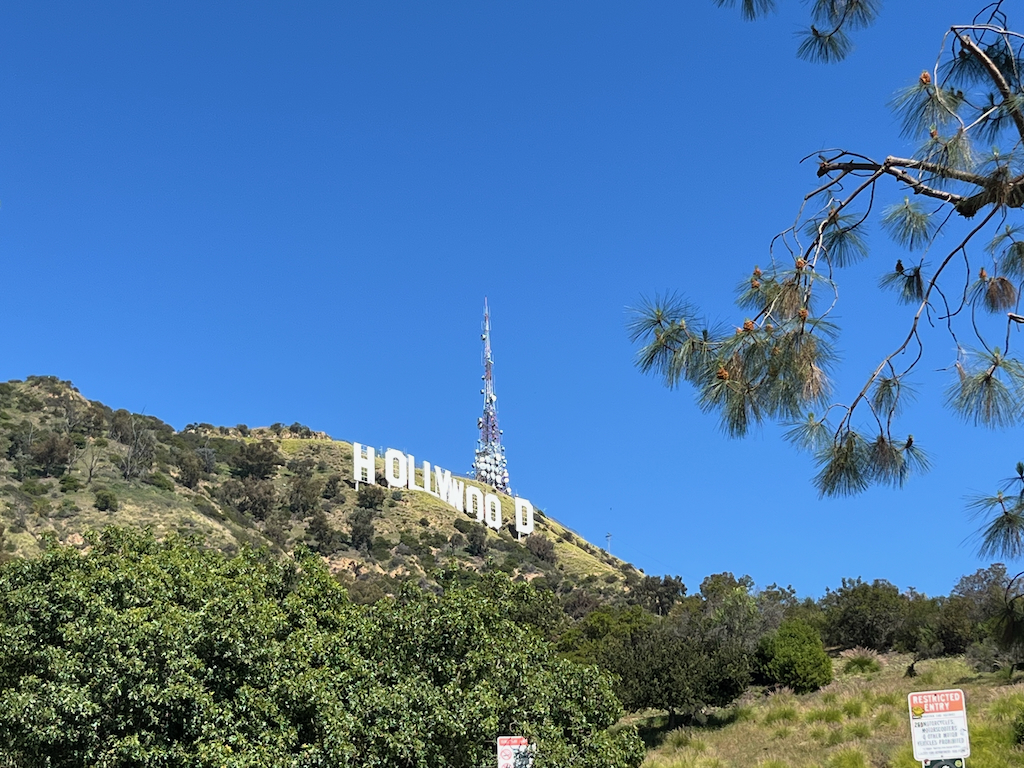
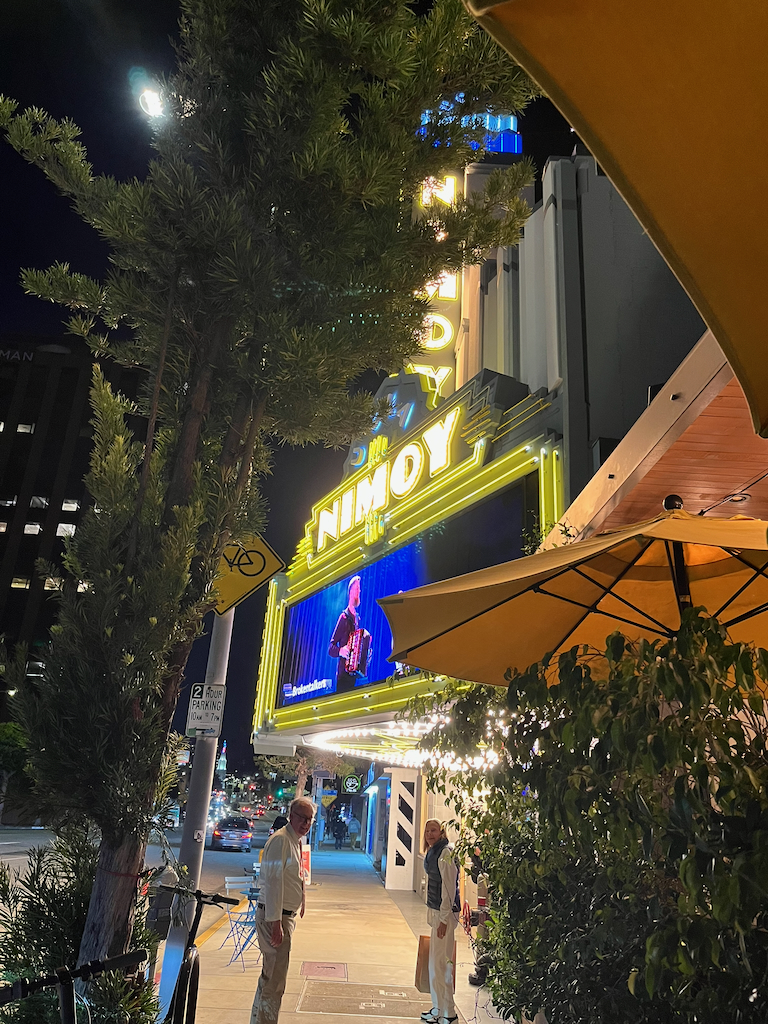
there are no palms out my window. no kitschy drive-ins in sunset shades of bubblegum pink and peach and aqua. no deco movie-house spires piercing the clouds, lit up in the night, ablaze with neon beacons.
instead, there is drab. limbs without leaves. birdhouses atilt thanks to gale-force winds in recent days. patches of snow still dot the brick walk back to the sodden alley, where a potage of wet leaves and muck and the detritus of winter all signal: these are the middlelands, where exotic is distant, and gray the predominant shade.
i’m home. and decidedly taking note of the vast gap—chromatic and otherwise— between LA and chicago. LA and my leafy little village. yes, there is a grand grand lake. but the waves are nowhere near pacific. and the water’s edge not so dramatic.
we live here in the middlelands. in more ways than geography. and it made me wonder. it made me think.
this old house is more than familiar. i know it by heart. it’s held me for decades now. i know its creaks, and which doors stubbornly refuse to close. i know which light switch is finicky. and just how to light the front middle burner.
we hold each other’s whispers.
this old house has heard me cry. and felt that rapid clip of my footfall when racing toward the door, because someone i love is knocking.
this old house knows my ways. how, pretty much, day after day, i awake before dawn, sit my bum on this bench, this bench where the cushion conforms and the wide-plank maple below is scuffed from all the years of my soles rubbing against the grain.
we humans make home where we are. where we land. but, now home from the land of abundant abundance—abundant color, abundant whim and whimsy, abundant greenscape and vertiginous terrain—i wonder how the drab infuses me. are we a less colorful people for the monochrome we’re up against?
or is home, in the end, the comfort that’s closest to the skin? the factor that completes the equation?
it’s something of a koan: might we be more colorful souls if we lived amid color? or do we make up for the lack thereof by sparking our very own rainbows?
is it the familiar, the cozy comfort of our surrounds, that’s the deeper, truer source of what fuels us?
how best to eke what we can out of this one shot of life?
to step into the unfamiliar is to open the lid on the sorts of queries we’d otherwise miss. which might be the wisest reason of all to pack up a suitcase and head—for a spell—for the hills—hollywood’s or beyond.
i know i’ll adjust, because that’s what we do. we could live in a box if we had to.
the bright hues of the city of angels will fade. i’ll forget the neon of the nimoy lighting the night.
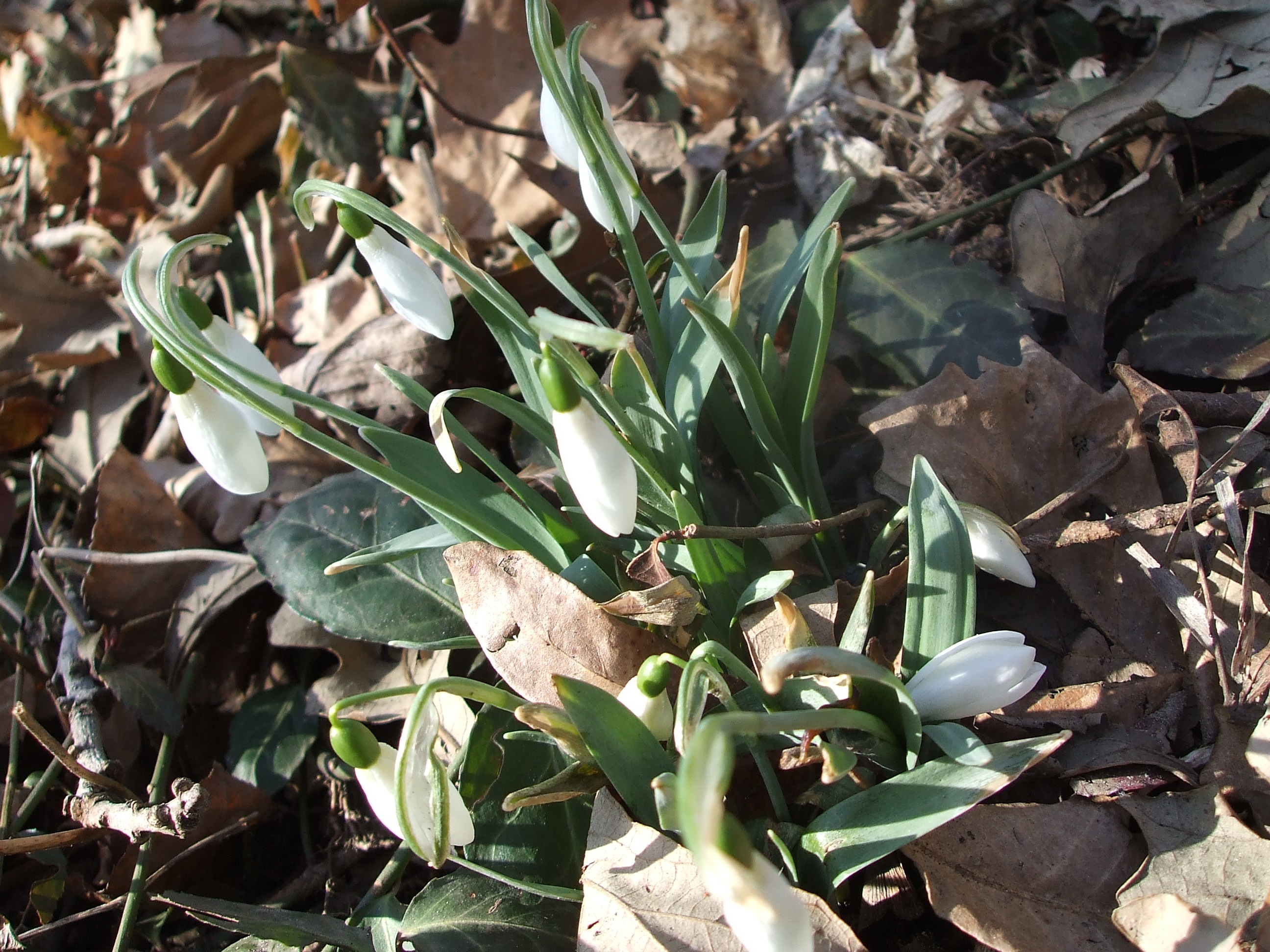
snowdrops: harbinger of spring on the rise
any day now, the snowdrops will rise, and the redbud will break out in a string of little red knots strewn along each branch. the pace of home will pick up, will sweep me into the current, and once again i’ll find myself sated.
but for now, in the interlude, in the space between there and here, i am wondering just how much it affects us deep down in the soul. and if, in our time here, we’d be wise to consider the backdrop in which we settle our lives.
it might account for the fact that day after day, here in the drab land, i slip my old arms into the nubbiest sweater of gray you ever did see: my uniform in winter, here where gray is a hue of many colors.
have you a place you’ve visited that made you wonder why you didn’t call it home? and what might your life be like if you up and transplanted your very sweet self? (mistake not the questions stirred for any serious thought of transplant; for one, i could never afford SoCal; for two, i’ve no intention of pulling up stakes, no matter how sumptuous someplace else might be…)
time and again, i find myself drawn into the orbit of pablo neruda, the late great chilean poet-diplomat and nobel laureate. time, in particular, is a subject at the core of my many contemplations. in Elemental Odes, neruda’s collection of odes to everyday objects—tomatoes, artichokes, soap—he laid out his most explicit instruction for how to hold time:
Listen and learn. Time is divided into two rivers: one flows backward, devouring life already lived; the other moves forward with you exposing your life. For a single second they may be joined. Now. This is that moment, the drop of an instant that washes away the past. It is the present. It is in your hands. Racing, slipping, tumbling like a waterfall. But it is yours. Help it grow with love, with firmness, with stone and flight, with resounding rectitude, with purest grains, the most brilliant metal from your heart, walking in the full light of day without fear of truth, goodness, justice, companions of song, time that flows will have the shape and sound of a guitar, and when you want to bow to the past, the singing spring of transparent time will reveal your wholeness. Time is joy. —Pablo Neruda
photo credit above: will kamin, 2011. AP photography senior portfolio, new trier high school.
it is among the most profound teachings of any religion. and its point is found at the root of every sage, seer, and saint.
remember that you are dust, and unto dust you shall return.
some years, to be truthful, those words washed over me. not this year. no longer. it is the teaching at the core of my scan time epiphany, pressed onto my heart as i emerged from the months-long fog that followed the words from my surgeon, “it was cancer; i was surprised.”
we don’t have forever. our days are numbered. our time here is fleeting. we’re wise not to whittle away the hours. wiser still to work toward the nub, the holy nub, that i believe lies at the heart of why we’re among the blessed who got to draw a first breath in the first place.
the odds of being born are stacked mightily against us; biology lays it all out at roughly 1 in 400 trillion (that’s 400 million million, or a 4 followed by 14 zeroes; i’m guessing that might be more than all the stars in the heavens. but what do i know?). we’re the ones who were allotted X number of days, who were given a holy task that’s ours and ours alone. and our slot to get it done, to reach toward holiness, to exude the light this world so desperately needs, is not without end.
so knew moses in the wilderness, imploring God: “teach us to number our days, so that we may gain a heart of wisdom.”
come the seventh century, a pope named gregory I pulled out the ashes to press against flesh, to remind the believers, to begin the 46 days then counted as Lent, a season of penitence before the coming of Easter. in judaism, the days of awe, from rosh hashanah, the new year, to yom kippur, the day of atonement, attention is turned to the mortal imperative: we will die. and we’d best make the most of our days. in islam, the inevitability of death is a core tenet, and muslims are taught to pray “as if this is your last ṣalāh (prayer).”
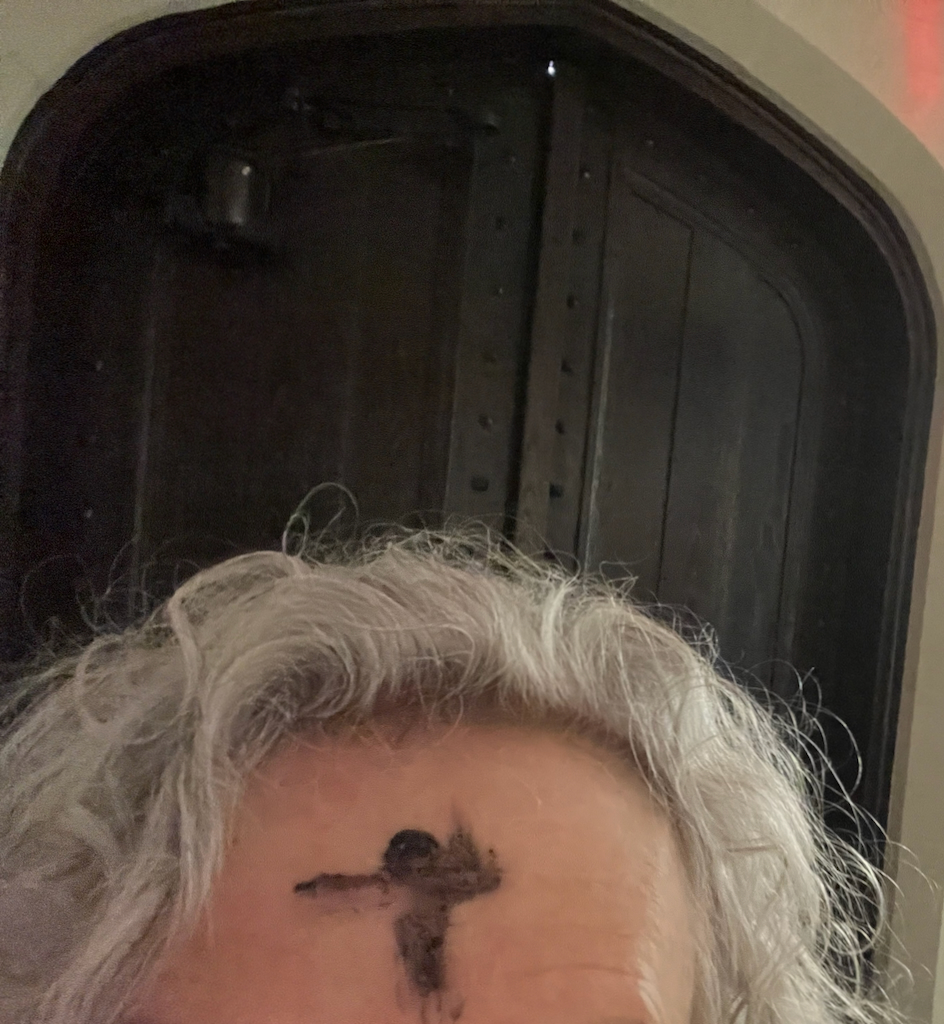
i live now with those teachings pressed hard against my flesh, whether you can see the smudge on my forehead or not. just so happens this week i walked around for a few hours looking as if i’d smudged a thumbful of dirt just above my eyebrows. and this week, a week in which i’ve spent so many hours trying to reach across to the other side, in search of a wink or a nod or a squeeze from two beloveds new to the other side, i found myself transfixed by the wisdom i wore for all the world to see.
i find it imperative. it’s the truth that fuels my every day, and all the hours within.
i live now with the palpable knowing that any minute the something stirring in my lungs (a something i likened to “a couch potato of a cancer” when my surgeon first described it as indolent, or lazy) could, in that surgeon’s inimitable words, “decide to leap off the couch and start running around the house smashing things.” the analogy here refers to the cancer detonating all throughout my lungs, a demonic pinball boinging wall to wall to any old air sac, the wee little bellows that allow you to draw in oxygen, blow out the junk that remains, the carbon dioxide we need to get rid of, lest we die of suffocation.
in my latest adventure in book writing, the book now awaiting yet another round of editing, a book whose working title is when evening comes: an urgent call to love (drawn from the great teaching of saint john of the cross who once wrote, “when the evening of this life comes, you will be judged on love,” and to which the mystic evelyn underhill then adds: “the only question asked of your soul: ‘have you loved well?'”), it’s the very point of the ashes—to dust you shall return—that animates every inkling, question, and meditation in the pages soon to be bound between covers.
in the year since i started writing that book, and in the almost three years since half my lung was snipped out of me, the choice to love well is one that rises over and over, a tide that won’t be quelled. it’s the most clarifying truth i’ve ever clung to. and it expands the walls of my heart, pushes me plenty beyond my comfort zone because i know my chances are dwindling. the next scan could come with the words that something is stirring. has made itself known. and i know those words will crumple me. knock the wind right out of me. at least for awhile. till i find my bearings again.
and so i live just ahead of those words, as if they’re always on the chase, running up from the rear.
the people i love who died last week, who crossed to the other side, were beautiful souls who loved so majestically, so magnificently, and both of whose lungs were filled with the damn cancer that would not relent. each loved till the very last breath. each didn’t want to die. each one was brave—mostly—till the end. and each one finally let go.
in so many ways, their holy nub did not die. their spirit, their joy, their infinite giving, it’s as alive as ever. maybe more so. i feel each of them. i hear their words, their laughter, the very lilt in the way they spoke every word. and their invisible presence stirs me robustly. maybe it’s that we were all in the cancer gulch together, shoulder to shoulder to shoulder. maybe it’s that we spoke a language so little known outside the republic of cancer; a language into which we’d been swept, a language where shadows are looming, a language propelled by unfiltered truth and urgency.
maybe i feel like it’s up to me to carry on their brilliant-beyond-description ways of being in the world. but that would be wrong. their work, their nub, lives on in the ways it will forever animate and rub up against ours. but my work is mine. and my days to do it are now. and your work is yours. and your days are now.
the God i believe in breathed into us a constellation of wonders, and set us on our way. as rilke once wrote in a poem i’ve long pressed to my heart, imagining God speaking to each of us as God makes us, before we are born, before we leave the womb of darkness, God “walks with us silently out of the night.” and as we near the precipice of the womb, the place where the daylight seeps in, God whispers: “Nearby is the country they call life. You will know it by its seriousness. Give me your hand.”
and so this work that is ours to do, in this time that will end, we are here for holy purpose. and our God is at hand.
ashes to ashes. dust to dust.
the time in between is our one holy chance.
how will we use it?
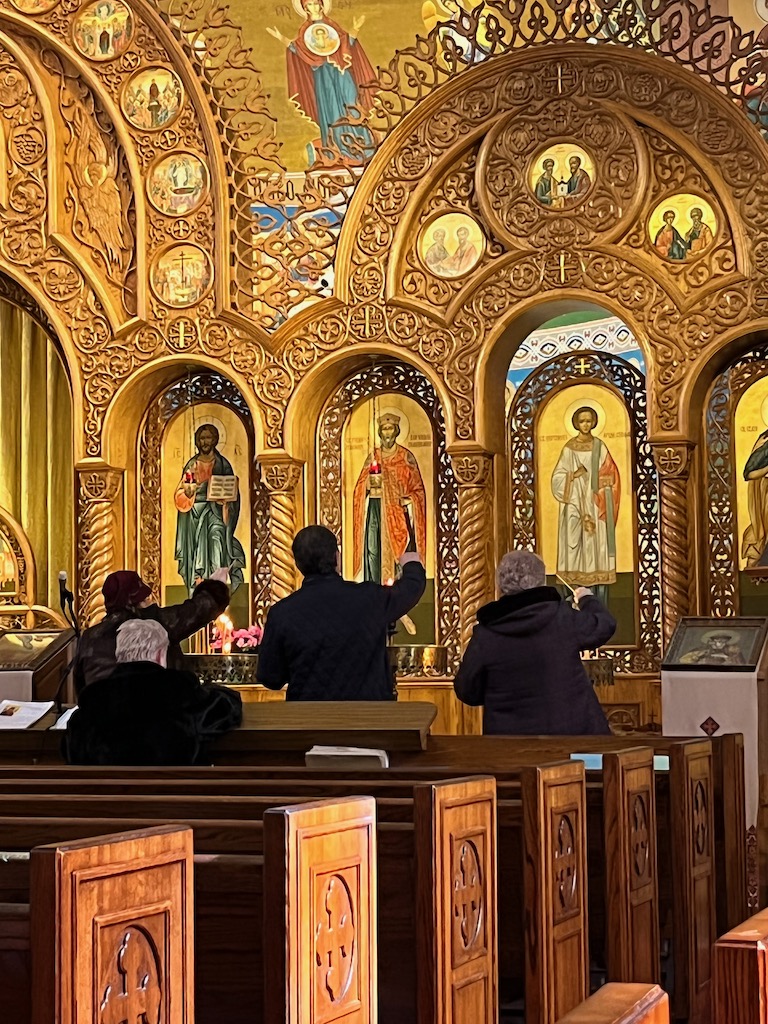
in the tiny chapel where i go to pray, and where this week the ashes were smudged on my head, i found these words from psalm 103 breathtakingly beautiful. . .
for [God] himself knows whereof we are made; he remembers that we are but dust. Our days are like the grass; we flourish like a flower of the field; When the wind goes over it, it is gone, and its place shall know it no more.
may our time in the field be fruitful, may our petals unfurl fully as we drink in the sunlight. before the wind blows over us, and our time here is no more….
love, bam
sending special special love to the beautiful mama of one of the beauties who has crossed to the other side….i know that all of us here reach across the table in hopes of steadying your trembling hand, tissue at the ready to dry your flow of tears….
winter, i’ve always sensed, is the curling-in time, the season of unseen stirring, and in an octave of dawns, dusks, and nightfalls, winter will be upon us.
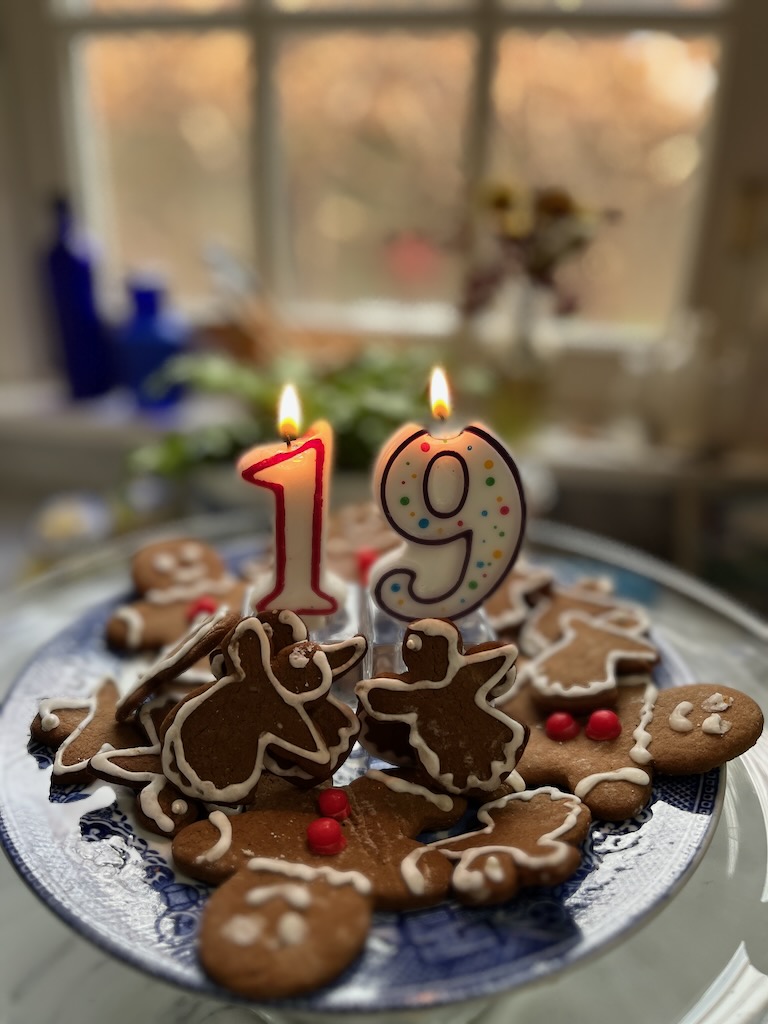
but even now, it’s a season for quieting, for simmering thoughts as well as saucepots of cinnamon stick, star anise, and clove. my simmering for the last nineteen years picks up the pace as the page turns on another year of pulling up chairs to this imaginary old maple table, one where the indentations of long-ago math homework are pressed into the grain, where so many coffees and juices have been poured and sipped and spilled and sopped up with sponges. over the course of these nearly two decades, it seems i’ve developed a knack for simmering while tapping away at the rows of alphabet keys—some 1,255 simmers and counting, all under the name “pull up a chair,” now tapped, posted, and filed away.
only a handful of the very first chairs—bless them, those stalwart humans—still pull up a chair, at least every once in a while. but along the way, so many chairs have been added, and multiplied. and our polestar has never shifted: to carve out a sacred space where questions are asked, and stories are told, where hearts are bared, and above all where gentle, gentle kindness is the metronome by which we set all our rhythms. once in a while, over all the bumps and bruises encountered along the way, we’ve been known to bow our heads and pour out our hearts in holy, holy please God, pray for us.
on the twelfth of december, 2006, our firstborn had just been bar mitzvahed, and our then so-called “little one” was but a kindergartener, not yet reading or writing but melting my heart by the minute and filling our notebooks with his stories and antics and an encyclopedia of unforgettable “teddyisms.” (some kept alive to this day; for the sheer pure joy of it). the firstborn, now law professor, insisted at the dawn of the self-published blogging age that i, his little old mother, could figure out how to “blog,” a verb that’s always sounded to me like a crude guttural effusion, a burp perhaps. and back in the day, he gave me his hand-me-down laptop to do it. to prove i could blog, that is. (as has so often been the case, he even then was wiser than me…)
back then, the question that had captured my attention was the simplest of notions: i believed, after a few years of keenly observing, tagging along with, and writing long newspaper stories of families in the thick of life transitions as a reporter for the chicago tribune, that life’s biggest questions aren’t reserved for colloquia and global summits, nor do they wait for podiums and percussive applause. they are the stuff of the everyday. and if we watch closely, pay keen attention, we can lift those universal, deeply-human questions and struggles from the quotidian stream, hold them to the light for closer consideration, and reap their wisdoms and epiphanies in real time. now, before the moments pass us by and we come to the saddest realization of all: that it’s too late, and our chance at most wakeful living has slipped into the distance.
all these years later, life certainly has galloped along here at the table. this ol’ chair has seen the growings up of two boys, buried parents beloved, moved another from her home of sixty years. taken a tour of cambridge, mass., and a second helping of college. trekked across the pond, set our sights on war zones, and been rolled into surgical suites and recovery rooms. we’ve feared for our country, for humanity, for civility, and plain old decency. and we’ve refused to surrender to the crude and cruel ways wielded by those who seize power. we’ve kept our minds opened, and tried—oh, we’ve tried—to emphasize the imperative of objective, double-sourced truth, and the slaying of hearsay and heresy. we’ve laid out worries here, and plenty of joys; we’ve marveled and wondered and been gobsmacked aplenty. i’ve pondered cancer and the physics of time, and the holy shimmering presence i know as God.
lately i seem to have taken to gathering up wisdoms far greater than mine will ever be. i am, as a beloved friend of the chair once put it, something of a magpie. a magpie mostly attuned to seeking the sacred amid the plainstuff of living. the idea of the commonplace book is one i heartily embrace: bring on the poets and sages and prophets, and let me invite you into their brilliant notebooks and minds and unfurl for you their passages and poetics that take away our collective breath and find a way of percolating for hours to come.
this ol’ chair has given me a place to keep on tapping away at the keys. i realized long ago that i untangle the knots of my life by stringing out sentences. and trying on thoughts. thank you for indulging me, those of you who choose to read along. thank you for pondering the questions at the end of each post, in the quiet of your own soul, or by leaving a note at the table.
you are, collectively and individually, humans who restore and buck up my faith in the inherent majesty and wonder of the shimmering undying spirit that populates this earth with more than a modicum of heaven’s best offerings.
bless you, bless you, a thousand times thousand, bless you.
this week i am bringing a little birthday bouquet of beauties that struck me across the week, all of them tied together by the beautiful idea that the birthing of holiness is a sacramental act of which we must partake. it’s one that entails unlocking our hearts, making room in the manger within, and allowing the Holy and Sacred to form within, and to birth it with our words and our love in the act. it’s quite the trinity here: a benedictine monk who practices and teaches meditation in the french countryside at a monastery known as bonnevaux; st. john of the cross, the great mystic, as translated by the poet daniel ladinsky; and the late, great luci shaw, a beloved british-american poet and essayist who died at 96 on december first.
first up, the idea of birthing God within us from the benedictine monk, laurence freeman, whom i’ve been learning from for years…
In the 14th century, Meister Eckhart enjoyed waking people up in his sermons by expounding some uncomfortably new perspectives about their standardised faith. He must have stirred a few dozy parishioners when he asked: “What good is it to me if this eternal birth of the divine Son takes place unceasingly, but does not take place within myself? And, that it should take place within myself, is really what matters.”
Actually, the great Augustine had asked the same question a thousand years before and added that if we are the children of God, we must become God’s mother as well. If, he said, this birth of the eternal word as Christ in the soul is to happen, our heart – the deepest centre of our being – must become the sacred manger. If we are filled with egocentric distraction there is ‘no room at the inn’ and so the heart must become that empty and open space where the birth takes place and through which he is welcomed into our world.
In today’s gospel, John the Baptist is usually and badly translated as saying ‘repent, for the reign of God is close at hand’. Basileia, the Greek word we think of as ‘kingdom’, is feminine and so could equally well translate it as ‘queendom’. It doesn’t mean a juridical area but the space in which the presence and grace of God is acknowledged and welcomed. The gospel word, badly translated as ‘repent’, is ‘metanoia’: a change of mind and heart. It is not about feeling sorry for past mistakes. It means spinning round 180 degrees and entirely changing your perspective on and approach to reality.
Living in the desert, wearing a garment of camel hair and eating locusts and wild honey, John seems to us a bit extremist. People who reduce waste and get back to essentials are often called crazy. But because of his spiritual sanity he drew the crowds who asked him ‘what shall we do?’ because, like us, they lived in confused, divided and dangerous times. He told them simply to live honestly and justly but that this lifestyle would prepare them for the imminent – and immanent – coming of the great transformer of all things.
Meditation is the great simplifier. It reduces the way we waste both time and life’s opportunities. In daily life it is the catalyst for ongoing metanoia. The medicine that loosens the grip of illusion. Usually, we start enthusiastically but before we get to the full 180 degrees we slow down and say, ‘this is quite good, let’s stop here’. Fortunately, if the birth process has already started, it will not allow us to arrest or deny it. We have to see it through until it breaks through into our world and we are happy and lucky if we do.
—Laurence Freeman
and from the sixteenth-century mystic St. John of the Cross there comes this interpretation/translation of what daniel ladinsky calls one of his “love poems”…
IF YOU WANT
If you want the Virgin will come walking down the road pregnant with the holy, and say, “I need shelter for the night, please take me inside your heart, my time is so close.”
Then, under the roof of your soul, you will witness the sublime intimacy, the divine, the Christ taking birth forever,
as she grasps your hand for help, for each of us is the midwife of God, each of us.
Yet there, under the dome of your being does creation come into existence eternally, through your womb, dear pilgrim– the sacred womb in your soul,
as God grasps our arms for help; for each of us is His beloved servant never far.
If you want, the Virgin will come walking down the street pregnant with Light and sing …
—St. John of the Cross, “If You Want” in Daniel Ladinsky, Love Poems from God: Twelve Sacred Voices from the East and West (New York: Penguin Group, 2002),306-307.
and, in closing, here’s a classic from blessed, blessed luci, whose great contribution to the canon of Christian poetry would be her capacity for drawing big truths about God and human experience from viscerally pulsing fine-grained images and objects. she is the perfect voice to close out this nineteenth year of the chair….
Kenosis By Luci Shaw
In sleep his infant mouth works in and out. He is so new, his silk skin has not yet been roughed by plane and wooden beam nor, so far, has he had to deal with human doubt. He is in a dream of nipple found, of blue-white milk, of curving skin and, pulsing in his ear, the inner throb of a warm heart’s repeated sound. His only memories float from fluid space. So new he has not pounded nails, hung a door, broken bread, felt rebuff, bent to the lash, wept for the sad heart of the human race.
amen.
may this blessed week bring softening to the walls of your heart, and a widening within those chambers so that Holiness, however you name it, might be birthed there….love, b.
let me begin by saying i have no business commenting on national affairs. and i confess to brandishing naivete at the highest level. but, in that way i always do come friday mornings, i scan the week and pluck the one particular thing that zings me the most. this week it’s war. it’s the word war. it’s opting for war instead of defense, it’s heralding a drive toward muscularity of the violent sort.
i’ve been studying Torah week after week for a few years now, more than long enough to know this tendency toward warring, toward violence, be it in the name of protection or crushing the opposition, stealing land, or seeking fortune, is as hard-wired into the human species as can be.
and yet…
and yet, there are those who’d see a rock and build it into a cairn, a path marker signaling to the stranger who comes behind, this is the way. this is the way toward a holiness, a holy place.
and there are those who see a rock and stoop to pluck it from the ground and fling it. where it lands, be damned. who or what it shatters, oh well.
i grew up on a street where there were rock flingers and cairn pilers. some of us played in the woods, being careful not to step on the trillium. some rode their bikes through the woods, fast and furious and zooming off logs piled for the purpose of velocity. crushing was part of the point. speed, the aim.
i live now in a country where the department of defense is considering a change of name, department of war. for all i know it’s happened overnight in one of those postings that now serve as executive orders. of all the countless assaults in a nation where rockets red glare once was a line in a patriotic hymn, why is one three-letter word so crushing to me?
because at heart i want to build cairns. i don’t want to be of a nation that only sees force as the way out. i know there’s a God seen as vengeful in the pages of ancient sacred text. but i know there came in time a Godly voice who took to the mountaintop and spoke: blessed are the peacemakers, blessed are the poor in spirit. blessed are the meek, the humble, the merciful.
that’s my tribe. by creed and by blood. but mostly by spirit.
and as the years accrue, as i have deepened into a sacred hollow, found my peace and my bliss there, i cannot fathom nor abide a mindset that heralds its predilection for bombs, for guns, for ballistics.
is there not might in the pen—the aphorism says that there is, that it’s mightier. is there not might in working it out, coming to the table with an understanding that we are but one tiny blue marble in the vastness of space, and we’ve been adorned with more than plenty, and all we need do is work out our share. the lines drawn in the sand are just that: subject to rearranging winds.
we needn’t turn into hermits, each in our own secluded and faraway hut (though it’s an idea that sometimes appeals to me). but we might be a village. a village where my empty cupboard is stocked when i need it by yours. where my faltering gait is held steady by you, because you respond to the impulse as hardwired into us as the rock-flinging one, the one that rushes to pluck the fallen from the sidewalk.
i am wise enough to know that’s not necessarily the dominant instinct, the peacemaking one. but i know there are ways to bolster it. it might be in following the lead of the everyday saints in our midst, the ones who rush to wherever there’s pain, or loss, or lacking. or the ones who quietly, quietly get the job done. it might be deep in the countless pages of ink poured over the millennia, the ones that brilliantly brilliantly illuminate a holier truth. the way toward blessedness is the path of the peacemaker.
i know my weighing in on the matter verges on silly. who am i but one breath in the wilds?
and all i’m saying is i am crushed, crushed, by one three-letter word.
and so very much more…
a choice: what crushed you this week? or what bolstered you?
i happen to have a big brother, his name is john, and he is marking a big birthday today. and so, i pause for a moment here (sometimes he pulls up a chair) to send a boatload of blessings and love. he’s been looking out for me since my beginning….(in this very old photo, he is kindly helping me climb into a little red car; he in red cap, me in the blue….)
this is from one of our ol’ home movies, a famous scene in family lore. i am soon either pushed over or assisted into car, depends on your perspective. since it’s his birthday, let’s give dear john the benefit of the doubt: he’s assisting. (though the next frame has me splat on the ground!)
If the intensity of my curiosities in this world were put to trial, and I was pressed to answer what question stirs me most, it would be the realm of the God I reach for as my North Star. I ruminate on the presence of God, the proximity of what I know as tender ballast, and though the edge of my knowing falls into a liminal mist, I aim anyway to live by what seems to be the timeless code of a just and loving, most merciful God.
Poetry, a gossamer web of knowing and unknowing, seems to be the closest frame through which to ask those questions, to rummage in the dim light and the darkness. It’s the poetry that rubs up against what seems true, and then falls swiftly away, that for me lasts and lingers. More so than sacred Scripture, I find myself venturing closest to the heavens when I follow poets unafraid to ask the unanswerable. The poets, so often, are my priests, my conduits from this much-battered planet to the uncharted heavens. Palpably alive and paying attention to the tiniest shards among us—the broken clock, the fallen sparrow, the furrow of a brow—the poet then leaps beyond or into, catapulting us into the vast, where the questions linger and the answers merely hover. Epiphany sometimes strikes. And we go forth, fortified.
I am particularly taken by those poets unafraid of doubt. As, truth be told, we live in mystery. It is those willing to expose their wrestling, their quest to question, that I find most resonant. Most true.
And when one of those poets dies, a volume closes; the possibility of question falls silent. We no longer knot our life raft to her fearless oceangoing vessel.
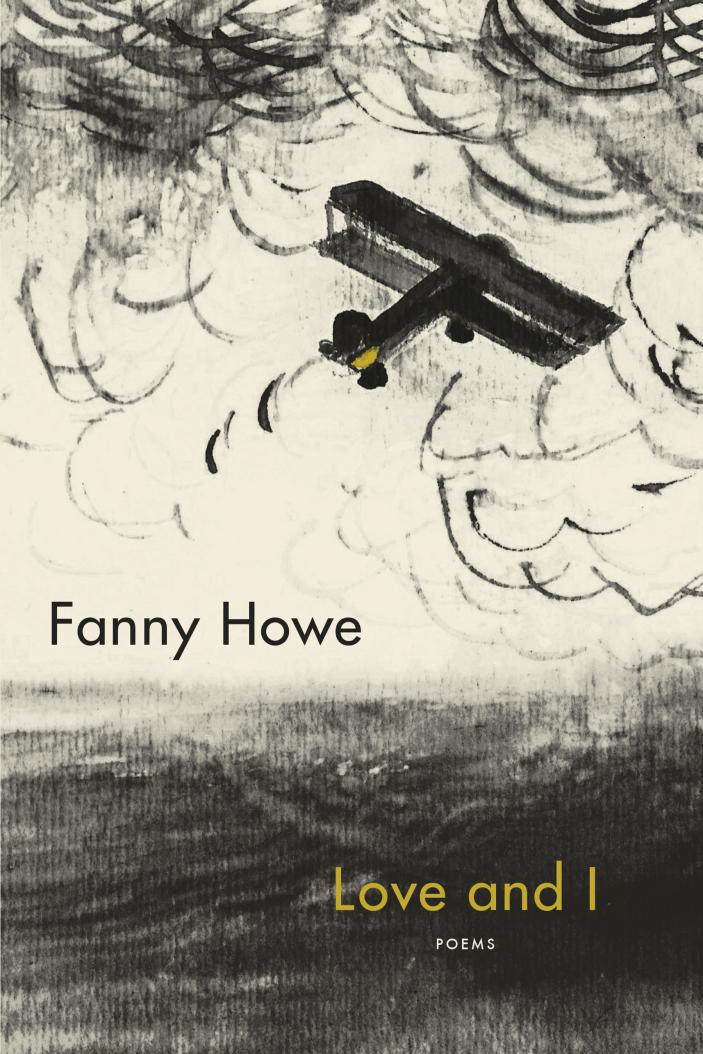
The world of poetry, from Ocean Vuong to those on the masthead at The Paris Review, mourned the loss this week of Fanny Howe (1940–2025), who died on Wednesday at 84. Over recent months, Howe, the daughter of an Irish playwright and a Harvard legal historian whose family traced its roots to the Boston Brahmin Quincy family, had been in conversation with the poet and translator Chloe Garcia Roberts, as part of the review’s Art of Poetry series. In a prelude I found as delicious as some of the conversation itself, Roberts sets the stage thusly in a piece published just last month:
“Howe has a sparrowlike figure and a blue peregrine stare. We met for this interview every few weeks over the course of several months from fall to spring, as she was moving out of her garden-level apartment in Cambridge into an assisted living facility just down the road. I would arrive midmorning, bearing scones and coffee with extra sugar cubes wrapped in napkins, and we’d talk each time for an hour or so. Our conversations circled family, motherhood, failure, race, and faith. After we were done recording, we’d gossip about the poetry scene and the succession of Pope Francis.”
And from there begins the interview, from which I pluck just a few snippets, and some of the Review’s own words (emphasis mine):
“I’d always been looking for a revelation that would open the whole universe for me and make it all have sense,” began Howe, who described herself as a “pagan Catholic,” and who converted to the faith at forty-one, counting among her guides Simone Weil, Giorgio Agamben, and the monks of Glenstal Abbey** in County Limerick, Ireland, with whom she stayed every summer for twenty years and whom she later watched on TV every Sunday, her personal Mass.
Howe was the author of an astonishing body of work—including twenty-five books of poetry, twelve novels, two story collections, and also essays, pulp romances, and young adult fiction. Her poems often enact the shock of belief, taking their power not from their devotional qualities—in fact, Howe avoided words like devotion and prayer—but their combination of faith and doubt. “I would think of poetry as a place where you connect your doubts to the things you don’t doubt,” she said. “Free-floating doubt wouldn’t trigger the lightning that contradiction does.”
In one of the hours of interviews, Howe let on that she considered it her “job” to be antidote to cynicism. When Roberts asked her to say more, she elaborated:
fanny in 1972 with her son, maceo
If I could say I was assigned something at birth, it would be to keep the soul fresh and clean, and to not let anything bring it down. And that’s the spirit of childhood, usually. Once you know that that’s what you’re doing, even when you’re walking through a war field, you’re carrying something to keep it safe. It’s invisible but you know it’s there, and it’s a kind of vision and a weight.
(You can listen to Howe, warbly voice and all, speak those very words here.)
Is it not all of our jobs—or certainly the job of some of us—to labor to keep the soul fresh and clean, to strain to not let anything bring it down? It is our singular entity, the one form over which we and we alone can steer the vessel, make the choices, choose love not hate, choose silence not bitter words, it is ours to keep, to draw in all the light we can muster. Our bodies, I’ve learned, are not under our control. Pathogens come, and cancers too. We crumble under the weight of time and toil. Our skin wrinkles, breaks out in bumps. But not our soul. Our soul is eternal, is timeless. Our soul is what we make of it.
The work of my soul is abetted, most often, by those whose words I read, by those whose way of being I watch. It is, so often, in the smallest, quietest of kindnesses. The triumphs of spirit over the temptations to turn away, to forgo the sharp edge, the blunt force.
Ours is an ongoing work in progress.
In her role as perhaps a patron saint of doubt within the amalgam of faith, Howe staked her claim in her introduction to George Bernanos’s 1937 novel of the 14-year-old French peasant girl, Mouchette: “Like a healthy human heartbeat, which has an intrinsic irregular system, the body of an artwork gets its vitality from a rhythm based in uncertainty. (Sick hearts have a dull regular thump.)”
Among the many lauds that poured forth in the wake of her death, Kazim Ali, the poet and co-founder of the small indie press, Nightboat Books, wrote this of Howe, the first author Nightboat published:
It would be wrong to say she was a polar star or a beacon in the darkness, because Fanny believed in mystery, in unknowing, in bewilderment. She didn’t mean to shine a light, but rather to see in the darkness.
Fanny once told me, in our life-long conversation about God, literature, and the world, that she thought Gnosticism was evil. What she found so evil was the belief that the material world was inferior to, or somehow separate from, the spiritual one. This world was the world to Fanny. “Human was God’s secret name,” she said in one poem. “If this life isn’t enough, then an afterlife won’t be enough,” she said in another.
To live in this rich, infinite world was the most important thing to her. “One cathedral is equal to the sky,” she wrote. And to God, she begged, “no answers, please, to any of my questions.”
Her life and work were conjoined in a long, lucid series of questions. How lucky we all are to have heard her askings.
may her askings live on, and her memory be a blessing. rest in knowing, dear fanny.
other than life itself and living, how have you encountered wrestling with doubt? is it a plain that animates you, or is it a space from which you run? (as always these questions are meant to be considered in the solitude and sanctity of your own quiet womb.)
i nearly forgot! should you choose to dig in to a bit of fanny howe and her wrestling with faith, the two books you might seek (mine is coming from interlibrary loan) are Love and I: Poems (2019) and Gone (2003). in both she writes about her conversion to Catholicism, and her relationship to faith.
**because i’ve not found many a rabbit hole into which i’ve chosen not to burrow, my reading of howe led me to Glenstal Abbey, a place i now dream of tucking into for a fulsome contemplative spell. it’s a benedictine monastery in county limerick, ireland, housed in a 19th-century normanesque castle, surrounded by 500 acres of farmland, forests, lakes, and stream. you might just want to join me there…(and you can tune in any time for matins, lauds, vespers, compline, or daily Mass, in both recordings and livecam.)
and one more thing before i go. it seems bishop marian budde, she who gained fame (and infamy in some quarters) presiding over the prayer service at washington’s national cathedral following the inauguration, has now launched a substack, where she will gather her writings, and broaden the scope of her reach. she introduces herself with these words. . .
“On January 21, 2025, the day after President Trump’s inauguration as our 47th president, I chose to conclude my sermon at a Prayer Service for the Nation, held at the Washington National Cathedral, with a call for mercy:
“Let me make one final plea, Mr. President. Millions have put their trust in you and, as you told the nation yesterday, you have felt the providential hand of a loving God. In the name of our God, I ask you to have mercy upon the people in our country who are scared now.”
she stirred up good trouble with those words. and in her new space on substack, she lays out her mission—”to live as best we can according to the highest aspirations of humankind revealed to us in Jesus” (also in Gandhi, in Buddha, in Brahma, in Allah, in Yahweh)—with this litany:
to recognize the inherent, God-given dignity of every human being
to love our neighbors as ourselves, and even to love our enemies
to share what we have and to strive for an equitable and just society
to refrain from evil and refuse to hate
to be mindful of the power of our words, and to speak without malice or contempt
to forgive, as we have been forgiven
to live in hope
to be willing to sacrifice, even our very lives, for the sake of love.
she concludes with these words:
“In this space, I hope to encourage a kind of human discourse in which we don’t have to see the world the same way, but we can all agree that we all belong in this world.
“In a culture of contempt, may we speak with dignity.
“In a world of mean-spiritedness, may we act with kindness and love.”
i was, for reasons that escape me, something of a reluctant suitress this year. the season’s slow-building seductions did little to seduce. i turned a blind eye. gave the cold shoulder.
harumph.
spring wasn’t an easy sell this time round. it came on thin, and unconvincingly. it taunted, played catch-me-if-you-can. and i couldn’t. couldn’t catch it.
i worried it might wholesale evade me this year. where was the catch in the throat, in the heart, in the soul, that usually caught me? had i been numbed, beaten down by the thrum of the world? was the malaise of the moment eclipsing the vernal exuberance?
but then, this week, it opened the spigot, came on rushingly, came on like a buttery rivulet poured on a mound of mash. i couldn’t resist.
i fell hard. have found myself dizzily staring out windows. even more dizzily tracing the garden’s edge. staring. marveling. asking again and again how it does it. how it knows. how, year after year, for all the inhales and exhales of the millennia of this holy Earth, does it find the oomph to give forth again and again and again?
if there’s wisdom in this year’s slow coming—and we know there is, for the earth is the vessel of wisdom without end—it must be one of patience. of giving it time. no need to go anxious when the oomph isn’t there. “live the questions,” taught rilke, in the one phrase we’re most apt to remember. but it came at the end of a wisdom more fulsome in the whole:
“Be patient toward all that is unsolved in your heart and try to love the questions themselves, like locked rooms and like books that are now written in a very foreign tongue. Do not now seek the answers, which cannot be given you because you would not be able to live them. And the point is, to live everything. Live the questions now. Perhaps you will then gradually, without noticing it, live along some distant day into the answer.”
so much of life swirls in the liminal time of not knowing, of waiting, of dwelling in the not-yet.
so this spring was for me. i knew what the calendar said. i knew how the sun had crossed its equinox, how light and shadow had fallen in equal measure and we were now slithering toward light and more light.
but the light out my window didn’t convince me. nor the nubs of green pushing up from their winter’s retreat. maybe it was the noise of the world blocking the sense that something lush and luscious might really be coming.
and then the abundance came. the climbing hydrangea emphatically leafed and greened, all but tapping at my kitchen window, come rub your nose in us. the viburnum buds about to burst with their pyrotechnic perfumery. the nodding heads of bluebell and snowflake. the aubade of the cardinal. the rampant rufflings of feather as sparrow mounts sparrow in the delirious dance of procreation.
and when the wind blows, which it has quite often this year, magnolia petals take flight, filling the air with what appear to be wings. a fluttering of perfumed birds playing on the breeze.
fibonacci spiral
it might have been the question mark of a woodland fern unfurling that first stopped me on a path this week. a flock of inquiry rising from the garden, in all the shadowed places. it’s the mystery of the universal spiral that catches me by the throat, the fibonacci spiral a leitmotif of all creation. born of the mysterious fibonacci sequence of 1, 1, 2, 3, 5, 8, 13, 21—wherein each number is the sum of the preceding two, beginning with 0—the spiral is the geometry laid upon that very grid. a geometric pattern constructed by connecting the corners of squares whose side lengths are consecutive fibonacci numbers, the spiral (sometimes known as the golden spiral) pervades the cosmos, from the spiral in a sunflower, to the question mark arising from my garden, to the scales of a pine cone, to the swirls of the chambered nautilus.
chou Romanesco, or Romanesco cauliflower
i sometimes imagine God so delighting in the whorl that the divine enthusiasms couldn’t be tamped, and thus its profligate presence wherever we look: into the vast galaxies above or the dappled woodlands below.
i often sense the spiral is but a trace of the soul’s very geometry, the innermost chamber tightly held at the apex. but what i don’t know is whether we spend our lives unfurling, from the nucleus of the sacred from which we divide and multiply in the womb, or whether ours is a journey inward, inching closer and closer into the fertile and eminently holy nub.
is it furl or unfurl? twining in or unspooling beyond?
such are the questions that arise from the earth’s thawing, such are the questions put before me, whirling within me, as the season begs only one thing: come close, bend low, watch what arises. from the earth, yes, but more so your soul.
a poem plucked from the book of garden wisdoms….
this is the recipe of life said my mother as she held me in her arms as i wept think of those flowers you plant in the garden each year they will teach you that people too must wilt fall root rise in order to bloom –The Sun and Her Flowers by Rupi Kaur
what stopped you in your tracks this week?
a few summers ago, in one of the wonders of my life, my beloved friend kat the priest handed me a ticket to a summer course at yale divinity school, a course i came to call my “poetry school.” my firstborn (now the law professor) was at law school there at the time, and for the summer had shuffled off to DC, meaning there was an empty apartment where i could play house–or college–for the week. so every morning i shuffled down the lanes of new haven and settled in for a day of poetries with a professor who happens to be named david mahan–yes, exactly like my last name, only without the “y”. when he wasn’t brilliantly teaching poetry, he was running a glorious something called the Rivendell Institute, which “seeks to examine and advance the contribution of a Christian vision of life to human flourishing and the common good within the academy and contemporary culture.” within the institute there is another something called the Rivendell Center for Theology and the Arts (RCTA), and their mission is “curating conversations between a variety of interlocutors.” long story short, this week, in their spring issue of Among Winter Cranes, RCTA published an excerpt from my Book of Nature, and since publishers love eyeballs, here’s the link to the essay, On Paying a Particular Attention.
in which we take a hard look at the crumbling discourse in this country, and consider a solution or two….
i’ll be honest. these are hard times. i pick up the news and feel pummeled by each new blow. i see pillars of democracy crumbling one after another. jeff bezos and the washington post, only the latest. i read of law firms—white shoe ones, meaning old-guard firms who take on some of the highest-profile clients, the most complex cases, aka “the elite”—being stripped of security clearance, being considered for criminal investigation only because they represented a client the current administration has inked onto the enemies list.
i see revenge as the rule of the day.
i’m sickened.
i’ve never prayed to a God of revenge.
but i read, too, that there are stirrings of hope. faint, yet beginning to stir.
you might call it an occupational hazard, but i happen to pay attention to the ways we get news and i worry desperately that we all cower in distant silos. (getting more distant by the day.) i get my news and you get yours and, often, ne’er the twain shall meet.
so how do we have a shared conversation? how do we sit down to the same old table and begin to listen? how do we reach across the table, and in a quiet, unquivering voice, utter the words, “i hear your point”? or the certain conversational lubricant, “say more”? or the nervier, and necessary, “that’s not actually true”?
i hold onto my hunch that most of us want what we think is fair, is just. and i’m not giving up on my fervent belief that if you saw me bleeding on a sidewalk, you would not ask first how i voted and then decide whether or not to lift me off the ground.
i’m fairly certain that in the nearly two decades we’ve been pulling up chairs here, some of us do get our news from different silos. i try to tread lightly. i respect divergence of thought. but the problem, as i see it, is that we are all being fed news in the flavors most to our liking. and that’s not the way the news is supposed to work. it’s not the way it worked for the time i was one of the ones writing what counted as news. and not in the newsroom i knew.
so here’s the jam: if the news you’re being fed is slanted, if some of it’s filtered out, and some of it’s twisted, if both sides aren’t fairly presented, it’s not any sort of surprise that conclusions are drawn, and wedges are wedged.
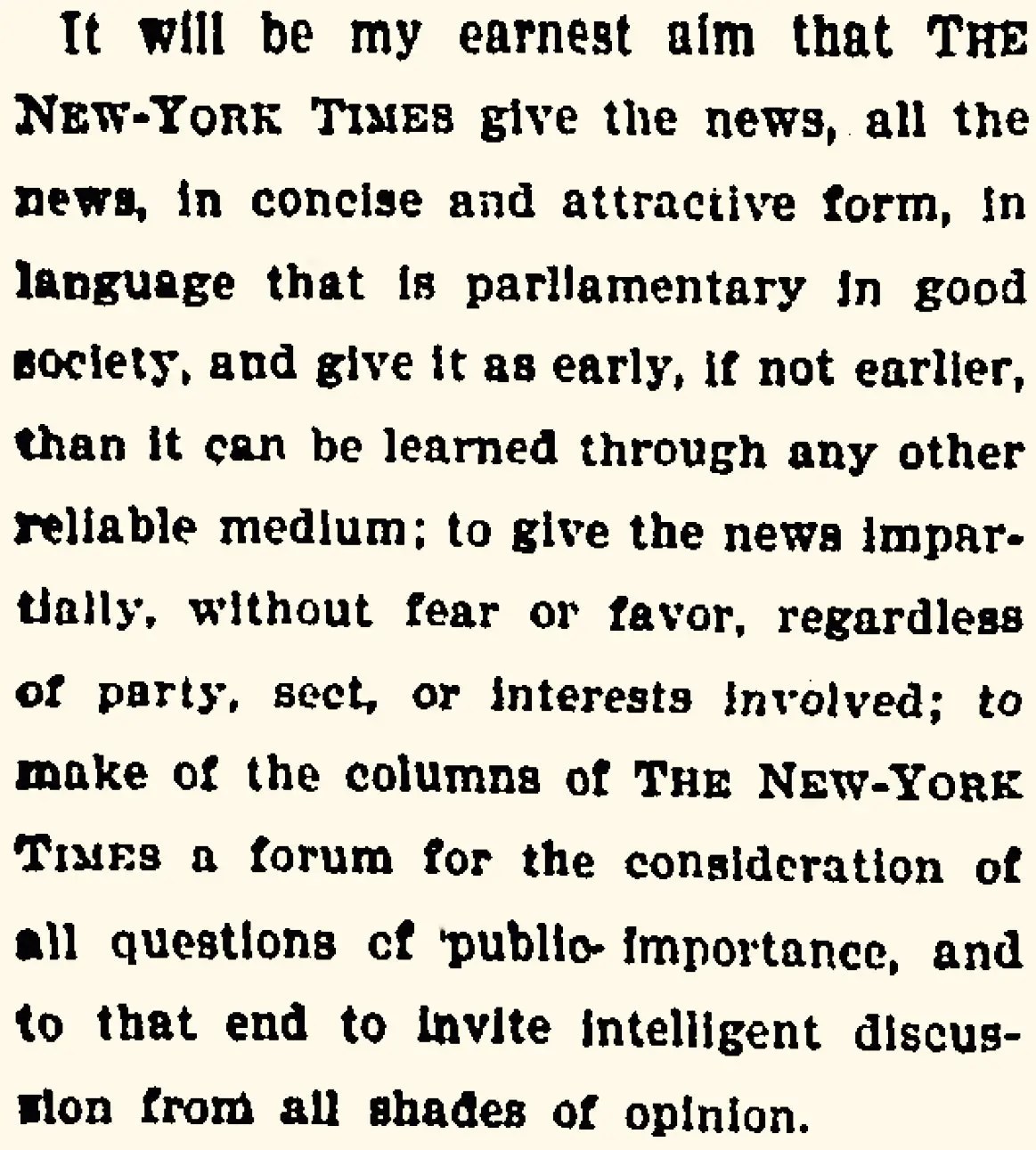
“…without fear or favor…”
these days, the ones helming the news––the owners, the billionaires who thought it a romp to claim a slot on the masthead––they seem to be in it for hard, cold cash. the one with the most wins. cozying up to power seems a game to which we’re not invited. to get there, you need to fly in your private jet, hopefully not one of the ones making a mess on the runways.
so much for democracy dying in darkness. or that now quaint-seeming declaration of adolph s. ochs in april of 1896, that his newspaper, the venerable new york times, would “give the news impartially, without fear or favor.”
good journalists hold firm to those words. good journalists have died defending those words.
you don’t get into the news biz––chasing after crooks and pols, climbing rickety stairs in darkened hallways, knocking on doors knowing full well you might find a muzzle pointed at the bridge of your nose––because it’s a sure way to raise your heart rate. or just cuz you’re nosey.
you get into the news biz cuz you’re a mad dog for the truth. and the fair telling of stories. you dig and you dig till you find that shimmering shard that, to your best knowledge, and according to more than one reliable source, is unassailably true. i sat beside folks in the newsroom who thought nothing of holing themselves in the dungeons of city hall or the bowels of bureaucrat mazes, riffling through file after file to track down the name and the dollar amount on contracts that might or might not have been legal. that might have unearthed wrongful convictions. or identified bodies dumped on the roadside. and those subterranean scribes had the pallor to prove it, after months and months under the glow of flimsy fluorescent lights. and cups of stale coffee. (we’ll leave the bottles of whiskey for another day.)
these days, the ones coursing the landscape with their reporter pads and pens, their itty-bitty microphones and their smartphone recorders, are plenty besmirched. discounted as little more than rousers of rabble. there’s a strong scent of disdain souring the air.
that’s an unfair and erroneous swipe at all those who abide by the time-tested codes. you might have heard that, um, democracy dies in darkness. and the reporters i know refuse to turn off their flashlights.
my little screed here won’t make a dent. but i cannot give up. none of us can. my faintest hope is that even one someone who reads this might take up the dare: fight fallacy and fiction with verifiable fact. there was an old maxim in the newsroom, one that we more or less lived by: if your mother tells you she loves you, check it out.
check your sources for news. read beyond your usual silo. sit down at a table and listen. exercise your ears more than your tongue.
at least for now, it’s a place to begin….
p.s. i know there is a good handful of journalistic heroes who pull up a chair, so if any of you wander by today or tomorrow or anytime soon, feel free to pen your prolific and profound views on the state of news consumption in america, and how it might be at least part of the root of what’s tearing us apart….
only one poem this week, and it’s a wonder from a poet who is a chicago legend, a hero in Black arts…..it’s an ode to books, which is a great place to begin a grounding in knowledge, and finding common language…..be sure to get to the last line, where i’m guessing you’ll let out a sigh. as i did. so much in common….
So Many Books, So Little Time by Haki R. Madhubuti
My sanctuaries are liberated lighthouses of shelved books, featuring forgotten poets, unread anthropologists of tenure- seeking assistant professors, self-published geniuses, remaindered first novelists, highlighting speed-written bestsellers, wise historians & theologians, nobel, pulitzer prize, and american book award winners, poets & fiction writers, overcertain political commentators, small press wunderkinds & learned academics. All are vitamins for my slow brain & sidetracked spirit in this winter of creating.
I do not believe in smiling politicians, AMA doctors, zebra-faced bankers, red-jacketed real estate or automobile salespeople, or singing preachers.
I believe in books. It can be conveniently argued that knowledge, not that which is condensed or computer packaged, but pages of hard-fought words, dancing language meticulously & contemplatively written by the likes of me & others, shelved imperfectly at the level of open hearts & minds, is preventive medicine strengthening me for the return to my clear pages of incomplete ideas to be reworked, revised & written as new worlds and words in all of their subjective configurations to eventually be processed into books that will hopefully be placed on the shelves of libraries, bookstores, homes, & other sanctuaries of learning to be found & browsed over by receptive booklovers, readers & writers looking for a retreat, looking for departure & yes spaces, looking for open heart surgery without the knife.
—Haki R. Madhubuti, who turned 83 this week, is a poet, writer, and educator, who in 1967 founded Chicago’s Third World Press, the largest independent Black-owned press. He’s regarded as an architect of the Black Arts Movement. Born Donald Luther Lee, he changed his name in 1973 after traveling to Africa: “Haki” means “justice” or “rights,” while “Madhubuti” means “precise, accurate, and dependable.” Both names are derived from Swahili. Of his renaming, Madhubuti explained at the time that he wanted to arrive at a new definition of self.
have you had any hard conversations of late? were you afraid to go there? what peaceable tools did you use to navigate? how did it go? will you try again?
A screenshot of a video released by the Ukrainian Police Department Press Service of military helicopters, apparently Russian, flying over the outskirts of Kyiv, February 24, 2022
dear blessed, blessed, good people of ukraine,
we are without words for the depth of our sorrow and our shame. we have betrayed you. cruelly. mercilessly. and we are sorry. we are so, so deeply sorry.
you have no idea of my existence. i am just a silver-haired lady in the middle of america, thousands and thousands of anonymities away, and yet i woke up trembling for the betrayal, and the insanity rained upon you in the form of words. words spoken by an elected leader of a country that until a month ago was doing all it could to ensure your safety, to uphold your humanity.
it is a sordid twist in history i’d prayed i’d never live to see. i thought we vowed never to forget.
the horror is that i don’t think anything is forgotten. from where i sit in an old shingled house on a quiet street near a big cold lake, it sounds as if the betrayal is the worst kind, the knowing kind, the horror not forgotten but ignored. it’s a supreme act of evil hubris the likes of which don’t belong in any century, let alone the one where we’ve allegedly evolved so much as to make machines that almost think like humans. perhaps we should have been investing in our souls. instead of masterminding brains.
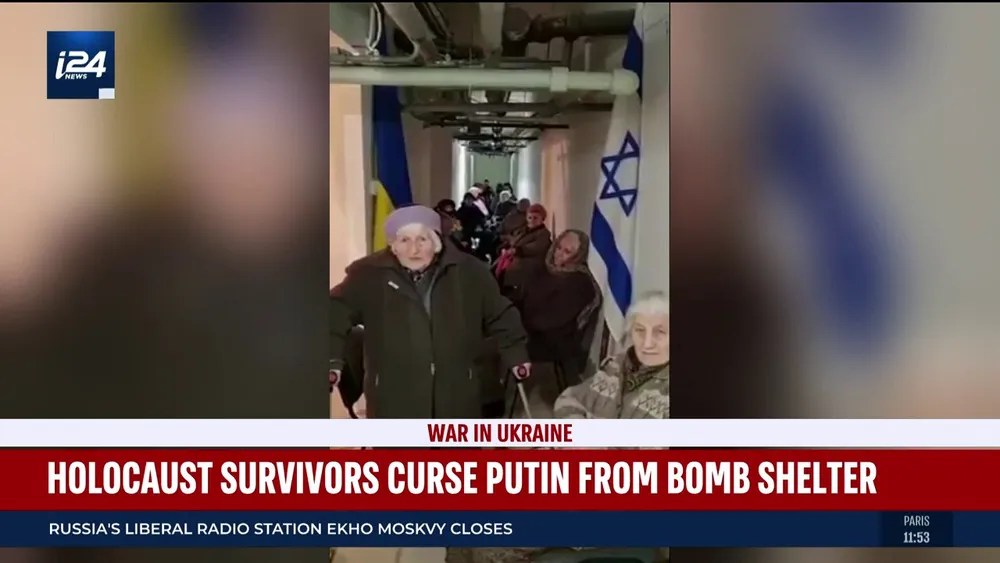
three years ago, we sat in front of screens frozen by the sights of maternity wards in rubble, of old ladies huddled in subway tunnels. some of us crowded into the nearest ukrainian churches, to pray with you. to bend our knees, bow our heads, and make the orthodox sign of the cross at the end of prayers whose words we did not know but whose intent we felt with every fiber of our being.
i can’t count the tears i’ve shed, reading stories of newborns blown to bits, of mothers laboring in bomb shelters, imagining the terror of a sky raining bomb after bomb after bomb. as, for three unbearable years, i read the stories of russian soldiers traipsing house to house, raping woman after woman, regardless of her decade. stories of herding children onto buses, tearing them away from families, all but delivering them to lives of sordid inner torture, tortures whose scars might never heal. stories of villagers lined up, plastic bags pulled over heads, shot execution style. the last sound each one heard, the sound of a rifle shot, and a body thudding to the ground, knowing that sound would next be them.
and yet, words from the white house occupant this week turned truth to lies, blamed the war on you, name-called your president, a man whose courage in the face of abysmal fear and threat not long ago brought burning hope to a darkened world. count me among the ones who cried as he walked the aisle of the house chamber of the u.s. capitol to ascend to the podium where his words shook a silent nation to the core. and where the roaring ovation from those in the chamber, and those in living rooms and rec rooms all around this country seemed a wave without end crashing to a shore. we saw hope in you. we prayed we could muster a modicum of the courage you showed, should we ever, ever find ourselves in a plight with even a fraction of the horror in which you lived.
and now, we are the people of this nation that might well become a living symbol of cruel betrayal.
and so, this humble letter, which you shall likely never read, is but one voice, speaking for many, as i fall to my knees, bow my head, and beg forgiveness for the sins thrust upon you.
this ukrainian grandma one of the lasting symbols of a feisty nation that would not, would not surrender.
three years ago, i wrote “exercise in empathy, another name for prayer,” and left it here on the chair. i am leaving it again, complete with the end note and question i left at the time. to remind us of the time when our whole nation felt united in praying for mercy, and willing to do all we could to make it happen…
can you imagine? can you imagine waking up with your bedroom windows shaking, a distant thump unmistakably drenching you in dread, even in the liminal fog of your pre-dawn dreams?
can you imagine lifting your newborn from the crib, cradling him against your breast, and running in the cold to the nearest subway shelter, where you will then spend hours upon endless hours, hearing the faint cacophony of what you know to be bombs exploding on a land you call your own?
can you imagine?
can you imagine rushing to your kitchen, clearing shelves of whatever might fuel you in the long hours ahead, grabbing your dog, your kids, your passport, and climbing behind the wheel of a car with only a half tank of gas, a tank you meant to fill the day before but one of the kids got cranky so you thought you’d put it off?
can you imagine if you were due to show up for an MRI to see how far the cancer had spread, how fractured was the tibia, the hip, the wrist, but now the air-raid sirens blare through the dawn and you have to weigh a trip to the hospital or the nearest border?
can you imagine watching your father fill his duffle bag, turning toward the door, pausing to kiss you on the forehead, watching the tears well up in your mother’s eyes, seeing how her hand now is shaking, how she clutches the sleeve of your father’s coat, and how he pulls himself away, unlocks the door and steps out into darkness? and your mother fills the sudden emptiness with a wail you’ve never heard before?
can you imagine holding a ticket to a flight out in the morning only to awake to find the airports all are closed, bombed in the night, and no air space is safe for flying?
imagining is imperative. imagining is how we weave the invisible threads that make us one united people, that make us begin to know what it is to walk in another’s hell.
imagining is the birthing ground of empathy.
and empathy fuels our most selfless urgent prayer.
empathy––a necessary precondition for loving as you would be loved, the necessity of imagining another someone’s pain or fear or desperation, for sometimes imagining nothing more complicated than cold or hunger or exhaustion so overwhelming you’re sure your heart is on its last full measure––empathy is the exercise that puts form and fuel to prayer, that enfolds its stripped-down architecture in the flesh of humanity. be it agony, or terror. be it frenzy, or dizzying confusion.
empathy is what lifts our prayer out of the trench of numbness, muttering words we memorize but do not mean. empathy fine chisels each and every prayer. catapults us beyond our own self-obsessed borders, across time zone or geography. conjoins our circumstance with that of someone we have never met, someone whose predicament is dire, and is––in fact––beyond our most ignited imagination.
truth is, our empathy cannot take us the whole distance. cannot––despite our deepest straining––plant us in the fiery pit of what it is to be awaking to the bombs, watching the ones we love walk into the inky darkness, not knowing for weeks if they’re dead or alive, maimed or shackled, or someone else’s prisoners of war.
but it’s the place to begin.
and isn’t the whole point of praying to reach across the emptiness, the void, to unfurl the one first filament that might begin to bring us side-by-side, in soul and spirit if not in flesh?
don’t we sometimes pray as if to hoist another’s leaden burden onto the yoke of our own shoulders?
isn’t the heart of it to lift us as one? we’re not here as parties of one, churning up our own little worries, butting our place to the front of the God line. we’re here to pay attention. to scan for hurt and humiliation, to go beyond, far beyond, lip service and throw-away lines.
imagination––the exercise of empathy––is a God-given gift, it’s the thing that equips us to love as you would be loved. without it, our every petition is flat. is a waste of our breath, really.
we invoke the hand, the heart of God, yes. but isn’t it our business, our holy business, to get about the work of trying to weave us into true holy communion?
it is our empathies that just might save us as a people, that just might move us toward the place where all our prayers rise in echo, from all corners, nooks, and crannies.
it’s not often we wake up to war. but we did this week. and so we will in the weeks and weeks to come.
i awake now in unending prayer. another name for exercising empathies, to stay awake to the suffering now inflicted on ones we’re meant to love. even if we’ll never know their names.
***
i searched for a prayer for peace, and came circling back to this, from ellen bass; it is a prayer for all, no matter to whom or what or how you pray:
Pray for Peace
Pray to whomever you kneel down to: Jesus nailed to his wooden or plastic cross, his suffering face bent to kiss you, Buddha still under the bo tree in scorching heat, Adonai, Allah. Raise your arms to Mary that she may lay her palm on our brows, to Shekhina, Queen of Heaven and Earth, to Inanna in her stripped descent.
Then pray to the bus driver who takes you to work. On the bus, pray for everyone riding that bus, for everyone riding buses all over the world. Drop some silver and pray.
Waiting in line for the movies, for the ATM, for your latte and croissant, offer your plea. Make your eating and drinking a supplication. Make your slicing of carrots a holy act, each translucent layer of the onion, a deeper prayer.
To Hawk or Wolf, or the Great Whale, pray. Bow down to terriers and shepherds and Siamese cats. Fields of artichokes and elegant strawberries.
Make the brushing of your hair a prayer, every strand its own voice, singing in the choir on your head. As you wash your face, the water slipping through your fingers, a prayer: Water, softest thing on earth, gentleness that wears away rock.
Making love, of course, is already prayer. Skin, and open mouths worshipping that skin, the fragile cases we are poured into.
If you’re hungry, pray. If you’re tired. Pray to Gandhi and Dorothy Day. Shakespeare. Sappho. Sojourner Truth.
When you walk to your car, to the mailbox, to the video store, let each step be a prayer that we all keep our legs, that we do not blow off anyone else’s legs. Or crush their skulls. And if you are riding on a bicycle or a skateboard, in a wheelchair, each revolution of the wheels a prayer as the earth revolves: less harm, less harm, less harm.
And as you work, typing with a new manicure, a tiny palm tree painted on one pearlescent nail, or delivering soda or drawing good blood into rubber-capped vials, twirling pizzas–
With each breath in, take in the faith of those who have believed when belief seemed foolish, who persevered. With each breath out, cherish.
Pull weeds for peace, turn over in your sleep for peace, feed the birds, each shiny seed that spills onto the earth, another second of peace. Wash your dishes, call your mother, drink wine.
Shovel leaves or snow or trash from your sidewalk. Make a path. Fold a photo of a dead child around your Visa card. Scoop your holy water from the gutter. Gnaw your crust. Mumble along like a crazy person, stumbling your prayer through the streets.
–Ellen Bass
how did you learn to pray?
a note in an age of war: when the first reports started seeping in, when the news broke the other night that shelling had started along the northern, eastern, and southern borders of ukraine, it wasn’t long till i found myself thinking of all of you here at the chair. i knew we would all be huddled on the edge of our armchairs, keeping watch, keeping terrible watch. made me wish that every once in a while we could be together in real time, with our real faces and voices. our hearts and souls come to life. maybe after two years without company, without mornings when i set out mugs and bowls spilling with clementines, i am getting hungrier for human contact. made me wonder if maybe one day soon we should gather in a zoom room. i’ll leave this as a thought. i know we’re a gaggle of rather shy souls, but even us shy ones sometimes hunger for company. true company.
my question on this cold february morning of 2025, is what oh what shall we do?
these are dark times. chaotic times. times so upside down and alarming, i’m groping for what i can do. sometimes i think the solutions are way, way above my paygrade.
what i know i can’t do is whistle in the dark. blather on about incidental ponderings, pretend that all this will soon go away. it feels as if we’re witnessing wide-eyed the wielding of sledge hammers to bedrock pillars of democracy. who are these 19-year-olds re-writing code in the department of treasury? why in the world would anyone waste a minute of breath renaming a mountain, a gulf, except for extreme case of hubris? and what of claiming gaza, the land of a people who have sustained unthinkable horrors to simply exist on the land of their ancestors, a land now so deeply bloodied i fear it seeps to the core of the planet? to say nothing of erasing the existence of aid to the poor, the hungry, the marginalized around the globe. to strike language and data from federal websites, all but telling vast swaths of humanity they’ve been expunged. to imagine the labs where cures for disease are suddenly stalled, where lives––like mine––depend on those cures.
i have aimed from the beginning not to bleed into politics here. and i still hold firm to that core. what i address here, what i disdain here, is something far more foundational, a vengeance fueled by a mindset that it’s always always us v. them. a philosophy of division, of payback in the cruelest of iterations. a credo of greed. let the weak be weakened, and the few take the pot. and let it all be built on a mound of mistruths, fictions of wild proportion.
we’ve an unspoken bond here at this table that once a week i will leave some platter of words that might open a window. even a crack. let light in to our collective souls. so maybe in these dark times my place is shifting. maybe i’m meant to listen in silence, to keep close watch, to defend the tenets of the God of justice and love. a God whose wisdom is not twisted, turned on its head, shoved to the side for malevolent purpose.
maybe the chair, in these dark and cruel times, is simply a place to swing by, to listen for voices wiser and keener than mine. maybe the chair is a place to come catch your breath. to embolden your spirit. to find brief reprieve.
until the darkness lifts––and wise and faithful souls believe that it will, that We the People in our undeniable goodness and courage shall overcome––i’ll do what i quietly can. my platter today comes with two poems and a slather of chocolate. yes, chocolate. though in this case, it’s the priceless morsel of the story behind katie hepburn’s very own chocolatey brownies that might best the brownies themselves. you decide.
a beauty of a new poem found on diana butler bass’s straight-talking, life-sustaining, deeply soulful the cottage….
Love relentlessly, she said, and I want to slip these two words into every cell in my body, not the sound of the words, but the truth of them, the vital, essential need for them, until relentless love becomes a cytoplasmic imperative, the basic building block for every action. Because anger makes a body clench. Because fear invokes cowering, shrinking, shock. I know the impulse to run, to turn fist, to hurt back. I know, too, the warmth of cell-deep love— how it spreads through the body like ocean wave, how it doesn’t erase anger and fear, rather seeds itself somehow inside it, so even as I contract love bids me to open wide as a leaf that unfurls in spring until fear is not all I feel. Love relentlessly. Even saying the words aloud invites both softness and ferocity into the chest, makes the heart throb with simultaneous urgency and willingness. A radical pulsing of love, pounding love, thumping love, a rebellion of generous love, tenacious love, a love so foundational every step of what’s next begins and continues as an uprising, upwelling, ongoing, infusion of love, tide of love, honest love.
an ode to kindness….aptly titled…
Small Kindnesses
I’ve been thinking about the way, when you walk down a crowded aisle, people pull in their legs to let you by. Or how strangers still say “bless you” when someone sneezes, a leftover from the Bubonic plague. “Don’t die,” we are saying. And sometimes, when you spill lemons from your grocery bag, someone else will help you pick them up. Mostly, we don’t want to harm each other. We want to be handed our cup of coffee hot, and to say thank you to the person handing it. To smile at them and for them to smile back. For the waitress to call us honey when she sets down the bowl of clam chowder, and for the driver in the red pick-up truck to let us pass. We have so little of each other, now. So far from tribe and fire. Only these brief moments of exchange. What if they are the true dwelling of the holy, these fleeting temples we make together when we say, “Here, have my seat,” “Go ahead—you first,” “I like your hat.” —Danusha Laméris
and now, for katie’s brownies, the story of which first appeared in the letters to the editor of the new york times….
July 6, 2003
To the Editor:
Re the death of Katharine Hepburn last Sunday: For many decades, my father used to walk across town to do his food shopping on Second Avenue. He often shopped at a Gristede’s around the corner from Miss Hepburn’s town house on East 49th Street.
One day he suddenly came face to face with Miss Hepburn, who was also picking up groceries. He acknowledged her with a nod, and she responded in kind. He began thinking of her as a neighbor.
In 1983, my senior year at Bryn Mawr, Miss Hepburn’s alma mater, I was frustrated and was doing poorly, and at Christmas break, I decided to quit. I had the romantic notion of running away to Scotland to write screenplays. My father was frantic. My mother had died two years before, leaving him with all the responsibility for his headstrong daughter.
He knew that Miss Hepburn had gone through her own struggles at Bryn Mawr, so he wrote her a letter asking her to intervene. ”She’s a great admirer of yours, and perhaps she’ll listen to you,” he wrote. On the way to the grocery store, he dropped the letter in her mail slot.
At 7:30 the next morning, the phone woke me up. I answered it and heard that famous voice, crackling with command. ”Is this the young woman who wants to quit Bryn Mawr?” I said it was. ”What a damn stupid thing to do!” she snapped. She went on to give me a lively lecture, the gist of which was that I had to finish my studies and get my degree, and after that I could do what I wanted to do. There was no arguing with her imperiousness. Then she said she wanted to meet us for tea.
The day of our appointment was gray and wintry. Walking the long blocks to Turtle Bay, my father and I didn’t speak much. It felt as if we were about to meet the Queen.
Miss Hepburn greeted us warmly. With casual hauteur, she provided us with tea and some of her famous brownies. Though she was in her 70’s, she had a youthful look, enhanced by her girlish clothes: a turtleneck, a black cardigan and shabby khaki-green pants.
We talked about many things, including Bryn Mawr. She said that she was miserable there and still had nightmares about it, but she was glad she went. At the end of the afternoon she told me, in a rather grim tone, ”You’re smart.” It was a compliment, but also an admonition not to be foolish in the future.
My father was invited to visit her a few times after that. Once, he had heard that she was recovering from a serious car accident, and he stopped by to drop off a package of homemade brownies and a get-well note. To his surprise, he was ushered in and invited into her boudoir, where she greeted him in her nightgown. She sampled his brownies.
”Too much flour!” she declared. She then rattled off her own recipe, which he hastily wrote down. ”And don’t overbake them! They should be moist, not cakey!”
I’ll always be grateful to Miss Hepburn for making me stick it out at Bryn Mawr and for giving me these rules to live by: 1. Never quit. 2. Be yourself. 3. Don’t put too much flour in your brownies.
KATHARINE HEPBURN’S BROWNIES
1/2 cup cocoa 1 stick butter 2 eggs 1 cup sugar 1/4 cup flour 1 cup broken-up walnuts or pecans 1 teaspoon vanilla pinch of salt
Preheat oven to 325 degrees. Melt butter in saucepan with cocoa and stir until smooth. Remove from heat and allow to cool for a few minutes. Mix in eggs, one at a time. Add sugar, flour, nuts, vanilla and salt. Pour into a greased 8×8 square pan. Bake 40 minutes. ”Don’t overbake!” They should be gooey. Let cool (an essential step) and cut into bars.
Heather Henderson St. Paul, Minn.
how, pray tell, are you finding your way? chocolatey or otherwise…
if i were truly of the prairie, rooted into its undulating loam, rather than a citizen merely plopped here by geography, because it’s the place i call home, i’d know the turning of the celestial wheel and its interplay with earth as robustly as the marrow that courses my bones. alas, my knowing is fainter than that. and yet, still, each september i feel it. the angle of light shifts, and the lens does too. it’s amber now, or so i seem to imagine. the days are drenched, more and more, in molasses hue. and the air holds a chill one minute, a warming the next.
the season itself is playing meteorological tug-of-war: do we want to let go? do we want to surrender? or shall we hang on with the last of our oomph?
ah, but the signs, they abound. and they quicken my spirit, each and every one. the school bus sightings, for one. they lumber the streets now, that slow serpentine crawl, disgorging couplets of children at most any corner. i’m detached from the school calendar now. it’s merely there at the edge of the frame. but, nonetheless, i notice.
my cooking’s changed too. i simmered this week. slow stirring a vegetable stew. i spent a good chunk of hours stationed by the stove, overseeing allium play sidekick to eggplant, to pepper. offering up its essence to add just a pique to the whole.
but mostly i feel the turning of earth in the garden, the plot that keeps me most rooted in the wonder, the majesty, the undying wisdom that is the sacred whole of creation. i felt it in the proliferation of spider webs, those silken geometries of arachnid architectures. the uncanny way the eight-legged thing knows to construct its trapping, and in the process makes beauty of pace-pausing proportion. i felt it in the crisping of blooms, and the heads of hydrangea and black-eyed susan starting to droop, the weight of their long season now taking its toll. a last gasp before death.
i hear it just now in the distant cloudcall of the goose, threading the sky, signaling autumn. it’s a cry that can shroud me in goosebumps. a call to prayer if ever there was.
september is when i feel myself beginning to curl like the nautilus, inward spiral, expanding the chambers within. making room for the quiet, the sacred, to come.
thirty some years into a spiritually-braided marriage, i know september to be the season of awe. quite literally. liturgically speaking. we are in the hebrew calendar’s month of elul, counting the days till the high holiness of the jewish new year. according to jewish tradition, it is the month for contemplating the question, “how should i live the existence that i am.”
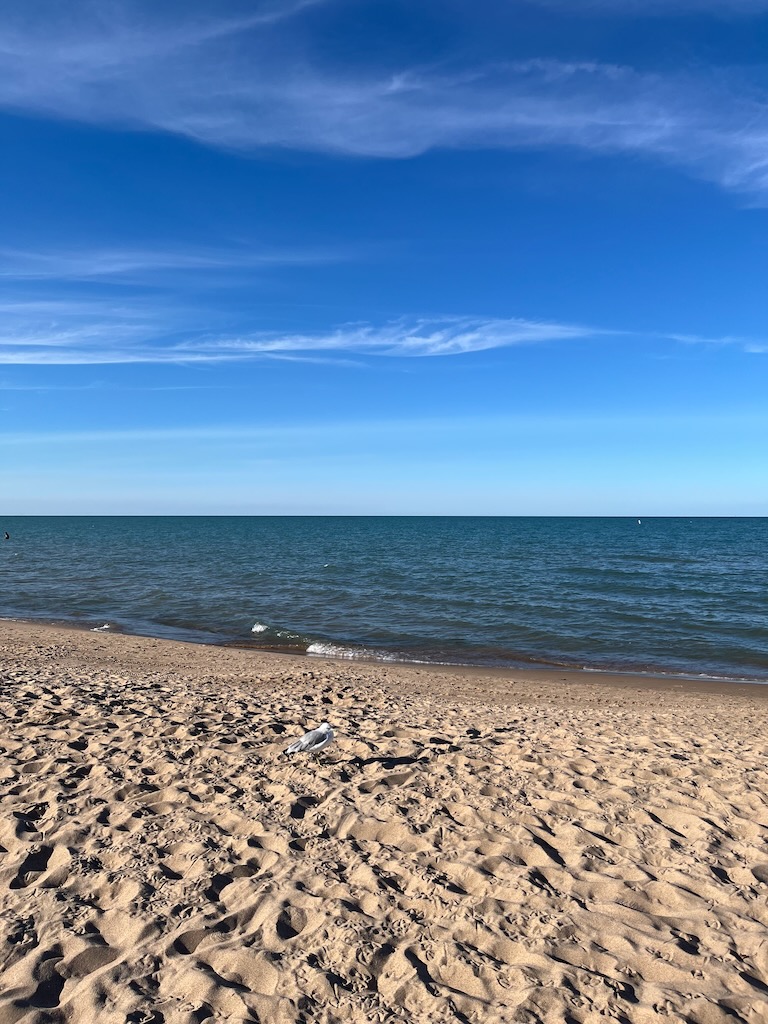
just the other day, i –– along with a rabbi i love and a gathering of women –– walked to the water’s edge, recited three blessings, and dropped into the water, into the great lake michigan. it was a cleansing, a beginning anew, a rite of purification. it was a mikveh, an ancient ancient tradition that is symbolically a turning of the page.
the question at the core of elul, “how should i live the existence that i am,” is one that especially quickened for me in a paragraph i read this week that had little to do with religion, and everything to do with the holiness of how we live our lives. it was the beginning of a review of a children’s picture book, and it was written by one of the high priestesses of everyday cultural commentary, maria popova.
she was writing about kamau & zuzu find a way, an “uncommonly soulful” story of a little boy and his grandmother who, somehow, find themselves living on the moon.
popova begins her essay this way:
The astonishing thing is that not one human being who ever lived has chosen the body, brain, place, or time to be born into, and yet in the narrow band of freedom between these chance parameters, we must find a way to live lives of substance and sweetness. Chance deals the hand and we must play it, and in how we choose to play it lies the measure of who we are.
“we must find a way to live lives of substance and sweetness.
“chance deals the hand and we must play it, and in how we choose to play it lies the measure of who we are.”
those are the questions i shall carry into my fading garden, and under the dome of a sky now rife with the cries and the calls of the flocks flying as one, in the migrational river that carries them faraway home.
in the quiet of your own soul, that’s the question for today: how do you choose to play the hand that chance has dealt you? what will be your sweetness and your substance?












 pull up a chair