with planes crashing into helicopters, and bodies falling into the potomac, and DEI blame being cast with no evidence in sight, i am in no mood to add more noise to the prattle. why tragedy needed to take a sharp turn into retribution, why our skies feel suddenly shaky, is only adding to the despondency i struggle to keep at bay.
i heard stories this week of kids i love, one in far off thailand teaching english in remote villages for the peace corps, terrified that the freezing of federal funds would shatter their dreams in the making. i’ve heard stories of dish washers and cooks in chicago’s little village, a mostly mexican corner of the city, afraid to show their face on the streets, forgoing paychecks in lieu of being handcuffed and torn from the families they love.
we live in a rippling circle of fear and confusion, a darkness is shrouding day after day.
in my teeny-tiny circle of life closer to home, some of that darkness is countered by flickering light. i find good reason for joy. feel wishes come blessedly true. i’ve lived to see a day i had prayed and prayed for, for one of my boys. and i am witness to the fire burning in the dreams of another.
just days ago, i was holed up in a rambling old house on the shore of one great lake with four glorious women whose lives have been marred and scarred by tragedy, and yet, they’ve risen. they’ve written their way through darkness toward light. and they are magnificent. and so so brave. (one wrote the searing memoir while you were out; two others are soon coming with masterpieces all their own. a fourth, i hope, will someday publish her stories that cut to the bone.)
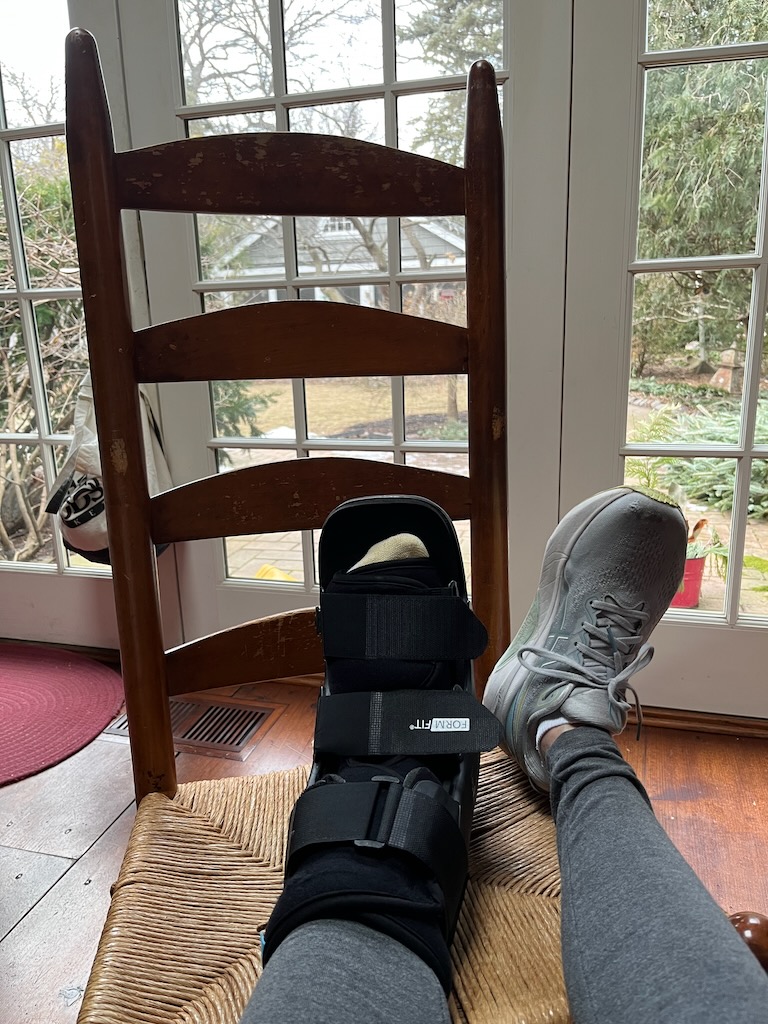
i hobbled home, after an otherwise uneventful walk on a stone-sprinkled beach, with an unhappy ankle.and a quick trip to the foot doc had me strapped into what feels like a leaden boot, and has curtailed my daily constitutionals for the next few weeks. but that’s not all: before week’s end, the resident triathlete in this old hovel had his knees poked and prodded and subjected to space-age medicine, and thus we’ve declared this the hobbledy house. indeed, we are a hobbling, most humbled pair, trading ice packs and heating pads, advil and tylenol, as prescribed by our duet of doctors.
and so my offerings this week rest on the shoulders of others far wiser, less wobbly, than me. cumulatively, they compound the point that we are the solution to the miasma that abounds.
this is our time, of all the times in our lives, to dig down deep as we can, and pull out the fiercest, finest truths we believe in. we must make true the life that ought to be. take it from this collection of seers and sages: clifton, mandelstam, rilke, and trommer, poets all.
In the bigger scheme of things the universe is not asking us to do something, the universe is asking us to be something. And that’s a whole different thing.
— Lucille Clifton
“What tense would you choose to live in?” the poet Osip Mandelstam once asked his journal, before answering his own question. “I want to live in the imperative of the future passive participle—in the ‘what ought to be.’”
Let this darkness be a bell tower and you the bell. As you ring, what batters you becomes your strength.
So I can’t save the world— can’t save even myself, can’t wrap my arms around every frightened child, can’t foster peace among nations, can’t bring love to all who feel unlovable. So I practice opening my heart right here in this room and being gentle with my insufficiency. I practice walking down the street heart first. And if it is insufficient to share love, I will practice loving anyway. I want to converse about truth, about trust. I want to invite compassion into every interaction. One willing heart can’t stop a war. One willing heart can’t feed all the hungry. And sometimes, daunted by a task too big, I tell myself what’s the use of trying? But today, the invitation is clear: to be ridiculously courageous in love. To open the heart like a lilac in May, knowing freeze is possible and opening anyway. To take love seriously. To give love wildly. To race up to the world as if I were a puppy, adoring and unjaded, stumbling on my own exuberance. To feel the shock of indifference, of anger, of cruelty, of fear, and stay open. To love as if it matters, as if the world depends on it.
how might you begin to try — not to save the world, nor even your own sweet self — to practice opening your heart, to be gentle with your insufficiencies, to take love seriously, give wildly, and live in the imperative of the future passive participle, in what “ought to be”?
i’ve been mulling these past few months how to move forward in a world where values that shatter me seem to be in ascendency: revenge, retribution, greed, humiliation, belittlement, and so much of it based on a metastasis of mistruth.
i’d been thinking that keeping my head down and plowing along in a spirit of turn-the-other-cheek, love-thy-neighbor-as-thyself might be a place to begin. might go a long distance.
but i don’t think that anymore.
i don’t think it’s nearly enough.
i think something much harder is called for. i think we’re called upon to reach deep in our souls, and pull up something called courage.
courage, when you’ve been taught to demur, to not make too many waves, courage when your father forbid you to use your real name in a basically-tame high school underground paper, courage when you don’t want to hurt those whom you love, can be an awkward suit to slip on.
i stumble sometimes trying to get my arms through its sleeves.
but i’m thinking it might be a fire built from these sticks: first, root yourself in verifiable truths (check, check, and triple check your sources); second, inhale grace; be clear; be compassionate; be compassionate. keep the most vulnerable keenly in your crosshairs.
and here’s the hard part: put voice to what you believe. correct mistruths when you hear them. amplify the voice of the voiceless. whether it’s in kitchen table conversations, or what serves as the modernday public square (my preference is those sites where fact-checking and vetting are part of the constitution). whether it’s spoken or scribbled or typed.
because conflict aversion lies deep in my DNA, and all but breaks me into hives, i find i’m less afraid when i remind myself that to hold a differing opinion is not to discount or disdain the one who holds it. without discourse, we all stay stuck. without courage, we’re cowards, wasting our time and our breath on our one short ride on this planet.
i’ve been keeping close watch all week on various lists of how to meet these times, how to keep on keeping on, and not a one of the lists suggests keeping mum. speak up. speak truth.
my own code of ethics is one that insists on gentleness, on a voice imbued with humility.
i heard such a voice this week, one that broke through the cacophonies that otherwise abounded, all wrapped in shimmering glitz. you won’t be surprised, perhaps, to know that it was an ordained woman of God, a bishop in washington DC, who took a deep breath, who acknowledged being afraid, but spoke up anyway, asking for mercy, one of the essential beatitudes outlined at the sermon on the mount. and she did so looking straight into the eyes of the newly-inaugurated president, who scowled and looked away, and later deemed her a “so-called Bishop” (reminds me of how, on national TV, he called my husband a “third-rate architecture critic,” adding that “most people thought he got fired,” back in the summer of 2014 on the Today Show, when they––along with Chicago’s mayor at the time––got into an architectural scuffle over the 20-foot-tall letters of the Trump sign on the real estate mogul’s eponymous Chicago skyscraper). And then in this week’s prayer service the President went on to add that the bishop was a “Radical Left hard line Trump hater.”
her name is mariann edgar budde, and she is the episcopal bishop of washington, DC. and the full 14:56 minutes of her sermon are worth a listen (or two.) my prayer is that in my one short swift and very small life, i might find such a voice in my own, and put breath to it when and where it most matters.
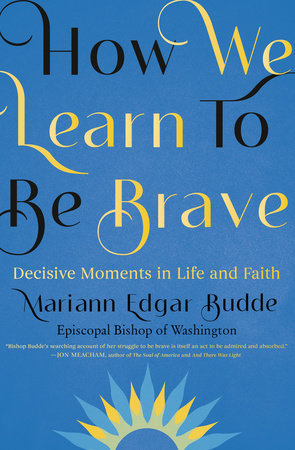
bishop budde, it turns out, wrote a book on how we learn to be brave. and i’ve peeked inside while awaiting my copy. worth reading is this:
and this:
and before signing off, inspiration on courage from kentucky bard and old-fashioned farmer wendell berry:
It may be that when we no longer know what to do, we have come to our real work and when we no longer know which way to go, we have begun our real journey.
The mind that is not baffled is not employed. The impeded stream is the one that sings.
― Wendell Berry
and the incomparable maya angelou:
INSPIRATION
We, unaccustomed to courage exiles from delight live coiled in shells of loneliness until love leaves its high holy temple and comes into our sight to liberate us into life.
Love arrives and in its train come ecstasies old memories of pleasure ancient histories of pain. Yet if we are bold, love strikes away the chains of fear from our souls.
We are weaned from our timidity In the flush of love’s light we dare be brave And suddenly we see that love costs all we are and will ever be. Yet it is only love which sets us free.
— Maya Angelou
where have you found courage of late? did it feel awkward? did it make a discernible difference?
i’m at a loss and not inclined this week to take up too much oxygen on this earth that is thirsting for rain. or snow. or even a dense fog to begin to smolder the flames that have made for apocalyptic infernos in the land of the backyard grapefruit and avocado, the storybook land where palm trees might be outnumbered only by show runners and gaffers and star-studded trailers.
the west coast is burning like hell and, among too many tragedies to count, one beloved friend has lost his whole classroom filled with 20 years of teaching, and others whom i don’t know have lost everything that constitutes the villages they call home: from the immigrant dry cleaners where they’re known by their shirts and their preference for starch, to the grocery stores where checkers are friends who ask about the kids and how quickly they’ve grown, to the churches and temples and mosques where knees are bent and prayers are sent up, to street after street of somebody’s home, once brimming with ballast and trinkets and treasures saved a whole life long––now embers at best.
it’s the unspoken threads, the immaterial, the irreplaceable human-to-human bonds that feel forever lost. and therein is the crushingest blow.
i often am inclined to keep the big, bad world at bay here. to set the table and let us live our pensive lives in sacred quietude, paying attention to the little noticed. but over the years, the outside has rushed in when the horrors and heartache are too much to ignore. when the grieving belongs to us all.
so it is with the incineration of the city of angels.
i can’t fathom it. can’t imagine the roar of a wall of flame barreling toward the windows, walls, and roofs where Christmas trees might have still been twinkling, where menorahs were just tucked back into cupboards. can’t imagine trying to not breathe in the toxins that are sure to leave scars in too many lungs (lungs are of prime consideration in my anatomy book these days).
my best friend, a long-time california girl, texts whenever she has even a percentage of power in her phone. and begs to talk so she can be soothed by the voice of someone not looking into the distance for the billowing smoke, or the closer-coming wall of red, orange, and blue flame.
she counts herself among the lucky unlucky, she says, for her husband indeed lost his meticulously cataloged classroom bookshelves, and his reams and reams of term papers saved (from before the digital age), and index card notes, and god knows what else a superstar english lit teacher saves. tragic irony is that he spent the summer finally clearing their garage of his files, and methodically transferring all to his bungalow classroom at Palisades Charter High, where beloved colleagues have lost classrooms and every bit of their homes. so suddenly the loss of only a classroom and a lifetime of teaching accoutrements stirs my best and longest friend to place herself in the lucky-unlucky column.
one of my brothers, one i adore for a million and ten reasons, not least of which is because he takes his care for the earth so deeply seriously, walking miles instead of driving, living with the sparest of necessities, always opting for a tent and starry night over any five-star hotel, hit the nail on the head when he captured the debacle thusly:
“Long past time for blame. It’s not politicians, it’s humankind. Most avoid living as if nature matters, yet many are surprised when nature reminds us that she matters. While sad, these fires and losses are not unimaginable.”
we need to do better. we need to remember: this earth is the heart of a sacred equation. it’s ours to romp in, to delight in, to “awe” in. it bountifully feeds us and clothes us and warms us and shelters us. and brings us infinite timeless wisdoms. but it’s begging we till it and keep it. as in the beginning, and ever after. amen.
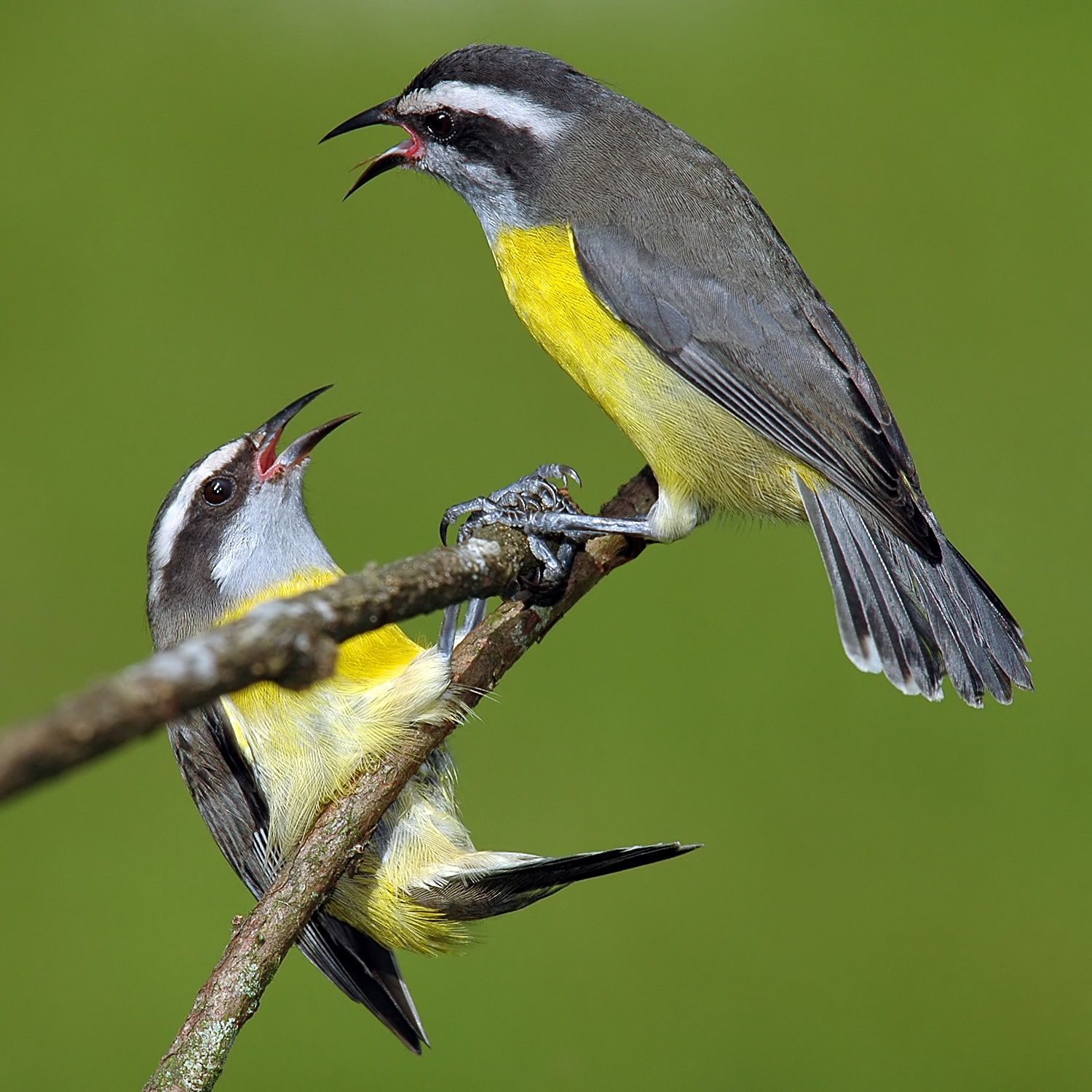
a pair of bananaquit
i’m turning for wisdom again to my friend and fellow pilgrim suleika jaouad, in which she further outlines her antidotes for worry and fear, two conditions that quite prominently rear their heads in CancerLand….(here, prompted by the first bird she saw this year, a little caribbean bird called bananaquit, with a common name “the sugar bird,” suleika went for sweetness as her quest for 2025…funny how intent the searching for essence becomes when life-altering diagnosis is the propellant….
Looking for the sweetness seems like a perfect antidote to the worry and fear. By looking for the sweetness, I mean seeking beauty, presence, and peace in every circumstance, letting go of my fears of suffering and death and what binds us to the material world, being nourished by what’s already inside of us—the nectar of bliss, as its called in Bhagavad Gita. It’s an ongoing practice—to stay nimble, to accept the constant flux, to find contentment wherever I am.
a simple question answered by a modernday mystic:
What do I mean by contemplation? And why does meditation lead us into this state of contemplation? Well, Thomas Aquinas defined contemplation very simply as ‘the simple enjoyment of the truth.’ The simple enjoyment of the truth. You couldn’t get anything more simple than that. It is simply finding joy in what is. —Brother Lawrence Freeman OSB, World Community for Christian Meditation
seek joy, dear friends. and thank heaven for the peace and calm and freedom from fear that allows you to sit pensively at your kitchen table, or to look out a window, mug of hot something in hand, and dream of a kinder, gentler, more just world of our making….
arguing that loving is not some passive happenstance that wafts in like fairy dust, but rather a human art that insists we practice as a painter would daub day after day at her paints, or a sculptor with her forms and clay, the great german social psychologist, psychoanalyst, and philosopher erich fromm in his 1956 masterwork The Art of Loving makes the case: love is a skill to be honed the way artists apprentice themselves to the work on the way to mastery, demanding of its practitioner both knowledge and effort.
The first step to take is to become aware that love is an art, just as living is an art; if we want to learn how to love we must proceed in the same way we have to proceed if we want to learn any other art, say music, painting, carpentry, or the art of medicine or engineering. What are the necessary steps in learning any art? The process of learning an art can be divided conveniently into two parts: one, the mastery of the theory; the other, the mastery of the practice. If I want to learn the art of medicine, I must first know the facts about the human body, and about various diseases. When I have all this theoretical knowledge, I am by no means competent in the art of medicine. I shall become a master in this art only after a great deal of practice, until eventually the results of my theoretical knowledge and the results of my practice are blended into one — my intuition, the essence of the mastery of any art. But, aside from learning the theory and practice, there is a third factor necessary to becoming a master in any art — the mastery of the art must be a matter of ultimate concern; there must be nothing else in the world more important than the art. This holds true for music, for medicine, for carpentry — and for love. And, maybe, here lies the answer to the question of why people in our culture try so rarely to learn this art, in spite of their obvious failures: in spite of the deep-seated craving for love, almost everything else is considered to be more important than love: success, prestige, money, power — almost all our energy is used for the learning of how to achieve these aims, and almost none to learn the art of loving. —Erich Fromm
and finally, simply because i love the language and the imagery, a bit of eliot to usher us into the week to come…
Chorus X from “The Rock” by T.S. Eliot
O Light Invisible, we praise Thee! Too bright for mortal vision. О Greater Light, we praise Thee for the less; The eastern light our spires touch at morning, The light that slants upon our western doors at evening. The twilight over stagnant pools at batflight, Moon light and star light, owl and moth light, Glow-worm glowlight on a grassblade. О Light Invisible, we worship Thee!
We thank Thee for the lights that we have kindled, The light of altar and of sanctuary; Small lights of those who meditate at midnight And lights directed through the coloured panes of windows And light reflected from the polished stone, The gilded carven wood, the coloured fresco. Our gaze is submarine, our eyes look upward And see the light that fractures through unquiet water. We see the light but see not whence it comes. О Light Invisible, we glorify Thee!
In our rhythm of earthly life we tire of light. We are glad when the day ends, when the play ends; and ecstasy is too much pain. We are children quickly tired: children who are up in the night and fall asleep as the rocket is fired; and the day is long for work or play. We tire of distraction or concentration, we sleep and are glad to sleep, Controlled by the rhythm of blood and the day and the night and the seasons. And we must extinguish the candle, put out the light and relight it; Forever must quench, forever relight the flame. Therefore we thank Thee for our little light, that is dappled with shadow. We thank Thee who hast moved us to building, to finding, to forming at the ends of our fingers and beams of our eyes. And when we have built an altar to the Invisible Light, we may set thereon the little lights for which our bodily vision is made. And we thank Thee that darkness reminds us of light. O Light Invisible, we give Thee thanks for Thine great glory!
“The Rock” was Eliot’s play written and performed in 1934, to raise money for the building of new churches. it speaks to humankind’s relation to God, and the implications of a world lived without religion. makes me wonder what Eliot might write today, in a world where religions have wandered so far from their holy essence. the “choruses” in this 21-page play are spoken by the workers, the bands of laborers who build the churches, and is thought to be strongly pro-religion with anti-communist overtones in reaction to the “looming shadow of totalitarian regimes building in Europe and the rumblings of the coming Second World War.” apt.
as i write this, snow in fat flakes is tumbling down, birds are traffic jammed at the feeder, and all is silent save for the ticking of an old, old arthritic clock and the whoosh of a furnace. i am so deeply conscious of how blessed we are that we take our physical safety for granted here in the middle lands this morning. instead of a question, this is a morning for simple reflection, counting the blessings we so often forget to notice….
top photo above by JOSH EDELSON/AFP via Getty Images
i clambered up from the basement yesterday morn, and found myself face-to-face with a whiteout. snow falling in thickets. snow whirling wildly. snow, snow, and more snow for hours and hours and hours.
it was all the currier & ives i needed to supercharge my countdown clock. the one that’s percolating at quicker and quicker clip as the days turn closer to wednesday a week, the eve of thanksgiving itself, when not just one but both of the boys i so love will––for the first time in almost a year––unfurl their dreams on the pillows of their long-ago boyhood beds, all nestled cozily under this mostly dependable, nearly centenarian roof.
and i will savor the joy of kissing both on the forehead as i trundle off to bed hours before my wide-eyed night owls, or should we all stay up till the same insensible hour i will give it my best waltons’ bedtime holler, and call out from under my bedsheets and across the hall and down a few stairs, “good night, will. good night, Bear. good night, old house. sweet dreams, my beautiful boys.”
it’s been a long hard autumn, held in the vise of worries and fear the likes of which i’d not recommend. and so this coming thanksgiving is the emotional equivalent of frank lloyd wright’s trademark compress-and-release, in which the great architect intentionally magnified the vast spaciousness of a room by first pressing in the walls and the ceiling of the space leading into the room, so that upon stepping through the tight corridor and into the vaulted chamber the sense of openness would be perceived as vaster than ever.
and so it is with the human dynamic of fear, grace, and gratitude: to walk through unbearable days, days that stretch into weeks, and weeks that stretch into more than a month, and then to find yourself falling into the arms of the human beings you most long to hold onto; it’s the pinnacle of paradise on earth, to be released from the vise and enwrapped in a love without end.
cancer sharpens that point. cancer sometimes brings on seasons of uncertainty that are quickly populated with ghosts and demons that defy containment. i’m learning the undulations of cancer that are colored in shades of gray. interminable shades of gray. questions that come without answers. doctors who call with unwelcome news. and barely stay on the line long enough to answer a single question. and then you hang up and feel the floor drop out from under you. sometimes––if you’re me––you take the short road to doom. because that’s what worriers do. we worry. we pray for holy release.
in time, we get a grip. regain our bearings. hold our chin high, dry our tears, practice at being brave. whistle into the in-blowing winds. hold tight to the hands of the one or two who know how dark it’s become, and we fall to our knees, or fold to the ground and enter the depths of divine meditation. i’ve spent more hours with eyes closed, palms open, sitting in silence, beckoning the perpetual God-flame within, than ever before. i’ve been tempted to beg, “more time, please.” but i don’t any longer believe i can––or hold any special claim to––change God’s equation, so what i pray for is grace. is heightened attention. what i pray for is an emphatic aliveness that infuses each turn of the day with unbarred acceptance. i don’t want to blink and miss something holy.
those prayers––for grace, for keen attention, for seeing deeper than ever day in and day out, for pausing to savor––are answered, blessedly. and my own season of unending thanks coincides with that of this nation founded on pillars of moral perpetude, and the hope of equal justice for all.
the essence of my life’s gratitude has always been the improbable miracle that i became a mother. that i birthed not one but two glorious humans, and devoted the best of my heart, my soul, my breath, my being, to carving out for them a space in which they’d be cocooned in the purest love i could imagine, could muster. along the way, i’ve tossed every life line i could whenever they needed, and now, lo and behold, they’re the lifelines and i’m the one needing.
and so all these past 45 days, i have longed for only one thing: hours more to sit side-by-side the ones i so fervently sumptuously love. to giggle at their antics. to marvel at their wild-eyed wonder tales. to feel their hands squeeze mine, to be wrapped in their arms, my ear pressed to their chest, absorbing the heartbeat i’ve loved since the very first ultrasound when that echoing lub-dub-dub poured over and through me like the holiest chrism.
this is a countdown like never before. and my heart is more than open for business. the business of loving my boys. in real time. under one shared and sheltering roof.
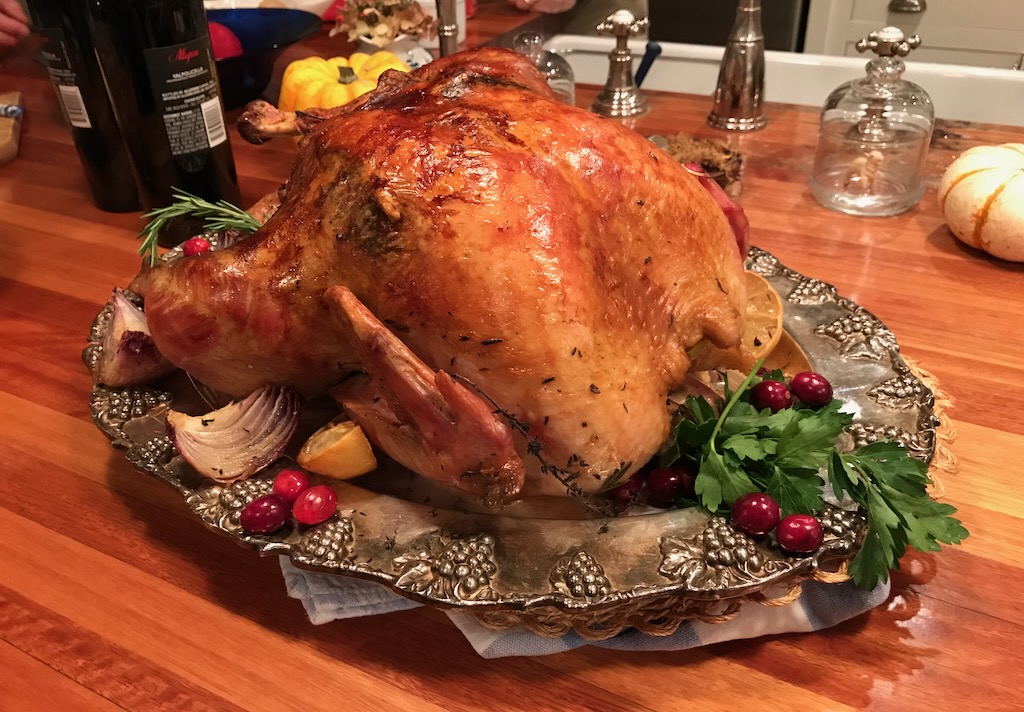
thanksgiving morn, a few years ago.
here’s a poem, fittingly, a prayer poem by the great madeleine l’engle, who lived by words but found herself wordless in prayer. which, indeed, is sometimes the way to our deepest depths…
Word
I, who live by words, am wordless when I try my words in prayer. All language turns To silence. Prayer will take my words and then Reveal their emptiness. The stilled voice learns To hold its peace, to listen with the heart To silence that is joy, is adoration. The self is shattered, all words torn apart In this strange patterned time of contemplation That, in time, breaks time, breaks word, breaks me, And then, in silence, leaves me healed and mended. I leave, returned to language, for I see Through words, even when all words are ended. I, who live by words, am wordless when I turn me to the Word to pray. Amen.
––Madeleine L’Engle
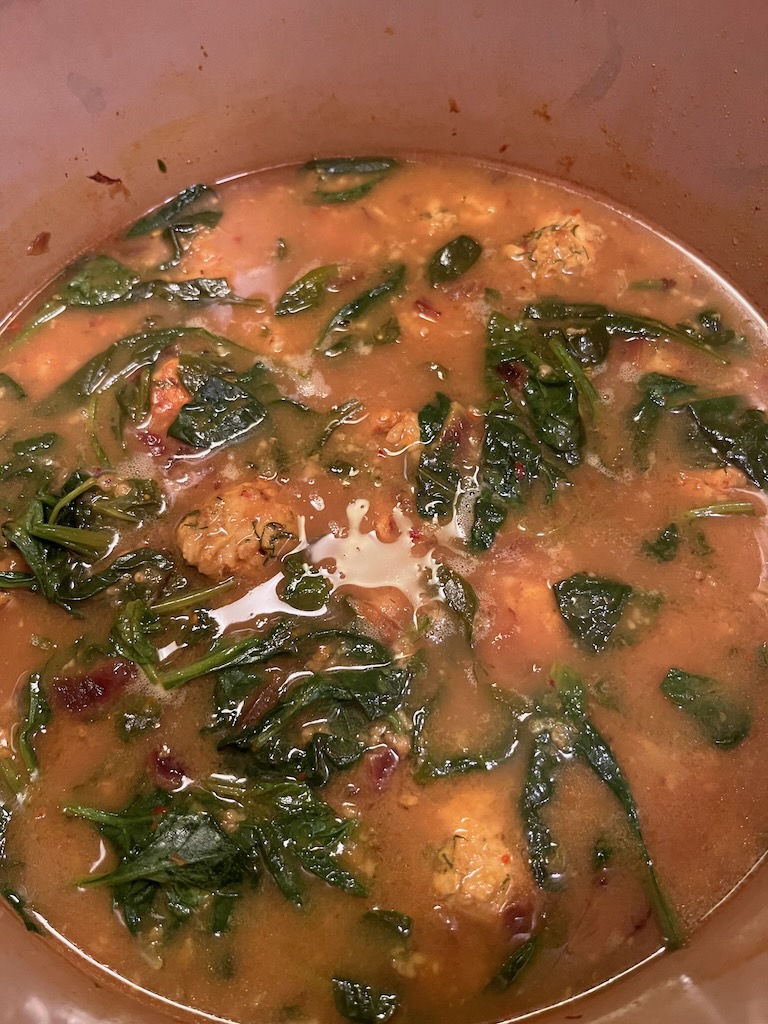
and here, because i love to imagine ladling steaming bowls of soup to people i love, is my new favorite stoup recipe, lemony chicken-feta meatball with spinach from my friends at NYT Cooking (you will be licking the bowl; it’s that good):
Lemony Chicken-Feta Meatball Soup With Spinach By Yasmin Fahr Yield: 4 servings Total Time: 30 minutes Note from NYT: Some might be suspicious of the rolled oats called for in this recipe, but used in place of breadcrumbs, they help create a light and tender chicken meatball. A half-cup more is simmered in the broth, which thickens it and provides a pleasant texture. The meatballs, made with ground chicken, feta and fresh dill, swim in a lemony, spinach-filled broth that’s comforting and light, perfect for lunch or dinner. Serve any leftovers with a fresh squeeze of lemon juice to brighten the soup.
INGREDIENTS 1 pound ground chicken or turkey, preferably dark meat (i use white meat) ½ cup crumbled feta ¾ cup old-fashioned rolled oats 1 small red onion, halved (½ diced, and ½ grated, then squeezed with a paper towel to remove excess liquid) ⅓ packed cup fresh dill leaves and fine stems, finely chopped 1 tablespoon ground cumin ½ teaspoon plus 1 tablespoon ground turmeric Kosher salt and black pepper 3 tablespoons olive oil ½ teaspoon red-pepper flakes, plus more for serving 4 cups low-sodium chicken broth 4 packed cups baby spinach (about 5 ounces) 2 lemons (1 juiced and 1 cut into wedges for serving)
PREPARATION Step 1 In a medium bowl, add the chicken, feta, ¼ cup oats, the grated onion, most of the dill (reserve about 2 tablespoons for garnish), the cumin, ½ teaspoon turmeric and 1 teaspoon salt. Gently combine without squeezing too hard or overworking the meat. Lightly wet your palms and shape the meat into small balls, a little smaller than the size of a golf ball, about 1½ inches. (You will have approximately 25 balls.)
Step 2 Heat the oil in a large Dutch oven or wide pot over medium until shimmering. Add the diced onion, season with salt, and cook until it begins to soften, about 2 minutes, stirring occasionally. Add the remaining 1 tablespoon turmeric and the red-pepper flakes, and stir until fragrant, about 30 seconds. Push the onions to the sides as best you can, then add the meatballs. (They will be close together, and that’s OK.) Cook until browned on two sides, 5 to 7 minutes total.
Step 3 Pour in the broth and remaining ½ cup oats, then gently tilt the pot to the right and left to distribute the oats and broth without disturbing the meatballs. Bring to a gentle boil, then immediately reduce the heat to maintain an active simmer. Season with salt. Cook, gently stirring occasionally to make sure nothing is sticking to the bottom, until the oats have softened and the meatballs are cooked through, about 4 minutes more.
Step 4 Stir in the spinach and lemon juice until the spinach is wilted, about 2 minutes more. Adjust the seasoning to taste. Spoon into bowls, top with pepper and the remaining dill. Serve with lemon wedges.
what is your heart longing for this season of through-and-through thanks?
in which these uncharted times have me leaning on the wisdoms of great minds and expansive souls who’ve navigated their own immensely dark and tough times…
more and more i find history is my balm. i think back to the eras of darkness across the arc of time and the indomitable human spirit that has never yet been extinguished, no matter the force of the counterwinds.
albert camus
curiously, albert camus––whom i’d never thought of as any sort of balm––has served well in that role. though considering the era in which he was writing, it’s no wonder it was darkness he saw through, shone a fierce beam of light on the way through the horrors of europe during the holocaust.
so often it’s the artists and writers, the makers of films and penners of poems, the ones endowed with an eye to see beyond the occlusions, the ones who imagine what others can’t conceive, who cast the lifeline beyond the capacities of strategists and political operators, power brokers and thieves.
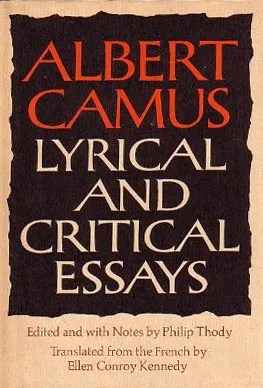
in his 1940 essay titled “the almond trees” (a species that brilliantly blooms in winter), found in his Lyrical and Critical Essays, camus weighs in on happiness, despair, and how to amplify our love of life.
only twenty-seven when he wrote this, here is the french-algerian philosopher who gave us the plague, the fall, the stranger,and the myth of sisyphus:
We have not overcome our condition, and yet we know it better. We know that we live in contradiction, but we also know that we must refuse this contradiction and do what is needed to reduce it. Our task as [humans] is to find the few principles that will calm the infinite anguish of free souls. We must mend what has been torn apart, make justice imaginable again in a world so obviously unjust, give happiness a meaning once more to peoples poisoned by the misery of the century. Naturally, it is a superhuman task. But superhuman is the term for tasks [we] take a long time to accomplish, that’s all.
Let us know our aims then, holding fast to the mind, even if force puts on a thoughtful or a comfortable face in order to seduce us. The first thing is not to despair. Let us not listen too much to those who proclaim that the world is at an end. Civilizations do not die so easily, and even if our world were to collapse, it would not have been the first. It is indeed true that we live in tragic times. But too many people confuse tragedy with despair. “Tragedy,” [D.H.] Lawrence said, “ought to be a great kick at misery.” This is a healthy and immediately applicable thought. There are many things today deserving such a kick.
echoing the sentiments of an earlier manifesto written in the immediate wake of the first world war, the 1919 “declaration of the independence of the mind,” again by a french philosopher, this time romain rolland––and signed by such luminaries as bertrand russell, albert einstein, bengali poet and nobel laureate rabindranath tagore (a favorite of mary oliver), social worker and activist jane addams (chicago’s own), upton sinclair, and hermann hesse––camus argues that this “kick” is to be “delivered by the deliberate cultivation of the mind’s highest virtues”:
If we are to save the mind we must ignore its gloomy virtues and celebrate its strength and wonder. Our world is poisoned by its misery, and seems to wallow in it. It has utterly surrendered to that evil which Nietzsche called the spirit of heaviness. Let us not add to this. It is futile to weep over the mind, it is enough to labor for it.
But where are the conquering virtues of the mind? The same Nietzsche listed them as mortal enemies to heaviness of the spirit. For him, they are strength of character, taste, the “world,” classical happiness, severe pride, the cold frugality of the wise. More than ever, these virtues are necessary today, and each of us can choose the one that suits him best. Before the vastness of the undertaking, let no one forget strength of character. I don’t mean the theatrical kind on political platforms, complete with frowns and threatening gestures. But the kind that through the virtue of its purity and its sap, stands up to all the winds that blow in from the sea. Such is the strength of character that in the winter of the world will prepare the fruit.
elsewhere in lyrical and critical essays, we find the line that practically serves as camus’s epigraph: “in the depths of winter, i finally learned that within me there lay an invincible summer.”
toni morrison
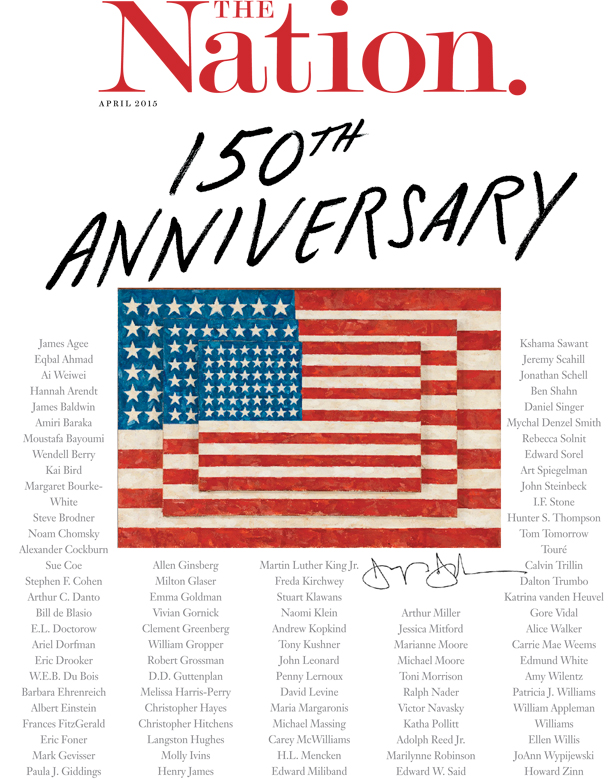
no less than toni morrison takes the baton, elaborating that the task of the artist is as a grounding and elevating force in turbulent times, in her essay titled “no place for self-pity, no room for fear,” included in the 150th anniversary issue of the nation, the monthly founded by abolitionists in 1865, not long after the adoption of the thirteenth amendment abolishing slavery.
morrison writes:
This is precisely the time when artists go to work. There is no time for despair, no place for self-pity, no need for silence, no room for fear. We speak, we write, we do language. That is how civilizations heal.
I know the world is bruised and bleeding, and though it is important not to ignore its pain, it is also critical to refuse to succumb to its malevolence. Like failure, chaos contains information that can lead to knowledge — even wisdom. Like art.
marcus aurelius
and finally let us turn way back the clock to ancient wisdoms, in this case those of good ol’ marcus aurelius, the roman emperor whose meditations were suggested to me the other day by one of my more astute and heavenly comrades. the meditations, written in the late second century of the Common Era during the emperor’s military campaigns against germanic tribes along the danube, are thought to be a window into his inner life, uncannily recognizable to our own deep-down whisperings. i borrowed the stoics from the library, but have already decided i need a paper copy all my own, the better for underscoring and stars in the margins. here’s but one of marcus’s wonders, from book II of his meditations, thought to be written in about the year 170 C.E. (uncanny how true wisdom is timeless, as this fits the november of 2024 as fulsomely as it fit nearly two millennia ago):
Begin the morning by saying to thyself, I shall meet with the busybody, the ungrateful, arrogant, deceitful, envious, unsocial. All these things happen to them by reason of their ignorance of what is good and evil. But I who have seen the nature of the good that it is beautiful, and of the bad that it is ugly, and the nature of him who does wrong, that it is akin to me, not [only] of the same blood or seed, but that it participates in [the same] intelligence and [the same] portion of the divinity, I can neither be injured by any of them, for no one can fix on me what is ugly, nor can I be angry with my kinsman, nor hate him. For we are made for co-operation, like feet, like hands, like eyelids, like the rows of the upper and lower teeth. To act against one another then is contrary to nature; and it is acting against one another to be vexed and to turn away.
what timeless wisdoms do you find anchoring, or elevating? and where might lie your invincible summer; how might you summon it?
here’s a challenge: imagine what’s possible. work toward it. begin with a baby step.
only when it is dark enough can you see the stars…
Undaunted is the word that came to me. Once the shock began to dull. Once I quelled the queasing in my belly. Once I decided I won’t surrender this blessed world, won’t shift the course of the project I call my most urgent life’s work.
I am undaunted.
My life’s work is accelerated these days. Its urgency is upon me, upon us all.
My life’s work aligns with that of every sage and mystic that ever has been: I am devoted to molding myself closer and closer to the holiness I was made to be, we were all made to be. Because this world is a sacred work in progress, and we are its players. We are the ones with the hearts and minds and hands to bend the arc of justice, to kindle more and more brightly the flame of the sacred. To reach toward the holiness infused through our every breath, every utterance, every inkling. The whole of it. At every turn. To be gentle, and kind. To tenderize the fibers of our heart. Especially the ones that have been torn and shorn over the years.
This is a path beyond the politics and power seekers of the world. I answer to a call from deep within, the eternal flame of the Divine breathed into us all in the beginning. In our beginnings. And the very beginning.
We’re called to play out our work in the milieu of the everyday, on a plane peopled with those who might test us, or just as certainly––often, more certainly––those who reach out a hand, and carry us along. Shimmy us onto their shoulders, if need be. And we in turn will do the same when we’re the ones whose knees aren’t buckling.
It’s contagious more often than not, this reaching toward kindness, toward peeling open the heart, digging deep, living for joy.
I’ve come to know that it’s a work best played out in incremental barely-noticed exchanges: the heart-melting smile shared in a crowded hallway; the hospital scheduler who takes the time to squeeze your hand, knowing you’re afraid; the grocery-store clerk who wipes away the tear that has crept down your cheek.
I once dreamed of solving world problems, curing life-crippling ills. Now, all I ask of each day is that I find moments to be bigger than I’ve been before, to reach deeper into the well of ordinary kindness, to bow my head and heart in deep thanks for every drop of beauty, wonder, decency.
That work is unaffected by whatever plays out on the world stage. The powers that be hold no power over our souls, and we needn’t succumb. Needn’t employ the crude or the cruel we witness too, too often these days; in fact, we need amplify the opposing forces. Be radical in our generosity. Our empathies. Our magnanimity. Our humility. And our righteous indignation when called for.
It so happens that this week found me being schooled in some of these very practices, and through the doorways of two great world religions. On Monday, a magnificent soul who happens to be a Hindu yogi, sat me down, lit a candle, and taught me the ways of deep meditation, turning my focus inward to the eternal flame of the Divine within; I am practicing every day. On Wednesday, I walked into the first of a series of classes at our synagogue on an ancient Jewish spiritual practice called the Mussar, centered on the verse in the Torah that tells us, “You shall be holy.” By drawing on seventeen soul attributes, and spending an arc of time––a season, a month, a week––keenly attuned to each, we exercise the muscles of our deepest being to become holy, to work toward our “primary mission in this world…to purify and elevate the soul.” The practice begins with humility.
In simplest terms, as the great Chasidic teacher known as the Kotzker, once put it: “Fine, be holy. But remember first one has to be a mensch.”
No one can stop us. Mensches will be we.
I’ve spent the week gathering around me a wagon train of wisdoms, a line from the Talmud, a prayer from Judy Chicago, a profoundly wise passage from EM Forster, another from Hannah Arendt, a post from Rebecca Solnit, and finally a paragraph or two from Kamala Harris’ gracious concession speech…..
from the wisdom of the Talmud, found in what’s known as the Pirkei Avot, which translates to Chapters of the [Fore]Fathers, a compilation of ethical teachings and maxims from Rabbinic Jewish tradition. It is a part of the Mishnah, a code of Jewish law compiled in the early third century of the Common Era.
“Do not be daunted by the enormity of the world’s grief. Do justly now, love mercy now, walk humbly now. You are not obligated to complete the work, but neither are you free to abandon it.”
A Prayer for Our Nation by Judy Chicago
And then all that has divided us will merge And then compassion will be wedded to power And then softness will come to a world that is harsh and unkind And then both men and women will be gentle And then both women and men will be strong And then no person will be subject to another’s will And then all will be rich and free and varied And then the greed of some will give way to the needs of many And then all will share equally in the Earth’s abundance And then all will care for the sick and the weak and the old And then all will nourish the young And then all will cherish life’s creatures And then all will live in harmony with each other and the Earth And then everywhere will be called Eden once again.
The English novelist, essayist, and broadcaster E.M. Forster (January 1, 1879–June 7, 1970) took up questions of societal empathies in an essay titled “What I Believe,” originally written just before the outbreak of WWII and later included in the out-of-print Two Cheers for Democracy, his 1951 collection of essays based on his wartime anti-Nazi broadcasts. Here’s Forster:
I distrust Great Men. They produce a desert of uniformity around them and often a pool of blood too… I believe in aristocracy, though… Not an aristocracy of power, based upon rank and influence, but an aristocracy of the sensitive, the considerate and the plucky. Its members are to be found in all nations and classes, and all through the ages, and there is a secret understanding between them when they meet. They represent the true human tradition, the one permanent victory of our queer race over cruelty and chaos. Thousands of them perish in obscurity, a few are great names. They are sensitive for others as well as for themselves, they are considerate without being fussy, their pluck is not swankiness but the power to endure, and they can take a joke… Their temple… is the holiness of the Heart’s affections, and their kingdom, though they never possess it, is the wide-open world.
With this type of person knocking about, and constantly crossing one’s path if one has eyes to see or hands to feel, the experiment of earthly life cannot be dismissed as a failure.
Politcial theorist and philosopher Hannah Arendt reminds us our reach for change needn’t be in the boldest strokes in The Human Condition, her 1958 study of the state of modern humanity, thought to be more striking now than at the time of its first publishing. Here’s but one sentence underscoring that claim:
“The smallest act in the most limited circumstances, bears the seed of… boundlessness, because one deed, and sometimes one word, suffices to change every constellation.”
Rebecca Solnit’s message the morning after the election:
You are not giving up, and neither am I. The fact that we cannot save everything does not mean we cannot save anything and everything we can save is worth saving. You may need to grieve or scream or take time off, but you have a role no matter what, and right now good friends and good principles are worth gathering in. Remember what you love. Remember what loves you. Remember …what love is. The pain you feel is because of what you love.
and finally, these two passages from Kamala’s gracious concession speech:
Fight in the voting booth, in the courts and in the public square. And … in quieter ways: in how we live our lives by treating one another with kindness and respect, by looking in the face of a stranger and seeing a neighbor, by always using our strength to lift people up, to fight for the dignity that all people deserve. The fight for our freedom will take hard work. … The important thing is don’t ever give up. Don’t ever give up. Don’t ever stop trying to make the world a better place. … This is not a time to throw up our hands. This is a time to roll up our sleeves. This is a time to organize, to mobilize, and to stay engaged for the sake of freedom and justice and the future that we all know we can build together.
and she closed with this…
You have the capacity to do extraordinary good in the world. And so to everyone who is watching, do not despair. This is not a time to throw up our hands. This is a time to roll up our sleeves. This is a time to organize, to mobilize, and to stay engaged for the sake of freedom and justice and the future that we all know we can build together. Look, many of you know I started out as a prosecutor and throughout my career I saw people at some of the worst times in their lives. People who had suffered great harm and great pain, and yet found within themselves the strength and the courage and the resolve to take the stand, to take a stand, to fight for justice, to fight for themselves, to fight for others. So let their courage be our inspiration. Let their determination be our charge. And I’ll close with this. There’s an adage a historian once called a law of history, true of every society across the ages. The adage is, only when it is dark enough can you see the stars. I know many people feel like we are entering a dark time, but for the benefit of us all, I hope that is not the case. But here’s the thing, America, if it is, let us fill the sky with the light of a brilliant, brilliant billion of stars.
what bright stars did you see this week? and how do you intend to carry on?
to those who note the rare use of caps this week, indeed sometimes you need to stand tall and say it loud and with proper capitalization, and so it is this fine morning. i mean what i say, and i say it undaunted.
in which a writing assignment, one that’s wholly captured my imagination, has taken over my gray matter (the stuff inside my head, not the pewter hairs that spring from it), and precluded most any other human activity—save for the occasional re-fueling at the cookstove to keep from puddling to the floor, famished. and for which i’ve shared my simmering salvation down below…
excuse me while i type over here. i seem to have fallen down-down-down into an engrossing writerly rabbit hole, and as the week’s worn on, i’ve only found myself burrowing deeper and deeper. it’s been a while since i’ve chased a thread of idea down to where the earthworms wriggle and the bunnies make hutches. and while i admit that my inner mad-scientist might be vividly on display here, in the way that i can’t put down my wild-eyed pursuit, there is a preponderance of joy stirring the madness.
i love chasing ideas. love untangling cognitive threads. discovering new ways of thinking i’d not known of before. love when one read leads to another and another. and then it’s my task to slice it, and dice it, and make it all make sense. extra points if it comes out poetic.
i’ve been a rabbit-hole writer as long as i’ve been slapping verbs and nouns into sentences. back in high school, i decided to write a mega theme paper on the misuse of wealth in america, and pretty much took hostage the dining room table for weeks on end. if anyone wanted easter dinner that year, they were going to have to shove aside my teetering stacks of tomes chronicling the gatsby brigade of modernday over-conspicuous consumption. years later, when the tribune set me off on a cross-country steinbeckian journey, zigzagging the continent from the deep woods of maine to the pacific northwest and plenty of points between, chronicling stories of hunger in america for a 10-part series, i distinctly remember my editor, a rumpled import from the new york times, sauntering over to my cubicle and insisting i unchain myself from my keyboard to at least stand under a shower, or swim a lap in a pool, long enough for one or two big ideas to snap into place. i was never much for taking breaks.
granted, writing that way might have been bad for the eyes and tough on the spine and the wrist, but i kept at it (one night, in the thick of telling a murderous tale, my writing partner and i took turns falling asleep on a very fat phone book). until i birthed a wee child. and said child insisted on eating. and i was the source, the one and only. swiftly realizing that typing while nursing had its drawbacks, i reluctantly succumbed to the art of the pause.
lo and behold, i discovered epiphany.
amazing things happen in the chambers of the mind when you stop hard-charging the thoughts. when you allow a synapse to slow to a pokier pace.
more often than i wish to admit, some elusive sentence has snapped into place while rinsing a plate under the faucet. and a sugarplum of a word has skydived in from seeminly nowhere. so i’ll concede that there’s virtue in lifting my head from the writerly hole.
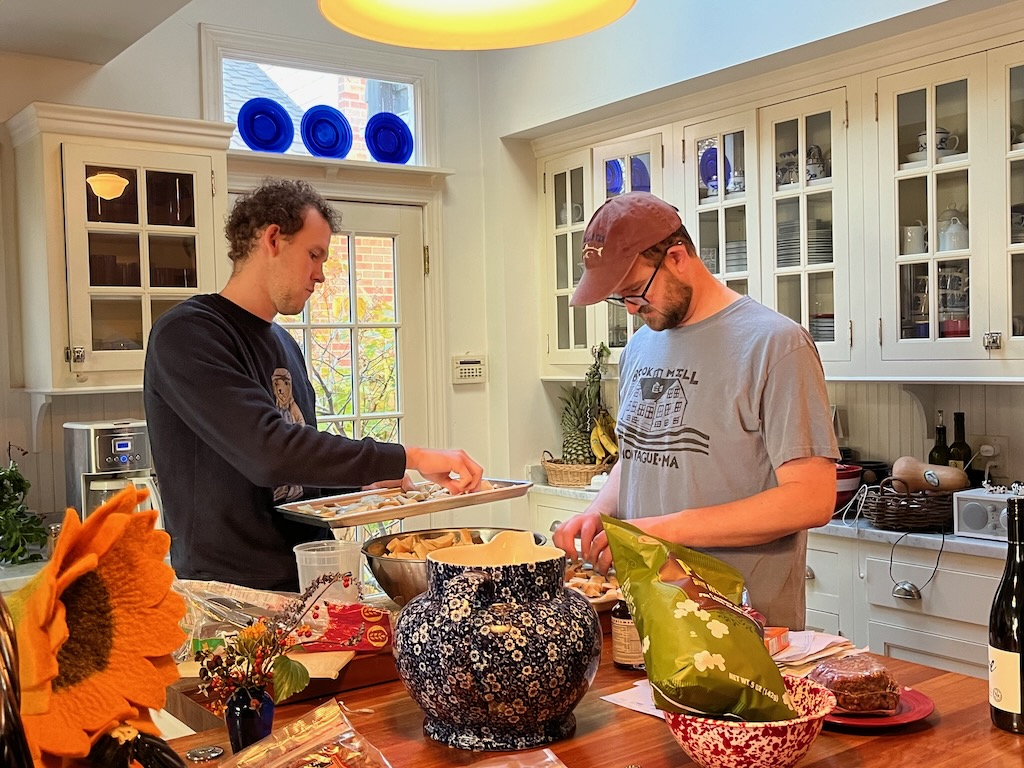
but now that this old house is mostly empty again, there’s no stopping me. except that there is still one other mouth to feed. (fear not, he feeds himself well and is happy to do so on the nights i relinquish my post at the cookstove.) and besides, chopping and stirring, i’ve found, provides fine syncopation for the drumming of thoughts while assembling an essay.
soup by the kettleful is my solution. all it takes is one afternoon of onion slicing, garlic mincing, and the tossing in of a few other things. and by nightfall, and the night after too, you’ve got plenty to slurp from your bowl.
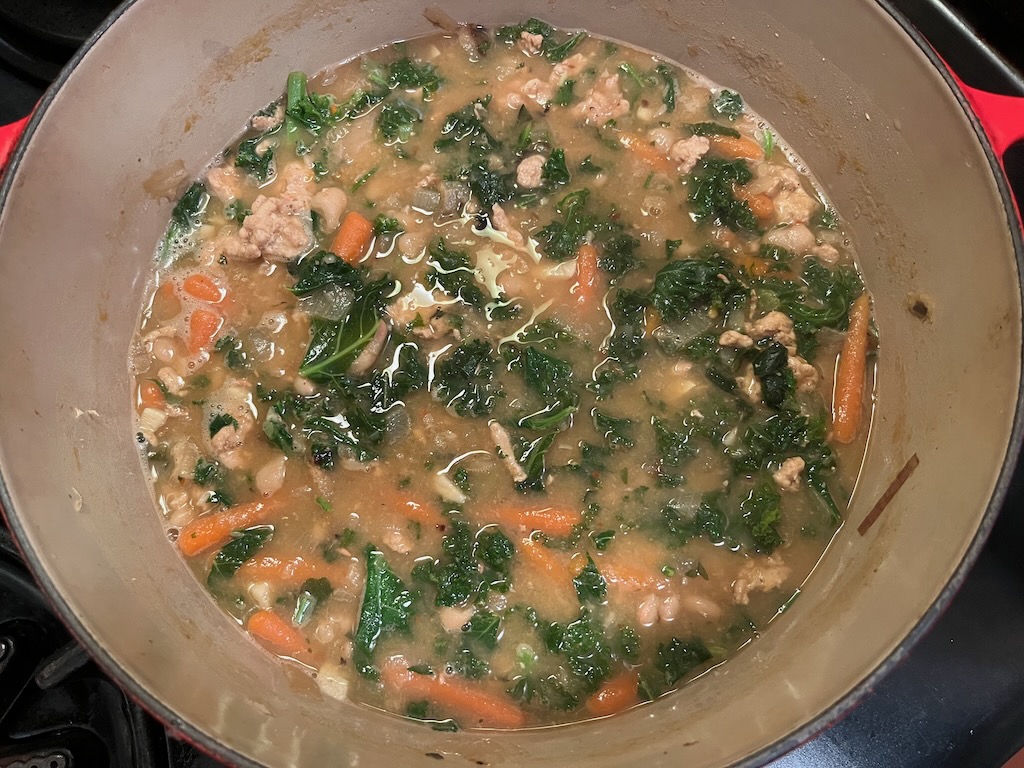
my ode to autumn, lemony white bean soup with turkey and tuscan kale, is what i bring you this week with the promise that it is utterly, perfectly, shlurpably delicious. it comes, as so much of my best cooking does, from my very fine friends at NYT Cooking, one of the perqs of seven-day-a-week home delivery, the last house this side of the block to still believe in turning actual newsprint pages.
Lemony White Bean Soup With Turkey and Greens By Melissa Clark Total Time 45 minutes
INGREDIENTS Yield: 4 servings
3 tablespoons olive oil 1 large onion, diced 1 large carrot, diced 1 bunch sturdy greens, such as kale, broccoli rabe, mustard greens or collard greens 1 tablespoon tomato paste 3⁄4 teaspoon ground cumin, plus more to taste 1⁄8 teaspoon red-pepper flakes, plus more to taste 1⁄2 pound ground turkey 3 garlic cloves, minced 1 tablespoon finely grated fresh ginger 1 teaspoon kosher salt, plus more to taste 1 quart chicken stock 2 (15-ounce) cans white beans, drained and rinsed 1 cup chopped fresh, soft herbs, such as parsley, mint, dill, basil, tarragon, chives or a combination Fresh lemon juice, to taste
PREPARATION
Step 1: Heat a large pot over medium-high for a minute or so to warm it up. Add the oil and heat until it thins out, about 30 seconds. Add onion and carrot, and sauté until very soft and brown at the edges, 7 to 10 minutes.
Step 2: Meanwhile, rinse the greens and pull the leaves off the stems. Tear or chop into bite-size pieces and set aside.
Step 3: When the onion is golden, add tomato paste, 3⁄4 teaspoon cumin and 1⁄8 teaspoon red-pepper flakes to the pot, and sauté until paste darkens, about 1 minute. Add turkey, garlic, ginger and 1 teaspoon salt, and sauté, breaking up the meat with your spoon, until turkey is browned in spots, 4 to 7 minutes.
Step 4: Add stock and beans, and bring to a simmer. Let simmer until the soup is thick and flavorful, adding more salt if needed, 15 to 25 minutes. If you like a thicker broth, you can smash some of the beans with the back of the spoon to release their starch. Or leave the beans whole for a brothier soup.
Step 5: Add the greens to the pot and simmer until they are very soft. This will take 5 to 10 minutes for most greens, but tough collard greens might take 15 minutes. (Add a little water if the broth gets too reduced.)
Step 6: Stir herbs and lemon juice into the pot, taste and add more salt, cumin and lemon until the broth is lively and bright-tasting. Serve topped with a drizzle of olive oil and more red-pepper flakes, if desired.
and because even amid my mad musing this week, i still found myself melted by poetry, i bring you this beauty…
End of Summer
An agitation of the air, A perturbation of the light Admonished me the unloved year Would turn on its hinge that night.
I stood in the disenchanted field Amid the stubble and the stones, Amazed, while a small worm lisped to me The song of my marrow-bones.
Blue poured into summer blue, A hawk broke from his cloudless tower, The roof of the silo blazed, and I knew That part of my life was over.
Already the iron door of the north Clangs open: birds, leaves, snows Order their populations forth, And a cruel wind blows. —Stanley Kunitz
named the tenth poet laureate of the united states in the autumn of 2000, kunitz was 95 at the time. his poetry was said to get richer with age. and one of his lifetime’s most pervasive themes probed the simultaneity of life and death. “it’s the way things are: death and life inextricably bound to each other,” he once explained. “one of my feelings about working the land [as a gardener] is that i am celebrating a ritual of death and resurrection. every spring i feel that. i am never closer to the miraculous than when i am grubbing in the soil.” he once told the new york times: “the deepest thing i know is that i am living and dying at once, and my conviction is to report that dialogue. it is a rather terrifying thought that is at the root of much of my poetry.” kunitz won the pulitzer prize in poetry in 1959. he died in 2006. (boldface emphasis mine…)
“my conviction is to report that dialogue. . .” and thus is the reason writers fall into rabbit holes…
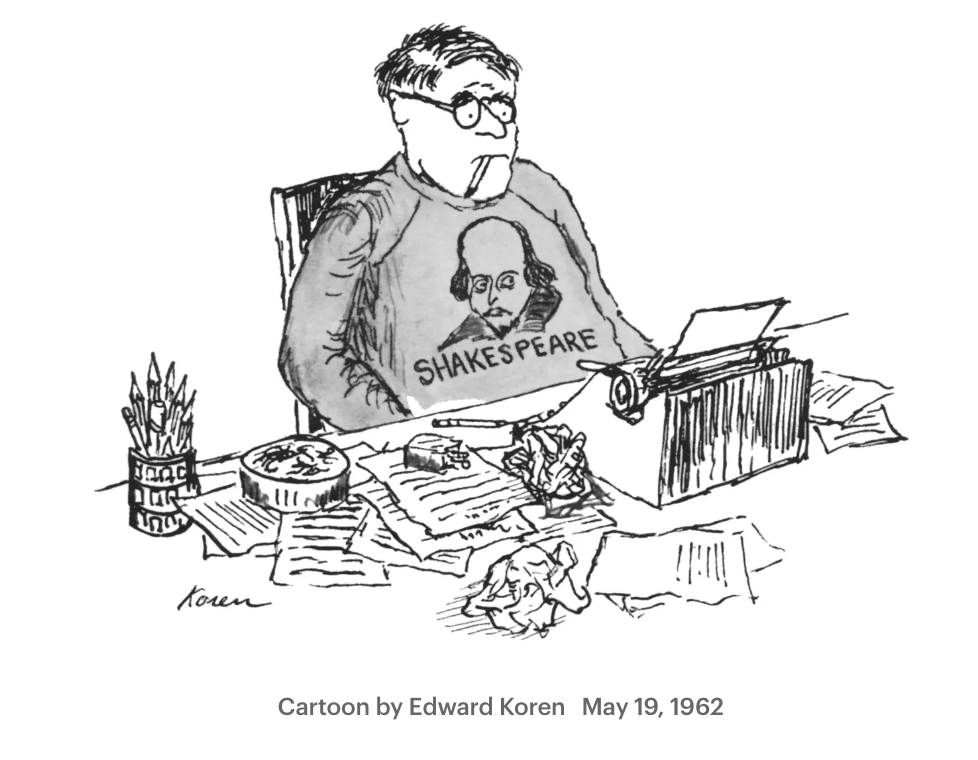
i was looking high and low for a roz chast cartoon of a madwoman pulling her hair out, for illustrative purposes above. but, alas, i could not find. though ed koren’s wild-haired woman did come in a close second, and in the end i opted for the wanna-be writer above, courtesy of mr. koren…
see you next week when if all goes well i hope to tell you the story of how i got myself a new name last week, and a hebrew one at that…
in the meantime, are you, like me, one who prefers to tie on the blinders and not come up for air till the task is completed, or are you of the sort who finds that leisurely attending to a task makes for all-round saner existence?
maybe my world is shrinking, or maybe pragmatism comes with creaky knees and hair turned pewter white. once upon a time i dreamed i might figure out a way to end world hunger. nowadays i spend my days worrying about how to make peace on the little block of houses where i live.
i’ve somehow shrunken my visionary zeal, realized i’m no melinda french gates and will never swipe the planet of those scourges — polio and TB and cluster bombs — that wreak a hardly-holy hell.
what consumes me nowadays is the hard task of human beings bumping up against each other with their curious quirks and rough spots. long ago, when i had my nose in books about saving the planet from the scourge of hunger, when i failed to set the dinner table cuz i was on the phone with a friend in tears, my mama used to drive me nuts with her refrain: “charity begins at home.” i thought that was just another way of getting me to mind my chores.
but, decades later, i get it. i get how hard it is to attend to the one simple command at the core of nearly every world religion: love thy neighbor.
yes, love the lady who shrieks out her window. love the guy whose dog barks through the night. love the ones who park their fancy car in the middle of the alley and don’t think they might be blocking your way.
it’s in the fine grain that we stumble. and that where the grit pits our knees.
it’s pie in the sky — and a cheap way out — to talk in platitudes. it’s a whole other thing to meet that someone on the sidewalk, to look into her eyes, and talk it out. to say i am so sorry you were hurt. to say, i’ll fix it. to invite someone in for coffee — after she’s made it clear she doesn’t much like the way you leave your christmas lights strung up till easter.
i’m not the one who’s in trouble at the moment. but i happen to know that of the eight houses on my side of the block, four are deep in scuffles. and it sickens me to know that in a single ZIP code we cannot find a way toward peace.
and it throws me back to that radical jesus, and maimonides not too long after, and buddha, and mahatma gandhi and mother theresa too, all of whom made it seem so clear, who gave us three words to live by: love thy neighbor.
work it out.
dig deep in your soul’s well, and pull up forgiveness. find compassion. try to imagine how deeply the hurt must be for someone to yell out their window to “mind your own ******’ business.”
this humanity is complicated stuff. not everyone seems to have read the same play book. and no matter how hard we wish, we cannot write the script, nor spew the lines for all to recite.
so how to be the instrument of peace? how oh how, is the question i ask over and over. i don’t have too many answers here. but i do know this: my one holy task, the one way i am choosing to spend my days, is to try. to wake up every morning with that code in mind. to catch myself in the rough spots, just before the fall. and to ask if there’s a kinder, gentler, humbler way to be.
it’s down here in the weeds of our own backyards where the hardest part comes. where it boils down to something more than everyday civility. where if someone’s house was burning, i might run toward the window to catch whatever was being thrown out the windows. where if someone fell on the sidewalk, bleeding, i’d run and hold her hand. wipe her tears. cradle her till the doctors came.
it’s not so hard to send off money to the middle east. what’s hard is walking down the sidewalk, or watering the garden, when someone turns the other way.
it’s in the squeeze of that human vise when we need call on our better, finer, wiser, kinder angels, to not only turn the other cheek, but to figure out a way to span the divide. to sow love where there is hurt. to be the living, breathing instrument of peace.
for that i pray. day after day after day.
diana butler bass, an author and historian who calls herself a public theologian, is someone whose voice i’ve been listening more intently to these past couple years. she points her focus on the intersection of modernday culture (often political culture) and religion and spirituality, and she scythes through any hint of hypocrisy and flat-out baloney. she stands, unflinchingly, for the good. this past week, she was writing about bread and wine and wisdom, and i stumbled into this one paragraph (bolded below) which held me for a long while. wisdom is something i look for, hope for, reach for. i love the way bass takes the hard turns in our lives and sets them as the building blocks upon which the wisdom rises. i love that “bad choices” is part of her mix of what might lead to wisdom. it’s not just that we’re the recipients, that bad things “just happen to us.” sometimes, she wisely puts it, we bring the dark times on. we can be culpable. we can stumble. and do dumb things. words we wish we could stuff back in our mouths. invitations we wish we didn’t turn down. chances we wish we were brave enough to have tried. she makes me wish i could turn back the clock of time just long enough across the arc of my life to tap little me on the shoulder to let me know the dark days i was stepping into were going to be the days that in the end would grow me into the wise old woman i’d long prayed i’d become. here’s diana on hard-won wisdoms…
Central to bread and wine is the exact same principle: In order to become what they are, they must be transformed from one thing into another. When a leavening agent is introduced to flour and water, it becomes a dough that bakes into bread. When yeast consumes the sugar in juice, it ferments the fruit and turns it into wine. Wheat and fruit are, in effect, broken down and simplified by an outside agent, turning them into bread and wine. That’s what fermentation does.
But this process takes time. Bread must be worked, kneaded, left to rise, reworked, and baked. Wine is the result of weeks or months or even years of yeasts breaking down sugar and slowly turning fruit into alcohol. Bread and wine are staple foods for everyone, and yet they demand great patience of bakers and vintners. Neither happens immediately. One must learn the craft of these foods over time. They cannot be rushed. Staples, yes. Slow foods, absolutely. The best things to grace our tables — those things that sustain us and give us joy — result from an intentional and gradual undertaking.
Wisdom is like that, too. How does one pursue wisdom? Where do you find it? Perhaps it is like bread and wine. It begins as something else — an experience, a loss, suffering, bad choices. But when some leaven — like the Spirit — is introduced, these original ingredients are transformed into wisdom through a process of fermentation that takes time. Wisdom cannot be rushed. You learn, you craft, you wait. Eventually, what was becomes something else — something lasting and satisfying.
i didn’t mean for this to line up quite so charmingly, but another thing that utterly grabbed me this week was this bit of poetry sent by my beloved poet friend win. it’s a poem called “butter knife.” bread and butter, how perfect. but first a word about win, who this year started up a wisdom gathering she sends out every monday morning. it’s called metta monday, and in it she gathers up a bouquet that stirs me, fuels me, and often draws out a tear. her well is deep, and she harvests broadly, drawing on sages and poets and zen masters. i’m not quite sure how you’d sign up for it, but if you leave word here, i will be sure win finds you. she starts your week with a rocketblast of all you need to make it to the other side. . .
click here for butter knife, a poem by hollie mcNish about wonder, and specifically about the wonders and wizardry of the human body and the interplay between blood, sweat, tears and the soul….where “teardrops can be conjured out of thoughts…” it’s a beauty! we might all climb on the hollie mcNish train….
do you have a story to tell of watching love blossom and break through darkness?
if you asked me today what church i belong to, i might stumble into an answer that wasn’t much of an answer. it might go round about. explain that sometimes i feel like an orphan. yes, there is a place where i go on the sundays when i’m on duty. i’m an altar girl at a church that welcomes my presence, where the sermons are great, but where i’m not much of a signer-upper which makes me feel a bit like a slacker. i have a synagogue, where sometimes i wander in to talk with the rabbi. where i can find myself in the deepest of prayer.
but the truth i’ve been wrestling with all summer long is that, mostly, i feel lost, adrift.
i didn’t grow up with a deep congregational sense. i talked to God most of the time from behind the closed door of my childhood bedroom. i found God in the notes i wrote, night after night during high school, to a motley band of the broken-hearted, the lost, and the otherwise looking for warmth. for a friend.
good thing i grew up with a mama who quoted emily dickinson more than anyone else. who taught me the lines of this poem that’s been ground into my soul in the finest of fine-grain elixirs:
Some keep the Sabbath going to Church – (236)
Some keep the Sabbath going to Church – I keep it, staying at Home – With a Bobolink for a Chorister – And an Orchard, for a Dome –
Some keep the Sabbath in Surplice – I, just wear my Wings – And instead of tolling the Bell, for Church, Our little Sexton – sings.
God preaches, a noted Clergyman – And the sermon is never long, So instead of getting to Heaven, at last – I’m going, all along.
the other thing my mama taught me––the one line she etched onto my soul was this: don’t let the Church get in the way of God.
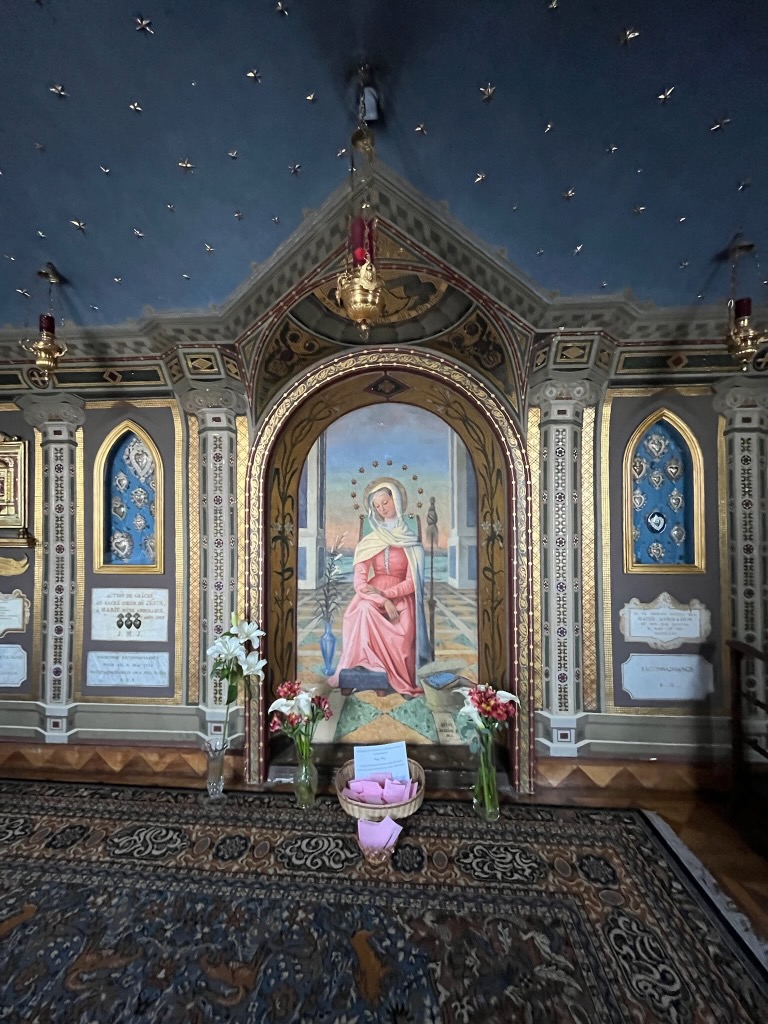
my mama, a girl who grew up in a convent where the nuns taught her to curtsy each time she dashed past the statue of the Pink Madonna (a story is told that one of the nuns–these are Sacred Heart nuns–once tried to paint a portrait of the Blessed Virgin Mary, and what she painted was so godawful, they tossed a rug over the thing, to hide it, and some time later when the rug was pulled off, lo and behold, there was a breathtakingly beautiful Mother of God decked out not in the usual blue but in pink. thus, the Pink Madonna that Sacred Heart girls (and their dutiful daughters) seek out whenever and wherever in the world they sense themselves in breathing distance of one of the few extant copies), my mama, as devout as the day is long, is far more radical than you might imagine for a girl who grew up in a convent in the most parochial burg of cincinnati, ohio. and that might be one of the things i treasure most about my mama.
and maybe that has something to do with my unwavering quest to find my way in this world along a path populated by sages, and not always of the churchly persuasion. i find holiness in unorthodox moments and places and, often, smack dab in the thick of a sentence.
i might not belong to a particular church these days. but i gather a goodly––and godly––congregation of pathfinders along my way. my church, quite often, rises up from the page.
i read, hour by hour, and day after day, with an eye out for wisdoms and truths, and guideposts to stir me. something akin to wandering an orchard, plucking from trees the lushest of fruits. i find my convictions deepened. my heart, often on fire. my intent: to make this blip that is my life as blessed as i can make it. i live by a gospel of love, one with an emphasis on that which is tender, and gentle not harsh. i believe, more and more, in humility. in understanding how little i know. and how much there is still for me to learn. to understand.
we live in a world that some days feels like it’s spewing all that i detest: there is cruelty, and hubris, and parading around as if no one else matters.
but then i open a book. or click on a text from a most blessed friend. and i read words that resonate. that underscore what seems to be Truth with a capital T. and i feel less alone, and less lost.
these are the lines that spoke to me this week in this holy space of my own making; one is from hafiz, the 14th-century sufi poet, another from thich nhat hanh, the blessed buddhist monk who died just two years ago, and the third is from greg boyle, the jesuit priest who founded Homeboy Industries, the world’s largest gang intervention and rehab program, based in east LA, and whose book, barking to the choir, is now on my most-wanted list.
first up, a prayer poem sent by a beloved friend, one from hafiz, the sufi poet, from a translation by daniel ladinsky, and which my blessed friend found in the pages of greg boyle’s barking to the choir:
Every child has known God, Not the God of names, Not the God of don’ts, Not the God who ever does anything weird, But the God who knows only four words. And keeps repeating them, saying: “Come Dance with Me, come dance.”
i love a God who whirls with me, who invites me into the dance.
next up, thich nhat hanh:
Understanding someone’s suffering is the best gift you can give another person. Understanding is love’s other name. If you don’t understand, you can’t love.
oh, that we should enter deep into the wounds of another. and therein find the walls of our own hearts widening and deepening, and our compulsion to hold a trembling hand the surest thing we can do.
and, finally, once down the greg boyle rabbit hole, i just got deeper and deeper, and then i found this:
“For unless love becomes tenderness—the connective tissue of love—it never becomes transformational. The tender doesn’t happen tomorrow . . . only now.”
photo above, of Mater Admirabilis, the Pink Madonna, is from our trip to rome back in may, during which, dutiful daughter that i am, i trekked to the top of the Spanish Steps, rang a bell at the convent of the sacred heart (my mother’s breed of nuns), turned over my passport for entry to the upper chapel where Our Lady resides, and beheld her.
joy comes in curious form. in simplest form sometimes. it arrived deep in the night last night in the form of tiptoes up the stairs. and then a creak of bedroom door. had i not been lost in the murky land of dreams i might have been startled, might have worried that burglars were afoot. instead, i somehow thought it was the mate asleep beside me, that he’d roused and went out lurking. but then i felt the lump beneath the sheets. and as the murk faded i realized the night visitor must be the very one who’d called that room his own for so many years.
a night visitor, sometimes, brings joy.
and so it is that the simple knowing that, come the waking hour (his waking hour clocks in hours beyond mine), i’ll be at the stove tossing berries in a pond of batter, is enough to wash me in a morning’s joy.
it’s as simple as that sometimes. as narrow-focused.
these days, i contemplate strategies for making joy. and survival.
we live in dark times. not so dark as other moments in history, perhaps, but dark enough to make it hard to dodge the shadow. or the pit in my belly that will not subside.
i found myself turning, this week, in three different instances to albert camus. not the first on my list when it comes to literary prozac, but thrice he and his wisdoms came through for me. his words, drawn from a collection of posthumously published essays, speak across the decades, and if a writer born into one world war, who lived through another, could find it in his soul searching to seek and find a trail of hope, well then he’s one to whom i’ll listen.
in the year i was born, camus (1913-1960) became the second-youngest laureate of the nobel prize for literature, awarded for writing that “with clear-sighted earnestness illuminates the problems of the human conscience.” the problems he mined were these: art as resistance, happiness as our moral obligation, and the measure of strength through difficult times.
one of my modern-day muses, as you might have gathered if you read here very often, is the cultural critic maria popova who rarely fails to pluck gems worth tucking in forever chests. in a trail that led me to her this week, i found that some years ago she too took a turn into the deep well of camus. she wrote:
“During WWII, Camus stood passionately on the side of justice; during the Cold War, he sliced through the Iron Curtain with all the humanistic force of simple kindness. But as he watched the world burn its own future in the fiery pit of politics, he understood that time, which has no right side and no wrong side, is only ever won or lost on the smallest and most personal scale: absolute presence with one’s own life, rooted in the belief that ‘real generosity toward the future lies in giving all to the present.’”
she goes on to point out that in camus’ writing she hears the echo of the young dostoyevsky’s exultant reckoning with the meaning of life shortly after his death sentence was repealed (“to be a human being among people and to remain one forever, no matter in what circumstances, not to grow despondent and not to lose heart,” dostoyevsky wrote to his brother, “that’s what life is all about, that’s its task”). these giants of literature belong on our nearest shelves for, in so many ways, they’ve left us instructions––or is it imperatives?––for living.
and here we hear camus:
“What counts is to be human and simple. No, what counts is to be true, and then everything fits in, humanity and simplicity. When am I truer than when I am the world?… What I wish for now is no longer happiness but simply awareness… I hold onto the world with every gesture, to men with all my gratitude and pity. I do not want to choose between the right and wrong sides of the world, and I do not like a choice… The great courage is still to gaze as squarely at the light as at death. Besides, how can I define the link that leads from this all-consuming love of life to this secret despair?… In spite of much searching, this is all I know.”
albert camus
not realizing i was tracing camus through the week, the first time he caught my eye this week was in the single short first sentence below, which hit me as a fist to the belly as i count my days under the penumbra of those first three words:
“Life is short, and it is sinful to waste one’s time. They say I’m active. But being active is still wasting one’s time, if in doing one loses oneself. Today is a resting time, and my heart goes off in search of itself. If an anguish still clutches me, it’s when I feel this impalpable moment slip through my fingers like quicksilver… At the moment, my whole kingdom is of this world. This sun and these shadows, this warmth and this cold rising from the depths of the air: why wonder if something is dying or if men suffer, since everything is written on this window where the sun sheds its plenty as a greeting to my pity?”
and finally, at 27, camus wrote this, speaking for this moment as well as the dark, dark times of 1940 when he wrote them:
“Our task as [humans] is to find the few principles that will calm the infinite anguish of free souls. We must mend what has been torn apart, make justice imaginable again in a world so obviously unjust, give happiness a meaning once more to peoples poisoned by the misery of the century. Naturally, it is a superhuman task. But superhuman is the term for tasks [we] take a long time to accomplish, that’s all.”
do yourself a favor and check out camus’ lyrical and critical essays. and consider leaving the front door unlocked lest any night visitor might wander in with reservation for blueberry pancake breakfast.
and may we all find that invincible summer.
what carried you across the abyss this week?
my night visitor, of course, is the boy we rarely see these days as he is ever toiling in the kitchen of stephanie izard’s famed girl and the goat eatery. but the holiday upon us drew him out of the city to an old friend’s house, where the hour was late enough that trains must have ceased their chugging along the track, and thus we scored him for the night. good thing the sheets are always clean, and the griddle ever at the ready.
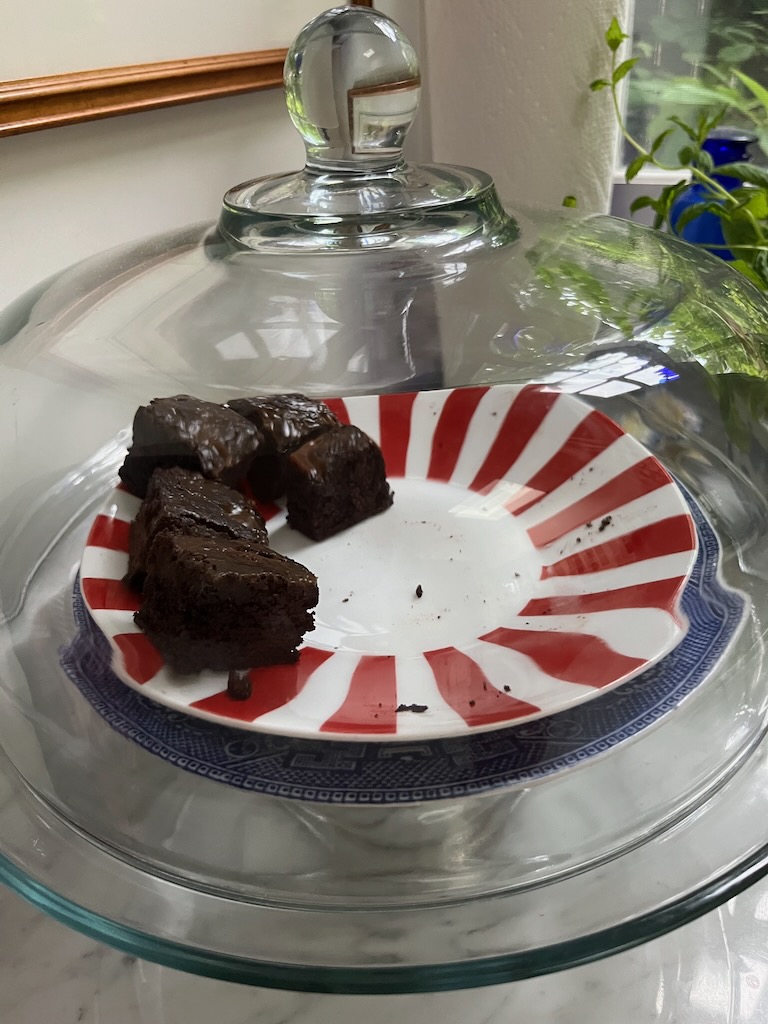
the cookie dome above, scattered with bits of brownie crumb, is one of the few clues left behind by the night visitor. i always delight in remnant evidence when i awake in the morning and find the kitchen not exactly as i’d left it. those crumbs bring volumes of joy to me…

















 pull up a chair