pull up a chair

where wisdom gathers, poetry unfolds and divine light is sparked…

Category: antidotes to madness

ashes to ashes under the specter of scan time

remember that thou art dust and unto dust thou shalt return. 

sobering words, as the grainy smudge is pressed upon my brow. it’s the season of shadow in the liturgical calendar, the season for recognizing our mortality, our fleeting time here to attend to the task of our being. 

dust to dust, ashes to ashes. 

the point of religion, at its wisest, is to strip us to our unfettered incidentality. to put us squarely in our place. we are star dust by chance. but a speck in the great river of time. a mere dot ordained with a task that we trust, we believe, might tip the scales toward goodness, toward light. i believe we’re here to be blessed, to become holiness in flesh form. 

six weeks of lent makes it the longest season of the church year outside of ordinary time. i’m no theologian so i’ve not read deeply on that equation, but i have to think it’s telling us something of import if more days are devoted to repenting, to remembering how mortal we are than to filling our heads with the usual noise. 

i’ve found myself in recent weeks deep in the writing of a book plumbing the spiritual epiphanies of cancer, which at its heart is a meditation on paying attention, remembering that we will die, and seizing the imperative to live profoundly in the now. 

i’ve called it scan time, an abbreviation of time into three- or six-month allotments that serve to focus my seeing. in knowing my time is on the clock, i dive into the work. holy work.

it’s basically living in some iteration of lent from here on in: ashes to ashes. knowing full well that i am dust and to dust i shall return. 

it’s a practice of every religion; humility among the highest virtues. recognizing how tiny a dot we are. and admitting how often we falter. putting voice to confession.

judaism distills it on a single day: the day of atonement, as somber a day as there is. a day in which we fast from all things, and scour our soul, confessing our sins from A to Z acrostically. abused, betrayed, been cruel, destroyed, embittered other’s lives. . .

before the naming of each and every one of those sins, both communal and individual, these words from the Yom Kippur prayer book are recited, directed to the almighty and merciful God:

You know the secrets of the universe and the secrets of the human heart. You know and understand us, for You examine our inner lives. Nothing is concealed from You, nothing hidden from Your sight. Eternal One, our God and God of our ancestors, we pray that this be Your will: forgive all our wrongs, pardon us for every act of injustice, help us atone for all our moral failures.

the act of contrition i learned in second grade says it like this: 

O my God, I am heartily sorry for having offended Thee, and I detest all my sins because of thy just punishments, but most of all because they offend Thee, my God, who art all good and deserving of all my love.

I firmly resolve with the help of Thy grace to sin no more and to avoid the near occasion of sin. Amen.

and the confession in the anglican book of common prayer is not dissimilar: 

Most merciful God,
we confess that we have sinned against you
in thought, word, and deed,
by what we have done, and by what we have left undone.
We have not loved you with our whole heart;
we have not loved our neighbors as ourselves.
We are truly sorry and we humbly repent. . .

sins and ashes aren’t things we like to think about. but, oh, they serve their purpose. and in a world where madness is reigning, where blame is cast but rarely admitted, and hubris has inverted the divine equation, i find myself seeking an alternative paradigm, one that answers not to power and vengeance but to mercy and justice and light.


and for a consideration of not our failings but our goodness, meister eckhart weighs in with this wisdom: 

The inner person is the soil in which God has sown the divine likeness and image and in which God sows the good seed, the roots of all wisdom, all skills, all virtues, all goodness—the seed of the divine nature. 
—Meister Eckhart 


a few years back, i dove a bit deeper into musings on the day of atonement, a post found here: 

you needn’t have been daubed with ashes, nor live with a scary diagnosis, nor recite an alphabet of sins, to recognize the wisdom of silently examining the state of your soul. and stepping forward to make right where you’ve wronged. it’s becoming countercultural in a world taking shape as it is. the ancient ways, though, have lasted. here we are millennia later, and confession still stirs in the human spirit. it takes nerve and true might to live it. needn’t answer here, but what are the profound memories you hold of learning to say, i am sorry? or any other thoughts on ashes and dust, and the sobering truth of our mortality. . .

p.s. i suppose my publisher would reallllly want me to mention (she sent me a little nudge in the social media department, a department where i’m quite often lacking) that The Book of Nature came out in paperback this week, so you can slip a copy more easily into a backpack or pocket. and it’s cheaper!! looks just like its big sister, only a flimsier–er, more pliable––cover.

in search of the common

in which we take a hard look at the crumbling discourse in this country, and consider a solution or two….

i’ll be honest. these are hard times. i pick up the news and feel pummeled by each new blow. i see pillars of democracy crumbling one after another. jeff bezos and the washington post, only the latest. i read of law firms—white shoe ones, meaning old-guard firms who take on some of the highest-profile clients, the most complex cases, aka “the elite”—being stripped of security clearance, being considered for criminal investigation only because they represented a client the current administration has inked onto the enemies list. 

i see revenge as the rule of the day. 

i’m sickened.

i’ve never prayed to a God of revenge. 

but i read, too, that there are stirrings of hope. faint, yet beginning to stir. 

you might call it an occupational hazard, but i happen to pay attention to the ways we get news and i worry desperately that we all cower in distant silos. (getting more distant by the day.) i get my news and you get yours and, often, ne’er the twain shall meet. 

so how do we have a shared conversation? how do we sit down to the same old table and begin to listen? how do we reach across the table, and in a quiet, unquivering voice, utter the words, “i hear your point”? or the certain conversational lubricant, “say more”? or the nervier, and necessary, “that’s not actually true”?

i hold onto my hunch that most of us want what we think is fair, is just. and i’m not giving up on my fervent belief that if you saw me bleeding on a sidewalk, you would not ask first how i voted and then decide whether or not to lift me off the ground. 

i’m fairly certain that in the nearly two decades we’ve been pulling up chairs here, some of us do get our news from different silos. i try to tread lightly. i respect divergence of thought. but the problem, as i see it, is that we are all being fed news in the flavors most to our liking. and that’s not the way the news is supposed to work. it’s not the way it worked for the time i was one of the ones writing what counted as news. and not in the newsroom i knew.

so here’s the jam: if the news you’re being fed is slanted, if some of it’s filtered out, and some of it’s twisted, if both sides aren’t fairly presented, it’s not any sort of surprise that conclusions are drawn, and wedges are wedged. 

“…without fear or favor…”

these days, the ones helming the news––the owners, the billionaires who thought it a romp to claim a slot on the masthead––they seem to be in it for hard, cold cash. the one with the most wins. cozying up to power seems a game to which we’re not invited. to get there, you need to fly in your private jet, hopefully not one of the ones making a mess on the runways. 

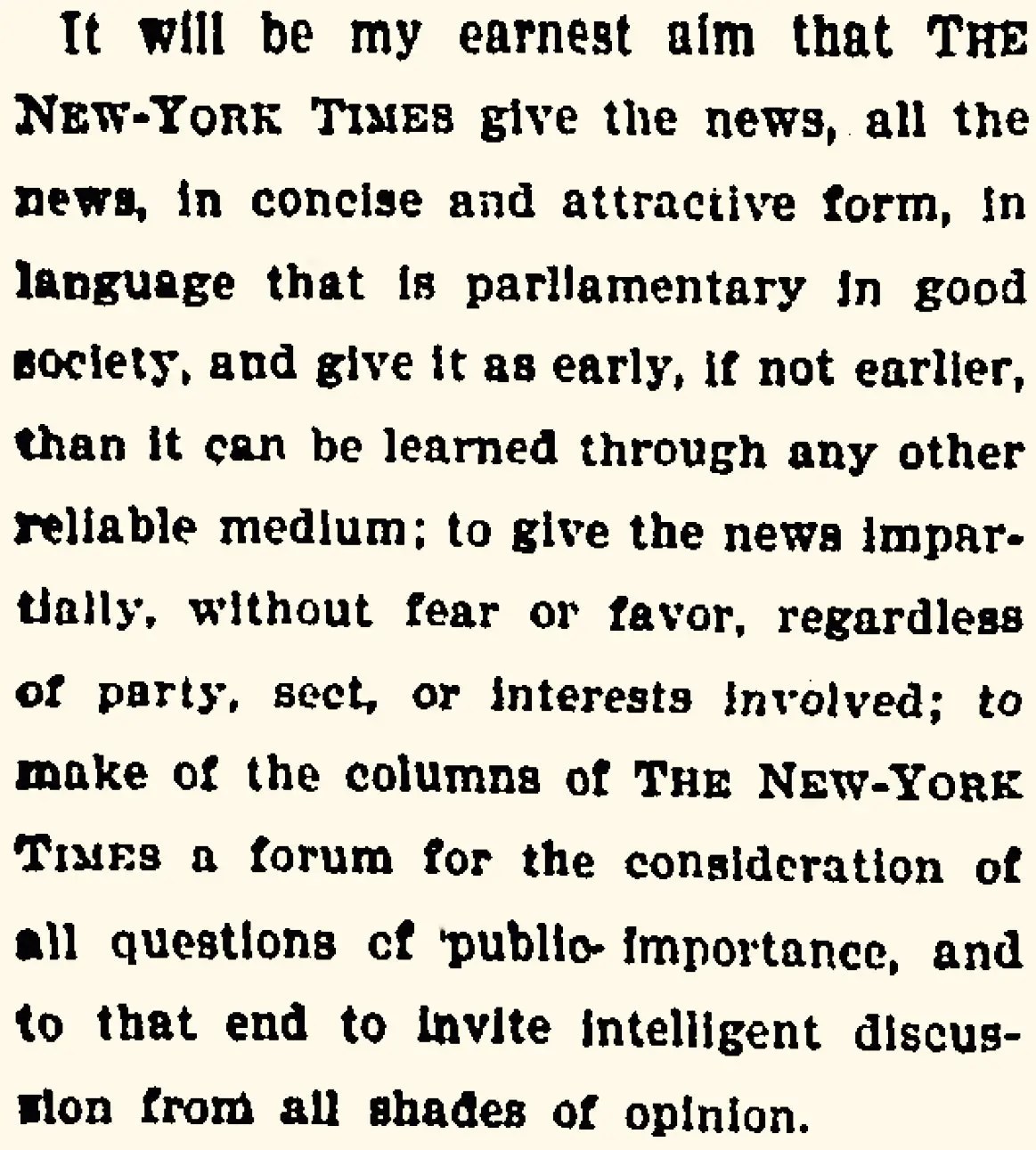
so much for democracy dying in darkness. or that now quaint-seeming declaration of adolph s. ochs in april of 1896, that his newspaper, the venerable new york times, would “give the news impartially, without fear or favor.” 

good journalists hold firm to those words. good journalists have died defending those words.

you don’t get into the news biz––chasing after crooks and pols, climbing rickety stairs in darkened hallways, knocking on doors knowing full well you might find a muzzle pointed at the bridge of your nose––because it’s a sure way to raise your heart rate. or just cuz you’re nosey.

you get into the news biz cuz you’re a mad dog for the truth. and the fair telling of stories. you dig and you dig till you find that shimmering shard that, to your best knowledge, and according to more than one reliable source, is unassailably true. i sat beside folks in the newsroom who thought nothing of holing themselves in the dungeons of city hall or the bowels of bureaucrat mazes, riffling through file after file to track down the name and the dollar amount on contracts that might or might not have been legal. that might have unearthed wrongful convictions. or identified bodies dumped on the roadside. and those subterranean scribes had the pallor to prove it, after months and months under the glow of flimsy fluorescent lights. and cups of stale coffee. (we’ll leave the bottles of whiskey for another day.)

these days, the ones coursing the landscape with their reporter pads and pens, their itty-bitty microphones and their smartphone recorders, are plenty besmirched. discounted as little more than rousers of rabble. there’s a strong scent of disdain souring the air. 

that’s an unfair and erroneous swipe at all those who abide by the time-tested codes. you might have heard that, um, democracy dies in darkness. and the reporters i know refuse to turn off their flashlights.

my little screed here won’t make a dent. but i cannot give up. none of us can. my faintest hope is that even one someone who reads this might take up the dare: fight fallacy and fiction with verifiable fact. there was an old maxim in the newsroom, one that we more or less lived by: if your mother tells you she loves you, check it out. 

check your sources for news. read beyond your usual silo. sit down at a table and listen. exercise your ears more than your tongue. 

at least for now, it’s a place to begin….

p.s. i know there is a good handful of journalistic heroes who pull up a chair, so if any of you wander by today or tomorrow or anytime soon, feel free to pen your prolific and profound views on the state of news consumption in america, and how it might be at least part of the root of what’s tearing us apart….


only one poem this week, and it’s a wonder from a poet who is a chicago legend, a hero in Black arts…..it’s an ode to books, which is a great place to begin a grounding in knowledge, and finding common language…..be sure to get to the last line, where i’m guessing you’ll let out a sigh. as i did. so much in common….

So Many Books, So Little Time
by Haki R. Madhubuti

My sanctuaries are liberated lighthouses of shelved books,
featuring forgotten poets, unread anthropologists of tenure-
seeking assistant professors, self-published geniuses, remaindered
first novelists, highlighting speed-written bestsellers,
wise historians & theologians, nobel, pulitzer prize, and american book
award winners, poets & fiction writers, overcertain political commentators,
small press wunderkinds & learned academics.
All are vitamins for my slow brain & sidetracked spirit in this
winter of creating.

I do not believe in smiling politicians, AMA doctors,
zebra-faced bankers, red-jacketed real estate or automobile
salespeople, or singing preachers.

I believe in books.
It can be conveniently argued that knowledge,
not that which is condensed or computer packaged, but
pages of hard-fought words, dancing language
meticulously & contemplatively written by the likes of me & others,
shelved imperfectly at the level of open hearts & minds,
is preventive medicine strengthening me for the return to my
clear pages of incomplete ideas to be reworked, revised &
written as new worlds and words in all of their subjective
configurations to eventually be processed into books that
will hopefully be placed on the shelves of libraries, bookstores, homes,
& other sanctuaries of learning to be found & browsed over by receptive
booklovers, readers & writers looking for a retreat,
looking for departure & yes spaces,
looking for open heart surgery without the knife.

—Haki R. Madhubuti, who turned 83 this week, is a poet, writer, and educator, who in 1967 founded Chicago’s Third World Press, the largest independent Black-owned press. He’s regarded as an architect of the Black Arts Movement. Born Donald Luther Lee, he changed his name in 1973 after traveling to Africa: “Haki” means “justice” or “rights,” while “Madhubuti” means “precise, accurate, and dependable.” Both names are derived from Swahili. Of his renaming, Madhubuti explained at the time that he wanted to arrive at a new definition of self.

have you had any hard conversations of late? were you afraid to go there? what peaceable tools did you use to navigate? how did it go? will you try again?

apologia

A screenshot of a video released by the Ukrainian Police Department Press Service of military helicopters, apparently Russian, flying over the outskirts of Kyiv, February 24, 2022 

dear blessed, blessed, good people of ukraine,

we are without words for the depth of our sorrow and our shame. we have betrayed you. cruelly. mercilessly. and we are sorry. we are so, so deeply sorry.

you have no idea of my existence. i am just a silver-haired lady in the middle of america, thousands and thousands of anonymities away, and yet i woke up trembling for the betrayal, and the insanity rained upon you in the form of words. words spoken by an elected leader of a country that until a month ago was doing all it could to ensure your safety, to uphold your humanity.

it is a sordid twist in history i’d prayed i’d never live to see. i thought we vowed never to forget.

the horror is that i don’t think anything is forgotten. from where i sit in an old shingled house on a quiet street near a big cold lake, it sounds as if the betrayal is the worst kind, the knowing kind, the horror not forgotten but ignored. it’s a supreme act of evil hubris the likes of which don’t belong in any century, let alone the one where we’ve allegedly evolved so much as to make machines that almost think like humans. perhaps we should have been investing in our souls. instead of masterminding brains.

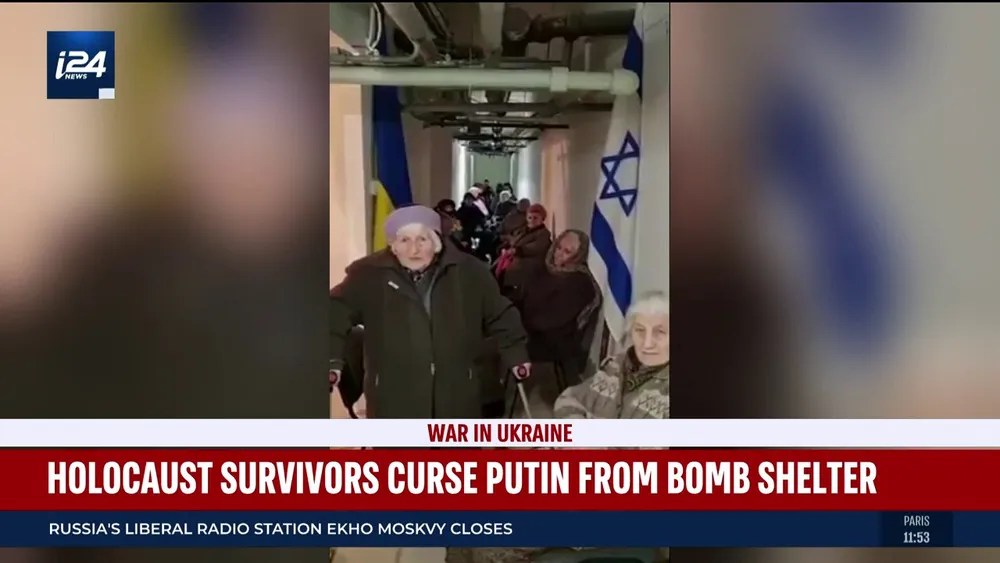
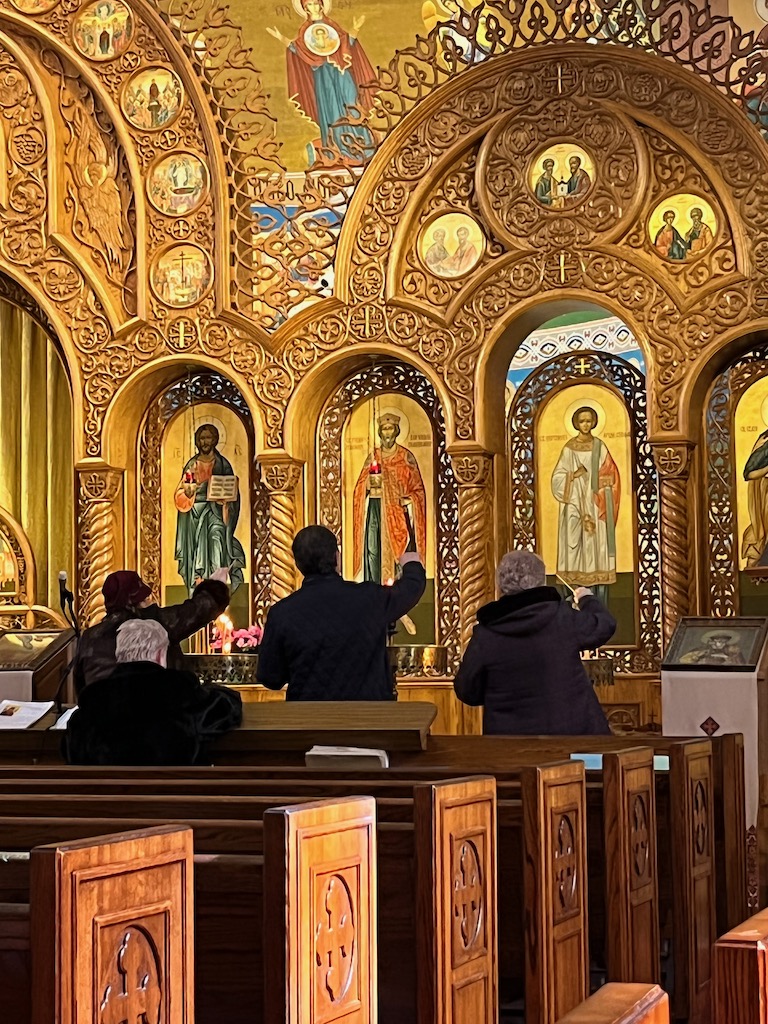
three years ago, we sat in front of screens frozen by the sights of maternity wards in rubble, of old ladies huddled in subway tunnels. some of us crowded into the nearest ukrainian churches, to pray with you. to bend our knees, bow our heads, and make the orthodox sign of the cross at the end of prayers whose words we did not know but whose intent we felt with every fiber of our being.

i can’t count the tears i’ve shed, reading stories of newborns blown to bits, of mothers laboring in bomb shelters, imagining the terror of a sky raining bomb after bomb after bomb. as, for three unbearable years, i read the stories of russian soldiers traipsing house to house, raping woman after woman, regardless of her decade. stories of herding children onto buses, tearing them away from families, all but delivering them to lives of sordid inner torture, tortures whose scars might never heal. stories of villagers lined up, plastic bags pulled over heads, shot execution style. the last sound each one heard, the sound of a rifle shot, and a body thudding to the ground, knowing that sound would next be them.

and yet, words from the white house occupant this week turned truth to lies, blamed the war on you, name-called your president, a man whose courage in the face of abysmal fear and threat not long ago brought burning hope to a darkened world. count me among the ones who cried as he walked the aisle of the house chamber of the u.s. capitol to ascend to the podium where his words shook a silent nation to the core. and where the roaring ovation from those in the chamber, and those in living rooms and rec rooms all around this country seemed a wave without end crashing to a shore. we saw hope in you. we prayed we could muster a modicum of the courage you showed, should we ever, ever find ourselves in a plight with even a fraction of the horror in which you lived.

and now, we are the people of this nation that might well become a living symbol of cruel betrayal.

and so, this humble letter, which you shall likely never read, is but one voice, speaking for many, as i fall to my knees, bow my head, and beg forgiveness for the sins thrust upon you.

this ukrainian grandma one of the lasting symbols of a feisty nation that would not, would not surrender.

three years ago, i wrote “exercise in empathy, another name for prayer,” and left it here on the chair. i am leaving it again, complete with the end note and question i left at the time. to remind us of the time when our whole nation felt united in praying for mercy, and willing to do all we could to make it happen…

exercise in empathy, another name for prayer

can you imagine? can you imagine waking up with your bedroom windows shaking, a distant thump unmistakably drenching you in dread, even in the liminal fog of your pre-dawn dreams? 

can you imagine lifting your newborn from the crib, cradling him against your breast, and running in the cold to the nearest subway shelter, where you will then spend hours upon endless hours, hearing the faint cacophony of what you know to be bombs exploding on a land you call your own?

can you imagine? 

can you imagine rushing to your kitchen, clearing shelves of whatever might fuel you in the long hours ahead, grabbing your dog, your kids, your passport, and climbing behind the wheel of a car with only a half tank of gas, a tank you meant to fill the day before but one of the kids got cranky so you thought you’d put it off? 

can you imagine if you were due to show up for an MRI to see how far the cancer had spread, how fractured was the tibia, the hip, the wrist, but now the air-raid sirens blare through the dawn and you have to weigh a trip to the hospital or the nearest border? 

can you imagine watching your father fill his duffle bag, turning toward the door, pausing to kiss you on the forehead, watching the tears well up in your mother’s eyes, seeing how her hand now is shaking, how she clutches the sleeve of your father’s coat, and how he pulls himself away, unlocks the door and steps out into darkness? and your mother fills the sudden emptiness with a wail you’ve never heard before?

can you imagine holding a ticket to a flight out in the morning only to awake to find the airports all are closed, bombed in the night, and no air space is safe for flying?

imagining is imperative. imagining is how we weave the invisible threads that make us one united people, that make us begin to know what it is to walk in another’s hell. 

imagining is the birthing ground of empathy. 

and empathy fuels our most selfless urgent prayer. 

empathy––a necessary precondition for loving as you would be loved, the necessity of imagining another someone’s pain or fear or desperation, for sometimes imagining nothing more complicated than cold or hunger or exhaustion so overwhelming you’re sure your heart is on its last full measure––empathy is the exercise that puts form and fuel to prayer, that enfolds its stripped-down architecture in the flesh of humanity. be it agony, or terror. be it frenzy, or dizzying confusion.

empathy is what lifts our prayer out of the trench of numbness, muttering words we memorize but do not mean. empathy fine chisels each and every prayer. catapults us beyond our own self-obsessed borders, across time zone or geography. conjoins our circumstance with that of someone we have never met, someone whose predicament is dire, and is––in fact––beyond our most ignited imagination.

truth is, our empathy cannot take us the whole distance. cannot––despite our deepest straining––plant us in the fiery pit of what it is to be awaking to the bombs, watching the ones we love walk into the inky darkness, not knowing for weeks if they’re dead or alive, maimed or shackled, or someone else’s prisoners of war.

but it’s the place to begin.

and isn’t the whole point of praying to reach across the emptiness, the void, to unfurl the one first filament that might begin to bring us side-by-side, in soul and spirit if not in flesh? 

don’t we sometimes pray as if to hoist another’s leaden burden onto the yoke of our own shoulders? 

isn’t the heart of it to lift us as one? we’re not here as parties of one, churning up our own little worries, butting our place to the front of the God line. we’re here to pay attention. to scan for hurt and humiliation, to go beyond, far beyond, lip service and throw-away lines.

imagination––the exercise of empathy––is a God-given gift, it’s the thing that equips us to love as you would be loved. without it, our every petition is flat. is a waste of our breath, really.

we invoke the hand, the heart of God, yes. but isn’t it our business, our holy business, to get about the work of trying to weave us into true holy communion?

it is our empathies that just might save us as a people, that just might move us toward the place where all our prayers rise in echo, from all corners, nooks, and crannies.

it’s not often we wake up to war. but we did this week. and so we will in the weeks and weeks to come.

i awake now in unending prayer. another name for exercising empathies, to stay awake to the suffering now inflicted on ones we’re meant to love. even if we’ll never know their names.

***

i searched for a prayer for peace, and came circling back to this, from ellen bass; it is a prayer for all, no matter to whom or what or how you pray:

Pray for Peace

Pray to whomever you kneel down to:
Jesus nailed to his wooden or plastic cross,
his suffering face bent to kiss you,
Buddha still under the bo tree in scorching heat,
Adonai, Allah. Raise your arms to Mary
that she may lay her palm on our brows,
to Shekhina, Queen of Heaven and Earth,
to Inanna in her stripped descent.

Then pray to the bus driver who takes you to work.
On the bus, pray for everyone riding that bus,
for everyone riding buses all over the world.
Drop some silver and pray.

Waiting in line for the movies, for the ATM,
for your latte and croissant, offer your plea.
Make your eating and drinking a supplication.
Make your slicing of carrots a holy act,
each translucent layer of the onion, a deeper prayer.

To Hawk or Wolf, or the Great Whale, pray.
Bow down to terriers and shepherds and Siamese cats.
Fields of artichokes and elegant strawberries.

Make the brushing of your hair
a prayer, every strand its own voice,
singing in the choir on your head.
As you wash your face, the water slipping
through your fingers, a prayer: Water,
softest thing on earth, gentleness
that wears away rock.

Making love, of course, is already prayer.
Skin, and open mouths worshipping that skin,
the fragile cases we are poured into.

If you’re hungry, pray. If you’re tired.
Pray to Gandhi and Dorothy Day.
Shakespeare. Sappho. Sojourner Truth.

When you walk to your car, to the mailbox,
to the video store, let each step
be a prayer that we all keep our legs,
that we do not blow off anyone else’s legs.
Or crush their skulls.
And if you are riding on a bicycle
or a skateboard, in a wheelchair, each revolution
of the wheels a prayer as the earth revolves:
less harm, less harm, less harm.

And as you work, typing with a new manicure,
a tiny palm tree painted on one pearlescent nail,
or delivering soda or drawing good blood
into rubber-capped vials, twirling pizzas–

With each breath in, take in the faith of those
who have believed when belief seemed foolish,
who persevered. With each breath out, cherish.

Pull weeds for peace, turn over in your sleep for peace,
feed the birds, each shiny seed
that spills onto the earth, another second of peace.
Wash your dishes, call your mother, drink wine.

Shovel leaves or snow or trash from your sidewalk.
Make a path. Fold a photo of a dead child
around your Visa card. Scoop your holy water
from the gutter. Gnaw your crust.
Mumble along like a crazy person, stumbling
your prayer through the streets.

–Ellen Bass

how did you learn to pray?

a note in an age of war: when the first reports started seeping in, when the news broke the other night that shelling had started along the northern, eastern, and southern borders of ukraine, it wasn’t long till i found myself thinking of all of you here at the chair. i knew we would all be huddled on the edge of our armchairs, keeping watch, keeping terrible watch. made me wish that every once in a while we could be together in real time, with our real faces and voices. our hearts and souls come to life. maybe after two years without company, without mornings when i set out mugs and bowls spilling with clementines, i am getting hungrier for human contact. made me wonder if maybe one day soon we should gather in a zoom room. i’ll leave this as a thought. i know we’re a gaggle of rather shy souls, but even us shy ones sometimes hunger for company. true company.

my question on this cold february morning of 2025, is what oh what shall we do?

no whistling in the dark here. but maybe some chocolate…

these are dark times. chaotic times. times so upside down and alarming, i’m groping for what i can do. sometimes i think the solutions are way, way above my paygrade. 

what i know i can’t do is whistle in the dark. blather on about incidental ponderings, pretend that all this will soon go away. it feels as if we’re witnessing wide-eyed the wielding of sledge hammers to bedrock pillars of democracy. who are these 19-year-olds re-writing code in the department of treasury? why in the world would anyone waste a minute of breath renaming a mountain, a gulf, except for extreme case of hubris? and what of claiming gaza, the land of a people who have sustained unthinkable horrors to simply exist on the land of their ancestors, a land now so deeply bloodied i fear it seeps to the core of the planet? to say nothing of erasing the existence of aid to the poor, the hungry, the marginalized around the globe. to strike language and data from federal websites, all but telling vast swaths of humanity they’ve been expunged. to imagine the labs where cures for disease are suddenly stalled, where lives––like mine––depend on those cures.

i have aimed from the beginning not to bleed into politics here. and i still hold firm to that core. what i address here, what i disdain here, is something far more foundational, a vengeance fueled by a mindset that it’s always always us v. them. a philosophy of division, of payback in the cruelest of iterations. a credo of greed. let the weak be weakened, and the few take the pot. and let it all be built on a mound of mistruths, fictions of wild proportion. 

we’ve an unspoken bond here at this table that once a week i will leave some platter of words that might open a window. even a crack. let light in to our collective souls. so maybe in these dark times my place is shifting. maybe i’m meant to listen in silence, to keep close watch, to defend the tenets of the God of justice and love. a God whose wisdom is not twisted, turned on its head, shoved to the side for malevolent purpose. 

maybe the chair, in these dark and cruel times, is simply a place to swing by, to listen for voices wiser and keener than mine. maybe the chair is a place to come catch your breath. to embolden your spirit. to find brief reprieve. 

until the darkness lifts––and wise and faithful souls believe that it will, that We the People in our undeniable goodness and courage shall overcome––i’ll do what i quietly can. my platter today comes with two poems and a slather of chocolate. yes, chocolate. though in this case, it’s the priceless morsel of the story behind katie hepburn’s very own chocolatey brownies that might best the brownies themselves. you decide. 


a beauty of a new poem found on diana butler bass’s straight-talking, life-sustaining, deeply soulful the cottage….

WHAT COMES NEXT
by Rosemerry Wahtola Trommer

Love relentlessly.
—Diana Butler Bass

Love relentlessly, she said,
and I want to slip these two words
into every cell in my body, not the sound
of the words, but the truth of them,
the vital, essential need for them,
until relentless love becomes
a cytoplasmic imperative,
the basic building block for every action.
Because anger makes a body clench.
Because fear invokes cowering, shrinking, shock.
I know the impulse to run, to turn fist, to hurt back.
I know, too, the warmth of cell-deep love—
how it spreads through the body like ocean wave,
how it doesn’t erase anger and fear,
rather seeds itself somehow inside it,
so even as I contract love bids me to open
wide as a leaf that unfurls in spring
until fear is not all I feel.
Love relentlessly.
Even saying the words aloud invites
both softness and ferocity into the chest,
makes the heart throb with simultaneous
urgency and willingness. A radical pulsing
of love, pounding love, thumping love,
a rebellion of generous love,
tenacious love, a love so foundational
every step of what’s next begins
and continues as an uprising,
upwelling, ongoing, infusion
of love, tide of love, honest love.


an ode to kindness….aptly titled…

Small Kindnesses

I’ve been thinking about the way, when you walk
down a crowded aisle, people pull in their legs
to let you by. Or how strangers still say “bless you”
when someone sneezes, a leftover
from the Bubonic plague. “Don’t die,” we are saying.
And sometimes, when you spill lemons
from your grocery bag, someone else will help you
pick them up. Mostly, we don’t want to harm each other.
We want to be handed our cup of coffee hot,
and to say thank you to the person handing it. To smile
at them and for them to smile back. For the waitress
to call us honey when she sets down the bowl of clam chowder,
and for the driver in the red pick-up truck to let us pass.
We have so little of each other, now. So far
from tribe and fire. Only these brief moments of exchange.
What if they are the true dwelling of the holy, these
fleeting temples we make together when we say, “Here,
have my seat,” “Go ahead—you first,” “I like your hat.”
Danusha Laméris


and now, for katie’s brownies, the story of which first appeared in the letters to the editor of the new york times….

July 6, 2003

To the Editor:

Re the death of Katharine Hepburn last Sunday: For many decades, my father used to walk across town to do his food shopping on Second Avenue. He often shopped at a Gristede’s around the corner from Miss Hepburn’s town house on East 49th Street.

One day he suddenly came face to face with Miss Hepburn, who was also picking up groceries. He acknowledged her with a nod, and she responded in kind. He began thinking of her as a neighbor.

In 1983, my senior year at Bryn Mawr, Miss Hepburn’s alma mater, I was frustrated and was doing poorly, and at Christmas break, I decided to quit. I had the romantic notion of running away to Scotland to write screenplays. My father was frantic. My mother had died two years before, leaving him with all the responsibility for his headstrong daughter.

He knew that Miss Hepburn had gone through her own struggles at Bryn Mawr, so he wrote her a letter asking her to intervene. ”She’s a great admirer of yours, and perhaps she’ll listen to you,” he wrote. On the way to the grocery store, he dropped the letter in her mail slot.

At 7:30 the next morning, the phone woke me up. I answered it and heard that famous voice, crackling with command. ”Is this the young woman who wants to quit Bryn Mawr?” I said it was. ”What a damn stupid thing to do!” she snapped. She went on to give me a lively lecture, the gist of which was that I had to finish my studies and get my degree, and after that I could do what I wanted to do. There was no arguing with her imperiousness. Then she said she wanted to meet us for tea.

The day of our appointment was gray and wintry. Walking the long blocks to Turtle Bay, my father and I didn’t speak much. It felt as if we were about to meet the Queen.

Miss Hepburn greeted us warmly. With casual hauteur, she provided us with tea and some of her famous brownies. Though she was in her 70’s, she had a youthful look, enhanced by her girlish clothes: a turtleneck, a black cardigan and shabby khaki-green pants.

We talked about many things, including Bryn Mawr. She said that she was miserable there and still had nightmares about it, but she was glad she went. At the end of the afternoon she told me, in a rather grim tone, ”You’re smart.” It was a compliment, but also an admonition not to be foolish in the future.

My father was invited to visit her a few times after that. Once, he had heard that she was recovering from a serious car accident, and he stopped by to drop off a package of homemade brownies and a get-well note. To his surprise, he was ushered in and invited into her boudoir, where she greeted him in her nightgown. She sampled his brownies.

”Too much flour!” she declared. She then rattled off her own recipe, which he hastily wrote down. ”And don’t overbake them! They should be moist, not cakey!”

I’ll always be grateful to Miss Hepburn for making me stick it out at Bryn Mawr and for giving me these rules to live by: 1. Never quit. 2. Be yourself. 3. Don’t put too much flour in your brownies.

KATHARINE HEPBURN’S BROWNIES

1/2 cup cocoa
1 stick butter
2 eggs
1 cup sugar
1/4 cup flour
1 cup broken-up walnuts or pecans
1 teaspoon vanilla
pinch of salt

Preheat oven to 325 degrees. Melt butter in saucepan with cocoa and stir until smooth. Remove from heat and allow to cool for a few minutes. Mix in eggs, one at a time. Add sugar, flour, nuts, vanilla and salt. Pour into a greased 8×8 square pan. Bake 40 minutes. ”Don’t overbake!” They should be gooey. Let cool (an essential step) and cut into bars.

Heather Henderson
St. Paul, Minn.

how, pray tell, are you finding your way? chocolatey or otherwise…

harumph.

with planes crashing into helicopters, and bodies falling into the potomac, and DEI blame being cast with no evidence in sight, i am in no mood to add more noise to the prattle. why tragedy needed to take a sharp turn into retribution, why our skies feel suddenly shaky, is only adding to the despondency i struggle to keep at bay. 

i heard stories this week of kids i love, one in far off thailand teaching english in remote villages for the peace corps, terrified that the freezing of federal funds would shatter their dreams in the making. i’ve heard stories of dish washers and cooks in chicago’s little village, a mostly mexican corner of the city, afraid to show their face on the streets, forgoing paychecks in lieu of being handcuffed and torn from the families they love. 

we live in a rippling circle of fear and confusion, a darkness is shrouding day after day.

in my teeny-tiny circle of life closer to home, some of that darkness is countered by flickering light. i find good reason for joy. feel wishes come blessedly true. i’ve lived to see a day i had prayed and prayed for, for one of my boys. and i am witness to the fire burning in the dreams of another. 

just days ago, i was holed up in a rambling old house on the shore of one great lake with four glorious women whose lives have been marred and scarred by tragedy, and yet, they’ve risen. they’ve written their way through darkness toward light. and they are magnificent. and so so brave. (one wrote the searing memoir while you were out; two others are soon coming with masterpieces all their own. a fourth, i hope, will someday publish her stories that cut to the bone.)

i hobbled home, after an otherwise uneventful walk on a stone-sprinkled beach, with an unhappy ankle.and a quick trip to the foot doc had me strapped into what feels like a leaden boot, and has curtailed my daily constitutionals for the next few weeks. but that’s not all: before week’s end, the resident triathlete in this old hovel had his knees poked and prodded and subjected to space-age medicine, and thus we’ve declared this the hobbledy house. indeed, we are a hobbling, most humbled pair, trading ice packs and heating pads, advil and tylenol, as prescribed by our duet of doctors. 

and so my offerings this week rest on the shoulders of others far wiser, less wobbly, than me. cumulatively, they compound the point that we are the solution to the miasma that abounds. 

this is our time, of all the times in our lives, to dig down deep as we can, and pull out the fiercest, finest truths we believe in. we must make true the life that ought to be. take it from this collection of seers and sages: clifton, mandelstam, rilke, and trommer, poets all. 

In the bigger scheme of things the universe is not asking us to do something,
the universe is asking us to be something.
And that’s a whole different thing.

— Lucille Clifton


“What tense would you choose to live in?” the poet Osip Mandelstam once asked his journal, before answering his own question. “I want to live in the imperative of the future passive participle—in the ‘what ought to be.’”


Let this darkness be a bell tower and you the bell.
As you ring, what batters you becomes your strength.

—Rainer Maria Rilke


BECAUSE
by Rosemerry Wahtola Trommer

So I can’t save the world—
can’t save even myself,
can’t wrap my arms around
every frightened child, can’t
foster peace among nations,
can’t bring love to all who
feel unlovable.
So I practice opening my heart
right here in this room and being gentle
with my insufficiency. I practice
walking down the street heart first.
And if it is insufficient to share love,
I will practice loving anyway.
I want to converse about truth,
about trust. I want to invite compassion
into every interaction.
One willing heart can’t stop a war.
One willing heart can’t feed all the hungry.
And sometimes, daunted by a task too big,
I tell myself what’s the use of trying?
But today, the invitation is clear:
to be ridiculously courageous in love.
To open the heart like a lilac in May,
knowing freeze is possible
and opening anyway.
To take love seriously.
To give love wildly.
To race up to the world
as if I were a puppy,
adoring and unjaded,
stumbling on my own exuberance.
To feel the shock of indifference,
of anger, of cruelty, of fear,
and stay open. To love as if it matters,
as if the world depends on it.

how might you begin to try — not to save the world, nor even your own sweet self — to practice opening your heart, to be gentle with your insufficiencies, to take love seriously, give wildly, and live in the imperative of the future passive participle, in what “ought to be”?

sun rising over the great lake michigan

a short course in courage

i’ve been mulling these past few months how to move forward in a world where values that shatter me seem to be in ascendency: revenge, retribution, greed, humiliation, belittlement, and so much of it based on a metastasis of mistruth. 

i’d been thinking that keeping my head down and plowing along in a spirit of turn-the-other-cheek, love-thy-neighbor-as-thyself might be a place to begin. might go a long distance. 

but i don’t think that anymore.

i don’t think it’s nearly enough.

i think something much harder is called for. i think we’re called upon to reach deep in our souls, and pull up something called courage. 

courage, when you’ve been taught to demur, to not make too many waves, courage when your father forbid you to use your real name in a basically-tame high school underground paper, courage when you don’t want to hurt those whom you love, can be an awkward suit to slip on.

i stumble sometimes trying to get my arms through its sleeves. 

but i’m thinking it might be a fire built from these sticks: first, root yourself in verifiable truths (check, check, and triple check your sources); second, inhale grace; be clear; be compassionate; be compassionate. keep the most vulnerable keenly in your crosshairs.

and here’s the hard part: put voice to what you believe. correct mistruths when you hear them. amplify the voice of the voiceless. whether it’s in kitchen table conversations, or what serves as the modernday public square (my preference is those sites where fact-checking and vetting are part of the constitution). whether it’s spoken or scribbled or typed.

because conflict aversion lies deep in my DNA, and all but breaks me into hives, i find i’m less afraid when i remind myself that to hold a differing opinion is not to discount or disdain the one who holds it. without discourse, we all stay stuck. without courage, we’re cowards, wasting our time and our breath on our one short ride on this planet. 

i’ve been keeping close watch all week on various lists of how to meet these times, how to keep on keeping on, and not a one of the lists suggests keeping mum. speak up. speak truth. 

my own code of ethics is one that insists on gentleness, on a voice imbued with humility.

i heard such a voice this week, one that broke through the cacophonies that otherwise abounded, all wrapped in shimmering glitz. you won’t be surprised, perhaps, to know that it was an ordained woman of God, a bishop in washington DC, who took a deep breath, who acknowledged being afraid, but spoke up anyway, asking for mercy, one of the essential beatitudes outlined at the sermon on the mount. and she did so looking straight into the eyes of the newly-inaugurated president, who scowled and looked away, and later deemed her a “so-called Bishop” (reminds me of how, on national TV, he called my husband a “third-rate architecture critic,” adding that “most people thought he got fired,” back in the summer of 2014 on the Today Show, when they––along with Chicago’s mayor at the time––got into an architectural scuffle over the 20-foot-tall letters of the Trump sign on the real estate mogul’s eponymous Chicago skyscraper). And then in this week’s prayer service the President went on to add that the bishop was a “Radical Left hard line Trump hater.” 

her name is mariann edgar budde, and she is the episcopal bishop of washington, DC. and the full 14:56 minutes of her sermon are worth a listen (or two.) my prayer is that in my one short swift and very small life, i might find such a voice in my own, and put breath to it when and where it most matters. 

bishop budde, it turns out, wrote a book on how we learn to be brave. and i’ve peeked inside while awaiting my copy. worth reading is this:

and this:

and before signing off, inspiration on courage from kentucky bard and old-fashioned farmer wendell berry:

It may be that when we no longer know what to do,
we have come to our real work
and when we no longer know which way to go,
we have begun our real journey.

The mind that is not baffled is not employed.
The impeded stream is the one that sings.

Wendell Berry

and the incomparable maya angelou: 

INSPIRATION

We, unaccustomed to courage
exiles from delight
live coiled in shells of loneliness
until love leaves its high holy temple
and comes into our sight
to liberate us into life.

Love arrives
and in its train come ecstasies
old memories of pleasure
ancient histories of pain.
Yet if we are bold,
love strikes away the chains of fear
from our souls.

We are weaned from our timidity
In the flush of love’s light
we dare be brave
And suddenly we see
that love costs all we are
and will ever be.
Yet it is only love
which sets us free.

— Maya Angelou

where have you found courage of late? did it feel awkward? did it make a discernible difference?

hellfire

i’m at a loss and not inclined this week to take up too much oxygen on this earth that is thirsting for rain. or snow. or even a dense fog to begin to smolder the flames that have made for apocalyptic infernos in the land of the backyard grapefruit and avocado, the storybook land where palm trees might be outnumbered only by show runners and gaffers and star-studded trailers. 

the west coast is burning like hell and, among too many tragedies to count, one beloved friend has lost his whole classroom filled with 20 years of teaching, and others whom i don’t know have lost everything that constitutes the villages they call home: from the immigrant dry cleaners where they’re known by their shirts and their preference for starch, to the grocery stores where checkers are friends who ask about the kids and how quickly they’ve grown, to the churches and temples and mosques where knees are bent and prayers are sent up, to street after street of somebody’s home, once brimming with ballast and trinkets and treasures saved a whole life long––now embers at best. 

it’s the unspoken threads, the immaterial, the irreplaceable human-to-human bonds that feel forever lost. and therein is the crushingest blow.

i often am inclined to keep the big, bad world at bay here. to set the table and let us live our pensive lives in sacred quietude, paying attention to the little noticed. but over the years, the outside has rushed in when the horrors and heartache are too much to ignore. when the grieving belongs to us all.

so it is with the incineration of the city of angels. 

i can’t fathom it. can’t imagine the roar of a wall of flame barreling toward the windows, walls, and roofs where Christmas trees might have still been twinkling, where menorahs were just tucked back into cupboards. can’t imagine trying to not breathe in the toxins that are sure to leave scars in too many lungs (lungs are of prime consideration in my anatomy book these days). 

my best friend, a long-time california girl, texts whenever she has even a percentage of power in her phone. and begs to talk so she can be soothed by the voice of someone not looking into the distance for the billowing smoke, or the closer-coming wall of red, orange, and blue flame. 

she counts herself among the lucky unlucky, she says, for her husband indeed lost his meticulously cataloged classroom bookshelves, and his reams and reams of term papers saved (from before the digital age), and index card notes, and god knows what else a superstar english lit teacher saves. tragic irony is that he spent the summer finally clearing their garage of his files, and methodically transferring all to his bungalow classroom at Palisades Charter High, where beloved colleagues have lost classrooms and every bit of their homes. so suddenly the loss of only a classroom and a lifetime of teaching accoutrements stirs my best and longest friend to place herself in the lucky-unlucky column.

one of my brothers, one i adore for a million and ten reasons, not least of which is because he takes his care for the earth so deeply seriously, walking miles instead of driving, living with the sparest of necessities, always opting for a tent and starry night over any five-star hotel, hit the nail on the head when he captured the debacle thusly:

“Long past time for blame. It’s not politicians, it’s humankind. Most avoid living as if nature matters, yet many are surprised when nature reminds us that she matters. While sad, these fires and losses are not unimaginable.”

we need to do better. we need to remember: this earth is the heart of a sacred equation. it’s ours to romp in, to delight in, to “awe” in. it bountifully feeds us and clothes us and warms us and shelters us. and brings us infinite timeless wisdoms. but it’s begging we till it and keep it. as in the beginning, and ever after. amen. 


a pair of bananaquit

i’m turning for wisdom again to my friend and fellow pilgrim suleika jaouad, in which she further outlines her antidotes for worry and fear, two conditions that quite prominently rear their heads in CancerLand….(here, prompted by the first bird she saw this year, a little caribbean bird called bananaquit, with a common name “the sugar bird,” suleika went for sweetness as her quest for 2025…funny how intent the searching for essence becomes when life-altering diagnosis is the propellant….

Looking for the sweetness seems like a perfect antidote to the worry and fear. By looking for the sweetness, I mean seeking beauty, presence, and peace in every circumstance, letting go of my fears of suffering and death and what binds us to the material world, being nourished by what’s already inside of us—the nectar of bliss, as its called in Bhagavad Gita. It’s an ongoing practice—to stay nimble, to accept the constant flux, to find contentment wherever I am. 


a simple question answered by a modernday mystic:

What do I mean by contemplation? And why does meditation lead us into this state of contemplation? Well, Thomas Aquinas defined contemplation very simply as ‘the simple enjoyment of the truth.’ The simple enjoyment of the truth. You couldn’t get anything more simple than that. It is simply finding joy in what is.
—Brother Lawrence Freeman OSB, World Community for Christian Meditation

seek joy, dear friends. and thank heaven for the peace and calm and freedom from fear that allows you to sit pensively at your kitchen table, or to look out a window, mug of hot something in hand, and dream of a kinder, gentler, more just world of our making….


arguing that loving is not some passive happenstance that wafts in like fairy dust, but rather a human art that insists we practice as a painter would daub day after day at her paints, or a sculptor with her forms and clay, the great german social psychologist, psychoanalyst, and philosopher erich fromm in his 1956 masterwork The Art of Loving makes the case: love is a skill to be honed the way artists apprentice themselves to the work on the way to mastery, demanding of its practitioner both knowledge and effort.

The first step to take is to become aware that love is an art, just as living is an art; if we want to learn how to love we must proceed in the same way we have to proceed if we want to learn any other art, say music, painting, carpentry, or the art of medicine or engineering. What are the necessary steps in learning any art? The process of learning an art can be divided conveniently into two parts: one, the mastery of the theory; the other, the mastery of the practice. If I want to learn the art of medicine, I must first know the facts about the human body, and about various diseases. When I have all this theoretical knowledge, I am by no means competent in the art of medicine. I shall become a master in this art only after a great deal of practice, until eventually the results of my theoretical knowledge and the results of my practice are blended into one — my intuition, the essence of the mastery of any art. But, aside from learning the theory and practice, there is a third factor necessary to becoming a master in any art — the mastery of the art must be a matter of ultimate concern; there must be nothing else in the world more important than the art. This holds true for music, for medicine, for carpentry — and for love. And, maybe, here lies the answer to the question of why people in our culture try so rarely to learn this art, in spite of their obvious failures: in spite of the deep-seated craving for love, almost everything else is considered to be more important than love: success, prestige, money, power — almost all our energy is used for the learning of how to achieve these aims, and almost none to learn the art of loving. —Erich Fromm 


and finally, simply because i love the language and the imagery, a bit of eliot to usher us into the week to come…

Chorus X from “The Rock” by T.S. Eliot

O Light Invisible, we praise Thee!
Too bright for mortal vision.
О Greater Light, we praise Thee for the less;
The eastern light our spires touch at morning,
The light that slants upon our western doors at evening.
The twilight over stagnant pools at batflight,
Moon light and star light, owl and moth light,
Glow-worm glowlight on a grassblade.
О Light Invisible, we worship Thee!

We thank Thee for the lights that we have kindled,
The light of altar and of sanctuary;
Small lights of those who meditate at midnight
And lights directed through the coloured panes of windows
And light reflected from the polished stone,
The gilded carven wood, the coloured fresco.
Our gaze is submarine, our eyes look upward
And see the light that fractures through unquiet water.
We see the light but see not whence it comes.
О Light Invisible, we glorify Thee!

In our rhythm of earthly life we tire of light.
We are glad when the day ends, when the play ends; and ecstasy is too
much pain.
We are children quickly tired: children who are up in the night
and fall asleep as the rocket is fired; and the day is long for work or play.
We tire of distraction or concentration, we sleep and are glad to sleep,
Controlled by the rhythm of blood and the day and the night and the seasons.
And we must extinguish the candle, put out the light and relight it;
Forever must quench, forever relight the flame.
Therefore we thank Thee for our little light, that is dappled with shadow.
We thank Thee who hast moved us to building, to finding, to forming at the ends of our fingers and beams of our eyes.
And when we have built an altar to the Invisible Light, we may set thereon the little lights for which our bodily vision is made.
And we thank Thee that darkness reminds us of light.
O Light Invisible, we give Thee thanks for Thine great glory!

“The Rock” was Eliot’s play written and performed in 1934, to raise money for the building of new churches. it speaks to humankind’s relation to God, and the implications of a world lived without religion. makes me wonder what Eliot might write today, in a world where religions have wandered so far from their holy essence. the “choruses” in this 21-page play are spoken by the workers, the bands of laborers who build the churches, and is thought to be strongly pro-religion with anti-communist overtones in reaction to the “looming shadow of totalitarian regimes building in Europe and the rumblings of the coming Second World War.” apt.


as i write this, snow in fat flakes is tumbling down, birds are traffic jammed at the feeder, and all is silent save for the ticking of an old, old arthritic clock and the whoosh of a furnace. i am so deeply conscious of how blessed we are that we take our physical safety for granted here in the middle lands this morning. instead of a question, this is a morning for simple reflection, counting the blessings we so often forget to notice….

top photo above by JOSH EDELSON/AFP via Getty Images

countdown. . .

i clambered up from the basement yesterday morn, and found myself face-to-face with a whiteout. snow falling in thickets. snow whirling wildly. snow, snow, and more snow for hours and hours and hours. 

it was all the currier & ives i needed to supercharge my countdown clock. the one that’s percolating at quicker and quicker clip as the days turn closer to wednesday a week, the eve of thanksgiving itself, when not just one but both of the boys i so love will––for the first time in almost a year––unfurl their dreams on the pillows of their long-ago boyhood beds, all nestled cozily under this mostly dependable, nearly centenarian roof. 

and i will savor the joy of kissing both on the forehead as i trundle off to bed hours before my wide-eyed night owls, or should we all stay up till the same insensible hour i will give it my best waltons’ bedtime holler, and call out from under my bedsheets and across the hall and down a few stairs, “good night, will. good night, Bear. good night, old house. sweet dreams, my beautiful boys.”

it’s been a long hard autumn, held in the vise of worries and fear the likes of which i’d not recommend. and so this coming thanksgiving is the emotional equivalent of frank lloyd wright’s trademark compress-and-release, in which the great architect intentionally magnified the vast spaciousness of a room by first pressing in the walls and the ceiling of the space leading into the room, so that upon stepping through the tight corridor and into the vaulted chamber the sense of openness would be perceived as vaster than ever. 

and so it is with the human dynamic of fear, grace, and gratitude: to walk through unbearable days, days that stretch into weeks, and weeks that stretch into more than a month, and then to find yourself falling into the arms of the human beings you most long to hold onto; it’s the pinnacle of paradise on earth, to be released from the vise and enwrapped in a love without end. 

cancer sharpens that point. cancer sometimes brings on seasons of uncertainty that are quickly populated with ghosts and demons that defy containment. i’m learning the undulations of cancer that are colored in shades of gray. interminable shades of gray. questions that come without answers. doctors who call with unwelcome news. and barely stay on the line long enough to answer a single question. and then you hang up and feel the floor drop out from under you. sometimes––if you’re me––you take the short road to doom. because that’s what worriers do. we worry. we pray for holy release.

in time, we get a grip. regain our bearings. hold our chin high, dry our tears, practice at being brave. whistle into the in-blowing winds. hold tight to the hands of the one or two who know how dark it’s become, and we fall to our knees, or fold to the ground and enter the depths of divine meditation. i’ve spent more hours with eyes closed, palms open, sitting in silence, beckoning the perpetual God-flame within, than ever before. i’ve been tempted to beg, “more time, please.” but i don’t any longer believe i can––or hold any special claim to––change God’s equation, so what i pray for is grace. is heightened attention. what i pray for is an emphatic aliveness that infuses each turn of the day with unbarred acceptance. i don’t want to blink and miss something holy.

those prayers––for grace, for keen attention, for seeing deeper than ever day in and day out, for pausing to savor––are answered, blessedly. and my own season of unending thanks coincides with that of this nation founded on pillars of moral perpetude, and the hope of equal justice for all.

the essence of my life’s gratitude has always been the improbable miracle that i became a mother. that i birthed not one but two glorious humans, and devoted the best of my heart, my soul, my breath, my being, to carving out for them a space in which they’d be cocooned in the purest love i could imagine, could muster. along the way, i’ve tossed every life line i could whenever they needed, and now, lo and behold, they’re the lifelines and i’m the one needing.

and so all these past 45 days, i have longed for only one thing: hours more to sit side-by-side the ones i so fervently sumptuously love. to giggle at their antics. to marvel at their wild-eyed wonder tales. to feel their hands squeeze mine, to be wrapped in their arms, my ear pressed to their chest, absorbing the heartbeat i’ve loved since the very first ultrasound when that echoing lub-dub-dub poured over and through me like the holiest chrism. 

this is a countdown like never before. and my heart is more than open for business. the business of loving my boys. in real time. under one shared and sheltering roof.

thanksgiving morn, a few years ago.

here’s a poem, fittingly, a prayer poem by the great madeleine l’engle, who lived by words but found herself wordless in prayer. which, indeed, is sometimes the way to our deepest depths…

Word

I, who live by words, am wordless when
I try my words in prayer. All language turns
To silence. Prayer will take my words and then
Reveal their emptiness. The stilled voice learns
To hold its peace, to listen with the heart
To silence that is joy, is adoration.
The self is shattered, all words torn apart
In this strange patterned time of contemplation
That, in time, breaks time, breaks word, breaks me,
And then, in silence, leaves me healed and mended.
I leave, returned to language, for I see
Through words, even when all words are ended.
I, who live by words, am wordless when
I turn me to the Word to pray. Amen.

––Madeleine L’Engle


and here, because i love to imagine ladling steaming bowls of soup to people i love, is my new favorite stoup recipe, lemony chicken-feta meatball with spinach from my friends at NYT Cooking (you will be licking the bowl; it’s that good):

Lemony Chicken-Feta Meatball Soup With Spinach
By Yasmin Fahr
Yield: 4 servings
Total Time: 30 minutes

Note from NYT: Some might be suspicious of the rolled oats called for in this recipe, but used in place of breadcrumbs, they help create a light and tender chicken meatball. A half-cup more is simmered in the broth, which thickens it and provides a pleasant texture. The meatballs, made with ground chicken, feta and fresh dill, swim in a lemony, spinach-filled broth that’s comforting and light, perfect for lunch or dinner. Serve any leftovers with a fresh squeeze of lemon juice to brighten the soup.

INGREDIENTS
1 pound ground chicken or turkey, preferably dark meat (i use white meat)
½ cup crumbled feta
¾ cup old-fashioned rolled oats
1 small red onion, halved (½ diced, and ½ grated, then squeezed with a paper towel to remove excess liquid)
⅓ packed cup fresh dill leaves and fine stems, finely chopped
1 tablespoon ground cumin
½ teaspoon plus 1 tablespoon ground turmeric
Kosher salt and black pepper
3 tablespoons olive oil
½ teaspoon red-pepper flakes, plus more for serving
4 cups low-sodium chicken broth
4 packed cups baby spinach (about 5 ounces)
2 lemons (1 juiced and 1 cut into wedges for serving)

PREPARATION
Step 1
In a medium bowl, add the chicken, feta, ¼ cup oats, the grated onion, most of the dill (reserve about 2 tablespoons for garnish), the cumin, ½ teaspoon turmeric and 1 teaspoon salt. Gently combine without squeezing too hard or overworking the meat. Lightly wet your palms and shape the meat into small balls, a little smaller than the size of a golf ball, about 1½ inches. (You will have approximately 25 balls.)

Step 2
Heat the oil in a large Dutch oven or wide pot over medium until shimmering. Add the diced onion, season with salt, and cook until it begins to soften, about 2 minutes, stirring occasionally. Add the remaining 1 tablespoon turmeric and the red-pepper flakes, and stir until fragrant, about 30 seconds. Push the onions to the sides as best you can, then add the meatballs. (They will be close together, and that’s OK.) Cook until browned on two sides, 5 to 7 minutes total.

Step 3
Pour in the broth and remaining ½ cup oats, then gently tilt the pot to the right and left to distribute the oats and broth without disturbing the meatballs. Bring to a gentle boil, then immediately reduce the heat to maintain an active simmer. Season with salt. Cook, gently stirring occasionally to make sure nothing is sticking to the bottom, until the oats have softened and the meatballs are cooked through, about 4 minutes more.

Step 4
Stir in the spinach and lemon juice until the spinach is wilted, about 2 minutes more. Adjust the seasoning to taste. Spoon into bowls, top with pepper and the remaining dill. Serve with lemon wedges.

what is your heart longing for this season of through-and-through thanks?

unearthing the wisdoms entwined in the past. . .

in which these uncharted times have me leaning on the wisdoms of great minds and expansive souls who’ve navigated their own immensely dark and tough times…

more and more i find history is my balm. i think back to the eras of darkness across the arc of time and the indomitable human spirit that has never yet been extinguished, no matter the force of the counterwinds. 

albert camus

curiously, albert camus––whom i’d never thought of as any sort of balm––has served well in that role. though considering the era in which he was writing, it’s no wonder it was darkness he saw through, shone a fierce beam of light on the way through the horrors of europe during the holocaust. 

so often it’s the artists and writers, the makers of films and penners of poems, the ones endowed with an eye to see beyond the occlusions, the ones who imagine what others can’t conceive, who cast the lifeline beyond the capacities of strategists and political operators, power brokers and thieves. 

in his 1940 essay titled “the almond trees” (a species that brilliantly blooms in winter), found in his Lyrical and Critical Essays, camus weighs in on happiness, despair, and how to amplify our love of life.

only twenty-seven when he wrote this, here is the french-algerian philosopher who gave us the plague, the fall, the stranger,and the myth of sisyphus:

We have not overcome our condition, and yet we know it better. We know that we live in contradiction, but we also know that we must refuse this contradiction and do what is needed to reduce it. Our task as [humans] is to find the few principles that will calm the infinite anguish of free souls. We must mend what has been torn apart, make justice imaginable again in a world so obviously unjust, give happiness a meaning once more to peoples poisoned by the misery of the century. Naturally, it is a superhuman task. But superhuman is the term for tasks [we] take a long time to accomplish, that’s all.

Let us know our aims then, holding fast to the mind, even if force puts on a thoughtful or a comfortable face in order to seduce us. The first thing is not to despair. Let us not listen too much to those who proclaim that the world is at an end. Civilizations do not die so easily, and even if our world were to collapse, it would not have been the first. It is indeed true that we live in tragic times. But too many people confuse tragedy with despair. “Tragedy,” [D.H.] Lawrence said, “ought to be a great kick at misery.” This is a healthy and immediately applicable thought. There are many things today deserving such a kick.

echoing the sentiments of an earlier manifesto written in the immediate wake of the first world war, the 1919 “declaration of the independence of the mind,” again by a french philosopher, this time romain rolland––and signed by such luminaries as bertrand russell, albert einstein, bengali poet and nobel laureate rabindranath tagore (a favorite of mary oliver), social worker and activist jane addams (chicago’s own), upton sinclair, and hermann hesse––camus argues that this “kick” is to be “delivered by the deliberate cultivation of the mind’s highest virtues”:

If we are to save the mind we must ignore its gloomy virtues and celebrate its strength and wonder. Our world is poisoned by its misery, and seems to wallow in it. It has utterly surrendered to that evil which Nietzsche called the spirit of heaviness. Let us not add to this. It is futile to weep over the mind, it is enough to labor for it.

But where are the conquering virtues of the mind? The same Nietzsche listed them as mortal enemies to heaviness of the spirit. For him, they are strength of character, taste, the “world,” classical happiness, severe pride, the cold frugality of the wise. More than ever, these virtues are necessary today, and each of us can choose the one that suits him best. Before the vastness of the undertaking, let no one forget strength of character. I don’t mean the theatrical kind on political platforms, complete with frowns and threatening gestures. But the kind that through the virtue of its purity and its sap, stands up to all the winds that blow in from the sea. Such is the strength of character that in the winter of the world will prepare the fruit.

elsewhere in lyrical and critical essays, we find the line that practically serves as camus’s epigraph: “in the depths of winter, i finally learned that within me there lay an invincible summer.” 

toni morrison

no less than toni morrison takes the baton, elaborating that the task of the artist is as a grounding and elevating force in turbulent times, in her essay titled “no place for self-pity, no room for fear,” included in the 150th anniversary issue of the nation, the monthly founded by abolitionists in 1865, not long after the adoption of the thirteenth amendment abolishing slavery.

morrison writes:

This is precisely the time when artists go to work. There is no time for despair, no place for self-pity, no need for silence, no room for fear. We speak, we write, we do language. That is how civilizations heal.

I know the world is bruised and bleeding, and though it is important not to ignore its pain, it is also critical to refuse to succumb to its malevolence. Like failure, chaos contains information that can lead to knowledge — even wisdom. Like art.

marcus aurelius

and finally let us turn way back the clock to ancient wisdoms, in this case those of good ol’ marcus aurelius, the roman emperor whose meditations were suggested to me the other day by one of my more astute and heavenly comrades. the meditations, written in the late second century of the Common Era during the emperor’s military campaigns against germanic tribes along the danube, are thought to be a window into his inner life, uncannily recognizable to our own deep-down whisperings. i borrowed the stoics from the library, but have already decided i need a paper copy all my own, the better for underscoring and stars in the margins. here’s but one of marcus’s wonders, from book II of his meditations, thought to be written in about the year 170 C.E. (uncanny how true wisdom is timeless, as this fits the november of 2024 as fulsomely as it fit nearly two millennia ago):

Begin the morning by saying to thyself, I shall meet with the busybody, the ungrateful, arrogant, deceitful, envious, unsocial. All these things happen to them by reason of their ignorance of what is good and evil. But I who have seen the nature of the good that it is beautiful, and of the bad that it is ugly, and the nature of him who does wrong, that it is akin to me, not [only] of the same blood or seed, but that it participates in [the same] intelligence and [the same] portion of the divinity, I can neither be injured by any of them, for no one can fix on me what is ugly, nor can I be angry with my kinsman, nor hate him. For we are made for co-operation, like feet, like hands, like eyelids, like the rows of the upper and lower teeth. To act against one another then is contrary to nature; and it is acting against one another to be vexed and to turn away. 

what timeless wisdoms do you find anchoring, or elevating? and where might lie your invincible summer; how might you summon it?

here’s a challenge: imagine what’s possible. work toward it. begin with a baby step.

undaunted

only when it is dark enough can you see the stars…

Undaunted is the word that came to me. Once the shock began to dull. Once I quelled the queasing in my belly. Once I decided I won’t surrender this blessed world, won’t shift the course of the project I call my most urgent life’s work. 

I am undaunted.

My life’s work is accelerated these days. Its urgency is upon me, upon us all. 

My life’s work aligns with that of every sage and mystic that ever has been: I am devoted to molding myself closer and closer to the holiness I was made to be, we were all made to be. Because this world is a sacred work in progress, and we are its players. We are the ones with the hearts and minds and hands to bend the arc of justice, to kindle more and more brightly the flame of the sacred. To reach toward the holiness infused through our every breath, every utterance, every inkling. The whole of it. At every turn. To be gentle, and kind. To tenderize the fibers of our heart. Especially the ones that have been torn and shorn over the years. 

This is a path beyond the politics and power seekers of the world. I answer to a call from deep within, the eternal flame of the Divine breathed into us all in the beginning. In our beginnings. And the very beginning.

We’re called to play out our work in the milieu of the everyday, on a plane peopled with those who might test us, or just as certainly––often, more certainly––those who reach out a hand, and carry us along. Shimmy us onto their shoulders, if need be. And we in turn will do the same when we’re the ones whose knees aren’t buckling.

It’s contagious more often than not, this reaching toward kindness, toward peeling open the heart, digging deep, living for joy.

I’ve come to know that it’s a work best played out in incremental barely-noticed exchanges: the heart-melting smile shared in a crowded hallway; the hospital scheduler who takes the time to squeeze your hand, knowing you’re afraid; the grocery-store clerk who wipes away the tear that has crept down your cheek.

I once dreamed of solving world problems, curing life-crippling ills. Now, all I ask of each day is that I find moments to be bigger than I’ve been before, to reach deeper into the well of ordinary kindness, to bow my head and heart in deep thanks for every drop of beauty, wonder, decency. 

That work is unaffected by whatever plays out on the world stage. The powers that be hold no power over our souls, and we needn’t succumb. Needn’t employ the crude or the cruel we witness too, too often these days; in fact, we need amplify the opposing forces. Be radical in our generosity. Our empathies. Our magnanimity. Our humility. And our righteous indignation when called for. 

It so happens that this week found me being schooled in some of these very practices, and through the doorways of two great world religions. On Monday, a magnificent soul who happens to be a Hindu yogi, sat me down, lit a candle, and taught me the ways of deep meditation, turning my focus inward to the eternal flame of the Divine within; I am practicing every day. On Wednesday, I walked into the first of a series of classes at our synagogue on an ancient Jewish spiritual practice called the Mussar, centered on the verse in the Torah that tells us, “You shall be holy.” By drawing on seventeen soul attributes, and spending an arc of time––a season, a month, a week––keenly attuned to each, we exercise the muscles of our deepest being to become holy, to work toward our “primary mission in this world…to purify and elevate the soul.” The practice begins with humility. 

In simplest terms, as the great Chasidic teacher known as the Kotzker, once put it: “Fine, be holy. But remember first one has to be a mensch.”

No one can stop us. Mensches will be we.


I’ve spent the week gathering around me a wagon train of wisdoms, a line from the Talmud, a prayer from Judy Chicago, a profoundly wise passage from EM Forster, another from Hannah Arendt, a post from Rebecca Solnit, and finally a paragraph or two from Kamala Harris’ gracious concession speech…..


from the wisdom of the Talmud, found in what’s known as the Pirkei Avot, which translates to Chapters of the [Fore]Fathers, a compilation of ethical teachings and maxims from Rabbinic Jewish tradition. It is a part of the Mishnah, a code of Jewish law compiled in the early third century of the Common Era.

“Do not be daunted by the enormity of the world’s grief. Do justly now, love mercy now, walk humbly now. You are not obligated to complete the work, but neither are you free to abandon it.”


A Prayer for Our Nation
by Judy Chicago

And then all that has divided us will merge
And then compassion will be wedded to power
And then softness will come to a world that is harsh and unkind
And then both men and women will be gentle
And then both women and men will be strong
And then no person will be subject to another’s will
And then all will be rich and free and varied
And then the greed of some will give way to the needs of many
And then all will share equally in the Earth’s abundance
And then all will care for the sick and the weak and the old
And then all will nourish the young
And then all will cherish life’s creatures
And then all will live in harmony with each other and the Earth
And then everywhere will be called Eden once again.


The English novelist, essayist, and broadcaster E.M. Forster (January 1, 1879–June 7, 1970) took up questions of societal empathies in an essay titled “What I Believe,” originally written just before the outbreak of WWII and later included in the out-of-print Two Cheers for Democracy, his 1951 collection of essays based on his wartime anti-Nazi broadcasts. Here’s Forster:

I distrust Great Men. They produce a desert of uniformity around them and often a pool of blood too… I believe in aristocracy, though… Not an aristocracy of power, based upon rank and influence, but an aristocracy of the sensitive, the considerate and the plucky. Its members are to be found in all nations and classes, and all through the ages, and there is a secret understanding between them when they meet. They represent the true human tradition, the one permanent victory of our queer race over cruelty and chaos. Thousands of them perish in obscurity, a few are great names. They are sensitive for others as well as for themselves, they are considerate without being fussy, their pluck is not swankiness but the power to endure, and they can take a joke… Their temple… is the holiness of the Heart’s affections, and their kingdom, though they never possess it, is the wide-open world.

With this type of person knocking about, and constantly crossing one’s path if one has eyes to see or hands to feel, the experiment of earthly life cannot be dismissed as a failure.


Politcial theorist and philosopher Hannah Arendt reminds us our reach for change needn’t be in the boldest strokes in The Human Condition, her 1958 study of the state of modern humanity, thought to be more striking now than at the time of its first publishing. Here’s but one sentence underscoring that claim: 

“The smallest act in the most limited circumstances, bears the seed of… boundlessness, because one deed, and sometimes one word, suffices to change every constellation.”


Rebecca Solnit’s message the morning after the election:

You are not giving up, and neither am I. The fact that we cannot save everything does not mean we cannot save anything and everything we can save is worth saving.  You may need to grieve or scream or take time off, but you have a role no matter what, and right now good friends and good principles are worth gathering in. Remember what you love. Remember what loves you. Remember …what love is. The pain you feel is because of what you love. 


and finally, these two passages from Kamala’s gracious concession speech:

Fight in the voting booth, in the courts and in the public square. And … in quieter ways: in how we live our lives by treating one another with kindness and respect, by looking in the face of a stranger and seeing a neighbor, by always using our strength to lift people up, to fight for the dignity that all people deserve. The fight for our freedom will take hard work. … The important thing is don’t ever give up. Don’t ever give up. Don’t ever stop trying to make the world a better place. … This is not a time to throw up our hands. This is a time to roll up our sleeves. This is a time to organize, to mobilize, and to stay engaged for the sake of freedom and justice and the future that we all know we can build together.

and she closed with this…

You have the capacity to do extraordinary good in the world. And so to everyone who is watching, do not despair. This is not a time to throw up our hands. This is a time to roll up our sleeves. This is a time to organize, to mobilize, and to stay engaged for the sake of freedom and justice and the future that we all know we can build together. Look, many of you know I started out as a prosecutor and throughout my career I saw people at some of the worst times in their lives. People who had suffered great harm and great pain, and yet found within themselves the strength and the courage and the resolve to take the stand, to take a stand, to fight for justice, to fight for themselves, to fight for others. So let their courage be our inspiration. Let their determination be our charge. And I’ll close with this. There’s an adage a historian once called a law of history, true of every society across the ages. The adage is, only when it is dark enough can you see the stars. I know many people feel like we are entering a dark time, but for the benefit of us all, I hope that is not the case. But here’s the thing, America, if it is, let us fill the sky with the light of a brilliant, brilliant billion of stars.

what bright stars did you see this week? and how do you intend to carry on?

to those who note the rare use of caps this week, indeed sometimes you need to stand tall and say it loud and with proper capitalization, and so it is this fine morning. i mean what i say, and i say it undaunted.