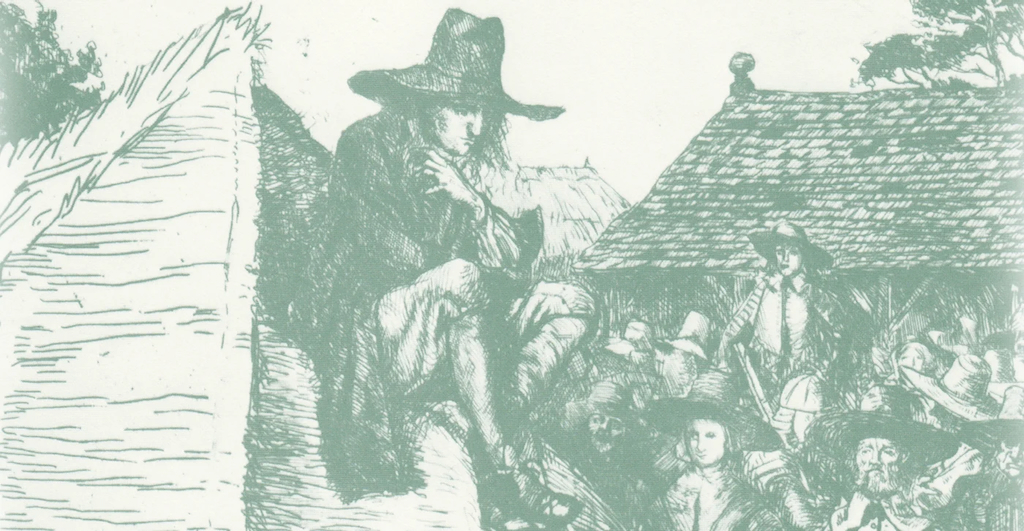
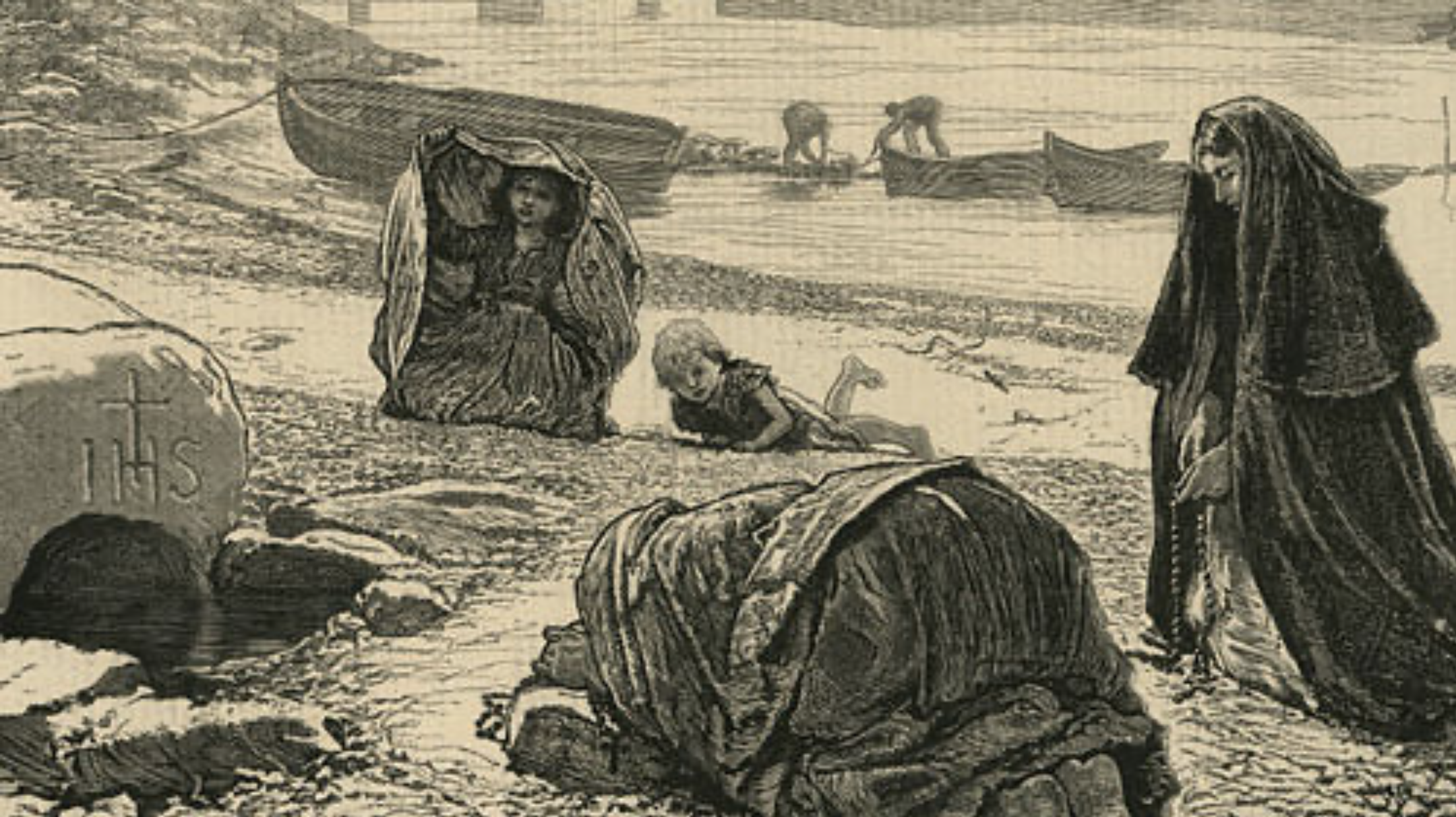
Robert Spence, George Fox on the Hay-stack, circa 1911. Etching on paper. Courtesy of Friends Journal archives.
i am late to history. whilst the rest of my college compatriots were piled into an old theatre, inhaling the histories of the war-torn globe, dissecting allegiances and alliances, double crossings and shots fired in the night, i and the rest of the pre-STEM nurses were across four lanes of traffic in yet another old building taking in the particulars of microbiology. or anatomy and physiology. or pharmacology.
little, really, did those lectures teach me about the ways of the world outside the hospital ward. for that the jesuits poured us volumes and volumes of theology. i drank thirstily.
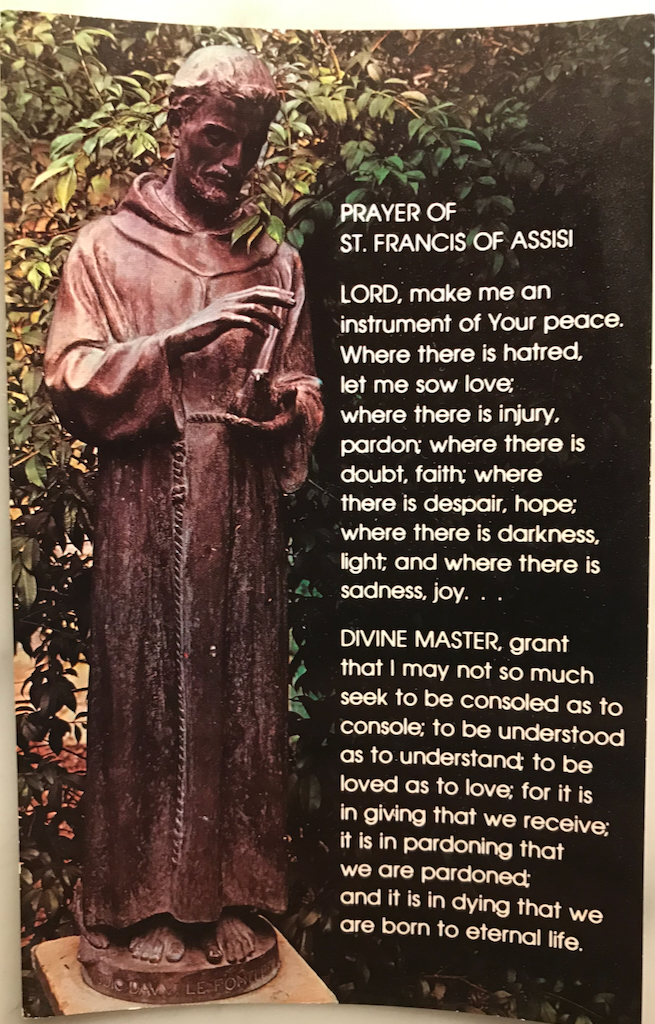
but still i didn’t learn much of a thinker—don’t remember a single mention—who made me think this week. made me stop in my tracks and think hard about the evil impulses that abound, the ones that have not been tamed over the many, many millennia. the ones that make me wonder just how, oh how, can we make a dent in their oncoming velocities, those of us who consider ourselves, in this thinker’s words, “the hidden [] of the heart and the meek and quiet spirit.” those of us, in my words, who aim to bring light, to turn the other cheek (yes, i still believe in it, despite the many many times i’ve been told that’s a fool’s game), to be in our own tiny, tiny way “instruments of peace, sowers of love, of pardon,” and maybe a droplet of hope.
perhaps the jesuits weren’t steeped in the ways of the quakers. or perhaps i’d signed up for the classes that left george fox off the syllabus.
george fox, you might know, is the 17th-century founder of the quakers, those peaceful peoples who’ve not let the war-torn centuries tear at their steadfast conviction that peace, not war, is the way. and while i don’t know much about their volumes of wisdom or tradition, i do know that reading this passage from the journals of george fox, a passage written in 1650 while he was imprisoned in derby, england, for blasphemy, i was stirred by its echoes in this godawful moment where iran and the u.s., iran and israel, israel and lebanon, israel and gaza, russia and ukraine, grow uglier and crueler with their seemingly bottomless arsenals of war.
this is the plea of george fox, words that arose as he sat in a silence he’d carved in his prison cell:
What a world is this: they have lost the hidden man of the heart and the meek and quiet spirit, which is of the Lord, of great price. I saw how the powers were plucking each other to pieces. And I saw how many men were destroying the simplicity and betraying the truth. And a great deal of hypocrisy, deceit and strife was got uppermost in people that they were ready to sheath their swords in one another’s bowels. Therefore be still a while from thy own thoughts, searching seeking, desires and imaginations and be stayed in the power of God in thee, to stay thy mind upon God, up to God, and you will find strength from Him and find him to be a present help in time of trouble, in need, and to be a God at hand.
“be stayed in the power of God in thee,” an instructive to plumb the holy well within, the one i too am convinced is at the core of us, all of us, if we work to tap into it, if we allow it to infuse the whole of us, to be just one tiny, 5-foot-3, 100-some-pound, vessel of all that is, by any definition, Godly. it’s an instruction not unexpected from a man whose most quoted line is his assertion that “there is that of God in everyone.”
amen, amen i say to that.
but what of those who seem hellbent on squelching it? those who crisscross the country—and the globe—preaching that empathy is for fools, claim it “a fundamental weakness of western civilization”? who puff their chests and bellow their war plan: “death and destruction from the sky all day long.” and go on to explain, to whom i cannot fathom, “this was never meant to be a fair fight, and it is not a fair fight. we are punching them while they’re down, which is exactly how it should be.” and who claim, “we negotiate with bombs,” and claim as their motto: “maximum lethality not tepid legality.” those ready to “sheath their swords in one another’s bowels.”
might we resurrect saint francis and put him in charge? pair him with george fox? send the warmongers off to mars, long known as “the war planet” anyway, drenched as it is in the color of blood (the residue of iron oxide, actually), named after the roman god of war, though he represented honorable conflict, a notion lost on those currently dropping the bombs, launching the deadliest of drones.
so how, amidst all the horrors, do i find hope, even a speck of it? i align myself with the millennia-long lineage of this who turn their backs on the bomb-droppers, who fix in my crosshairs the likes of history’s peacemakers and keepers, the jesuses and george foxes, the francis of assisis and the solomons, the gandhis and thích nhất hạnhs.
i know we’re but one. but one + one + one eventually equals a counterforce.
our time is short. our mission steep. and the half-life of love is as long as the quiet turning of the cheek, the unheralded random act of goodness, of mercy, of tender loving care, and unbroken attention to the brokenness that leaves us in pieces.
Therefore be still a while from thy own thoughts, searching seeking, desires and imaginations and be stayed in the power of God in thee, to stay thy mind upon God, up to God, and you will find strength from Him and find him to be a present help in time of trouble, in need, and to be a God at hand.
“to be a God at hand”….
amen.
who or what guides you in the countercultural ways of peace, the ways where empathy is among the highest holiest of graces?
i love this last weekend of march, for two of my most deeply beloveds will blow out their birthday candles on back-to-back bday cakes. sweet p today, and tomorrow it’s auntie mullane, the one who taught me how it feels to be loved, deeply, tenderly loved, a whole half century ago. if either of them was in charge, ours would be a world where every blessed day was as gentle on the heart, and as glowingly radiant as any of us could ever, ever imagine…..
it is a strange sisterhood. it comes in out-of-the-blue phone calls that, within a sentence, pull us both into perhaps the darkest corner of our lives. “do you have time to talk?” is sometimes the precede. sometimes not even that. yesterday i got the precede. the time before i did not. (yes, that’s two such calls within the space of a month.)
i dialed the number attached to the text, and the woman who answered, a woman i barely know, suddenly inhabited the very same place i know too well, will never forget. she’d found out, the day before, that she had stage 4 lung cancer. she said it so fast — and so plainly — i had to ask her to say that again. i wasn’t quite sure i had heard what she said, couldn’t possibly have heard what it seemed like she said. she sounded so matter-of-fact when she said it.
she said it again. the day before, she’d gone in for biopsies, two of them, both in her lungs, and woke up to the surgeon telling her it was cancer, and it was stage 4, a number that scythes like a death knell.
not even a whole day later, she was working the phones, searching for doctors who would dole out what amounts to the only possible hope: chemo that just might stave off the spread, just might dial down the madness of cancerous cells that divide and multiply dervishly, devilishly, and finally deathly.
she’d heard that i too know what it is to find out cancer’s been lurking without any warning. lurking in the lungs, specifically. lurking in the very bellows of where and how you breathe.
when cancer, any cancer, is the subject at hand, you don’t need to know much about the someone you’re calling. you just call. because inside the very dark chamber in which you are finding yourself, you reach for any semblance of light seeping in. and someone who might know a doctor is all the light you might need.
so she called. and in curious ways, she sounded quite numb. as if gathering the names of oncologists, and deciding where she’d go for her daily infusions of chemo, was not too different from shopping for just the right shoes. but then the hand-grenade sentences came. when she said, “surgery isn’t an option for me. it’s all over my lungs.” and, when the subject of five-year-survival rates came up, she said plainly: “i won’t live that long.” and in between those sentences she mentioned how much she loves her life, how much she’s loved her thirty years being married to the love of her life, how her girls are her everything. it’s the whole gamut, from gut-wrenching realism to the first seeds of mourning, all in one fell swoop. and she spoke all of it without shedding a tear.
i gave her the name of the doctor i love, the doctor who pulls her stool close whenever she talks to you, presses her knees against yours, all but cups your face in her hands. i opened the door to a chamber in my heart that seems to have moulded itself into a space for those who know, for those swept into a club no one wants to belong to. but once there, we are sealed as tightly and fiercely as humans are able to be. we muster our “fight.” we pray fiercely for each other. we ride each other’s highs and lows and the muddies all in between. we laugh with the darkest of humors. we sometimes speak in a shorthand. i don’t need you to tell me how desperately you don’t want to die, to leave the luscious life you call your own; i already know. me, neither.
we speak each other’s most foreign language.
these phone calls remind me how human we are. how, within mere breaths of beginning to talk, to tell our worst imaginable stories, we can sidle so close to each other, we can almost finish each other’s sentences. at the core, there is so very much about us that isn’t so one-of-a-kind.
we humans get scared. we humans sometimes get dealt the worst possible news, news that wants to shatter us. but then, pressed against the warmth of someone else’s breath, someone’s skin, someone’s voice, we remember we’re not wholly alone.
there is someone out there who travels a similar road. someone else has heard the death-knell sentences and picked up the pieces and carried on. because that’s what humans do—till the end.
and in that associative property (the back and forth of courage and fear, of questions and answers, of hope maybe just maybe flashing off in the distance) we find the pulse beat to carry us forward. not alone. but tucked tight in a cocoon that no one wants to inhabit.
i will always, always answer those calls, make those calls, chase down the answer to questions that come in those calls. inscribe those someones on the close-to-my-heart rolls. check in just often enough, or sometimes out of the blue. because that’s what sisterhoods do. and there’s a mysterious beauty here in the chamber where no one wants to be: the truth-telling is as clear and unfettered as any i know. we might be our very most human in the space and the time when we realize time is short — so short — and all the distraction is stripped away, and we are living as close to the holy nub as we can possibly be.
i am still grieving—that raw early stage when it’s never far from mind—two of those sisterly souls who dwelled in that most sacred space, right alongside me, right till the end. their end. barely a month ago. and i can all but feel them just the other side of this worldly existence. they live in me now. i think we are sealed in the holiest union. and it all begins with the worst story we might have ever been told: you have cancer.
what’s beyond that story, that door, though, is breathtakingly, beautifully rare: the human spirit in all its magnificence; a muddling of courage and truth, of seeing through a luminous lens, asking the most eternal of questions, and sometimes just plain finding the hilarity in the ridiculous twists and turns on cancer’s godawful road.
in uncanny, indescribable ways, i am so blessed to find myself in this rarest of rooms. a room where all is magnified, and illumined, and little goes without notice. most emphatically, the marvel of every last drop of being alive.
kelly belmonte
before i go, i found a poem this week, and another poet who will someday soon be the subject of the next installment of adopt-a-poet. i found her through anglican poet, priest, singer, songwriter, and hobbit lookalike, malcolm guite, who included this poem in his anthology for lent, titled word in the wilderness: a poem a day for lent and easter. the poet, kelly belmonte, who hails from upstate new york, is the creator and founder of All Nine, a creative collaborative. she explains the “nine” as “a reference to the nine sister muses of Greek mythology. These inspirational sisters represent multiple domains of creativity and intelligence, from epic poetry to science. For any vision to move from the inside of one person’s eyelids to the physical world where it can make a positive impact, it takes a collaborative effort across multiple disciplines and an openness to many sources of inspiration. Hence, all nine.”
her latest work, the mother of all words, came out last year, and is on my library list. belmonte claims as her poetic influences an eclectic list including Kobayashi Issa, R.M. Rilke, Mary Oliver, and Frank X. Gaspar.
i found myself stunned by the interplay of the quotidian here, and the easy reach within which we find God….
How I Talk to God
Coffee in one hand leaning in to share, listen: How I talk to God.
“Momma, you’re special.” Three-year-old touches my cheek. How God talks to me.
While driving I make lists: done, do, hope, love, hate, try. How I talk to God.
Above the highway hawk: high, alone, free, focused. How God talks to me.
Rash, impetuous chatter, followed by silence: How I talk to God.
First, second, third, fourth chance to hear, then another: How God talks to me.
Fetal position under flannel sheets, weeping How I talk to God.
Moonlight on pillow tending to my open wounds How God talks to me.
Pulling from my heap of words, the ones that mean yes: How I talk to God.
Infinite connects with finite, without words: How God talks to me.
it is among the most profound teachings of any religion. and its point is found at the root of every sage, seer, and saint.
remember that you are dust, and unto dust you shall return.
some years, to be truthful, those words washed over me. not this year. no longer. it is the teaching at the core of my scan time epiphany, pressed onto my heart as i emerged from the months-long fog that followed the words from my surgeon, “it was cancer; i was surprised.”
we don’t have forever. our days are numbered. our time here is fleeting. we’re wise not to whittle away the hours. wiser still to work toward the nub, the holy nub, that i believe lies at the heart of why we’re among the blessed who got to draw a first breath in the first place.
the odds of being born are stacked mightily against us; biology lays it all out at roughly 1 in 400 trillion (that’s 400 million million, or a 4 followed by 14 zeroes; i’m guessing that might be more than all the stars in the heavens. but what do i know?). we’re the ones who were allotted X number of days, who were given a holy task that’s ours and ours alone. and our slot to get it done, to reach toward holiness, to exude the light this world so desperately needs, is not without end.
so knew moses in the wilderness, imploring God: “teach us to number our days, so that we may gain a heart of wisdom.”
come the seventh century, a pope named gregory I pulled out the ashes to press against flesh, to remind the believers, to begin the 46 days then counted as Lent, a season of penitence before the coming of Easter. in judaism, the days of awe, from rosh hashanah, the new year, to yom kippur, the day of atonement, attention is turned to the mortal imperative: we will die. and we’d best make the most of our days. in islam, the inevitability of death is a core tenet, and muslims are taught to pray “as if this is your last ṣalāh (prayer).”
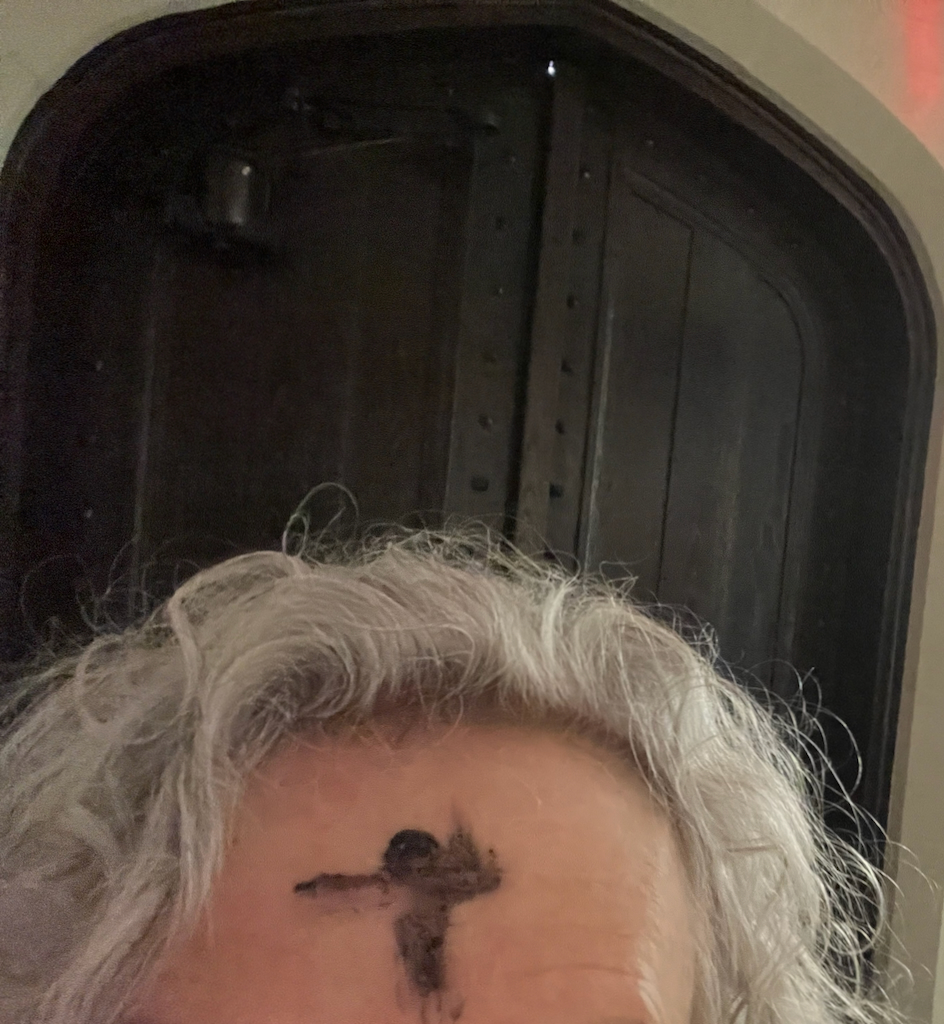
i live now with those teachings pressed hard against my flesh, whether you can see the smudge on my forehead or not. just so happens this week i walked around for a few hours looking as if i’d smudged a thumbful of dirt just above my eyebrows. and this week, a week in which i’ve spent so many hours trying to reach across to the other side, in search of a wink or a nod or a squeeze from two beloveds new to the other side, i found myself transfixed by the wisdom i wore for all the world to see.
i find it imperative. it’s the truth that fuels my every day, and all the hours within.
i live now with the palpable knowing that any minute the something stirring in my lungs (a something i likened to “a couch potato of a cancer” when my surgeon first described it as indolent, or lazy) could, in that surgeon’s inimitable words, “decide to leap off the couch and start running around the house smashing things.” the analogy here refers to the cancer detonating all throughout my lungs, a demonic pinball boinging wall to wall to any old air sac, the wee little bellows that allow you to draw in oxygen, blow out the junk that remains, the carbon dioxide we need to get rid of, lest we die of suffocation.
in my latest adventure in book writing, the book now awaiting yet another round of editing, a book whose working title is when evening comes: an urgent call to love (drawn from the great teaching of saint john of the cross who once wrote, “when the evening of this life comes, you will be judged on love,” and to which the mystic evelyn underhill then adds: “the only question asked of your soul: ‘have you loved well?'”), it’s the very point of the ashes—to dust you shall return—that animates every inkling, question, and meditation in the pages soon to be bound between covers.
in the year since i started writing that book, and in the almost three years since half my lung was snipped out of me, the choice to love well is one that rises over and over, a tide that won’t be quelled. it’s the most clarifying truth i’ve ever clung to. and it expands the walls of my heart, pushes me plenty beyond my comfort zone because i know my chances are dwindling. the next scan could come with the words that something is stirring. has made itself known. and i know those words will crumple me. knock the wind right out of me. at least for awhile. till i find my bearings again.
and so i live just ahead of those words, as if they’re always on the chase, running up from the rear.
the people i love who died last week, who crossed to the other side, were beautiful souls who loved so majestically, so magnificently, and both of whose lungs were filled with the damn cancer that would not relent. each loved till the very last breath. each didn’t want to die. each one was brave—mostly—till the end. and each one finally let go.
in so many ways, their holy nub did not die. their spirit, their joy, their infinite giving, it’s as alive as ever. maybe more so. i feel each of them. i hear their words, their laughter, the very lilt in the way they spoke every word. and their invisible presence stirs me robustly. maybe it’s that we were all in the cancer gulch together, shoulder to shoulder to shoulder. maybe it’s that we spoke a language so little known outside the republic of cancer; a language into which we’d been swept, a language where shadows are looming, a language propelled by unfiltered truth and urgency.
maybe i feel like it’s up to me to carry on their brilliant-beyond-description ways of being in the world. but that would be wrong. their work, their nub, lives on in the ways it will forever animate and rub up against ours. but my work is mine. and my days to do it are now. and your work is yours. and your days are now.
the God i believe in breathed into us a constellation of wonders, and set us on our way. as rilke once wrote in a poem i’ve long pressed to my heart, imagining God speaking to each of us as God makes us, before we are born, before we leave the womb of darkness, God “walks with us silently out of the night.” and as we near the precipice of the womb, the place where the daylight seeps in, God whispers: “Nearby is the country they call life. You will know it by its seriousness. Give me your hand.”
and so this work that is ours to do, in this time that will end, we are here for holy purpose. and our God is at hand.
ashes to ashes. dust to dust.
the time in between is our one holy chance.
how will we use it?
in the tiny chapel where i go to pray, and where this week the ashes were smudged on my head, i found these words from psalm 103 breathtakingly beautiful. . .
for [God] himself knows whereof we are made; he remembers that we are but dust. Our days are like the grass; we flourish like a flower of the field; When the wind goes over it, it is gone, and its place shall know it no more.
may our time in the field be fruitful, may our petals unfurl fully as we drink in the sunlight. before the wind blows over us, and our time here is no more….
love, bam
sending special special love to the beautiful mama of one of the beauties who has crossed to the other side….i know that all of us here reach across the table in hopes of steadying your trembling hand, tissue at the ready to dry your flow of tears….
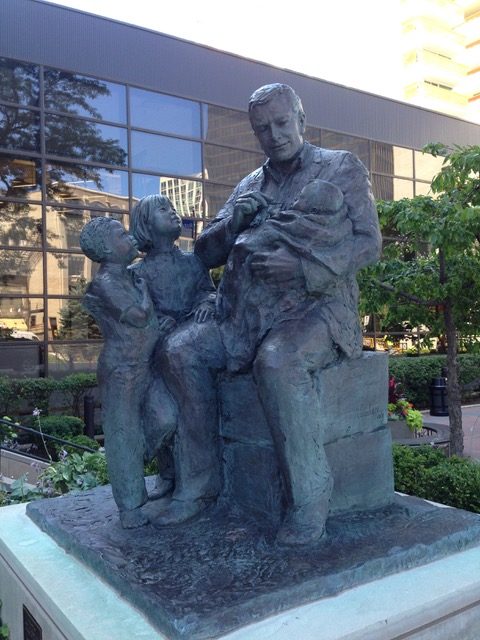
“polioplus” (1991), bronze sculpture by glenna goodacre
dear world,
i fear we must be seeming pretty ugly these days, those of us of huddled here in this nation built on what we’d deemed monumental pillars that would not, could not, be crumbled.
but for all the world, and certainly from the wobbly chair where i sit, the granite, the marble, the impenetrable ore looks to be crumbling into fine, chalky bits.
i am—we are—so, so sorry.
mortified is more like it.
in the last 48 hours, i’ve heard the titular head of the land once home of the free labeled a.) “a national embarrassment,” b.) “unhinged,” c.) and the right-wing belgian prime minister put it this way: “it’s up to him to decide if he wants to be a monster, yes or no.”
of our american president’s words from the podium in ski spa switzerland, even the conservative bret stephens of the new york times wrote that it “sounded, in places, as if it had been ghostwritten by mario puzo [author of epic crime-family novel, the godfather]. wrapped in self-aggrandizing boasts and exaggerations, along with ugly jibes, meandering asides and shopworn grievances, lay a premeditated threat worthy of a padrino [mob boss]: ‘you can say ‘yes’ and we will be very appreciative,’ the president said, in reference to his demand for greenland. ‘or you can say ‘no’ and we will remember.’”
the so-called “board of peace,” convened by our very own national embarrassment, has been populated by “three ex-soviet apparatchiks, two military-backed regimes, and a leader [wanted for] war crimes,” according to the financial times. with an entry fee of one billion per pop. peace needn’t be so exclusive a club.
let me put this plainly (and plaintively): we are not, most of us, bullies. we are not always crude. we do not lie awake at night imaging the gilding of our toilet bowl, our hearth, the chairs upon which we perch.
the people i know here—plenty of them anyways—will race you to the ER on a second’s notice, ferry in casseroles of steaming hot chicken and dumplings, and should someone without a home need a warm shower, clean clothes, and a sandwich, well, my street number is 522.
my distaste for bullies is not new. i’ve had a lifelong aversion. could sniff out a skunk in disguise as far back as first grade.
in the house where i grew up we made shoebox hospitals for dinged baby birds, and cardboard villages (complete with a church and a steeple) for ladybugs who’d shimmied in through open windows. oh, and early on we were taught the tenth commandment: “thou shalt not covet thy neighbor’s goods.” so i went to confession to divulge to the priest my longing for my next-door-neighbor’s rainbow-colored toothpicks. yes, toothpicks. (a counting device in first grade, so mandated by the nuns.)
and believe you me, toothpicks pale in comparison to coveting the island nation of the arctic north, where threats have been made and the stomping of combat boots could be heard in the distance.
all i’m trying to say, dear world, is that we too are shuddering, and shaking our heads, and seeking any possible exit from this existential yet very real nightmare. and we are not, most of us, in any way, shape, or form seeing any bit of ourselves, our souls, reflected in this national madness.
we’re clanging the five-alarm fire bells. some days, weeping into our palms.
we yearn to return to the U.S. of Compassion, the flotillas and flanks that race to the rescue whenever, wherever, there’s rupture—earthly or otherwise.
there’s a statue i pass on the way to church (or trader joe’s) of a kindhearted doctor, (you can sense the kindness even in passing by; i’d imagined it to be dr. jonas salk, developer of the polio vaccine, though turns out it’s just your basic good doctor) with wee ones clambering onto his lap, as he plunges a dose of vaccine into the mouth of one of the babes, part of a worldwide effort to eradicate the godawful scourge. it makes me weep when i pass it now. as it’s the antithesis of our national policy and our re-ordered global health agenda, and i cannot believe that in my lifetime i am watching this obsolescence.
i fear you’ll shove us from your sidewalks, should we dare to set foot in your lands. i fear you’ll see hate when you look at my weathering face.
and i’ll understand. though it will crush me.
all i want you to know is that we are, mostly and deeply, a rather good people. and if there’s anything you ever need, please knock at my door. i promise gentle, warm welcome. and chicken and dumplings to go.
speaking of scandinavian environs, it just so happens that i found a breathtakingly beautiful poem from a reclusive norwegian poet, emil boyson, as i was reading one of my favorite new thinkers recently. my poet friend kathleen hirsch pointed me to norwegian bishop erik varden a while back, and ever since, his wisdom illuminates my days. this poem was found in varden’s 2023 book, Chastity).
i love that it speaks to that delicate beauty inside all of us, a beauty that we ourselves often shy away from, demur. but in truth we yearn to be seen, and maybe most important to see for ourselves our tender, unbreakable beauties. it sounds to me as if some celestial wisdom, maybe God, is speaking in whisper to a precious child who is blind to her own beauties.
here tis:
To the Body by Emil Boyson
Life is made bearable because, in this world, you exist. You are the hidden songbird. You are the new moon’s beauty. You are the white cloud of yearning. You are the tornado that pulls us out of ourselves and lets our sweet pain know that all will be changed like a garment and that one day when fate’s measure is full the face of this world must pass.
Who would have thought that YOU, who hold in your hand ultimate secrets known otherwise to God alone, should be a shy young girl whom thousands pass in the street, about whom nought is known except that you like crosswords, do housework for your mother, speak sense about the weather, and knit little vests for the child your sister expects in March.
Are you never fearful, in the quiet of the night, of your being’s enigma? Is it your unfurrowed brow that obliges us to brood? What do you know of questions and answers? You smile as you pass on your way to reality’s frontier, strangely united with your fate; while our hearts quiver you are again transformed, finding, lost in a freedom you have never sought to fathom, the rigorous paradigm of grace made one with your body, then collapsing as if dead at the end of your last dance.
what brought any droplet of anti-madness to your world this week?
the winds have been howling all night, a rushing, a roaring of air on amphetamines. sometimes the sound rises in pitch, almost a keening, the sound of a soul in mourning.
keening, a word that draws me half around the world to the banshees of that faraway island from which my people came (a good half of my people, actually, but it seems the half i’m rooted in). it’s a word that places me in a dark and damp room where a fire roars, and the people are circled in sorrow, cloaked in black woolen wraps. swaying and rocking, the sound that rises up is the sound that lives at the pit of us, the sound that rises when our heart or our soul is shattered. cracked wide open. it’s the ooze of anguish that comes without volition. keening sometimes comes without knowing. it just is. it’s primal. a reservoir so deep inside us it takes velocities of sorrow to tap into it, to draw from its well.
i might have keened once or twice, but i barely remember. both times someone had died, and it felt like part of me did as well. i remember the sound, remember i barely knew where it rose from, or that i’d had it inside.
the God who imagined us imagined so far beyond the imaginable. the God who imagined us gave us a sound, buried it deep, deep inside, where it awaits necessity. there are in our lives times when only that keening will do. that high pitched guttural whoosh that captures the unspeakable, a whoosh that rises and falls, traces the scale from basso, the animal roar, to mezzo soprano, up high where it’s piercing.
and why would the wind be keening?
look around.
listen.
don’t let us dull to the litany.
waking up to find we live in a pariah nation is one. but that’s almost too big for my head. i tend to operate in the finer grain. and the closest i came to keening this week was the news that the poet had been shot through the head.
what poet, you might ask?
the one in minnesota. the one whose first description i read was “37-year-old, mother of a six-year-old, award-winning poet.”
who shoots a poet? how often does the descriptor of a violent death include the word poet?
poets are porous. poets live in the world permeable to the little-noticed. poets process what’s breathtaking and put it, miraculously, to words. poets, the ones i love, the ones whose words put form and frame to unutterable parts of me, they’re among the most gentle-souled humans i’ve known.
renée good was a poet. a mother. and she died at 37, in the front seat of her maroon van we’ve all now watched over and over.
renée nicole good
renée good, back when she went by the name renée nicole macklin, won the 2020 academy of american poets prize. that’s not a prize for a piker. that’s a real-deal prize, a trophy worth tucking on the highest shelf in your house. she won it for a poem curiously titled “On Learning to Dissect Fetal Pigs.” now, that might not be the first thing that stirs me to want to write a poem. but poets begin in curious places sometimes and take us into terrain where wisdom or epiphany comes.
when we become a nation where a poet is shot through the windshield, just minutes after dropping her six-year-old off at school, we need to ask who in the world we’ve become. it only becomes more twisted when we can see for ourselves how the scene unfolded, and the people in charge, the ones holding the guns, the ones not letting a doctor rush to the scene, tell us that we didn’t see what we saw.
i wonder how apt this headline would be: good is dead.
that would be the headline atop the poet’s obituary. rachel good, award-winning poet and mother of three, was shot through the head. by federal agents. who then refused to let a doctor rush to the front seat of her bloodied, bloodied minivan. and waited too many fading heartbeats before giving the okay to call 9-1-1.
no wonder the wind is keening.
no wonder the world is tapping into its most guttural cries.
not long before i’d found myself tripping over the violent death of rachel good, i’d been thinking deeply about poets. thinking about a breed of poets i’d likened to “a tribe of saintesses.” that’s a feminization of saint, an intentional genderizing, if you will, because the poets i’m most drawn to might technically, and in an old-time world, be coined poetesses, and because the ones to which i am most deeply drawn are ones who weave the sacred, even the liturgical, into the vernacular from which they write. because the saintesses to whom i am most drawn are the ones whose verse scans the divine, shimmers at the edge of the ineffable, catches me unaware, but grounds me in a certainty more certain than many a gospel, i turn to them for edification and plain old uplift of my weary soul.
i keep them in close reach.
sitting just beside me here at this old maple table are two such poet saints, the ones whose lines leave me gasping, my spine tingling as if something holy has just wafted by and through me. because it has.
here’s one. her name is kathleen hirsch, and this is from her mending prayer rugs (finishing line press, 2025). it’s the last stanza of her poem “prayer rugs” (emphasis mine):
I bend in blessing toward all that breathes May each hour enlarge the pattern— rose dawn, wind song, tender shoots of faith— that I may see the weft of the hidden weaver.
or, also sitting right by my elbow, jan richardson’s how the stars get in your bones: a book of blessings (wanton gospeller press, 2025), i flip through pages and pluck just one, titled “the midwife’s prayer.” it begins:
Keep screaming, little baby girl. Keep practicing using those lungs and do not stop, because hollering will help to ease the shock every time you go through another birth.
the saintesses, i swear, speak from a godly vernacular. they see deeper than the rest of us, dwell deeper too. their gift is the gift taken away at Babel. while all the rest of us were stripped of the powers of universal understanding, the saintesses kept on. they speak words that speak to all of us—if we listen closely. if we trace our fingers across the lines they offer, sacramental lines, lines that lift off the page, lift us off the page and into the transcendent, where for just a moment we get to reside.
i don’t know the rest of rachel good’s poems. but i know she was a poet. and the silence where once she spun the words of the unspoken, the little-heard voice, that silence now is cacophonous.
and even the winds are keening.
you can read the whole of rachel good’s prize-winning fetal-pig poem here.
and here are the first few lines…
On Learning to Dissect Fetal Pigs by Renée Nicole Macklin
i want back my rocking chairs,
solipsist sunsets, & coastal jungle sounds that are tercets from cicadas and pentameter from the hairy legs of cockroaches.
i’ve donated bibles to thrift stores (mashed them in plastic trash bags with an acidic himalayan salt lamp— the post-baptism bibles, the ones plucked from street corners from the meaty hands of zealots, the dumbed-down, easy-to-read, parasitic kind):
keening in minnesota on the block where rachel good was killed
what shall we do to quell the need for keening? and what poets draw you into the depths of the Holy?
sometimes, in the holy hollows of the morning after, the wonder of Christmas drifts deeper into my soul than in the rush of days before. it’s as if snowflakes, the sorts that tumble laconically from above, come down, down, down. quietly. contentedly.
it’s my own hushed holy day.
as is this morning. the old clock is ticking, the fridge is humming as it churns to keep the leftover bits of beast and yorkshire pudding from curdling (or worse), the furnace has just kicked on. and, best of all, the beds upstairs are full. there is no more sumptuous bounty to me than the fullness of beds with lumps under the covers, lumps that rise and fall in respiration. it’s knowing that the dreams of those i love most dearly are all whirling under the one same roof, drafty as it is.
if prayer is practicing the presence of God, as little brother lawrence, the patron saint of pots and pans, long ago taught, then this morning is a prayer. and i am doing the dear little french monk one better: i am not practicing, i am believing. as surely as i fill my lungs with breath, i am sure the presence of something holy, the alpha and omega of Love, is here in this old house.
i’ve been watching it play out, as last night the one i used to call “my little one” all but pulled me away from the sink and plopped me firmly on the couch, so he could take up the last of the dishes, scraping away the bits of feast left behind, as he sensed, from across the Christmasy room, that i was on my last gasp, and could do with a superhero to swoop in to my rescue. that boy (who’d already cooked the beast to perfection, and zhoozhed up the horseradish sauce to picture-perfect perfection) is living, breathing empathy, and benevolence should be his middle name.
i’ve been listening to it, as the sounds of two boys, brothers born with eight years between, plotted late into the night, and their whispers climbed the stairs, rounded the bend, and slithered under the bedroom door to my ears. i know, from the rise and fall of their voices, and the unchecked bursts of laughter, that the distance between their years is slowly, slowly, melting away. and in the deepest, deepest chamber of my heart, i know they will always have each other.
i’ve sensed it, as my mama nestled her head onto my shoulder as she hugged me goodnight, a tenderness that blooms between us these days as never before.
i was wrapped in it, the presence of God, as i sat at my end of the table, watching the postures and gestures of family feasting: heads leaning in to share a retort or rejoinder; arms reaching for bottles or bowls, and serving another; everyone at once shaking with laughter, or knowing the punch lines to stories told again and again over the years.
and so this morning, still alone in the silence, i will sit inside this prayer, and pull it tight round my shoulders, and whisper a holy amen, a declaration proclaiming “it is true” or “so be it,” a hebrew word shared by all the abrahamic religions, derived from the hebrew for faith, emunah (אמונה).
faith, indeed. faith felt real, spelled out in quotidian stuff of one old house, filled this morning with four blessed souls who live and breathe and laugh out loud and sometimes share secrets and dry each others’ tears and make mistakes and say i’m sorry and reach across the table, every time, and squeeze the hand and share the look that says “i love you now, i have loved you always, and ours is a love without end, a love that will vault into eternity.”
amen.
and thank you, holy holy God, born anew each day in each of our most blessed hearts. may it be so….
how and when have you felt the Holy Presence in this whirl of wild days?
i am leaving you two little Christmasy gifts, a beautiful blessing from christine valters paintner, the dancing monk of the abbey of the arts….and a breathtaking tale from an herbalist, eco-therapist, and author named brigit anna mcNeill….
first, the blessing….
A Christmas Blessing
This blessing dances at the doorway of light and dark, knows both as sacred: fertile womb space, miracle of blooming.
This blessing breathes through those moments of labor when you too birth the holy into this fragile, luminous, hurting world
as Mary did two thousand years ago, eyes wide, hands gripping, waters breaking like crashing waves of the primordial sea sending a prayer through time that echoes still, pulsing like starlight in an enormous sky.
This blessing rests a hand on the back of the lonely disoriented lost hungry despairing persecuted to say your humanity is not an obstacle but a threshold, to remind you that the wound is a portal through which your gifts pour forth, that raw ache you feel is the terrible wonder of being alive calling you into a communion of veil-lifters, catching glimpses of a world where the greeds and horrors are turned upside down.
This blessing comes as an Annunciation: the world needs *you* wild edge-dweller where the wind cries out, where the stone endures,
your hands a bowl, your heart a cave, your eyes a mirror, bringing a drink of water, an ancient song, a shimmering light reflecting all that we miss in days of rushing.
This blessing creates a resting place to gather your strength between the diastole and systole of the heart, to learn to trust in roses and pomegranate, in sparrows and dragonflies, in the electricity of the storm.
This blessing says: know this birthing is not once and for all but again and again, erupting like moonlight between bare branches, like a hearth fire lit for all who have been exiled. This blessing calls you home.
~ Christine Valters Paintner from the forthcoming A Book of Everyday Blessings: 100 Prayers for Dancing Monks, Artists, and Pilgrims
There are lessons you can only learn when the world goes dark enough to hear your own bones. In recent evenings, as heartbreak presses its tremors against my ribs and illness narrows the space inside my body, I step out of the granite cottage and into the night. Not searching for signs or answers, just stepping into a different kind of knowing.
merry blessed morning after. may you find a Holy Presence settling in like snowflakes from heaven this day….
the siege of rebar and rubble seems endless. there are shards on our streets, and in our hearts.
the images stun me every time. images find their way in where words sometimes take roundabouts. of all the thousands and thousands of words that have passed before my eyes this summer past, that have sometimes settled into the nooks and crannies of my brain where i can’t shake them out, the images are otherwise: immediate, gut punch. they demand no absorbing. they are all but instant. as fast at it takes for the pupil, retina, and occipital lobe to zap into action. 13 milliseconds; a measure i can’t even measure. another name for instant.
no wonder we feel assaulted. the assault is everywhere.
this week i felt gutted. i am almost ashamed to hold up images of war against images of destruction that i cannot shake. the destruction that gutted me most this week was wrought by the sin of hubris, of addiction to power and greed. what’s rebuilt will not be a hospital for the deathly ill, the dying, the shattered. it will be for the clinking of crystal, and the lifting of forks that are gilded.
in a world of brokenness, we go dizzy sometimes thinking that all there is is evil. we don’t know how to stop it. which is why i spend my hours poring over the pages of sages and everyday saints, not the ones beatified and sanctified, the ones ushered into the hallowed halls of a hierarchy that’s laid out miles and miles of rules and red tape. the saints i search for are the ones whose names you would never ever know, the ones who populate the checkout lines at the grocery, who drive the buses and never fail to wait for the kid loping to the bus late and frantic, or the lady with the pail of cleaning supplies and the limp that won’t let her hurry.
henri nouwen
henri nouwen was a dutch-born priest, psychologist, and theologian who left the vaunted podiums of yale and harvard divinity schools to devote his life to those who might be seen as broken, broken of mind by worldly measure but not of spirit. he became pastor of l’arche daybreak, an interfaith, non-denominational, shared community where both the intellectually challenged and the not intellectually challenged live as one. it consists of eight homes, an old barn, and 13 acres in the rolling hills of ontario, about an hour north of toronto. its core belief is that beneath every brokenness there is light. radiant light.
henri nouwen is no longer; he died of a heart attack at 64 in 1996. but his books, some 39 translated into 35 languages, live on. his radiance, his wisdom, is without end.
nearly every morning, i read henri. he glides into my inbox deep in the night, awaits my morning. he sets me straight for the day. this week, one morning, he reminded this:
Everyone is a different refraction of the same love of God, the same light of the world, coming to us. We need a contemplative discipline for seeing this light. We can’t see God in the world, only God can see God in the world. That is why contemplative life is so essential for the active ministry. If I have discovered God as the center of my being, then the God in me recognizes God in the world…. The spiritual life requires a constant and vigilant deepening and enlivening of the presence of God in our hearts.
if we can look into the brokenness, beyond the brokenness, if our guiding principle is a belief that the Sacred is inextinguishable, cannot be broken, then we might, just maybe, find fortitude in setting our sights on seeing the God in our midst.
i know the nature of God is twisted and sometimes torn, depending on our stories, our pasts, those who taught us or not. i know that some refuse to utter God’s name, and some to deny God’s presence. but i use the name, the knowing, as that for which there are no words. the inexpressible, the depths that defy expression. i know God as the tender force that draws even strangers together. i know God as the hay bale into which i fall when i am afraid. i know God when i look into the eyes of pain without end, and a glimmer is caught, and love is made real, and by only the grace of God we pull each other out of the darkness, the impossible darkness. i know God as the depth and the light of me.
so when henri nouwen reminds me that if i keep God in my center, if i sense the palpable presence as often as i turn my attention that way, then i am equipped for what so often feels impossible: i can search for and find the sparks of the Divine in most any tableau i encounter. in the joyous laughter of the jamaican nurses who love my mama, who make her giggle like a schoolgirl. in the friend down the lane who is crushed and crushed again and again by the cruelties of someone she birthed, someone she will love fiercely forever—no matter the cost. in my absolute favorite grocery store checker, the one with the pink or purple hair, the multiple piercings, and more ink on her skin than it took to write Webster’s first dictionary, the one who holds my hand tight as the tears pour down her cheeks as she tells me the tale of her beloved who’s died, as she tells me how hard it is to still be alive.
these days i’ve shifted my orientation, my seeing. i’ve slipped out of the worldly paradigm, a paradigm that crushes me daily. i’ve moved into the realm of the sacred, the holy. the only way forward, as the rubble and rebar compounds, is to do as nouwen teaches: seek the sacred, be it the faintest of sparks or a bonfire. seize it, hold onto it as long as you can. even amid the rubble there will be the faintest stirring from under the dust, under the twisted steel rods. when the broad view, the overview, dares to pummel us, for all we can see is the evil, the hubris, the cruelest of cruelties, maybe the wisdom is in shifting our sights to whatever is holy and unfurls right before us: the faintest of kindness, of improbable light, of love that refuses to whimper or die.
the world beyond our reach is going to break us every time, but the world we can touch, the world we can sense with all our own God-given senses, that just might be what saves us. and the way we too can take part in the saving.
may it be so.
what broke you this week? and more urgently: what stirred you to see the Sacred?
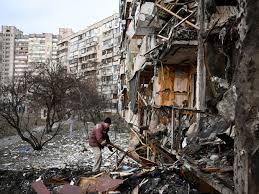
the images above are of gaza, kyiv, washington, d.c. can you tell which is which?
it started because months, or maybe years, ago, i stumbled onto a poem that took my breath away. it was written by a poet i’d not known of, didn’t think i’d ever read. but the poem, titled “Nativity,” stayed with me, a poem that paints the first Christmas scene in strokes and shades that settled deep into my marrow, and forever more are the Christmas i imagine.
it’s a poem that lays the baby Jesus in a rough-sawn barn, the air pungent with animal. “the wind tugging at the shutters.” there is nothing gilded about it. and it was written, i knew right away, by someone at ease with being small, tucked off in a corner keeping watch. it was written, i could tell, by someone whose very veins course with humility, and understood a God who preached the same, a God who asks us to get about the business, the holy business, of loving as we would be loved without noise or bombast or folderol.
it turns out he lives on an isle on the scottish west coast, a place where the wind might tug at shutters. and it turns out he is something of a polymath: a poet, a painter, a children’s book writer, a translator of great works. and, above all, something of a pilgrim, a pilgrim seeking the quiet beauties that punctuate the everyday. he calls them “atoms of delight.”
and he writes of pilgrimage: “the word is often used to describe the journey to a shrine or sanctuary in search of spiritual transformation, which is a meaning i acknowledge. but now pilgrimage has become a much bigger thing for me; it has gone far beyond that rather heavy and medieval sense of going on a journey to visit a holy site. why shouldn’t it be about a walk to a hill loch to listen to the impossibly beautiful singing of red-throated divers? why shouldn’t it be about a child running into the forest in the early morning to find the treasure they dreamed of? these are journeys of the heart, seeking the profoundly precious places where little miracles happen. and why shouldn’t it be about panentheism—the finding of God in all things?”
it’s not hard sometimes to recognize a kindred soul.
what is hard is to imagine finding yourself in conversation with such a kindred someone. but that’s what’s happened. kindness is the thing that opened the door, his kindness. in a world ruled by transaction, where fees are paid and contracts signed for any exchange of goods—be it words or bricks or lumber—kenneth steven lives otherwise.
i found that out not long ago, when, during the editing phase of my next book, i dove into the task called “permissions,” in which for any chunk of text—poetry or prose or lyrics to a song—beyond a certain measure, you must secure permissions from its author. this can be a costly exercise. and it is always one that makes me quiver, wondering what walls i’ll encounter, and what cold-shouldered hubris i might have to tiptoe through.
it’s that poem, “Nativity,” that’s stayed with me all these years. and i’d included the whole of it, eight lines, at the start of an essay that i hope to include in the book.
wondering if i was whistling into the wind, i sent off a proper letter, the digital kind, and shipped it cross the sea. i’d no idea if mr. kenneth steven would ever reply. but, lo and behold, come monday morning, there he was, tucked kindly in my mailbox. and more than generously writing: “of course you are more than welcome to use the poem. i’m sure you’ll mention where you found it.”
and thus, with the stroke of his generous heart, a friendship has unfolded. and a treasure trove of poetries have now brushed through me. and i am richer for this scottish friend who, as a boy, awoke one night at midnight, and hearing a great and ferocious wind, hurriedly dressed and left the house, where he climbed a hill in howling winds, before crossing through a field to reach his favorite tree, where he knew the horse chestnuts would be falling, and he was out to save them, to gather them up. “i felt given a whole world,” he writes in an essay about the midnight escapade. “it was about the autumn and the big winds, and the thrill of running up that long hill and entering the field at last at what felt like the middle of the night.” and the indescribable delight of knowing “that all this treasure was mine.” the treasure: a cloth bag of chestnuts shaken from the limbs, their deep and woody smell, orbs that looked as though they were made of shoe leather.
befriending him, he who writes me every day now, sometimes more than once a day, is magical. is akin to befriending any of the authors from my childhood who’ve long entranced me, drew me into storybook tableaus: tasha tudor; e.b. white; frances hodgson burnett, who wrote the 1911 children’s classic, the secret garden, a book that featured my holy trinity—an orphaned girl, a padlocked garden, and a robin redbreast that finds the key—and once prompted me to fake a fever so i could skip church one sunday to stay at home and turn its pages.
long ago, when i’d be asked if i’d ever want to write a book, i demurred, brushed away the thought. didn’t think i could hold a thought long enough to pen more than a few pages. i didn’t know, though, that the magic of a book comes in all the threads unspooled along the way. threads that carry me to places far and wide, and to souls i’d never otherwise know. but words, like little birds, or prairie seeds, catch on the wind and settle into fertile loam. and we are richer for them.
in much the way, my beloved chairs, through all the words and all the years, have become my dearest treasures.
bless you.
love, bam
have you a penpal in this digital, globe-crossing, email world? someone you’ve not met but who seems a certain friend?
i promised kenneth i would share word of his beautiful meditative podcast, Imagining Things, on the patreon platform. recorded in a studio that seems to be just behind his island home, you can sometimes hear the scottish winds blowing off the atlantic, and a bird or two not far away. (or maybe i’m imagining.) and of course he speaks in a scottish-soaked timbre, and in between reflections he shares poems that will make you hit rewind so you can listen once again, so breathtaking are the lines.
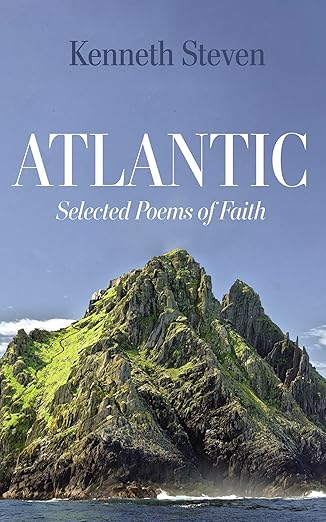
his latest book, one that should be landing on my front stoop within days, is Atlantic: Selected Poems of Faith. but i’m already deep into Atoms of Delight: Ten Pilgrimages in Nature, and Iona: New and Selected Poems.
alas, the tuxedo-clad bird, decked out in what seems at swift glance a crisp white bib, along with obsidian jacket and tails, is reputed to be a plunderer of shiny baubles, be it crumples of tinfoil or pop tops of aluminum cans. as such, its reputation is nastier than it deserves. it’s thought to be a mischievous thief, a rapscallion of the ornithological world. one who surveys the landscape for the juiciest morsel to scavenge.
in that case, i am showing my magpilian virtues this week. i am, in summer’s height, plucking and gathering, assembling but a brief collection of baubles for your consideration.
lest we let the poor magpie’s reputation flounder down at the bottom of the seed barrel, science leaps to its rescue with news from the university of exeter that, in fact, the ‘pie is not a thief. it’s been exonerated by exeter’s ornithologists, it seems. according to a study published in the journal Animal Cognition, the bird is merely curious, and actually suffers from a malady known as neophobia, fear of new things.
here’s how the ornithologists explain it:
“The Exeter University study found that magpies were actually more cautious and less likely to approach shiny or novel objects, even when food was nearby. In 64 tests, magpies only made contact with shiny objects twice, picking up a ring and immediately discarding it. This behavior suggested they were trying to determine if the rings were food, rather than expressing an attraction to their shine.”
if only shakespeare had known. over and over, the bard plucks at the so-called plunderer.
“And chatt’ring pies in dismal discords sung;”
this, from Henry VI, Part 3 (Act V, Scene 6, Line 45), but one example.
again and again, shakespeare draws on the corvids—the raven, crow, rook, jackdaw, jay, and magpie—luring them into his scripts. and except for the blue jay, they often appear, according to those of the literary cognoscenti, the ones who read the bard closely, “together in ominous flocks to plunder the dead.” the magpie, specifically, was thought to be “possessed by the devil and channeled his evil words while chattering,” an idea traced back especially to king henry who in Henry VI pulls out “chattering pie” as the cutting-est put-down he knows for his archnemesis, the dastardly duke of york.
audubon’s plate 357, american magpie
nearly a quarter century later, j.j. audubon himself attempted to rehabilitate the bird’s roguish reputation, writing in his journal, the birds of america, of the american magpie in plate 357:
“It is extremely shy and vigilant in the vicinity of towns, where it is much molested, but less so in country places, although even there it is readily alarmed. When one pursues it openly, it flits along the walls and hedges, shifts from tree to tree, and at length flies off to a distance. Yet it requires all its vigilance to preserve its life; for, as it destroys the eggs and young of game birds, it is keenly pursued by keepers and sportsmen, so that one might marvel to find it maintaining its ground as a species, and yet it is not apparently diminishing in most parts of the country.”
all this to say that at this sauna-like point in the summer, when the air outside is thick enough to cut with a butter knife, and the sweltering has us curling up in arboreal shadows, i come bearing plundered fruits. i am the magpie of ill repute, the one before the reputational rescue. (a warning: not all fruits are sweet. some, too bitter for words, though words are one sure means of conveying even a hint of the harshness.)
joanna macy
for the third week in a row, i come bearing tribute to a great woman whose death leaves us once again with a great voice silenced, and a soul we pray lives on. joanna macy, the buddhist ecophilosopher and translator of rilke, died over the weekend at 96. four years earlier, in conversation with krista tippett, on the occasion of her and anita barrows’ then-new translation of rilke’s Letters to a Young Poet, macy had this to say about living in the moment, and opening ourselves to the beautiful, during this moment in history she refers to as the Great Unraveling:
Well, it seems clear that we who are alive now are here for something and witnessing something for our planet that has not happened at any time before. And so we who are alive now and who are called to — who feel called, those of us who feel called to love our world — to love our world has been at the core of every faith tradition, to be grateful for it, to teach ourselves how to see beauty, how to treasure it, how to celebrate, how — if it must disappear, if there’s dying — how to be grateful. Every funeral, every memorial service is one where you give thanks for the beauty of that life or the quality of what — and so there’s a need, some of us feel — I know I do — to what looks like it must disappear, to say, “Thanks, you were beautiful. Thank you, mountains. Thank you, rivers.”
And we’re learning, how do you say goodbye to what is sacred and holy? And that goodbye has got to be — has got to be in deep thanksgiving for having been here, for being part of it. I kind of sound like I’m crying, and I do cry, but I cry from gladness, you know. I’m so glad to recognize each other. You can look in each other’s face, see how beautiful we are. It’s not too late to see that. We don’t want to die not knowing how beautiful this is.
the thing about being a magpie in human form, is that shiny objects—the true kind, the sort that carry weight and depth all on their own, shininess aside—come all but hiding under rocks. i never know where i’ll spy one. might be bound between the covers of a great book, or might simply be scrolling along when i’m stunned in my own tracks. and so it was when i came upon this sumptuous reply to a post from suleika jaouad in her isolation journals recounting her recent breathtaking birthday trip to tunisia, where she spent much time during her childhood summers. someone named kim wrote this, and set me off on my own voyage into the uninvited beauties that populate and punctuate my world:
In my own world, beauty doesn’t knock. She slips in uninvited—smelling faintly of burnt sugar & sandalwood. She hides in the scorch on toast, the chipped bowl I can’t let go of, the silver cutlery I keep polished for no one but me. I light incense for no reason. I turn the spoon the right way in the drawer. I whisper thank you to the kettle like it’s an old friend who stayed.
you never know where poets are poking about…
but, oh, the reverie in my mind as i, too, considered the beauties too many to count…
i’m going to wade into troubled waters here, and there is nothing but tragedy and horror in the words i feel compelled to leave as the lingering ones of the week.
we cannot let ourselves be living in a world that has children too malnourished to let out a whimper, children whose every rib you could count as if an x-ray with the barest of flesh. in a world of abundance, a world where each night alley dumpsters are spilling with portions too overzealous for even a glutton, in a world where essential nutrition can be picked into space-food sticks, or gel packets meant for mass distribution, there is NO godly or ungodly reason for children or infants or mothers or fathers or the ones who’ve borne them to wither away, for flesh and sinew to waste (the medical term for the breaking down of tissue as the body desperately seeks energy), for breathing to be labored because even the muscles of the chest wall have wasted, and the barest of life-sustaining functions are on their last gasp.
read this statement below, issued yesterday by Philippe Lazzarini, the Commissioner-General of the United Nations Relief and Works Agency, and decide what you might do to respond to the cry of this so-broken world:
“People in Gaza are neither dead nor alive, they are walking corpses…. One in every five children is malnourished in Gaza City as cases increase every day. When child malnutrition surges, coping mechanisms fail, access to food & care disappears, famine silently begins to unfold. Most children our teams are seeing are emaciated, weak & at high risk of dying if they don’t get the treatment they urgently need…. Parents are too hungry to care for their children. Those who reach UNRWA clinics don’t have the energy, food, or means to follow medical advice. Families are no longer coping, they are breaking down, unable to survive. Their existence is threatened.”
all you need do is glance toward the sky, eyes skimming over the players on high. sunlight and cumulus. sunlight and cirrus. sunlight and nimbostratus. sunlight and cloud ever in play, in duet, in doh-si-doh of shadow and light.
there’s a truth being told there, a universal and organizing principle of all creation. on the first day, in the second verse, there was darkness, darkness hovering over the deep. in the third verse, light. God commanded it. and God saw that it was good.
in our lives, the leitmotif is a given. light will come. shadow will follow. light will come again.
so it was in my reading this week, when first i tumbled deeply into a luminous shaft, a boreen* of writings from a norwegian bishop and monk, erik varden, whose power as a writer was pointed out to me by a poetry friend whose taste i know to be exquisite and deep. i swiftly realized the bishop’s thinking and writing are everything they were billed to be: rare. exquisite. deep. radiant.
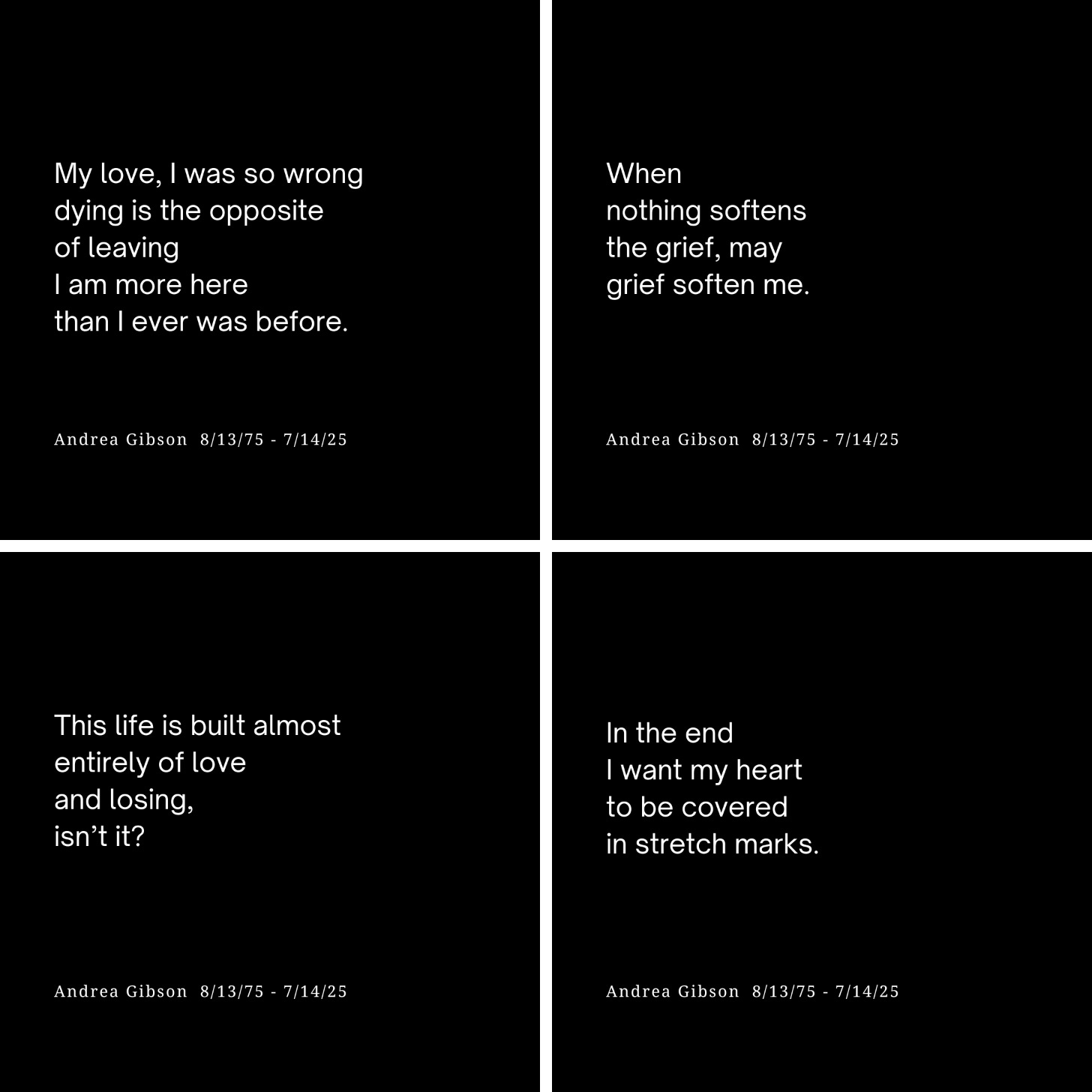
but then, hours later, shadow: i began reading a string of sentences posted from the account of one of my lifeline poets, someone you might call a patron saint of heartbreak and healing, of being more alive than you’ve ever imagined. i started to read, as if it were just another brilliant post: “Whenever I leave this world, whether it’s sixty years from now, I wouldn’t want anyone to say I lost some battle. I’ll be a winner that day.” and then i got to these words: “Andrea Gibson was a winner today. On July 14th, at 4:16AM, Andrea Gibson died…” and my legs stopped moving, and my breath was caught in midstream, and i read and read again. and then my fingers started to tremble, and my knees too.
andrea gibson
andrea gibson, 49, colorado poet laureate in 2023, queer activist (they/them/their pronouns), who had been diagnosed with stage 4 ovarian cancer in 2021, not long after they’d started a newsletter titled “Things That Don’t Suck,” had many, many times pried open my heart, pulled out the unspoken words and the fears and set them soaring. when i too found out what it is to live with cancer as one of the nouns in my story, i drew andrea into my innermost circle. the ones who know, without you uttering a word, just what you’re thinking, you’re feeling, you’re praying. the ones who some days save you. because even though the cyberworld is distant and intangible, it works in mysterious ways, and someone with whom you’ve never breathed the same air can become someone whose voice you can hear as you flutter to sleep, and whose courage you conjure as they glide you into the sarcophagus that is your biannual CT scan.
light. shadow. light from shadow. shadow deepening light. it’s the dance of the duet, interminably entwined. one is always more beautiful because of the other’s presence, because the duet is perpetual.
first, this week’s light:
that monk on a bicycle, spotted cycling through the garth just beyond the cloister, is all it took for me to want to whisper my vows, and cycle along.
as i’m quick to do, i signed up for bishop varden’s website, coram fratribus, a name derived from his episcopal (meaning “of the bishop”) motto, coram fratribus intellexi, latin for “understanding with my brothers.” because the bishop is shepherd of a flock spread across 22,000 square miles in the north of norway, extending beyond the polar circle, he sees his site as a way to speak to the diaspora, to think aloud of those things he finds beautiful or challenging, to gather his flock into a communion of thought. specifically, i felt my heart quicken as i burrowed into the bishop’s collections of writings under the tabs “life illumined,” and the shorter jottings under “notebook,” which he describes thusly:
“To scribble in the margins of texts is an ancient practice. There are people, these days, who make an academic career out of studying ancient marginalia. Any exercise of reading is fundamentally conversational. The notes collected here are brief responses to impressions received not just through books, but also through encounters, art, music, and films.”
now you see why i, a marginalian of long practice, swoon?
before i get to the paragraph in “life illumined” that drew me deep into thought, let us pause to note why we see that little outline of an owl, in the upper right corner, and hovering over every page of the site. the good bishop describes that choice thusly (emphasis mine from here on in):
“The emblem of the site is an owl. The owl does not just wing you back to the front page. It has for centuries been a symbol of the monk. Why? Because it watches in the night, when most people sleep; because it is able to see in the dark, discerning movements and patterns, foundations of meaning, where the human eye perceives only vaguely. I am fond of this Italian doggerel:
“Sopra una vecchia quercia c’era un vecchio gufo: più sapeva e più taceva, più taceva e più sapeva.
“In an old oak tree there sat an old owl: the more it knew, the silenter it was; the silenter it was, the more it knew.”
what fluttered into my mailbox the other morning was a page of the monk’s notebook on the nightingale, complete with an ancient poem (from the early middle ages, written by alcuin of york, an adviser to charlemagne) mourning the absence of the wild creature and its delicate throat. a recitation in english and latin, and including a recording of the nightingale’s song. that alone was more than beautiful enough. and then my poking and peeking accelerated, and that’s how, under the “life illumined” tab, i found a break-me-open paragraph on learning to pray.
in an essay focused on the simplicity of jesus’s prayer, and the universal cry of all believers, “lord, teach us to pray,” varden paints the scene of 72 disciples who learned not simply by listening to the words of jesus in prayer, but in witness to his consuming attention to the ways and will of God. varden expounds:
“Jesus’s teaching on prayer amounted to more than the provision of a text for recitation, that is clear. It was the sight of Jesus praying that made the disciples wish to learn prayer. The words of prayer, which touch our reason and orient our will, point towards the breaking-open of our heart, the transformation of our being as we dare to aspire, even in this life, to ‘become participants of the divine nature’.”
it is the breaking open of the heart, indeed, where the truest serum of our souls pours out. only in the last couple years have i understood that as profoundly as i do now. and, yes, that breaking so often comes with pain, or in pain, or through pain. but i’ve learned now how it truly is the propellent, the force that pushes us deeper into sacred truths than we might otherwise venture. without the breaking open, we might cling to the safer and shallower waters.
the bishop goes on. takes us beyond merely the breaking, and makes the point of its purpose. be it through prayer or through living, the breaking open is the vehicle for those who dare to aspire, in the here and now, to become participants of the divine nature. to inch as close as we can in this lifetime to something akin to sacred. i found a redemptive resonance in that line because at heart, even for the quiet ones among us, we are a people of communion, and there is a heartening, an emboldening, that comes in finding that your purpose, your aim, is not yours alone, but shared in common understanding with at least some of your sisters and brothers.
let us be broken open, then, if it points us toward our holiest purpose. through the break in the clouds, the light comes.
and onto the shadow, the eclipsing shadow…
less than one month shy of her fiftieth birthday, andrea gibson, the poet who boldly faced the coming of her death, who has been amplifying wonder, making us see the unseen, relish the oft-overlooked, took her last breath in the wee hours of monday morning.
i have been relishing her, here and in my everyday, for years now. curiously, her presence in my life spans almost precisely the arc of time in which i’ve been in the company of my own cancer.
the month before my lung surgery, when the world felt overwhelmingly like the depths of a cave, i wrote of andrea and lines i’d inscribed on my heart:
thanks to a friend i love with my whole heart, i stumbled on another wise soul with buckets of beauty to grace the world. a poet-activist-performer named andrea gibson, now a cancer survivor whose words might take your breath away. andrea identifies as queer, and uses the pronoun “they;” and they are known for their trademark honesty and bare-naked vulnerability, traits i find irresistible and blessed beyond words. here are just a few lines i couldn’t keep from scribbling down:
when it comes to hearts i want always to be size queen…
i love you because we both showed up to kindness tryouts with notes from the school nurse that said we were too hurt to participate….
when your heart is broken, you plant seeds in the cracks and pray for rain.
before i die, i want to be somebody’s favorite hiding place, the place they can put everything they know they need to survive, every secret, every solitude, every nervous prayer, and be absolutely certain i will keep it safe. i will keep it safe.
yesterday, thursday, this slipped into my mailbox from andrea’s wife, meg:
A couple years ago, Andrea said, “Whenever I leave this world, whether it’s sixty years from now, I wouldn’t want anyone to say I lost some battle. I’ll be a winner that day.”
Whatever beast of emotion bucks or whimpers through you right now, I hope you can hold that line beside it: Andrea didn’t lose anything. If you had been here in our home during the three days of their dying—if you’d seen dozens of friends drift in to help, to say goodbye, to say thank you, to kiss their perfect face, if you’d felt the love that floored every hospice nurse—you would have agreed. Andrea won.
I won’t sugarcoat the fact that they desperately wanted more time on this planet that they loved so much. This planet of squirrels and romance and basketball and moonlight.
But the time they had was significant, prismatic, and wild. It was full of trampolines and mountain ranges, stage lights and pants-peeing laughter. In their words, they “juiced the sun for every holy drop.” One of the last things they said before dying was, “I fucking loved my life.” Their conviction stunned the room.
If Andrea’s life was a poem (and it was), could there be a better last line?
a little backstory, again from meg:
In 2021, before the diagnosis, Andrea announced they were writing a newsletter, titled Things That Don’t Suck. A few weeks later, we learned they had ovarian cancer.
At first, Andrea said, “What a terrible time to be committed to writing about what doesn’t suck.” Then, almost immediately, they shifted their perspective and said, “What a perfect time.”
And so, this space was born. Part journal, part poetry, part pep talk, part treasure hunt. It became an archive of Andrea’s ability to find beauty in unlikely places, to wring gratitude from even the hardest hours. A museum of how they danced through their diagnosis, always turning their compass toward joy. It fostered a community they deeply loved.
And Andrea wanted all of it to continue.
meg tells us it will. there are reams and reams of unpublished writings, lines scribbled under the silvery light of the moon on those nights when sleep wouldn’t come. pages poured into volumes tucked away. a memoir, unfinished. half-written poems. a documentary coming this fall.
and meg promises this:
And there are stories of our life, and of the last months, that I, as their partner, and as a writer, feel both lucky to carry and uniquely able to tell.
As gut-wrenching, impossible, and tear-soaked as this moment is, I’m grateful beyond measure that they were so prolific. Through their books, their reels, their interviews, their albums, Andrea’s incredible mind will reverberate for a century—I’m sure of that.
and so, in the presence of the bishop monk, and the absence of the poet prophet, we shall go on. awake in the light and the shadow. and the shadow that deepens the light.
in case you’re curious, a bit more about dear bishop varden:
it was only after absorbing so much of his writing that i circled back to learn a bit of his origin story.
varden was born into a non-practicing lutheran family in a small village in the south of norway, and would go on to earn a doctorate in theology and religious studies at the university of cambridge, and further study in rome. a convert to catholicism at 19, he was drawn to the monastic life, and joined the mount saint bernard abbey, a cistertian monastery, in charnwood forest, in leicestershire, england. he was called to rome to be a professor of syriac language, monastic history, and Christian anthropology. and two years later, returned to the abbey when he was named its eleventh abbot. and, in 2019, pope francis named him bishop of trondheim, a nearly 22,000-square-mile prelature north of the polar circle in norway.
mount saint bernard abbey, varden’s home monastery, is where the only Trappist beer is brewed in all of England, under the name Tynt Meadow English Trappist Ale. beer to the trappists is no earthly distraction. the belgian trappists have a saying: “Beer should be liquid bread, not coloured water.”
and here’s a morsel, this one on the theology of beer, as spoken at the blessing of the monk’s brewery on st. george’s day, 2018. from Dom Erik’s address:
“One of the fascinating things about beer, is that this (potentially) sophisticated beverage is made of the simplest ingredients. By being refined to manifest their choicest qualities; by being brought together in a favourable environment; by mingling their properties and so revealing fresh potential; by being carefully stored and matured, the humble malt, hops, yeast, and water are spirit-filled and bring forth something new, something nurturing and good, that brings joy to those who share it. Considered in this perspective, the brewery provides us with a parable for our monastic life, with the Lord as virtuoso brewmaster. The Scriptures favour wine as an image of the Gospel – but that is culturally conditioned; beer, it seems to me, is a much neglected theological symbol.”
*boreen, you might recall from a few weeks ago, is the old irish word for what we might call a pothole, a rabbit’s hole, but in ireland, an island etched with cowpaths, it’s a word derived from a meandering side path when the cow decides to venture off on her own….if language is a cumulative patchwork, boreen is a word now in my lexicon….
you’ll find a veritable font of andrea’s spoken word poems, and writings at their website, andrea gibson.org. spend some good time there.










 pull up a chair