pull up a chair

where wisdom gathers, poetry unfolds and divine light is sparked…

Month: January, 2026

undocumented deficiency: medical thesaurian urgently needed

in which we duck out from the horrors of this tinderbox world—for just a moment’s pause—to unfurrow our overworked brows, breathe out the voluminous tensions, and inject a brief interlude of jocularity into the day. in other words, to laugh a bit when we might otherwise weep, because even in—especially in—these times that try the soul, we must exercise the human capacity for humor. science now tells us (with tape recordings to prove it) that even baboons giggle and guffaw. though we might still be the only species who knows just how to tell a joke.

and sometimes life just makes you laugh…

thus, and herewith, i benevolently offer my linguistic services to those in the medical world whose lexicon is so severely lacking and ill-equipped in the adjectival realm. i beg consideration for my application to a most necessary, and clearly overlooked post: that of human medical thesaurus, aka thesaurian. 

for your adjectives, dear doctor world, are limpid, frail, and just plain rude.

it’s come to my attention (abruptly so) that those who peer into our every sinew and synapse might well be adept at pinpointing our deficiencies and odd bits, but the lack of gentility in affixing descriptors to those diagnoses is so sub-par that we’re left gasping, listing toward the cold hard floor.

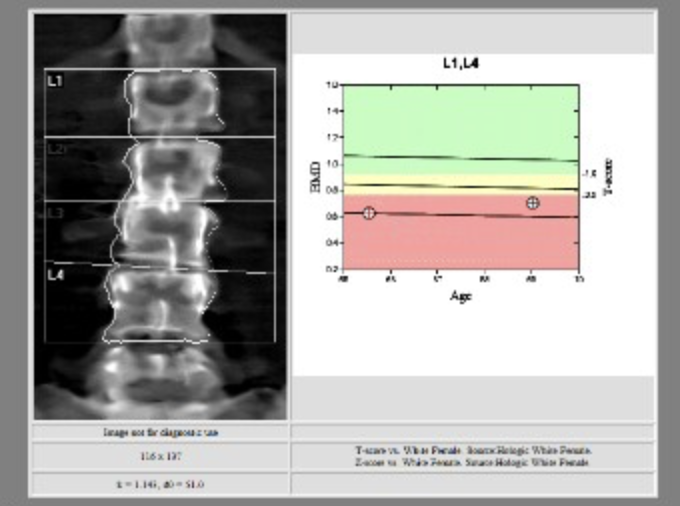
case in point: just yesterday morning, when word arrived that my latest bone scan report (after a year of monthly pokes in both arms, in hopes of building up my chalky bones into something more substantial), had been filed by the radiologist, and was ready for viewing, i opened said report and nearly toppled. 

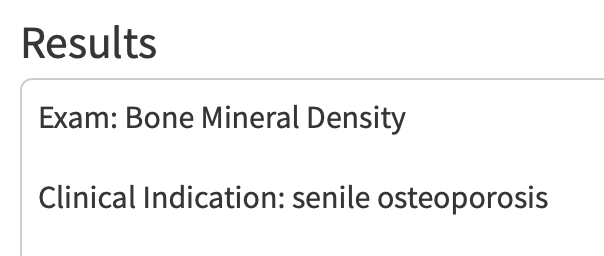
there, in black and white, the impolite and overwrought label they’d pinned to my condition: not only was i osteoporotic in the extreme, they went one descriptor further, dipping deep into their shallow pool and dubbed my affliction, senile osteoporosis

senile? really? how ‘bout just plain forgetful (as if a bone, the ossification of calcium and protein, contained capacity for confusion)? i looked it up just now, and see that the term is applied to “a long-standing imbalance.” (it gets worse the deeper i dig….)

now, i might be daffy, and i might lose track of why i’ve walked to the pantry, or climbed down the basement stairs, but i’ve otherwise no hard evidence that i’ve been pushed into the realm of the senile. i can recite my name, birthdate, and at least four times out of seven i’m likely to know which day of the week it is. i’m older than i was (aren’t we all, all of us who can read these words), but am i now old enough to be objectively labeled senile in any way, shape, or bone form?

apparently so.

my bones, no longer merely osteoporotic; they’re now flimsy with a side of senility. 

and, mind you, this is not my first go-round with doctors’ adjectival idiocy. 

a quarter-century ago, when i found myself miraculously (though not immaculately) “with child” at 44, after eight years of futility, infertility, and heartbreak, the good obstetrician looked hard at the ghostly image from inside my womb, and confirmed my condition. but, no, she didn’t just proclaim me pregnant, plain and simple. oh no. she couldn’t leave well enough alone—this ebullient news that me and my last little egg had defied ALL odds and were forging ahead gestationally. 

no, she and the medical world in all its lexicographic obsolescence tethered yet another adjective to my case. i was, forthwith and from that day on, the proud custodian of my very own “geriatric pregnancy.”

perhaps realizing the arthritic creak in those words, my beloved OB-gyne coined yet another way to phrase it, and every time she burst into the wee exam room, my belly bulging by the month, she greeted me as if borrowing from a swashbuckler’s or a swindler’s saltiest address: “you old mother!!” the words she swung my way.

in the journalism biz, the one in which i traded for some three roller-coaster decades, there’s a faulty maxim that if you can find two points and a draw a line between, you’ve got what’s called “a trend.” so let’s say we’ve got one here, one worthy of consideration and at least a dash of commentary.

the common tie between the two aforementioned adjectival assaults seems to be age, as in old age. as in a prejudicial slant not favoring those of us who’ve accumulated years. 

as opposed to theologians and philosophers who seem at least cognizant of the wisdoms so acquired, the medical among us seem hellbent on shoving us into the aged cage. my futzy bones aren’t just futzy, they’re senile futzy. my pregnancy at 44 wasn’t purely gift from on high, its medical moniker inspired images of bent and wrinkled me shuffling into delivery, unable to hoist myself upon the bed, let alone shimmy into birthing hardware (aka those unforgiving cold metal stirrups).

i’d like to remind those in the naming department of medicine’s world headquarters that sometimes the assaults on our little old selves are plenty enough, without them playing pin-the-nasty-name-on-the-doddering-old-soul. 

a bit of dignity is all we ask. slight consideration for how it might read to those of us who don’t fling such hard-edged modifiers willy-nilly and with abandon. discovering that all those shots did not one thing to make me stronger, nor lessen at all the chance that should i slip i’ll shatter, that alone was plenty sobering. 

did you really need to top it off with a good fat dollop of senility?

next thing i know you’ll tell me i’m a geriatric mother. oh, wait, you told me that. . . twenty-five short years ago. 

have you ever been pinned with a medical moniker that might do well with a spin through the softening machine? or, more broadly, did anything find you giggling this week, or simply, plainly amused?

keening.

the winds have been howling all night, a rushing, a roaring of air on amphetamines. sometimes the sound rises in pitch, almost a keening, the sound of a soul in mourning.

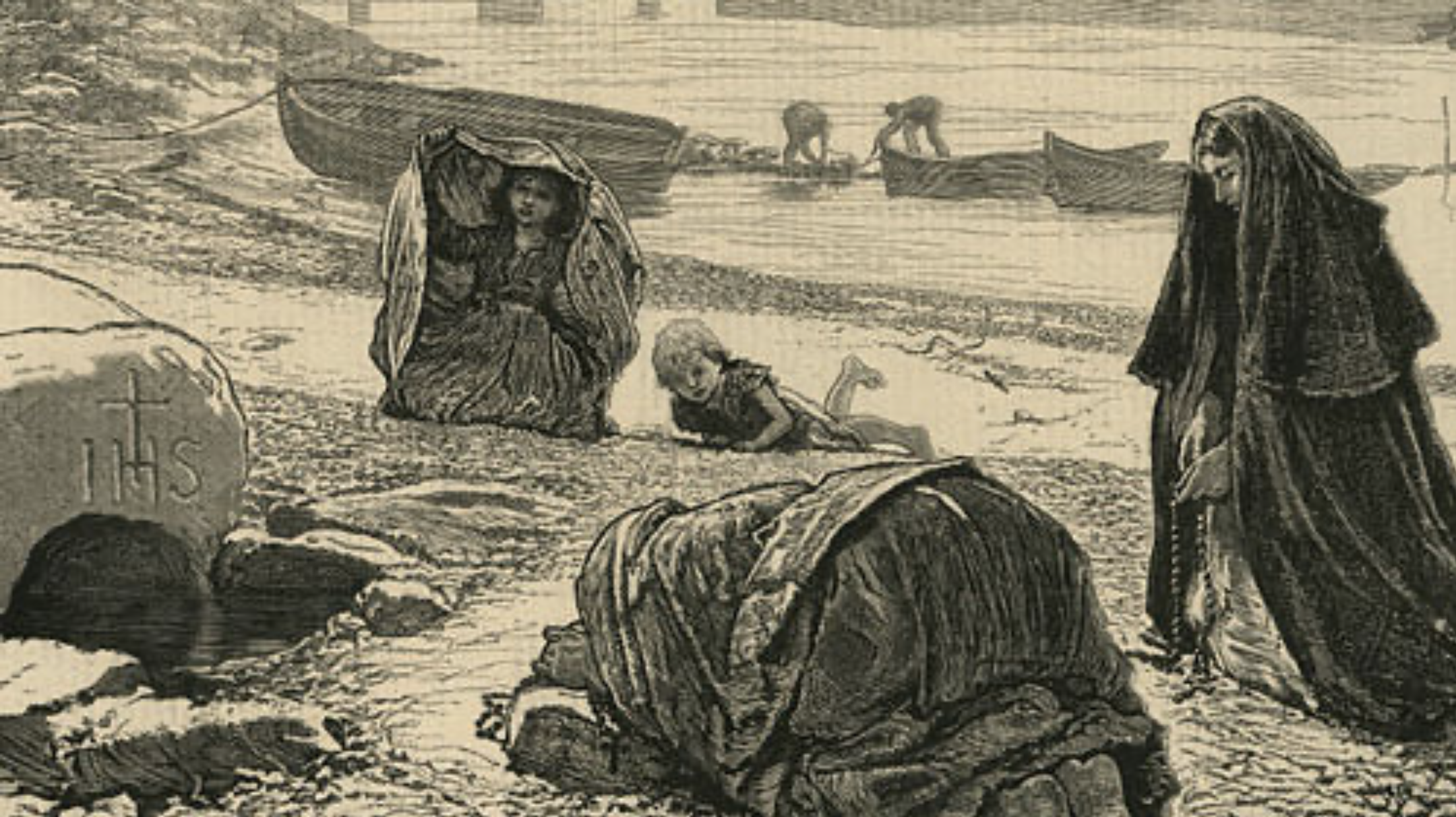
keening, a word that draws me half around the world to the banshees of that faraway island from which my people came (a good half of my people, actually, but it seems the half i’m rooted in). it’s a word that places me in a dark and damp room where a fire roars, and the people are circled in sorrow, cloaked in black woolen wraps. swaying and rocking, the sound that rises up is the sound that lives at the pit of us, the sound that rises when our heart or our soul is shattered. cracked wide open. it’s the ooze of anguish that comes without volition. keening sometimes comes without knowing. it just is. it’s primal. a reservoir so deep inside us it takes velocities of sorrow to tap into it, to draw from its well.

i might have keened once or twice, but i barely remember. both times someone had died, and it felt like part of me did as well. i remember the sound, remember i barely knew where it rose from, or that i’d had it inside.

the God who imagined us imagined so far beyond the imaginable. the God who imagined us gave us a sound, buried it deep, deep inside, where it awaits necessity. there are in our lives times when only that keening will do. that high pitched guttural whoosh that captures the unspeakable, a whoosh that rises and falls, traces the scale from basso, the animal roar, to mezzo soprano, up high where it’s piercing.

and why would the wind be keening?

look around.

listen.

don’t let us dull to the litany.

waking up to find we live in a pariah nation is one. but that’s almost too big for my head. i tend to operate in the finer grain. and the closest i came to keening this week was the news that the poet had been shot through the head.

what poet, you might ask?

the one in minnesota. the one whose first description i read was “37-year-old, mother of a six-year-old, award-winning poet.”

who shoots a poet? how often does the descriptor of a violent death include the word poet?

poets are porous. poets live in the world permeable to the little-noticed. poets process what’s breathtaking and put it, miraculously, to words. poets, the ones i love, the ones whose words put form and frame to unutterable parts of me, they’re among the most gentle-souled humans i’ve known.

renée good was a poet. a mother. and she died at 37, in the front seat of her maroon van we’ve all now watched over and over.

renée nicole good

renée good, back when she went by the name renée nicole macklin, won the 2020 academy of american poets prize. that’s not a prize for a piker. that’s a real-deal prize, a trophy worth tucking on the highest shelf in your house. she won it for a poem curiously titled “On Learning to Dissect Fetal Pigs.” now, that might not be the first thing that stirs me to want to write a poem. but poets begin in curious places sometimes and take us into terrain where wisdom or epiphany comes.

when we become a nation where a poet is shot through the windshield, just minutes after dropping her six-year-old off at school, we need to ask who in the world we’ve become. it only becomes more twisted when we can see for ourselves how the scene unfolded, and the people in charge, the ones holding the guns, the ones not letting a doctor rush to the scene, tell us that we didn’t see what we saw.

i wonder how apt this headline would be: good is dead.

that would be the headline atop the poet’s obituary. rachel good, award-winning poet and mother of three, was shot through the head. by federal agents. who then refused to let a doctor rush to the front seat of her bloodied, bloodied minivan. and waited too many fading heartbeats before giving the okay to call 9-1-1.

no wonder the wind is keening.

no wonder the world is tapping into its most guttural cries.

not long before i’d found myself tripping over the violent death of rachel good, i’d been thinking deeply about poets. thinking about a breed of poets i’d likened to “a tribe of saintesses.” that’s a feminization of saint, an intentional genderizing, if you will, because the poets i’m most drawn to might technically, and in an old-time world, be coined poetesses, and because the ones to which i am most deeply drawn are ones who weave the sacred, even the liturgical, into the vernacular from which they write. because the saintesses to whom i am most drawn are the ones whose verse scans the divine, shimmers at the edge of the ineffable, catches me unaware, but grounds me in a certainty more certain than many a gospel, i turn to them for edification and plain old uplift of my weary soul.

i keep them in close reach.

sitting just beside me here at this old maple table are two such poet saints, the ones whose lines leave me gasping, my spine tingling as if something holy has just wafted by and through me. because it has.

here’s one. her name is kathleen hirsch, and this is from her mending prayer rugs (finishing line press, 2025). it’s the last stanza of her poem “prayer rugs” (emphasis mine):

I bend in blessing toward all that breathes
May each hour enlarge the pattern—
rose dawn, wind song, tender shoots of faith—
that I may see the weft of the hidden weaver.

or, also sitting right by my elbow, jan richardson’s how the stars get in your bones: a book of blessings (wanton gospeller press, 2025), i flip through pages and pluck just one, titled “the midwife’s prayer.” it begins:

Keep screaming, little baby girl.
Keep practicing using those lungs
and do not stop,
because hollering will help
to ease the shock
every time you go through
another birth.

the saintesses, i swear, speak from a godly vernacular. they see deeper than the rest of us, dwell deeper too. their gift is the gift taken away at Babel. while all the rest of us were stripped of the powers of universal understanding, the saintesses kept on. they speak words that speak to all of us—if we listen closely. if we trace our fingers across the lines they offer, sacramental lines, lines that lift off the page, lift us off the page and into the transcendent, where for just a moment we get to reside.

i don’t know the rest of rachel good’s poems. but i know she was a poet. and the silence where once she spun the words of the unspoken, the little-heard voice, that silence now is cacophonous.

and even the winds are keening.


you can read the whole of rachel good’s prize-winning fetal-pig poem here.

and here are the first few lines…

On Learning to Dissect Fetal Pigs
by Renée Nicole Macklin

i want back my rocking chairs,

solipsist sunsets,
& coastal jungle sounds that are tercets from cicadas and pentameter from the hairy legs of cockroaches.

i’ve donated bibles to thrift stores
(mashed them in plastic trash bags with an acidic himalayan salt lamp—
the post-baptism bibles, the ones plucked from street corners from the meaty hands of zealots, the dumbed-down, easy-to-read, parasitic kind):

keening in minnesota on the block where rachel good was killed

what shall we do to quell the need for keening? and what poets draw you into the depths of the Holy?

when you greet the new year, your very own, with a whisper not a bang. . .

fresh is the year, fresh as the newly-fallen tableau of snow. fresh as a bedsheet unwrinkled by the toss and turn of night. fresh, fresh, fresh. 

as with any wintry panorama, the horizonless plane is punctuated with little-noticed hideaways, nooks and crannies for peeking out unseen, for safe harbor within. one of those nooks of the new year, tucked in the shadows of the timpani of christmas, of hanukkah, of new year’s, is a nook all my own. i curl inside it, pulling taut the woolen spans within which i wrap myself. i am a child of the fresh new year. my begin-again in sync with that of time’s eternal ticking. 

i mark it devotedly, and by long-ago acquired habit, in some degree of solitude and silence.

it is my pianissimo of blessing. and it needs no accompaniment.

it’s one of a kind, yet not unlike any other.

i will never not celebrate the dawning of each new day. not ever. i live now in the land of gratitude and grace, where every day given is a welcomed bead of prayer answered, an unearned gift, on the abacus of joy. a whole new year is possibility, is joy, is grace, compounded and multiplied. it’s beyond measure, truly. i intend to spend it wisely.

nearly three years ago, in the wake of a surgery that had me calculating five-year-survival odds, sixty-nine seemed far beyond my reach. it was a sum i dared not count. though i wished mightily. prayed heartily. 

and now that it’s come, on the third of this new year, i welcome it between my double daily doses of tamiflu, the magic capsule meant to avenge the virus coursing through my achy hollows and my knotty sinew. 

instead of gathering tomorrow night round a table at a place hand-picked by my very own aficionado of chicago kitchens, it seems we’ll be gathered here at home (or at least the three-fourths of us now sharing iterations of influenza A). the yuletide tree still standing, still blinking like a night sky stitched with twinkling stars, it’s as cozy a place as i could ever dream. and i’m more than blessed to call it home.

looking back across the years, and all the january thirds, i count more than a handful spent under covers, a thermometer poking from my pucker. it seems the time of year when bugs catch up to me. knock me off my stride.

the lesson here is elementary, and not profound: what matters is not the way you spend a certain day, but how you enter into each and every one. 

and i am entering full of bliss. 

i know, and won’t forget, how priceless is each day; how not a one of these is to be assumed, presumed, taken for granted. 

my birthday gift, once again, is the gift i open every given day: this day, these beauties, these people i so dearly love; the sky that shifts from pink to peach to blue to gray to indigo; the stirrings of the critters who imprint their nighttime rustlings in the snow, or the birds who animate the winter boughs; and especially the quietude, the wintry quietude, that underscores it all—these are the wrappings of the shimmering at my deepest core, the against-all-odds chance to be alive here and now, to love and love some more, to bring some faint grain of blessedness to each and every day. 

for all of this, in any form, in every form, i bend my knees and bow: thank you, O Holy, Holy One, for the breath that animates and infuses, the breath that fills my heart and lungs with the inextinguishable, ineffable trace of You.

epiphany is the light shining in the not-so distance. may it cast its glow on our uncharted paths and illuminate our way….and may this new year bless all of us. deeply, contentedly, quietly.

what lights do you see in the not-so distance?