pull up a chair

where wisdom gathers, poetry unfolds and divine light is sparked…

Month: October, 2025

when war games are played on your streets

ICE agents on the campus where my mama now lives

there is nothing make-believe about it. the leafy lanes and brick streets of the little village where i live have been invaded this week. not by distant armies, but by thugs of our country’s own making. men—yes, always men—dressed in combat suits, their faces covered in balaclavas, wearing boots made for stomping and crushing, roaming the streets in vans with darkened windows. traveling in patrols of two vans or three, they cruise slowly, surveilling, and when they come to a stop, when they burst out of the vans, i’m told you can smell the testosterone in the air. they are armed for conflict. they are on the hunt and ready to snatch.

they’ve cruised down our alleys, parked near our grade schools, stopped across from the library, and set chase across the manicured lawns where my mama and some 300 of her fellow nonagenarian, octogenarian, septuagenarian compatriots live out their days in what’s meant to be peaceful harmony. how many they’ve “caught” is unknown (these are not folk who disclose, whose m.o. is secrecy and surprise), but tallying anecdotal reports, the number is somewhere between five and seven, and, mind you, that’s merely the count from these quiet little streets where violent crime is nearly unheard of, and the only gangs you might see are the preteens and their too-many motorized scooters clogging the lanes.

whom might you ask is the target of all this slo-mo patrolling?

it’s the gentle brown-skinned folk who change our children’s diapers, who warm their lunches, and tuck them in for naps, who rock them in their arms, singing lullabies in spanish, and who rinse off the scrapes and the cuts on their knees, and smother them with kisses. or they’re the gentle-souled men who cut back our hydrangeas at the end of the summer, or trim our lawns to manicured perfection. or the ones tacking shingles to roofs, to keep the rains out. they might be the women who shlep into homes lugging vacuums and pails spilling with bottles of cleaning supplies. the women who scrub the toilets, and change the sheets, and fold the laundry in crisp four-corner stacks, so meticulously they rival the stacks in the boutiques at the mall.

thug is not a word i use loosely, and for a peace-making girl it hurts to write it. but i cannot think of another word to put to souls who sign up for a job of cops-and-robbers gone rogue. when i was little i watched my brothers move little green plastic soldiers around the basement floor. they made guttural sounds and knocked over the men with their green plastic rifles and hand grenades. i’d wander away with one of my dolls clutched under my arms. when it wasn’t “war” on the basement floor, they took to the yards and the street where we lived. they’d hide in bushes, leap out, and “capture.” the same guttural sounds, only this time with humans as soldiers. the boys on the stingray bicycles versus the boys on the run.

we are a nation obsessed with our war games. from what i read, basements and rec rooms these days are filled with big loud screens and folks with their headsets and clickers, controllers and keyboards, killing and maiming with automatic rat-a-tat-tats and bombs exploding in cauliflower clouds. i imagine the guttural sounds now come from the screens, in digitized amplitudes. obliteration, i’m told, is the aim.

and we are now a nation that’s bringing its war games to our own backyards. especially if you happen to live in a city deemed blue, with a president who’s never been keen on the city that didn’t embrace his big shiny skyscraper with his name in football-field-sized letters slapped on the side.

i know full well that this is albino-pale compared to gaza or kyiv, but a “federalized military presence” complete with long guns and tear gas is not why we pledge allegiance to the flag. it’s a war of terror. parents afraid to take children with fevers to the ER, children watching their parents handcuffed and hauled away at school drop-off or pick-up. taquerias that now lock their doors. street vendors who’ve locked up their pushcarts and turned off the lights in their kitchens. a people on lockdown is inhumane, unconscionable, and unsustainable.

all because their skin is brown? these are not the criminals, rapists, drug dealers, human traffickers once upon a time purported to be the sole target of this racist campaign. there’s no reading of rights, no miranda anywhere in the vicinity. if you’re brown, and you’re out on the streets, you’re a target. and being a target often means being thrown to the ground, hands tied behind your back. doesn’t matter if toddlers are watching in horror, screaming for their mama, or their nanny. doesn’t matter if you have a u.s. passport back home in the top drawer of your bureau.

but that’s not even the worst of it. the worst is that the folks they snatch are then “disappeared,” a word that means precisely what it says. where you land is a wild-eyed guess, and the people who love you will need to pony up cash to track where you are, and to get you the heck out of the hellscape of a jail, where toilets are few and lights buzz 24/7. too bad if you need pills for your heart, or inhalers so you can breathe.

but here’s a faint glimmer of light: the ones of us whose skin happens not to be brown, we are not having it. and we are leaping out of our complacencies, and in the company of others finding something akin to solidarity, to resilience, to compassion that compounds through the magnification of the many.

chicago, hog butcher to the world, is a fighting-back town. you don’t send your thugs to our streets and expect that we’re going to hide behind the couches. we are whistling our lungs out at the first sighting of a slow-rolling, dark-windowed van. towns that aren’t usually in the news pushing back against men in camo suits, towns with names like naperville, mt. prospect, wilmette, they’re in the resistance.

1939 berlin isn’t too distant for too many of us. i sat next to a woman at an organizing meeting the other day whose hands were quaking as she said she can’t stop thinking of her grandfather and wondering at what point he realized he needed to send his wife and children out of the country, to that faraway place named america, where the tired, the poor, the huddled masses yearning to breathe free were welcomed, were harbored, were the name of the game.

where did that america go?

that question has been haunting me for months now. but what’s happening here on the streets of chicago is giving me hope. we are many, and we are not about to surrender to thugs. we are bursting out of our cloistered existences, and doing what we can to be our brothers’ keeper.

when crews are harbored in your garage for hours, hiding, awaiting the nightfall retreat of the thugs, when you are ferrying out water and oranges, when you’re dashing down the alley to tell the construction crew that ICE is nearby and you see the sheer paralyzing terror on the face of one of the workers, you do not forget. you see the humanity that is all of us. you feel the horror, sense the gentle kindness, get sick at the thought of these men who got out of bed expecting nothing but another day’s hard work now wondering if they’ll ever get home.

you cannot for the life of you figure out why no one in charge can stop this. but then you look over your shoulder and see that there are those around us who are not waiting for help from beyond. the people who live down your very own block, and just across the way, they are showing their muscle, their hearts, their humanity. and for the first time in a long time, you think maybe there’s hope. maybe, just maybe, the good guys can win.

and that’s a war game i’ll play. though i play by pacifist rules.


here, my beautiful friends, is something i truly hope you will read. it’s a little bit long, but i don’t think you will find it in your scrolling around the internet, and it is just what we need in this moment.

it’s a view from the front row of the horrors russia is visiting on ukraine, and the profile in courage that is ukrainians and their unwillingness to surrender to evil. this comes from the Peace Prize acceptance speech of german author Karl Schlögel, and is “a powerful summons to relinquish naivety and wishful thinking, to think hard and to act bravely.” the Peace Prize of the German Book Trade is a major literary award “for authors who have contributed to peace through their writing.” recent recipients include historian Anne Applebaum (2024) for her work on autocracy, author Salman Rushdie (2023) for his defense of free expression, and historian Karl Schlögel (2025) for his work on Eastern Europe and warnings about Russian expansionism. these are Schlögel’s words, and i found them soul-stirring to the highest order. if ukrainians can push back against evil, so too can those of us here on our leafy little streets, and our concrete corridors….

Learning from Ukraine. Lessons of Resistance.

No one is more interested in peace than the Ukrainians. They know that an aggressor with limitless determination cannot be stopped with words. They are realists who can afford no illusions. Their refusal to be victims drives them to fight back. They are prepared for anything. They fight for their children, for their families, for their state – they are prepared even to die for their country. What amounts to television footage for others is firsthand experience for them. Ukraine’s defence at the front would be nothing without the army of volunteers behind it. They have survived the winters and braved the nightly terror of drones and missiles for weeks, even months on end. The IT experts of yesterday are the drone pilots of today. The festive dress women don for the theatre or a concert betrays an attitude that holds firm even in a state of emergency – the club is where young people draw strength to continue the resistance. They are heroes in a post-heroic world, without making a fuss about it. They keep their transport system running, and with it their country remains whole. The howl of sirens is background noise for their everyday lives, not just a fire drill. They have learnt how drone strikes differ from ballistic missile attacks. They are helping us prepare for the time after this historical turning point. They are teaching us that national defence has nothing to do with militarism. Soldiers, and above all women soldiers, are respected because everyone knows that they are performing their duty and doing that for which they are prepared. The citizens of Ukraine are teaching us that what is happening is not the ›Ukraine conflict‹, but war. They are helping us understand whom we are dealing with: a regime that hates Europe and that seeks to destroy Ukraine as an independent state. They are showing us that accommodating the aggressor only increases its appetite for more, and that appeasement does not lead to peace – it paves the way to war. Because they are on the front line, they know more than we in our still-safe confines of the hinterland. Because they are at the mercy of a superior enemy, they must be faster and more intelligent than their foe. Ukrainians, who are generally suspected of nationalism, are showing us that patriotism has not become obsolete in the 21st century. They are ahead of us in terms of military technology, as they were forced to fight at a time when we could still allow ourselves to ponder questions of eternal peace. They took it on themselves to develop weapons that were withheld from them out of hesitation or fear. They are the mirror into which we peer, reminding us what Europe once stood for and why it is still worth defending. They are calling out to us: do not be afraid – not because they are not afraid, but because they have overcome their fear. Ukraine’s writers do their utmost to express what those farther away lack the words for. They have taken the Ukrainian language out into the world and performed a literary miracle. Their poets speak with deadly seriousness, while some have even paid for it with their lives. Their president is a man who expects the truth from his compatriots, no matter how bitter he knows it may be. They are well versed in the behavioural tenets of resistance and are teaching the Europeans what to expect if they continue to fail to prepare for the worst-case scenario. They have learnt from experience that when threat levels are high, decisions are made overnight, while in quieter times they are put off until the day after tomorrow, if even then. Stoic aplomb is a luxury they can only afford once the war is over. To endure, to persevere, despite unspeakable exhaustion – this is the revolution of dignity in permanence. They are the ones to whom we owe our peace, while they pay a price both incalculable and unfathomable. 
—Karl Schlögel

how will you stand up for justice, give voice to the voiceless, be home to the tired, the poor, the huddled masses yearning to breathe free?

*thank you to the dear friend who sent the photo above. best close-up i’ve seen.
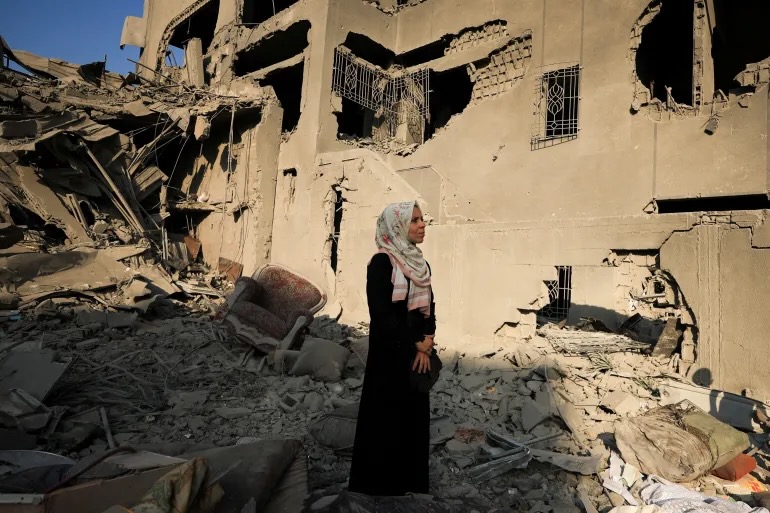
brokenness abounds.

the siege of rebar and rubble seems endless. there are shards on our streets, and in our hearts.

the images stun me every time. images find their way in where words sometimes take roundabouts. of all the thousands and thousands of words that have passed before my eyes this summer past, that have sometimes settled into the nooks and crannies of my brain where i can’t shake them out, the images are otherwise: immediate, gut punch. they demand no absorbing. they are all but instant. as fast at it takes for the pupil, retina, and occipital lobe to zap into action. 13 milliseconds; a measure i can’t even measure. another name for instant.

no wonder we feel assaulted. the assault is everywhere.

this week i felt gutted. i am almost ashamed to hold up images of war against images of destruction that i cannot shake. the destruction that gutted me most this week was wrought by the sin of hubris, of addiction to power and greed. what’s rebuilt will not be a hospital for the deathly ill, the dying, the shattered. it will be for the clinking of crystal, and the lifting of forks that are gilded.

in a world of brokenness, we go dizzy sometimes thinking that all there is is evil. we don’t know how to stop it. which is why i spend my hours poring over the pages of sages and everyday saints, not the ones beatified and sanctified, the ones ushered into the hallowed halls of a hierarchy that’s laid out miles and miles of rules and red tape. the saints i search for are the ones whose names you would never ever know, the ones who populate the checkout lines at the grocery, who drive the buses and never fail to wait for the kid loping to the bus late and frantic, or the lady with the pail of cleaning supplies and the limp that won’t let her hurry.

henri nouwen

henri nouwen was a dutch-born priest, psychologist, and theologian who left the vaunted podiums of yale and harvard divinity schools to devote his life to those who might be seen as broken, broken of mind by worldly measure but not of spirit. he became pastor of l’arche daybreak, an interfaith, non-denominational, shared community where both the intellectually challenged and the not intellectually challenged live as one. it consists of eight homes, an old barn, and 13 acres in the rolling hills of ontario, about an hour north of toronto. its core belief is that beneath every brokenness there is light. radiant light.

henri nouwen is no longer; he died of a heart attack at 64 in 1996. but his books, some 39 translated into 35 languages, live on. his radiance, his wisdom, is without end.

nearly every morning, i read henri. he glides into my inbox deep in the night, awaits my morning. he sets me straight for the day. this week, one morning, he reminded this:

Everyone is a different refraction of the same love of God, the same light of the world, coming to us. We need a contemplative discipline for seeing this light. We can’t see God in the world, only God can see God in the world. That is why contemplative life is so essential for the active ministry. If I have discovered God as the center of my being, then the God in me recognizes God in the world…. The spiritual life requires a constant and vigilant deepening and enlivening of the presence of God in our hearts.

if we can look into the brokenness, beyond the brokenness, if our guiding principle is a belief that the Sacred is inextinguishable, cannot be broken, then we might, just maybe, find fortitude in setting our sights on seeing the God in our midst.

i know the nature of God is twisted and sometimes torn, depending on our stories, our pasts, those who taught us or not. i know that some refuse to utter God’s name, and some to deny God’s presence. but i use the name, the knowing, as that for which there are no words. the inexpressible, the depths that defy expression. i know God as the tender force that draws even strangers together. i know God as the hay bale into which i fall when i am afraid. i know God when i look into the eyes of pain without end, and a glimmer is caught, and love is made real, and by only the grace of God we pull each other out of the darkness, the impossible darkness. i know God as the depth and the light of me.

so when henri nouwen reminds me that if i keep God in my center, if i sense the palpable presence as often as i turn my attention that way, then i am equipped for what so often feels impossible: i can search for and find the sparks of the Divine in most any tableau i encounter. in the joyous laughter of the jamaican nurses who love my mama, who make her giggle like a schoolgirl. in the friend down the lane who is crushed and crushed again and again by the cruelties of someone she birthed, someone she will love fiercely forever—no matter the cost. in my absolute favorite grocery store checker, the one with the pink or purple hair, the multiple piercings, and more ink on her skin than it took to write Webster’s first dictionary, the one who holds my hand tight as the tears pour down her cheeks as she tells me the tale of her beloved who’s died, as she tells me how hard it is to still be alive.

these days i’ve shifted my orientation, my seeing. i’ve slipped out of the worldly paradigm, a paradigm that crushes me daily. i’ve moved into the realm of the sacred, the holy. the only way forward, as the rubble and rebar compounds, is to do as nouwen teaches: seek the sacred, be it the faintest of sparks or a bonfire. seize it, hold onto it as long as you can. even amid the rubble there will be the faintest stirring from under the dust, under the twisted steel rods. when the broad view, the overview, dares to pummel us, for all we can see is the evil, the hubris, the cruelest of cruelties, maybe the wisdom is in shifting our sights to whatever is holy and unfurls right before us: the faintest of kindness, of improbable light, of love that refuses to whimper or die.

the world beyond our reach is going to break us every time, but the world we can touch, the world we can sense with all our own God-given senses, that just might be what saves us. and the way we too can take part in the saving.

may it be so.

what broke you this week? and more urgently: what stirred you to see the Sacred?

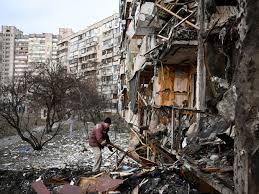
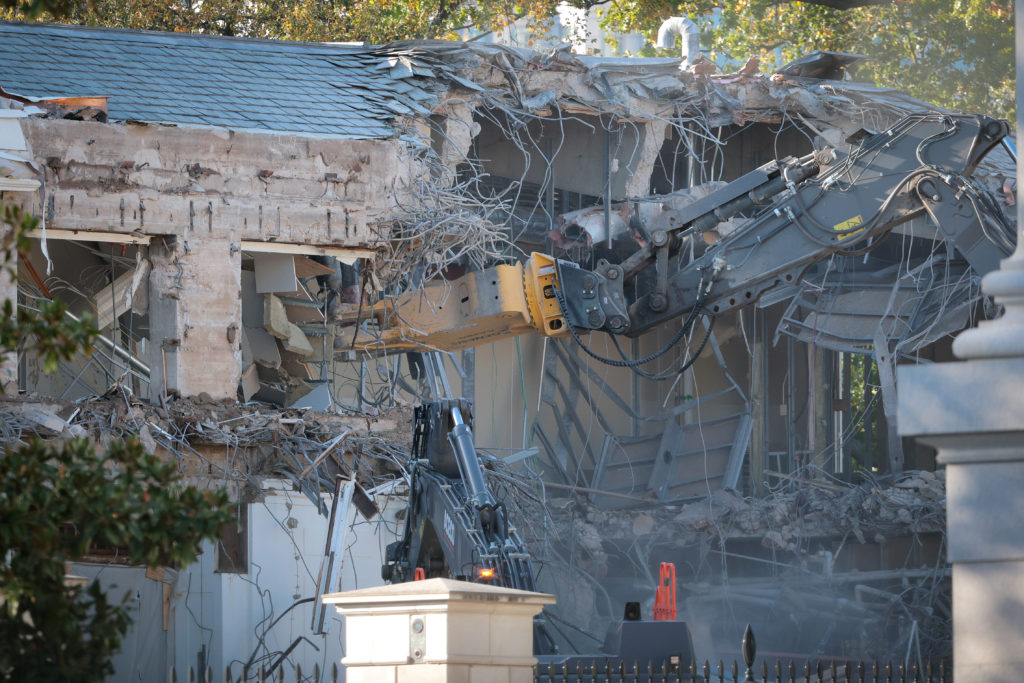
the images above are of gaza, kyiv, washington, d.c. can you tell which is which?

we are all filled with tears. if only we notice.

i am, as i so often am, late to the game. late to the nick cave game. i’ve known of his profound capacity to pierce the armament of the contemporary human wardrobe: the shield that keeps us at a distance from our own vulnerability. i’d heard rumor that he was a writer’s writer. but i’d never really dived in. 

until now. 

when a beloved, beloved friend sent me a letter he’d written that rang so, so close to truth — to my truth, anyway — i signed right up for more, more, more. 

nick cave, in case he’s floated outside your circle of knowing, is, in a nutshell, a once-upon-a-time choir boy from australia, who went on to a wild ride through the early punk rock scene, and with his shock of black black hair and an emaciated profile, might aptly be described as a goth pioneer (note to mom: that means someone who takes on a wardrobe that’s something of a cross between a corpse and your most ghoulish uncle, and wallows in the literature and the language and the aesthetic of similar darkness, verging on the macabre). in time, he moved into the quieter, more contemplative lane of soulful song. his trademark, a baritone so deep it feels pulled from igneous rock, is fittingly in sync with the haunting, soulful lyrics he’s come to write. 

nick cave

i’d known that tragedy struck dear nick, when his then 15-year-old son, arthur, fell from a cliff near brighton, england, and seven years later another son, jethro, died at 31, a death he doesn’t talk about, abiding by the wishes of jethro’s mother. i’d read bits of his writings about grief.

It seems to me, that if we love, we grieve. That’s the deal. That’s the pact. Grief and love are forever intertwined. Grief is the terrible reminder of the depths of our love and, like love, grief is non-negotiable. There is a vastness to grief that overwhelms our minuscule selves. We are tiny, trembling clusters of atoms subsumed within grief’s awesome presence. It occupies the core of our being and extends through our fingers to the limits of the universe. Within that whirling gyre all manner of madnesses exist; ghosts and spirits and dream visitations, and everything else that we, in our anguish, will into existence. These are precious gifts that are as valid and as real as we need them to be. They are the spirit guides that lead us out of the darkness.

but never have i read any of the longer works i will now go find (faith, hope and carnage, an extended interview with the journalist seán o’hagan.) what’s intrigued me most, in poking around and gathering bits in the ways of magpie (a bird known for scavenging trinkets hither and yon), is his take on religion. it’s always the soulful entrée where i find my curiosities leading me. this paragraph alone shouts, read, read, read more to me….

Cave is an avid reader of the Bible. In his recorded lectures on music and songwriting, Cave said that any true love song is a song for God, and ascribed the mellowing of his music to a shift in focus from the Old Testament to the New. He has spoken too of what attracts him to belief in God: “One of the things that excites me about belief in God is the notion that it is unbelievable, irrational and sometimes absurd.”When asked if he had interest in religions outside of Christianity, Cave quipped that he had a passing, sceptical interest but was a “hammer-and-nails kind of guy.” Despite this, Cave has also said he is critical of organised religion. When interviewed by Jarvis Cocker of Pulp on 12 September 2010, for his BBC Radio 6 show Jarvis Cocker’s Sunday Service, Cave said that “I believe in God in spite of religion, not because of it.” 

*(emphasis, mine; in the case of “hammer-and-nails” it just struck my funny bone.)

the red hand files is the name of his blog, where he writes perhaps his most spontaneous writing (the hidden beauty of blogging [among the uglier words in the lexicon]). started years ago, it was a place for nick cave fans to send him questions, questions he’d sift through and choose to answer—or not. it seems to have morphed into a place of profound nakedness, another name for truth in unprotected, unshielded, undressed form. 

here, the letter that drew me in, or most of that letter anyway: 

As the ground shifts and slides beneath us, and the world hardens around its particular views, I become increasingly uncertain and less self-assured. I am neither on the left nor on the right, finding both sides, as they mainly present themselves, indefensible and unrecognisable. I am essentially a liberal-leaning, spiritual conservative with a small ‘c’, which, to me, isn’t a political stance, rather it is a matter of temperament. I have a devotional nature, and I see the world as broken but beautiful, believing that it is our urgent and moral duty to repair it where we can and not to cause further harm, or worse, wilfully usher in its destruction. I think we consist of more than mere atoms crashing into each other, and that we are, instead, beings of vast potential, placed on this earth for a reason – to magnify, as best we can, that which is beautiful and true.  I believe we have an obligation to assist those who are genuinely marginalised, oppressed, or sorrowful in a way that is helpful and constructive and not to exploit their suffering for our own professional advancement or personal survival. I have an acute and well-earned understanding of the nature of loss and know in my bones how easy it is for something to break, and how difficult it is to put it back together. Therefore, I am cautious with the world and try to treat all its inhabitants with care. 

I am comfortable with doubt and am constitutionally resistant to moral certainty, herd mentality and dogma. I am disturbed on a fundamental level by the self-serving, toddler politics of some of my counterparts – I do not believe that silence is violence, complicity, or a lack of courage, but rather that silence is often the preferred option when one does not know what they are talking about, or is doubtful, or conflicted – which, for me, is most of the time. I am mainly at ease with not knowing and find this a spiritually and creatively dynamic position. I believe that there are times when it is almost a sacred duty to shut the fuck up.

I’m not particularly concerned about where people stand – I’ve met some of the finest individuals from across the political spectrum. In fact, I take pride and immense pleasure in having friends with divergent views. My life is significantly more interesting and colourful with them in it. 

Perhaps this all amounts to very little, but I suppose, in the end, I value deeds over words. I see my own role as a musician, songwriter, and letter writer as actively serving the soul of the world, and I’ve come to understand that this is the position that I must adopt in order to attempt to cultivate genuine change. In fact, I am now beginning to understand where I do stand, Alistair – I stand with the world, in its goodness and beauty. In these hysterical, monochromatic, embattled times, I call to its soul, the way musicians can, to its grieving and broken nature, to its misplaced meaning, to its fragile and flickering spirit. I sing to it, praise it, encourage it, and strive to improve it – in adoration, reconciliation, and leaping faith. 

Love, Nick

but that’s not all….

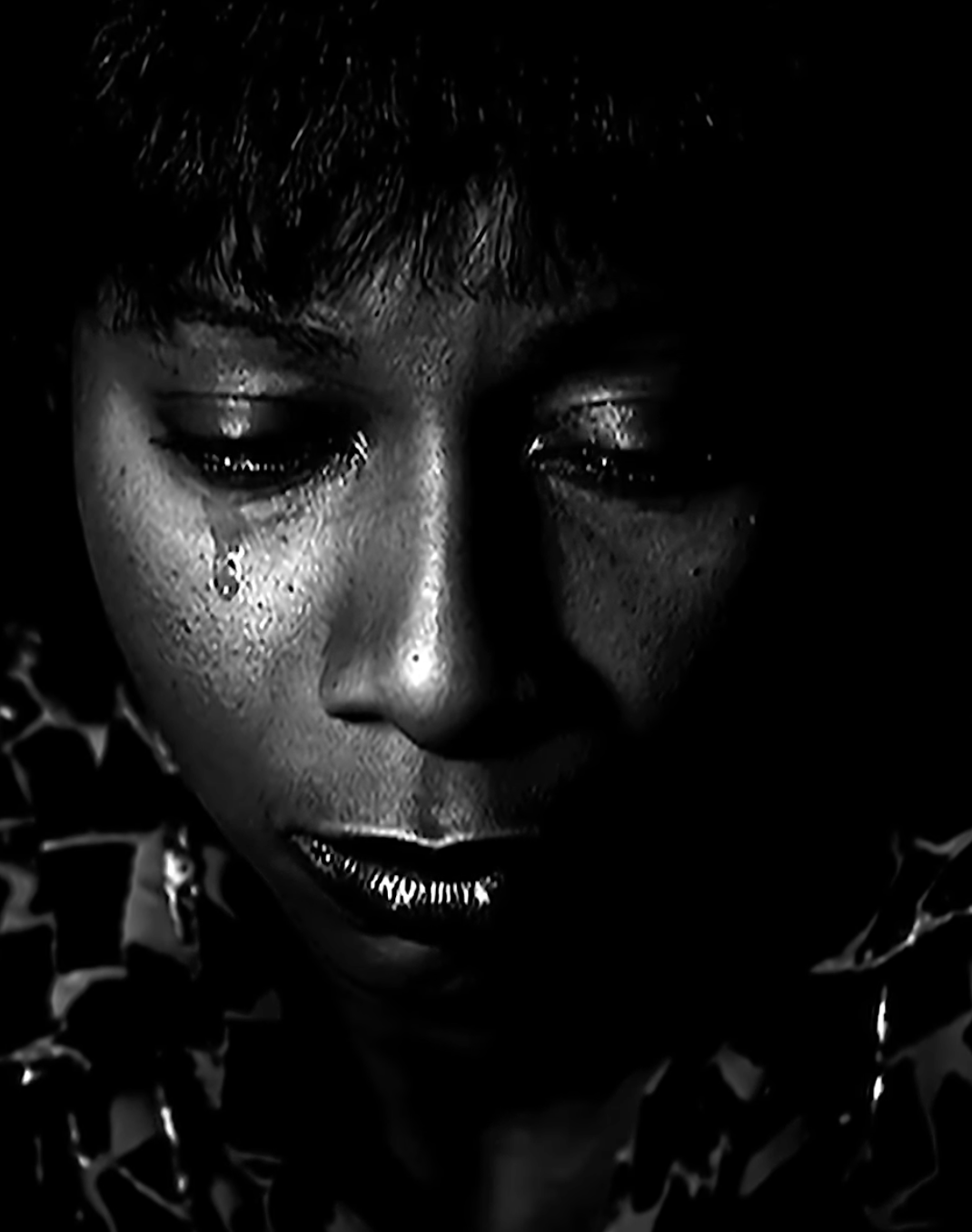
maybe what we need in this age is to move beyond words. to use our eyes more than our ears. to look and look closely at the common bonds of our humanity, and herein is precisely the study we might need, to see the human visage wrought  by sorrow, or grief: on the brink of tears, fighting tears, to watch the flinching of muscle, the biting of lips, the contortion of muscle, pulled by nerves tied to whatever is the emotional core of us. to see how the human face on the brink of tears is sooooo deeply universally understood, felt, responded to. maybe in that place of wordlessness we can remember that we are all one, of one species, and that within us all is the emotion called grief, called sorrow. and we’d do well to remember that we are all always on the verge of brokenness. and, too, we might be the arms that reach out to dry the tear, to hold the quivering shoulders, to brace the wobbling spine against whatever strength we might muster. maybe we need to remember how tender we all are, somewhere, somewhere deep inside…..


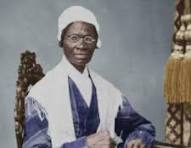
only one poem this week, and it wasn’t actually written as a poem, but laid out that way here it works mightily. it’s excerpted from abolitionist Sojourner Truth’s “Ain’t I a Woman” address, in the version published in 1863. The speech was originally delivered in the 1851 Women’s Rights Convention in Akron, Ohio. we might do well to ask, in the face of so much inhumanity, if swapping out the word “human” for “woman” stirs its own seeds of compassion….i am bereft; hollowed, haunted by the stories of immigrants pulled from their churches, their cars, their homes, flung to the ground, stomped on, kicked, living in fear…..

sojourner truth (unknown birth date; died 1883)

but this, as written, is more than mighty as is…..

Ain’t I A Woman?

That man over there
says that women
need to be helped into carriages,
and lifted over ditches,
and to have the best place everywhere. 
Nobody ever helps me into carriages,
or over mud-puddles,
or gives me any best place!
And ain’t I a woman? 

Look at me! Look at my arm!
I have ploughed and planted,
and gathered into barns,
and no man could head me!
And ain’t I a woman?

I could work as much
and eat as much as a man —
when I could get it —
and bear the lash as well!
And ain’t I a woman? 

I have borne thirteen children,
and seen most all sold off to slavery,
and when I cried out
with my mother’s grief,
none but Jesus heard me!
And ain’t I a woman?
. . .
Then that little man in black there,
he says women can’t have
as much rights as men,
’cause Christ wasn’t a woman! 
Where did your Christ come from?
From God and a woman!
Man had nothing to do with Him.

If the first woman God ever made
was strong enough to turn
the world upside down all alone,
these women together
ought to be able to turn it back,
and get it right side up again!
And now they is asking to do it,
the men better let them!

+ Sojourner Truth

because you are all so wise in so many ways, what thoughts might you add to a conversation on love and grief, and the intermingling therein?

i’m off to my 50th high school reunion this weekend, a date that gives me pause, as it was one of the tenderest times in my life 50 years ago, a time that marked me through all these years. it was a steep uphill climb for a long time there. and thank holy God i lived long enough to get here. my prayer is that those who show up find compassion and grace, and that those who choose to stay home look around and see lives that have grown beyond the bounds of whatever have been the obstacles.

and i pray, oh i pray, for this world. no kings rally tomorrow….i heard a story this week about the not-far-away catholic church where ICE agents filled the parking lot during spanish-language mass, targeting the prayerful inside. so the priest becalmed those in the pews, locked the church doors, promised protection to his flock, and a brigade of rapid-response volunteers drove parishioners safely to their homes. cars had to be left behind. prayers were laced with terror. this is not the america my uncle died for, bayoneted in the night in a tent on iwo jima….

as my beloved friend fanny put it, “they come after us because we’re brown.”

**thank you, laura, for sending me nick….

on faraway sands, the poets of war spoke to me

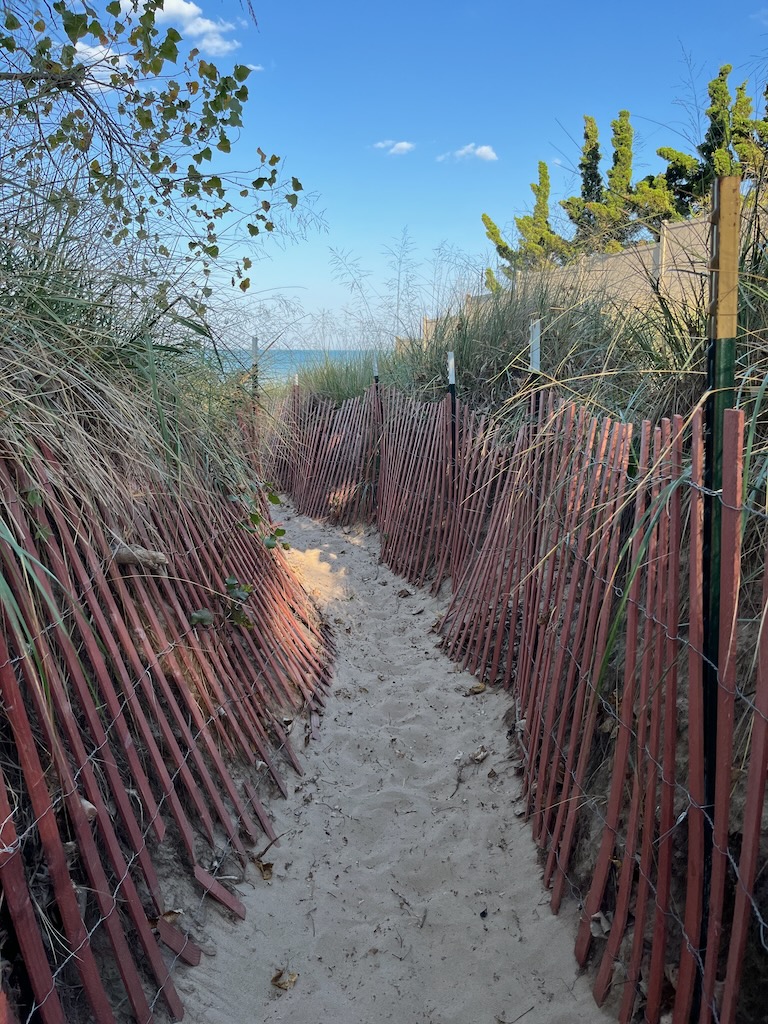
i was alone for the day, a whole sumptuous day of solitude and silence. so i, like half the rest of the world it seemed, was pulled to the water’s edge. i carried but a book and a bottle of water. i knew the week ahead would be rough, though i hadn’t a clue yet quite how rough. (two beloved souls, my exact age, died suddenly, one falling to her death*, another simply dying in his sleep.)

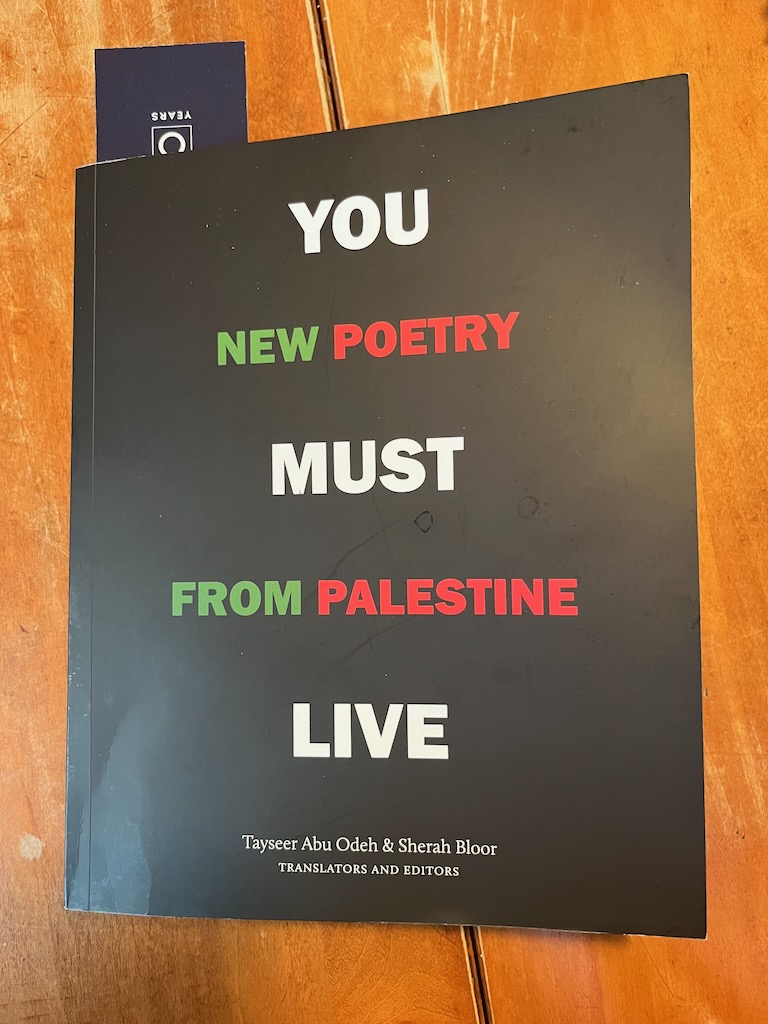
the book i carried is one i’d yearned to crack into, and as i sat there allowing its truths to wash over me, as the waves of the lake just across the sand washed over the shoreline again and again, i felt every drop of its anguish and truth. it was a book of poems written by thirty poets in gaza, and four from the west bank.

once upon a time, for ten good years, i gathered up each month for the chicago tribune a collection of three books that had most stirred my soul. they might be children’s books, or poetries, or memoirs and stories of the holiest people. the gatherings were vast, and some of those publishers still send me books, knowing full well my readers now are not the millions from the tribune and beyond, but rather the cherished friends of the chair.

this book i bring today is one worth clutching in your hands, pressing hard against your heart. it might be even more poignant against the improbable news that a cease fire in gaza has begun and some twenty living israeli hostages will soon be released.

its title, you must live: new poetry from palestine (copper canyon press, 2025), only begins to tell the story, only hints at the horrors and tendernesses within. but you can hear the pleas, the cries rising up from the rubble. it’s a bilingual anthology of poetries from gaza and the west bank, translated from the arabic and edited by Tayseer Abu Odeh and Sherah Bloor, with guest editor Jorie Graham, and it’s written not by poets who’ve somehow escaped, left behind the ravages of war, but rather it’s written by those still there. in poring over its pages—slowly and with prayerful intent—you hear the murmurs perhaps unheard by anyone else, you hear the lone voice rising from dust, you hear the whimper of a child left alone in the world, in the shattered brokenness of a world that no longer stands.

“especially now,” the editors write, “it is crucial to attend to those whose voices are under threat of elimination.”

ocean vuong called it “a light beam of a collection in our dark hours.” ilya kaminsky, the great poet most famous for his deaf republic, has written that it’s a book “filled with poems of utter urgency, poems that give us wisdom, in the face of devastation, in spite of devastation.”

i was as moved by the story behind the poems, as by some of the poems themselves. for starters, editing in a war zone is no feat for the timid. the editors write that at first they didn’t realize that every time someone’s phone connected to a satellite (to reply to an editing question) they became a target. to get a clear signal, the editors write, meant a life-or-death decision: standing atop rubble is where the signal is sharpest, and yet of course that means the poet is risking her or his life to reply.

consider that.

the editors write too that every time a reply did come through, be it a response about punctuation or diction, the editors sighed with relief. “they were still with us.” imagine being willing to die over a comma rather than a semicolon. consider that the next time you make a simple correction in a sentence you’re typing.

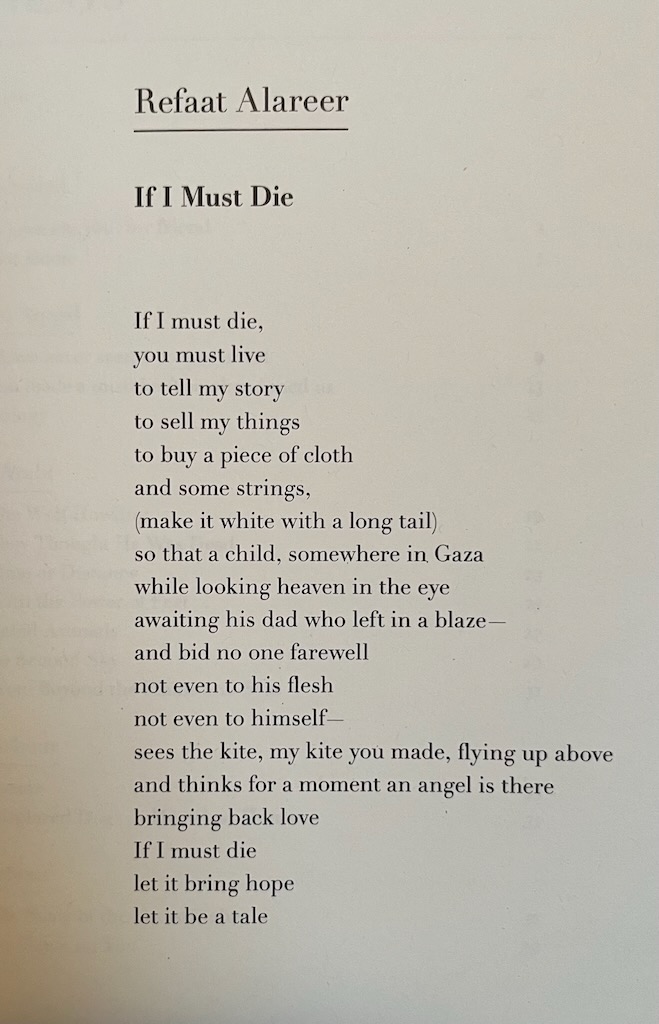
the collection begins with a poem that’s become fairly widely known, “if i must die,” by the late Refaat Alareer. the editors write: “this poem stands in for all those poets we failed to reach in time. their poems—chalked onto collapsed walls, or on the blackboards of schools-turned-shelters-turned-bombsites, traced in sand, or shared in private messages—will never reach us.”

the silence is stunning. the silence demands our reverence.

the editors call the poems a “poetry of witness,” speaking from a war zone deadly for journalists, a war zone where so many stories would otherwise go untold. the poets paint the portrait. and it is seizing with humanity. humanity crushed. humanity pummeled. human refusing to extinguish its tender, fragile beauties. we must know what we, humanity all, have wrought.

here are a few samples, barely enough to give you a sense of the pathos within, the pathos that rises from this old globe like a poisonous cloud desperate for one breath of air….

here is the poet Waleed al-Aqqad’s elegy for a young friend, set at the boy’s funeral, and tenderly describing the mutilations of his war-torn body:

We said goodbye
to you in your small death like the death
of sparrows.
We rearranged you.
We placed your severed hand across your chest,
covered your wounds with flowers,
cried as you wanted.

or this, from Ala’a al-Qatrawi’s poem to her children, two daughters and two sons, all under the age of six, all killed in an air strike on their home. she addresses her babies in heaven, offers her own body parts to her daughter, Orchida, as if she could piece her body back into her embrace:

And give my lungs to her.
Without them, maybe she suffocated.
Maybe she couldn’t call my name.
The rubble would have been too heavy for her.

it is wrenching to read. all of it. page after page, i read slowly, as if a dirge. i sat on a bench on the sand thousands and thousands of miles away. that seemed cruel, unfair, that i should be hearing the sounds of a day at a beach, when the sounds of war pressed on. and the words of new poets would again go unheard.

to those who understand the power of words, to those who dared to gather poems out from the rubble, bless you, and bless you, and may peace, everlasting peace, at last come to the holy land.

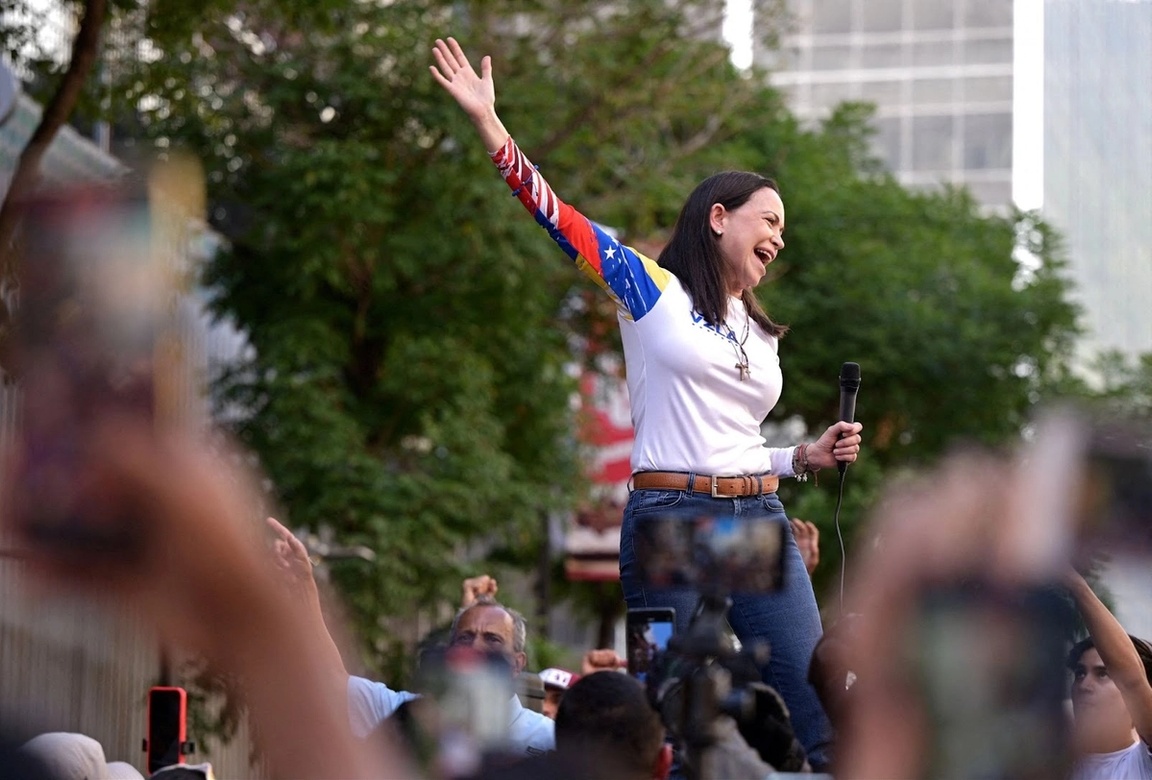
maria corina machado, recipient of the 2025 nobel peace prize

this hard week ends with a few sparks of hope: first, word of the cease fire and the imminent promised release of 20 living israeli hostages, and the bodies of 26 confirmed dead. and, in the immediate wake of that, the nobel peace prize was awarded this morning to venezuela’s “iron lady,” maria corina machado. the committees’ citation reads: “She is receiving the Nobel Peace Prize for her tireless work promoting democratic rights for the people of Venezuela and for her struggle to achieve a just and peaceful transition from dictatorship to democracy.”

where did you find hope in these hard times?

*joannie barth was a most beloved reader of the chair. she lived in evergreen, colorado. was the right-hand everything to the best-selling author philip yancey. she and i had gone to college together, but mostly got to know each other’s souls through this ol’ chair. she would send notes radiant with love, with a faith that couldn’t be shaken. she shared her own heart’s ache, an ache i now hold for her. i was with her less than a year ago, and as she always had, she lit up a room. her smile rose from a deep deep place. a week ago, she was rock climbing. and the belts gave out. she died instantly. not at all surprisingly, i feel her closer than ever. she was, and is, an angel.

joannie

hallowing the hollows

“the garden of eden with the fall of man” (ca. 1615):
Peter Paul Rubens
Jan Brueghel the Elder

i emerge here from a day of prayer, a day of poring over the sins of my soul, and the sins of us all collectively. it is a day that’s not easy to leave behind. certainly not this year.

Yom Kippur, the day of atonement, opened with the rabbi once again sharing shattering news. a horror in manchester, england, he told us, without details, had left more than one dead.

morning light streamed in.

i felt us all move in closer, a natural deeply human instinct to harbor each other. it’s those natural instincts that tend to get drowned out on ordinary days, days when it’s noisy, days when we’re so distracted we don’t pay attention to the sound of our breath, the warmth of our skin, the deeply human instinct to run toward, not away, from someone who’s hurting.

we live in a world so distant now from the original vision. from an edenic world where boughs were bent from the heaviness of their fruits, where the silence allowed for the chorus of chirring and chirping to rise from the underbrush, from the branches. in the beginning, in the genesis, after the cascade of wonders—light, darkness, seas and sky, dry land and waters, seed-bearing plants and fruits with seeds buried inside, two great lights in heaven’s vault, the demarcation of day and night, teeming waters and birds filling the air, wild beasts and slithering, down-on-the-ground ones—the one who’d imagined it all, the one we name God, God looked down and saw still a void. how would the garden be tilled? how would it be kept?

and so God made beings in God’s own image, so genesis tells us. and for a short flash of time, man and woman lived in peaceful accord. but temptation arose. and it all shattered and changed. eden was no longer. the man and the woman were banned.

and all these millennia later, we are a people plagued by temptation. temptation of power, of greed, of malice and evil, of hurtful whisper, and weapons of war.

we have fallen so far from the garden of peace and tranquility.

and so, on Yom Kippur, we atone. all world religions, as far as i know, hold confession at the core, are built on the knowing that we will go wrong, exercise evil, traffic in hate.

and so, through the day, over and over and over again, we confess. we confess in short form and long form. we confess and confess, each go at it grating closer and closer to the core.

against the backdrop of the world in which we are living, these are a few of the confessions we prayed:

“The ways we have wronged you by hardening our hearts; and the harm we have caused in Your world through careless speech.”

“The ways we have wronged You by giving in to our hostile impulses; and the harm we have caused in Your world through inflexibility and stubbornness.”

or this, one of the pleas to the Almighty and Merciful, Avinu Malkeinu:

Avinu Malkeinu, halt the reign of those who cause pain and terror.”

so ardently we confess and we pray.

to enter the sanctuary, be it the one of a synagogue or the one under the heavens in my own backyard, is to submit to a paradigm other than the distortions of a world ruled by greed, and power, and envy, and lust.

in these past godawful years, when i can almost hear the walls of decency and democracy crumbling, i retreat more and more into the sanctuary. the voice to whom i answer is that of the Merciful, Benevolent God, a God who is gentle, and tender, a God who seeps into the deepest parts of me, the parts where i surrender, where i know my place is so, so small, and yet, whatever light i can bring to this world, whatever infinitesimal flickering flame, it matters. because we are not the only flame. we inch closer together when word comes, once again, of horror and chaos and evil upon evil. we are many, many flames. or we can be. if we so choose.

it is a mighty thing to stand and sit through a day when over and over we confess our sins, our evils, our hurt-making acts. we are a nation that could do with a day of atoning.

and i am blessed that i, a lifelong believer in God’s tender mercy, was asked to atone for the sins of my own and the sins of us all.

i enter quietly back into this shattered, and shattering world.

i will not extinguish my faint little flame.

what will be your flame this holy day?


i leave you with words of john lewis, the late great hero of civil rights and warrior for justice:

Every human personality is something sacred, something special. We don’t have a right, as another person or as a nation, to destroy that spark of divinity, that spark of humanity, that is made and created in the image of God. 
—John Lewis 


and should you care to be moved by one of the gentlest, fiercest spirits ever to walk among us, this beautiful interview, recorded just last week, of jane goodall, the great primatologist and anthropologist who died at 91 on wednesday. bless her, she was deep in her last book tour when her blessed heart beat its last.

i remember how, when there was a jane goodall special on national geographic, my mother would huddle us around the TV, for she was someone worthy, and i always found her a brilliant source of hope, kindness, an uncanny attunement with nature and nature’s creatures. i have prayed all my life to live to be a wise grace-filled woman like her…..wrinkles worn with dignity, hair whitened by the sun, wrapped in her shawl, at once wise and funny, of the moment and yet timeless. . . .