
pull up a chair

where wisdom gathers, poetry unfolds and divine light is sparked…

Month: September, 2025

turn to sweetness

Gen One Honeycake

the new year calls for sweetness. the Jewish new year, i mean. it’s encoded, in fact, in the Talmud, the nearly-as-old-as-time, all-you-need-to-know guide to living Jewishly, a sacred compendia of rabbinic discourse, debate, and back-and-forth covering ancient teachings, law, and theology, and it gets down to the nitty gritty of what to eat when, and certainly on Rosh Hashanah, one of the highest of the high holy days. it’s spelled out, right there in tractate Keritot 6a (truth be told, i am not quite sure what a tractate is, but i’m surmising it’s something like a bullet point), where a certain sage named Abaye in the second century suggests that eating certain foods might bring on good things in the new year (this might explain the thinking behind the famous sheet cake scene with tina fey from saturday night live*). these sacred foods for the new year are called simanim, and while the Talmud explicitly names fenugreek, dates, leeks, and beets, it merely points broadly to sweetness. honey wended its way into the Rosh Hashanah traditions way back in the seventh century. which means the jews have kept the bees in business for a long, long time. and the dipping of apples in honey is a tradition that waited till the 16th century, which means we’ve been dipping now for 500 years.

and i realize i am steering well off course here, but i find myself in a rabbinic hole of infinite delight and must let you know that jews, known as lovers of wordplay, have prayers to accompany each of those prescribed foods (derived from the shared linguistics in the hebrew root), and the way it worked was that the particular prayer was prayed, followed by the eating of said foods, and this whole shebang was known as the simanim seder. here are a few of the foods and the prayers they inspired:
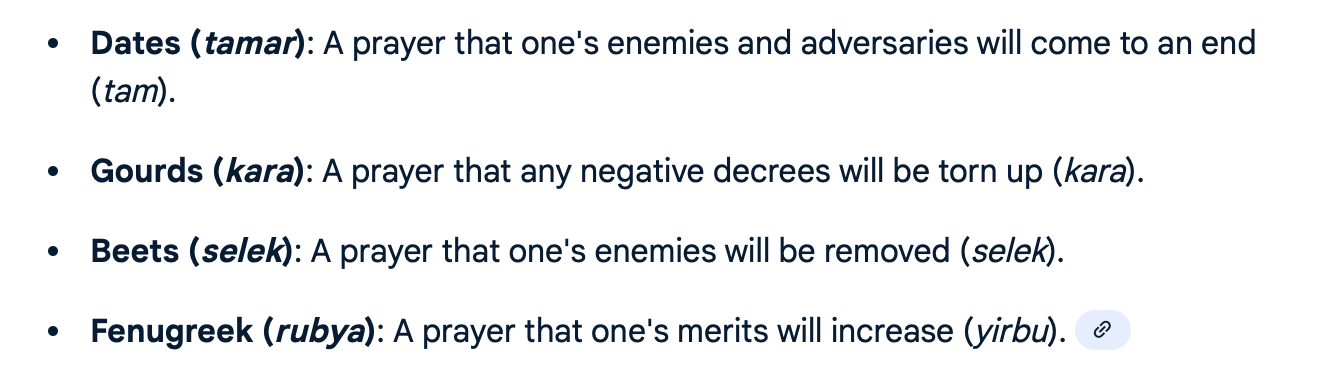
personally, i think we should all be loading up on dates and beets. but now i am really off in the ditch, and shall return myself to more linear thinking. . .

we were musing about honey, or at least i was. and since this is ultimately going to be a story about honey cake, i’m in the midst of explaining how we got there. how i wound up shoving a bundt pan of sumptuous honey-doused batter into my unreliable but deeply lovable ancient commercial-grade oven.

i tend to be someone who gloms onto traditions. and, given that these days, i spend a lot of time musing about time and the passing of years, i was suddenly struck—even though i am the farthest thing from a baker—with the question of whether there was some heirloom recipe for the holiday that i might have been missing. so i struck out to the best family baker, my brilliant and beloved sister-in-law brooke of the upper east side, and before the text with the query could possibly have registered in her wee little phone, she shot back the recipe she’s been baking for years. she noted that it was a super hit, and she noted that it was a family heirloom not in the traditional since, as her mother/my mother-in-law staked her claim to feminism by not knowing her way about the kitchen, and thus might not have baked in her life, dear brooke had made it a family tradition, one that secured its position the very first year she baked it when all that was left was a plate full of crumbs.

that’s all the convincing i needed, so i (practically as inept a baker as my late, great, mother-in-law) leapt aboard. i wheeled my grocery cart wildly through the store, plucking spices off shelves, fresh-squeezed OJ from the cooler, stocking up on fresh bags of flour, baking soda, baking powder (for the ones currently on my shelves had likely turned to clay, the subjects of years of idle waiting), and i set myself to baking. words being more my thing, i immediately gave it a name, this honey cake of famed repute. since dear brooke had clued me in its familial origins with this trademark hilarious note —”Considering that Mom’s recipe for the New Year was attending someone else’s party, this is our (1 generation = me) tradition.”—i immediately dubbed it Gen One Honeycake, and so it’ll stick. i also informed my boys they’d best follow along, for it was now incumbent upon them and their children’s children to crank the ovens every Rosh Hashanah, and pull out the whiskey and OJ.

excuse me, you say? where does the whiskey come in, and why are we talking cocktails so early in the morning? well, this famed honey cake, so dense it shall bulk your biceps as you ferry it to the table, is loaded: whiskey (or rye), OJ, a cup of coffee, a cup of honey, and a shuk‘s worth of spices. (a shuk is the israeli name for an open-air spice market)

aunt brooke continued, holding my hand (long-distance) the very whole way:

“It’s Marcy Goodman’s honey cake and it’s a fan favorite. Use the whiskey and use the sliced almonds in the recipe. And if you have whole wheat flour, sub in 1/2 c wheat flour for 1/2 c white flour. Make it in a tube pan. It’s a big dense cake.”

much to my amazement i found it pure delight to stand at the counter dumping in this and that, and stirring as directed. as the smell rose from the bowl, i began to understand the soothing powers of baking. and now wonder if it’s seductive enough—and sufficiently sedative—to carry me through the next 1212 days (inauguration 2029).

oops!

because my oven is, as i’ve mentioned, a recalcitrant behemoth, i’ve no idea whether it rose to the necessary 350-degrees Fahrenheit, and suspect it was probably my fault that the cake, despite its extra five minutes in the oven, decided to collapse round the middle (a flub fixed first by dumping extra almond slivers into the hole, and then duly disguised by brooke’s suggestion of stuffing the hole with rosemary sprigs, which i happened to have growing out back).

by the time i carried it to the table, where eager forks awaited, i felt my chest puffing out just a bit, swelled with pride at picking up the family slack. we now have ourselves a tradition. and my boys, by edict of their mother, shall carry it on, far into the next and the next and the next generation. may it always be so.

with no further ado, for i’ve tarried long enough here, i offer you the famed aunt brooke gen one honey cake, courtesy of one marcy goldman, reigning queen of the honey cake whoever she is. the version here was posted on deb perelman’s smitten kitchen site, and comes along with notes at the end, worth reading for their spicy humor.

Gen One Honeycake, from famed family baker BJKR, courtesy deb perelman’s Smitten Kitchen, courtesy marcy goldman (a cake with lineage!)

SERVINGS: 16
TIME: 20 MINUTES TO ASSEMBLE; 1 HOUR TO BAKE
SOURCE: MARCY GOLDMAN’S TREASURE OF JEWISH HOLIDAY BAKING
See Notes about recipe changes at the end of the recipe.

3 1/4 cups plus 2 tablespoons (445 grams) all-purpose flour (see Note)
1 3/4 teaspoons baking powder (see Note)
1 teaspoon baking soda
1 teaspoon kosher salt (see Note)
4 teaspoons ground cinnamon
1/2 teaspoon ground cloves
1/2 teaspoon ground allspice
1 cup (200 grams) vegetable or another neutral oil
1 cup (320 grams) honey
1 1/2 cups (300 grams) granulated sugar
1/2 cup (110 grams) light or dark brown sugar
3 large eggs
teaspoon vanilla extract
1 cup (235 grams) warm coffee or strong tea (I use decaf)
1/2 cup (120 grams) fresh orange juice, apple cider, or apple juice
1/4 cup (60 grams) rye or whiskey, or additional juice
1/2 cup (50 grams) slivered or sliced almonds (optional)

Pan size options: This cake fits in two (shown here) or three loaf pans; two 8-inch square or two 9-inch round cake pans; one 9- or10-inch tube or bundt cake pan; or one 9 by 13 inch sheet cake.
Prepare pans: Generously grease pan(s) with non-stick cooking spray. Additionally, I like to line the bottom and sides of loaf pans with parchment paper for easier removal. For tube or angel food pans, line the bottom with parchment paper, cut to fit.
Heat oven: To 350°F.
Make the batter: In a large bowl, whisk together the flour, baking powder, baking soda, salt, cinnamon, cloves and allspice. Make a well in the center, and add oil, honey, granulated sugar, brown sugars, eggs, vanilla, coffee, juice, and rye. [If you measure your oil before the honey, it will be easier to get all of the honey out.]
Using a strong wire whisk or in an electric mixer on slow speed, stir together well to make a well-blended batter, making sure that no pockets of ingredients are stuck to the bottom.
Spoon batter into prepared pan(s). Sprinkle top of cake(s) evenly with almonds, if using. Place cake pan(s) on two baking sheets, stacked together (which helps the cakes bake evenly and makes it easier to rotate them on the oven rack).
Bake the cake(s): Until a tester inserted into a few parts of the cake comes out batter-free, about 40 to 45 minutes for a round, square, or rectangle cake pan; about 45 to 55 minutes for 3 loaf pans; 55 to 65 minutes for 2 loaf pans (as shown), and 60 to 75 minutes for tube pans.
Cool cake: On a rack for 15 minutes before removing it from the pan. However, I usually leave the loaves in the pan until needed, as they’re unlikely to get stuck.
Do ahead: This cake is fantastic on day one but phenomenal on days two through four. I keep the cake at room temperature covered tightly with foil or plastic wrap. If I want to bake the cakes more than 4 days out, I’ll keep them in the fridge after the first 2 days. If you’d like to bake them more than a week in advance, I recommend that you freeze them, tightly wrapped, until needed. Defrost at room temperature for a few hours before serving.

Notes:
Size: These days, I bake this cake in two filled-out loaves, as shown, instead of 3 more squat ones. My loaf pans hold 6 liquid cups; they’re 8×4 inches on the bottom and 9×5 inches on the top; if yours are smaller, it might be best to bake some batter off as muffins, or simply use the 3-loaf option.
Flour: After mis-measuring the flour many years ago and baking the cake with 2 tablespoons less flour and finding it even more plush and moist, I’ve never gone back. The recipe now reflects the lower amount.
Baking powder: The original recipe calls for 1 tablespoon of baking powder, but I found that this large amount caused the cake to sink. From 2011 through 2023, I recommended using 1 teaspoon instead. But, after extensive testing this year, I’ve found that a higher amount — 1 3/4 teaspoons — keeps this cake perfectly domed every time, and even more reliably than the 1-teaspoon level.
Salt: The original recipe calls for 1/2 teaspoon but I prefer 1 teaspoon.
Liquids: This is address the question that comes up in at least 30% of the 1115 comments to date: “What can I use instead of whiskey?” and/or “What can I use instead of coffee?” The original trifecta of liquids in this cake [coffee, orange juice, and whiskey] is unusual and wonderful together, and I still think the perfect flavor for this cake. But if you want to omit the whiskey, simply use more orange juice or coffee. If you want to omit the coffee, simply use tea. If you don’t want to use tea, use more juice. If you don’t want to use orange juice, my second choice liquid here would be apple cider (the fresh, not the fermented, kind), followed by apple juice.
Apples and honey: It’s a whole thing!
Sweetness: The recipe looks like it would taste assaulting sweet but you must trust me when I say it doesn’t. But, if you reduce the sugar, any one of them, you will have a cake that’s more dry. You can still dial it back, but do understand what the adjustment can do to the recipe.
Flavor: Finally, this is every bit as much of a spice cake as it is a honey cake. Honey isn’t the most dominant flavor, but it’s one of many here that are harmonious and wonderful together. It smells of fall in a way that a simmer pot of $60 candle could never. I hope you get obsessed with it too.

that’s it, sweet friends. certain we could all use a little sweetness at this turn in the year, where did you find sweetness this week?

*as promised, the tina fey sheet cake scene. (nod to faithful chair reader sharon of twin cities!)
turning inward, turning back

these times call for pronounced postures, for intention. ultimately we want to reach out, to be the bridge, the peacemaker. or, maybe little more than one flickering flame amid the global shadow. but first, in aim of fortification, we turn in. it’s where we stoke the fire, clarify the vision, and maybe just maybe find the peace, the calm, from which to set forth.

i’d call myself a quietist. one of the ones who finds the solitude and silence a necessary interiority. it is the place of prayer, of wisdom seeking, reaching far beyond the bounds of life as i know it, and drawing in pole stars to point the way. more and more, i start to think i subscribe to the church of the bookshelf. an eclectic crowd of thinkers and seers, the holy well from which i draw.

the noise of the world is beyond cacophony these days. rafters are rattling, pots and pans are clanging. all of which pushes me into the cracks of the world, where i poke around endlessly, sniffing out wisdoms like a mouse after cheese. i’m intent.

this week i turn east, and i turn back in time. way back, and way east. east to india. back to the first century of the common era, roughly 55 CE.

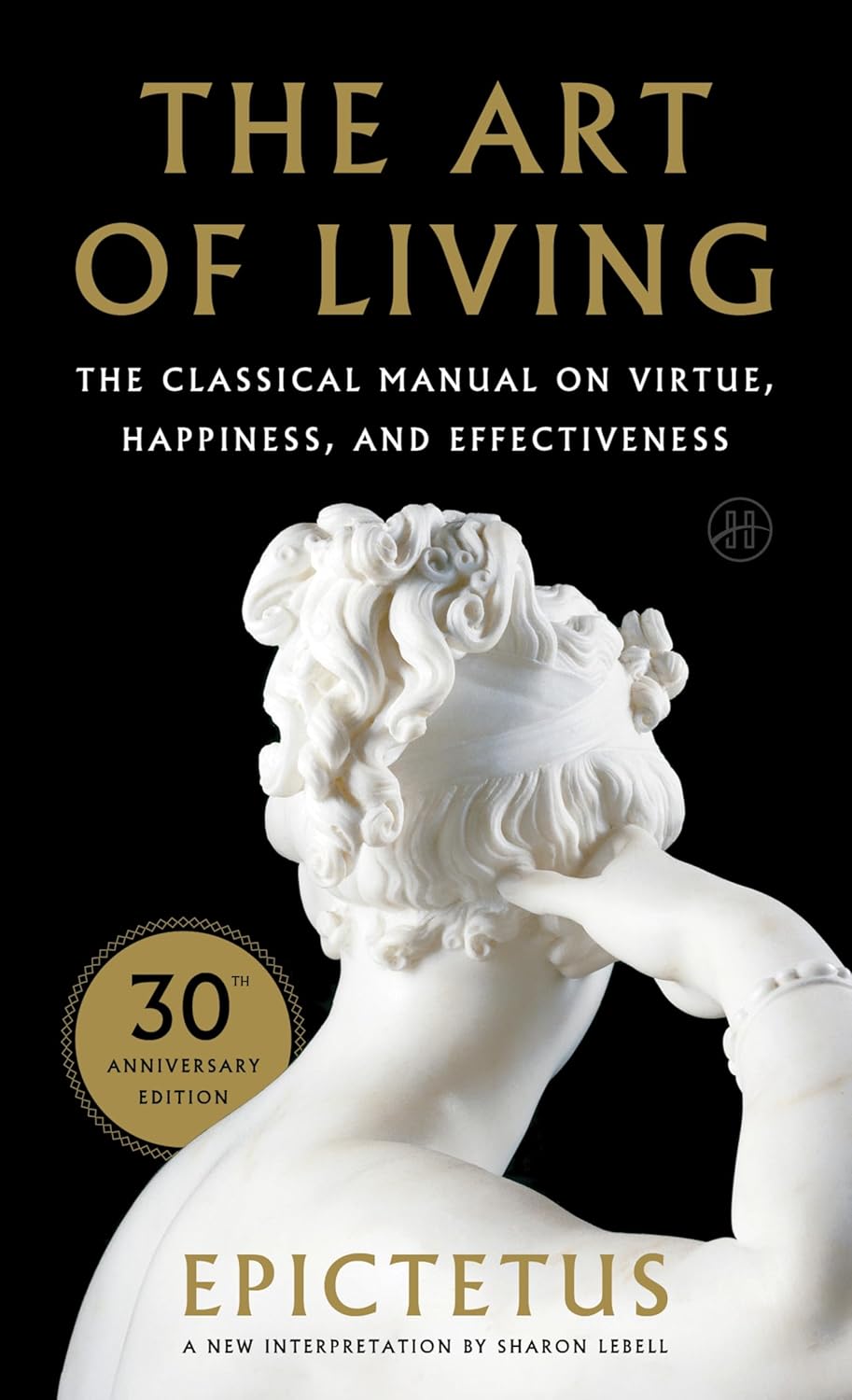
epictetus, the unsung stoic, goes first. he was as unlikely a pole star as they might come: born a slave, a slave with a limp, he carved out 93 instructions, bound them as a book, slapped on a catchy title (the art of living), one that came with a wallop of staying power (we’re still seeking the art), and all these millennia later, we’re still turning its pages.

a marvelous philosopher and musician, a northern californian by the name of sharon lebell, back in 1995 took a crack at translating epictetus anew. her translation stuck, and it’s now considered a classic. i found epi’s wisdoms rather timeless, and in keeping with survival in tumultuous times.

here’s epictetus:

Caretake This Moment

Caretake this moment.
Immerse yourself in its particulars.
Respond to this person, this challenge, this deed.

Quit the evasions.
Stop giving yourself needless trouble.
It is time to really live; to fully inhabit the situation you happen to be in now.
You are not some disinterested bystander.
Exert yourself.

Respect your partnership with providence.
Ask yourself often, How may I perform this particular deed
such that it would be consistent with and acceptable to the divine will?
Heed the answer and get to work.

When your doors are shut and your room is dark you are not alone.
The will of nature is within you as your natural genius is within.
Listen to its importunings.
Follow its directives.

As concerns the art of living, the material is your own life.
No great thing is created suddenly.
There must be time.

Give your best and always be kind.

~ Epictetus ~
(Epictetus: The Art of Living a New Interpretation by Sharon Lebell.)

Arundhati Roy

the next wise soul i bumped into this week was arundhati roy, the booker prize-winning novelist, who grew up and lives still in india; delhi specifically these days. she’s getting plenty of ink of late because her latest work, her first memoir, Mother Mary Comes to Me, has just been published. it’s an exploration of her complex relationship with her “iconic” and “extraordinary” mother, whom she describes as both “my shelter and my storm.”

roy’s 1997 novel, The God of Small Things, is what won her the booker prize for fiction, which in this mercenary worldly equates with that murkily-defined “success,” and its often evil twin, fame. roy, wise woman, wasn’t having it. she was not one to be deluded, or seduced, by such worldly measures. as she tells it she was keenly influenced by an uncle, a beloved uncle, who was one of india’s first rhodes scholars for his work in greek and roman mythology, but gave up his academic pursuits to start a pickle, jam, and curry-powder factory with his mother. and to build balsa-wood model airplanes in his basement.

not surprisingly, someone schooled in the shadow of such an uncle might have strong instincts on the “right” definition of success. and in a conversation with an old friend, arguing that “recognition is not the only barometer of brilliance or human worth,” she noted the friend’s eyebrow arching. skepticism, in full display. so roy did what any cocktail debater might do: she pulled the paper napkin out from under her drink, and a pen from her purse, and began to scribble.

what she wrote amounts to a gospel of success that belongs not on half-soggy paper, but a granite slab somewhere:

To love. To be loved. To never forget your own insignificance. To never get used to the unspeakable violence and the vulgar disparity of life around you. To seek joy in the saddest places. To pursue beauty to its lair. To never simplify what is complicated or complicate what is simple. To respect strength, never power. Above all to watch. To try and understand. To never look away. And never, never to forget.

sometimes i think i’m a broken record, saying over and over—and over—such a few simple truths. 

never get used to the unspeakable violence and vulgar disparity of life around you.

seek joy in the saddest places.

never simplify what is complicated or complicate what is simple.

respect strength, never power.

above all, watch.

never look away.

love.

love.

love.

what inscription might you add to a granite wall of truths?

p.s. i hyperlinked to a marvelous interview with sharon lebell above (i love her whole story, how she was drawn to study philosophy, inspired by a neighbor with more books than she’d ever seen, and how she found those first classes in philosophy “exercises in obfuscation” — might that describe much of the noise here on planet Earth in the year 2025?). here is just one of the grafs from that interview you might find as delicious as i did….

Epictetus drew me in particular because in the mid-1990s he was the unsung Stoic. People had heard of Marcus, of Seneca. No one, except the cognoscenti, had heard of Epictetus or could pronounce his name. I liked his humble background: he wasn’t an emperor or a big cheese. As a former slave with a limp, he was someone who wasn’t expected to have a voice, but he used his voice anyway. He was a relatable everyman trying to figure out best practices for getting through the day.  Since I am female, this mattered a lot. Many philosophers invoke male experience as a stand-in for the universal human experience. Epictetus did not, of course, address females when he taught, but his teachings have an inclusive, of-the-people feel.”

sodden, sodden week

i come this week with sodden heart, afraid for the world we are (no longer becoming but present in the now), fearful of what’s to come. 

once again, a week of news bulletins, and the voices of mass-shooter psychologists filling the airwaves, unfurling the narrative in their cable-news staccato. i didn’t write of the children of annunciation church two weeks past, because i had no words vast enough to reach the depths of it. and i didn’t want to add empty noise.

but a woman i’ve come to love for the purity of her heart, and her inextinguishable humor (mother of five, breast cancer survivor, sister of a brother who died too young, neighbor of annunciation, and one as likely to freely shed tears as to find the hilarity in the everyday) found out that at the moment the first bullets shattered the stained glass of annunciation church, the children in the pews were just beginning to recite psalm 139. 

one of the most ancient prayers, it begins: 

Lord, you have probed me, you know me:

    you know when I sit and stand;
    you understand my thoughts from afar.

You sift through my travels and my rest;
    with all my ways you are familiar.

Even before a word is on my tongue,
    Lord, you know it all.

Behind and before you encircle me
    and rest your hand upon me.

Such knowledge is too wonderful for me,
    far too lofty for me to reach.

and it includes a line i consider one of the most beautiful of all sacred text: 

II
You formed my inmost being;
    you knit me in my mother’s womb.

I praise you, because I am wonderfully made;
    wonderful are your works!
    My very self you know.

My bones are not hidden from you,
When I was being made in secret,
    fashioned in the depths of the earth.[e]

Your eyes saw me unformed;
    in your book all are written down;
    my days were shaped, before one came to be.

III
How precious to me are your designs, O God;
    how vast the sum of them!

Were I to count them, they would outnumber the sands;
    when I complete them, still you are with me.

When you would destroy the wicked, O God,
    the bloodthirsty depart from me!

Your foes who conspire a plot against you
    are exalted in vain.

i can barely get past the line about being knit in my mother’s womb. and it turns out neither could my friend laura. 

she recites it here, a reading worth hearing, as you absorb the words….

then came this wednesday, and with it an assassination and yet another school shooting. and then, thursday, the twenty-fourth anniversary of 9/11. another tragedy, another thread that over the years has brought its tragedy into full view as a woman i have come to love lost her father in that tower that day. and because i know of the layers and layers of tragedy it brought, it is so much more to me now than a terrible day in our national story. as with any violent death, the shrapnel is of the never-ending sort, carnage upon carnage, year after year. flesh shredded, souls shattered, psyches never ever re-settled. 

and so, this poem, with its title so apt: “Try to Praise the Mutilated World.” mutilated we are, all right. 

this poem, it seems, made its way to light in the immediate wake of 9/11 quite by accident, when the poetry editor at the new yorker, who happened to be reviewing an advance copy of the poet’s newest book (at the time) was asked by david remnick, the new yorker’s editor, to find a poem fitting for a special edition of the magazine to be printed and published within days of the tragedy. it was printed on the last page of that issue, as we all scanned the mutilations that hadn’t yet fully revealed themselves. isn’t that always the case with tragedy? the revelations, not unlike a land mine, explode and explode, unseen until the moment of detonation, whenever that comes. 

adam zagajewski, a polish poet who died in 2021, had written the poem with no particular occasion in mind. over the last two dozen years, it’s become his most famous poem, and a poem often pulled from the files to mark this sad, sad day. his choice of the word mutilation is most apt, a word not too too often pulled into text. twinning it with the verb “to praise,” is wholly disturbing. what is there to praise? maybe the work is in the “try.” maybe that’s the instructive, meant to be just beyond our reach. try to praise….

there is work to be done here. there is always work. and maybe if we can remember june’s long days, and the wild strawberries, and the gentle caring of one stranger for another, we can remember why we must weep at the sound of gunshot, and why we must not surrender. this world, mutilated in so many ways, is still a world rife with wonders. 

might we add but a single drop of sweetness to the bitter, bitter taste in our mouths….

Try to Praise the Mutilated World

By Adam Zagajewski

Try to praise the mutilated world.
Remember June’s long days,
and wild strawberries, drops of wine, the dew.
The nettles that methodically overgrow
the abandoned homesteads of exiles.
You must praise the mutilated world.
You watched the stylish yachts and ships;
one of them had a long trip ahead of it,
while salty oblivion awaited others.
You’ve seen the refugees heading nowhere,
you’ve heard the executioners sing joyfully.
You should praise the mutilated world.
Remember the moments when we were together
in a white room and the curtain fluttered.
Return in thought to the concert where music flared.
You gathered acorns in the park in autumn
and leaves eddied over the earth’s scars.
Praise the mutilated world
and the gray feather a thrush lost,
and the gentle light that strays and vanishes
and returns.
(Translated, from the Polish, by Clare Cavanagh.)


a closing thought from jeremiah johnson, co-founder of the Center for New Liberalism, who writes on his substack Infinite Scroll, where he ponders the politics of posting and the dynamics of the social internet: 

As much as you can, resist the hysteria. Refuse to participate in it, refuse to make the polarization worse. The purpose of liberalism is to allow us to disagree with someone without discriminating against them, without harassing them, without killing them. It’s a precious thing, perhaps the most precious thing our civilization has achieved. Every time you break bread in peace with an outsider, every time a Catholic and Protestant shake hands, it’s a miracle. Don’t take it for granted.

what might you find to praise in this mutilated time and this week of mutilation?

crushed by a word

cairn

let me begin by saying i have no business commenting on national affairs. and i confess to brandishing naivete at the highest level. but, in that way i always do come friday mornings, i scan the week and pluck the one particular thing that zings me the most. this week it’s war. it’s the word war. it’s opting for war instead of defense, it’s heralding a drive toward muscularity of the violent sort.

i’ve been studying Torah week after week for a few years now, more than long enough to know this tendency toward warring, toward violence, be it in the name of protection or crushing the opposition, stealing land, or seeking fortune, is as hard-wired into the human species as can be.

and yet…

and yet, there are those who’d see a rock and build it into a cairn, a path marker signaling to the stranger who comes behind, this is the way. this is the way toward a holiness, a holy place.

and there are those who see a rock and stoop to pluck it from the ground and fling it. where it lands, be damned. who or what it shatters, oh well.

i grew up on a street where there were rock flingers and cairn pilers. some of us played in the woods, being careful not to step on the trillium. some rode their bikes through the woods, fast and furious and zooming off logs piled for the purpose of velocity. crushing was part of the point. speed, the aim.

i live now in a country where the department of defense is considering a change of name, department of war. for all i know it’s happened overnight in one of those postings that now serve as executive orders. of all the countless assaults in a nation where rockets red glare once was a line in a patriotic hymn, why is one three-letter word so crushing to me?

because at heart i want to build cairns. i don’t want to be of a nation that only sees force as the way out. i know there’s a God seen as vengeful in the pages of ancient sacred text. but i know there came in time a Godly voice who took to the mountaintop and spoke: blessed are the peacemakers, blessed are the poor in spirit. blessed are the meek, the humble, the merciful.

that’s my tribe. by creed and by blood. but mostly by spirit.

and as the years accrue, as i have deepened into a sacred hollow, found my peace and my bliss there, i cannot fathom nor abide a mindset that heralds its predilection for bombs, for guns, for ballistics.

is there not might in the pen—the aphorism says that there is, that it’s mightier. is there not might in working it out, coming to the table with an understanding that we are but one tiny blue marble in the vastness of space, and we’ve been adorned with more than plenty, and all we need do is work out our share. the lines drawn in the sand are just that: subject to rearranging winds.

we needn’t turn into hermits, each in our own secluded and faraway hut (though it’s an idea that sometimes appeals to me). but we might be a village. a village where my empty cupboard is stocked when i need it by yours. where my faltering gait is held steady by you, because you respond to the impulse as hardwired into us as the rock-flinging one, the one that rushes to pluck the fallen from the sidewalk.

i am wise enough to know that’s not necessarily the dominant instinct, the peacemaking one. but i know there are ways to bolster it. it might be in following the lead of the everyday saints in our midst, the ones who rush to wherever there’s pain, or loss, or lacking. or the ones who quietly, quietly get the job done. it might be deep in the countless pages of ink poured over the millennia, the ones that brilliantly brilliantly illuminate a holier truth. the way toward blessedness is the path of the peacemaker.

i know my weighing in on the matter verges on silly. who am i but one breath in the wilds?

and all i’m saying is i am crushed, crushed, by one three-letter word.

and so very much more…

a choice: what crushed you this week? or what bolstered you?

i happen to have a big brother, his name is john, and he is marking a big birthday today. and so, i pause for a moment here (sometimes he pulls up a chair) to send a boatload of blessings and love. he’s been looking out for me since my beginning….(in this very old photo, he is kindly helping me climb into a little red car; he in red cap, me in the blue….)

this is from one of our ol’ home movies, a famous scene in family lore. i am soon either pushed over or assisted into car, depends on your perspective. since it’s his birthday, let’s give dear john the benefit of the doubt: he’s assisting. (though the next frame has me splat on the ground!)