
among those unafraid to ask the unanswerable
If the intensity of my curiosities in this world were put to trial, and I was pressed to answer what question stirs me most, it would be the realm of the God I reach for as my North Star. I ruminate on the presence of God, the proximity of what I know as tender ballast, and though the edge of my knowing falls into a liminal mist, I aim anyway to live by what seems to be the timeless code of a just and loving, most merciful God.
Poetry, a gossamer web of knowing and unknowing, seems to be the closest frame through which to ask those questions, to rummage in the dim light and the darkness. It’s the poetry that rubs up against what seems true, and then falls swiftly away, that for me lasts and lingers. More so than sacred Scripture, I find myself venturing closest to the heavens when I follow poets unafraid to ask the unanswerable. The poets, so often, are my priests, my conduits from this much-battered planet to the uncharted heavens. Palpably alive and paying attention to the tiniest shards among us—the broken clock, the fallen sparrow, the furrow of a brow—the poet then leaps beyond or into, catapulting us into the vast, where the questions linger and the answers merely hover. Epiphany sometimes strikes. And we go forth, fortified.
I am particularly taken by those poets unafraid of doubt. As, truth be told, we live in mystery. It is those willing to expose their wrestling, their quest to question, that I find most resonant. Most true.
And when one of those poets dies, a volume closes; the possibility of question falls silent. We no longer knot our life raft to her fearless oceangoing vessel.
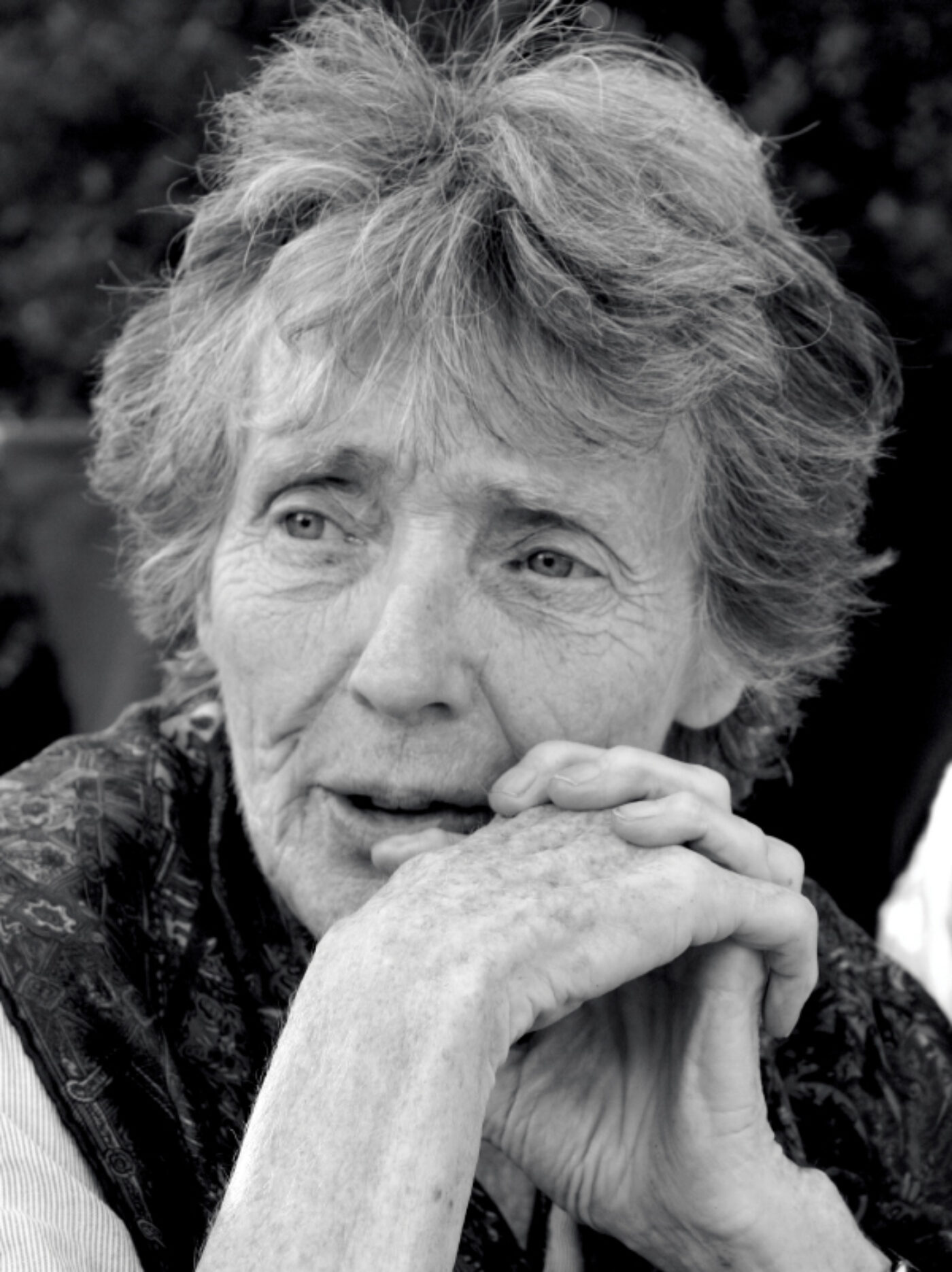
The world of poetry, from Ocean Vuong to those on the masthead at The Paris Review, mourned the loss this week of Fanny Howe (1940–2025), who died on Wednesday at 84. Over recent months, Howe, the daughter of an Irish playwright and a Harvard legal historian whose family traced its roots to the Boston Brahmin Quincy family, had been in conversation with the poet and translator Chloe Garcia Roberts, as part of the review’s Art of Poetry series. In a prelude I found as delicious as some of the conversation itself, Roberts sets the stage thusly in a piece published just last month:
“Howe has a sparrowlike figure and a blue peregrine stare. We met for this interview every few weeks over the course of several months from fall to spring, as she was moving out of her garden-level apartment in Cambridge into an assisted living facility just down the road. I would arrive midmorning, bearing scones and coffee with extra sugar cubes wrapped in napkins, and we’d talk each time for an hour or so. Our conversations circled family, motherhood, failure, race, and faith. After we were done recording, we’d gossip about the poetry scene and the succession of Pope Francis.”
And from there begins the interview, from which I pluck just a few snippets, and some of the Review’s own words (emphasis mine):
“I’d always been looking for a revelation that would open the whole universe for me and make it all have sense,” began Howe, who described herself as a “pagan Catholic,” and who converted to the faith at forty-one, counting among her guides Simone Weil, Giorgio Agamben, and the monks of Glenstal Abbey** in County Limerick, Ireland, with whom she stayed every summer for twenty years and whom she later watched on TV every Sunday, her personal Mass.
Howe was the author of an astonishing body of work—including twenty-five books of poetry, twelve novels, two story collections, and also essays, pulp romances, and young adult fiction. Her poems often enact the shock of belief, taking their power not from their devotional qualities—in fact, Howe avoided words like devotion and prayer—but their combination of faith and doubt. “I would think of poetry as a place where you connect your doubts to the things you don’t doubt,” she said. “Free-floating doubt wouldn’t trigger the lightning that contradiction does.”
In one of the hours of interviews, Howe let on that she considered it her “job” to be antidote to cynicism. When Roberts asked her to say more, she elaborated:

If I could say I was assigned something at birth, it would be to keep the soul fresh and clean, and to not let anything bring it down. And that’s the spirit of childhood, usually. Once you know that that’s what you’re doing, even when you’re walking through a war field, you’re carrying something to keep it safe. It’s invisible but you know it’s there, and it’s a kind of vision and a weight.
(You can listen to Howe, warbly voice and all, speak those very words here.)
Is it not all of our jobs—or certainly the job of some of us—to labor to keep the soul fresh and clean, to strain to not let anything bring it down? It is our singular entity, the one form over which we and we alone can steer the vessel, make the choices, choose love not hate, choose silence not bitter words, it is ours to keep, to draw in all the light we can muster. Our bodies, I’ve learned, are not under our control. Pathogens come, and cancers too. We crumble under the weight of time and toil. Our skin wrinkles, breaks out in bumps. But not our soul. Our soul is eternal, is timeless. Our soul is what we make of it.
The work of my soul is abetted, most often, by those whose words I read, by those whose way of being I watch. It is, so often, in the smallest, quietest of kindnesses. The triumphs of spirit over the temptations to turn away, to forgo the sharp edge, the blunt force.
Ours is an ongoing work in progress.
In her role as perhaps a patron saint of doubt within the amalgam of faith, Howe staked her claim in her introduction to George Bernanos’s 1937 novel of the 14-year-old French peasant girl, Mouchette: “Like a healthy human heartbeat, which has an intrinsic irregular system, the body of an artwork gets its vitality from a rhythm based in uncertainty. (Sick hearts have a dull regular thump.)”
Among the many lauds that poured forth in the wake of her death, Kazim Ali, the poet and co-founder of the small indie press, Nightboat Books, wrote this of Howe, the first author Nightboat published:
It would be wrong to say she was a polar star or a beacon in the darkness, because Fanny believed in mystery, in unknowing, in bewilderment. She didn’t mean to shine a light, but rather to see in the darkness.
Fanny once told me, in our life-long conversation about God, literature, and the world, that she thought Gnosticism was evil. What she found so evil was the belief that the material world was inferior to, or somehow separate from, the spiritual one. This world was the world to Fanny. “Human was God’s secret name,” she said in one poem. “If this life isn’t enough, then an afterlife won’t be enough,” she said in another.
To live in this rich, infinite world was the most important thing to her. “One cathedral is equal to the sky,” she wrote. And to God, she begged, “no answers, please, to any of my questions.”
Her life and work were conjoined in a long, lucid series of questions. How lucky we all are to have heard her askings.
may her askings live on, and her memory be a blessing. rest in knowing, dear fanny.
other than life itself and living, how have you encountered wrestling with doubt? is it a plain that animates you, or is it a space from which you run? (as always these questions are meant to be considered in the solitude and sanctity of your own quiet womb.)
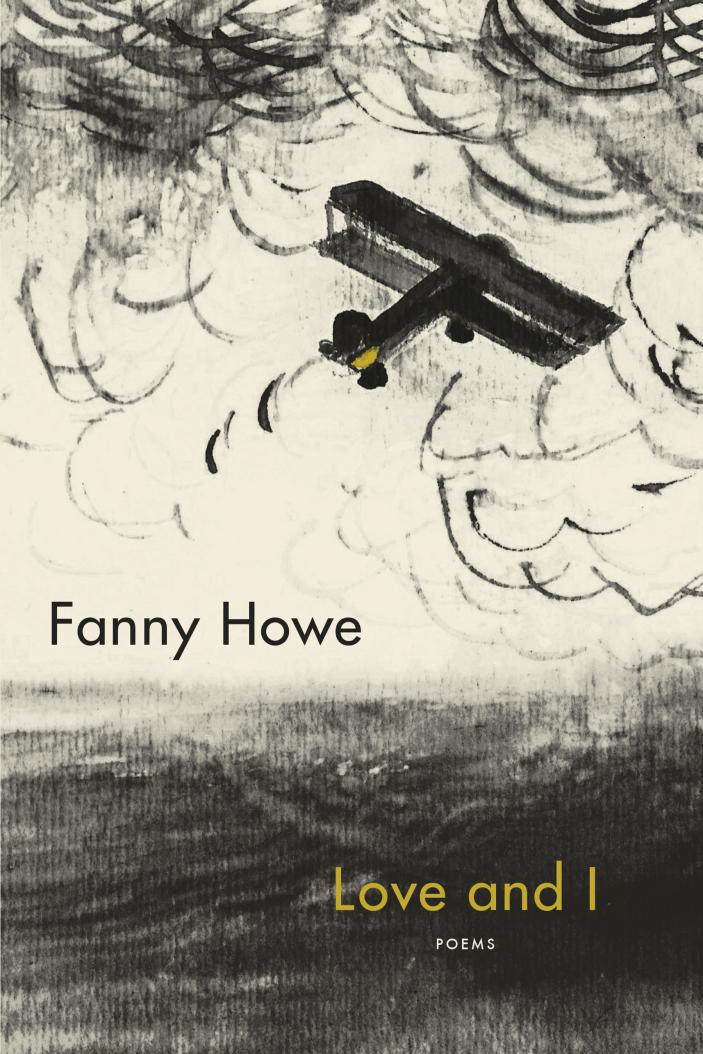
i nearly forgot! should you choose to dig in to a bit of fanny howe and her wrestling with faith, the two books you might seek (mine is coming from interlibrary loan) are Love and I: Poems (2019) and Gone (2003). in both she writes about her conversion to Catholicism, and her relationship to faith.
**because i’ve not found many a rabbit hole into which i’ve chosen not to burrow, my reading of howe led me to Glenstal Abbey, a place i now dream of tucking into for a fulsome contemplative spell. it’s a benedictine monastery in county limerick, ireland, housed in a 19th-century normanesque castle, surrounded by 500 acres of farmland, forests, lakes, and stream. you might just want to join me there…(and you can tune in any time for matins, lauds, vespers, compline, or daily Mass, in both recordings and livecam.)
and one more thing before i go. it seems bishop marian budde, she who gained fame (and infamy in some quarters) presiding over the prayer service at washington’s national cathedral following the inauguration, has now launched a substack, where she will gather her writings, and broaden the scope of her reach. she introduces herself with these words. . .
“On January 21, 2025, the day after President Trump’s inauguration as our 47th president, I chose to conclude my sermon at a Prayer Service for the Nation, held at the Washington National Cathedral, with a call for mercy:
“Let me make one final plea, Mr. President. Millions have put their trust in you and, as you told the nation yesterday, you have felt the providential hand of a loving God. In the name of our God, I ask you to have mercy upon the people in our country who are scared now.”
she stirred up good trouble with those words. and in her new space on substack, she lays out her mission—”to live as best we can according to the highest aspirations of humankind revealed to us in Jesus” (also in Gandhi, in Buddha, in Brahma, in Allah, in Yahweh)—with this litany:
- to recognize the inherent, God-given dignity of every human being
- to love our neighbors as ourselves, and even to love our enemies
- to share what we have and to strive for an equitable and just society
- to refrain from evil and refuse to hate
- to be mindful of the power of our words, and to speak without malice or contempt
- to forgive, as we have been forgiven
- to live in hope
- to be willing to sacrifice, even our very lives, for the sake of love.
she concludes with these words:
“In this space, I hope to encourage a kind of human discourse in which we don’t have to see the world the same way, but we can all agree that we all belong in this world.
“In a culture of contempt, may we speak with dignity.
“In a world of mean-spiritedness, may we act with kindness and love.”
how might you stir good trouble today?
 pull up a chair