
artisanal peace
by bam
sages are in short supply, it seems. certainly now, and certainly on the global scale. i scan where i can, ever on the lookout. and wasn’t my eye caught when i read the words “artisanal path” to “handmade peace.”
tell me more, my little heart shouted.
though it sounded a bit like a recipe for earthy bread or hand-thrown plates, the sort that rise from the potter’s wheel, i sensed the subject here was far more urgent, and in dire need of replenishing. not what you’d find on any pantry shelf.
hand-crafted peace, peace constructed with care and attention. peace that we at home can build, without scissors or glue or a potter’s spinning wheel.
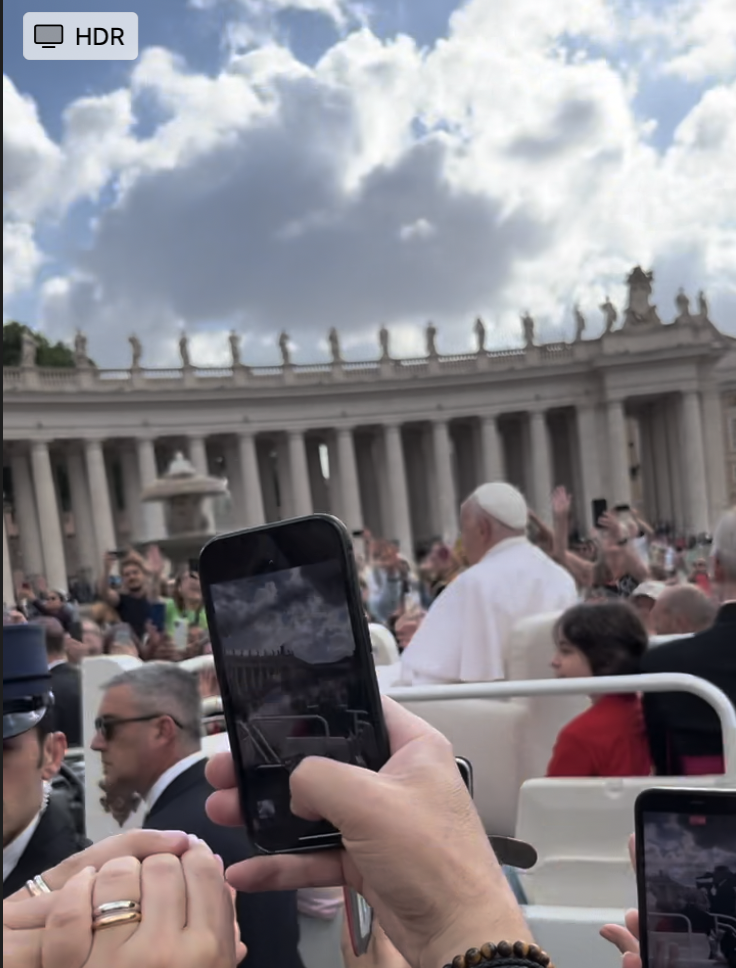
i clicked on a duly-provided link, and wasn’t one iota surprised to find that Il Papa, our most beloved Francis, was the one who not only dared to raise his voice above the blather, but considered it a requisite of his job’s description.

he is, after all, shepherd to a farflung flock. but more than that, he’s a prophet, which, according to the definition i found in richard rohr’s brand-new the tears of things: prophetic wisdom for an age of outrage, means a radical change agent, teacher of a moral alternative, and deconstructor of every prevailing order. rohr reminds us of the prophets of ancient times, the ones described by isaiah and ezekiel, whose job it was to hold the powers that be “maddeningly honest.”
bring on the prophets, please.
in these times, francis, our dear pope who from his hospital bed in rome reached out to the suffering of gaza, is the rare voice to which all the world will sometimes listen. thank holy God, he speaks the language of love without condition, clause, or pause. there are those among us, in this age of outrage, who might do well to listen. especially when they claim to take instruction from the very same God who whispers to Il Papa.
the new york times calls him “an increasingly lonely moral voice on the world stage.”
all the more reason to listen. and listen hard.
“peace is crafted; it is the work of our hands,” francis began at a prayer vigil in the central african republic back in 2015, “it is built up by the way we live our lives.” he was speaking to an audience of children, teens, and young adults in bangui, the capital of the central african republic, when that country was in the midst of a sectarian war between Christians and Muslims, and thousands had been killed, and more than a million displaced from homes, their properties looted or destroyed.
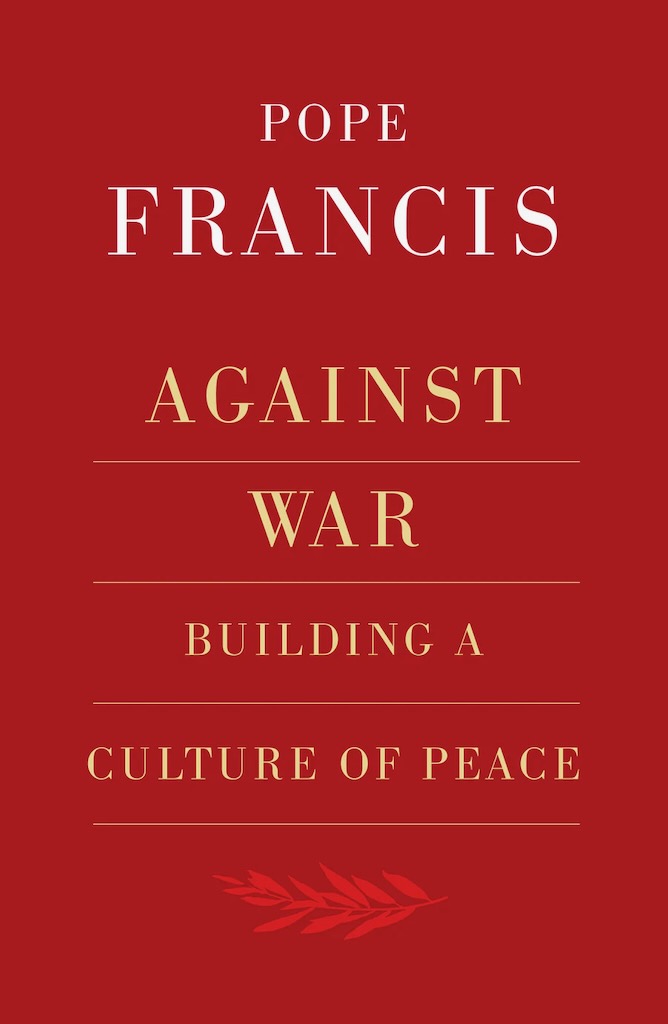
this artisanal path, “built up by the way we live our lives,” is spelled out, it turns out, in francis’s Against War: Building a Culture of Peace, a book i’ve ordered from my local bookstore, as it’s one with permanent claim to a slot on my bookshelf.
it’s not that i think i can build a culture of worldwide peace, though once upon a time i dreamed of such things. the point here, from the wee bit i’ve read, is that peace is a sphere we build bit by bit, as we travel through space and time, and it’s built by even the most unassuming of gestures, attitudes, and actions.
what the pope is saying, and what the world ought listen to, is that the tiniest empathies and kindnesses matter: giving cuts in the grocery line, waving someone into your expressway lane; taking time to take the call, dropping the tupperware of soup on your neighbor’s stoop. biting your tongue when you’re tempted to snap, and, yes oh yes, turning the other cheek, a trait i’m told no longer belongs in a world of dog eat dog.
what a game changer: here’s the head of a church that counts 1.39 billion baptized among its ranks, and he too concurs that we needn’t be rocket scientists in the art of magnanimous charitable persuasion to make a dent in the realm of ever-spreading goodness.
for one thing, it’s fairly contagious. if you’re out-of-the-blue kind to me, if you take my breath away with some wonder act of yours, chances are i’m inclined to be a copy cat and try the same. if for no other reason than the pure joy of watching someone be surprised you’ve not just slammed the door in their sorry, sorry face.
here’s where Il Papa begins his artisanal path to handmade peace, with this fulsome criticism of the futility of war:
“war is not the solution, war is madness, war is a monster, war is a cancer that feeds off itself, engulfing everything!”
that’s all i needed to keep on reading. and what i found, and what you’ll find should you decide to play along, is a compendium of his most outstanding commentaries on war and peace during the first nine years of his pontificate.
here are a few of the nuggets you just might choose to tuck in your peace-gathering pockets.
because one can’t best the pope when it comes to eloquence and voice, i am quoting from the book, here on in, and plucking five that leap out the most….
1.) seeing the world as one human family living in one common home.
The stars in the sky shine down on every single person — from the beginning of time to today — and learning “to look at the stars” will be “the most effective vaccine for a future of peace,” he said in Ur, Iraq, in 2021.
“Anyone with the courage to look at the stars, anyone who believes in God, has no enemies to fight. He or she has only one enemy to face, an enemy that stands at the door of the heart and knocks to enter. That enemy is hatred,” the pope said.
“There will be no peace as long as we see others as them and not us,” he said. Humanity lives under one heaven, under the gaze of one God who desires his children to be “hospitable and welcoming” to each other on earth.
2.) reconciling with one’s enemies and embracing unity in diversity.
The pope told young people in the Central African Republic that the first step toward being a peacemaker was “never hate anyone. If someone wrongs you, seek to forgive.”
“We only win if we take the road of love,” he said, and, with love, “you will win the hardest battle in life” and find peace.
But “we need to pray in order to be resilient, to love and not to hate, to be peacemakers,” and “you must be courageous,” he added. “Courageous in love, in forgiveness, in building peace.”
3.) the difficult art of dialogue and listening, which can sometimes be as hard as building a bridge over an abyss.
Pride and arrogance must be eradicated from one’s own heart, he told young people at a congress of the educational project, “Scholas Occurrentes,” in 2016. “Our world needs to lower the level of aggression. It needs tenderness. It needs gentleness, it needs to listen, it needs to walk together.”
Dialogue is “the capacity to listen, not to argue immediately, to ask,” he said. “Everyone wins in dialogue; no one loses” because “it is about agreeing to proposals so as to move forward together.”
Dialogue is to put oneself in the other’s place, “to form a bridge” and “persuade with gentleness.”
4.) peace is a constant journey of “getting one’s hands dirty,” concretely working for the common good.
“Our path leads us to immersing ourselves in situations and giving first place to those who suffer,” he said in Assisi for the World Day of Prayer for Peace in 2016.
Feeling responsible for helping others and refusing to be indifferent cleanses the heart and requires the “purification” and conversion that can only come from God, he said in Irbil, Iraq, in 2021.
This new order must meet humanity’s desire for justice, equality and participation, he said in his World Day of Peace message in 2020. A democratic society recognizes everyone’s rights and one’s duties toward others, which can temper a harmful, unbridled understanding of freedom.
5.) living the beatitudes is to bring heaven––and peace––to earth.
In his homily in Baghdad in 2021, the pope said, “We do not need to become occasional heroes, but to become witnesses, day after day,” embodying the wisdom and love of Jesus.
Jesus changed history “with the humble power of love, with his patient witness. This is what we are called to do,” he said, and “that is how the world is changed: not by power and might, but by the beatitudes.”
People who live the beatitudes “are helping God to fulfill his promises of peace,” he said. “This is the way; there is no other.”
in these tumultuous times, i am turning hungrily to prophets and sages in the news and on my dusty bookshelves. i’m inclined to not fill this space with my own blather, but rather to bring any lights that might dapple our paths. it’s always a tug-of-war to quiet the chair or keep it going with whatever bits i find. this doesn’t seem like the time to turn to silence. so my aim is upped to break through blather and bring voices that will wedge open our hearts, and like a doorstop, keep it wedged till we get through to the other side….
what voices broke through to you this week?
 pull up a chair
Amen, Sister!
❤ ❤ ❤ !
We often think of “peace” as such a benign, kind of mushy word. But as you and Pope Francis have said, peace is hard work.
harder at the beginning, then maybe it just becomes our way of being. more effortless. reading the book now. even better than i’d thought….
Addendum: For so so many yeare I have used many morning/evening candle lighting time go-to reflection sources. I always return to Joan Borysenko’s Pocket Full Of Miracles. She is such a woman of wisdom, faith and compassion. It is another resource in the most challenging times. So thankful for this Table!
ohhhhh, will have to check out Pocket Full of Miracles…..
we ALLLLL need to dial up courage. as i was trying to fall asleep last night, the question that kept stopping me is: what in the world can i do here?
Beautiful! Thank you for this. It gives me hope. I will definitely check out this book.
oh, thank you. it always brings joy when someone new wafts by…..
blessings.