
summer idyll: another name for “idle”
by bam

summertime is for slow. and slow i am this summer. i watch bunnies make breakfast buffet of my flowerpots. i keep vigil for a redbud tree that might be on its death march. i cut corn off the cob and dump it into confetti-like salads, delicious salads of tomato, armenian cucumber, and fists full of basil. i swim, slowly and gasping for air at the end of the lanes, in a pool where i am the youngest by a few decades.
and of course i read, an exercise that requires little other than the moving of one’s pupils, the occasional blink, and the turning of pages should one resort to that quaint document, the page.
and so it was in reading this week that those pupils of mine––and the braincells behind them––paused for deep consideration when i came across a commencement address by the late great russian poet and essayist joseph brodsky.

in the summer of 1989, two years after he won the nobel prize in literature and two decades after he fled the soviet dictatorship with the help of w.h. auden, brodsky stepped to the podium at dartmouth college to give the commencement address, later published in a posthumous collection titled, “on grief and reason: essays” (farrar, straus and giroux, 1997).
the topic he chose, curiously, was boredom. but brodsky being brodsky, he soared with it. and because i found it altogether mesmerizing, and because his closing passage stuck with me in what amounts to the cerebral iteration of gum to the bottom of your sneakers, i’m bringing it here to the old make-believe maple table.
what’s true, in these months of living fully awake to the ephemerality of time, is that i soak in especially the wisdoms of those who understand that fleetingness to be central to the sanctifying of time’s each and every parcel. to understand that time is not endless, but rather bracketed and with certain end, is for me anyway the gravitational force that drives my attention out of malaise and into full-on savor.
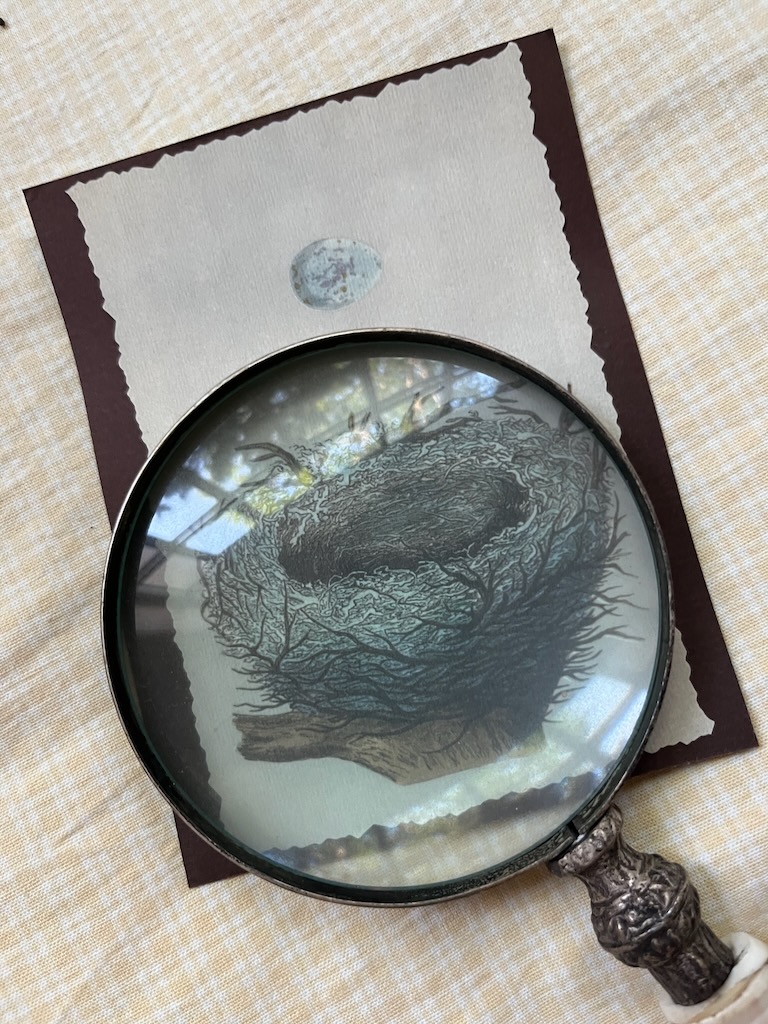
i hold each grain of time, as often as i pause and catch myself, up to the incandescent luminescence that reveals and magnifies its wonder. in other words, i aim to live with one of these in my back pocket, gliding time beneath my ever-ready looking glass:
here then is where brodsky begins his deep-dive into boredom, as he looked out upon a sea of soon-to-be-graduates at that ivy-covered college in new hampshire’s piney countryside (i’d endorse reading clear through these next few grafs, but if you’re pressed for time, leap down to the bottom of read to see if you, too, are struck by brodsky’s likening our time here to a ride on a runaway train, and his admonition to seize each blessed frame as it’s passing by):
Known under several aliases – anguish, ennui, tedium, doldrums, humdrum, the blahs, apathy, listlessness, stolidity, lethargy, languor, acedia, etc. – boredom is a complex phenomenon and by large a product of repetition. It would seem, then, that the best remedy against it would be constant inventiveness and originality. That is what you, young and newfangled, would hope for. Alas, life won’t supply you with that option, for life’s main medium is precisely repetition.
[…]
In a manner of speaking, boredom is your window on time, on those properties of it one tends to ignore to the likely peril of one’s mental equilibrium. In short, it is your window on time’s infinity, which is to say, on your insignificance in it. That’s what accounts, perhaps, for one’s dread of lonely, torpid evenings, for the fascination with which one watches sometimes a fleck of dust swirls in a sunbeam, and somewhere a clock tick-tocks, the day is hot, and your willpower is at zero.
Once this window opens, don’t try to shut it; on the contrary, throw it wide open. For boredom speakes the language of time, and it is to teach you the most valuable lesson in your life – the one you didn’t get here, on these green lawns – the lesson of your utter insignificance. It is valuable to you, as well as to those you are to rub shoulders with. “You are finite,” time tells you in a voice of boredom, “and whatever you do is, from my point of view, futile.” As music to your ears, this, of course, may not count; yet the sense of futility, of limited significance even of your best, most ardent actions is better than the illusion of their consequences and the attendant self-aggrandizement.
For boredom is an invasion of time into your set of values. It puts your existence into its perspective, the net result of which is precision and humility. The former, it must be noted, breeds the latter. The more you learn about your own size, the more humble and the more compassionate you become to your likes, to that dust swirls in a sunbeam or already immobile atop your table. Ah, how much life went into those fleck! Not from your point of view but from theirs. You are to them what time is to you; that’s why they look so small. And do you know what the dust says when it’s being wiped off the table?
“Remember me,”
whispers the dust.
Nothing could be farther away from the mental agenda of any of you, young and newfangled, than the sentiment expressed in this two-liner of the German poet Peter Huchel, now dead.
brodsky closes his address with the words that first caught my eye this week, and that i––once again––will aim to not forget:
[…]
What lies ahead is a remarkable but wearisome journey [on a] runaway train. No one can tell you what lies ahead, least of all those who remain behind. One thing, however, they can assure you of is that it’s not a round trip. Try, therefore, to derive some comfort form the notion that no matter how unpalatable this or that station may turn out to be, the train doesn’t stop there for good. Therefore, you are never stuck — not even when you feel you are; for this place today becomes your past… receding for you, for that train is in constant motion. It will be receding for you even when you feel that you are stuck. So… look at it with all the tenderness you can muster, for you are looking at your past.

i reached for that confetti salad glamour shot above because it was a bit more visual than trying to find an image of boredom. it was perhaps the most delicious thing i made this week (the grilled salmon that arrived with the salad was mighty good, but i did nothing other than introduce it to the heat of the grill), and if you’re now hungry, here’s the recipe, courtesy of david lebovitz, a former pastry chef from chez panisse now a cookbook writer living in paris. lucky david.
fresh corn, tomato, cucumber, avocado, basil summer salad
2-3 ears of fresh corn
2 cups (350g) cherry tomatoes , (or 2 cups fresh tomatoes, diced)
1 ripe avocado
1/2 cucumber, peeled and seeded
1 cup (75g) loosely packed chopped fresh basil, (reserve any small leaves for garnish) Freshly ground black pepper
Vinaigrette
2 tablespoons red wine vinegar
4 teaspoons Dijon mustard
1-2 small shallots, peeled and minced (1-2 tablespoons)
1 teaspoon sea or kosher salt
6 tablespoons (90ml) extra-virgin olive oil
- Shuck the corn and remove it from the cob.
- Remove any stems and slice the cherry tomatoes in half.
- Peel the avocado, remove the pit, and dice the flesh. Cut the cucumber into similar sized cubes.
- Put the corn kernels, tomatoes, avocado, cucumber, and basil into a serving bowl and season with freshly ground black pepper.
- In a small bowl, whisk together the vinegar, mustard, shallots, salt, and olive oil. Pour the vinaigrette dressing over the salad and gently mix together. Taste, and add more salt and pepper if necessary.
Serving and storage: The dressed salad can be served right away or in a few hours. (It can be stored in the refrigerator or at room temperature, but should be served room temperature.) It’s best the same day it’s made.
your thoughts on the runaway train (above) welcome here, with the related question, what are the ways you remind yourself to live each day mindful of the preciousness and miracle that it holds?
 pull up a chair
the global technoglitch let the gremlins out of the bag this morning and thus my dear brother in maine (whose anartfarm.org is worth your regular read!!) tried to leave three paragraphs of thought, but none was captured, and only one was he able to copy and send to me.
here’s what he started to write:
“My children are many decades younger than I, and it is full speed here, too fast, it almost seems. Would that I had quiet time, or I must work harder to carve some out. Pulling up a chair now, has given me some, which I relish.” (David Patrick Mahany)
Just yesterday I came across a note I made, something that a friend’s husband said that I wanted to remember. I believe it echoes Brodsky…
“Don’t look back. You’re not going that way.” – Janis Eizis
the very same thing, pithily!!
oh my BAM. You sure gave us a basket full of thinking. Boredom..over the last twenty four hours I have pondered on what that word can be. My mind and heart slipped back to my Appalachian matriarchal and wondered what their definition would be. My feeble attempt to unplug on Simple Sabbath will surely be more enlightened tomorrow. Thank you for taking my hand and leading me to this place.
BTW I explored your brother’s site. Oh my. No words just yet.
RAIN has visited us this week. Stood up to 110 degrees and bebe blues hatched in defiance!
M
oooohhh! Love love love those defiant (and resilient) Bebe blues!!
thank heaven for clouds that give way to buckets of rain!
and thanks for giving David’s site a close look. He is a masterful writer. A classicist scholar whose work life flows from his masterful hands (he’s a woodworker and artisan of all stripes.)