
of joy and hope in hard times
by bam
joy comes in curious form. in simplest form sometimes. it arrived deep in the night last night in the form of tiptoes up the stairs. and then a creak of bedroom door. had i not been lost in the murky land of dreams i might have been startled, might have worried that burglars were afoot. instead, i somehow thought it was the mate asleep beside me, that he’d roused and went out lurking. but then i felt the lump beneath the sheets. and as the murk faded i realized the night visitor must be the very one who’d called that room his own for so many years.
a night visitor, sometimes, brings joy.
and so it is that the simple knowing that, come the waking hour (his waking hour clocks in hours beyond mine), i’ll be at the stove tossing berries in a pond of batter, is enough to wash me in a morning’s joy.
it’s as simple as that sometimes. as narrow-focused.
these days, i contemplate strategies for making joy. and survival.
we live in dark times. not so dark as other moments in history, perhaps, but dark enough to make it hard to dodge the shadow. or the pit in my belly that will not subside.
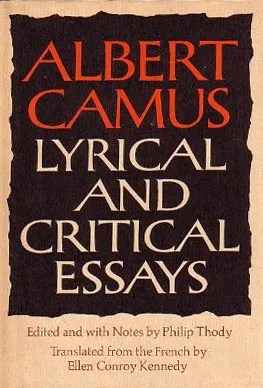
i found myself turning, this week, in three different instances to albert camus. not the first on my list when it comes to literary prozac, but thrice he and his wisdoms came through for me. his words, drawn from a collection of posthumously published essays, speak across the decades, and if a writer born into one world war, who lived through another, could find it in his soul searching to seek and find a trail of hope, well then he’s one to whom i’ll listen.
in the year i was born, camus (1913-1960) became the second-youngest laureate of the nobel prize for literature, awarded for writing that “with clear-sighted earnestness illuminates the problems of the human conscience.” the problems he mined were these: art as resistance, happiness as our moral obligation, and the measure of strength through difficult times.
one of my modern-day muses, as you might have gathered if you read here very often, is the cultural critic maria popova who rarely fails to pluck gems worth tucking in forever chests. in a trail that led me to her this week, i found that some years ago she too took a turn into the deep well of camus. she wrote:
“During WWII, Camus stood passionately on the side of justice; during the Cold War, he sliced through the Iron Curtain with all the humanistic force of simple kindness. But as he watched the world burn its own future in the fiery pit of politics, he understood that time, which has no right side and no wrong side, is only ever won or lost on the smallest and most personal scale: absolute presence with one’s own life, rooted in the belief that ‘real generosity toward the future lies in giving all to the present.’”
she goes on to point out that in camus’ writing she hears the echo of the young dostoyevsky’s exultant reckoning with the meaning of life shortly after his death sentence was repealed (“to be a human being among people and to remain one forever, no matter in what circumstances, not to grow despondent and not to lose heart,” dostoyevsky wrote to his brother, “that’s what life is all about, that’s its task”). these giants of literature belong on our nearest shelves for, in so many ways, they’ve left us instructions––or is it imperatives?––for living.
and here we hear camus:
“What counts is to be human and simple. No, what counts is to be true, and then everything fits in, humanity and simplicity. When am I truer than when I am the world?… What I wish for now is no longer happiness but simply awareness… I hold onto the world with every gesture, to men with all my gratitude and pity. I do not want to choose between the right and wrong sides of the world, and I do not like a choice… The great courage is still to gaze as squarely at the light as at death. Besides, how can I define the link that leads from this all-consuming love of life to this secret despair?… In spite of much searching, this is all I know.”

not realizing i was tracing camus through the week, the first time he caught my eye this week was in the single short first sentence below, which hit me as a fist to the belly as i count my days under the penumbra of those first three words:
“Life is short, and it is sinful to waste one’s time. They say I’m active. But being active is still wasting one’s time, if in doing one loses oneself. Today is a resting time, and my heart goes off in search of itself. If an anguish still clutches me, it’s when I feel this impalpable moment slip through my fingers like quicksilver… At the moment, my whole kingdom is of this world. This sun and these shadows, this warmth and this cold rising from the depths of the air: why wonder if something is dying or if men suffer, since everything is written on this window where the sun sheds its plenty as a greeting to my pity?”
and finally, at 27, camus wrote this, speaking for this moment as well as the dark, dark times of 1940 when he wrote them:
“Our task as [humans] is to find the few principles that will calm the infinite anguish of free souls. We must mend what has been torn apart, make justice imaginable again in a world so obviously unjust, give happiness a meaning once more to peoples poisoned by the misery of the century. Naturally, it is a superhuman task. But superhuman is the term for tasks [we] take a long time to accomplish, that’s all.”
as if all that was not enough to carry me across the tide of this july’s miasma, it was with joyful inkling of recognition that my reading unearthed this most unforgettable line of camus: “In the depths of winter, I finally learned that within me there lay an invincible summer.”
do yourself a favor and check out camus’ lyrical and critical essays. and consider leaving the front door unlocked lest any night visitor might wander in with reservation for blueberry pancake breakfast.
and may we all find that invincible summer.
what carried you across the abyss this week?
my night visitor, of course, is the boy we rarely see these days as he is ever toiling in the kitchen of stephanie izard’s famed girl and the goat eatery. but the holiday upon us drew him out of the city to an old friend’s house, where the hour was late enough that trains must have ceased their chugging along the track, and thus we scored him for the night. good thing the sheets are always clean, and the griddle ever at the ready.
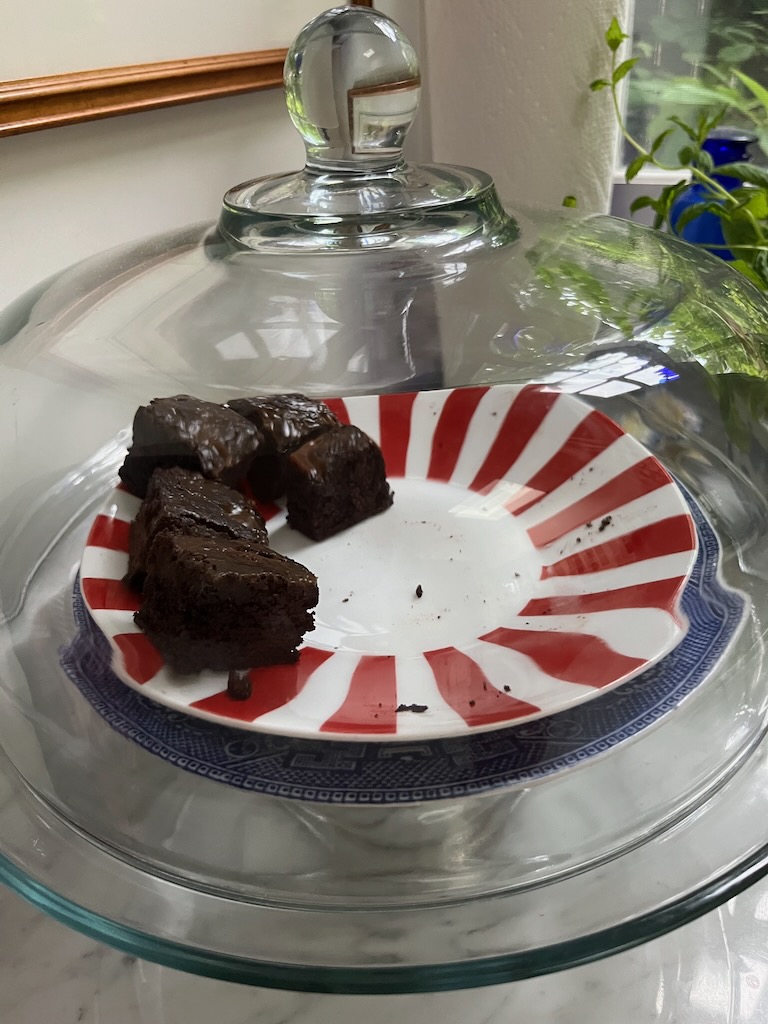
the cookie dome above, scattered with bits of brownie crumb, is one of the few clues left behind by the night visitor. i always delight in remnant evidence when i awake in the morning and find the kitchen not exactly as i’d left it. those crumbs bring volumes of joy to me…
 pull up a chair
OMG. Needed this. Thank you. 😘
we hold on to whatever steady fenceposts we find. with you in the wobbles….
a powerful essay, and reassuring that the written word, coupled with an author’s clarity and compassion, can help us navigate a way forward.
I had a round about with a brother, differing views on these times. Popova’s eloquent phrasing “…burn its own future in the fiery pit of politics” was indeed apt.
Camus as balm is surprising – I had not thought of the existentialist as such – but I appreciate the counsel, the recommendation. Balm is needed on these hot summer days.
indeed, it surprised me that camus was coming to my emotional rescue. and, yes, the line about the fiery pit of politics leapt out at me too. as a classicist yourself, i am certain you can trace that fiery pit back millennia. i do find solace these days in reading history, and holding onto the ashes of proof that we do somehow survive. and then i pray that the survival holds. . .
I find myself hanging on to something I learned much earlier in my life with its requisite ups and downs – “Don’t freak out until you have a reason to freak out – and most of the time, there is no reason.” I’m hoping that still proves true. And how wonderful to wake up to having a surprise “customer” for leftover holiday brownies and comforting blueberry 🫐 pancakes!
i’ve heard versions of that myself, and try — TRY — to practice it, but to little avail. but at least i know to try to remind myself of it….