pull up a chair

where wisdom gathers, poetry unfolds and divine light is sparked…

Month: July, 2024

summer is for cooking. no, really.

when the day presents itself as sooty afghan, gray and soft and without shadow. when the air is cool, so cool that cranking the oven is not an act of self-destruction. when the bins at farmers’ market are nearly tumbling to the parking lot below, so weighted by their zaftig field-plucked wares. well, on summer days like that the itch to cook begins.

and so it was the other morning i woke up with eggplant visions. eggplant layered lushly with cheesy-herby oozy pillows in between. all bathed in marinara. baked. dubbed summer’s abbondonza eggplant lasagna.

i promised easy reading here in summer time. and thus, below, i keep my promise, with nothing more strenuous to read than a grocery list of things to gather, and step-by-step notes so you can play along.

abbondonza eggplant lasagna, with more than a few idiosyncratic twists

(as always, i read a few recipes, extract a few cues and follow my whims from there. this began from something that zipped by me on instagram, and led me to a website called mediterranean something or other, and wound up so delicious i gobbled two oozy squares the size of my dinner plate. my annotations below in italics, which is basically me talking back to the recipe. . .)

Ingredients

2 to 3 eggplants (about 1 ½ pounds), sliced lengthwise into ½-inch thick slices (about 10 to 12 slices)
1 zucchini, sliced into coins (or honestly any shape you choose)
1 pint cherry tomatoes
Extra virgin olive oil
Kosher salt
1 large egg
1 15-oz tub part-skim ricotta cheese
1 ½ cup part-skim mozzarella cheese, divided
½ cup grated Parmesan cheese, divided
3 garlic cloves minced (i squeezed mine through garlic press)
1 teaspoon dried oregano
10 oz frozen spinach, thawed and fully dried (wring out all the water)
1 cup packed chopped fresh parsley
½ cup packed chopped fresh basil, ⅔ ounce
Black pepper to your liking
2 generous cups marinara sauce of choice (i used trader giotto’s organic tomato basil marinara)

Instructions

  • Season the eggplant slices on both sides with kosher salt and set aside for 20 to 30 minutes (if you don’t have the time, this step can be optional). i skipped this part, because i didn’t have time and because i recently read that these days eggplant has been cured of its bitterness.
  • Meanwhile, preheat the oven to 400 degrees F and position a rack in the middle.
  • Wipe the eggplant slices very well with a paper towel (you want to dry it well and remove any excess salt), then arrange on parchment-lined baking sheet (or two if needed). Brush both sides of the eggplant with extra virgin olive oil. Roast in the heated oven until the eggplant softens and becomes pliable (about 15 to 20 minutes or so on the first side, at least another 10 minutes for the B side, which might be because i have a cranky old oven). to this step i added sliced zucchini, and a tub of cherry tomatoes, similarly brushed with oil, and roasted on their own sheet pan.
  • While the eggplant, zucchini, and tomatoes are roasting, prepare the ricotta filling. In a mixing bowl, beat the egg. Add the ricotta, 1 cup mozzarella, ¼ Parmesan, garlic, oregano, spinach and chopped herbs. Add a small pinch of kosher salt and black pepper to your liking. Mix well to combine. i wandered out to my so-called farm (a raised bed alongside the back alley) and snipped a cup’s worth of basil and another of flat-leaf parsley; the freshness filled the air surrounding my cutting board.
  • Remove the eggplant, zucchini, and cherry tomatoes from the oven. Lower the heat to 375 degrees F.
  • Prepare a 9 x 13-inch baking dish. Pour a bit of the pasta sauce (i used 1 cup of trader joe’s marinara) and spread it out into one layer. Lay a few eggplant slices (anywhere from 4 to 6 and it’s fine if they overlap a bit). Next, add half the zucchini slices and half the roasted cherry tomatoes. Spread 1/2 of the ricotta filling, then spread a thin layer of the sauce. Repeat the process in the same pattern. Spread the final layer of sauce and follow with the remaining ½ cup mozzarella cheese and ¼ cup of Parmesan.
  • Cover the dish tightly with foil. Bake in the heated oven for 15 to 20 minutes, then carefully uncover and return to the oven. Bake for another 10 to 20 minutes or until the cheese has melted and the edges of the lasagna turn a nice golden brown.
  • Let the lasagna rest for 10 minutes before cutting and serving.
  • Slice and savor. And then daydream about it till you get around to making it again.

not all who wander to the chair believe in the stove as kitchen essential, and thus for those good souls and anyone else who never minds a blessing, here’s a treasure sent to me weeks back by dear beloved chair friend nan. it’s a blessing from kate bowler, who is herself something of a wonder. a four-times NYT best-selling author, a professor of american religious history at duke divinity school, the scholar who wrote the book on the prosperity gospel, a wife and mother and 35-year-old when she was diagnosed with stage IV colon cancer, deemed incurable, and now (nine years later) is cancer-free, she’s taken as her mission “giving you permission to be human.” fully human: warts, dents, soft spots, wonders, glories, whole truths and nothing but the truths.

i’ve been in a room where kate was speaking and she is hilarious. and self-deprecating. and doesn’t present herself as the eighth wonder of the world (which isn’t always the case at writing festivals that showcase those who’ve gained fame by building sentences that grow into paragraphs that fly off the shelves and rack up fine profits). so, with no further ado, and deep thanks to our beloved nan, here is a blessing from kate that, to my mind, gets to the heart of so much that matters:

the blessing above is from kate’s book of blessings, co-written with the lovely jessica richie, and titled “The Lives We Actually Have: 100 Blessings for Imperfect Days.”

may all of us work to be the ones who notice the light in their eyes, or when that light dims, and to always not be afraid of scooting up close, close as need be, to their suffering.

and that’s the news from the summer kitchen this week. xox

where did you find blessing this week, at the cookstove or otherwise?

summer idyll: another name for “idle”

summertime is for slow. and slow i am this summer. i watch bunnies make breakfast buffet of my flowerpots. i keep vigil for a redbud tree that might be on its death march. i cut corn off the cob and dump it into confetti-like salads, delicious salads of tomato, armenian cucumber, and fists full of basil. i swim, slowly and gasping for air at the end of the lanes, in a pool where i am the youngest by a few decades.

and of course i read, an exercise that requires little other than the moving of one’s pupils, the occasional blink, and the turning of pages should one resort to that quaint document, the page.

and so it was in reading this week that those pupils of mine––and the braincells behind them––paused for deep consideration when i came across a commencement address by the late great russian poet and essayist joseph brodsky.

joseph brodsky

in the summer of 1989, two years after he won the nobel prize in literature and two decades after he fled the soviet dictatorship with the help of w.h. auden, brodsky stepped to the podium at dartmouth college to give the commencement address, later published in a posthumous collection titled, “on grief and reason: essays” (farrar, straus and giroux, 1997).

the topic he chose, curiously, was boredom. but brodsky being brodsky, he soared with it. and because i found it altogether mesmerizing, and because his closing passage stuck with me in what amounts to the cerebral iteration of gum to the bottom of your sneakers, i’m bringing it here to the old make-believe maple table.

what’s true, in these months of living fully awake to the ephemerality of time, is that i soak in especially the wisdoms of those who understand that fleetingness to be central to the sanctifying of time’s each and every parcel. to understand that time is not endless, but rather bracketed and with certain end, is for me anyway the gravitational force that drives my attention out of malaise and into full-on savor.

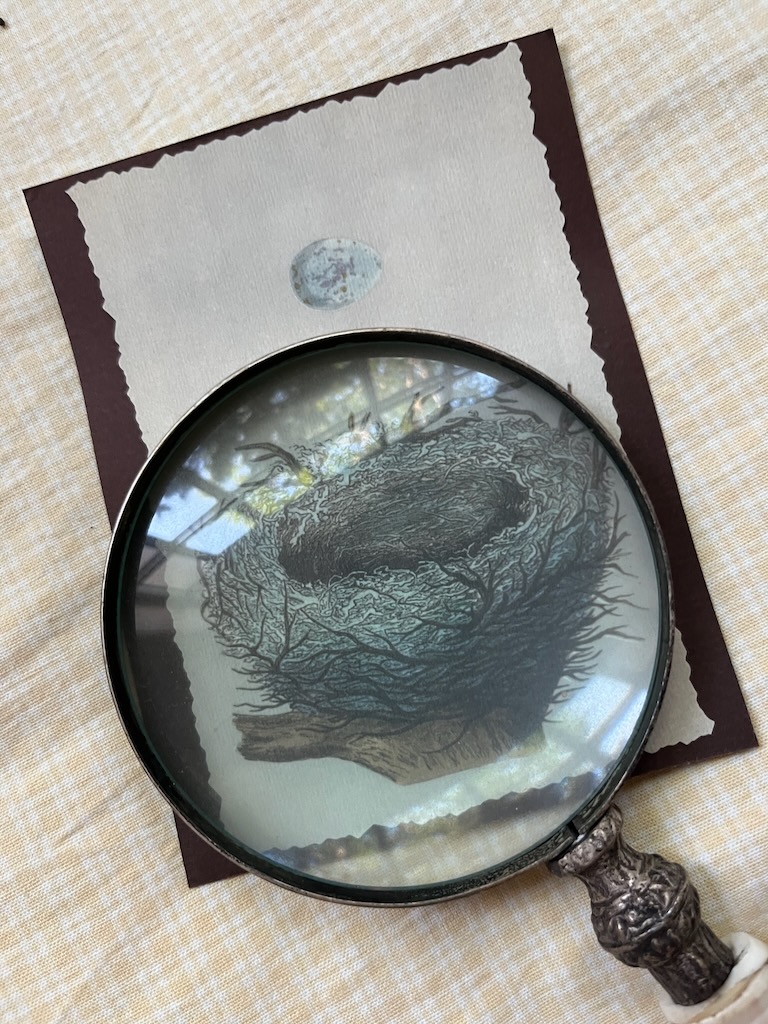
i hold each grain of time, as often as i pause and catch myself, up to the incandescent luminescence that reveals and magnifies its wonder. in other words, i aim to live with one of these in my back pocket, gliding time beneath my ever-ready looking glass:

here then is where brodsky begins his deep-dive into boredom, as he looked out upon a sea of soon-to-be-graduates at that ivy-covered college in new hampshire’s piney countryside (i’d endorse reading clear through these next few grafs, but if you’re pressed for time, leap down to the bottom of read to see if you, too, are struck by brodsky’s likening our time here to a ride on a runaway train, and his admonition to seize each blessed frame as it’s passing by):

Known under several aliases – anguish, ennui, tedium, doldrums, humdrum, the blahs, apathy, listlessness, stolidity, lethargy, languor, acedia, etc. – boredom is a complex phenomenon and by large a product of repetition. It would seem, then, that the best remedy against it would be constant inventiveness and originality. That is what you, young and newfangled, would hope for. Alas, life won’t supply you with that option, for life’s main medium is precisely repetition.

[…]

In a manner of speaking, boredom is your window on time, on those properties of it one tends to ignore to the likely peril of one’s mental equilibrium. In short, it is your window on time’s infinity, which is to say, on your insignificance in it. That’s what accounts, perhaps, for one’s dread of lonely, torpid evenings, for the fascination with which one watches sometimes a fleck of dust swirls in a sunbeam, and somewhere a clock tick-tocks, the day is hot, and your willpower is at zero.

Once this window opens, don’t try to shut it; on the contrary, throw it wide open. For boredom speakes the language of time, and it is to teach you the most valuable lesson in your life – the one you didn’t get here, on these green lawns – the lesson of your utter insignificance. It is valuable to you, as well as to those you are to rub shoulders with. “You are finite,” time tells you in a voice of boredom, “and whatever you do is, from my point of view, futile.” As music to your ears, this, of course, may not count; yet the sense of futility, of limited significance even of your best, most ardent actions is better than the illusion of their consequences and the attendant self-aggrandizement.

For boredom is an invasion of time into your set of values. It puts your existence into its perspective, the net result of which is precision and humility. The former, it must be noted, breeds the latter. The more you learn about your own size, the more humble and the more compassionate you become to your likes, to that dust swirls in a sunbeam or already immobile atop your table. Ah, how much life went into those fleck! Not from your point of view but from theirs. You are to them what time is to you; that’s why they look so small. And do you know what the dust says when it’s being wiped off the table?

“Remember me,”
whispers the dust.

Nothing could be farther away from the mental agenda of any of you, young and newfangled, than the sentiment expressed in this two-liner of the German poet Peter Huchel, now dead.

brodsky closes his address with the words that first caught my eye this week, and that i––once again––will aim to not forget:

[…]

What lies ahead is a remarkable but wearisome journey [on a] runaway train. No one can tell you what lies ahead, least of all those who remain behind. One thing, however, they can assure you of is that it’s not a round trip. Try, therefore, to derive some comfort form the notion that no matter how unpalatable this or that station may turn out to be, the train doesn’t stop there for good. Therefore, you are never stuck — not even when you feel you are; for this place today becomes your past… receding for you, for that train is in constant motion. It will be receding for you even when you feel that you are stuck. So… look at it with all the tenderness you can muster, for you are looking at your past.

i reached for that confetti salad glamour shot above because it was a bit more visual than trying to find an image of boredom. it was perhaps the most delicious thing i made this week (the grilled salmon that arrived with the salad was mighty good, but i did nothing other than introduce it to the heat of the grill), and if you’re now hungry, here’s the recipe, courtesy of david lebovitz, a former pastry chef from chez panisse now a cookbook writer living in paris. lucky david.

fresh corn, tomato, cucumber, avocado, basil summer salad

2-3 ears of fresh corn
2 cups (350g) cherry tomatoes , (or 2 cups fresh tomatoes, diced)
1 ripe avocado
1/2 cucumber, peeled and seeded
1 cup (75g) loosely packed chopped fresh basil, (reserve any small leaves for garnish) Freshly ground black pepper
Vinaigrette
2 tablespoons red wine vinegar
4 teaspoons Dijon mustard
1-2 small shallots, peeled and minced (1-2 tablespoons)
1 teaspoon sea or kosher salt
6 tablespoons (90ml) extra-virgin olive oil

  1. Shuck the corn and remove it from the cob.
  2. Remove any stems and slice the cherry tomatoes in half.
  3. Peel the avocado, remove the pit, and dice the flesh. Cut the cucumber into similar sized cubes.
  4. Put the corn kernels, tomatoes, avocado, cucumber, and basil into a serving bowl and season with freshly ground black pepper.
  5. In a small bowl, whisk together the vinegar, mustard, shallots, salt, and olive oil. Pour the vinaigrette dressing over the salad and gently mix together. Taste, and add more salt and pepper if necessary.

Serving and storage: The dressed salad can be served right away or in a few hours. (It can be stored in the refrigerator or at room temperature, but should be served room temperature.) It’s best the same day it’s made.

your thoughts on the runaway train (above) welcome here, with the related question, what are the ways you remind yourself to live each day mindful of the preciousness and miracle that it holds?

summer reading: the writer who gave us spider webs and a little mouse, plus other wisdoms

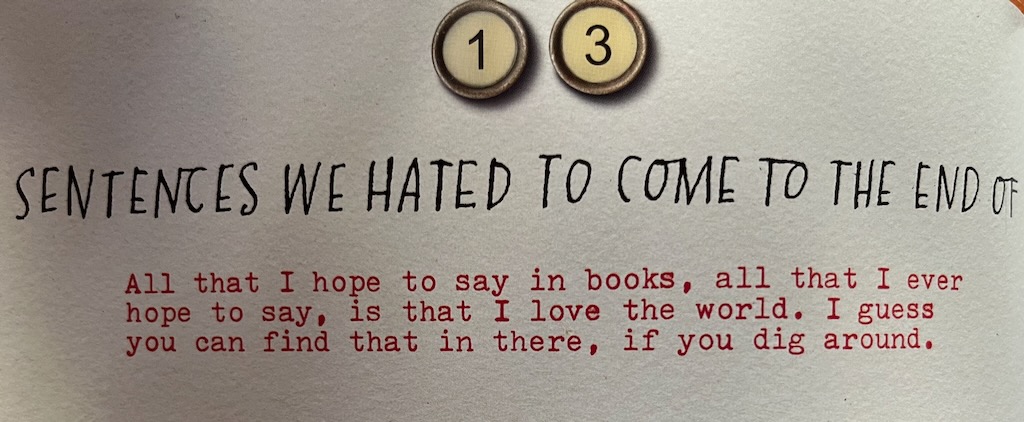
elwyn brooks white, best known to those who loved him as “andy,” and best known to you and me alphabetically as “e.b.,” taught me as much about love as just about any author i’ve ever read. and that includes the sacred texts of just about any religion i’ve happened upon.

every time i’ve pored over the words of charlotte’s web, or stuart little, or “death of a pig,” among the most masterful essays put to paper, i’ve felt the walls of my heart widen, and the bottom go deeper. perched against pillows in the old four-poster bed where both our boys inhabited the dreamland of their youths, i recall the sobs coming in echoes––from the one who was reading and the one being read to––as i choked my way through the tear-blurred words at the top of a still-splotted page 171: “she knew he was saying good-bye in the only way he could. and she knew her children were safe.” (i can’t even type that last sentence now without the tears coming again, filling my sockets.) “. . . she never moved again.” and then “. . .no one was with her when she died.”

we are reading, of course, of a spider. a spider we have all come to love, named charlotte.

and any writer who could make me love with all my heart an arachnid is a writer about whom i can never ever know enough. so it was with purest, geyser-like joy that i turned the pages this week of the first-ever fully illustrated biography of the legendary elwyn brooks white.

part collage, part scrap book, with excerpts of e.b.’s letters, and sketches, and reprints of early drafts and revisions in his own handwritten manuscript, Some Writer! The Story of E.B. White, by the caldecott honor winner melissa sweet, is at heart a love story told of one of the great disciples of love in its quietest, most undeniable forms.

e.b.’s life’s work, as he saw it, and as he wrote in a letter to a reader of charlotte’s web, boils down, pretty much, to this:

love these days seems to be a commodity of which the world is running short. but andy, or e.b., set out to make us see it, and feel it deep in our bones, by telling us the stories, as he put it, “of the small things of the day, the trivial matters of the heart.” he calls those matters “the only kind of creative work which i could accomplish with any sincerity or grace.”

e.b. white

well, dear andy, my gratitude to you is etched on the chambers of my heart, a graffiti of the highest order. to teach a child that love comes in the corner of a barn or even atop the manure pile where wilbur the pig so merrily huddled, well, that’s a blessing pure and certain. and imperative, i’d argue. and too often missed, i’d add.

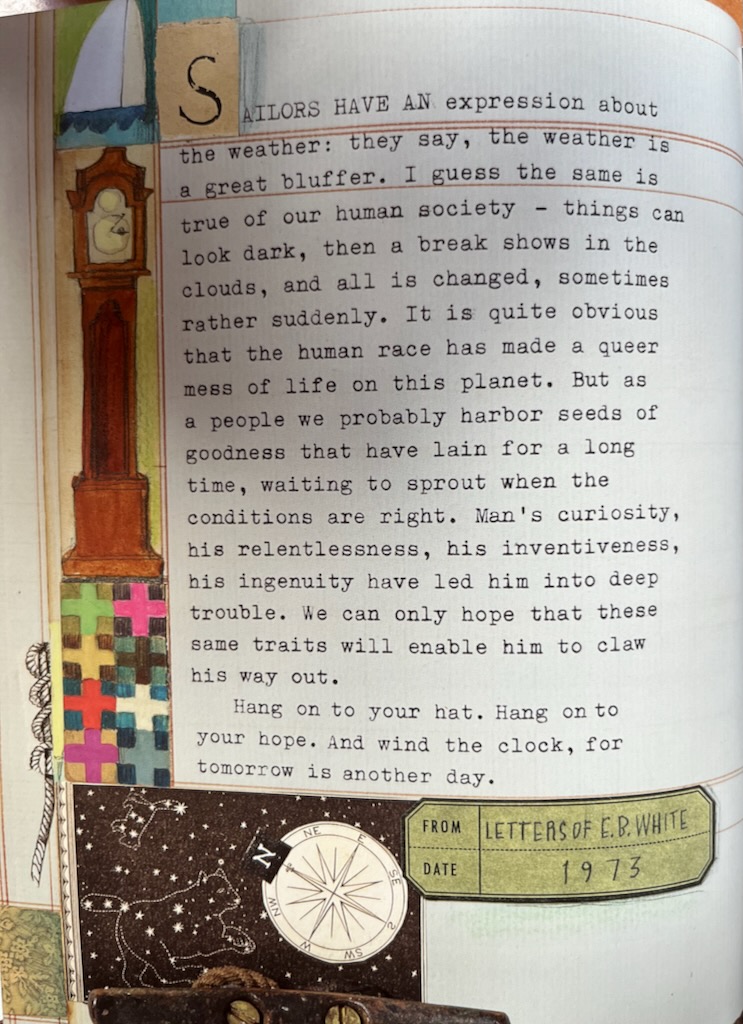
because he’s earned his post as ballast for my wobbly, sometimes-too-tender heart, wasn’t i delighted when i turned to page 132 in this charmed and charming illustrated biography, and found this excerpt from andy’s letters, which seemed to me a prescriptive for these hard times and the dark clouds under which we find ourselves:

“things can look dark, then a break shows in the clouds, and all is changed, sometimes rather suddenly. it is quite obvious that the human race has made a queer mess of life on this planet. but as a people we probably harbor seeds of goodness that have lain for a long time, waiting to sprout when the conditions are right.

i’ll stop there with my old friend e.b., because that’s the line i want to consider, the line i want us to latch onto and live.

and so, what a curious thing that the next wise soul i wandered into this week was one olga jacoby, a german-jewish englishwoman and mother of four adopted children, who, in 1909 at age 35, had received a terminal diagnosis from her doctor, and sat down to write him a letter on the subject of living and dying without religion, but with moral courage, kindness, and a stunning receptivity to beauty. their correspondence would unfold until jacoby’s death four years later, and her letters, “by turns funny, touching, and intensely sad,” were published posthumously and anonymously by her husband in 1919.

in her first letter, to “my dear doctor,” she boiled down her belief to this:

“To leave a good example to those I love [is] my only understanding of immortality.”

and a year into her diagnosis she illuminated that notion:

“. . . More and more to me this simplest of thoughts seems right: Live, live keenly, live fully; make ample use of every power that has been given us to use, to use for the good end. Blind yourself to nothing; look straight at sadness, loss, evil; but at the same time look with such intense delight at all that is good and noble that quite naturally the heart’s longing will be to help the glory to triumph, and that to have been a strong fighter in that cause will appear the only end worth achieving. The length of life does not depend on us.”

and, she leaves us with this bedrock of lived truth:

“. . . Love, like strength and courage, is a strange thing; the more we give the more we find we have to give. Once given out love is set rolling for ever to amass more, resembling an avalanche by the irresistible force with which it sweeps aside all obstacles, but utterly unlike in its effect, for it brings happiness wherever it passes and lands destruction nowhere.”

who teaches you on the subject of love? what seeds of goodness harbor in you, and how will you coax them to sprout? and how might you put into practice the avalanche of irresistible force practiced by spiders and pigs alike (at least in the rich imagination of one e.b. white) and that, to the dying mother of four, was the most lasting thing that ever there was?

Some Writer! came to me, as so many of the best so-called children’s books do, by way of my best longest friend, auntie mullane, the children’s librarian, who prescribed it as the sure cure for summer blues, or any blues that might befall us in this dark-clouded era.

e.b. white on a rope swing, 1976

of joy and hope in hard times

evidence of joy lurking somewhere in the house

joy comes in curious form. in simplest form sometimes. it arrived deep in the night last night in the form of tiptoes up the stairs. and then a creak of bedroom door. had i not been lost in the murky land of dreams i might have been startled, might have worried that burglars were afoot. instead, i somehow thought it was the mate asleep beside me, that he’d roused and went out lurking. but then i felt the lump beneath the sheets. and as the murk faded i realized the night visitor must be the very one who’d called that room his own for so many years.

a night visitor, sometimes, brings joy.

and so it is that the simple knowing that, come the waking hour (his waking hour clocks in hours beyond mine), i’ll be at the stove tossing berries in a pond of batter, is enough to wash me in a morning’s joy.

it’s as simple as that sometimes. as narrow-focused.

these days, i contemplate strategies for making joy. and survival.

we live in dark times. not so dark as other moments in history, perhaps, but dark enough to make it hard to dodge the shadow. or the pit in my belly that will not subside.

i found myself turning, this week, in three different instances to albert camus. not the first on my list when it comes to literary prozac, but thrice he and his wisdoms came through for me. his words, drawn from a collection of posthumously published essays, speak across the decades, and if a writer born into one world war, who lived through another, could find it in his soul searching to seek and find a trail of hope, well then he’s one to whom i’ll listen.

in the year i was born, camus (1913-1960) became the second-youngest laureate of the nobel prize for literature, awarded for writing that “with clear-sighted earnestness illuminates the problems of the human conscience.” the problems he mined were these: art as resistance, happiness as our moral obligation, and the measure of strength through difficult times.

one of my modern-day muses, as you might have gathered if you read here very often, is the cultural critic maria popova who rarely fails to pluck gems worth tucking in forever chests. in a trail that led me to her this week, i found that some years ago she too took a turn into the deep well of camus. she wrote:

“During WWII, Camus stood passionately on the side of justice; during the Cold War, he sliced through the Iron Curtain with all the humanistic force of simple kindness. But as he watched the world burn its own future in the fiery pit of politics, he understood that time, which has no right side and no wrong side, is only ever won or lost on the smallest and most personal scale: absolute presence with one’s own life, rooted in the belief that ‘real generosity toward the future lies in giving all to the present.’”

she goes on to point out that in camus’ writing she hears the echo of the young dostoyevsky’s exultant reckoning with the meaning of life shortly after his death sentence was repealed (“to be a human being among people and to remain one forever, no matter in what circumstances, not to grow despondent and not to lose heart,” dostoyevsky wrote to his brother, “that’s what life is all about, that’s its task”). these giants of literature belong on our nearest shelves for, in so many ways, they’ve left us instructions––or is it imperatives?––for living.

and here we hear camus:

“What counts is to be human and simple. No, what counts is to be true, and then everything fits in, humanity and simplicity. When am I truer than when I am the world?… What I wish for now is no longer happiness but simply awareness… I hold onto the world with every gesture, to men with all my gratitude and pity. I do not want to choose between the right and wrong sides of the world, and I do not like a choice… The great courage is still to gaze as squarely at the light as at death. Besides, how can I define the link that leads from this all-consuming love of life to this secret despair?… In spite of much searching, this is all I know.”

albert camus

not realizing i was tracing camus through the week, the first time he caught my eye this week was in the single short first sentence below, which hit me as a fist to the belly as i count my days under the penumbra of those first three words:

“Life is short, and it is sinful to waste one’s time. They say I’m active. But being active is still wasting one’s time, if in doing one loses oneself. Today is a resting time, and my heart goes off in search of itself. If an anguish still clutches me, it’s when I feel this impalpable moment slip through my fingers like quicksilver… At the moment, my whole kingdom is of this world. This sun and these shadows, this warmth and this cold rising from the depths of the air: why wonder if something is dying or if men suffer, since everything is written on this window where the sun sheds its plenty as a greeting to my pity?”

and finally, at 27, camus wrote this, speaking for this moment as well as the dark, dark times of 1940 when he wrote them:

“Our task as [humans] is to find the few principles that will calm the infinite anguish of free souls. We must mend what has been torn apart, make justice imaginable again in a world so obviously unjust, give happiness a meaning once more to peoples poisoned by the misery of the century. Naturally, it is a superhuman task. But superhuman is the term for tasks [we] take a long time to accomplish, that’s all.”

as if all that was not enough to carry me across the tide of this july’s miasma, it was with joyful inkling of recognition that my reading unearthed this most unforgettable line of camus:  “In the depths of winter, I finally learned that within me there lay an invincible summer.”

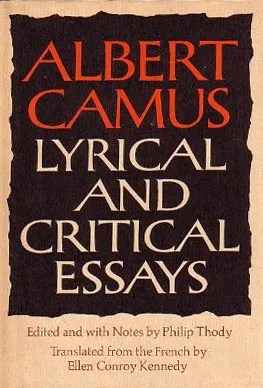
do yourself a favor and check out camus’ lyrical and critical essays. and consider leaving the front door unlocked lest any night visitor might wander in with reservation for blueberry pancake breakfast.

and may we all find that invincible summer.

what carried you across the abyss this week?

my night visitor, of course, is the boy we rarely see these days as he is ever toiling in the kitchen of stephanie izard’s famed girl and the goat eatery. but the holiday upon us drew him out of the city to an old friend’s house, where the hour was late enough that trains must have ceased their chugging along the track, and thus we scored him for the night. good thing the sheets are always clean, and the griddle ever at the ready.

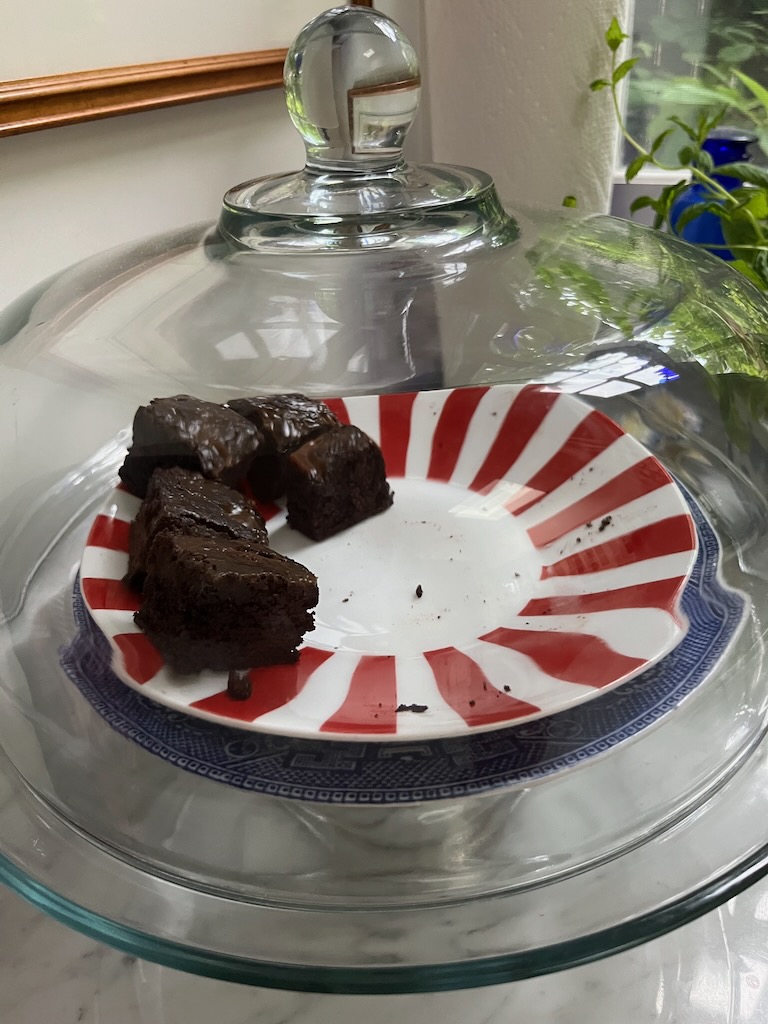
the cookie dome above, scattered with bits of brownie crumb, is one of the few clues left behind by the night visitor. i always delight in remnant evidence when i awake in the morning and find the kitchen not exactly as i’d left it. those crumbs bring volumes of joy to me…