pull up a chair

where wisdom gathers, poetry unfolds and divine light is sparked…

Month: March, 2024

in the silence . . .

in the long tradition of seekers and sages, silence is a constant. a leitmotif maybe. a rhythm that ebbs and flows. it is into the silence that we surrender to enter the depths of our soul, the unencumbered spaces where whispers are heard, where the stirring comes.

in silence, the earthly noise is muffled. we tune our inner ear, the one that’s tied to the soul. the one that allows the sacred to find its way in.

and so, on this day, this good friday, a day long held in silence for me, i will make room for that long quenching that comes when i am alone in the depths, in the stillness.

this is the first holy week in a very long time where the braiding of the two traditions that animate this old house — jewish passover and christian easter — are not entwined. easter i only recently learned falls on the first sunday after the first full moon following the vernal equinox. passover, though, always begins on a full moon, the 15th day of the month of nisan on the hebrew calendar, and because the lunar and solar calendars are marching to their own separate tunes, every once in a while there is a good bit of moon between the two holidays.

so this year, i will be deep in good friday all day, as i was deep in holy thursday last night, the breathtakingly spare hour when, in a nod to jesus’ last supper, a seder in which he knew he would be betrayed by one of his closest twelve, and retreated to the garden of gethsemane to weep and to pray, the whole church was stripped of ornament and color. the altar was washed, the vestments of priest and deacon and choir were removed. every candle was snuffed. we left the church in thick silence.

my own blessed mother held this day, this good friday, in a reverence that seeped early on into the depths of me. silence was kept from noon till the hour of jesus’ death on the cross, which we somehow had determined was three in the afternoon. and so, all these years later, i keep that silence.
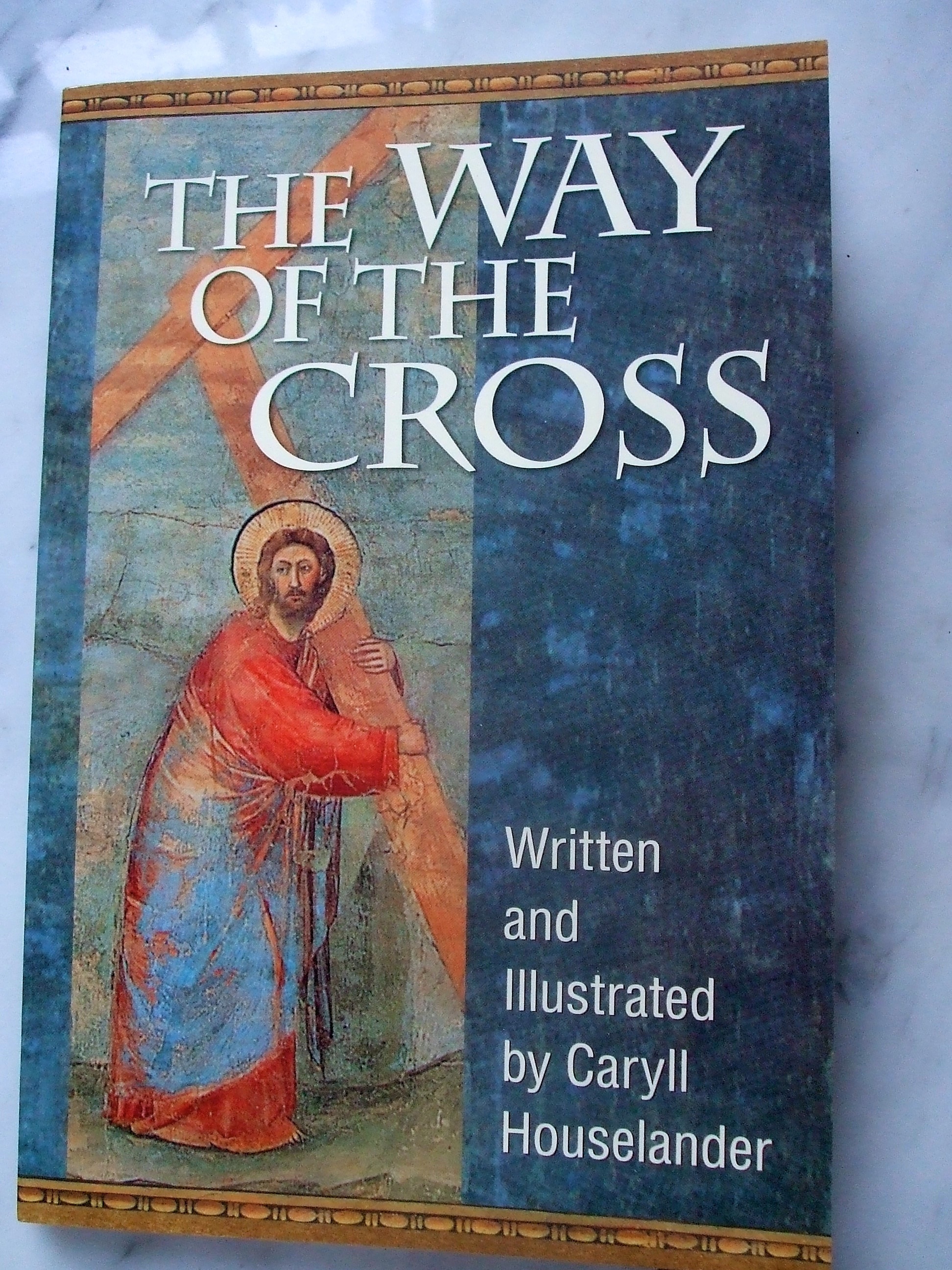
most often i take to my window seat, the perch looking out into the trees. i will pick up my caryll houselander, the 20th-century mystic whose words penetrate me like no other, her meditations on the stations of the cross, the dusty desolate path of jesus’ walk to the hill of golgotha, the hill where he would die.

there is much to pray on and for this year. the brokenness, the darkness, is plenty. and all we’ve got to begin to mend the brokenness, to kindle a flickering light in the darkness, is the small but inextinguishable capacity of whatever antidotes we can muster: the smallest kindness; the rare attention to someone else’s suffering; the unexpected delivery of joy.

we can, in our pointillist way, drop dot upon dot of goodness onto the canvas that is our moment in time on this planet. hope stirs as long as we can stand in the face of darkness, and muscle our few and feeble yet insuppressible defiances: we will not surrender to those forces we know to be counter to the sacred; we will not let all the light be extinguished. we are our own last best hopes for the world we imagine. and i will enter into the silence and the depths of the sorrow today to chart my way toward whatever light i can muster.

so help me God.


because it is increasingly my way to bring you the voices of souls far wiser and deeper than i might ever be, i have gathered up a few who stirred me this week.

first up, henri nouwen, restless seeker, priest and theologian, comes along, as antidote to so much suffering, reminding us–in one of his most indelible passages–to be surprised by joy:

Learn the discipline of being surprised not by suffering but by joy. As we grow old . . . there is suffering ahead of us, immense suffering, a suffering that will continue to tempt us to think that we have chosen the wrong road. . . . But don’t be surprised by pain. Be surprised by joy, be surprised by the little flower that shows its beauty in the midst of a barren desert, and be surprised by the immense healing power that keeps bursting forth like springs of fresh water from the depth of our pain.

henri nouwen

and praying this isn’t too dark, this epiphany from louise erdrich‘s the painted drum:

Life will break you. Nobody can protect you from that, and living alone won’t either, for solitude will also break you with its yearning. You have to love. You have to feel. It is the reason you are here on earth. You are here to risk your heart. You are here to be swallowed up. And when it happens that you are broken, or betrayed, or left, or hurt, or death brushes near, let yourself sit by an apple tree and listen to the apples falling all around you in heaps, wasting their sweetness. Tell yourself that you tasted as many as you could.

louise erdrich

and, bon mot for all who love poetry and find it endlessly a wonder, this from david hinton, chinese literature scholar:

Poetry is the cosmos awakened to itself. Narrative, reportage, explanation, idea: language is the medium of self-identity, and we normally live within that clutch of identity, identity that seems to look out at and think about the Cosmos as if from some outside space. But poetry pares language down to a bare minimum, thereby opening it to silence. And it is there in the margins of silence that poetry finds its deepest possibilities — for there it can render dimensions of consciousness that are much more expansive than that identity-center, primal dimensions of consciousness as the Cosmos awakened to itself. At least this is true for classical Chinese poetry, shaped as it is by Taoist and Ch’an (Zen) Buddhist thought into a form of spiritual practice. In its deepest possibilities, its inner wilds, poetry is the Cosmos awakened to itself — and the history of that awakening begins where the Cosmos begins.

where were you surprised by joy this week? and — only to ask yourself — what might you bring to this world today to turn back the darkness, to begin to mend the brokenness?

this is the little hyacinth that surprised me this week. a bulb tossed aside at the end of last spring, she decided to bloom amid an otherwise forgotten patch along the alley

when springtime lives up to its billing: equal parts shadow and light

according to celestial alignments, the shadow now is equal, light and dark. the sun has crossed the equator, and here on the northern half of the orb, spring is upon us. except that as i type, snow is blanketing my tender spring tendrils, and the walk is slick, and, well, tis the very picture of springtime here in the heartlands, where you’re wise not to count your blooms before the ides of may.

my heart too is heavy, beating in time with that of a mother i know who is off in the mountains of northern california searching for her blessed daughter who went hiking from the tassajara zen mountain center on monday, and five days and cold dark nights later still has not been found. i ask for prayers for caroline.

motherhearts are a communal collective. we cannot pause the pounding against our own chest wall, we cannot sleep soundly, when we know profoundly of another mother in unimaginable distress. be it the mothers of syria, or gaza, or israel’s kibbutzim, or my long-ago newsroom compatriot now strapped into her hiking boots, hearing only the echo of her own cry as she walks the remote yet exquisite topography where, somewhere, her firstborn is lost, is lying, is awaiting her mama’s arms and a wrapping in blankets.

my prayers have been looping nonstop, clouding out most other thoughts, since i first heard word. caroline’s mama is a woman of incredible, unbreakable faith. the notes she is sending back home, here in chicago, bolster my faltering. “my gratitude and hope outweigh my fears,” she wrote in her last short update, teaching me a thing or two about how to be strong in the face of the unbearable.


because the promise of springtime is, indeed, equal parts shadow and light, i turn to the poets for a dappling of light. and we begin with emily, the belle of amherst, and quickly turn to the little-known artist who inspired her:

“to be a flower,” emily dickinson wrote in her 1865 poem, “bloom,” considered a pre-ecological work, “is profound responsibility.”

clarissa munger badger

a passionate lifelong gardener, emily D (“a keen observer of the house of life who made of it a temple of beauty,” as cultural critic maria popova once put it) had fallen under the spell of wildflowers as a teenager while composing her herbarium of 424 blooms native to new england. but, writes popova, it was an “uncommonly beautiful” book her father gave her just before she turned thirty that rocket-blasted her poetic passion for nature’s own garden: wild flowers drawn and colored from nature by the botanical artist and poet clarissa munger badger (may 20, 1806–december 14, 1889).

published in 1859, the same year charles darwin’s on the origin of species shook science, badger’s book “contained twenty-two exquisite scientifically accurate paintings of common new england wildflower species — violets and harebells, the rhododendron and the honeysuckle — each paired with a poem bridging the botanical and the existential: some by titans like percival and longfellow, some by long-forgotten poets of her time and place, some by badger herself,” writes popova.

seven years later, badger brought her brush to the beauty of wildflowers’ domestic counterparts, the blooms of greenhouse and garden: the pansy and the lily, the day-blazing geranium and the night-blooming cactus, the tulip and the rose, and once again pairing her paintings with poems, she celebrated garden flowers as “brilliant hopes, all woven in gorgeous tissues,” as “stars… wherein we read our history.”


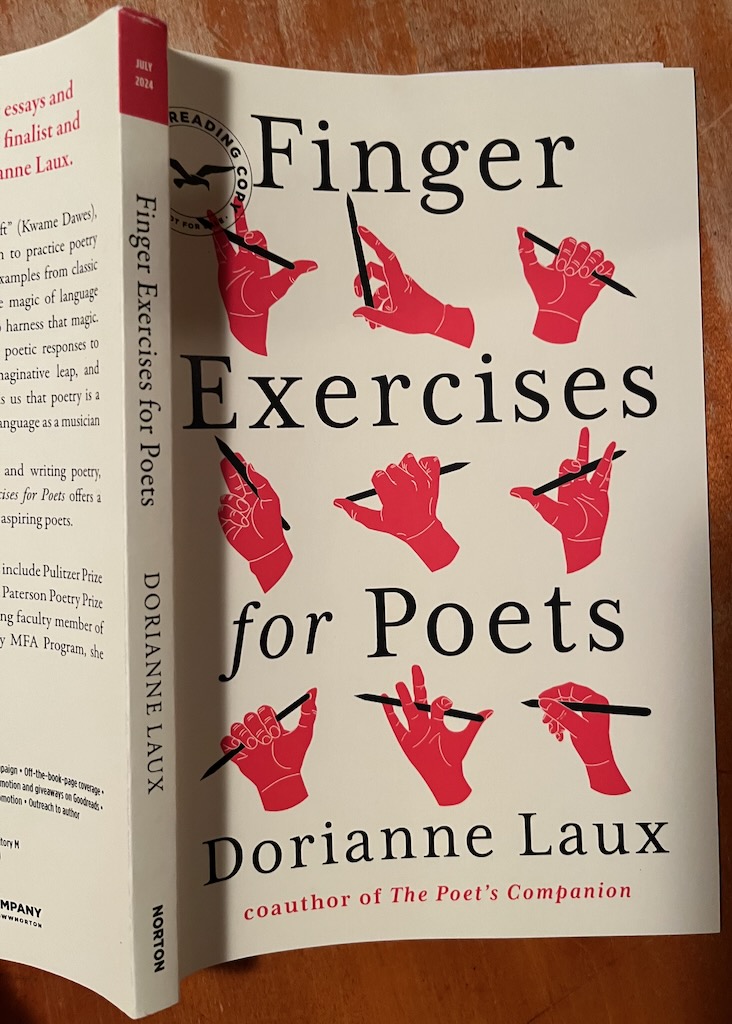
another poet, one i dream of sitting down to dinner with, or more in keeping with her ilk, plopping on a porch swing, she with cigarette burning orange against the black of night, me, merely pumping my merry little legs. dorianne laux is her name, and you’ve seen me write of her here. she has a brand new craft book, companion of sorts to her earlier the poet’s companion, and the new book, finger exercises for poets, is “an engaging invitation to practice poetry alongside a master,” and it’ll be out this july from w.w. norton & company. (they still send me advance reader copies; bless them.)

here’s a passage i knew i needed to share, from glorious, glorious dorianne’s introduction:

“My instrument is the immensity of language, the techniques and effect of crafting images, shaping sound and rhythm, creating new combinations with the single notes of words, each colliding or coming together, meshing or crashing, standing firm or tumbling. There are eighty-eight keys on a piano, six hundred thousand words in the English language. The patterns, the sequences, and permutations of both are endless. For me, language is another kind of music.

“I practice poetry. This book invites you to practice along with me.”


and i close, this snowy spring morning, with yet another master of language, and truth-telling: james baldwin. (this comes to me from a french monk whose writing i follow; laurence freeman is his name, and here’s a bit of what he sent this week from the bonnevaux centre for peace, in the southwest of france): “toward the end of his life, baldwin gave a television interview in which he was asked to reflect on the essential subject of his classic, groundbreaking novel, giovanni’s room. baldwin’s answer is an extraordinary meditation on love, and in particular, how it can serve a kind of educational purpose in our lives.” here’s what baldwin said, laid out as a poem. 

Q: What’s the novel, Giovanni’s Room, about?

Baldwin’s answer:

It’s about what happens to you
if you can’t love anybody.
It doesn’t make any difference
whether you can’t love a woman,
or can’t love a man —
if you can’t love anybody,
you’re dangerous.
Because you’ve no way
of learning humility.
No way of learning
that other people suffer.
No way of learning
how to use your suffering,
and theirs, to get from one place
to another.

In short, you fail the human
responsibility, which is
to love each other.

+ James Baldwin

what are the lessons of love you learned in this week of shadow and light?

my “springtime” garden, whitened.

p.s. illustration at the top is indeed one of clarissa munger badger’s beauties. and i will ask once again, please please offer up prayers for rescue for blessed, blessed caroline, her mama, her papa, and all who are holding their most sacred breath…..

saved by the dust bunnies

dear reader, fear not. at last writing, as i bemoaned the absence of progeny in this old house, and awoke to the relative quietude of life as empty nester, i might have seeded worry. what will she do, that poor blithering mama, you might have wondered. will she clock her time staring out the window, awaiting the return of said progeny galloping in from distant plains, in need of laundry, grilled cheese, or any other assorted task for which a mother is distinctly schooled?

worry not: purpose has arrived.

yes, indeedy. in the form of unknown possibly invisible creatures lurking in the chamber where the recently departed (from this house, that is) now attempts to sleep. these invisible and invincible forces seem intent on making the boy rub his nose and eyes and sneeze. all night long. and well into the daylight.

and so, the call has come. i am (somewhat) needed. or, at least my vacuum is. and i, taking no such task lightly, i’ve equipped myself with a whole battery of dust-bunny-battling weaponry. just last night my friends at amazon delivered the air purifier deemed best in class by the folks at wirecutter, that band of trusty testers at the new york times. and i’ve a gallon jug of vinegar, a mop, and microfiber dust cloths, enough to wipe out legions of pesky mites.

dust buster am i.

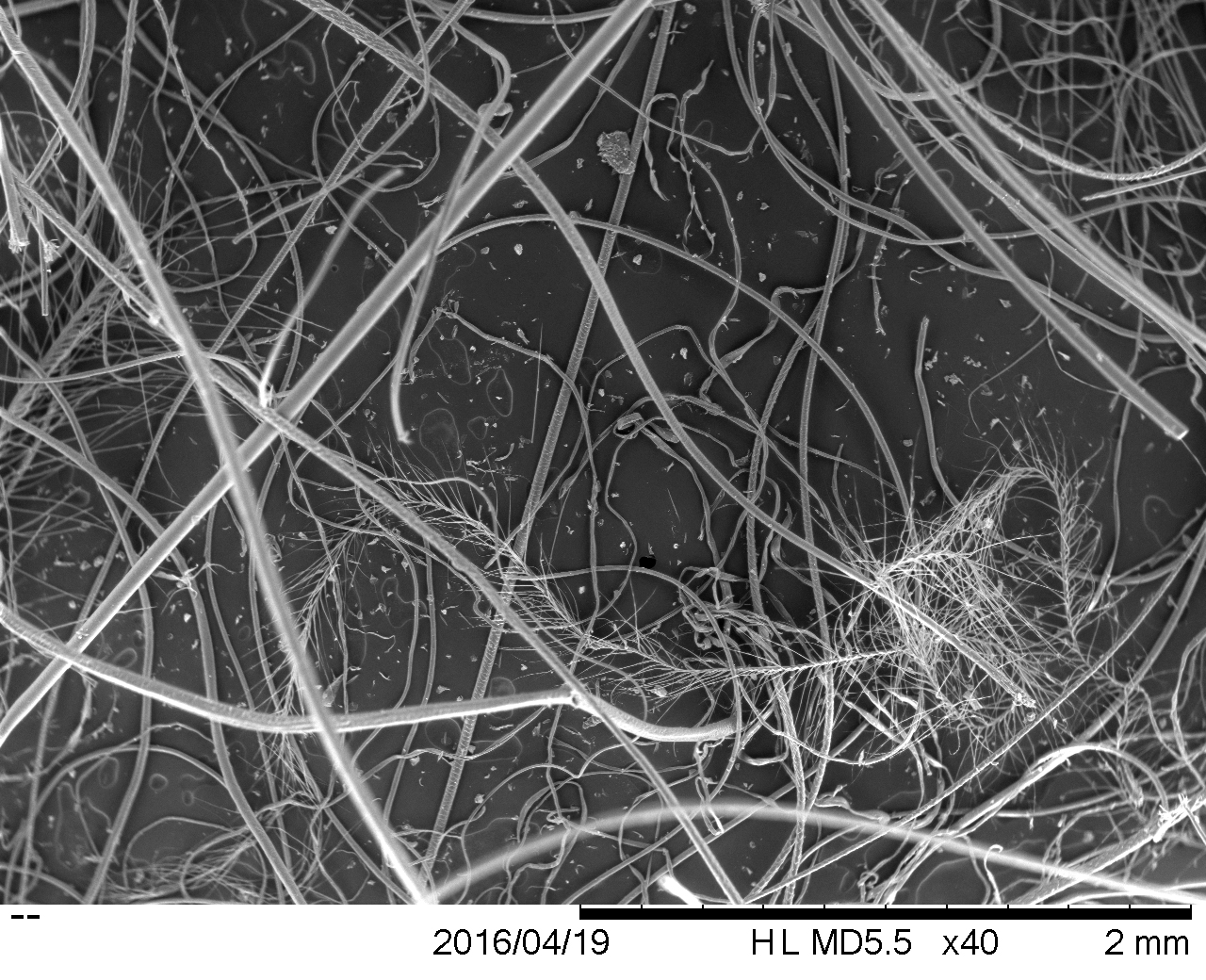
dust bunny under microscope: what we’re up against in the dust bunny challenge

all of which points to the foregone conclusion that ol’ mothers never ever pass their expiration dates. we are not sent off to distant pastures. our aprons and our mops, never really set out to dry. we do not wither on the vine. we are, if not invincible, indelibly anchored in the domestic equation.

why, just this week the kid who mostly dashed in and out of the house whilst he was living here, has seen fit to call me for instructions on: a.) how to work a wet mop; b.) what to take for allergies; c.) what else to take for allergies; and d.) all of the above.

it’s a reassuring thing to know the worry chambers of my mama brain need not turn off. i can still muster up a storm in there, scheming up the options, imagining the worst. and, then, as i’ve done since the first note of first pregnancy, i leap into action. if i can slay one dragon––be it lost mitten in the long ago, or dust mites under the bed today––i sidle one inch nearer to indispensability. or so i pretend.

the truth, as i’ve long known, is that love––in any form––does not subscribe to geographical or chronological bounds. i can love as fiercely and devotedly whether you’re under my roof or far far from here. ours is a world in which distance is a given. we are no longer a people of the shtetl or the lane. i only wish those i love lived nearby enough to rap at the door and sidle in for tea. or late night storytelling.

be it by the powers of imagination or a polished knack for empathy, the human heart is the inexplicable muscle with unbound capacity to stretch from here to eternity. and in so doing, we can fiercely and fine-grainedly love the ones too far away or the ones who are no longer, for their essence burns on and on as long as we are breathing. and, sometimes, in the uncanniest of ways: in reaching for my mother-in-law’s signature-red coffee mug on any morning, i can suddenly hear her singsong way of telling me her faith in me has never dulled. and she’s been gone now for nearly three years.

the resurrective powers of love are without rhyme or reason. and, indeed, they save us.

i’ve thought plenty in recent months about the muscularity of love. how it has propelled me up steep inclines, ones i might not have found the nerve to climb had i not felt some forcefield behind me. i’ve a never-ending fascination with this ineffability we know as love, not as valentine ephemera, but love as true physical force, love as divinely inspired. with the power to heal. the power to quell. and, sometimes, the power to slay a bunny made of dust.

your thoughts on the mystical powers of love welcome here:

coming home to an empty nest

a desk cleaner than it’s been in a long, long while…

the house i walked into the other day, upon return from faraway, was not the house i left. mostly, it looked the same. same pair of stools at the kitchen counter. same loose brick on the backdoor step. but here and there things were missing: coats no longer weighing down the coat hooks; size 12 shoes, all gone; the big ol’ speaker with the disco lights, the one parked beside the birdseed bin ever since last springtime’s college graduation, it had up and vanished. 

and the silence was the loudest i had heard in a long, long while.

whilst i was away, there arrived an absence.

my beloved and i, for the first time in nearly 31 years, now dwell in an empty nest. 

the younger fledgling has flown the coop. and we, the grownups, haven’t much clue what to do with the newborn stillness.

while i was off in the nation’s capital, puttering about Boy No. 1’s apartment, planting myself in the way back of his law school lecture hall, motoring about the countryside in search of sought-after antiques, Boy No. 2 set south for the ‘hood to which he was born. 

he left behind a room that would be described as empty, if not for the torrent of assorted trinkets strewn in his wake. (it’s a collection of castoffs that counts among its contents a box of not-yet-dusty college paraphernalia, a half-burned chicago-scented candle (who knew?!), the oddest assortment of half-empty bottles and squeezed-dry tubes, outgrown clothes, and, yes, a tall stack of various welcome-home placards we’d penned upon his many returns over the years.)

as of one week ago, this old house boasts an official population of two and only two. 

i, though, only stepped into the stillness the day before last––late to the game, as i so often am. my mate, the boy’s papa, has had a six-day jump on the vast emptiness, and he deems it a “sad, sad” state of being. 

we just plain miss the kid, is the gist of it.

and while a piece of me is feeling the pangs, i’m just as keenly approaching this new endeavor as if a room to which i’d never before entered. i’ve always known it was there at the end of the hall but the knob hadn’t yet turned, and so as i now tiptoe about, peeking into its nooks and crannies, i am still getting to know my way.

for starters, the quiet. the pared-down daily rhythms (no more nightly shuttle of the old sedan to park it near the train once the meters dozed off at 9 p.m., and where it awaited the boy’s 1:05 a.m. arrival from downtown, thus sparing him a long-enough walk in the cold and the dark and whatever the weather gods chose to hurl on his route). no more rushing to throw some semblance of breakfast in a rumpled brown bag as he raced off to work and we all held our breath that he’d beat the train to the station. (and, yes, yes, if you’re starting to catch on that we might be among the dotingest parents that ever there were, we plead utterly guilty.) 

did i mention the newfound dearth of laundry? or the fact that the cupboards look to be barer than ever before?

in that way that the mind plays tricks, as it wraps itself around those episodes in life it’s not before encountered (after a birth, a death, a diagnosis), i find it playing a form of peek-a-boo. an almost haunting hide-and-seek. i forget the kid is not asleep behind the bedroom door. wake up and skip a beat or two till i remember not to check that he made it home the night before. remind myself there’s no need to leave the porch light on when i tiptoe off to sleep.

in this day and age, where youngins come and go till their middlings or older, this new empire of emptiness cannot be called an inevitable geography. while the college years gave us a taste of it, this time round it seems a sharper, bolder border, a less permeable line than the empty nest of yore, when the emptiness ebbed and flowed according to academic calendar. 

this time the kid is paying his own utilities, and sending off a monthly check to the landlord. and except for the comfy armchair and the rug he whisked from his upstairs room, he needs us not in his domestic equation. 

and while he whistles the freedom song, his papa and i are fumbling in a fog across the contours of this new state of being. largely, i find myself deeply curious, and admit to something of a relieved sigh that i no longer will wake in the night to be sure i hear him clomping up the stairs. 

time turns and turns in labyrinthine spirals, and with every twist we see ourselves from whole new angles. though i know full well that parenting is a post without pause, and one i intend to hold onto till my very last breath, this empty nestiness allows for––begs for––a whole new deepening. we’re a duet again, his papa and i, and on our own to chart our days. indeed, it’s solitude i’ll oft befriend. 

which makes me think that now must be the hour in a lifetime when our soul begins its quickening, something of a leavening, with more hours to read, more years to remember, heavier questions to ponder. my prayer is that with the quiescence there comes a gathering of deeper grace.

of course, it aches a bit to think we’re past the years where cacophony was a daily occurence. where my hours were filled with comings and goings, and assorted bunches of kids clumped in the basement or were planted in sleeping bags or stuffed in the way back of the old red wagon. where an hour to myself was both rarity and marvel.

but maybe, just maybe, the quiet that’s tiptoed in will point the way toward the wise old lady i’ve always wanted to become. 


and let us indulge in a glistening bit of mary O here this morning. an old favorite, something that indeed kills me with delight….

Mindful
by Mary Oliver

Every day
I see or hear
something
that more or less

kills me
with delight,
that leaves me
like a needle

in the haystack
of light.
It is what I was born for—
to look, to listen,

to lose myself
inside this soft world—
to instruct myself
over and over

in joy,
and acclamation.
Nor am I talking
about the exceptional,

the fearful, the dreadful,
the very extravagant—
but of the ordinary,
the common, the very drab,

the daily presentations.
Oh, good scholar,
I say to myself,
how can you help

but grow wise
with such teachings
as these—
the untrimmable light,

of the world,
the ocean’s shine,
the prayers that are made
out of grass?

how did you navigate through the rocks and shoals of those uncharted landscapes life has surely thrown your way?

time travel

the other morning, when the clouds were especially bumpy, i boarded a plane, paid no mind to the bumps, and flew 612 miles to turn back the clock to “before time,” and seize a few of the most important days of my life. 

what might those days be, you wonder? those days are nothing so fancy as plain old ordinary quotidian days side-by-side with a law professor who happens to be my firstborn. and whose life all those hundreds of miles away from where i usually lay my head on my pillow feels too far for a mama trying to seize every blessing from every old day. 

i count myself among the blessed, having birthed a human who happens to be one of my favorite of the whole species. he is 30 and i am double that-plus. and all these decades in, i still purr like a happy cat when he and i are curled like bookends on either side of the same couch. or side-by-side in the front seat of a car, him at the wheel, motoring hither and yon as together we trace some curiosity. or attend to a plain old errand. 

a year ago at exactly this time i was here slicing open boxes, stacking sheets on shelves, and filling a fridge, moving him in at the start of his professorial life. it was just weeks before i had surgery, and before i had any idea what the surgeon would tell me as i lay there coming out of an ethereal fog. in fact, it was during my week here in DC that i tried to casually mention that i was going to be having a little surgery. and so, this week in time and place holds some sort of magical power for me: it allows me to suspend time, to return to “before,” and to savor the simple insatiable union of mother and manchild. 

only, truth is, there’s a twist this time round. and that twist takes it up a notch. or many a notch. 

i know now, in a way i didn’t know then, how very precious even one day is. and how, if you told me i had only a certain number of days, and then asked me how i would want to seize the most of those days, i would tell you the one thing i wanted most emphatically was to be as close as i could be to the people whose lives have left the deepest mark on me. 

this year, i know a bit more about the arithmetic of life. and how, no matter how many days there are, there are a precious few categories for which there are never enough. and how, simply hearing the sounds––even the humdrum ones, maybe especially so––of someone you love shaking off the bedsheets in the other room, awaking to another day, watching that someone in real time, in the flesh, go about the unspoken routines that make for a day––grabbing the keys from the bowl, looping back for one last chug of coffee, turning down a particular street to get to work, all those incidentals that make a life a life––those are the things i want to take in in real time. to press them to my knowing. to be entwined with.

and so, as the calendar rolls back to that seminal season when everything changed, i wanted to slip in between time and enter a netherworld in which i could plant one foot in “before time,” when i wasn’t someone who’d been told she had cancer, and “after time,” another name for now, when i do know that the blessing of cancer, or any leaden-weighted diagnosis, is that nothing means more than time. unfettered, ordinary, spectacular, magnificent hour-upon-hour doing the things that make a life a life. 

because these are the hours i will never ever regret or forget. and i don’t ever want to wish i’d made more time for time. 


while i marinate in the hours and days before me, before i board the homebound plane, here are a few things worth pondering. all of which make for this most beautiful mosaic we call our sweet fine lives. . .

this sweet gem is an excerpt from the very lovely susan cain’s Bittersweet

Franz Kafka was one of the great European novelists of the twentieth century. But there’s another story, this one written not by Kafka but about him, by the Spanish writer Jordi Sierra i Fabra. This story is based on the memoirs of a woman named Dora Diamant, who lived with Kafka in Berlin, just before his death.

In this story, Kafka takes a walk in the park, where he meets a tearful little girl who just lost her favorite doll. He tries and fails to help find the doll, then tells the girl that the doll must have taken a trip, and he, a doll postman, would send word from her. The next day, he brings the girl a letter, which he’d composed the night before. Don’t be sad, says the doll in the letter. “I have gone on a trip to see the world. I will write you of my adventures.” After that, Kafka gives the girl many such letters. The doll is going to school, meeting exciting new people. Her new life prevents her from returning, but she loves the girl, and always will.

At their final meeting, Kafka gives the girl a doll, with an attached letter. He knows that this doll looks different from the lost one, so the letter says: “My travels have changed me.”

The girl cherishes the gift for the rest of her life. And many decades later, she finds another letter stuffed into an overlooked cranny in the substitute doll. This one says: “Everything that you love, you will eventually lose. But in the end, love will return in a different form.”


and, lastly, this: wisdom from The Dhammapada, a collection of sayings of the Buddha in verse form and one of the most widely read and best known Buddhist scriptures.

With gentleness overcome anger – with generosity overcome meanness – with truth overcome deceit – Beware of the anger of the mind – master your thoughts – Let them serve truth – the wise have mastered body, word and mind – the wise harm no one. 

The Dhammapada*

“the wise harm no one…” let us be wise, be gentle, be generous.


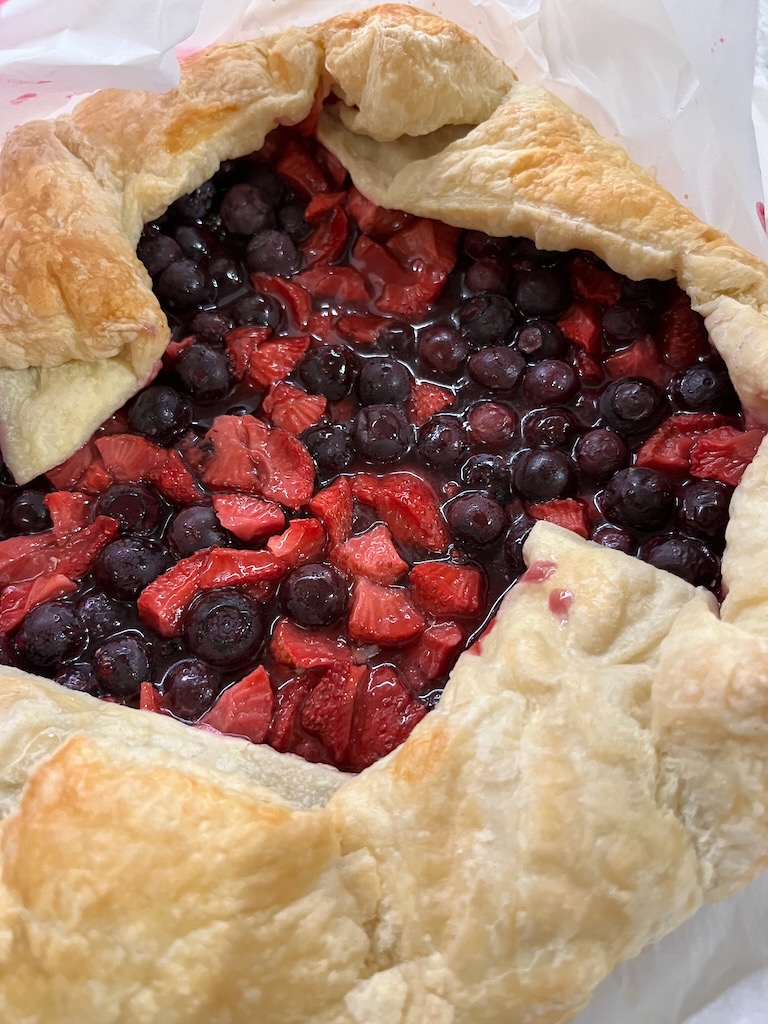
and speaking of generosity one of our beloved beloved chairs who lives not far from where i sit typing here in DC motored over yesterday to spend a good chunk of the day traipsing through a franciscan monastery that took our breath away (and not only because of the paths up and down hills) and who delivered this glorious berry-filled galette to me and my sweet professor, whom she knew when he was a mere wee lad of kindergarten age…generosity abounds at the chair, and i love you all for it.

pjt’s very magnificent very-berry galette

and how might you choose to seize a day, any old day, in the magnificent story of your sweet and blessed life?